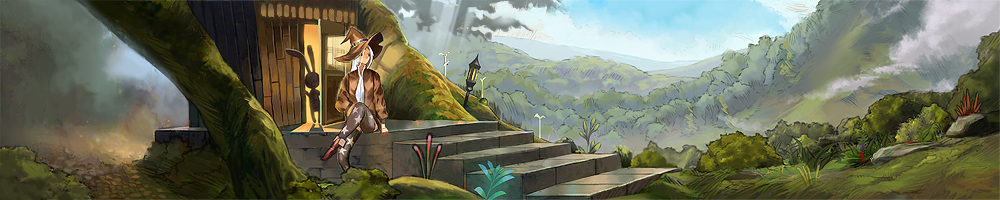
Some quick first impressions: White Album, Minami-ke Okaeri and Zoku Natsume Yuujin-chou

White Album

Short Synopsis: Our lead character has an idol as girlfriend.
Chance of me Blogging: 60% (It’s actually good… wut?)
Saying that shounen romance isn’t my favourite genre is an understatement, so when I learned that this series would revolve around a guy whose girlfriend was an idol, I definitely didn’t expect much from it. And yet at the end of the episode, I was convinced that this show has easily the best first episode of the new season so far. This show isn’t as much a romantic comedy, but rather as how you deal with being away from your girlfriend. What I especially liked was, however, the male lead: he has a personality, he works part time at a local cafe: the guy actually has a life! That’s something that’s really rare in this genre, and this show reminds me a lot of True Tears. Despite the whole idol-bit, this series feels refreshingly down to earth and true to life.

Minami-ke Okaeri

Short Synopsis: Our lead characters… do various things.
Chance of me Blogging: 10% (What is there to write about this series for every consecutive episode… seriously?)
Okay, so this is my third attempt at following a Minami-ke series, after having failed both previous ones. It’s not like this is a bad series, but more like other series were more interesting at the time (but then again, if I dropped Dragonaut back then I could have easily kept watching this series…). In any case, this season actually looks like I might last until the end. It felt quick and fresh, and the fast pacing never gave me the chance of getting bored. For once Haruka also felt like more than just a clone of your typical elder sister that you see IN 100 OTHER SERIES ALREADY. The good thing about this series is that you can just join in at any episode you’d like without missing much, and this episode proofs that.

Zoku Natsume Yuujinchou

Short Synopsis: Our lead character meets one of Nyanko’s old friends
Chance of me Blogging: 100% (Hell yeah!)
This season lacks originality! More than half of the new shows so far have been sequels… what happened to original content? Nevertheless, I’m really glad to see this series back, and it already starts off with a very strong episode. Nyanko-sensei especially was a delight to watch, and the chemistry between him and Natsume gets better and better. Now all that’s left is to see whether the second season can surpass the hotaru-episode of the first season, and perhaps bring a bit of continuity to the entire story.

Porfy no Nagai Tabi Review – 90/100


Porfy no Nagai Tabi is the second series of the revival of the famous World Masterpiece Theatre franchise, a long-running collection of series based on popular children’s novels, made accessible for every age. The franchise is typically very slow paced, combined with genuine, true to life and realistic characters, and it’s a formula that’s proven itself over and over again; though it’s definitely not a series for everyone.

Like the title does suspect, this instalment is a travelling series. It consists out of roughly five arcs, each of them being completely different from the others in tone, mood, pacing and execution. It starts out as a gentle and calm slice of life series, then it turns into a dark tear-jerker, then it becomes a slow laid-back travelling-series, then a haunting fast-paced one, and the final arc yet again goes into a completely different path, making sure that the 52 episodes of this series don’t drag on.

One of this series’ strengths is that it’s absolutely masterful at building up. Every single episode is chockfull of cross-references to either past or future events, the amount of foreshadowing is huge, and yet in half of the cases you won’t recognize the foreshadowing until what they wanted to hint at has already happened. When you see something randomly happen, especially in the first quarter of the series, you can be sure that one of the later episodes uses or builds further on this.

The same goes with the characters. The amount of development that goes into Porfy and Mina is immense. The show may not have as huge or complex of a regular cast as Les Miserables, but in order to make up for that it does what it can to make the lead cast as true to life and realistic as possible, and they really succeed at that. Porfy and Mina aren’t exactly immediately likable, but as the series progresses they and the other characters become very easy to relate to, simply due to their different sides and many subtle quirks that shaped their characters.

Another strength of Porfy no Nagai Tabi is the travelling-part of the series. Especially the second half really managed to catch the essence of travelling: meeting many different people, and not knowing beforehand whether they have ill intentions or are cooperative. Everyone that Porfy runs into is different, and the contrast between the loneliness of travelling alone without knowing anybody, and talking to random people you meet on the way really works.

The weakest part of this series is around the middle, where the travel arcs are long and a bit too tedious to get through. Porfy meets the right people a bit too conveniently, and overall there are times when it just feels a bit unrealistic when Porfy gets involved in large dramas, and in the end manages to make people who originally hate each other make up again like nothing happened. Thankfully the later travel arcs fix this wonderfully, and provide a more realistic view to this.

And yes, this definitely isn’t a show for the impatient. Especially since hardly anything happens aside from building up in the first twelve episodes, you need to be able to enjoy slice of life moments if you want to enjoy this series, but that’s the case with nearly every other WMT-series: the characters are amazing, but there’s an amazing amount of time needed to flesh them all out.

Since the character-designs look fairly simple and childish, do not make the mistake to think that the graphics are all very dull and simple. Sure, the character-designs aren’t complex, but to make up for it this series has some of the most beautiful background art in all anime. For 52 episodes, the creators consistently deliver the most gorgeous landscapes full of life and detail, perfectly representing the area that Porfy finds himself in at the time: you can really see the changes as Porfy moves through Europe.

Overall, Porfy no Nagai Tabi isn’t as incredible as Les Miserables, yet it’s a wonderful series nonetheless. I really hope that these guys succeed in fansubbing this series, because it’s definitely been one of the most under-looked series of 2008. You obviously don’t want to watch this, expecting nothing but juicy plot twists, but for those who can appreciate a bit of slice of life here and there, it really is an excellent recommendation.

Storytelling: 9/10
Characters: 10/10
Production-Values: 9/10
Setting: 8/10

Porfy no Nagai Tabi – 52


Short Synopsis: I think we all know what’s going to happen. ^^;
Overall Enjoyment Value: 8,5/10 (Awesome)
Talk about cruel: out of all possible episodes, this one gets delayed. The BIG finish of Porfy no Nagai Tabi took bloody ages to come out on share, but I must say, that IT WAS WORTH THE WAIT! This ending did exactly what it needed to do, and even though it’s not very unpredictable, it’s just so awesome that everything went well for Porfy and Mina, after the huge amount of ordeals that they had to endure. A predictable yet wonderful ending, if I have to say so myself.

The episode starts with Porfy waking up and Rose wonders whether her eyes look funny, since she spent the previous night pretty much crying. It’s snowing outside, so Rose comments that they’re going to get a white Christmas. In the end, Porfy couldn’t find an appropriate present for her, but she’s happy enough with a bolt that he happened to have in his pocket.

Rose then figures that she needs to give Porfy his present too, and she goes out to make a certain phone call. In the meantime, the creators tease us for one final time by letting Natalie and Zaimis bump into each other. Since Natalie is carrying a heavy shopping bag, they stay together and talk for a bit. Natalie notes how she can immediately see that Zaimis is not from Paris, since he looks so bewildered at the snow (it seems to be an often-used metaphor in this series: symbolizing things you’ve never seen before). Just before he’s about to tell that he’s from Greece, Natalie’s car arrives and they say goodbye.

Tiffany meanwhile receives Rose’s phone call, where Rose says that she needs to talk about Mina. They decide to meet at the film studio. Zaimis meanwhile has immediately developed a crush for Natalie as Porfy calls out to him. Porfy then gets a bit nostalgic now that his journey is about to end, and talks about how he’s seen many places. His mother used to say that the world is big, though at the time when she said it, he didn’t really understand what she meant, but now that he’s seen so many different places and people, he understands. Zaimis also appears to have worked hard, in order to protect his mother and little sister. The two then end up arm-wrestling, which is won by Porfy.

At the studio, Rose and Tiffany meet again, and Rose is finally able to say to Tiffany that her latest film was a great one (she did watch it with Porfy, after all), and that she lost to Tiffany: even without the cheating, Tiffany simply was meant to be a star. Rose then tells Tiffany about how she met Porfy, and the two then decide to give the two of them their best Christmas presents ever.

Porfy and Zaimis then talk a bit about how big Paris is, and Porfy still rather doesn’t want to talk about what happened to Simitra anymore, compared to Zaimis who still often thinks back to the incident. This again symbolizes the difference between the two of them: they both ended up dealing with the new situation in their own way, and grew in their own ways.

That evening, Rose tells Porfy about how she’s found Mina. Tiffany’s driver then comes to pick them up, and drives them to the movie theatre where they went to see Tiffany’s movie. In there, Porfy and Mina finally meet each other again, and the episode and series ends. That was just so adorable.

This episode really showed how Porfy no Nagai Tabi may not have been as beyond awesome as Les Miserables, yet it was a wonderful series on its own. This episode lacked the aftermath that closed off Les Miserables so well: we never get to see what happens after the two meet again: it’s left up to our imagination, but nevertheless the reunion between the two was very fit for a climax of this series. I’m only bitter due to the lack of Alecia, but that’s just personal preference.

Speaking of fanboying: the trailer for Konnichiwa Anne was pasted at the end of the episode, and I have to say that Anne looks AWESOME! April 5th can’t come soon enough!

Kaleido Star Review – 90/100


Kaleido Star is yet another example of why Gonzo can produce really outstanding series when they really want to. It first starts out as your average shoujo series about gymnastics and acrobatics, complete with ultra-talented female rival, a just as talented male potential love interest and another love male interest. And yet, with these ingredients it grew into everything a good shoujo series should be.

What made this series work so well is its excellent use of its 52 episodes. The first 26 episodes are already a very capable series by themselves. They show perfectly how Sora (the lead character) rises as a capable rival for Layla, emphasizing guts and hard work, never giving up, and including a number of plot twists that make sure to emphasize that not everything always happens in the lead character’s favour. Overall it’s a very satisfying story by itself, and then the second half of the series comes and pushes this development even further. The new characters of Leon and May really manage to get the best out of Sora in terms of development and make her into a really memorable character by the end of the series, and both of them also pretty impressive by themselves.

Since this is a series about acrobatics, performances also play a huge part in it. And while the creators didn’t have an unlimited budget, the animation does look really nice nonetheless. Especially the costume design for the different parts that are played throughout the series are top-notch, and the creators know exactly how to use their camera-angles and lighting effects to create a great show, based on still shots and close-ups.

If I had to mention a flaw in this series… then it lacks realism. Some of the moves that are performed by the characters are near-impossible, while at other times they master top-notch moves with only a week of training, not to mention that this is a series where seals turn into dogs. But really, the characters shine enough to make up for this flaw, and it never really gets in the way of what really is important for this series. Neither is the romance, by the way. When I first started watching this series, I was afraid that typical silly love triangles would develop over time, but the romance only appeared once in a while, and knew exactly that it shouldn’t get in the way of the characters.

So yes, this series deserves all of the praise it gets. Even though it’s got 52 episodes, every single one of them is dedicated somehow to pushing one of the characters forward, and I especially liked how much of an in-depth look it gave into the themes of working to your dreams and never giving up. It’s a wonderful series, definitely the product of Good Gonzo.

Storytelling: 9/10
Characters: 9/10
Production-Values: 9/10
Setting: 9/10

Space Pirate Captain Harlock Review – 80/100


Matsumoto Leiji: the founder of the space opera genre. While his first work, Space Battleship Yamato, lacked a lot of polish, his next work, Captain Harlock, would feature an improvement in just about every aspect. This is the series that would define epic, and would provide inspiration for the many other space opera anime that would follow. Thank you Live-eviL, for having the patience to fully sub it.

While the set-up of the series is again simple (evil aliens known as the Mazone are attacking the earth, and Captain Harlock is the only one who can stop them with his battleship the Arcadia), this series knows how to use its 40 episodes very well. This isn’t a simple series where the Mazones just keep throwing monster after monster until they eventually die, but every episode serves to flesh out and develop the members of its cast, so that the end of the series closes off with both the good guys and the bad guys feeling complete.

Especially the Mazones and Captain Harlock provide to be more than capable of being the respective villains and hero of this series. While the Mazones are most definitely evil, this series makes them more than villains who are just evil for the sake of being evil. Harlock on the other hand stands far apart from your typical lead character. He’s a character who knows what his duty is, no matter what gets in his way, and after watching, I can really understand why Harlock managed to capture the hearts of many when it first aired.

But yeah, you really need patience in order to watch this. The best parts of this series only really start to shine in the final quarter of this series, and the building-up parts can be really nerve-wrecking at times. Especially the middle part of the series can be tedious to get through, in its attempt to give every major character a sufficient amount of background.

Nevertheless, the result of this build-up is an epic series with a rock-solid final quarter, even though it’s already more than thirty years old at this time. While this is definitely not a series you want to marathon in the beginning, it’s nevertheless a series that has a clear purpose and has found a good use for its forty-two episodes. So it’s nowhere near Tomino or World Masterpiece Theatre levels, but nevertheless it’s among the better series to have aired in the seventies.

Storytelling: 8/10
Characters: 8/10
Production-Values: 8/10
Setting: 8/10

Some quick first Impressions: Touhou – A Summer’s Day Dream, Shikabane Hime Kuro and Maria-Sama ga Mitaru Fourth Season

Touhou – A Summer Day’s Dream

Short Synopsis: Our lead character gets targeted by a mysterious thief.
Chance of me Blogging: 10% (Very slim)
First of all, since this is a series that’s purely created by amateurs, I must praise the creators for doing an actually pretty good job at it. The character art is a bit crude here and there, but nevertheless the music is excellent and the background look pretty nice, and there’s actual CG in here. You can really see that a lot of time was put into this to make it look good, and it definitely beats the to be honest rather half-assed Animax Grand Prix series. I’m also glad that they went for a slice-of-life setting, rather than going to try and recreate the game’s virtually non-existent plot. But yeah, the entire story is about a mysterious thief who keeps stealing stuff. It’s just one big excuse to show as many of the game’s characters as possible and giving them some reason to fight, but nevertheless it’s an interesting way to spend 20 minutes.

Shikabane Hime Kuro

Short Synopsis: Our lead character trains hard to accept his mission.
Chance of me Blogging: 90% (I blogged the first season, so why not?)
Overall a decent start to the second season, but I have my worries here and there. The episode felt a bit dry with Makina being chained up for the largest part, but let’s hope that she snaps out of angsting over what happened at the first season soon. The side-characters also were mostly in the spotlights, and they did a good job of driving the episode forward… but what was up with those boob-jokes? Seriously, this episode had more fanservice than the entire first season together, and that has me slightly worried. Especially that new character… talk about out of place-looking characters. This is a horror-series, not a magical girl show.

Maria-sama ga Miteru Fourth Season

Short Synopsis: Our lead character participates in a school play.
Chance of me Blogging: 10% (Have yet to watch the first seasons)
well, so this is the fourth season of the much-loved Maria-sama ga Miteru franchise, but I’m not yet convinced. Based on the title and promo-art, I expected this to be some sort of combination between big brother and yuri, but in the end this is just another slice of life series on an elite school. Ultimately, this episode was simply dull; there was nothing that really made me watch the rest of this series, nor the first two seasons. What it did well was the bit of development for that one classmate, but nothing else even caught my attention. The lead character is annoying, in the way that she keeps poking her nose into everything. What made the previous seasons so good anyway?

Bonen no Xamdou – 21


Short Synopsis: Jin infiltrates Kakisu’s base in order to get his daughter back.
Overall Enjoyment Value: 8/10 (Excellent)
One of the many things I love about this series: it knows that it shouldn’t force its main characters towards the centre of attention all the time. It’s often said that a good story writes itself, and that’s really the case here. Akiyuki has a clear purpose in the series, but until his time comes the creators smartly focus on the rest of the characters of this series. In this episode, it’s about the people on Sentan Island.

Especially Kakisu is going crazy, and the next episode looks to be a big climax for him. In this episode, he kills the white-haired kid he captured when the latter starts talking about the former’s past.

It’s also a big episode for Akiyuki’s parents. When the series started, I really believed that they’d be your standard hero’s parents, who stayed at home while their son went on an adventure, but this episode shows that they’re very much involved with their own story. The two of them feel like proper characters, instead of plot devices.

2008 Summary – Part II

I originally wanted to wait with posting this until Porfy no Nagai’s final episode got released, but its time is nearly running out here. The Share-uploaders have a very cruel sense of humour: out of all the episodes they could have picked to delay, it became that one. In any case, here’s the second half to my review of 2008.

Most Pleasant Surprise

Kaiba

Well, here’s a no-brainer. When I wrote my preview (apologies for the lack of images there), I originally ignored this series, mistaking it for a simple kiddie show. Then when it was finally time for the show to air, it totally blew me away. Other nice surprises this year were Chi’s Sweet Home (never knew that cats can be so awesome) and Blassreiter (which for a Gonzo action series turned out to be actually really good).

Best Action

Bonen no Xamdou

This was a tough one to decide, as there wasn’t exactly one series that really stood out in the action-department. Blassreiter featured some amazing fast-paced camera work because of the CG, the very few fight scenes of Real Drive were detailed and exciting, and Shikabane Hime featured some great typical Gainax-action scenes. But I guess that none of them really is able to beat Bonen no Xamdou: amazingly detailed animation, an amazing soundtrack and characters made for the best action scenes I watched this year.

Best Comedy

Gintama

Obviously, Gintama takes this award for the second year in a row. It’s not just funny, it’s been funny for nearly 100 episodes, and it still simply getting better and better. Runner-ups as Hyakko, Skip Beat and Chi’s Sweet Home may have been hilarious, but they still just didn’t match up to some of the most hilarious episodes of Gintama this year.

Best Old Series I Happened to See This Year

Mysterious Cities of Gold

Yeah, so what if the series is already 26 years old. It’s still everything an adventure series should be: a fast non-linear pacing, original setting, there’s always something going on. The cast of characters was awesome, especially Mendoza was brilliant, and it’s got to have the best soundtrack of any anime of the seventies and eighties. Runner up is Air (more than simply a bittersweet series).

Best Character-Development

Porfy no Nagai Tabi

Yeah, it’s probably no big surprise that a WMT-series is running off with this award again. This series has 52 episodes of nearly pure development in not just Porfy, but every other important character of the series, making them feel not only incredibly real, but also extremely dynamic, with lots of different sides. Especially Porfy is an excellently rounded character, and it’s an award well-earned. Runners up include Saiunkoku Monogatari (obviously) and in terms of shorter series: Blade of the Immortal (the growth of Rin, and the bond between her and Manji is definitely memorable).

Best Animation

Bonen no Xamdou

I can’t really give this one to Macross Frontier. Sure, it had a huge budget, but nevertheless the characters art kept looking inconsistent. A good use of messy animation would be something like Kurenai: things didn’t always flow well, but it was nevertheless full of life and detail. The only series that managed to beat Kurenai in that aspect this year was Bonen no Xamdou: the animation shined in everything through the series, and the creators really managed to pay attention to some small details. While not as good as the series that got this award last year (Seirei no Moribito), the work that the animators did on Bonen no Xamdou remains very impressive.

Best Script

Casshern Sins

From the outside, Casshern’s individual episodes seem like mere fillers, and yet the creators manage to use the time of each episode to the full potential through imaginative dialogues that get the best out of each characters. The scripts of the runners-up as Amatsuki and Mouryou no Hako was also very impressive.

Most Imaginative Setting

Kaiba

This is an award that I didn’t hand out last year, but I decided to include it this time for the series that have spent a significant amount of time to flesh out the world they’re set in, with the key word being imagination. Real Drive is an excellent example of this, with the vision of the world in sixty years it tried to create. Bonen no Xamdou also has some excellent ideas that are hidden in its setting, from the Xam’d designs to the imaginative locations that the series visits. But yeah, none of them can match up to Kaiba: there was hardly anything about the series that didn’t feel imaginative.

Best Slice of Life

Mokke

The definition of Slice of Life is of course a bit ambiguous, as it can mean different things depending on how you look at it. Still, I consider the daily lives of Shizuru and Mizuki to be part of the genre, and the combination of the two of them made for a compelling slice of life drama, with both parts equally interesting.

Best Thought-Provoking Anime

Mouryou no Hako

Runner-ups as Kaiba (questions what it means to have a body) and Jigoku Shoujo Mitsuganae (never afraid to be completely politically incorrect and yet it’s very critical of this) were already very interesting, but none of them really match up to the dialogues of Mouryou no Hako. There’s always something going on, and even when the characters aren’t discussing the plot, they’re delving into some sort of topic that vaguely has something to do with it, in order to flesh it out.

Best Supporting Character

Vanilla – Kaiba

The guy remains a total bastard for some of the things he did, but you can’t help but love the guy as the story unfolds. His quirks were a lot of fun, and also the serious scenes around him were downright awesome. The runners-up for this category probably are the side-casts of Amatsuki and Shion no Ou: thanks to them, there always was something interesting going on in their respective series.

Best Male Character

Akihiko Chuzenji – Mouryou no Hako

A bit of a strange choice, but let me try to explain. In 2008, there wasn’t really a male character that stood out for me in a way like: “Yes! He’s going to be the best male character of the year!”, so I had to turn to the runner-ups: characters that didn’t stand out per se, but nonetheless were excellent to watch. Those were Gintoki (Gintama, whenever he appears you know you’re going to crack up), Watanuki (xxxHOlic, I really liked how his character grew through the second season) and Akihiko. While we hardly know anything about him, compared to other characters in other series, the guy has an air of presence, similar to Ginko of Mushishi.

Best Female Character

Shion – Shion no Ou

When I watched the series, Shion struck me as a very headstrong character, despite all of the things that she had to cope with. She grew into an absolutely adorable one by the end of the series, and it was always fun to watch her rise in the tournament. Runner-ups are Minamo (RD Sennou Chousashitsu, a downright lovable character) and Hatchin (Michiko e Hatchin, sarcastic, independent and awesome to watch).

Best Mystery

Mouryou no Hako

Since mystery is one of my favourite genres, I was a bit let-down by 2007 due to the very small amount of good mystery-series in that year, but thankfully 2008 came back with some excellent series of the genre. Kurozuka was simple, yet effective, and Kaiba made optimal use of the unknown in creating its downright awesome storyline. Still, Mouryou no Hako gets this award for me, due to the sheer complexity and creativity of all the weird things that happen throughout the series. The questions are satisfying, but the eventual answers even more.

Best Drama

Shion no Ou

It’s always a bit vague what really belongs in this category, since nearly all anime has some sort of drama. The best drama I watched this year came from Shion no Ou, though. It was powerful, and yet never really melodramatic.

Best Story

Kaiba

Even though it only had 12 episodes, in those episodes Kaiba accomplished what most other series can’t even do in 26 of them. Kaiba’s story is complex, multi-layered and continuously interesting. Runners-up: Mouryou no Hako, Shion no Ou, Bonen no Xamdou.

Top 20 Anime of 2008: #10 – #1

#10: xxxHOlic: Kei

A very worthy successor to the original xxxHolic series. While the series was a bit short and the Kohane-arc disappointed a bit, the beginning and ending were downright excellent, and definitely the best stories that the series has shown us thus far. Even with the many crossovers to Tsubasa Chronicle in the manga, this series still kept its identity as an anime about modern folklore, and I really enjoyed it.

#9: Gunslinger Girl – Il Teatrino

Perhaps a controversial entry on this list, since according to many people it ruined the first season. I, however, don’t care, since the story was downright excellent. Artland’s adaptation was definitely different, yet at the same time a very enjoyable series, with an especially haunting cast of characters.

#8: Amatsuki

Amatsuki is one of the two big “lots of talking”-series this year. Still, it worked really well, not only because of the depth of the dialogue, but also the strength of the storytelling and characters. At times it may have been a bit difficult as a raw-watcher to understand what went on, but nevertheless it was one of the highlights of the past spring season.

#7: Ghost Hound

2008 may have been a relatively bad year for Production IG, but none of this reflected in Ghost Hound. It’s a unique series with its extreme emphasis on sound effects and psychology, but nevertheless it was a very interesting series to watch, and it did the seemingly impossible by making a bunch of teenaged brats into excellent characters.

#6: Porfy no Nagai Tabi

Ah, the latest World Masterpiece Theatre series. Unlike Les Miserables, it didn’t have an enormous story to work with, and instead it was a simple travelling series, but it put such an amazing amount of detail into just about everything. Porfy and Mina are some of the most rounded characters of the year due to their non-stop development, and I haven’t even mentioned the amazing background art yet.

#5: Bonen no Xamdou

Really, if there was some sort of book called “the ultimate guide to writing a good story”, then Bonen no Xamdou would be mentioned everywhere in it. It never takes anything for granted and slowly builds up just about everything that might be important to the storyline later on. There are no forced climaxes, and yet the attention to detail is amazing.

#4: Himitsu ~ The Revelation

If Madhouse’s domination in this year’s anime wasn’t already obvious enough: 3 of my top 4 series come from them. Himitsu had a concept with so much potential handed to it, and it used this to deliver one awesome series during the past spring-season. It was delightfully unpredictable: you never knew what the next story would be focusing on, or whether an episode would be simply entertaining or downright awesome. I also really grew to like the cast of characters more and more, and especially the series’ final quarter was one hit after the other.

#3: Mouryou no Hako

Mouryou no Hako really took me by surprised. Before it aired, I was almost certain that nothing would be able to beat Amatsuki this year in terms of complex dialogues, and then this series came and either equalled or even surpassed it in just about every aspect. Even though the series is filled with dialogues, the creators also succeeded in a very subtle chemistry between the characters, and wasted no moment to further flesh out its cast through either this dialogue or through their expressions. Clamp’s character-designs and the very solid production values made it continuously pleasing to look at, and the plot itself also was really well written.

#2: Kaiba

This year I again had a lot of difficulty choosing my number one. Both Kaiba and my number one pick for 2008 were downright incredible and just as good -if not better- than my top picks of 2007, though in the end I put this one on number 2 because of its rushed ending. Apart from that, though, this series felt like one that was its time far ahead. Masaaki Yuasa succeeded in delivering by far his best work. It’s series like this one that show the beauty of experimental series to its fullest.

#1: Shion no Ou

In the end, I really have to give my top pick of the year to Shion no Ou, the only series of 2008 to make it in my top 10. I hardly knew anything about Shougi, and yet it turned into an awesome series that managed to exploit the tournament setting to its fullest. The awesome cast of characters also made nearly every episode a success and the addictive pacing never let any episode get anywhere near boring. The animation was also daring, but ultimately it gave the series a unique and excellent look. I’m hoping to run into more series like this one in 2009.

Okay, that was it from me for 2008. A happy new year everyone, and the best wishes for 2009!

Mouryou no Hako Review – 92,5/100


The past fall season aired a lot of good and great series, but none of them was as good as this series: Mouryou no Hako, Madhouse’s latest masterpiece. This is one series that did just about everything right. Obviously it’s not for those who don’t like people talking over and over again, but it’s perfect for those who are looking for mature and complex anime. This is how mystery should be done!

I honestly can’t recall any other anime apart from a Mamoru Oshii-production that puts more emphasis on talking as this one. The series follows a string of bizarre murders, and the people who try to solve it. This whole mystery is multi-layered, it’s full of flashbacks and references, you’ll never know when something that passes the screen is important for the future. There are lots of scenes that don’t necessarily have any direct meaning, but instead are there to flesh out the setting or throw the viewer on a side-track, and yet the series itself never loses track of its goals, and everything comes together in the end in one of the best endings I’ve seen.

Another big selling-point of the series is its cast of characters. They hardly get as much screen time or background as your average anime, and yet they’re utterly amazing. The animation knows exactly what it needs to do to show their subtle movements and gestures in order to flesh them out while many other things happen, and the background that’s there is meaningful and has a huge impact. Every character has his or her own distinctive presence, with the best ones being Kanako and Akihiko, both for very, very different reasons. The entire cast is colourful and a delight to watch, despite the huge amounts of talking within this series.

Also, if you thought that shows as Code Geass is disturbing, then you haven’t seen anything yet. I refuse to spoil anything here, but like a few other Madhouse productions, this series breaks taboo after taboo. This is nothing near your average tame detective story.

Then the visuals: they look utterly incredible. Especially in the beginning episodes and episodes, the characters all look crisp and very detailed. The animators throw the most beautiful shots and visual effects at the viewer. Combine that with an awesome soundtrack, and you’ve got some amazing production values.

The only possible turn-off is, like mentioned above, the large amounts of talking: if you don’t like it, then it’s going to be hard to enjoy this series. There are two particular consecutive episodes, where nothing else happens apart from three guys, sitting in a room and talking to each other. This anime isn’t afraid to take risks, even though it might turn off some people.

So overall, this has been an amazing series. The script is fresh and creative and has a huge impact. There’s a lot of symbolism, both visual and in the storyline, and an excellent recommendation for those who look for a short mature series. The storytelling is strong yet subtle, and it’s yet another masterpiece by Madhouse.

Storytelling: 10/10
Characters: 9/10
Production-Values: 9/10
Setting: 9/10

Mouryou no Hako – 13


Short Synopsis: It’s finally time to reveal who is the real culprit behind this series.
Overall Enjoyment Value: 9/10 (Fantastic)
What an awesome way to close off 2008! I must say, this episode was absolutely incredible. It was the best episode of Mouryou no Hako yet, it had some of the best visuals of all the series I watched in 2008, it’s the second-most disturbing episode of 2008 and it has without a doubt the best ending of 2008, and in fact one of the best endings I’ve ever seen. Oh my god, how everything came together in the end!

So in the end, the culprit was Amemiya. I’m pretty surprised that I forgot this myself, but amongst all the clues that were thrown around, two of them pointed at the real culprit really clearly: the time when Kiba saw him outside of the research institute: he was trying to get Kanako’s limbs back, though didn’t take into account that Kiba would be there. Then, later as we saw Kanako lying in bed, it was indeed he who was watching her from the peek in the door. He then met Suzaki, who just smuggled Kanako’s head outside and killed him, taking away her head. It then seems that he met Kubo in the train, and showed him Kanako’s head, JUST LIKE IN THE STORY. It turns out that the story from Sekiguchi was from Kubo! Kubo then became jealous and wanted to create something like that too, not realizing that it took some advanced science to keep her alive in that state and… ah, forget the bloody summary, Hayase does a much better job at it.
And I must say that this is one disturbing story! Mimasaka slept with his actress daughter and got her freaking pregnant! People chopping up girls’ bodies, keeping them alive and distributing their limbs all over the country.

I must say, that of the past fall season, Mouryou no Hako has definitely been the best series of all airing shows. I already was convinced of that after the previous episode, and then it came with this episode. Even though Casshern Sins, Michiko to Hatchin and Bonen no Xamdou are already amazing, they’re going to have to be really good in order to be able to top this one. I realize how much of a hassle this series is to translate, but it would be such a shame if this gem would remain unsubbed.

My only question left is: what happened to Amemiya and Kanako’s body? Were they found? Did they disappear?