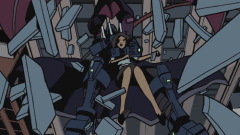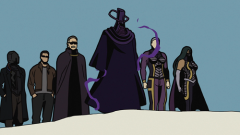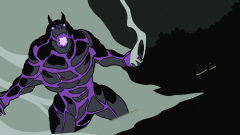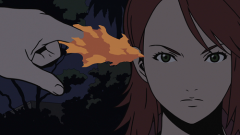
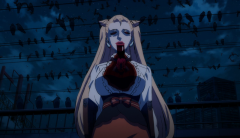
Shingeki no Bahamut: Virgin Soul Review 80/100

“Dance!”

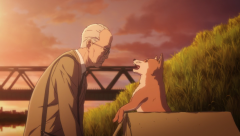
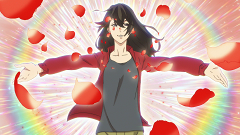
I have been a  reader of this blog for a long time. Indeed it would not be wrong to say that psgels and the current crop of writers have helped maintain my interest in anime for the last decade. So now here is my chance to give something back to this excellent blog. Shingeki no Bahamut: Virgin Soul /Rage of Bahamut: Virgin Soul, was one of the series the writers watched but did not review. With an exceptional year in anime (with shows like Made in Abyss, ACCA 13, and others) there is never enough time to cover everything. And while Virgin Soul was in no way a bad show, it was a conventional show. However, it was a well-executed conventional show.

Virgin Soul is the sequel of Shingeki no Bahamut:Genesis , aired back in 2014. Both are created by Studio Mappa, and both are based on a card game by Cygames. Now most shows based on games tend to be bad to mediocre, being nothing more than vessels to increase sales. For some reason the creators of Genesis and Virgin Soul avoided that. Indeed even the few references to the card game in Genesis are completely gone from Virgin Soul. To be frank, if the show was supposed to get you to go and buy the card game, it largely failed. But conversely you do not need to know anything about the game to enjoy the show.

“Arrgh, I want to play the card game too!”

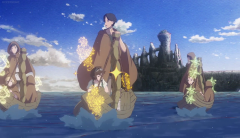
The story of Virgin Soul takes place in the shadow of the aftermath of Genesis. In the end of Genesis, the heroes- flamboyant desperado Favoro, moody knight Kaisar, zombie-girl Rita- were able to stop the plans of the villain. It wanted to use the powerful monster Bahamut to destroy the balance between humans, daemons, and gods. But the price of victory was terrible as it demanded a heavy sacrifice. Between Genesis and Virgin Soul Mappa produced two short episodes that fleshed out a bit Favoro, Kaisar, and the secondary character of Jeanne, a knight who used to be favored by the gods. Even though the villain of Genesis failed to attain his version of the breakdown of the balance of the world, the effect of Bahamut’s Rage brought about change, nevertheless.

Virgin Soul takes place in this changed world. The new king of the humans, Charioce, in reaction to the destruction of Bahamut, decided that humanity could only find security in its own power. Using forbidden powers he went to war with both the gods and daemons and won. The gods were largely banished to their heavenly realm to sulk, while the daemons were enslaved to serve humanity, including being pitted in death matches for the entertainment of the populace(disgusting). On the slave labor of daemons, Charioce has built a prosperous human kingdom, though through tools like the Onyx Soldiers he represses any dissent. It is in this world that our protagonist Nina enters. Nina is an excitable teenage girl full of pluck and optimism. She is also a virgin. And, she is also a half dragon, and will turn into a powerful red dragon if approached or touched by a good looking man.

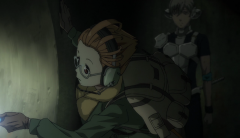
“Nina does a lot of running. You gotta expend that teenage energy somehow!”

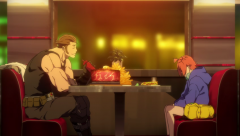
When you think of the title, and of the condition of the protagonist, you could easily see how this show could go wrong. And yet like Marie the Virgin Witch, the show plays Nina’s virginity and condition straight, with little turn to vulgar humor. Now, the show does have its fan service, but it never felt creepy or leery. Instead what we get is a show that in general has a conventional plot, which is enlivened by the interaction of the characters. Virgin Soul is not a show you watch for the plot. It is a show you watch to see some interesting characters interact. In this sense it is similar to the live-action sci-fi show Killjoys, which has a conventional, indeed boring plot, but great characters interacting. Another thing that is similar is that in both cases the characters in general are what we might call good looking by fashion industry standards.

Those characters and their interactions are developed by secondary plot points, which in a way are worth more than the central plot. Nina is developed through a great and touching depiction of first love, rejection, and redemption. Kaisar by his struggle between his personal sense of justice, offended by the actions of the king his serves, and his duty to that king. The daemon Azazel, an obnoxious villain in Genesis, here is developed through his brotherly relationship with one of the new characters, his passionate and desperate fight to restore the freedom of daemons, and the inner struggle about whether he is driven by personal spite or a true need to make things right. Jeanne, the fallen servant of the gods, gets development through a touching depiction of mother-hood. Favoro by his struggles with the consequences of the events of Genesis and mentoring of Nina. Thus in general the main characters of Virgin Soul tend to be given interesting stories that make them interesting and sympathetic (Rita unfortunately not us much as they could had done ). Most of the time these are well done, though the show never really integrated these character developing sub-plots to the central plot. It also failed to resolve many of them.

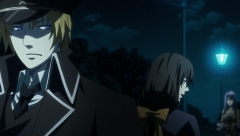
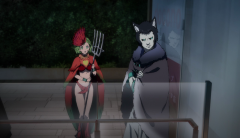
“Here we see a friendly chat on the nature of liberty and duty”

The exception to these generally good secondary plots is King Charioce. Introduced to us like a cruel, ruthless, but efficient ruler, the show then makes him a major love interest of another protagonist. His two personas, lover and king, are very incongruous. This has led many reviewers to castigate the show. That is a bit unfair. The problem is not that Charioce the King and Chris the Lover are too different. Just read “Eichman in Jerusalem” to see that this is often the case in reality with these types of people. The issue is that the directors and writers did not really do a good job at balancing this. Chris the Lover and Charioce the King are never brought in direct conflict in the character himself. We only see the conflict through the eyes of other characters. Sadly that makes Charioce more of an object than a character. It is not grating, but it is a lost chance.

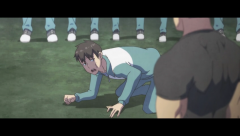
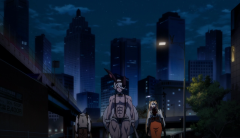
“But I played soccer with the street urchins!”

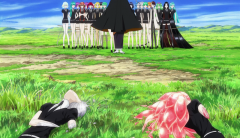
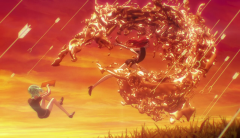
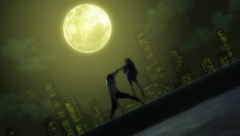
These characters, their interactions, and their adventures are rendered with animation and art that is generally excellent. Action scenes are fluid, and character facial and body expressions emanate personality (except for Charioce-though this might be more of character trait). As a result the show does a good job of giving its comedy, action, and tragedy depth. In both Genesis and Virgin Soul the animators of studio Mappa really like to show off their skills with elaborate dance scenes, and they do a good job of encapsulating what this show can give to the eye. Backgrounds are well done and lush. The only negative mark is the use of CGI with some of the creatures, including the titular Bahamut. This did seem a bit out of place next to the fluid animation of characters.

The music was in generally serviceable. The first opening was excellent, with the second one being more conventional. Both endings were quirky and cute. In the show, the best music scores were during poignant moments of tragedy, while during battles sometimes the music would try too hard and lose me.

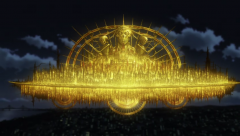
“I, Charioce offer this light show as proof of my good party spirit”

Despite the conventional character of the plot I must give kudos to the writers for taking some decisions with characters that would make George RR Martin (of Game of Thrones fame) happy. But they also had some plots lines that were sloppy and not really useful (for example Nina’s fight with the dragon-hunter).
In the end Shigneki no Bahamut: Virgin Soul is a conventional show well executed. It has a cast of interesting and exciting characters that carry a rather mundane plot. The artistry of animation helps greatly the characters come to life. It is just a pity they are not used to their best. A solid 80 out of 100 (or B).

“Ahh, the ship that never shipped”

Characters: 90/100 (most of the central characters are interesting and receive development. But the blind spots are egregious)

Plot: 70/100 (conventional central plot,  but with some points of ruthless brilliance)

Art: 90/100 (animation and design is in general great, but CGI at points was not integrated as well as it could be)

Sound-Music: 80/100 (some good pieces and good music direction, a good first OP and EDs, but at other points it tries too hard)

Fall Season 2017 Preview

Yet again we are here in a new season of anime even though it feels just a moment ago the summer season had started. Seasons come and go, stupid controversies rise and fall and yet life goes on as it has always gone on. Well then enough with the sloppy rhetoric and let’s just get to what you are all here for. I must say that this season is looking very promising indeed as while we don’t have the abundance of shows present in the summer season, we do have quite a number of shows with the potential to be something real special. Depending on how this turns out I may be dropping less shows than I usually do and end up watching a majority of the season.

Same values as usual apply as I check out the source material of everything in the season along with the staff to give a better idea of what might turn out well. Below is a poll which can influence what we writers pick up to cover for this season so vote for as many shows as you want. Truth be told a lot of us have already decided on what we will cover for this season, but should we change our minds we will certainly take the poll results into account when choosing a new show.

This poll is no longer accepting votes

What will you be watching this spring?

Once again thanks to Mario for gathering the images and helping with the format. And thanks to Wooper and Lenlo for helping with editing. Let’s get rocking.

The sequels/Shorts I don’t care about

Shokugeki no Souma: San no Sara
Himouto! Umaru-chan R
Yuuki Yuuna wa Yuusha de Aru: Yuusha no Shou
Love Live! Sunshine!! 2
Hoozuki no Reitetsu 2
Osomatsu-san 2
ClassicaLoid 2
Cardfight!! Vanguard G: Z
Itsudatte Bokura no Koi wa 10cm datta
Time Bokan: Gyakushuu no San-Okunin
Wake Up, Girls! Shin Shou

Series I don’t care about

Anime Gataris


Studio: WAO World
Director:: Kenshiro Morii
Script/Series composer: Mitsutaka Hirota
Source: Original
The anime centers on Minoa Asagaya, a new high school student in Sakaneko Private High School. Despite being a novice to anime, Minoa’s classmate Arisu Kamiigusa invites her to make an “anime research club” at school. Through conversations with her classmate Miko Kouenji, as well as various anime-loving upperclassmen, Minoa gradually gets hooked on anime. While they stand against the student council’s continuous efforts to disband their club, and they ignore the impending end of the world, they talk about anime, whether in Akiba, or in real-life “sacred place” anime settings, or the hot springs.

I am very ready to write this off as a rather uninteresting show as all signs point to this being a cute girls doing cute things show. This appears to be an adaption of what was originally a short animation screened during intermission at TOHO cinemas. The PV points to this being just cute girls in a club as well. But there is one thing here that throws me off and that is that tiny detail in the description: “and they ignore the impending end of the world”. My interest in this show depends on how literal that statement is. That is the make or break point for this show for me, because an anime club by itself isn’t going to sell this show (I would be better off watching Genshiken). But an anime club at the end of the world? There’s something to get me interested. Director really hasn’t worked on anything of note and the same goes for the series composer unless you liked the anime X-men adaption or the New Prince of Tennis. Despite this I don’t have very high hopes for this as it likely won’t be anything of note even if it goes for the impending apocalypse scenario.

Continue reading “Fall Season 2017 Preview”

Classroom of the Elite – 12 [Genius Lives Only One Story Above Madness]

Youkoso pulls off a neat trick to close this shaky Islands arc in a high note, although I still can’t overlook its sillier details. At first, I was pleasantly surprised that despite making a lot of guessing games in last few weeks, Youkoso still manages to catch me off guard. This finale details the initial plans from Class-A, Class-C perspectives, respectively, each of them believes their plan going to be perfect but as it turns out, Ayanokouji has an upper hand. There are three main big reveals that has previously been kept from the viewers: 1) Class-A’s Katsuragi forms a contract with Ryuuen from Class-C 2) Ryuuen uses Ibuki as a mole to figure out class-D’s leader and 3) Ayanokouji swaps himself for Horikita as Class-D’s leader. Although those developments make up for some nice twists at the end, some of the rules aren’t properly explained or only hint to us during an internal eyecatch, make the end result somewhat cheated and unsatisfied.

The biggest reveal of this last episode is the contract formed between class-A and class-C, Katsuragi transfers his class’s points to Sparkling Nerriot and class-C will drop out and give the top class the leader names of the remaining two classes. I didn’t see that coming and this development runs really well with the underlying theme of Youkoso. With that, Class-A has a huge advantage of being at the top by negating all the bonus points from Class-B and Class-D due to identifying correctly the leaders, in addition that Class-C is already out of the picture. One thing bald man did not expect is that Sparkling Nerriot double-cross him by partnering with the guy in Kayanasagi’s circle and thus, he knows about class-A proxy leader. But then, Youkoso goes stupid again by revealing us that there is an addition clause that each of student from class-A will have to transfer the points to Sparkling Nerriot every month until he graduates. What the hell? Are you sure that bald guy sits in the right class? Who would be stupid enough to sign a deal that has that lasting negative effect like this. My god, my head bursts.

Ibuki, as expected, turns out to be Sparkling Nerriot’s mole and her mission is to identify the leader of class-D. Ayanokouji notices something she buried before – a digital camera – so he’s basically figures out the plan, speeds it up. He destroys the camera and uses Horikita as a pawn in order to get Ibuki into action – stealing the card. Sparking Nerriot actually sold me a bit of his character as he appears more determined than we previously assumed, but like I said above the last bit (the contract) rings so lousy that it took away all my goodwill for him. With this twist, Ibuki, on the opposite end, appears more shallow than previous episode. Ayanokouji then plays his triumph card: uses Horikita’s sickness as an excuse to change class-D’s leader. While it’s a nice surprise to come up with that idea, I feel that the rules are bending too much in favors for this plot twist. When you really think about that, the rules established favors too much on figuring out the class leaders. Other missions like securing spots and using the points sufficiently are never the top priority thus, making a whole thing very unbalanced. Class-B, who favors latter methods never raise to the top, for example. It doesn’t help that they never properly explained that rules, instead they dropped details little by little, which is very frustrating for us viewers because the little details they drop through bulletin board can change the game greatly.

Another issue I have with the ending is how class-D won despite all they did was pointing fingers at each other, and I guess I gave too much credits for Tarzan as it turns out, he truly gave up to admiring the moon. Ayanokouji seems to use this as an opportunity to teach Horikita a lesson that she will need to rely on others in order to succeed. It’s a pretty deep thought, except… coming from the mouth of Ayanokouji it sounds so false and alarming. So no, despite this arc ends on high note I don’t think this is a good arc at all. This has been a very bumpy ride, and from what I gather Lerche adapted the story with some questionable changes that it pisses off even fans from the LN. Full review will come soon but I believe you all know how I am going to rate this.

Katsugeki Touken Ranbu Review – 45/100

Every Anime season we the viewers are shown a number of adaptations, often made after Light or Visual Novels. It’s an already written story with an established base, a smart business decision. In recent years studios have also begun pulling from the Video Game market for their shows. Pieces like the Idolmaster series, Kantai Collection and Akibas Trip. I bring this up not because this is a new event, but because the anime I want to talk about today, Katsugeki/Touken Ranbu, is one such anime.

Ranbu is based off of the online video game Touken Ranbu, along the same lines as Kantai Collection. It focuses on a group of warriors who are the human personification of famous weapons, sent back in time. Their task? To protect history from the forces of the Time Retrograde Army, who seek to change history for an unknown reason. Ranbu focuses in on the 2nd Unit, newly minted and formed from a group who have never worked together before. Together they will face the hordes of the Retrograde Army and defend the past from the future!

Let’s jump in.

Continue reading “Katsugeki Touken Ranbu Review – 45/100”

VN Recommendation – Doki Doki Literature Club

I don’t plan to do this often but after playing this I wanted to make a post recommending it. I could have done a review like I usually do but in this case the story is so short and the VN can be downloaded for free so if I was to write a full review of it i would most likely spoil the experience. The length of the game is about 3 to 4 hours and while it likely doesn’t look like something all that interesting I can guarantee that it is well worth reading. The first hour is a bit tough to get through as it is rather dull and starts up slowly. But once things get going this story picks up immensely so power though till you get to that point. The visual novel was made in 2 years by a former Smash Bro’s Modder and despite it’s style it is an English Only Visual novel, meaning that it is not made in Japan. You can download the game from this site but it will also be available from Steam here. I highly recommend checking it out as it’s certainly a fascinating experience.

Kakegurui Review – 61/100

This show is one that makes conventional reviewing difficult as your enjoyment of your series will likely determine on highly subjective factors. For if I was to put this under scrutiny on matters of f-plot, setting and characters then it will end up lacking in all categories. The plot is just watching Yumeko face members of the student council in a series of gambling games. The setting is absolutely ridiculous with a unnecessary school setting that makes no sense whatever considering what happens in the series. The cast is made up of people whose main trait is being crazy in some form or another and go over the top with facial expressions. Yes to judge this show on these qualities would have it fall low indeed but that is not what makes a show enjoyable. I believe that style over substance is what I am getting at here as Kakegurui works mainly due to it’s presentation.

While gambling is the focus of this anime, the games themselves don’t really amount to much as we never really get a chance to look inside Yumeko’s head and see her work out plans or countermeasures. If you have just finished Kaiji and walk into Kakegurui expecting something similar then you will be undoubtably disappointed. For the common factor here is to see how smug the opponent is in how they rigged the game and having Yumeko eventually unveil that she knows about it and manages to win. Often putting her previous smug opponent down a peg.

Thus the satisfaction is in seeing the over exaggerated fashion at which this all goes down. The music, animation and art are often as over the top as possible with the soundtrack sporting trumpets and jazz like music while the characters faces distort into vile contortions be it in victory or defeat. Every character is crazy and none are crazier than our lead who often elapses into sexual excitement over the idea of risk. This aspect can get admittedly too much as it’s used to push fanservice as characters essentially orgasm over gambling and there are quite a few times where in female characters seem to be visually seducing each other in what would be otherwise a normal conversation. Yuri undertones are apparent here quite blatantly despite none of the character being made clear to be homosexual nor interesting in anything besides gambling and their own ambitions.

As such this is a series that I can’t really provide value through words, instead I say if you show interest then check out the first episode as that acts as an example of what you will receive for the entire series. However I would warn you to not expect something more than that as Kakegurui is only good at one thing and it will not move far from that one thing. This is a series about a crazy gambling girl showing smug assholes their place. That’s all you are going to get. But if you are fine with that then this is the show for you. Personally while i enjoyed it at first, I began to grow tired of it in the final episodes of the shows run so my rating for it’s that it’s a decent distraction but not one I will return to.

Ballroom e Youkoso – 12 [Meeting]

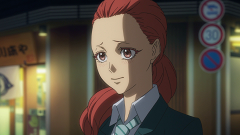
We’ve reached the halfway point of Ballroom e Youkoso’s projected 24-episode run, and along with a new high school life for Fujita Tatara comes a new OP/ED combo. Unison Square Garden returns to do the intro for the second cour, and I’m loving the new song choice. Both openings have been serviceably energetic for a shounen series, but I prefer the backbeat-driven danceability of the new one to the vocal theatrics of the original. The new ED trades clever waltz-pop fusion for even more J-rock, though, which is a definite step down. One notable thing about both visual sequences is their heavy emphasis on Chinatsu, the redhead that we glimpsed last week and to whom we were briefly introduced this time around. The OP’s use of a thunderstorm as the setting for her dance with Tatara tells us everything we need to know about her personality, and the contentious relationship she’ll have with her eventual partner. But that’s a topic for another time, as the present episode features Gaju and even Sengoku more strongly than any one newcomer.

Unfortunately for our hero, Tatara’s first year at his new school doesn’t get off to the blossoming start he’d hoped for. The cute girl sitting in front of him mocks his hobby, which he was brave enough to mention during his class introduction, and a new gang of thugs recruit him to be their errand boy on day one. The poor kid just wanted to make some new friends in high school – he even thought to himself on the way to homeroom that five was plenty! A hooded figure appears to save him from a year of subservience, though, who is eventually revealed to be our favorite mullet-head Gaju. It’s great that the elder Akagi sibling happens to go to the same school, and that he properly befriends Tatara after beating up the bullies who were on his case, but I’d love to see Tatara meet new people or stand up for himself using some of the confidence he’s learned from dance. For now, though, I’m glad he’s got somebody he can talk to between classes, even if Gaju’s the kind of weirdo who gets upset that his sister has started wearing a bra. Anime keeping it classy as always.
Something I noticed while watching this episode were the minor tweaks Ballroom made to its characters in the move to its second cour. There’s been a bit of a timeskip since the Tenpei Cup, which could explain a slight shift in their attitudes, but it was still troubling to me in a couple spots. Gaju’s sheepishness when asking for Tatara’s cell number was one instance, since it doesn’t gel with his brash personality. It felt like the show was working overtime to make him sympathetic, since he functioned as a bully himself just a few weeks ago, but in most other scenes he was his usual hotheaded self. The bigger sin, from my perspective, was turning Shizuku into a blushing Tatara fan and beacon of encouragement. Her speech about enjoying the Tenpei Cup because of his presence bore zero resemblance to her ice queen demeanor at the event itself, and while we know that was just a façade, I don’t understand why she’d drop it so completely now. Nor am I able to grasp why she wants to compete with him again so badly, since she’s light years beyond his skill level. Their whole conversation was a setup for Tatara’s new goal of finding a partner and rising through the JDSF rankings, but Shizuku needn’t have become the Perfect Girl for that to be communicated.

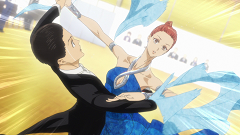
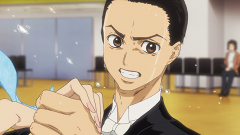
The show’s second act was devoted to a professional dance competition where Sengoku (and his partner Chizuru) were the main attraction. Tatara and Gaju go to watch them perform, which is a rare opportunity now that he’s traveling abroad once more. There’s a distinct sense here that the world of Ballroom is expanding, as Tatara realizes that Sengoku spends most of his time overseas, being a major figure in the DanceSport world, and that it’s a miracle he managed to attract his attention. Tatara’s self-doubt comes to the forefront in this scene, leaving him unable to make eye contact with Sengoku as he leaves the floor, but as his former coach passes by, he instructs him to “watch closely.” What follows is an exhibition of skill that the show really needed to nail, and I think they pulled it off nicely. There were several clear, fluid dance sequences here, nestled amidst the disorienting effects used to illustrate Sengoku’s unorthodox movement. (Even the CG background dancers looked better than usual, although that could have been my imagination.) His performance is so captivating that a mob of screaming fans chase him as he leaves the arena, and who else should Tatara happen to spot among them but Chinatsu? Hearing her explain away that earlier dismissal of ballroom dancing ought to be good, but then, so will everything else involving her character – she’s my favorite!

Re:Creators – 22 [Re:CREATORS] – 75/100

There was never going to be a epic fight with every creation squaring off against the overpowered and invincible Altair. That possibility died when the creators threw the copycat of Blank at her only to have that plan backfire horribly. Besides, it wouldn’t have been a satisfying conclusion to Altair’s story to have her be brought down by the remaining supporting characters given that Selecia disappeared in the blue ether beforehand. Predictably, it comes down to Altair convincing herself that the world is worth saving and the conversation between Altair and Setsuna was really well done with both voice actresses going back and forth with their arguments about placing the blame on the world that was so cruel to Setsuna. There is a parallel between those two and how Bltiz choose to switch side when confronted with the opportunity to gain back the very reason for their motivation to end the world. As well, the transformation from the PPSh-41 machine gun to an actual violin is a visual symbolism of her ultimate choice to create and not destroy. As the far as the main plot goes, Re:Creators is finished as its antagonist goes happily off into sunset with her creator into their own world of adventure and fun. It’s not the best twist ending but I’m perfectly satisfied with how the series build itself up to that point and concluded it.

After everything’s said and done, the final episode wraps up with everyone having a celebratory meal, saying their goodbyes and reflecting on past sacrifices. The creations go back to their own fictional world but Meteora, due to the untimely death of her creator, which begs the question of what happened to Magane. Curiously absent from the final episode, I would infer that she would have lost her powers just like Meteora and go on to become a regular trolling schoolgirl. It’s not quite the ending for those who wanted to see justice be served for the murder of the shopkeeper and her own creator but I think it better to see her leave quietly than having a upbeat epilogue scene for her. The ending summarizes the points of the series in that creators will keep on creating even to the point where a creation, like Meteora comes full circle and end off the series with her own work of Re:Creators.
Re:Creators marks the third series that Studio TROYCA have made with Aldnoah.Zero and Sakurako-san no Ashimoto ni wa Shitai ga Umatteiru being the first two. While their original mecha show was a wild ride of disappointment that really needs more time to flesh out its characters and concepts and the episodic nature of its investigative show took away from the overarching narrative, I felt that they succeed in having and executing an interesting premise while having a few flaws. The biggest glaring issue I had was the uneven pacing in regards to the infrequency of actions scene and mid-series lull of dealing with Sota’s underlying guilt and laying of the foundation for the Elimination Chamber Festival. Also, as Rei Ham (Writer of Re:Creators) regretfully mentioned in an interview, Mamika exited far too early in the show as she was probably one of the best characters arc by growing out of her naive magical girl persona. Her replacement of Hikayu wasn’t all that great despite the creators having fun with her backstory and power-ups. Finally, the 3D stilted animation of the mecha hasn’t been improved over their effort of Aldnoah.Zero and just cements the reality that 3D and mechs don’t mix (Knight of Sidonia is an exception). Aside from those quibbles, I enjoyed my time with Re:Creators over the past half year and looked forward to watching it every week. It looked nice, had that sweet sweet Sawano soundtrack and always had something interesting to say about the nature of artistic creation.

7.5/10

The Reflection – 10 [Eleanor]

This week The Reflection finally gives us some quality time with our main villain, as Wraiths plan hits its final stages. Lets jump in.

Reflection opens on Elen arriving at the mansion we saw at the end of last week, meeting evil!Stan Lee. Deciding that her decision to give herself up for the sake of others was a poor one, Elen immediately starts running through the mansion. Teleporting from intersection to intersection, rather than simply… exiting out a window? Not sure what she is doing here, but its necessary for the big reveal at the end. Meanwhile, our crew continues to follow Vy as she leaps through the streets. Eventually she reaches the mansion, busting in through a side window! Inside, as Lisa and co arrive, we see evil!Stan Lee sipping a nice cup of tea, expecting them. Apparently, he was the one telling Vy where to go and how to reach him, leading her to this very room, but surprise! Its a trap!
The mansion begins to burst into flame, as the Russian Ninja and Human Thunderbolt appear in the room. The man who can phase through walls comes up from the floor and whisks Stan Lee through a wall to safety. Unprepared, our heroes are quickly overwhelmed. The floor gives out, causing them all to fall. As they do, we see Elen through a doorway, walking down a hall. Its a slow-motion shot, with her looking into the room, so clearly this isn’t real. Could it be the one who can create illusions from before? Continue reading “The Reflection – 10 [Eleanor]”

Kakegurui – 12[Gambling Woman]

It’s been awhile since I seen an anime original ending and honestly I was rather dreading it when I started this episode. Anime original endings don’t have a good track record as of course attempting to tack on an abrupt conclusion to an ongoing story is not going to turn out swimmingly. Even if I wasn’t aware this would be anime original, I believe the dialogue at the beginning of the episode would have clued me in. For I always notice a level of artificiality when it comes to anime original endings, like here where the characters are attempting to string together some feeling of conclusion from what is essentially the start of a story. However against all odd this actually worked out for Kakegurui. We have an ending which brings a feeling of closure while leaving open the potential for a second season, a second season which I don’t think this series needs. I will be blunt and say that this series has run it’s course and the only thing that lies ahead is more of the same. There is only so many times you can see the same scenario before it grows tiresome and so it’s better to stop while you are ahead than run yourself ragged. For anyone that wants more there is always the option to start the manga from chapter 27, where the anime leaves off.

So Yumeko bets against the president and in the source it was supposed to be that the president’s secretary challenges her instead. leading to a high stakes bet that involves a giant tower structure that the president built for the sole purpose of a single bet. Here though the president challenges Yumeko to a simple game using Tarot cards. Admittedly anticlimactic considering that if the president was dying to bet against Yumeko then she would set up a much more dramatic gamble but well we got one episode to wrap this show up and when you get down to it the gamble isn’t really the important part. The rules are simple, three people pick up a single tarot card. Each tarot card is worth a certain amount of points and depending on whether it’s upside down or rightside up those points could be plus or minus. The president wins if the points are minus while Yumeko wins if the points are plus. Both pick up one card and the last card is selected by Ryota. The loser of the bet must leave the academy forever and never come back. It is rather funny that out of all the bets Yumeko has been in, this is by far the most fair. In most other games the opponent was cheating but here it really does appear to be a game of luck and nothing more.

Though thanks to luck the president manages to put Yumeko in a position where the only card she can win with is the fool and Ryota must be the one to pick up that card. I really love the mindgame here however as one of the cards was marked by the president’s nail polish during a small demonstration, making it that all that needs to be done to win is to pick up the marked card. Though the question is whether the president truly marked the fool card or some other card in other to throw off her opponent. This leads to what might be quite frankly, my favorite moment in this series, where Ryota more or less confesses to Yumeko and ends up picking a card at random. The way that Yumeko practically transformed into a demonic entity guiding his hand is an image that’s likely to come to mind whenever I think of this series. Thus the game ends in a draw and neither have to leave the campus. Though whether the president marked the Fool card or not is left up to debate, to which I guess that she probably did. Thus we have a confrontation showdown between the two without compromising the possibility of a second season. I may require some rewriting to make it work but it can be done but much like I said before, I think it’s fine to leave this story like this. Kakegurai isn’t likely to get a second season and an ending like this is fine as she managed to challenge all the student council members and not leave too much hanging. Sure there is a bit of a sequel hook but it is my hope that this will be it as this show came, did it’s thing and now can leave the stage graciously.