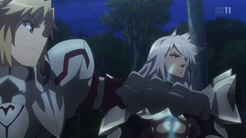
Some Quick First Impressions: The IdolM@ster Side M, UQ Holder! 2 and Black Cover

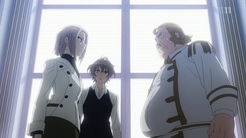
The IdolM@ster Side M

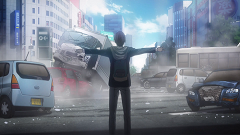
Short Synopsis: An independent male idol group consider going pro.

AidanAK47’s review

Considering the amount of male idol shows I have had to subject myself to, this actually comes out better than most. I guess because this feels like it’s actually trying with it’s story. Most Male Idol shows just throw you into the thick of it and introduce all the characters at once. making them just feel like they came of a production line to appeal to as mainstream an audience as possible. This story instead focuses on three of the idols to join the studio first and I appreciate that. The characters themselves are basic stereotypes (The tsundere hot headed one, the childish playful one, the older responsible one) but at least have a bit more going on for me to consider them actual characters instead of fetish placeholders. Again the biggest problem with judging these shows is that I am not the target demographic but this one didn’t make me want to bash my head against a wall or bore me out of my skull so it must be pretty alright by boy idol anime standards.
Potential: 20%

Mario’s review

You might think that episode 00 serves as a prequel for this series, while part of it was true, this 00 episode is a standalone story about one of the Idol group, Jupiter. One little detail that pique my interest is this is a story when Jupiter was an indie idol band. While it’s overpowered to have a band as young as they are, can manage all the deals, the band’s schedule, dealing with fans all by themselves, the spirit of “DIY” is there. There are some decent interactions here and there between the group and the agency guy, but everything else is mild and forgettable. This main lead is annoying though that he can’t even take simple criticism and I don’t get why they are half an hour length because they can easily cut the performance part and the story is still intact. With this season that is heavily on male idols (we have 2 more coming, along with girl idols Love Live Sunshine), I don’t even think this one can stand out as the best of that pack, and already that bar is pretty low to begin with.
Potential: 20%


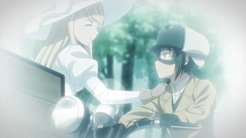
UQ Holder! 2

Short Synopsis: The Grandson of Negi tries to earn the right to go to the capital city.

AidanAK47’s review

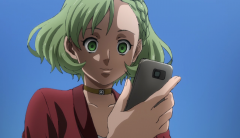
You know it’s a Ken Akamatsu work when the protagonist is getting beaten to death by the main heroine for little reason. Author of not only this but also Love Hina and Negima, there is a certain nostalgic charm to this. However there are problems, one is a reason I was not that interested in this manga and that’s because at the end of this episode they confirm that our main protagonists cannot die. In other works that more or less a given but in this case they literally cannot die. Which kind of drains away any tension from battle when they can recover from any wound no matter how grievous. The second thing that put me off this series is that I never really liked the cast of UQ holder that much. And the third is the fanservice, the kind of fanservice that was in the beginning of this episode and the large amount of fanservice to come. Not to mention lots of fanservice of characters of rather questionable age. A while back there was a law that was trying to be put in place to outlaw nude lolita depictions of anime characters due to it possibly being considered pedophile pornography and you can bet that Ken Akamatsu was right in the crosshairs due to his series having a large amount of that. Still if you can look past the fanservice there is some good action to be had and this is looking to be the strongest adaption of his work to date so there could be something watchable here.

Potential: 30%

Mario’s review

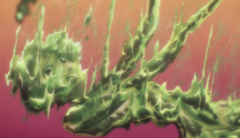
We have a generic shounen story that neither original nor ground-breaking, but for what it worth it’s still a serviceable one. Although billed as a sequel you don’t really need the knowledge of the original to follow this. It ticks pretty much on the boxes of tired tropes, and the story of a young boy who turn immortal is something that done countless time before in anime, even how this little episode turns out is by-the-book so in terms of plot, this episode fails hard. What it makes up is the chemistry between the boy and his guardian and the confident pacing that thankfully hold our attention till the end. What happens next is pretty predictable though, they going to the city, meeting new friends while the young boy hones his skills. At that I don’t get why she can grow her body despite being a vampire and the fanservice is way too blatant. Should provide a fun, mindless ride with some emotional attachments if you’re lucky but don’t expect anything serious about it.

Potential: 20%


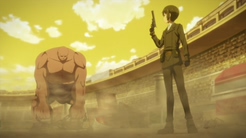
Black Cover

Short Synopsis: A boy without magic in a world filled with tries to gain a magic grimoire.

AidanAK47’s review

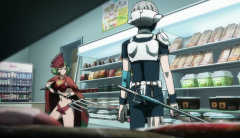
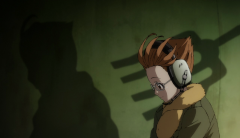
A good anime is like programing code. You need it all to work in harmony and all it really take is one small mistake, one tiny aspect, and the whole thing can fall apart.I thought the main protagonist of this series could be annoying but reading the manga I had the joy of not having to listen to him. But here they decided to hire a terrible voice actor for him who shouts his every line. Good god, it’s annoying. He has this way of drawing out the end of his shouts as well as inflection and once you notice it, it grates on your nerves. Hopefully the SimulDub tones down this as other than this horrible voice actor this episode was fine. Pierrot is changing some things unnecessarily but other than that it’s a solid first episode for a shounen. If you are a shounen fan and can bear the shouting the protagonist then I say you could have fun with it. If his shouting is too annoying you can always try the dub to come soon. Animation was fine as well so this could be something watchable

Potential: 40%

Mario’s review

We have a generic shounen story that… Wait? Déjà vu? Despite having different settings Black Cover and UQ Holder share the same DNA – the plot is full of cliché and general tropes; the characters are one note and that cheap one-time antagonist. How many times before do we see a main hero who has no power turn out to be the best?? Black Cover has a more realized setting than UQ Holder, depicting the fantasy world that rely on using magic. But the main character… boy, is he annoying brat. Overact and loud all the time, he’s the lead that helps me greatly in dropping this series without hesitant. Moreover, this show also teach me a valuable lesson that animating iron chain is the kryptonite of CG animation since it’s jarring consider how out of place the iron chain with the rest. The relationship between the two leads will be what ride the story forward, although I admit that I’m not too interested to follow either the plot or their rivalry. An easy skip for me.

Potential: 10%

Made in Abyss Review – 91/100

There are few series which can capture the mystery and wonder of a fantasy world as well as Made in Abyss. Their world is dangerous, brutal and unforgiving but beautiful, wondrous and exciting in it’s presentation. The story is of a ordinary girl called Riko and a mysterious cyborg boy called Regu traveling down the levels of a massive chasm called the abyss. With each level they encounter new people and monsters alike as they work together to survive the darwinian nature of the chasms ecosystem. The story boosts some of the finest presentation of the anime of the year alongside a gripping tale that never lets go till its conclusion. The characters are memorable though which each level brings a new cast to the forefront. Ozen and Nanochi are the strongest out the cast. But the dynamic between Riko’s optimistic easygoing attitude and Regu’s more negative questioning nature works well in exploring the morality and dangers of this world. The shows strongest aspect is the world building and atmosphere of the setting. Accentuated by the visuals the Abyss is truly a marvel of nature that makes for a fantastic backdrop.

The pacing may be a bit slow for some but I see no way to make it faster and the character designs may look kiddy and lighthearted but Made in Abyss holds darker themes. When it goes for the emotional gut punch it is often heavy and effective. It doesn’t shy away from the uglier side of nature and exploring as well as the dark parts of it’s history. Aside from one or two rare moments the animation in this show is excellent and the backgrounds are beautiful landscapes giving even the best artists in the industry a run for their money. Which isn’t all that surprising when you consider that a former Ghibli background artist worked on the series. The music is equally excellent with standouts like the series ending theme Tomorrow and Hanezeve Caradhina. Tomorrow being a personal favorite for how it closes out the series with melancholy nostalgia and wonder.

Sadly at the point of writing this review this is the only season of the series and the final episode does leave many loose ends behind. This season can be seen as a prologue of things to come and it’s lack of conclusion hurts the series as a whole. The pacing takes it’s time and because of it’s single cour length people could feel that the story didn’t truly get started. At the moment chances of a second season look promising but in the anime industry there are no guarantees. As such people could be left wanting more by the time the final credits roll which is something that could be considering a positive as this is basically an advertisement for the manga but I need to knock off points as this story works some much better as an animated product that I doubt the manga could match it’s level of presentation. Nonetheless what is present here is more than worth checking it out as it still has powerful moments, atmosphere and world building second to none. I have no doubt that this series will be seen as one of the best anime of 2017 in future years to come.

Made in Abyss – 13[The Challengers]

Normally when I finish a series I take a moment to think back on it and try to imagine just how I would make it better. Maybe better pacing or removing a certain character or story arc that went nowhere or just improving the animation at certain points. But with Made in Abyss I tried to do the same thing and found myself coming up blank. I really cannot see how this series could have been done better and in thinking of this I came to realise this series may have far more value that I initially realised. Potentially the value to be called a future classic of the genre but that may be me getting ahead of myself. Well the finale of this series goes out with a bang as we have a double length episode to close out the series. The majority of this episode detailed about how Nanochi began living in the abyss and how she and Mitty came to be twisted into the forms they are now. Finally ending off with Mitty being mercy killed and Nanochi joining Riko and Regu on their journey to the bottom of the abyss. I was right that with Nanochi added to the group that the group dynamic is far better as a whole. Nanochi adds a playfulness that makes the interactions more fun to watch and I am certain she would be a boon in the future of the story.

There were a lot of emotional moments during this finale and this may just be the best episode of the series. Bondrewd looks to be trying to make up for his lack of presence throughout the series by pumping all his villain credibility into this one episode wherein his actions are so morally disgusting that I was wishing for his death by the halfway point of this episode. The transformation of the two girls was absolutely brutal with Mitty’s horrific dissolving into a tangled genetic mess being the stuff of nightmares. I pray some ignorant parent does not mistake this show for a children’s cartoon or this would be a level of trauma they might not get back from. Provided they made it through the arm breaking scene. Though as disturbing as it may be that didn’t quite affect me due to my resistance built up over the years. However to my absolute shock the death of Mitty hit me harder than I ever thought it would. I didn’t think I would find her death so tragic but i found myself welling with emotion at Nanochi setting up the toys and comforting Mitty in her last moments. The dam broke when Nanochi had a brief moment of regret, calling off Regu and hugging Mitty while apologizing, only to walk back and ask Regu to kill her again. I didn’t cry buckets but tears did roll down my face and being the soulless husk that i am, I consider any show that can wringe that level of emotion out of me something truly special. As a side note i was surprised to see that Riko has a scar after all the treatment.With years of watching anime where in bandages heal all wounds without a single blemish it’s great to see some lasting consequences.

Sadly though I say I have trouble imagining this show being better, if there is one flaw I could truly pick out it would be this. The show ended at the point it wasn’t supposed to end. In the final minutes the main cast has come together, the main villain(At this time) has been made apparent and this truly is the real beginning of this story. Suddenly roll credits. Want more? Read the manga. The chances of a second season are not quite grim and I would like to believe that a show as good as this would get the sales it deserves. However anime continuation has always been tied to the sales of its source and no matter how good it is, if there is no return from that then there is no second season. It’s a sad thing that adapting a source to competition is the exception rather than the norm. I thought about picking up the manga again on this series end but as I saw the small balloon float through the various beautiful levels of the abyss with that evocative melody playing I realised that without the music, sound, colour and gorgeous backgrounds that this series just wouldn’t have the same level of impact. The artwork of the manga is nothing to scoff at but I still doubt it can bring forth the same magical feeling and atmosphere of the anime. So I will hold off on reading this group’s future adventures until I can be certain no second season is coming. Then I will jump in due to necessity. Hopefully that will not be the case. For now despite it’s incomplete nature I am willing to say this will be making it into my best anime of the year list.

Fate/Apocrypha – 13[The Last Master]

We have officially entered the second half of Fate/Apocrypha and with that comes a new opening and ending. The ending doesn’t leave much of an impression but I do prefer this opening over the first opening. The first opening just didn’t really suit my tastes while I prefer the melody of this opening more even if the visuals of it are rather generic. As far as Fate anime openings go for the whole franchise I still believe that Fate/UBW has the best ones. For the past few episodes this series has actually been pretty good but it seems that streak has ended with this episode. Part of the reason is that the long action sequence has ended and another part is that Sieg is getting center attention again. I swear this kid is like a fun black hole, where all fun is sucked out of a scene just by his very presence. I don’t like the fact that I keep harping on about this kid but he really is that much of a problem. His design is boring and every line of his dialogue is archetypal and systematic. He’s quest to discover his purpose is gone and with that he has essentially become the most predictable and expected hero character you can write up. I can almost predict his every line of dialogue in any given situation.

Made all the worse by his continued climb up the Gary Sue ladder with him now not only being a servant himself but also a Master. Not exactly a new thing in the Fate universe as Medea from the main series also managed to summon a servant despite being a servant herself. Though that came with it’s own problems, one of which looks to have been severely hand waved here. For now Amakusa Shirou is is sole master for almost the entirety of the red faction. Now it may be a question for some that if a mage can summon a servant during a Holy Grail War then why don’t they try to summon more than one? There are no rules against having more that one servant. However the problem is that it is akin to trying to drive three cars when you only have enough gas for one full tank. Sure you can drive them all if you divide up the gas between the three cars but all three will never drive as far as one can with a full tank. There are even cases such as with Shirou and Saber in the original where Shirou didn’t have enough mana to fuel her and as a result her abilities were handicapped. So the question is, how is Amakusa Shirou managing to fuel six servants(Including the newly defected Caster of Black) without them getting downgraded? Even taking into account that Shirou is a servant himself who also requires mana. He did mention about potentially being incarnated but even a previously incarnated servant needed an external source of mana. I don’t really expect an answer to this as this show has already made it clear the rules don’t really matter all that much.

I don’t like Riders master. No, I don’t mean that in the obvious way as she is a character meant to be disliked. What I mean is that I don’t like how horribly and lazily written she is. With such a large character roster it’s understandable that a couple of characters would get shafted when it comes to characterisation but this really is F grade villain writing. She gets off on torturing others and throwing them into despair and it’s just such childish reasoning. If you want to write a character who has that with better motivations and personality then take notes from DanganRonpa’s antagonist. Here I just realize that the entire purpose of this character is for this one scene, to give the protagonist a free servant and the satisfaction of seeing her head get chopped off by Mordred. Not saying that wasn’t satisfying to witness but come on, Shinji from Fate/Stay Night had better writing than this. I also find myself immensely irritated at what is the worst forced servant retreat in this series to date.

We have only four servants on the enemy side, defected Avicebron, Semiramis, Shirou and Karna. On the good side we have Joan of Arc, Atlanta, Chiron, Achilles and to top it all off Mordred enters the fray. Five against four and two fo the four are low tier servants. So why did Sisigou order a retreat? Karna is a problem, most definitely but he can be kept busy and while Semiramis has a territory boost she still would have trouble with a Saber. With Shirou being the master of all red servants, all the good side needs to do is kill him to win. So why did Sisigou order a retreat? Shirou may have command spells but Joan of Arc is a Ruler Class and thus has two command spells per servant. She can quite literally order all the servants on the opposing side to stand down. Not to mention getting into the hanging Gardens of Babylon again would be a hard task and facing Shirou with such advantageous odds again is even harder. So just why did Sisigou order a retreat? I just can’t understand it no matter how much I think about it.

Classroom of the Elite (Summer 2017) Review – 54/100

Here’s a perfect example of a Light Novel adaptation schlock that has some interesting concept but terrible presentation. Youkoso usually starts the episode with a thought-provoking philosophical quote, and then (in one episode in particular) they followed up with a boob shot. It sums up exactly how I feel about this show. In service for some few good twists, Youkoso sacrifices too many things: the new rules that only pop up in convenient of the plot, the character developments (aside from Ayanokouji) that somehow become lesser and more one-note than they first appeared, the pacing which is slow and dull at times and finally, the questionable alteration regarding the source material from Lerche. All that and I even put aside some silly plot threads like the class spending 10 minutes arguing whether or not they should purchase a portable toilet (which will never address again, mind you), or another 10 minutes bickering about the panty thief (dear boys and girls, do you realize it’s just a piece of cloth?). I will address each and every issue down below so readers, fasten your seatbelt for a wide ride now.

The first issue of Yousoko is how the show conveniently bend the rules they themselves established in the service of advancing the plot. For all the complaints, the very concept of Youkoso: the point system where points can buy everything, and the classes are sorted based by certain merits, not solely academic ability and the classes fight each other to move up rank are something I can get behind. There are many implications on how to buy points for the class’s own advantages (even to the point of buy off the exam’s points); but in the end of the day, I still struggle to know how the hell they can get more points in normal circumstances? The rules are so vague and only in a convenient time they add new conditions that we never heard before. For example, apparently everyone can track other students using GPS on the school-provided phone if they know their number? That bit never explained before and up until Sakura nearly get raped that… voilà. Hero saves the day using the GPS!! Then the security camera is supposed to be everywhere, but then in the most crucial incident there were none around. The same thing happens in the Island arc as Youkoso added some new conditions that change the game completely. For example, “The class that have leader identified will lose all the bonus points”. Suddenly Survival of the Fittest test become Finding the Leaders test because all that matters in the end is guessing the right Leaders and avoid being guessed by other classes.

The cast of Youkoso never behave like real people, and most of them are neither relatable or even likable. In addition to their ridiculous character designs, most of the time they’re lousy, over the top (Tarzan anyone? Or Sparkling Nerriot dude) that it’s hard to take them seriously. Ayanokouji, however, hold his ground firmly and it’s fun to guess what he’s scheming to support his class or even what exactly is inside his head. The other members of class-D, especially the girls, have rather shallow developments that somehow end up being one-note. Sakura, for example, after her involvement with class-C – class-D dispute, just hanging around and have no real role (also, the way she’s treated in that arc was terrible). The same can be said for Kushida who kind of disappear in the last arc. Most terrible treatment is Horikita, from independent no-nonsense girl become a vulnerable girl with brother complex to become a weak girl who says mean things that end up being used by both sides – the enemy and her own side. The main cast, consist of Ayanokouji, Horikita and Kushida had some chemistry in the beginning that reminded me of the cast in SNAFU, but that chemistry soon vanishes into thin air that it feels like they don’t live together in the same universe.

The uneven pacing is another glaring issue that relevant from the very first episode. It takes too long for Youkoso to get into the main hook, and then drags out again until the final twist. The first arc had that issues, but most glaringly was the Island arc where Youkoso stayed too long on the luxury cruise, expanded its theme on the first day then wasted the 4 whole days for almost nothing. In addition, the fan-service is excessive and poorly done because it has no reason to be there in the first place. Some might argue that gazing too long into Kushida’s boobs is a foreshadowing of Kushida “blackmailed” Ayanokouji, but I disagree. Some might argue that the fan-service in the pool episode serves its purpose. While I partly agree, the very next episode when the students enjoy their luxury life on the cruise, it serves no purpose whatsoever.

Lastly, the anime changes some major parts from the novel that makes very little sense. Well, I’m all for anime taking its artistic liberty from the source, and I’m here to judge the anime version and not how faithful it adapts the source material, but Lerche screws up the changes so bad that I can’t help but noticing it. The most controversial choice from the anime version is the decision to put Horikita as the main lead. In the novel she isn’t considered as one and believe it or not, the one (they say) that takes the main spot is Karuizawa (remember her? No? I know, right?). Then Lerche decides to adapt a pool episode which happened much later in the novel, the decision that was received negatively even amongst Yousoko’s novel fans. In general practice, the anime cut down too many interactions between the supporting casts that sometimes it’s just jarring (and they use that time for the class bickering about panty thief… Here I go again!). Most notable case is when Ichinose from class B asks Ayanokouji to be her fake boyfriend, while in the anime they just met once before. Or Hirata who doesn’t have much speaking lines up until the Island arc, despite in the novel he is the voice of reason for Class-D.

I have no more energy to keep babbling about its negatives, so I’ll sum it up here. Youkoso is a failure, it falls below the line and even receives a minus point for its horrendous treatment to the female cast. The writing is weak as the show tries to sound smart but end up being pretentious. The characters are too over the top to be taken seriously and they alter the rules they themselves established for some plot convenience. I don’t hate it despite all those flaws because I still found some parts enjoyable, but I’ll be the first to admit that I have better things to do rather than spend more time on it.

The Reflection – 11 [White Sands]

In the penultimate episode of The Reflection, we finally get to see Wraiths master plan come to fruition and the Idol group finally becomes relevant. Lets jump in!

Reflection starts off with a flashback to 3 years ago, to the event of the Reflection. We see a young Elen looking out her window, as she is hit by both the black smoke and the green light. Hopefully we get some more explanation as to what this does. Did it bring her dead brother back to life? Split personality? Who knows, but considering its become a main plot point, it better get explained. Afterwords we cut back to Wraith, X-On and Steel Ruler in the underground cave. Wraith does a minor monologue about how she/he needed to remove Elen from themself, but that Elen had to do it herself. This raises more questions, was she not real? Which one is the original? Does it even matter?

Regardless, after the monologue and a quick side jaunt to lecture X-On, we cut to the desert. Here there is a ring of woman, the Allen women I presume. We are given a glimpse of a map of the United States, with purple and green dots all over it. Forcing them to use their powers far beyond their ability, we see the Allen women all begin to glow green. In a flash of light everyone, every Reflected in America, is teleported to White Sands New Mexico. Yes, that does include our illusive Idol Group. Turns out even Wraith was so fed up with them that they literally teleported them into the middle of the plot. This combined with their general uselessness has caused myself and many others to fear they are going to pull some deus-ex machina idol song to save the day in the final episode.

With the Idols part in this episode done, we not pan over to X-On and our heroes. They are all standing together on the top of a hill. I-Guy prepares to soar up to Wraith and deliver a beat down but X-On, now bearing ‘Flaming Furys’ fire power, holds him back. Wraith steps forward at the top of a dune and prepares to make another speech. Luckily, its not a speech about destroying humans but about how they number to few to do anything against the humans. There doesn’t seem to be much purpose to it now, but later on in the episode we see that this is all setup. X-On however gets a random cell-phone call at the end. The ringtone got me, I was unprepared for this, so credit where credit it due. The call itself from the government woman, as she has something to tell him.

Apparently the US Army is reacting to their sudden appearance in the desert and is bringing in a number of helicopters. We see them approach on the horizon, in formation. The soldiers yell over the intercom, asking the Reflected to leave peacefully. With this all part of her plan however, Wraith has one of her cronies make the Soldiers fire on the Reflected. In reaction, the Reflected naturally fight back. We get to see some interesting powers on display here, as the Reflected attack the soldiers, X-On and co hold the Reflected back, and the Soldiers retaliate. It will be interesting to see if, in the final episode, X-On manages to take all of these powers.

Our heroes aside though, this is all a very clever plan from Wraith. She/he makes it out as if the military is starting this conflict. By bringing them all in one place however, she is the one to have instigated this. She becomes a savior to the Reflected. Over the course of this fight, through Michael’s Reflected vision however, we see some of the Brightstar Reflected become Darkness Reflected. There was zero evidence of this earlier in the series, but it seems sufficient anger or whatever will cause a Reflected to change. I suspect it works in reverse as well and that is where the Idol group will come in.

With X-On and the others interfering in her plan though, Wraith is not content to sit idly by. She sends Steel Ruler and her other minions out to stop them, though Ruler appears to hesitate. Disappointingly, we see the Bat Man return, this time in a shiny new metal costume. Say what you will about evil, it has great health care apparently. After getting his wing blasted off by I-Guy and apparently not dying, he has returned for one final showdown. With all of the fights set, Wraith reaches out and shoots dark electricity out at all of the Reflected gathered. Is she taking their power? Mind controlling them? We have no idea what her power is, so there is no way to tell. Finally, The Reflection pans over to our Idol Group, who have found their luggage and are ready to save the day!

All in all, another disappointing episode of The Reflection. There’s no consequences, no one gets hurt (Except for I-Guy) or stays dead (Except for I-Guys team). The writers took their time with the story in the first half, but have sped through it in the second. The pacing is all over the place and we still don’t know the Idol groups powers! There’s far to much to cover in a final episode, I just dont see how they will get it done well.

Suppose we will see next week on, The Reflection! See you then.

18if (Summer 2017) Review – 68/100

Allow me to skip over the last episode coverage for this full review of 18if, since I was too underwhelmed by the finale to have anything concrete except pointing out how messy the ending was. The first thing you need to know about 18if is that it’s a multimedia project (along with a mobile game and VR game), which can probably signal you about the overall quality of the anime version. The concept that each episode our main character Haruto will need to save a Witch of the week – make her confronting with her dark and learn more about herself – in a dream world could lead to interesting places. Here’s the main catch for 18if: each episode is handled by different directors with different animation styles AKA the directors’ own take to the world of 18if. This format results in 18if as an inconsistent show by design. The quality of each episode is like a box of chocolate, you never know what you gonna get. That unpredictability in plot, the surreal nature of dream world and the diversity in animation styles are what I was personally looking for coming to 18if. For the most part, 18if stays true to itself, albeit below-average. The ending, however, tries hard to connect the dots and runs out of its steam fast with confusing tone, weak writing and nonsensical message.

For one thing that 18if does quite consistency despite its format, it’s that the show explores the real-world issues of multiple teenage girls in a dreamy surreal fashion. These girls have a nervous breakdown and struggle to find happiness in the real world, thus succumb to the dream world in the form of Sleeping Beauty Disease where they can do whatever they like, most of the time destructively. Those issues range from the pressure of being idol, bullying or even witnessing their family members murdered. They don’t often succeed on bringing the girls’ negative emotions to light, but their personal issues work as an emotional core for each passing episode. In addition, Haruto’s job is to confront those witches and only casually does he have some chemistry with the girls. In some episodes he only serves as a witness to watch the story unfolds.

Its episodic nature, where different directors handle different episode, is what 18if’s most unique factor. You can see the styles change in the character designs of Haruto. Most notably, in episode 7 the show hits the mark in full force with its European-influence aesthetic and tells a beautiful children story about the broken friendship that would be right at home with the classic works like The Little Prince. The genres and the tones change randomly as well as in one of the episode, 18if went full horror, other time it became an arthouse animation-showcase and at times it’s just flat out goofy. The quality of each episode also ranges from plain bad, “WTF did I just watch” to really great. As of now, I’d only recommend a handful of episodes instead of suggesting a whole package. Although possess a wide range of animation style, judging the show as a whole, the episode doesn’t add up much to the grand picture. There are no set rules (like in episode 4 the girl’s still fully awake despite the rules imply that all of them having Sleeping Beauty syndrome), there’s no deeper implication to takeaway after each episode (like episode 2 shows us that the dream world can affect the real world, which ends up being wasted). Each episode hardly connects to each other except for the main cast and the trouble climax. Since nothing adds up at all, most of them fall flat on their faces.

The main leads – consist of Haruto, his mysterious sister Lily and his mentor the anthropomorphic cat – don’t develop at all despite appearing in all episodes. Haruto, in particular, changes his personality from each passing episode in accordance with the Witch and frankly that makes it hard to get invested in him. There are some attempts, however, to give Haruto a backstory but the end result is so absurd it can’t be taken seriously (Adam and Eve nonsense). I’m personally all in for having a proper closure and it’s always welcomed to see those girls back for action but18if further loses its sparks when it tries to close up the arc with a very patch-up jobs of writing: unnecessary new characters (the new doctor, the Cult Leader), Eve the main antagonist that has no personality whatsoever and the tone is messy and disjoined. It hurts as well that the closing arc is one of the weakest in term of productions. The budget for the show wasn’t that much and it shows; you can argue the lack of consistent character designs and even the frame rates are all artistic choice, but more often than not the show looks poorly done and uninspiring. The dream world doesn’t receive a good treatment either, since it functions like a setting for Haruto saving the girls, with the only consistent rule is “Anything can happen in the dream world” – which is why it’s messy and all over the place.

In the end, 18if is an intriguing mess. It attempts to do something different by trying out variety of genres and styles. This concept sounds good on paper but only a handful of episodes succeed at bringing something new on the table (I’d recommend you sample episode 7, 10, 2, 3 in that order), the rest is below the line. After 13 episodes, 18if still struggles to find a right tone for itself, result in tonal wreck that never quite sure if it wants to take itself seriously. Ultimately, when you consider if 18if can leave any lasting impact, the answer is a resounding “No” – it lacks the punchline, lacks the sparks to become something special.

“Fun quiz: Can you spot out the missing Witch?”

Princess Principal (Summer 2017) Review – 82/100

Princess Principal has emerged as a true sleeper hit for this admittedly sloppy Summer Season. A joint project from indie studios that bring us my favorite anime of last year Flip Flappers (3Hz) and “better than it has any right to be” Girls und Panzer (Actas), Princess Principal records the missions of five cute spy girls in an alternate Britain (known as Albion) in the early 20th century. As ill-advised as it might sound, the cute girl designs don’t really bother me that much. If you are looking for a true espionage story; however, you bound to be disappointed because they’re more like James Bond flashy action, somewhat superpower ability and whenever they have a chance, they’ll announce “We’re spy” with pride. Yeah, it’s that kind of mindless over-the-top action series that we need to believe the unbelievable but as an action-spy-steampunk series, Princess Principal delivers what it promised.

The first strength of this show lies in its intriguing world settings. I might have personal issues with Ichirou Okuochi as a whole, but even I don’t deny that he can create an interesting setting that triggers my curiosity. Princess Principal has such fascinating world. In this vision, Albion monopolizes a powerful substance known as Cavorite that made the Kingdom the dominant country in the world. Such development creates a rift between the Royalty and the lower people and as a result, the Wall of London was built in the middle of London where the country is split into The Commonwealth and the Kingdom. The tension between the two nations, however, never really addressed at all and only serves as a backdrop to generate dramatic development for our two main leads, Ange and Princess. In addition, the steampunk setting makes for an aesthetic pleasure and I would argue that it’s Princess Principal’s strongest characteristics.

However, Princess Principal isn’t just merely an action show. The five girls have some interesting developments and each of them is given a solid backstory. Moreover, they have solid dynamic altogether that make the interactions between them a joy to watch. Noticeably, in the latter half when the cases become less prevalent, and the show slowed down the fast tempo mission-heavy established in the first half for more character-focus episodes. The change might turn off some of the viewers who look for quick-paced, entertaining action but it’s a welcoming sign that the show gave a proper time to flesh out the five girls. The relationship between Ange and Princess serves as the show’s central emotional arc and while the swapped-identity backstory had its merits, the show pad it out way too thin during the climax that it couldn’t transfer the emotions to its fullest. Other girls, especially Chise and Dorothy (sorry Beatrice! You have a voice… but nothing else) have so much personality to them and they all add necessarily perspectives (Chise- from the outside perspective; Dorothy- friends come first) to the Principal team. Not that they’re a deepest bunch around but I’m quite happy to spend time with them anytime.

Another factor that add to Princess Principal’s identity is its use of non-chronological order. This technique works for the show’s benefits most of the time because these episodes feel like a piece in a jigsaw puzzle (which admittedly doesn’t add up much at the end), and up in till the climax we can watch these episodes in any order and it still makes sense. This format will work well on re-watch as well since there are some already-established relationships or a piece of information that will make more sense now we know the context. But presenting it non-linearly doesn’t mean the episodes were arrange randomly. The flow from one episode to another is present and moreover, this format helps us gaining context on certain themes, on certain character developments that otherwise would be insignificant in a linear way. For example we gain an extra layer on Chise struggling with the social-class issues through the backstory of Ange and Princess established a week before, something that won’t have much impact if they tell the story in a linear fashion.

Thus, Princess Principal is at its best in episode 5 (the introduction of Chise) where it focused on the exciting mission, while never forget to give our girls an extra depth. In that episode, the fluid animation, flawless fight choreography and the lively character movements help bring the mannerism of our characters to light.  On the other spectrum, the last two episodes bring the show down a notch with its safe open-ended closure that resolve almost nothing. In addition, they introduced new characters (Zelda, the General) and new conflict (the coup) too late in the game without any proper foreshadowing beforehand. Remember Princess wanted to fight that battle till the end? Flashforward and we see her lying on the beach in Casablanca, while holding hand with another girl. It’s a let-down, of course, especially when they hint for a second season which might never come, but to be frank the first 10 episodes were so solid that in the end I consider this show a critical success.

Technically, the production is on the bright side. Off-model here and there, cheap-cuts sometimes and they do have some questionable over-cute character designs, but the action always hold its ground, characters move in their own ways that fitting to their personality and the killer soundtrack, coupling with beautiful steampunk aesthetic and you have a winner all around. Princess might not dig deep to the political conflict between two countries, or develop its Cavorite theme and the enemy side is frankly, weak and underdeveloped; but Princess Principal offers some entertaining action set-pieces, at the same time care enough to develop properly the main cast and their relationships.  Second season- coming might not look promising and the ending lacks bite, but I don’t argue that I had a great time following it the past season. Can’t never get enough of Chise’s precious facial expressions, it appears.

Shingeki no Bahamut: Virgin Soul Review 80/100

“Dance!”

I have been a  reader of this blog for a long time. Indeed it would not be wrong to say that psgels and the current crop of writers have helped maintain my interest in anime for the last decade. So now here is my chance to give something back to this excellent blog. Shingeki no Bahamut: Virgin Soul /Rage of Bahamut: Virgin Soul, was one of the series the writers watched but did not review. With an exceptional year in anime (with shows like Made in Abyss, ACCA 13, and others) there is never enough time to cover everything. And while Virgin Soul was in no way a bad show, it was a conventional show. However, it was a well-executed conventional show.

Virgin Soul is the sequel of Shingeki no Bahamut:Genesis , aired back in 2014. Both are created by Studio Mappa, and both are based on a card game by Cygames. Now most shows based on games tend to be bad to mediocre, being nothing more than vessels to increase sales. For some reason the creators of Genesis and Virgin Soul avoided that. Indeed even the few references to the card game in Genesis are completely gone from Virgin Soul. To be frank, if the show was supposed to get you to go and buy the card game, it largely failed. But conversely you do not need to know anything about the game to enjoy the show.

“Arrgh, I want to play the card game too!”

The story of Virgin Soul takes place in the shadow of the aftermath of Genesis. In the end of Genesis, the heroes- flamboyant desperado Favoro, moody knight Kaisar, zombie-girl Rita- were able to stop the plans of the villain. It wanted to use the powerful monster Bahamut to destroy the balance between humans, daemons, and gods. But the price of victory was terrible as it demanded a heavy sacrifice. Between Genesis and Virgin Soul Mappa produced two short episodes that fleshed out a bit Favoro, Kaisar, and the secondary character of Jeanne, a knight who used to be favored by the gods. Even though the villain of Genesis failed to attain his version of the breakdown of the balance of the world, the effect of Bahamut’s Rage brought about change, nevertheless.

Virgin Soul takes place in this changed world. The new king of the humans, Charioce, in reaction to the destruction of Bahamut, decided that humanity could only find security in its own power. Using forbidden powers he went to war with both the gods and daemons and won. The gods were largely banished to their heavenly realm to sulk, while the daemons were enslaved to serve humanity, including being pitted in death matches for the entertainment of the populace(disgusting). On the slave labor of daemons, Charioce has built a prosperous human kingdom, though through tools like the Onyx Soldiers he represses any dissent. It is in this world that our protagonist Nina enters. Nina is an excitable teenage girl full of pluck and optimism. She is also a virgin. And, she is also a half dragon, and will turn into a powerful red dragon if approached or touched by a good looking man.

“Nina does a lot of running. You gotta expend that teenage energy somehow!”

When you think of the title, and of the condition of the protagonist, you could easily see how this show could go wrong. And yet like Marie the Virgin Witch, the show plays Nina’s virginity and condition straight, with little turn to vulgar humor. Now, the show does have its fan service, but it never felt creepy or leery. Instead what we get is a show that in general has a conventional plot, which is enlivened by the interaction of the characters. Virgin Soul is not a show you watch for the plot. It is a show you watch to see some interesting characters interact. In this sense it is similar to the live-action sci-fi show Killjoys, which has a conventional, indeed boring plot, but great characters interacting. Another thing that is similar is that in both cases the characters in general are what we might call good looking by fashion industry standards.

Those characters and their interactions are developed by secondary plot points, which in a way are worth more than the central plot. Nina is developed through a great and touching depiction of first love, rejection, and redemption. Kaisar by his struggle between his personal sense of justice, offended by the actions of the king his serves, and his duty to that king. The daemon Azazel, an obnoxious villain in Genesis, here is developed through his brotherly relationship with one of the new characters, his passionate and desperate fight to restore the freedom of daemons, and the inner struggle about whether he is driven by personal spite or a true need to make things right. Jeanne, the fallen servant of the gods, gets development through a touching depiction of mother-hood. Favoro by his struggles with the consequences of the events of Genesis and mentoring of Nina. Thus in general the main characters of Virgin Soul tend to be given interesting stories that make them interesting and sympathetic (Rita unfortunately not us much as they could had done ). Most of the time these are well done, though the show never really integrated these character developing sub-plots to the central plot. It also failed to resolve many of them.

“Here we see a friendly chat on the nature of liberty and duty”

The exception to these generally good secondary plots is King Charioce. Introduced to us like a cruel, ruthless, but efficient ruler, the show then makes him a major love interest of another protagonist. His two personas, lover and king, are very incongruous. This has led many reviewers to castigate the show. That is a bit unfair. The problem is not that Charioce the King and Chris the Lover are too different. Just read “Eichman in Jerusalem” to see that this is often the case in reality with these types of people. The issue is that the directors and writers did not really do a good job at balancing this. Chris the Lover and Charioce the King are never brought in direct conflict in the character himself. We only see the conflict through the eyes of other characters. Sadly that makes Charioce more of an object than a character. It is not grating, but it is a lost chance.

“But I played soccer with the street urchins!”

These characters, their interactions, and their adventures are rendered with animation and art that is generally excellent. Action scenes are fluid, and character facial and body expressions emanate personality (except for Charioce-though this might be more of character trait). As a result the show does a good job of giving its comedy, action, and tragedy depth. In both Genesis and Virgin Soul the animators of studio Mappa really like to show off their skills with elaborate dance scenes, and they do a good job of encapsulating what this show can give to the eye. Backgrounds are well done and lush. The only negative mark is the use of CGI with some of the creatures, including the titular Bahamut. This did seem a bit out of place next to the fluid animation of characters.

The music was in generally serviceable. The first opening was excellent, with the second one being more conventional. Both endings were quirky and cute. In the show, the best music scores were during poignant moments of tragedy, while during battles sometimes the music would try too hard and lose me.

“I, Charioce offer this light show as proof of my good party spirit”

Despite the conventional character of the plot I must give kudos to the writers for taking some decisions with characters that would make George RR Martin (of Game of Thrones fame) happy. But they also had some plots lines that were sloppy and not really useful (for example Nina’s fight with the dragon-hunter).
In the end Shigneki no Bahamut: Virgin Soul is a conventional show well executed. It has a cast of interesting and exciting characters that carry a rather mundane plot. The artistry of animation helps greatly the characters come to life. It is just a pity they are not used to their best. A solid 80 out of 100 (or B).

“Ahh, the ship that never shipped”

Characters: 90/100 (most of the central characters are interesting and receive development. But the blind spots are egregious)

Plot: 70/100 (conventional central plot,  but with some points of ruthless brilliance)

Art: 90/100 (animation and design is in general great, but CGI at points was not integrated as well as it could be)

Sound-Music: 80/100 (some good pieces and good music direction, a good first OP and EDs, but at other points it tries too hard)

Fall Season 2017 Preview

Yet again we are here in a new season of anime even though it feels just a moment ago the summer season had started. Seasons come and go, stupid controversies rise and fall and yet life goes on as it has always gone on. Well then enough with the sloppy rhetoric and let’s just get to what you are all here for. I must say that this season is looking very promising indeed as while we don’t have the abundance of shows present in the summer season, we do have quite a number of shows with the potential to be something real special. Depending on how this turns out I may be dropping less shows than I usually do and end up watching a majority of the season.

Same values as usual apply as I check out the source material of everything in the season along with the staff to give a better idea of what might turn out well. Below is a poll which can influence what we writers pick up to cover for this season so vote for as many shows as you want. Truth be told a lot of us have already decided on what we will cover for this season, but should we change our minds we will certainly take the poll results into account when choosing a new show.

This poll is no longer accepting votes

What will you be watching this spring?

Once again thanks to Mario for gathering the images and helping with the format. And thanks to Wooper and Lenlo for helping with editing. Let’s get rocking.

The sequels/Shorts I don’t care about

Shokugeki no Souma: San no Sara
Himouto! Umaru-chan R
Yuuki Yuuna wa Yuusha de Aru: Yuusha no Shou
Love Live! Sunshine!! 2
Hoozuki no Reitetsu 2
Osomatsu-san 2
ClassicaLoid 2
Cardfight!! Vanguard G: Z
Itsudatte Bokura no Koi wa 10cm datta
Time Bokan: Gyakushuu no San-Okunin
Wake Up, Girls! Shin Shou

Series I don’t care about

Anime Gataris


Studio: WAO World
Director:: Kenshiro Morii
Script/Series composer: Mitsutaka Hirota
Source: Original
The anime centers on Minoa Asagaya, a new high school student in Sakaneko Private High School. Despite being a novice to anime, Minoa’s classmate Arisu Kamiigusa invites her to make an “anime research club” at school. Through conversations with her classmate Miko Kouenji, as well as various anime-loving upperclassmen, Minoa gradually gets hooked on anime. While they stand against the student council’s continuous efforts to disband their club, and they ignore the impending end of the world, they talk about anime, whether in Akiba, or in real-life “sacred place” anime settings, or the hot springs.

I am very ready to write this off as a rather uninteresting show as all signs point to this being a cute girls doing cute things show. This appears to be an adaption of what was originally a short animation screened during intermission at TOHO cinemas. The PV points to this being just cute girls in a club as well. But there is one thing here that throws me off and that is that tiny detail in the description: “and they ignore the impending end of the world”. My interest in this show depends on how literal that statement is. That is the make or break point for this show for me, because an anime club by itself isn’t going to sell this show (I would be better off watching Genshiken). But an anime club at the end of the world? There’s something to get me interested. Director really hasn’t worked on anything of note and the same goes for the series composer unless you liked the anime X-men adaption or the New Prince of Tennis. Despite this I don’t have very high hopes for this as it likely won’t be anything of note even if it goes for the impending apocalypse scenario.

Continue reading “Fall Season 2017 Preview”