The Reflection – 11 [White Sands]

In the penultimate episode of The Reflection, we finally get to see Wraiths master plan come to fruition and the Idol group finally becomes relevant. Lets jump in!

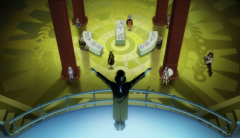
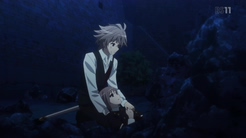
Reflection starts off with a flashback to 3 years ago, to the event of the Reflection. We see a young Elen looking out her window, as she is hit by both the black smoke and the green light. Hopefully we get some more explanation as to what this does. Did it bring her dead brother back to life? Split personality? Who knows, but considering its become a main plot point, it better get explained. Afterwords we cut back to Wraith, X-On and Steel Ruler in the underground cave. Wraith does a minor monologue about how she/he needed to remove Elen from themself, but that Elen had to do it herself. This raises more questions, was she not real? Which one is the original? Does it even matter?

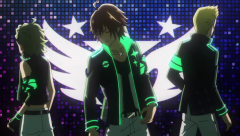
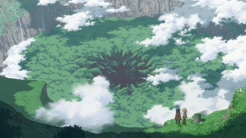
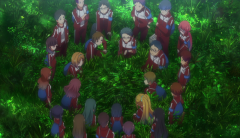
Regardless, after the monologue and a quick side jaunt to lecture X-On, we cut to the desert. Here there is a ring of woman, the Allen women I presume. We are given a glimpse of a map of the United States, with purple and green dots all over it. Forcing them to use their powers far beyond their ability, we see the Allen women all begin to glow green. In a flash of light everyone, every Reflected in America, is teleported to White Sands New Mexico. Yes, that does include our illusive Idol Group. Turns out even Wraith was so fed up with them that they literally teleported them into the middle of the plot. This combined with their general uselessness has caused myself and many others to fear they are going to pull some deus-ex machina idol song to save the day in the final episode.

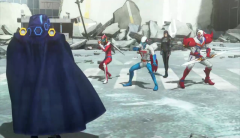
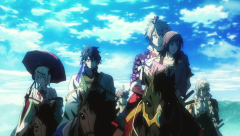
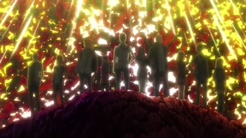
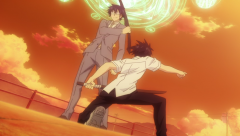
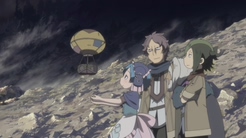
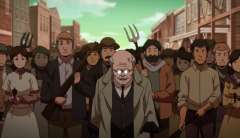
With the Idols part in this episode done, we not pan over to X-On and our heroes. They are all standing together on the top of a hill. I-Guy prepares to soar up to Wraith and deliver a beat down but X-On, now bearing ‘Flaming Furys’ fire power, holds him back. Wraith steps forward at the top of a dune and prepares to make another speech. Luckily, its not a speech about destroying humans but about how they number to few to do anything against the humans. There doesn’t seem to be much purpose to it now, but later on in the episode we see that this is all setup. X-On however gets a random cell-phone call at the end. The ringtone got me, I was unprepared for this, so credit where credit it due. The call itself from the government woman, as she has something to tell him.

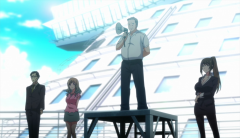
Apparently the US Army is reacting to their sudden appearance in the desert and is bringing in a number of helicopters. We see them approach on the horizon, in formation. The soldiers yell over the intercom, asking the Reflected to leave peacefully. With this all part of her plan however, Wraith has one of her cronies make the Soldiers fire on the Reflected. In reaction, the Reflected naturally fight back. We get to see some interesting powers on display here, as the Reflected attack the soldiers, X-On and co hold the Reflected back, and the Soldiers retaliate. It will be interesting to see if, in the final episode, X-On manages to take all of these powers.

Our heroes aside though, this is all a very clever plan from Wraith. She/he makes it out as if the military is starting this conflict. By bringing them all in one place however, she is the one to have instigated this. She becomes a savior to the Reflected. Over the course of this fight, through Michael’s Reflected vision however, we see some of the Brightstar Reflected become Darkness Reflected. There was zero evidence of this earlier in the series, but it seems sufficient anger or whatever will cause a Reflected to change. I suspect it works in reverse as well and that is where the Idol group will come in.

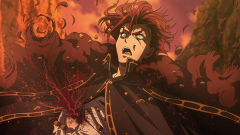
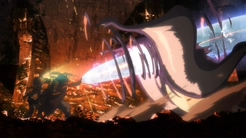
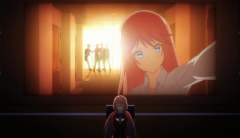
With X-On and the others interfering in her plan though, Wraith is not content to sit idly by. She sends Steel Ruler and her other minions out to stop them, though Ruler appears to hesitate. Disappointingly, we see the Bat Man return, this time in a shiny new metal costume. Say what you will about evil, it has great health care apparently. After getting his wing blasted off by I-Guy and apparently not dying, he has returned for one final showdown. With all of the fights set, Wraith reaches out and shoots dark electricity out at all of the Reflected gathered. Is she taking their power? Mind controlling them? We have no idea what her power is, so there is no way to tell. Finally, The Reflection pans over to our Idol Group, who have found their luggage and are ready to save the day!

All in all, another disappointing episode of The Reflection. There’s no consequences, no one gets hurt (Except for I-Guy) or stays dead (Except for I-Guys team). The writers took their time with the story in the first half, but have sped through it in the second. The pacing is all over the place and we still don’t know the Idol groups powers! There’s far to much to cover in a final episode, I just dont see how they will get it done well.

Suppose we will see next week on, The Reflection! See you then.

18if (Summer 2017) Review – 68/100

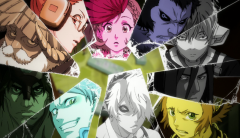
Allow me to skip over the last episode coverage for this full review of 18if, since I was too underwhelmed by the finale to have anything concrete except pointing out how messy the ending was. The first thing you need to know about 18if is that it’s a multimedia project (along with a mobile game and VR game), which can probably signal you about the overall quality of the anime version. The concept that each episode our main character Haruto will need to save a Witch of the week – make her confronting with her dark and learn more about herself – in a dream world could lead to interesting places. Here’s the main catch for 18if: each episode is handled by different directors with different animation styles AKA the directors’ own take to the world of 18if. This format results in 18if as an inconsistent show by design. The quality of each episode is like a box of chocolate, you never know what you gonna get. That unpredictability in plot, the surreal nature of dream world and the diversity in animation styles are what I was personally looking for coming to 18if. For the most part, 18if stays true to itself, albeit below-average. The ending, however, tries hard to connect the dots and runs out of its steam fast with confusing tone, weak writing and nonsensical message.

For one thing that 18if does quite consistency despite its format, it’s that the show explores the real-world issues of multiple teenage girls in a dreamy surreal fashion. These girls have a nervous breakdown and struggle to find happiness in the real world, thus succumb to the dream world in the form of Sleeping Beauty Disease where they can do whatever they like, most of the time destructively. Those issues range from the pressure of being idol, bullying or even witnessing their family members murdered. They don’t often succeed on bringing the girls’ negative emotions to light, but their personal issues work as an emotional core for each passing episode. In addition, Haruto’s job is to confront those witches and only casually does he have some chemistry with the girls. In some episodes he only serves as a witness to watch the story unfolds.

Its episodic nature, where different directors handle different episode, is what 18if’s most unique factor. You can see the styles change in the character designs of Haruto. Most notably, in episode 7 the show hits the mark in full force with its European-influence aesthetic and tells a beautiful children story about the broken friendship that would be right at home with the classic works like The Little Prince. The genres and the tones change randomly as well as in one of the episode, 18if went full horror, other time it became an arthouse animation-showcase and at times it’s just flat out goofy. The quality of each episode also ranges from plain bad, “WTF did I just watch” to really great. As of now, I’d only recommend a handful of episodes instead of suggesting a whole package. Although possess a wide range of animation style, judging the show as a whole, the episode doesn’t add up much to the grand picture. There are no set rules (like in episode 4 the girl’s still fully awake despite the rules imply that all of them having Sleeping Beauty syndrome), there’s no deeper implication to takeaway after each episode (like episode 2 shows us that the dream world can affect the real world, which ends up being wasted). Each episode hardly connects to each other except for the main cast and the trouble climax. Since nothing adds up at all, most of them fall flat on their faces.

The main leads – consist of Haruto, his mysterious sister Lily and his mentor the anthropomorphic cat – don’t develop at all despite appearing in all episodes. Haruto, in particular, changes his personality from each passing episode in accordance with the Witch and frankly that makes it hard to get invested in him. There are some attempts, however, to give Haruto a backstory but the end result is so absurd it can’t be taken seriously (Adam and Eve nonsense). I’m personally all in for having a proper closure and it’s always welcomed to see those girls back for action but18if further loses its sparks when it tries to close up the arc with a very patch-up jobs of writing: unnecessary new characters (the new doctor, the Cult Leader), Eve the main antagonist that has no personality whatsoever and the tone is messy and disjoined. It hurts as well that the closing arc is one of the weakest in term of productions. The budget for the show wasn’t that much and it shows; you can argue the lack of consistent character designs and even the frame rates are all artistic choice, but more often than not the show looks poorly done and uninspiring. The dream world doesn’t receive a good treatment either, since it functions like a setting for Haruto saving the girls, with the only consistent rule is “Anything can happen in the dream world” – which is why it’s messy and all over the place.

In the end, 18if is an intriguing mess. It attempts to do something different by trying out variety of genres and styles. This concept sounds good on paper but only a handful of episodes succeed at bringing something new on the table (I’d recommend you sample episode 7, 10, 2, 3 in that order), the rest is below the line. After 13 episodes, 18if still struggles to find a right tone for itself, result in tonal wreck that never quite sure if it wants to take itself seriously. Ultimately, when you consider if 18if can leave any lasting impact, the answer is a resounding “No” – it lacks the punchline, lacks the sparks to become something special.

“Fun quiz: Can you spot out the missing Witch?”

Princess Principal (Summer 2017) Review – 82/100

Princess Principal has emerged as a true sleeper hit for this admittedly sloppy Summer Season. A joint project from indie studios that bring us my favorite anime of last year Flip Flappers (3Hz) and “better than it has any right to be” Girls und Panzer (Actas), Princess Principal records the missions of five cute spy girls in an alternate Britain (known as Albion) in the early 20th century. As ill-advised as it might sound, the cute girl designs don’t really bother me that much. If you are looking for a true espionage story; however, you bound to be disappointed because they’re more like James Bond flashy action, somewhat superpower ability and whenever they have a chance, they’ll announce “We’re spy” with pride. Yeah, it’s that kind of mindless over-the-top action series that we need to believe the unbelievable but as an action-spy-steampunk series, Princess Principal delivers what it promised.

The first strength of this show lies in its intriguing world settings. I might have personal issues with Ichirou Okuochi as a whole, but even I don’t deny that he can create an interesting setting that triggers my curiosity. Princess Principal has such fascinating world. In this vision, Albion monopolizes a powerful substance known as Cavorite that made the Kingdom the dominant country in the world. Such development creates a rift between the Royalty and the lower people and as a result, the Wall of London was built in the middle of London where the country is split into The Commonwealth and the Kingdom. The tension between the two nations, however, never really addressed at all and only serves as a backdrop to generate dramatic development for our two main leads, Ange and Princess. In addition, the steampunk setting makes for an aesthetic pleasure and I would argue that it’s Princess Principal’s strongest characteristics.

However, Princess Principal isn’t just merely an action show. The five girls have some interesting developments and each of them is given a solid backstory. Moreover, they have solid dynamic altogether that make the interactions between them a joy to watch. Noticeably, in the latter half when the cases become less prevalent, and the show slowed down the fast tempo mission-heavy established in the first half for more character-focus episodes. The change might turn off some of the viewers who look for quick-paced, entertaining action but it’s a welcoming sign that the show gave a proper time to flesh out the five girls. The relationship between Ange and Princess serves as the show’s central emotional arc and while the swapped-identity backstory had its merits, the show pad it out way too thin during the climax that it couldn’t transfer the emotions to its fullest. Other girls, especially Chise and Dorothy (sorry Beatrice! You have a voice… but nothing else) have so much personality to them and they all add necessarily perspectives (Chise- from the outside perspective; Dorothy- friends come first) to the Principal team. Not that they’re a deepest bunch around but I’m quite happy to spend time with them anytime.

Another factor that add to Princess Principal’s identity is its use of non-chronological order. This technique works for the show’s benefits most of the time because these episodes feel like a piece in a jigsaw puzzle (which admittedly doesn’t add up much at the end), and up in till the climax we can watch these episodes in any order and it still makes sense. This format will work well on re-watch as well since there are some already-established relationships or a piece of information that will make more sense now we know the context. But presenting it non-linearly doesn’t mean the episodes were arrange randomly. The flow from one episode to another is present and moreover, this format helps us gaining context on certain themes, on certain character developments that otherwise would be insignificant in a linear way. For example we gain an extra layer on Chise struggling with the social-class issues through the backstory of Ange and Princess established a week before, something that won’t have much impact if they tell the story in a linear fashion.

Thus, Princess Principal is at its best in episode 5 (the introduction of Chise) where it focused on the exciting mission, while never forget to give our girls an extra depth. In that episode, the fluid animation, flawless fight choreography and the lively character movements help bring the mannerism of our characters to light.  On the other spectrum, the last two episodes bring the show down a notch with its safe open-ended closure that resolve almost nothing. In addition, they introduced new characters (Zelda, the General) and new conflict (the coup) too late in the game without any proper foreshadowing beforehand. Remember Princess wanted to fight that battle till the end? Flashforward and we see her lying on the beach in Casablanca, while holding hand with another girl. It’s a let-down, of course, especially when they hint for a second season which might never come, but to be frank the first 10 episodes were so solid that in the end I consider this show a critical success.

Technically, the production is on the bright side. Off-model here and there, cheap-cuts sometimes and they do have some questionable over-cute character designs, but the action always hold its ground, characters move in their own ways that fitting to their personality and the killer soundtrack, coupling with beautiful steampunk aesthetic and you have a winner all around. Princess might not dig deep to the political conflict between two countries, or develop its Cavorite theme and the enemy side is frankly, weak and underdeveloped; but Princess Principal offers some entertaining action set-pieces, at the same time care enough to develop properly the main cast and their relationships.  Second season- coming might not look promising and the ending lacks bite, but I don’t argue that I had a great time following it the past season. Can’t never get enough of Chise’s precious facial expressions, it appears.

Shingeki no Bahamut: Virgin Soul Review 80/100

“Dance!”

I have been a  reader of this blog for a long time. Indeed it would not be wrong to say that psgels and the current crop of writers have helped maintain my interest in anime for the last decade. So now here is my chance to give something back to this excellent blog. Shingeki no Bahamut: Virgin Soul /Rage of Bahamut: Virgin Soul, was one of the series the writers watched but did not review. With an exceptional year in anime (with shows like Made in Abyss, ACCA 13, and others) there is never enough time to cover everything. And while Virgin Soul was in no way a bad show, it was a conventional show. However, it was a well-executed conventional show.

Virgin Soul is the sequel of Shingeki no Bahamut:Genesis , aired back in 2014. Both are created by Studio Mappa, and both are based on a card game by Cygames. Now most shows based on games tend to be bad to mediocre, being nothing more than vessels to increase sales. For some reason the creators of Genesis and Virgin Soul avoided that. Indeed even the few references to the card game in Genesis are completely gone from Virgin Soul. To be frank, if the show was supposed to get you to go and buy the card game, it largely failed. But conversely you do not need to know anything about the game to enjoy the show.

“Arrgh, I want to play the card game too!”

The story of Virgin Soul takes place in the shadow of the aftermath of Genesis. In the end of Genesis, the heroes- flamboyant desperado Favoro, moody knight Kaisar, zombie-girl Rita- were able to stop the plans of the villain. It wanted to use the powerful monster Bahamut to destroy the balance between humans, daemons, and gods. But the price of victory was terrible as it demanded a heavy sacrifice. Between Genesis and Virgin Soul Mappa produced two short episodes that fleshed out a bit Favoro, Kaisar, and the secondary character of Jeanne, a knight who used to be favored by the gods. Even though the villain of Genesis failed to attain his version of the breakdown of the balance of the world, the effect of Bahamut’s Rage brought about change, nevertheless.

Virgin Soul takes place in this changed world. The new king of the humans, Charioce, in reaction to the destruction of Bahamut, decided that humanity could only find security in its own power. Using forbidden powers he went to war with both the gods and daemons and won. The gods were largely banished to their heavenly realm to sulk, while the daemons were enslaved to serve humanity, including being pitted in death matches for the entertainment of the populace(disgusting). On the slave labor of daemons, Charioce has built a prosperous human kingdom, though through tools like the Onyx Soldiers he represses any dissent. It is in this world that our protagonist Nina enters. Nina is an excitable teenage girl full of pluck and optimism. She is also a virgin. And, she is also a half dragon, and will turn into a powerful red dragon if approached or touched by a good looking man.

“Nina does a lot of running. You gotta expend that teenage energy somehow!”

When you think of the title, and of the condition of the protagonist, you could easily see how this show could go wrong. And yet like Marie the Virgin Witch, the show plays Nina’s virginity and condition straight, with little turn to vulgar humor. Now, the show does have its fan service, but it never felt creepy or leery. Instead what we get is a show that in general has a conventional plot, which is enlivened by the interaction of the characters. Virgin Soul is not a show you watch for the plot. It is a show you watch to see some interesting characters interact. In this sense it is similar to the live-action sci-fi show Killjoys, which has a conventional, indeed boring plot, but great characters interacting. Another thing that is similar is that in both cases the characters in general are what we might call good looking by fashion industry standards.

Those characters and their interactions are developed by secondary plot points, which in a way are worth more than the central plot. Nina is developed through a great and touching depiction of first love, rejection, and redemption. Kaisar by his struggle between his personal sense of justice, offended by the actions of the king his serves, and his duty to that king. The daemon Azazel, an obnoxious villain in Genesis, here is developed through his brotherly relationship with one of the new characters, his passionate and desperate fight to restore the freedom of daemons, and the inner struggle about whether he is driven by personal spite or a true need to make things right. Jeanne, the fallen servant of the gods, gets development through a touching depiction of mother-hood. Favoro by his struggles with the consequences of the events of Genesis and mentoring of Nina. Thus in general the main characters of Virgin Soul tend to be given interesting stories that make them interesting and sympathetic (Rita unfortunately not us much as they could had done ). Most of the time these are well done, though the show never really integrated these character developing sub-plots to the central plot. It also failed to resolve many of them.

“Here we see a friendly chat on the nature of liberty and duty”

The exception to these generally good secondary plots is King Charioce. Introduced to us like a cruel, ruthless, but efficient ruler, the show then makes him a major love interest of another protagonist. His two personas, lover and king, are very incongruous. This has led many reviewers to castigate the show. That is a bit unfair. The problem is not that Charioce the King and Chris the Lover are too different. Just read “Eichman in Jerusalem” to see that this is often the case in reality with these types of people. The issue is that the directors and writers did not really do a good job at balancing this. Chris the Lover and Charioce the King are never brought in direct conflict in the character himself. We only see the conflict through the eyes of other characters. Sadly that makes Charioce more of an object than a character. It is not grating, but it is a lost chance.

“But I played soccer with the street urchins!”

These characters, their interactions, and their adventures are rendered with animation and art that is generally excellent. Action scenes are fluid, and character facial and body expressions emanate personality (except for Charioce-though this might be more of character trait). As a result the show does a good job of giving its comedy, action, and tragedy depth. In both Genesis and Virgin Soul the animators of studio Mappa really like to show off their skills with elaborate dance scenes, and they do a good job of encapsulating what this show can give to the eye. Backgrounds are well done and lush. The only negative mark is the use of CGI with some of the creatures, including the titular Bahamut. This did seem a bit out of place next to the fluid animation of characters.

The music was in generally serviceable. The first opening was excellent, with the second one being more conventional. Both endings were quirky and cute. In the show, the best music scores were during poignant moments of tragedy, while during battles sometimes the music would try too hard and lose me.

“I, Charioce offer this light show as proof of my good party spirit”

Despite the conventional character of the plot I must give kudos to the writers for taking some decisions with characters that would make George RR Martin (of Game of Thrones fame) happy. But they also had some plots lines that were sloppy and not really useful (for example Nina’s fight with the dragon-hunter).
In the end Shigneki no Bahamut: Virgin Soul is a conventional show well executed. It has a cast of interesting and exciting characters that carry a rather mundane plot. The artistry of animation helps greatly the characters come to life. It is just a pity they are not used to their best. A solid 80 out of 100 (or B).

“Ahh, the ship that never shipped”

Characters: 90/100 (most of the central characters are interesting and receive development. But the blind spots are egregious)

Plot: 70/100 (conventional central plot,  but with some points of ruthless brilliance)

Art: 90/100 (animation and design is in general great, but CGI at points was not integrated as well as it could be)

Sound-Music: 80/100 (some good pieces and good music direction, a good first OP and EDs, but at other points it tries too hard)

Fall Season 2017 Preview

Yet again we are here in a new season of anime even though it feels just a moment ago the summer season had started. Seasons come and go, stupid controversies rise and fall and yet life goes on as it has always gone on. Well then enough with the sloppy rhetoric and let’s just get to what you are all here for. I must say that this season is looking very promising indeed as while we don’t have the abundance of shows present in the summer season, we do have quite a number of shows with the potential to be something real special. Depending on how this turns out I may be dropping less shows than I usually do and end up watching a majority of the season.

Same values as usual apply as I check out the source material of everything in the season along with the staff to give a better idea of what might turn out well. Below is a poll which can influence what we writers pick up to cover for this season so vote for as many shows as you want. Truth be told a lot of us have already decided on what we will cover for this season, but should we change our minds we will certainly take the poll results into account when choosing a new show.

This poll is no longer accepting votes

What will you be watching this spring?

Once again thanks to Mario for gathering the images and helping with the format. And thanks to Wooper and Lenlo for helping with editing. Let’s get rocking.

The sequels/Shorts I don’t care about

Shokugeki no Souma: San no Sara
Himouto! Umaru-chan R
Yuuki Yuuna wa Yuusha de Aru: Yuusha no Shou
Love Live! Sunshine!! 2
Hoozuki no Reitetsu 2
Osomatsu-san 2
ClassicaLoid 2
Cardfight!! Vanguard G: Z
Itsudatte Bokura no Koi wa 10cm datta
Time Bokan: Gyakushuu no San-Okunin
Wake Up, Girls! Shin Shou

Series I don’t care about

Anime Gataris


Studio: WAO World
Director:: Kenshiro Morii
Script/Series composer: Mitsutaka Hirota
Source: Original
The anime centers on Minoa Asagaya, a new high school student in Sakaneko Private High School. Despite being a novice to anime, Minoa’s classmate Arisu Kamiigusa invites her to make an “anime research club” at school. Through conversations with her classmate Miko Kouenji, as well as various anime-loving upperclassmen, Minoa gradually gets hooked on anime. While they stand against the student council’s continuous efforts to disband their club, and they ignore the impending end of the world, they talk about anime, whether in Akiba, or in real-life “sacred place” anime settings, or the hot springs.

I am very ready to write this off as a rather uninteresting show as all signs point to this being a cute girls doing cute things show. This appears to be an adaption of what was originally a short animation screened during intermission at TOHO cinemas. The PV points to this being just cute girls in a club as well. But there is one thing here that throws me off and that is that tiny detail in the description: “and they ignore the impending end of the world”. My interest in this show depends on how literal that statement is. That is the make or break point for this show for me, because an anime club by itself isn’t going to sell this show (I would be better off watching Genshiken). But an anime club at the end of the world? There’s something to get me interested. Director really hasn’t worked on anything of note and the same goes for the series composer unless you liked the anime X-men adaption or the New Prince of Tennis. Despite this I don’t have very high hopes for this as it likely won’t be anything of note even if it goes for the impending apocalypse scenario.

Continue reading “Fall Season 2017 Preview”

Classroom of the Elite – 12 [Genius Lives Only One Story Above Madness]

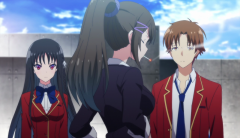
Youkoso pulls off a neat trick to close this shaky Islands arc in a high note, although I still can’t overlook its sillier details. At first, I was pleasantly surprised that despite making a lot of guessing games in last few weeks, Youkoso still manages to catch me off guard. This finale details the initial plans from Class-A, Class-C perspectives, respectively, each of them believes their plan going to be perfect but as it turns out, Ayanokouji has an upper hand. There are three main big reveals that has previously been kept from the viewers: 1) Class-A’s Katsuragi forms a contract with Ryuuen from Class-C 2) Ryuuen uses Ibuki as a mole to figure out class-D’s leader and 3) Ayanokouji swaps himself for Horikita as Class-D’s leader. Although those developments make up for some nice twists at the end, some of the rules aren’t properly explained or only hint to us during an internal eyecatch, make the end result somewhat cheated and unsatisfied.

The biggest reveal of this last episode is the contract formed between class-A and class-C, Katsuragi transfers his class’s points to Sparkling Nerriot and class-C will drop out and give the top class the leader names of the remaining two classes. I didn’t see that coming and this development runs really well with the underlying theme of Youkoso. With that, Class-A has a huge advantage of being at the top by negating all the bonus points from Class-B and Class-D due to identifying correctly the leaders, in addition that Class-C is already out of the picture. One thing bald man did not expect is that Sparkling Nerriot double-cross him by partnering with the guy in Kayanasagi’s circle and thus, he knows about class-A proxy leader. But then, Youkoso goes stupid again by revealing us that there is an addition clause that each of student from class-A will have to transfer the points to Sparkling Nerriot every month until he graduates. What the hell? Are you sure that bald guy sits in the right class? Who would be stupid enough to sign a deal that has that lasting negative effect like this. My god, my head bursts.

Ibuki, as expected, turns out to be Sparkling Nerriot’s mole and her mission is to identify the leader of class-D. Ayanokouji notices something she buried before – a digital camera – so he’s basically figures out the plan, speeds it up. He destroys the camera and uses Horikita as a pawn in order to get Ibuki into action – stealing the card. Sparking Nerriot actually sold me a bit of his character as he appears more determined than we previously assumed, but like I said above the last bit (the contract) rings so lousy that it took away all my goodwill for him. With this twist, Ibuki, on the opposite end, appears more shallow than previous episode. Ayanokouji then plays his triumph card: uses Horikita’s sickness as an excuse to change class-D’s leader. While it’s a nice surprise to come up with that idea, I feel that the rules are bending too much in favors for this plot twist. When you really think about that, the rules established favors too much on figuring out the class leaders. Other missions like securing spots and using the points sufficiently are never the top priority thus, making a whole thing very unbalanced. Class-B, who favors latter methods never raise to the top, for example. It doesn’t help that they never properly explained that rules, instead they dropped details little by little, which is very frustrating for us viewers because the little details they drop through bulletin board can change the game greatly.

Another issue I have with the ending is how class-D won despite all they did was pointing fingers at each other, and I guess I gave too much credits for Tarzan as it turns out, he truly gave up to admiring the moon. Ayanokouji seems to use this as an opportunity to teach Horikita a lesson that she will need to rely on others in order to succeed. It’s a pretty deep thought, except… coming from the mouth of Ayanokouji it sounds so false and alarming. So no, despite this arc ends on high note I don’t think this is a good arc at all. This has been a very bumpy ride, and from what I gather Lerche adapted the story with some questionable changes that it pisses off even fans from the LN. Full review will come soon but I believe you all know how I am going to rate this.

Katsugeki Touken Ranbu Review – 45/100

Every Anime season we the viewers are shown a number of adaptations, often made after Light or Visual Novels. It’s an already written story with an established base, a smart business decision. In recent years studios have also begun pulling from the Video Game market for their shows. Pieces like the Idolmaster series, Kantai Collection and Akibas Trip. I bring this up not because this is a new event, but because the anime I want to talk about today, Katsugeki/Touken Ranbu, is one such anime.

Ranbu is based off of the online video game Touken Ranbu, along the same lines as Kantai Collection. It focuses on a group of warriors who are the human personification of famous weapons, sent back in time. Their task? To protect history from the forces of the Time Retrograde Army, who seek to change history for an unknown reason. Ranbu focuses in on the 2nd Unit, newly minted and formed from a group who have never worked together before. Together they will face the hordes of the Retrograde Army and defend the past from the future!

Let’s jump in.

Continue reading “Katsugeki Touken Ranbu Review – 45/100”

VN Recommendation – Doki Doki Literature Club

I don’t plan to do this often but after playing this I wanted to make a post recommending it. I could have done a review like I usually do but in this case the story is so short and the VN can be downloaded for free so if I was to write a full review of it i would most likely spoil the experience. The length of the game is about 3 to 4 hours and while it likely doesn’t look like something all that interesting I can guarantee that it is well worth reading. The first hour is a bit tough to get through as it is rather dull and starts up slowly. But once things get going this story picks up immensely so power though till you get to that point. The visual novel was made in 2 years by a former Smash Bro’s Modder and despite it’s style it is an English Only Visual novel, meaning that it is not made in Japan. You can download the game from this site but it will also be available from Steam here. I highly recommend checking it out as it’s certainly a fascinating experience.

Kakegurui Review – 61/100

This show is one that makes conventional reviewing difficult as your enjoyment of your series will likely determine on highly subjective factors. For if I was to put this under scrutiny on matters of f-plot, setting and characters then it will end up lacking in all categories. The plot is just watching Yumeko face members of the student council in a series of gambling games. The setting is absolutely ridiculous with a unnecessary school setting that makes no sense whatever considering what happens in the series. The cast is made up of people whose main trait is being crazy in some form or another and go over the top with facial expressions. Yes to judge this show on these qualities would have it fall low indeed but that is not what makes a show enjoyable. I believe that style over substance is what I am getting at here as Kakegurui works mainly due to it’s presentation.

While gambling is the focus of this anime, the games themselves don’t really amount to much as we never really get a chance to look inside Yumeko’s head and see her work out plans or countermeasures. If you have just finished Kaiji and walk into Kakegurui expecting something similar then you will be undoubtably disappointed. For the common factor here is to see how smug the opponent is in how they rigged the game and having Yumeko eventually unveil that she knows about it and manages to win. Often putting her previous smug opponent down a peg.

Thus the satisfaction is in seeing the over exaggerated fashion at which this all goes down. The music, animation and art are often as over the top as possible with the soundtrack sporting trumpets and jazz like music while the characters faces distort into vile contortions be it in victory or defeat. Every character is crazy and none are crazier than our lead who often elapses into sexual excitement over the idea of risk. This aspect can get admittedly too much as it’s used to push fanservice as characters essentially orgasm over gambling and there are quite a few times where in female characters seem to be visually seducing each other in what would be otherwise a normal conversation. Yuri undertones are apparent here quite blatantly despite none of the character being made clear to be homosexual nor interesting in anything besides gambling and their own ambitions.

As such this is a series that I can’t really provide value through words, instead I say if you show interest then check out the first episode as that acts as an example of what you will receive for the entire series. However I would warn you to not expect something more than that as Kakegurui is only good at one thing and it will not move far from that one thing. This is a series about a crazy gambling girl showing smug assholes their place. That’s all you are going to get. But if you are fine with that then this is the show for you. Personally while i enjoyed it at first, I began to grow tired of it in the final episodes of the shows run so my rating for it’s that it’s a decent distraction but not one I will return to.

Ballroom e Youkoso – 12 [Meeting]

We’ve reached the halfway point of Ballroom e Youkoso’s projected 24-episode run, and along with a new high school life for Fujita Tatara comes a new OP/ED combo. Unison Square Garden returns to do the intro for the second cour, and I’m loving the new song choice. Both openings have been serviceably energetic for a shounen series, but I prefer the backbeat-driven danceability of the new one to the vocal theatrics of the original. The new ED trades clever waltz-pop fusion for even more J-rock, though, which is a definite step down. One notable thing about both visual sequences is their heavy emphasis on Chinatsu, the redhead that we glimpsed last week and to whom we were briefly introduced this time around. The OP’s use of a thunderstorm as the setting for her dance with Tatara tells us everything we need to know about her personality, and the contentious relationship she’ll have with her eventual partner. But that’s a topic for another time, as the present episode features Gaju and even Sengoku more strongly than any one newcomer.

Unfortunately for our hero, Tatara’s first year at his new school doesn’t get off to the blossoming start he’d hoped for. The cute girl sitting in front of him mocks his hobby, which he was brave enough to mention during his class introduction, and a new gang of thugs recruit him to be their errand boy on day one. The poor kid just wanted to make some new friends in high school – he even thought to himself on the way to homeroom that five was plenty! A hooded figure appears to save him from a year of subservience, though, who is eventually revealed to be our favorite mullet-head Gaju. It’s great that the elder Akagi sibling happens to go to the same school, and that he properly befriends Tatara after beating up the bullies who were on his case, but I’d love to see Tatara meet new people or stand up for himself using some of the confidence he’s learned from dance. For now, though, I’m glad he’s got somebody he can talk to between classes, even if Gaju’s the kind of weirdo who gets upset that his sister has started wearing a bra. Anime keeping it classy as always.

Something I noticed while watching this episode were the minor tweaks Ballroom made to its characters in the move to its second cour. There’s been a bit of a timeskip since the Tenpei Cup, which could explain a slight shift in their attitudes, but it was still troubling to me in a couple spots. Gaju’s sheepishness when asking for Tatara’s cell number was one instance, since it doesn’t gel with his brash personality. It felt like the show was working overtime to make him sympathetic, since he functioned as a bully himself just a few weeks ago, but in most other scenes he was his usual hotheaded self. The bigger sin, from my perspective, was turning Shizuku into a blushing Tatara fan and beacon of encouragement. Her speech about enjoying the Tenpei Cup because of his presence bore zero resemblance to her ice queen demeanor at the event itself, and while we know that was just a façade, I don’t understand why she’d drop it so completely now. Nor am I able to grasp why she wants to compete with him again so badly, since she’s light years beyond his skill level. Their whole conversation was a setup for Tatara’s new goal of finding a partner and rising through the JDSF rankings, but Shizuku needn’t have become the Perfect Girl for that to be communicated.

The show’s second act was devoted to a professional dance competition where Sengoku (and his partner Chizuru) were the main attraction. Tatara and Gaju go to watch them perform, which is a rare opportunity now that he’s traveling abroad once more. There’s a distinct sense here that the world of Ballroom is expanding, as Tatara realizes that Sengoku spends most of his time overseas, being a major figure in the DanceSport world, and that it’s a miracle he managed to attract his attention. Tatara’s self-doubt comes to the forefront in this scene, leaving him unable to make eye contact with Sengoku as he leaves the floor, but as his former coach passes by, he instructs him to “watch closely.” What follows is an exhibition of skill that the show really needed to nail, and I think they pulled it off nicely. There were several clear, fluid dance sequences here, nestled amidst the disorienting effects used to illustrate Sengoku’s unorthodox movement. (Even the CG background dancers looked better than usual, although that could have been my imagination.) His performance is so captivating that a mob of screaming fans chase him as he leaves the arena, and who else should Tatara happen to spot among them but Chinatsu? Hearing her explain away that earlier dismissal of ballroom dancing ought to be good, but then, so will everything else involving her character – she’s my favorite!