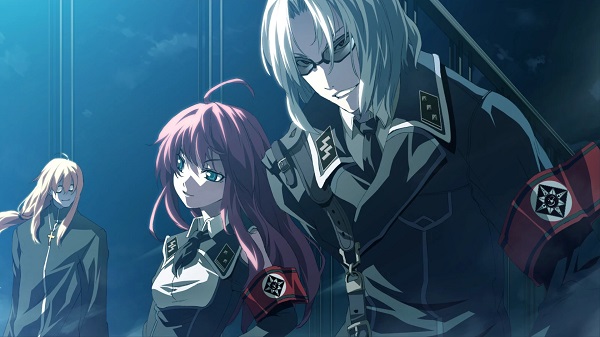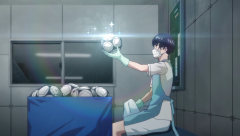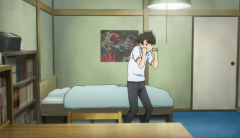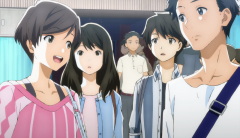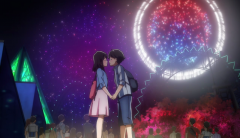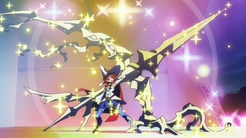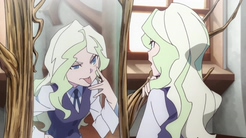
Tsuki ga Kirei (Spring 2017) Review – 88/100

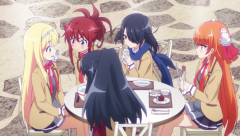
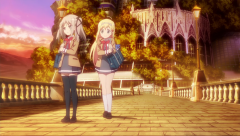
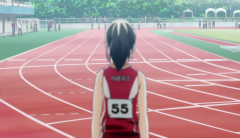
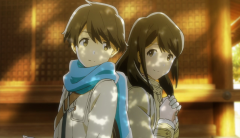
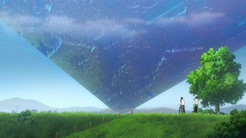
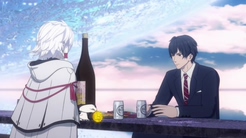
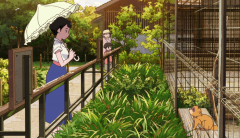
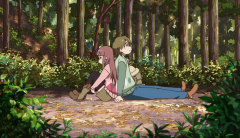
It’s hard for me not to go overboard on Tsuki ga Kirei: out of all the show I’ve followed this season, I resonated the most to this one; but even when I’m judging this show objectively, Tsuki ga Kirei is one of the most perfect one, in a way that it achieved exactly what it set out to do, and achieve it flawlessly most of the time. The story that they tell – detailing the first love relationship of our young Kotarou and Akane – is decidedly simple, mundane but honest that it feels more like a love story taken from young best mates. It has that “sincere” quality, something that the anime medium often cranks it up to the max with “moe” and exaggeration everywhere. Not here. Tsuki ga Kirei has great flair of visual storytelling (something that benefited from being an original show, they don’t tie up to your usual LN and manga visual cliché), using show-don’t-tell approach that often focus on small moments and little gestures than big emotional melodramatic scenes. The characters never play off their roles, they’re the most natural group of kids that feel exactly kids their age: naïve, inexperience and pure. This show ends up at top of its genre as I consider it the most effective romance anime out there. In short, I freaking love almost everything about this show.

What Tsuki ga Kirei will be remembered the most for lie in real depiction of first love relationship. The more you watch romance anime, the more you surprise at how simple, yet distinctive achingly honest this show aim for. Ordinary romance anime would spend its entire time on how boy gets girl, throw in some other love interests that make them realize how much they mean for each other, and if we’re lucky we might actually see they confess to each other in the end. Tsuki ga Kirei is an entirely different beast, we got the confession right at the end of episode 3, and from there we follow every stage of that relationship and see their love progressing. Moments like Kotarou had to search the internet on what people do when they’re dating, finding a way to spend time alone together, or thinking how to continue their love after graduation – all feels so real and progresses so naturally that I suspect anyone who have been in relationship will find a thing or two from this show that speak directly to their experience.

Moreover, they understand that in order to make this relationship work, we have to relate to Akane and Kotarou and they did a damn fine job at that. Both have their own lives and their own troubles to deal with, so we can see them as characters who have distinctive personality, with well-defined goals and struggles. In one of the episode, they both reach a new low in their personal dreams, as Akane underperformed her track competition and Kotarou got a call from a real publisher just to receive an advice that he had no talent in serious writing. Then in small moments when those characters act without much thinking, it’s a treat to see how their personality plays out: I love how every time Kotarou get excited he will punch the light’s chord in his room, or Akane whenever she gets nervous she will press that pushie hard. Their circle of friends also adds to the naturalism of the story and although they aren’t developed much, they clearly belong to this universe.

The visual storytelling is another great strength of the show. As both Kotarou and Akane are introverts and tend to keep their feelings inside without saying out loud, it’s showing their subtle gestures, their glances that we get to know a lot about them. As a result, this show is decidedly quiet, there’s not much monologue going on but that is the reason why this show feels just like in real life. The designs are simple, again emphasizing on subtle over excessive details. Great shot compositions everywhere. This is one of the rare show where I can argue that the visual components play as an important part of the show and they achieved it almost exactly what they’re aiming for.

Another factor that feel like a character itself that I feel the need to acknowledge, it’s LINE. Just like kids their age, Kotarou and Akane’s main communication is through LINE and we witness a huge chunk of amount that they exchanged through LINE, as they are, no shortcut. It’s just like how real kiads would do and to achieve this effortlessly is no small feat at all, so congrats to Tsuki ga Kirei for its respectful use of social chatting. The shorts in the end also a part of this show’s identity, as they depict the love relationships from Kotarou and Akane’s friends with more bawdy and comedic tones, which in turn made that world so inviting to watch.

Although the show succeeds most of the time in term of production values, I can still see some production troubles from the show and the delay in airing in later half further reflected that. Tsuki ga Kirei does suffer from that as in one of the episode the production values just fall apart. But I’m genuinely surprised that after that disaster episode they managed to keep up a consistent quality and the more I know about their trouble backstage, the more I’m in awe about their efforts. It’s obviously a product of many sleepless nights from the production team so I thank studio Feel for their outstanding performance.

And all of what I was written above was just how I access the show objectively and that kinda demerit one of Tsuki ga Kirei’s most appealing factor: it’s right down charming that touch the hearts of viewers with its bright and delightful portrayal of pure love – I don’t deny I fall under its spell, actively care for the couple and goddamnit I just want them to be happy together. Tsuki ga Kirei is breathtakingly intimate in narrative scope and I know I will remember the show and its characters very fondly. Arigatou.

Seikaisuru Kado Review 51/100

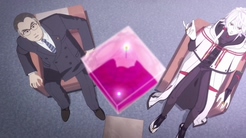
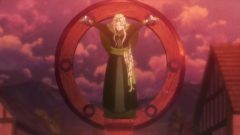
Seikaisuru Kado was a title which caught my attention for a number of reasons. For one it’s visuals showed not a single teenager in sight and a cast mainly consisting of working adults. Another is that it deals with a premise not often tackled in anime, Philosophical Science Fiction. The story features an alien being who lands on earth and gifts humanity with revolutionary devices which could throw the economic, social and political climate into pure chaos. Our main characters are a Japanese Negotiator by the name of Shindo and an Alien being from something known as the anisotropic who refers to himself as ZaShunina. While I wouldn’t call the cast great, I do say they perform the needs of the plot well and are interesting enough to engage the viewer. Well up until the point where there characters are forced to change due to the direction of the story. There are examples of anime tropes which only cheapen the serious atmosphere of the stories tone such as a scientist girl who eccentricity is at a far too unbelieveable level. Though sadly anime tropes show up in other parts of the show as well, mainly in the rather rushed romance of the second half.

A positive aspect of this series is that it has some of the best CGI integration I have seen to date in a anime. In most series CGI is jarring and breaks immersion but here the CGI is included well enough to keep things looking natural. It does use a combination of 2D and 3D visuals and it is noticeable when it changes between the two. However I never had a moment watching this series where I was just taken out of the experience completely by shaky 3D work. The CGI also works wonders in displaying ZaShunina’s alien nature as his cube structure is a pure prism of visual marvel. The music likewise processes a grandiose and majestic feel which illustrates how this is the turning point of mankind. On the technical side of things I would consider Kado to be a success.

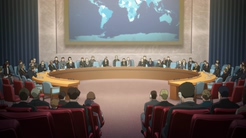
But when it comes to a storytelling standpoint this is where Kado fails. At first things look good as there is a focus on the diplomatic systems reaction to the sudden arrival of an Alien entity, while the Alien itself is slowly growing accustomed to human ways and learning about human culture. From the outset it feels like Kado is revving up to really dive into some deep topics but as the series continues you will find that these topics continue to get pushed into the background and not addressed. The series focuses more on ZaShunina introducing the amazing device and then implementing it. But when it comes to the long term ramifications to integration of such advanced technology, then this series instead decides to ignore it and move on to the next gift. You see the introduction and integration of the device, but never the conclusion. It appears as though the writer was never interested in these ramifications but instead in pushing some generic themes of humanity instead.

In the end Kado is a story that starts with a lot of potential and looks to bank on that potential within its first six episodes. However it moves away from a multifaceted issue to have a more black and white conflict instead. The story and characters suffer for it and it concludes in an ending that’s nonsensical, disappointing and terrible. As a result Kado is a series which most would likely regret watching as you see great ideas tossed aside to portray a stereotypical good vs evil conflict. Ultimately Seikaisuru Kado is evidence that just because someone is writing the story does not mean they know the best road to take it and in the future I hope there are those who see just what this series could have been so that they can fulfil its lost imaginable value.

ID-0 (Spring 2017) Review – 81/100

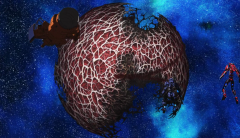
Here comes one of the most under-appreciated anime of this Spring season. ID-0 has many hassles that keeps viewers away from watching it: Netflix exclusive, full CG animation and a plot that just plain weird and a bit incomprehensive at first view. I originally took it as nothing more than fun spooky little-seen show until I realized that ID-0 is a well-crafted one. Both in terms of productions, worldbuilding storytelling or characters’ development, they’re all above par. ID-0 also succeeds on introducing their main concepts that not only plausible on the surface, it hints on deeper implications regarding those concepts and the show handles those issues competently. The discovery of the Orichalt – the red crystalline mineral that floating in space – has allowed humanity to travel through space and live outside other planets. In order to look out for more Orichalt, human creates “I-Machines”, the giant robot that is functioned by transferring human consciousness into robot’s operating systems – a robot body with human mind. It’s important to remember those two details since the show explores its theme from there.

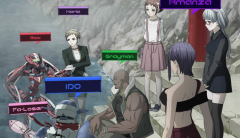
The first implication from the show’s concept, which perfectly aligned with the lead Ido’s main character arc – is how much of this I-Machines version independent from its host? Are they the same identity with the host body, or are they their own selves? Normally, it shouldn’t be a problem since human uses I-Machines as a means to perform work in harsh environments. Loose the I-Machines and they will trance their mind back to their original body. No big deal. The Escavate team, a team of Orichalt-pirate, contain many exceptions to that rules. They lost their physical body forms due to different circumstances, thus the I-Machine bodies are their owns now, called Evertrancers. Ido has no recollection of his past, and his ID was erased (hence ID-0). Throughout the series, it’s his personal journey of finding out who he was, and whether or not he’s still Ido the Excavator or the embodiment of his past real self. Another member of the group, Rick – another Evertrancer, adds some more layers regarding this “self-existent” theme as well. His current soul is a copied version of his original consciousness, meaning he has no “real” body and no “real” soul, he’s Rick yet he isn’t Rick. He carries the same personal traits as the original Rick, has the same memory but he’s ultimately his own individual now. Their current I-Machine versions are who they are now, with the consciousness that run totally independent from their former host.

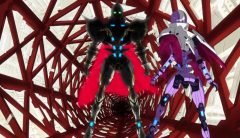
And I just barely touched the ice-tip of ID-0 themes, so let’s dig in further. Now looking back, I really love the concept that Orichalt is already something irreplaceable and invaluable for the humanity from Day 1. Everyone keeps talking about it, all their activities aim to get more of those Orichalt to begin with. It just shows how humanity has taken Orichalt for granted, so that when the Rajeev (the wandering planets) appear, we can sense the high stake of the situation. I also enjoy the philosophy behind this Rajeev. Just like how Joker was inspired to challenge the very concept that Batman has built, for everything that too good to be true for our human race, there will be some sort of drawback, a kryptonite that attack directly to the advancement that we gained. These wandering planets’ main purpose is to consume Orichalt, and they have developed their own intelligence on top of that – a worthy enemy to destroy the human kind. Although the solution come a bit far-fetch as best: teaching them the love of humanity so that they can learn about humanity and leave us alone (Yes, you heard it right), I still firmly believe this is a well thought-out main conflict for this series.

ID-0 also suggests a far darker implication to this Mind-Trance system, albeit a bit under-developed as they don’t have time to progress that angle. It’s the “immortality” theme. A secret organization, using the techniques as a mean to transport their mind to their younger clone to archive living immortally. For me, this actually sounds very intriguing because it’s entirely possible. If there is a second season of ID-0 I would love if the show goes darker and focus on these themes like this. Seriously, there is many interesting variables to the concept that I really want to explore more. All of that jut to highlight how well-crafted the world settings are. Well done, ID-0.

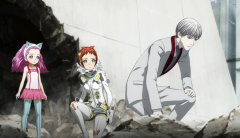
Now, I realize that I have delved too much on its themes without giving you an actual critique, so I will do just that below. ID-0 is a prime example of having a great pacing. The story almost never drags, while still allowing many of space for the characters to breathe and all the developments progress quite naturally. In other words, top-notch. The cast’s overall chemistry is another highlight for me. They have easy chemistry and they bounce off each other extremely well. It helps that each of them has their own voices so when the show putting them altogether, their diverse voices are more than enough to shine through. They’re not the deepest bunch by any mean but nearly all of them have enough development to work with. I’m a bit sad that Maya isn’t given enough spotlight in the end (this is, after all, Ido’s story), she serves more as our lenses to that brand-new world more than a flesh-out or deep character, but I am fine with that. In other spectrum, the main antagonist of the show, Adams, unfortunately is one of the worst character that brings the show down a note. Apart from his obvious inferior-complex to Kane and his eight-grade symptom of the world has to revolve around him, he has no real personality to speak of and he terribly overacts all the time that it’s hard to take him seriously. The sequence where Adams reveals Ido’s past is a kind of convenient and way to-your-face approach that personally turned me off, but other than that obvious misstep ID-0 manages to maintain its beat thoroughly.

The CG animation does feel stiffs at times and it takes some time to familiar with the animation, due to its mecha robots that floating in air- premise, but this is one of the few series that not only the CG animation is done right, it has its purpose; as robots and space, and spaceships are all components that CG can be used the most effective. In addition, the character designs are attractive, characters look their ages and even the I-Machines versions have so much personality for each member of the team. Sanzigen continues to be a studio that has its firm grasp on making convincing CG anime so thumb ups for the studio for this amazing anime. This is a solid anime offering, a firm 8/10 rating for me. Definitely the best show that no one watch this season. Now, I just hope that Netflix knows what to do with this little gem.

Grimoire of Zero (Spring 2017) Review – 77/100

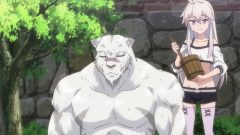
I remember, back in our first impression of this series, Aidan remarked that Grimoire of Zero isn’t your typical LN-adaptations, but he didn’t know what to make of it. To be honest, after watching an entire cour, I’m still unsure what to make of it myself. This show has some serious flaws, yet despite all that I never find myself losing interest in it. I guess the biggest strength this show offers is the rock-solid chemistry between Zero and the beastfallen Mercenary, and in the end, I do get out of it wanting more of these two’s adventures. They also put some serious thought into its sorcery world building and overall while Grimoire of Zero can never raise above exceptional level, I have quite a good time watching it.

One of the first head-scratching factor about this anime is the decision to adapt the whole full season for a single first volume. I watched a fair bit amount of Light Novels-adaptations anime so I know that usually it’d take between 6 to 8 episodes for one volume AT MOST. Here they intentionally stretch out to 12 episodes, meaning some of the time the plot has too stretch a bit thin; and for my money with all the developments, they could condense the story into 6 episodes – half of its actual length. For example, Grimoire of Zero took quite a bit of time until we get to meet Thirteen (episode 5), then it took 3 whole episodes for Mercenary and Zero to finally reconcile. On the other hand, stretching the story enhances the slice-of-life feel in the first few episodes, and making the show much more room to breathe. That decision of adapting only first volume, to sum it up, has a fair share of good and bad points, but that was one of the reason that made Grimoire of Zero different from its LN fantasy offerings.

Second factor that baffled me is the show’s tones. I don’t know how to explain this clearly, but I always feel this series is mono-tone. When they try to mix with other tones, it’s embarrassing. They failed miserably at comedy because of that mono-tone. For the most glorious example, the sequence where Zero and Thirteen stopped in the middle of the fight for lunch break was so off-putting it was actually (unintentionally) hilarious. Or when it wants to tackle seriously about the dark, cynical side of human (part when the girl using the Mercenary to protect herself from other beastfallens) or the true flesh-lust nature of beastfallen, it didn’t leave much of an impact. Other times, when the show tries to amp up the romance (“what is Kisssss?), it falls completely flat. Yet, despite all that, the tone the show usually goes for – not quite slow, methodically but not action-packed either – is always strong and engaging that it still holds my interest till the end. Weird, since I can’t still put my finger on what exactly the show’s general tone is.

Then the characters, which are decidedly a mixed bag all around. All the main players are developed smoothly throughout its run. Apart from the amazing chemistry between Mercenary and Zero (which for me light up the screen every single time), Albus, Holdem, Thirteen and most notably Sorena all have their time to shine. Other characters, unfortunately, are quite plain and sometimes quite offensive (I’m looking at the guy who has a fetish for Zero’s clothes) and this is unforgivable considered that the show has so much time to develop those characters if they really want to, but they just didn’t give a damn. There are inconsistencies at the end for example: the Sorcerers of Zero attack the kingdom to kill Thirteen, and the guards fight back. After Zero negates the use of magic, you expect them shaking hands in peace immediately? *you might say I’m a dreamer – but I’m not the only one lala*. Albus and Holdem are a good addition to this arc, strong enough for me to care about them, but just about enough so that when they gone I don’t miss them much. This, after all, is the adventures of Zero and the Mercenary.

The sorcerer and witch backdrop is an intrigued world building itself and at first I enjoyed seeing there are many races from completely different backgrounds that live independently in this world. Not sure if this is just this arc, but later on the show goes heavily on those sorcerer’s themes which detail the division amongst the witch’s world: the Sorcerers of Zero, the Rouge witch and Sorcerer of the State; it doesn’t bring much impact. Moreover, I do feel that the final reveal revolving Thirteen’s role is a bit of a convenient one, and despite the whole witches’ war just don’t do much to me, I still find it provides some great details regarding its world settings. So, great details, but shaky development.

In term of production, this show is slightly above-average. There nothing exceptional to speak of, although the animation quality is rather consistent. In the end, one thing for sure that Grimoire of Zero never fails to be intriguing, whether or not it is intentional is up for debate. Despite its uneven approach, I’m still looking forward for its sequel, as the main catch of the series, the chemistry between Zero and Mercenary, will become more prominent in later volumes. And honestly that is more than enough to get me on board.

Uchoten Kazoku Review – 94/100

(Note: Since psgels didn’t give his final review to the first season, this review is for the entirety of Eccentric Family. If I had to grade the second season alone, it’s 90/100).

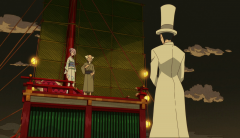
Doesn’t matter how you look at it, the Eccentric Family is a unique show, in a way it feels and tastes like no other shows out there, both in and out of itself. Everything surrounding it feel magical just like its world: the series is the only anime show that promoted as a city ambassador (Kyoto Special Goodwill Ambassador), the second season that no one see coming (especially at the time the first season ended the second book hasn’t even written yet), P.A Works studio became the leading unit in production committee of this second season, meaning they are passionate about this series and they have total artistic control over it (as for how influential the anime studios usually have over the decision of their work. Nil. Most of the time they are slave who draw and deliver what were told. Sad fact). This is one of few series where I can see a lot of love was put into those details, from the love of their characters to its rich world settings, to Yasaburou’s various adventures. Of course P.A Works does a magnificent job to visualize that world, but I also credit the success on Tomihiko Morimi’s adept writing. Eccentric Family is at heart a character-driven series, and he’s simply one of the best in this industry when it comes to character writing: eccentric cast of characters who distinctive, whimsical but always insightful and intriguing. I have a lot to say about this world so let get right down to it.

The Eccentric Family’s first and foremost strength comes from its magical-realism Kyoto world where human, tengu and tanuki live together in harmony. I am not at all exaggerating when I say that this setting is my personal favorite anime settings ever. Magical-realism has always been right up my alley: the mundane, ordinary world that mixed in with magical elements that serve as a normality to their world. And sure, in this world a lot of strange things happen: tanuki who transform into human shape and fool around until they get caught and turn into a hot pot tanuki, human who float in the air in broad daylight, a tiger (and bear) appear in the middle of the city. Just by the look of it, this world promises to provide a lot of fun, but this show even goes much more further than that: all the settings that not only gorgeous to look at, they all have strong sense of personality that feel like they get stuck in that specific moments: when you see the rooftop you immediately link to Benten, Yasaburou and the moon; when you see a flying house you would think right back to the Daimonji Festival and the stupid fights between Shimogamo and Ebisugawa’s family.

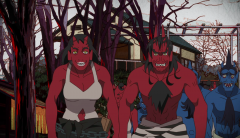
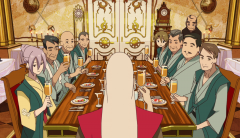
And to support for both its sense-of-wonder attitude and its magical-realism settings, The Eccentric Family is a masterclass at portraying an impossibly huge interior space that looks much grander than it supposed to be***: the Painting of Hell that literally pull you through hell with Onis doing wrestling and eating ramen; the 3-stories bus that has an upper floor of open air onsen and bamboo pathway; or a shogi board that can suck you into a secret room. Not only that warped sense occurs in space, it happens in time as well. There is a 2-epsiode worth of playtime that dedicated to Yasaburou’s various adventures in a span of a single day, where he enjoyed a public bath, went through hell, watching Oni wrestling, enjoyed mixed onsen, having crazy dinner party and witnessing his uncle got shot. See, those events feel much longer than it supposed to be. This is on purpose, of course, since what is a better way to highlight the enjoyment of busy carefree life by crazy events one after another?

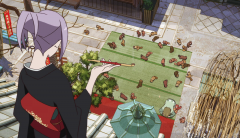
In addition, the Eccentric Family’s greatest strengths come from its characters. The first season contains a great diversity of cast, but that quality really shines through in the second season as the new additions not only fit very well with the old cast, they even outshine them in many moments. Each of them has their own voice, has great arc to develop and their chemistry are natural, warm and insightful. Here comes one of the decision from the P.A Works that I find worth applauding, they never probably introduce a new character to us. Most of the time the new characters just walk in and have a normal conversation with our main casts and we have to work out their name and their role to the story. It helps that nearly every single one of them has their own way of speaking and their own personalities, so it’s not that hard to differentiate one from another, despite a relatively huge cast. It also helps that through we can tell so much about their characters through subtle gestures, so much as the Eccentric Family is one rare show that I can fall for new characters within the first few minutes (I remember you very fondly, Seiran). Our main protagonist, Yasaburou, is an interesting character to follow, throughout the course although all we see about him is having as much fun as possible with no consideration for responsibility, he takes care of everyone arounf him in his own way and in the end, he reaches a personal grown on balancing between those two factors. It’s up in the air if he’s constantly thinking of everything or constantly thinking nothing at all being led by his fool’s blood; but for him anyway, these are the same goddamn thing.

But by all mean, even 95 percent of the time this show treats their characters thoughtfully, the remaining 5 percent whenever the idiotic twins and Soun appear, they unfortunately drag the show down. These characters are the type that we all love to hate, so they possess their annoying traits… all the way, being annoying for the sake of annoying. I have since warmed up to Soun, but the way he came back to life kind of demerit his meaningful death. Another factor that happen in second season, is that sometimes they reprise the events of the first season (the Daimonji festival, the Nise-emon election), and whenever they do that they can’t bring the same impact as the first and seem like they rely on the beaten path.

While the first season focus more about familial bond, the responsibility one would strive to do versus the fun one has to experience through life, the second season follow that freedom sense, but touch on other themes such as self-identity (in term of Nidaime and Benten: one is a tengu who refuse to be one, the latter is a human who wants to become a tengu. None of them are happy), and the fate of love. The romance part is what surprise me the most as I would never expect I would ship for almost all the lovey cute little love here. I also give my hat off to the character designs, as each of the tanuki have human and tanuki counterparts, and we have such huge cast here but nearly every one of them is distinctive and attractive. The animation is thoroughly consistent and the music is really, really well done. In term of production value, I really have no complain.

The Eccentric Family has a lot to recommend on, I would argue that distractors can read the show as un-focus at times, because it feels like they set up for one crazy set-piece after another without a central conflict; but take heed that the majority of its 2-season runtime is about Yasaburou wanders around his city, tries to live the life to the max so it has its merit. I just say this simply; this show is brimming with love in every scene and with shows like this I know why I fall in love anime medium in a first place. The Eccentric Family already has a special place in my heart.


***If you want a real-place equivalent to this, I’d say it’s like the Old Quarter in Hanoi. From the outside you can only see a small pathway between 2 old houses that only wide enough for a bicycle to get in, then you get through that pathway, turn to some small alleys, go up-stair, pass through some small apartments and TADAH: a bookstore, a store and a café located inside all that maze. I was utterly amazed but there’s no chance an outsider would know such a place without the help of the local. And I do worry what going to happen if there is a fire there?

Little Witch Academia TV Review – 80/100

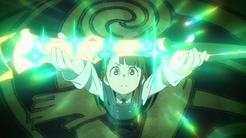
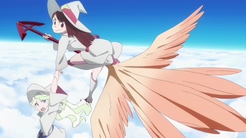
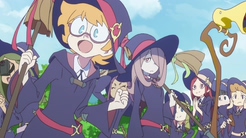
The Little Witch Academia series has been something that’s a long time coming. Ever since Studio Trigger made the original Anime OVA back in 2013 I have been hotly anticipating the time when it would be fleshed out into it’s own anime series. I love both the original OVA and the enchanted Parade so this series was one I was really looking forward to. So the question remains. Is Little Witch Academia a good series? Absolutely, out of the 25 episodes of it’s runtime I only didn’t enjoy one episode. This series was very fun and a worthwhile watch. However, is Little Witch Academia a great series? And therein lies the greatest problem with this series as a whole. For you see my friends, Little Witch Academia holds the potential for greatness and very closely skirts the line to becoming a truly great series. There are standout episodes which show a small glimmer of what this series could have really been. However instead the series plays it safe and sticks to a rather cartoonish format of episodic stories. It’s excellent character cast is unfortunately underutilised aside from some single episode stories and the main plot it develops within it’s second half more or less fizzles out into something more tame.

So to those watching it can be frustrating to see how this series opens up roads to great storytelling possibilities only to take the road of least resistance. Thus my greatest advice to any viewer is to not let yourself be fooled into thinking that this show will have a dynamic shift into a greater story arc. Throughout it’s run this is a simple story with simple objectives. Thus if you can come to accept that then you can enjoy what Little Witch Academia has to offer. Again, this really is a good show and has the kind of fun sensibility that very few anime can pull off. It’s a show that wouldn’t look out of place if put in a Saturday morning cartoon block and for those that woke up on mornings to tune into these kinds of shows as kids it will certainly hit that sentimental spot. If you aren’t part of that demographic then this may be a harder sell as I could see others get tired of the inconsequential episodic stories and a general lack of character development. Some characters get small changes but for the most part have simple characterisation. Akko in particular tends to have sporadic development as she tends to waver between growing as a person and then falling into her old ways.

Animation can have hiccups but is pretty stellar and charming throughout the board. You can really tell that a lot of heart went into this series production, even if it likely drove the animators to exhaustion. This show has it’s fair share of Sakuga sequences that show there is some real talent at Trigger. There are also references galore throughout the series from callouts to old cartoons(Hanna Barbara, Disney, Dexters lab) to previous trigger works and to even oddballs like 1984, Pawn Stars, Hellboy and Dinotopia. Keep a keen eye and you can spot dozens of callouts within the framework. OST is suitable but has some great versions of the main theme and a very good opening theme. Overall I do recommend this series. It isn’t what it could have been but what it is is hardly anything to scoff at. It’s one of the surprisingly few anime you can show to a young child without worry and maybe even blossom another fan of this medium. If you feel burned out by current anime and need something that’s a bit of a change of pace then LIttle Witch Academia is a fine recommendation indeed.

Summer Season 2017 Preview

Come one, come all, it’s time for the usual Anime season Preview and let me say this one took a lot more out of me than previous seasons. Maybe I am getting old or maybe it was the fact that I wrote a preview for a series and researched it only for to end up a short series. Making my efforts a waste of time. That would be the reasoning why there are previews of short series below when I usually disregard them. Either way, with holidays, moving to a new house, Dies Irae and just a general listlessness I found this season harder to write for. Looking at it overall I think this may be the weakest season of the year so far but we do still have a few standouts and some potential surprises that could save it.

So you know the drill. I check out every source I find from light novels to manga and give you a rundown on what looks to be great or terrible. Naturally peaking at the staff as well just to give a vague estimate on a series quality. Below we have a poll where you can rate what you want to be blogged this season which us writers will use as a reference when picking out shows. Whatever’s top of the list is guaranteed to get blogged. You have more than one vote so vote as many shows as you like.

This poll is no longer accepting votes

What will you be watching this fall?

Once again thanks to Mario for gathering the images, chipping in his two cents and helping with the format. Honestly makes this task a whole lot easier. Let’s get started,


The sequels/Shorts I don’t care about

Ikemen Sengoku: Toki o Kakeru Koi (Short)

Jigoku Shoujo Yoi no Togi [Hell Girl Season 4] (Sequel)

Kaito x Ansa (Short)

Musashino! (Short)

New Game! 2 (Sequel)

Nora to Oujo to Noraneko Heart (Short)

Seizei Gambare Mahou Shoujo Kurumi (ONA)

Senki Zesshou Symphogear AXZ (Sequel)

Skirt no Naka wa Kedamono Deshita. (Short)

Teekyuu 9 (Sequel)


Series I don’t care about

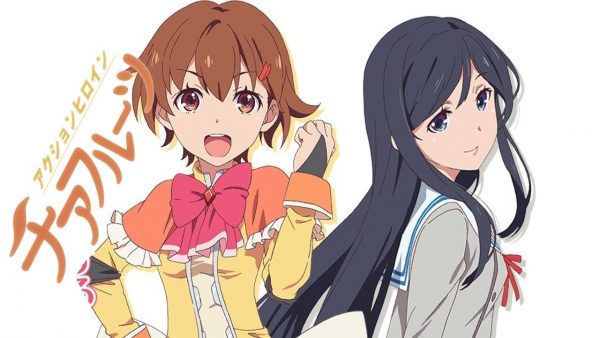
Action Heroine Cheer Fruits


Studio: diomedea

Director: Keizou Kusakawa

Script/Series composer: Naruhisa Arakawa

Source: Original

Set in Hinano City, a tranquil area that cultivates fruits, but has lost its vitality. For the town she loves, high school girl Misaki Shirogane and other girls become local heroines (at the urging of Misaki’s aunt, the prefectural governor) and vow to produce action live events. The teen story depicts their strenuous efforts to revitalize their town.


Honestly sounds like an effort to merge Love Live with Kickass. We got the director of Sekirei, Fuuka, Dog Days, Campione, Asura Cryin’….Oh god it only gets worse and worse. Well he did Nanoha’s first three seasons so I guess that’s something. Series composer worked on more bad than good but well I thought Nadesico and Outbreak company where alright. I don’t see any real hope for this. I say the hero aspect won’t play much of an active role and this will just be a bunch of cute girls in homemade hero outfits. I have had enough of cute girls being all cute and stuff but give me a call if we got cute girls in insane asylum.

Continue reading “Summer Season 2017 Preview”

Announcement Time – Writer’s Recruitment

UPDATE: WE HAVE ANOTHER WEEK TO GO. THIS APPLICATION PROCESS WILL CLOSE AS SOON AS THE FIRST SHOW – KAKEGURUI – STARTS AIRING. WE WILL SEND EMAILS TO THE APPLICANTS AFTERWARDS TO INFORM THEM WHETHER OR NOT THEY MADE IT. THANK YOU.

I’ll be straight to the point, it’s time for us to recruit a new permanent writer.

The reason, you ask? Welp, as much as I don’t want to admit, each season I feel we left out too many shows that worth covering. Having another writer on board, along with the support from casual writers like Helghast Killzone or Bam, we’re aiming at 9-10 shows per season. With psgels is now returning on the site with his monthly summary, the site can finally be in an active mode. Having new writer also mean that more shows for you guys to follow and enjoy.

But I’ll stress this again, for those of you who wonder if this site is ever going back to the glory times before psgels left, I can safely say we won’t, nor we intend to. We run things differently now with all the respect towards his bloggings from before, and rest assured that we still inform psgels on any development/ change we plan for this site, such as this.

But if you’re tempted with the idea of blogging anime, let be warned: this is a job that have little to no reward, time-consuming and require a strong commitment and frequent update. If you frequent this blog you would notice that usually we have little response rate, we’d be lucky if we have 1 or 2 response per post. Writing a post can eat up a lot of your free time as well. Usually, it’s about 3 hours per post, and you need to write them constantly almost every week.

Now, are you still keen on giving it a shot? Then, to the application:

Tell us a little bit about yourself, your favorite anime/ genre, what can you bring to the site (nah, we are not some kind of stuck up employers), and a sample post on any recent episode of your choice, or even a full review. The main reason for this sample post, apart from us having a good grasp of your writing style, is a little challenge for you guys to test yourself. “Try to write a post a same size as us (about 500 – 600 words), time how long it takes and ask yourself if you can really do that 3 times a week, for every single week of the year.” I’m just quoting roughly what Aidan said to me when I first approached him for the job and it did scare the hell out of me, but I survived. Ask yourself can you devote that much time each week to write reviews. If after you finish this sample post you still feel perfectly fine with all that, then you’re basically who we looking for.

One more thing that I suggest you do if you give this blogging a shot, just be yourself on your writing. Having a competent writing skills and good critical writing ability of course help, but having your own voice is what matters most. Let us know more about you through your post.

Send your application to this email: redriver(underscore)2005(at)yahoo(dot)com with the subject: “[your username] psgels.net Writer’s Application”. The deadline will be until the start of next season (1st of July), meaning you will have approximately 3 more weeks to get involved. Depending on how many applications we get, we will try to email you back whether you made it or not as soon as the decision is made. If you have any question, shoot it down the comment section. We honestly don’t know how many applications we will eventually get, but it’s part of the fun. Remember, as long as you think of this blogging as your hobby, you’ll be fine. That I can assure. You won’t go far for things you don’t enjoy. So don’t be shy, give this a shot and good luck.

Window Horses (2016) Movie Review – 87/100

In Window Horses, or its full name Window Horses – The Poetic Persian Epiphany of Rosie Ming, many characters keep asking the main protagonist, a Stick Girl in an otherwise fully formed character designs, why is she wearing a chador, in which she’s unable to reply. It’s her first trip to go overseas, so she just tries to fit in. For she’s blank state, you see, having little to no idea about the outside world, or even the poetry world. Rosie Ming, her name – herself a half-Chinese half-Persian who living in Canada, working in a fast food restaurant while writing poems (to be more exact, singing poems) as her hobby. She self-published her first book title “My Eye-full Poems by a person who has never been to France” and her greatest wish is to travel to France, the land of love and poetry. God listens to her well it seems, as she receives an invitation to attend to a poetry festival… in Shiraz, Iran. Throughout the course of the film, in a stranger land, she has a chance to listen to the voices of others, to staying open and curious with different cultures from different generation and learns a bit about herself and her family situation.

There’s one thing I can say for sure, Window Horses’ most obvious charm come from the fact that it feels like nothing else you’ve seen, especially in animation medium; the film whose main setting is in a poetry festival, a main character that is multiracial and the cast contain characters from many different backgrounds. Partly due to its unique appeal, the director Ann Marie Fleming had a bit of difficult time funding it, so she decided to crowdfund the project instead and it took her nine years to finally bring this lovely feature to life. The main character Rosie, a Stick Girl, has been the director’s own avatar for most of her career (the director herself is a half-Asian), and her simple design, both mean as a blank page, who despite not having a lot of experience, goes out to the world with curiosity and willingness to learn the world and all the things she can from other people; and as a simple likable character we can all root for and feel empathy with.

While the main plot is about Rosie visiting Iran, Window Horses isn’t strictly about her tale, but she serves as our window for the tales of other poets, the tale of Iran, and the tale of her father, who she come to believe that he had abandoned her and her Mom when she was young. Putting together, those tales are messy and over the place, but that is exactly the point to demonstrate how inspiration can come from every corner of the world; it’s the love of art, of poetry that brings those people who have vastly different ethnical backgrounds and different experiences in life all together. In one of her poetry quest, she is handed a poem by a Chinese poet Di Di (in Mandarin of course), who requested her to recite his poem in English with her own take. In order to do that she has to translate them into Persian, and then from Persian to English; thus in a process she has a chance to learn more about both of her ancestors, the Chinese and the Persian.

The humor of Window Horses is on the bright side here, in fact, its whimsical and light-hearted nature really help strengthening the mood and the theme of the story. This trip, after all, is more like an adventure for Rosie, where every new thing she learned, every people she met brimming with curious eyes. She quickly remarks in most of the things, mostly innocent deadpan questions like “How is it everyone here knows everything about everything”. The struggles she experienced for her “offensive content” to the Persian culture, for example (ya know, in Iran, solo performances by women is considered mildly offensive and have been banned), or the background story of exiled Chinese poet Di Di, both show us the difference in cultural perception, and add the richness to this little world.

Another main portion of the film is about each poet reciting their poems, and the history of Iran and important figures in Persian poetry culture, in which each part is showcase of visual inventiveness from different directors, who experiment with new styles to fit the content of the poems they are representing. (Fleming’s main job in those segments was to composite them into a cohesive whole). The history part doesn’t really sell it for me, mostly because it feels more like an educational Discovery Chanel on TV rather than fitting into this plot’s content; but the poem parts are easily one of the best strength of Window Horses. The director Fleming gave a smart decision to have all the poems reciting in their own languages without the subtitle. As a result, us as viewers don’t really understand what they’re talking about, but feel it. It’s the beauty of poetry. It’s not about the meaning, but the rhythms. Fleming also commented later in her interview that she wanted those poems to be some kind of code, viewers don’t need to understand it because they might get distracted from the main story, but if they wanted to, they can dig deeper to those contents because ther’s a whole world of art buried underneath it.

And then her little story about her parents, especially her father’s life come into light and was told to her by different people, most of them have known him at some point of his life. Her father’s backstory come a bit heavy-handed at times as it again touches upon the Iran Revolution and the refugees, but they do it without the expense of emotional drama of familial bond at its heart, so as messy as it is, it has its merits. Rosie’s grandparents, voiced beautifully by Nancy Kwan and Eddy Ko (If you have no idea who Nancy Kwan is, she was one of the first Asian-born actress played a pivotal role in the acceptance of actors of Asian ancestry in major Hollywood film roles) have some really great scenes of overprotective grandparents who must do anything to avoid their kid getting hurt, but hurts her instead by not telling her everything.

Wildly imaginative, sensitively portray the richness of multi-cultures and the love for poetry, at the same time bright and optimistic enough to bring hopeful sentiments to some otherwise grim and dark topics and a full delight from start to finish, Window Horses is a total winner in my book. Although feature a wide array of cast, it’s ultimately a personal story of Rosie to reach the world, learn few new things from other, appreciate more about her backgrounds and grown into her own at the end. Window Horses is a little story that worth telling.

May Summary

The month of may was… tough. I was incredibly busy and had very little time to keep up with 12 different series, and in the end I just couldn’t. But ah well, this happens. Back in the days this blog was my top priority after my studies: I’d finish my classes and homework and aside from that, all I did was watch anime and write. At this point my life is totally different, and I cannot do that anymore, so months like these happen. Next month’s going to be even worse because of a 2,5 week holiday to Denmark.

But yeah, the thing with this season was that there are a lot of series with potential. With months like these, it’s not just a matter of dropping the bad and uninteresting ones, but they force you to honestly look: which series are the really special ones? Which ones do more than just tell a story? Which are the series that go the extra miles. Below is the list of the shows that survived.

First some notes on the shows that I ended up dropping: Uchoten Kazoku was definitely well written but it just couldn’t grab me. Sakura Quest almost immediately lost my interest after last writing about it, Alice to Zouroku has a nice message for family values, but in the end it remains a story about a magical girl that has been done in essence many times before, Re-Creators lacks something that puts it above the others to me, and Sagrada Reset suffers from the “first episode is the best”-syndrome. I loved episode one, because it had this really melancholic undertone, but that completely disappeared after the first arc and now it’s just this “Hyouka with gore”. Dropping Warau Salesman hurt like the entire series, but in the end: it does remain a one-trick pony.

#4: Natsume Yuujinchou Roku (04-08)

Okay, I told myself I’d be strict on this series: if it’s going to go on for 6 season I’d better be consistently amazing to be worth it. This month was not. It was pretty much average Natsume: good stories with good morals that fleshed out the characters some more. At this point, I think it’s a good moment to officially label the length as one of the flaws of Natsume Yuujinchou, because it sure as hell isn’t going to stop after this season.

Here’s the thing: being concise is a key part of storytelling. You cannot just let your story go on for ever and ever. A good story has a beginning, middle and end. The beginning is there to sweep you away. The middle is there to develop, keep you on your feet, be a roller coaster ride of some sort. And then the ending is there to take everything to a next level. Natsume Yuujinchou is just a middle part that keeps going on and on and on. There’s no closure. That’s a very big problem with adaptations: they’re often way too faithful because of their length, so that there is no way to create a good ending. The reason why I’m still going back to anime is the ones that were made with an ending in mind. You cannot start your series and make stuff up as you go along, that is not good storytelling, and yet a lot of light novels and mangas are set up like that: they are written by small teams, who hope to go on for as long as possible. Anime have much tighter budgets, so especially the small ones know exactly how much time they have on their hands. A competent writer can use that to exactly plan the course of the series.

This is going to be fun for Jigoku Shoujo next season. Oh, I am going to sound SO hypocritical!

#3: Shingeki no Bahamut – Virgin Soul (05-08)

I did not continue with Zero Kara Hajimaru no Shou. Despite its great themes on racism, it got me thinking: it’s not like it’s breaching new ground or something. It’s just portraying racism pretty well this time, but should we really praise a series for doing something so trivial? Should we praise a seires for being not bad? No, what I’m interested in is the shows that go the extra mile and Zero just didn’t cut it.

Shingeki no Bahamut is more: this uses animation to tell its story, and it’s just as important as the written dialogue. It’s the type of series that can only work as an anime because in manga-form you’d miss out on so many details, movements, gestures, and not to mention the wonderful soundtrack here. But what this show is best at is portraying emotions: it beams across the screen. And that’s why I watch anime: I want to see what animation can elicit from viewers. Not a narrated picture-book, no something only movement can do. The direction, script, and production-values are all geared towards that. I mean logic is good and all, but sometimes you just need a character motivation of “I just felt like it”.

No, screw average or merely good. All series should strive to achieve something special. I don’t care what it is, as long as it stands out and it’s amazing (being especially bad is obviously not the right path). And when I look at my favourites over the years, they are all series that understood that, and did something in their own way. Something that cannot exactly be put to words, and at the very least can never be written down as a guide or something. It’s this feeling you get. And that makes it different for everybody of course, but I can see this show being filled with good intentions, and it’s drawing me in unlike most other shows this season that feel much less ambitious. And this is not just about the budget. Sure, it helps, but there is one particular show this season that demonstrates that you do not need a big budget for that. But first:

#2: Shingeki no Kyojin (31-34)

Okay so this turned out to be completely different from what I expected, but that’s good! This has turned out to be a really excellent sequel. It was so easy for the creators to pull a sell-out here: lots of titan-bashing, lots of Mikasa, much of the same really. And they didn’t: they used the first season as a diving board to go into a new direction. There is so much more mystery and horror here.

Also, the characters: like what did the three main characters do this season anyway? Aside from some flashbacks, all of them basically rode some horses, fought once, failed miserably and apart from that they did nothing and instead the spotlights were on all of the side-characters. This takes balls for such a mainstream series that has so much money depending on it! I love it! Especially since all these characters are much more interesting than our main trio (because let’s face it: they bear a lot of resemblances to Ash, Misty and Brock from Pokemon). This is the type of storyline that really tries to sweep its viewers off their feet the right way: not by having the flashiest budget, but because it messes with your expectations, your mind, while still being very well written.

This show has this annoying trick where right as a character is about to get to a plot twist, they get distracted, something happens, or they outright refuse to tell something that’s obvious to them. It’s like there’s this whole storyline going on that we have no idea about but they keep teasing us with it. That’s good mystery! Great mystery should be messy. It’s driving me crazy to get to know what’s really going on here. Yes, this is better than Yuri on Ice. In terms of really mainstream series it’s been a long time since a show had so many balls here.

#1: Seikaisuru Kado (05-07)

Okay, so why did Seikaisuru Kado win this season? I don’t think I’ve ever placed a series on top with this much intrusive CG: like half the character animations are in 3D, something I previously thought to be impossible to properly bring to life. Well let’s just say that the creators pulled a few tricks, plus what they did bring to the table is more than enough to make this just not matter.

A big theme in anime is evolving humanity: lots of villains’ plans are attempting not to destroy humanity, but to advance it. They can be done both well or terribly, but the fact remains that this is something typical of Japanese animation. You see this much less in the mediums of other countries. Seikaisuru Kado is entirely about this, but it plays with it brilliantly. Instead of having the villain attempt this, we’re at this moment still not sure whether Yahakui Zashunina is a villain or not: what his intentions are, and why he’s doing everything. Instead he has offered a number of advantages to humanity that are much more specific than what you’d otherwise see: this series really is trying to evolve humanity, but it’s also looking at the geopolitical implications of this, also something unheard of!

Out of all series this season, this really feels like it’s taking risks. It’s doing something that goes against the trends, proving that you can tell great stories on a small budget, it’s taking risks and it’s also attempting to evolve the medium itself by asking questions about common tropes. It’s in this way quite like a deconstruction, and a really good one. Because hell, before the season started I expected Shingeki no Kyojin to deliver the best plot twists, but hell no: this show blows everything out of the water. Every single episodes drops some kind of truth bomb that you don’t see coming and give an entirely new swing to the whole storyline.

Take episode 07 for example: when they went to the festival, and put that female character in a kimono, I found myself thinking “oh god, another one for the fanservice”. And then at the end of the episode she delivered a plot twists that pushed the story in a completely different direction from where it was going.

Yeah this is a really big contender for the Anime of 2017.