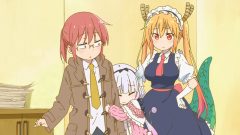
Some Quick First Impressions: Tsugumomo, Warau Salesman NEW and Frame Arms Girl

Tsugumomo

Short Synopsis: A boys keepsake from his mother turns into a girl and fights monsters

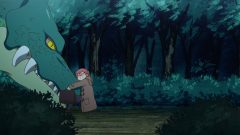
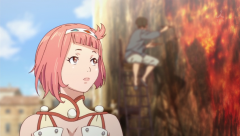
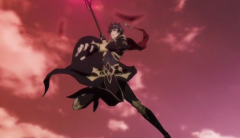
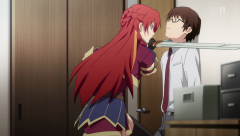
Hey you! Do you like Shounen? Do you like tits? Do you like tits and Shounen? Then do we have the show for you! The start of this show pretty much ticks all the usual tropes of a harem battle anime. Is it terrible? Not really, just rather uninspired. The story does improve as it continues and the manga even has moments of pretty impressive art. However it ups the ante in both action and fanservice. If you thought the fanservice was too much this episode then boy, you haven’t seen anything yet. The fanservice is so much that the author of the manga made a small strip with the characters pretty much flabbergasted that it’s getting an anime in the first place. Still for what it is, this does the job. Fight animation wasn’t half bad either. If you are a fan of the likes of High School DxD I think you might like this. Provided you can get past overdone tropes.

Potential: 20%

Mario: I can sense that Tsugumomo can become a popular show this season, as it ticks many boxes of tropes that can attract anime viewers: the mindless action popcorn part, the romance ecchi undertones and HEAPS OF FANSERVICE. All for the wrong reasons of course. Let’s see, just right in this first episode we have groping, taking bath together, sleeping together and obviously, our main character is a helpless boy driven mostly by hormone. The premise is overdone at this point, being the boy encounter the spirits/gods/monsters from some random stuffs. The characters are on the weak side here as no one have any distinct personality whatsoever. This show is conventional, all the beat feel so familiar here but I don’t deny that it was an easy watch. But seriously, the fanservice turns me off and this show sure doesn’t shy away at all from horniness. So here’s how you should approach this show: if you feel entertained by this episode, by all means keep watching it, if you feel the fanservice is too much or the show lacks deep then this show isn’t for you as it will get dull fast.

Potential: 20%


Warau Salesman NEW

Short Synopsis: A salesman will help you with any problem you have, for a price.

I do have a fondness for parables which is why I hold Kino’s Journey in such high regard. Warau Salesman aims for a similar kind of parable but in a much simpler sense. We have two stories where in the saleman tempts people with something and then punishes them when they break a certain rule. My big problem with this series is that in a morality tale it’s often about punishing a person for something that’s entirely their own fault. But the Warau Salesman purposefully sets people up for failure right from the start. He creates the problem and then punishes people for it. He leads two workers to a bar which will allow them to drink during the day and then punishes them for drinking during the day. He gives a shopaholic a card that will allow her to buy whatever she wants and then punishes her for buying something she cannot return. These people are don’t really seem like bad people so it’s a series about a crappy person screwing over decent people for the sake of a fairly flawed moral. After all, in normal circumstances those workers wouldn’t have drunk during the day and that shopaholic would have been stopped by the fact that she can’t afford to shop. I will give this show credit for having a groovy opening but otherwise it’s a parable show with some pretty poor parables. Unless you consider not drinking during work hours and not shopping when you don’t have money to be good life lessons instead of common sense.

Potential: 10%

Mario: “Be careful what you wish for” – This basically is the main theme of this Laughing Salesman show. Here in the first episode we have 2 variations of that moral play: each of them build up the desire of its main targets and then when that desire got out of control, the price they have to pay is far greater. Human being is a flawed creature and Laughing Salesman serves as a catalyst to bring the dark desire of each person. I understand its underlying themes but show with this premise in an episodic format will get pale very fast; indeed by the second story my interest for continue watching this show just gone. It’s just different set-ups for the same damn thing. It doesn’t help that the visual execution isn’t great with simplistic designs and limited animation (but hey, the OP actually looks pretty cool) and the stories progress as obvious and predictable as it could get. Shows should have a strong central message, but when “message” is the only thing they have, and worse, they repeat that same message every single time then I figure we could just watch the first 10 minutes to get an idea of what they’re offering. The rest won’t be needed. Here something interesting that you could try Warau Salesman, make an actual 3-act out this salesman, then I will be interested to follow it.

Potential: 10%


Frame Arms Girl

Short Synopsis: A girl is gifted with a sentient little doll.

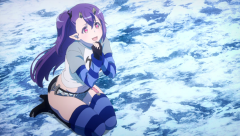
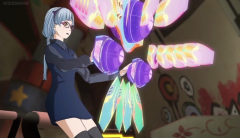
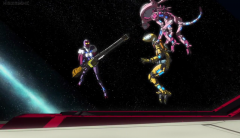
Ah, Horrible CGI. We meet again. Well we spend half an episode with the girl putting together parts for her little robot girl so I now know how to put together a frame arms girl figurine. Surely information necessary for the future where I will never buy one of these figurines. Look, I know that anime is often glorified advertisement for merchandise as that’s generally where they make their money back but I it’s fairly insulting when they are just so blatant about it. Also think the fanservice is in poor taste. For one to charge these figurines you need to insert a cable at her butt and naturally when you do so they let out a visible “Ah!” for purely scientific reasons I am certain. What we basically got here is cute girls being all cute and stuff mixed with action scenes which have no stakes or point. It’s pretty dull and boring.

Potential: 0%

Mario: The very first three shots of the OP give you an exact idea what this show aims for: a panty shot, an armour suit, and a CG-design toy girl. A side bonus from the actual episode: you have lively instructions on how to set up the plastic model!!!! and the mechanics of how they battle. This product obviously was made with only one thing in mind: to promote the toys. The show has no plot whatsoever so there’s no point to criticize it. The animation of CGI robot fighting is subpar, the battle isn’t remotely interesting and the characters speak like… well, toys. No, even if I am the intended audience, I wouldn’t buy the products after watching this show. What’s the point of buying another Gourai if you know for sure she isn’t going to activated? I would have preferred much better in all honesty if the show goes for chibi style as shown in the ED rather than this bland CG models. Alright, to be fair I do learn one thing out of this, that panty is a part of BODYSUIT. Get it?

Potential: 0%

Some Quick First Impressions: Attack on Titan Season 2, GRANBLUE FANTASY The Animation and Alice to Zouroku

Attack on Titan Season 2

Short Synopsis: Eren and the rest of humanity face a greater threat when a monkey like Titan appears within the walls.

Thus we have the return of the biggest mainstream anime hit in recent memory. I still stand by my assertions in the season preview that this season will likely turn a number of people off the series but admittedly the production values are making it one hell of a return to form. Besides some CGI horses this episode will likely have fans right back into the world of titans and scouting legions. The biggest highlight is of the appearance of the titan with the fan name “Monkey Trouble” With him being one of the first titans who can talk and control other titans, this series may have gotten it’s main antagonist for the season. We also got a peek into some conspiracy as it was revealed at the end of the season that Titan’s reside within the walls and the wall cult seems fully aware of this. Though we didn’t get any real answers as to why there are titans within the walls and that lack of answers is something I suggest people get used to. Sadly the opening didn’t quite match the grander of the first opening but all things considered the first opening set a pretty high bar. Seeing as it topped the poll in the preview I will be covering the show this season and I hope it turns out to be as explosive a season as this first episode.

Potential: 70%


Mario: Anime fans rejoice for arguably the most crossover anime hit in this decade. I’m guessing you all have an idea of what Attack on Titan is about, right? Well, this episode certainly won’t disappoint you. Right in this first episode, the show sets up for 2 interesting premises that the human kind wish they didn’t know about Titan: the Titan(s) who stay within the Walls that supposed to protect human, and Titan who has human intelligence and even speaks human language. As expected, the visual and the amount of animation are top-notch and highly-detailed and they get the Titan feel just right. Like after 4 years of waiting, all it takes is first few minutes for us to get back to that dread and heart-pumping universe. While personally this kind of high action work isn’t my cup of tea (I’m a coffee drinker, and I’m a minority who don’t care about Marvel movies either so you know where I come from), Attack on Titan is a must-see for every anime fan out there. It packs one of the best production values this industry has to offer and it’s highly entertainment. Although with only 12 episodes I hope they will at least finish one arc before make us wait again for god-knows-how-long.

Potential: 70%


GRANBLUE FANTASY The Animation

Short Synopsis: In a fantasy world a boy finds a girl with strange powers who is on the run from an evil empire.

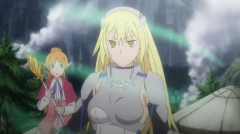
This makes me feel rather nostalgic. This first episode was essentially set up like an old school JRPG, hitting every cliche in the genre. You can clearly see this was based on a game as you can make out the points of the first dungeon and boss. What further adds to this is that Noburu Nematsu is listed as a composer, most likely of the original game’s soundtrack. Noburu is a legendary figure when it comes to RPG music, having made some of the best soundtracks in the genre. So this is story is standard JRPG through and through which means if you have played a lot of rpgs, or watched standard fantasy in general, then this story is going to feel very familiar. The animation is quite impressive and makes me think that Fate/Apocrypha may not be in such bad hands after all if they can make animation like this. However the characters are all standard stereotypes lacking any defining characteristics and the worse is that mascot character Dragon. Adds absolutely nothing but annoyance. If you are going to have a mascot in your show then the best thing you could do is ensure they shut their mouth. If you are a fan of fantasy anie this might tickle your fancy but I say it would prove too by the books to keep your interest.

Potential: 20%


Mario: A harmless old-fashion fantasy fluff, that what Granblue Fantasy is. Every set-up feels like you have watched in other anime before, and that old feel of more straight-forward fantasy fare makes me questioning about the age of this source material until those CGI monsters appear screaming to my face “Are you impressed with this updating?”. No sir, not one bit. The actual story flows nicely but it’s as generic as it could get. Cliché upon cliché (the girl fall off the sky, guy happens to be nearby to rescue her, guy happens to be bad-ass and many more) and after seeing many protagonists redefining what a “true” hero entails (just pop up my head: Subaru in Re:Zero for the dark side of becoming the man to save the day and Kazuma in KonoSuba for arguably who we would likely become if we were sucked into another world for real), a straight-face hero like this feel just plain and no personality. Everything here is decent, the world-building is alright, the production’s still on par so far, the characters aren’t overly bad, but nothing really memorable either. Also that annoying flying lizard can fly without clapping his wings in one scene? That’s sadly the only noticeable details after watching this episode.

Potential: 10%


Alice to Zouroku

Short Synopsis: A superpowered little girl on the run from the government decides to stay with a gruff old man.

A 45 minute pilot episode and my overall experience with this show is rather mixed. The car chase was the worst part of the episode with some truly terrible CGI and a couple of animation goofs. Action in general seems to be this show’s weakest aspect as it has a relatively uninspired setup and there doesn’t really feel to be any real danger in regards to stakes. The government is acting suitably shady but the little girls don’t seem to be mistreated or malicious. One of the things that made the action fall flat was in how no one looks to be taking it seriously. It’s hard to feel a sense of danger when the ones fighting are little girls making jokes and talking like it’s some kind of playdate. What works here and made this episode stand out was the main character, who happens to be an old man who just doesn’t put up with any of this nonsense. His reactions are remarkably refreshing in comparison with your normal anime leads and his grandfatherly care of the girls is rather heartwarming. While this episode displayed a lot of action I have a feeling this show is moving more into slice of life territory which I am all for surprisingly. Normally I wouldn’t prefer a show trade off action for slice of life but seeing how this show pulls off action scenes I think it’s the safer option to forgo it from this point forward. What will decide this show’s fate is how much it plans to dwell on the government science facility as frankly that aspect has been done before and to a much better degree. If it’s a tale of a girl hanging around a grandfather figure then I say it’s worth checking out but if it’s a tale of a girl fighting her fellow lab rats with lame superpowers then I say it will not be worth your time.

Potential: 60%

Mario: Boy, I certainly didn’t expect this much action for this show. But here the thing, the action part is a weaker part of the show. After watching the show I have a really mixed feeling about it. While many elements make it a must-watch for this season, other elements are uninspiring and below-par. For example, the action. While the actual fights are fine, showing right in the beginning when we don’t have a clue about the girls’ gifts make more confusing than aspiring. Moreover, the CG cars moving on the road feel very out of place and terribly unconvincing (remember the scene where the old man stopped the car and asked Sana out? The background scene was MOVING on its own). Likewise, I feel whenever the research institution is mentioned, the show goes heavy-handled, and it’s boring. Evil facility acts like an evil facility isn’t something new. The main beef of the show, however, is the relationship between Sana and old man Zouroku and their chemistry is amazing. They act their ages and they bounce of each other well (love the no-nonsense attitude of the old man) and it was those small moments that bring out so much warm and heart to this show. But seeing how the plot advances, I’m pretty sure that we will have an uneven show of one-half taking itself too seriously with plot-driven MESSAGE, and the other half of endearing slice-of-life of Sana and old man. Weight your choice. I will be on this board as the latter clearly outweigh the former.

Potential: 60%

Shouwa Genroku Rakugo Shinjuu Review – 90/100

When you have watched a large amount of anime you can come to assume that you have learned a lot about Japanese culture. Though I think it’s testament to how limited it is to view Japan through anime when you come to realize that despite watching so much, you have never heard of Rakugo. Rakugo is a time of performance art that involves a man sitting on stage and telling a story. Sometimes a funny story, other times a heartwarming story or sometimes even a horror story. The man is given no props and much convey each actor and event in the story with his voice and mannerisms alone. Rakugo is the art of the storyteller and Shouwa Genroku Rakugo Shinjuu is a story about those storytellers. Truthfully it’s difficult for me to explain exactly why this series is so great. It could be considered a landmark in character drama and a true mature anime for those tired of superpowered teenagers fighting monsters. Rakugo is a story about tragedy, about the harshness of time, about the stories that lie within stories. It follows the tale of a young boy entering the art to his final days performing in old age. In a way this story isn’t about Rakugo but instead how it affects those involved with it and their passion to perform.

Admittedly though this isn’t the show for everyone. For one a large amount of the show is dedicated to Rakugo performances. While you can admire the skill of the voice actors emoting and the general outline of the story, it’s clear that a lot is lost on ears that cannot understand Japanese. This is a character driven story and the characters are driven by Rakugo so if the Rakugo itself doesn’t quite appeal to you then admittedly that’s a large chuck of the show you won’t enjoy. Even for those that do enjoy it there is the issue that while the first season is near perfect, the second drags out it’s conclusion which can be a detriment if it isn’t tugging your heartstrings as much as it wants to. Through if Rakugo hits that sweet spot for you then it will likely be a series you hold close to your heart. The characters are great with Yakumo being center stage for most of the story. We see him go from an insecure young man to a confident performer to an old tired professional in the span of a single season. Sukeroku is the lovable mooch whose passion for what he does is unmatched. Likewise you have Yotaro who is a man that’s loud and straightforward, but delightfully genuine. With Konatsu being the snarky girl with a heart of gold. What truly makes these characters special is that they lack the common anime tropes which seem to invest each anime character nowadays. The characters of Rakugo are genuine in personality and that’s what makes the drama so strong.

Animation and art wise the series is relatively subdued and a lot of the effort goes into the emotions during  Rakugo performance. This series isn’t a visual tour de force but frankly that’s not the point. Music again is suitable but not really all that memorable. If you happen to have an interest in Japanese culture and feel worn out by the modern cliches of anime then Rakugo is a breath of fresh air for you. It will take you on a ride with twists and turns before ending with a conclusion that leaves no loose ends. By its very nature I think Rakugo will be a niche gem of the anime medium. Through however niche, it will truly beloved. Much like the art of Rakugo itself.

Youjo Senki Saga of Tanya the Evil Review – 80/100

Isekai stories have become somewhat of a tiresome genre as of late. There have been many stories of people being transported/reincarnated into other worlds where they shed their once pitiful exterior and become some legendary figure in another world. In most cases it’s trit, balant childish wish fulfilment and the stories often become tiresome when the protagonist gains a level of power that could never be challenged. Enter Youji Senki(Saya of Tanya the evil) where in a HR manager from Japan is tossed into a alternative world WWI by god in an effort to teach him piety. Tanya’s first episode may not win over many but if you check out the second episode you will be taken for quite a ride. This series is the first work by Studio Nut and while it pushed them to their limits it remains a impressive piece of work. Animation and art could be shaky and character designs took a hit for what looks to be for making animation easier. Tanya has some truly impressive set pieces and boasts the largest number of war scenes I have seen in a single anime.

There are shows which advertise themselves as action packed but are anything but, however Tanya is not one of these shows. Though when Tanya takes it slow that can be some of the more interesting parts of the series. Tanya and God’s interactions make for some of the best parts of the show and show a underline of Theism vs Atheism symbolism. The show doesn’t pick a side and admittedly any meaning gathered from this would be shallow level speculation at best. This aspect also becomes less prevalent in the second half of the show as God stands aside in favor of a more human antagonist. It didn’t delve into the concept as much as it could have but it nonetheless makes for a great hook to keep the viewer interested.

In regards to this series flaws the big thing is that it is Tanya’s show through and through. What means is that Tanya gets the bulk of the development, Tanya gets the glory and she gets every moment of badassery. This leaves a large majority of the supporting cast rather underdeveloped and I am certain you won’t remember most of their names by show’s end. In the same way Tanya is to a degree rediculously overpowered and a good amount of the shows second half is dedicated to her steamrolling her opponents. If you don’t find Tanya’s character compelling or interesting, I doubt there will be much here for you besides an alternate take on World War I. Still it’s hard not to like Tanya when she is a beautifully made anti-hero whose motivations are understandable but exceedly malicious. The series can be humorous at times with the after credits sequences taking on a more joking tone than the series normally goes for. The way in how Tanya’s actions and intentions are misinterpreted make for some really humorous scenarios.

For history buff this series provides some meat as well in how the war proceeds in the anime mirrors that of real history and while magical aspects are present, a lot of the equipment used is true to the time. Music is decent with the main theme having enough to get you pumped during an action scene. The opening is different and might not be to everyone’s tastes but the ending is great and closes out each episode perfectly. I applaud Tanya for being one of the few anime to not make use of fanservice as Tanya is in no way fetished at any point within the show. Considering that she is a lolita you would think that’s a given but believe me in that hasn’t stopped many shows before. This show remains a remarkably fun watch throughout, though it loses some steam in its second half but makes a comeback with it’s final two episodes. I say this is well worth any anime fans time and certainly deserving of a second season if being X is merciful.

March Summary

Delayed by a day, because I wanted to include Classicaloid’s ending in this. Word currently says that this turned into an article of more than 4500 words, Jesus Christ what am I doing. At the very least I’ve got the passion to write back, but at the same time this format works best: write a huge amount once a month (or twice in the start of a season) and take a bit of a break the rest of the time. This works when balancing this blog with the rest of my life. There will be some weird months here and there, but eh, we’ll see when they come.

As usual: yarr there be spoilers. Really major ones this time because this month delivered some really good plot twists and endings, but I also really want to talk about them and all of their contexts. Again these are just my impressions of whatever aired the past month, the episode numbers are indicated next to the title, and these are ranked based upon the shows I liked least to best this month.

#10: Piace – Watashi no Italian (08-12)

This month, something happened to Piace: it stopped being funny. This is a pretty big deal for a comedy.

It’s classic what happened: as the show goes on the best jokes run out, and the creators hope that they can continue on, on the merits of the characters. The problem is that you need to have good characters for that, and it became painfully obvious that Piace only had its comedy to write home about. Without it, these characters are empty shells. Stereotypes and cardboard boxes who just depend on their own two quirks, rather than being actual characters.

Yeah, it’s pretty serious for a show of 12 episodes of only 20 minutes to run out of material. Like dude, it’s not that hard! It’s Italian food! I mean I finished this up because of how short it was, but this last month unfortunately was another strike against series like this: their creators are a bunch of lazy bastards. This was one of the few that actually had some effort going into it, which makes it all the more sad that they couldn’t even remain fired up for a measly 36 minutes.

I am a completionist, but next season I will stop giving every tiny show the same kind of attention. Only if they’re notable in some way, because this trend is getting too much out of control.

#9: Onihei (08-12)

So of course Onihei has to be the oddball here to have its final episode air on april 4th, while the new season is already well under its way. Ah screw it, unless the final episode does something really unusual this is going to be my final say on the series, I don’t want to wait that long.

Onihei always stood apart from the other series this season. It attempted to show samurai tales from a different perspective, and it didn’t shy away from the ugliness, while not going completely overboard like what Shigurui did. Every episode showed a different story, which tried to be thought-provoking in some way or another. Last month I complained about there way too many pure evil minor-characters who only existed for the story’s sake and had no depth to them whatsoever, and this month improved that. They were still there, but not as abundantly as before. The stories all were interesting, I saw no real big slips or overly stupid episodes.

However my problem with this series is that thinking back… I kindof have to say that I liked the first episode best here. And that’s not a good sign. The fist episode to me was the sharpest. Had the best ideas. And while the other ones aren’t bad by any means, you just keep hoping for something as good as the first impression, and that tends to sting more and more as the show goes on. Thankfully episode 12 came close to it, at the very least I consider it the best of the rest, but even then I can’t get rid of this slightly bad aftertaste for Onihei.

Also, I’d like to say a few things about the acting in this series: the show has this look that’s different from the other series this season, and the creators tried to put in a lot of details in the characters’ faces. But the problem is that it’s also really had to emote that, and what irked me through the entire series was that all facial expressions just look weird. The budget was very obviously limited, but the creators here need to learn the art of cutting corners. They did the basics of course, but strangely not in the area of facial expressions. I mean I can forgive bad animation of course, but the whole reason why I watch anime is watching characters being brought to life. And watching these weird expressions in this uncanny valley… it didn’t work as well as the creators hoped to.

#8: Hand Shakers (09-12)

Okay, that ending. First of all it was obvious sequel-bait, but even then this episode definitely also attempted to close things off in case the investors aren’t gonna bite, and with that in mind you’d expect some sort of closure. That happened, but as the final two episodes went on I found myself really scratching my head because the main villain really wasn’t making any sense.

We’re talking about a former partner, who broke off without saying anything, who went on to kidnap a young girl and drug her into fighting for him and keeping her from disappearing. I know the alternative was putting her to sleep, but even then this seems wrong on so many levels, especially seeing it develop into this weird Stockholm syndrome relationship. And when they revealed his reasoning behind everything things made even less sense. Holy crap what an anti-social dork!

Only when I really started to read inbetween the lines did I see the values of this ending. Handshakers isn’t just about a bunch of people fighting, it’s about deeply flawed people, connecting with each other through something as innocent as holding a hand. Even the two leads: one born doomed to be different, the other haunted by the death of his sister. And a big theme throughout this series is characters trying to pretend that nothing is wrong and things are perfectly normal. People being afraid to show their true colours, and being beaten allows them to fully open up and accept themselves. Within that context, this all makes sense, and it fits within the central theme of hand holding. But yeah, this really is one of those series where reading inbetween the lines is absolutely necessary, otherwise this was a horrible ending.

So yeah, I was preparing to write this whole rant about wasted potential, but in the end I just can’t. I appreciate this series, I really do. And I do not regret watching it. If anything, it tried a whole different way of storytelling, and just for that it deserves credit. Hand Shakers is nice. If has warmth. It’s cliched on the surface, but beyond it’s worth it. However the cliches on the surface remain. If there ever comes a second season, I’d love to see less typical stories. Don’t start with idols, thugs and incest, start with actual characters. Dare to stay away from the stereotypes.

#7: Kuzu no Honkai (08-12)

Again that final minute! What Kuzu no Honkai did in its final month was different: instead of focusing on unrequited love, it had two other focuses: moving on, and actual love. Moving on was the logical progression: everybody got their time to show their feelings come to a breaking point, and being able to move on from their desires, accepting that it never was gonna be something. The actual romance though… sorry but I just didn’t buy it. It was just way too cheesy for me to take seriously. This show was always good at the dark side of romance. The bright side: nope. Especially not so quickly after Fune wo Amu.

So yeah, the entire final episode was hinting at that the two leads were gonna end up as a couple after not seeing each other fr a while. The hints were so obvious and cliched, you see them everywhere. And then… they don’t! They actually realized that they could return, yet they chose because they wanted real romance and went their own way! The only correct way for this show to have ended. Move on! There are more fish in the ocean! Any relationship between these two would have been doomed from the start.

I do think that this is the month I enjoyed the least of this series. It mostly had to do with how good it was at its unrequited love. This ending wrapped everything up perfectly fine and it left the cast as very well rounded, so it was definitely necessary, but it didn’t have that “wow”-factor that the first parts had. Although I still want to praise it a lot for that ending. And also one other thing: it’s Noitamina. Ideally, I would like to never again see a series to take place in a high school in this timeslot again. The timeslot was meant for adult series, and we have plenty of room for high school series in the other timeslots that don’t have this context.

#6: ChaoS;Child (09-12)

Okay, yeah. ChaoS;Child had a really juicy ending. It pervailed through the sheer force of its original material, and I’m not going to spoil anything more. It just has to be experienced. Instead of that, I’m going to talk about the context of it all.

Because aside from Steins;Gate, make no mistake that this was the best semi-colon series to come out. It took Chaos;Head’s potential and actually made it better, which is very rare for an unplanned sequel. It was less solid than Robotics;Notes, but instead of falling apart at the end it came together. And while the characters weren’t the best, they were miles above the annoying shells that I had to witness in that one episode of Occult;Nine. Steins;Gate remains miles above it though. I mean Chaos;Child’s problems are really big. But damn, this was some wasted potential overall. In the right hands this would have been one hell of a series.

I can really imagine the original visual novel being a really good one, and a great ride. That doesn’t have the horrible pacing and acting problems that this series had, and it’s something I’m going to recommend, especially for those who are familiar with Chaos;Head (because let;’s face it, you need to have seen that one before watching this). Will I end up playing the games at one point? Hell no.

Leaving aside that I already know what’s going to happen, the bigger issue is that I’m simply not going to touch games, or light novels, or even mangas for that matter. Even though their stories may be better than in anime, I’m not gonna. So there. Even in the case of Chaos Child, where it’s obvious that the story of the game is better than in the TV-series, I would still have picked the anime if I knew this beforehand.

“The original story is better” is something I have heard, almost since the start of this blog, and it always irked me, even though I couldn’t always explain exactly why. It confused me for a long while, and I did dabble into manga for a bit. And what I read there were indeed some awesome stories. But in the end, while I was in my two-year slump of not watching anything, I realized that I wanted to return to watching anime, while I couldn’t be bothered at all with the mangas I checked out. The reason in the end is simple: the reason why I’m so drawn to anime is the sum of its parts. The way everything comes together to make something bigger and better than what they individually could have done. This means that stories may be done better in novels, mangas and games with more time, there is better music in the medium that specializes to music. Pure art and movies will have better visuals. But it’s everything coming together that really is my passion. That’s also why ratings splitting ratings up into various sub-categories, like story, characters, animation, et cetera always felt weird and unnatural: they miss synergy!

And of course, your mileage may vary. Everyone enjoys entertainment in a different way. It’s useful to listen to others and give things a chance, but in the end the person you need to listen to the most is yourself. Your time on this planet is limited, so you’d better spend it on the things that pique your interests. Because of that, I’ll gladly take this collection of badly acted blobs here, because somehow, despite everything against it, this show came together and delivered something that should have been impossible.

#5: Youjo Senki (08-12)

The finale set up for a sequel, but to be honest, I’d be glad if it didn’t get one, as weird as it sounds. The open ending fits actually quite well with the themes that the final number of episodes were going for: fighting to stop fighting is a bloody stupid idea that’s only ever going to make more people mad at you.

What disappointed me though was that they did very little with Being X. There was lots of silence from it, and it’s much more that its presence loomed over the entire series. And yes, I never thought I’d ever say this, but God won, and was glorious. I quite liked how it pretty much passed over the baton to the new superpower to emerge.

It’s a simplistic depiction of war sure, but to me they quite got away with it. I had quite an enjoyable time while watching this series, and “Tanya” actually turned out to be an excellent example of an anti-hero. Clearly the protagonist, but obviously not on the moral side of rightness. The war here was presented as something that sucks for every side, even the winning one. The tactics used were simple, but not the reason to watch it. Surprisingly, it’s the human element. It did so in a really different way from Shuumatsu no Izetta, which while it had a better start, lost my interest after a while, while Youjo Senki remained strong. I think the reason was because it was about something: through the series it really drove home that everyone wanted the war to end, especially as the show went on. Izetta meanwhile got lost in its boob jokes and its main characters ended up being a bit too… perfect. And too morally one-sided now that I think back to it: the evil empire is evil and must be stopped, while the small country with lots of pretty girls in the center has to fight it off.

Seriously Youjo Senki I really commend you for not using any boob-, loli- or any other kind of fanservice pandering joke here! Well done!

#4: The Dragon Dentist (01-02)

Kazuya Tsurumaki comes along with his team of former Gainax employees at Studio Khara, and basically shows how it’s done. Dragon Dentist consists out of two 50-minute tv-specials, and they’re apparently continuing a project Khara did a year ago with a compilation of 35 different pilots and short films. Now there’s one movie that I’m really interested in checking out – I thought that the genre was dead!

But I digress, The Dragon Dentist: basically had this been a 26-episode series, then it would have been the epic of the year. The mainstream show that got people talking, draw in people who aren’t usually interested in the medium, and that would still stand ten years after airing. Perhaps no Full Metal Alchemist Brotherhood, but bigger than Attack on Titan, it was that solid. And only something that could have been done in anime. I really liked the idea behind this series, of giant near-invincible dragons floating around, and the whole world built around it. Its own religions, customs and traditions. From what we saw of the world here, the creators were excellent at bringing life to it. Plus the action was amazing. The two episodes did it in completely different ways, but it had me glued to the screen, and this show getting really gorgeous in the second episode only helped this.

But yeah, we only got two episodes. This basically was a pilot, in the same way that Kyousogiga, and Little Witch Academy did their thing. Now all that’s left is waiting for an investing party to bite, to try and make a full fledged one. I mean it just felt weird that in episode one, everything just happened too fast. There was no way to really build up urgency or context before things started happening. This show really did what it could, but it really feels we just skimmed the surface of all that’s possible in this setting. Like the creators ran home with a clump of gold while being inches away from this gold mine.

Full Metal Alchemist, Attack On Titan… I don’t think that those shows are the best to compare this with. You know what this reminds me most of? Bounen no Xamdou! It’s got the same inspiration behind its setting, it too looked incredibly solid, while still daring to break barriers. Both toyed with their own religions and had very relatable characters. Now Bounen no Xamdou made the mistake of lingering on a bit too much near its ending. I really think that if this gets green-lit for real, then The Dragon Dentist will be able to avoid the same fate, because the way episode 2 ended was actually really, really good. It’s the type of thing why I watch anime: watching everything come together. The action was great, while in the meantime the setting got fleshed out, characters kicked ass, the plot thickened, the graphics got gorgeous, the music. It gets it! Everything just fit.

I remember how I disliked the Evangelion movies. Made by the same guys. I think what irked me the most there was watching a recap, and things didn’t really mesh well. And while I still need to watch the third Evangelion movie, I do think that they were on to something, and this really feels like they took what they learned there, and are experimenting further. At the very least, these are the guys that need to be influential. These are the guys that need to inspire the next generation that there is plenty of kick-ass material just waiting to be brought to life, and the best way to do it is to be bold and show some balls! Instead of being too safe.

#3: Classicaloid (21-25)

Wha? There’s gonna be a sequel? If you said that at the beginning of this season, this was going to be one of my last guesses for a continuation. It is all the more weird because this definitely is not the most popular series, and with an announcement this early this definitely was planned in advance… yet the final episode was pretty conclusive. I was about to praise this series for avoiding the dreaded comedy ending, but here’s another hurdle it’s going to have to face: the dreaded comedy sequel. Will it have enough material to keep fresh for 25 more episodes? I am writing this like immediately after that twist and it puts like everything in a different perspective. And don’t get me wrong: if the creators know what they’re doing then the result will be beautiful. This cast has that potential. However if this was a decision from the producers against the writers’ will: oh dear god the pain!

But anyway, to the ending. Classicaloid was completely different from all other shows on this list. Most of them, at least the best ones, were tasked in wrapping up their stories. Making everything come together in a clever way, with layered plot twists, themes and characters coming together (which they all did really well by the way). Classicaloid however never was based on logic. For Classicaloid, the point was to deliver a bang of an ending. Bring it to an emotional climax. And they went to heaven and beyond for that!

Five episodes. The first two were the standard episodic ones, but they rank among the funniest of the season, including the single greatest rap track ever to have appeared in an anime. The final three episodes delivered the finale, and you know these parabolic graphs? Well, it was like that. It started off quite standard, with a lot of exposition that made me fear that they were going for a completely serious ending. Then things got better with anti-climax. And then the aliens arrived!…!?!?

Like Deus ex Machina much?!? And yet in the context of the series it totally fit, and it allowed the creators to just keep surpassing themselves in atmosphere. They saved some of the best tracks for the finale, and especially the ending was just a visual orgasm of colours and shapes and musik, it was glorious and incredibly fun! Really if it wasn’t for the sequel announcement I might have placed this at the top of this list!

So yeah, for now I’ll spend the next half year without Classicaloid, and when they return, let’s hope it will be glorious. Please be even better! You can do this! You have half a year! Use this time to plan out the best possible course for this show! It deserves it!

#2: ACCA – 13-Ku Kansatsu-ka (-)

Thinking back, the season that set my writer’s block in motion was the Autumn of 2013. This is where I became disillusioned by the series that came out, and even though I tried to hold on, my interest became less and less, and the reason for that was the sheer amount of series that had very interesting premises, yet utterly failed at even the most basic elements of storytelling. The worst offenders were Galilei Donna, and Copellion, but also Nagi no Asukara, Yozakura Quartet and even Samurai Flamenco and Kill la Kill: they all were disappointing because of their lack of respect to the rules of basic storytelling, to the point where only Kyousogiga ended up as a success.

I feel that this season, we have the antithesis of that: lots of different series who actually KNOW what writing is. One of the best examples for that is ACCA, simply because of how much it had against it. I mean, now that the final episode has passed, I can confirm that they actually did it: they managed to squeeze this huge story and setting into one season, and they made everything fit. The pacing feels natural, there were no forced episodes. And despite all of these constraints, it was constantly building up to the final episodes, and never forgot what it was trying to do.

It’s a show that has many layers. The foundation is the 13 countries. All of them get visited throughout the series. Above that is Jean Otis and his colleagues and his sister. On top of that is the central government. In between them are the storylines around the coup that was to be attempted, interwoven with the background stories of all of the different characters, who due to the nature of this series all came from a different part of the world. The focus on food was fluff to flesh out the setting and characters. And even then the final episode delivered a twist that was lurking behind all of that in the shadows and tied everything together. This is the example of what happens when you put a lot of time into planning out your series’ structure, instead of rushing it or outsourcing it, to make sure that everything is just right.

Of course, this method is not perfect. The benefit of spontaneous writing is that it’s better at bringing out emotions, it’s more spontaneous. But that was solved by the very consistent mood this show had. It always was mellow. There was no drama whatsoever in this show, and instead it hinged on intrigue, and that made it work. I also loved how diplomatic everyone was. Sure people have their own agendas and stuff, but instead of the yelling and irrational fights, putting groups of people against each other, people just drop grudges, accept things and go on with their days. Obviously this show does present a very simplified form of politics: it assumes that everyone in a country has the same opinion. which of course in real life is a bit more complicated.

Of course, Natsume Ono, who previously wrote the original material of Sarai-ya Goyou and Ristorante Paradiso delivered some amazing story again, but that is no guarantee that it translates well to the anime format. But they did it, and let this be a lesson for future writers: this is how you write a series and make it interesting. It takes both itself and its audience seriously and simply wants to write a good story with the means that it has. Kudos to Madhouse&co!

#1: Shouwa Genroku Rakugo Shinjuu Season 2 (09-12)

And finally it’s Shouwa’s turn to end. The final four episodes of this series had a lot to live up to, after such a series. And all in all I have to say that this ending was totally rock-solid. The past four episodes all wrapped things up perfectly, really taking their time to make sure that everything got closed off in a satisfying way. All that this show had been building up to: the main characters, the side characters, but also all of the themes when you start reading between the lines.

This whole series was the story of death and rebirth. You see it everywhere, with the main one being Yakumo’s life, but the death of Sukeroku, and him surviving through the next generation if another really big one. How Rakugo almost died under the 8th Generation, but was revived by the 9th generation. How all the rakugo titles keep getting inherited whenever someone passes away. And not to mention the following: I cannot recall any other series that featured more generations than this one. Four generations, all changing as time goes on, growing and weakening.

The big challenge with endings like this is that they tend to just wrap everything up like a good schoolkid, while forgetting to actually tell a story, make it interesting, make sure everything is satisfying. What Shouwa did really well was that the final episodes all managed to keep the balls in the air, and they kept delivering new stuff. We worked towards Yakumo’s death, but even there it wasn’t a simple case of him dying, but he was really clinging to his last moments in live like a living paradox. Then the afterlife episode came, and we finally got to wrap up a lot of questions that the big death left us. I think that this would have worked even better for those who watched the first series as it came out, instead of me, catching up to it in January. Everyone got to accept death, and it felt good. Then the final episode showed yet another time-skip, but there was much more meat to it than usual, because it showed the rebirth of Rakugo, with new rules that could finally be implemented now that the eighth generation has moved on. It was essential to show this. Plus, it even came with an extra twist to boot, hinting that Yakumo may have had a descendant. They could have easily done without, but it made things even more interesting in hindsight, and while awkward, it fits strangely well.

This series is not perfect though. I was not convinced by the romance, and I don’t think that this show really understands it. It was definitely the most annoying part of the series. Also this is not the easiest show to watch. You need to pay attention, and this definitely isn’t a series that you can watch while relaxing. There are parts that while vital to the story, are a tad difficult to sit through. No, in terms of pacing, I don’t think that the creators could have done a better job here.

And yeah, this is the type of series to set a new standard for future shows to live up to. Last season this was Fune wo Amu, and together they create a very solid baseline to hold shows up with. These series show how you should tell a story, where Fune wo Amu shows how to bring characters to life, and Shouwa Genroku Rakugo Shinjuu shows how you should pace your series. And what’s also important about these two series: usually series as solid as them are the product of a big name director who has already proved him or herself. This is especially true of the past ten years, remember Sayo Yamamoto’s Yuri on Ice last season. But Fune wo Amu’s director? He had done Sukitte Ii Na Yo and a number of episodes here and there, but nothing as vibrant. Shouwa Genroku Rakugo Shinjuu was directed by Shinichi Omata, the director of Sankarea, Rozen Maiden Zuruckspielen. While good, they always lacked something, and here he really managed to make everything come together, and you can see a very tight control from beginning to end. This is the new generation waking up and coming up with their own styles, rather than just doing the same popular thing over and over again. This is a trend that needs to continue. They have demonstrated that they know how to tell a story. From here, it’s time to add more and more guts and balls. Dare to be exciting! Dare to challenge the status quo! You have the power!

ACCA: 13-Territory Inspection Dept. (Winter 2017) Review – 83/100

Imagine my utmost amazement when a show that I wasn’t that confident on taking in the beginning turned out to be one of the most solid offering this season had to offer. ACCA is the most recent anime adaptation from mangaka Natsume Omo, which despite isn’t a household name, many of her works (6 titles of them) have been translated to English, a privilege that rarely seen among this industry. Watching ACCA though, it’s easy to see her appeals: attractive and recognizable character designs, detailed world settings, complex yet laid-back themes and featuring characters that always in the move. ACCA embodies all those traits with slow but confident pacing that have an ending that perfectly tied up all the plot threads- for me one of the best ending I have seen in years. ACCA isn’t perfect by any mean, after all, adapting full 6 volumes into one cour of 12 episodes mean that they have to cut LOTS of extra details. Although I would’ve preferred more if the show has more time to focus on these 13 Districts and their ACCA’s representatives, the mere fact that they manage to make the plot points flows seamlessly, while still engage (or rather, enhance) viewers’ interest by each passing episode isn’t an easy feat at all; so a special shout out for Madhouse for this wonderful adaptation.

At first, what really makes ACCA compelling to watch is its rich world setting; as the show’s diverse settings is one of its identity itself. The 13 districts all have their own distinctive traits and are vastly different in wealth and their sub-cultures; which remind me a bit of the worlds in Kino’s Journeys. In fact, it’s too different from each other that the only thing that they all SHARE is its autonomy. I should remind you, the demand for putting background details for this show is insane, as they have to show the characteristics of all 13 districts in the little time they had without obstruct the pacing, but Studio Pablo (you might need to remember that name- They are an anime background company, the team who also handled the gorgeous visual backgrounds in Flip Flappers) did a marvelous job in putting as much details as possible from those districts. The two poorest districts were given more development than the rest with their own stories and struggles and as a whole, Dowa Kingdom is a place that I’m more than happy to spend more time to. The ACCA’s representative member in each district, likewise, all given just about enough personality to both inform us their own characters, and how the uniqueness in the district they work in starts to influent them. Regrettably, I still feel the show doesn’t have much screen time to flesh out those ACCA members but that is the sacrifice I’m willing to take…

… Because ACCA is masterclass at its storytelling and pacing. Even now when I’m looking back at the series, I don’t see any wasted segments, any meaningless conversations or any useless developments. Everything the show puts in, they are there for a reason, either to advance the plot, or to flesh out the characters, or give the show more identity. All the plot developments were hinted subtly way ahead, so when the BIG ANOUNCEMENTS take place, we don’t feel like them pulling the rug under our feet, but instead we’re well prepared to take such twists in. Secondly, all the character’s usual habits like Jean’s constantly smoking, Nino taking pictures, or Lotta eating cakes all the times not only tell us their personality, but also those details suggest a deeper plot meaning (see the relevance of cigarettes here? Or the reason why Nino taking pictures all the time?). Moreover, for a show that mainly about the scheming, plan within a plan within a plan about the coup, there are surprising overloaded with breads, cakes and deserts. Characters in this show fall in love with breads, buying cakes when scheming about a plan, making friends through the love of toasts (which ultimately saved Lotta’s life), and to be fair, the love of bread is what give birth to Jean and Lotta to begin with (guess where their Mom met their father? A bakery of course), but strangely, those moments of cake-porn never feel out of place in this ACCA world. For me personally, cakes and toasts will be what I miss the most about this show. And then the pacing. While many would argue the ACCA is snail-moving slow, and they’re mostly right, this is one of the most confident pacing that I’ve seen this season. It’s slow, but it never drags. It’s slow, but it keeps getting more intense as it goes on; steadily to its final showdown.

Another attribute; however, that really sets ACCA well apart from other political thrillers, or any thrillers in that extend; lies in its almost non-existence of violence and dark intentions. ACCA is an idealistic show; characters in ACCA think and behave for the benefit of the kingdom, where sacrifice of individuals can be necessary to keep peace for the nation (That make the backstory of princess Schnee even more tragic). Even the show’s main villain’s thrust to destroy the throne wouldn’t necessary qualified as evil either; after all, all he wanted is the “rightful” power and control for his own district, one of the richest and most influential district. If shows like Berserk or Death Parade keeps addressing the dark and ugliness of human’s nature, show like ACCA is the opposite. It’s almost too bright, too optimistic about human, which is be no mean these characters aren’t complex. The characters are plotting plans within plans, and sometimes their actions are already manipulated by other’s, but more or less their objectives always aim for the better of the people, with little to no gain for themselves. While personally I don’t have much of an issue with it, I do feel portraying the world that devoid of violence or ill-will might split the audience on being unrealistic, and that ending where too much of good things happened (look, Pranetta hits gold) could turn some viewers off for being over-cheerfulness.

Madhouse’s execution to this series is overall top-notch. The use of strong color pallete, for example, gives the show so much texture and more impressively, they fit in with the tones so well that those color palletes don’t stick out like sore thumb. Episode 8, for example, detailing the one big flashback of princess Schnee through Nino and his father’s eyes is textbook example on how to use those colors the most effective. The music, likewise, is really on point most of the time and the shot compositions have great flairs, cinematic, and sometimes they convey the mood and tension just by showing one character’s position to another (like when Mauve informed Jean about his royal heritage) or putting the characters in the soft, blurred background (most prominently through the climax of the last episode). In one word, exceptional. But there is one minor issue, though. For a show that have high caliber of crafting like ACCA, the animation, the actual motions, is lacking. Characters stay at static positions most of the time, and even their expressions don’t change much. Which for me is fair, because ACCA has always been about the calm, about what beneath the surface so it’s only appropriate that we don’t get to see much actions on the surface, both in term of actual movement, or the plot itself.

ACCA also is extremely well-grounded in terms of underlining characters’ chemistry. Although I would argue that those characters don’t change/grow much in terms of character’s development (see, in the end, Jean is still the same guy we saw at the beginning, so is Lotta, or… gasp, Owl), but the show delivers such natural chemistry between the cast, especially the trio Jean – Nino – Lotta that it’s such a nice time to see them hanging around together. Each of the pair give off a different chemistry to boost, and they always feel so effortlessly to each other that when Jean and Lotta find out the truth about Nino, it’s bitter and sweet at the same time. For a show that is more about the detachment (everything flows underneath the surface), they understand that the underlying emotions of the show is the buddy relationship between Nino and Jean (and well, Schnee’s tragic past) so rightfully ACCA gives their final moments on those two as a sweet farewell to us.

But like I mentioned earlier, ACCA is not without its issues. One of it is that the show has to compress its source material to only 12 episodes, as a result in the last third of the show the sweet cakes and deserts just evaporated (but I can understand, we wouldn’t take the coup seriously with all those cakes and breads so they have to go), and like I said, more time to flesh out the uniqueness of each districts and their ACCA representatives would benefit the show greater. Secondly, by giving much attentions to the royal and the members in power, we don’t get to see the Dowa Kingdom in ordinary citizen’s point of view. I mean, we hardly know anything about Jean and Lotta’s father, a commoner, for example. Moreover, being slow and static and diplomatic-centric also means that when the show has to raise up its tempo; most notably during the Lotta assassination; they are clumsy in both storytelling and execution to the point of near-ridiculousness. And lastly, show with this deliberate pacing won’t attract much of the mainstream audience, in which if that is the case, the only think I can say is that they have missed out one of the best well written gem this year had to provide and trust me, this show will hold up well with time. I will definitely check out more of Natsume Omo’s works.

Demi-chan wa Kataritai (Winter 2017) Review – 62/100

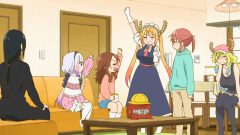
Demi-chan is one of the newest addition to the monster girl subgenre, which usually feature a human helpless male lead get stuck in a harem of mythical creatures, in form of oversized boob girls of course (why usually those monsters are in female forms anyways? Aren’t they sexless?). In this case, we have monster girls as high school students in an otherwise mundane ordinary world, where human begins to accept them as a part of society. With the help of a teacher who takes special interest in demi-human, those monster girls (called themselves as demi) starts to navigate their lives, opens up about their demi abilities and how they adjust those abilities to fit in with the environments around them. Demi-chan, as a result, tackles quite thoughtfully and sincerely about demi issues from multiple sides; from demi side, from those who do and don’t aware about them. The middle part of the show, however; dragged the show down by a passable but uninspiring slice-of-life tendency where nothing much happened. The final two episode picked up some of the show’s best spirits but as a whole, Demi-chan isn’t special enough or hard-hitting enough to really stand out in a crowd.

As you can probably guess from the title “Interviews with Monster Girls”, the show focuses on the main demi-human nature of our high school girls: vampire, dullahan, snow girl, succubus. By that the show comparing their true natures to those traits we all heard from mythology (Do vampires hate onion? How succubus work to attract male preys?), addressing their main concerns toward blending in with human world, and explaining their demi abilities so that those girls understand and be proud about their nature. One of the main moral question the show keeps asking throughout its run is that how we, the human people, should treat the demi girls most appropriately. Should we treat them like normal people, or should we care more about their monster’s attributes? Isn’t keep questioning about their “abnormal” nature a kind of discrimination itself? When you keep asking about those natures so many times it’d make the monster girls aware that they are different than the rest. For that Demi-chan argues that it is necessary for the girls to learn and embrace their own natures because those natures are a part of themselves and are what make them unique as a person. The human as well should learn and understand their concerns in order to really support them. Sometimes we do some discriminated actions to them without we knowing it (one of the lines from a recent film Hidden Figure really hits it home. The white boss: “Despite what you may think, I have nothing against y’all”. To which one of the black girl replied “I know, I know you probably believe that.” I totally agree with this thoughtful approach and to be frank this attitude is relevant to the people from ethnic groups in real life as well. I’m not going to touch on world political much but with Trump’s aggressive actions towards Muslim countries and border immigrations, sometimes what we should do instead is understanding each other’s points of views and acknowledge and respect their distinctive cultures.

Another strength of Demi-chan is this show has a lot of hearts. The show has its light-heart, sweet nature hanging in the air and many of those big emotional scenes are heart-felt and delightful. Well, you can argue that those moments (like Hikari confronts the bullied girls in the toilet, or Hikari encourages Tetsuo by the lake) are over-sentimental for its own good, but when its heart is on the right place I have no problem with that. It’s that sweet nature and the easy chemistry between those girls and Tetsuo that basically carry the show throughout its run. In addition, the sweet voice acting help elevating the chemistry as well. Of those characters, Tetsuo-sensei and Hikari are easily the best characters of the show. Hikari for her over the top but that’s-exactly-what-we-need carefree attitude, and Tetsuo for consistently helping out the girls with his kindness and he also grows from approaching the girls with curiosity into wholeheartedly caring about them. The second last episode where the show examines how close should he assist the girls is also a thoughtful, well-drawn conflict that help developing his character and making us see how much he means to other monster girls.

The introductions and then the interviews of our monster girls are easily the show’s best parts. After the interviews segment though, Demi-chan stumbles in finding a hook so it relies on some of its more questionable aspects: the romance and the slice-of-life approach. The romance is a totally dead weight, unfortunately, because this show doesn’t need any romance to begin with. Sakie’s crush on Tetsuo is more of a missed opportunity than a hit, because it’s awkward in tone and worse, gets pale very, very quickly. Kyouko the dullahan’s feeling towards her teacher is also the show’s low points, and there was more than one time that Tetsuo having a sexual tension towards her, which gives this show a rather bad taste. Secondly, after the interviews the show wanders around for “cute monster girls doing cute things” focus, that including the girls studying for the exams, enjoy reading old manga and swimming in the pool (really, we MUST have pooling episode in some ways). Those moments sure are cute and relaxing but they don’t really have much to say and it loses its steams by each passing episode. In fact, I don’t remember much what happens in those middle episodes because nothing really happened, nor mattered. Lastly, the new characters introduced in that period are unmemorable at best. The young boy and the detective adds little to the table, that Tetsuo’s scientist friend has no chemistry whatsoever with the cast, the human students don’t have much screen time to stand out and Hikari’s parents, while well-fleshed out, still remain underdeveloped. In fact, where is Himari in the second half of the show? It is a shame because she’s far more interesting than most of the core cast out there.

In the end, I’d only recommended the first 4 episodes and the last two, which would sum up to exactly half of its runtime. Except from its well-thought approach on the nature of the demon girls and the easy chemistry between our characters, the show leaves little impact and unfortunately, for me at least, the middle part really brings the show down to the point I feel it falls flatter and flatter as each episode passed. The last two episodes did regain some of its spirit but by then it was far too late. Still, I don’t deny that I have an easy time watching Demi-chan, it’s good to get sucked in their world and enjoy the band of demi-girls having fun times, but ultimately when it’s all done and gone I left without much personal attachments from any of this.

Seiren (Winter 2017) Review – 51/100

Let me say this out front, Seiren is NOT a good show, it’s a highly uneven one. Throughout its run, I can see some solid moments and fresh ideas that could potentially raise it above the bar, but ultimately, view it as a whole, Seiren is a show that isn’t worth recommending. At first, I’m actually intrigued by the premise of the show: an omnibus format on the romance between our protagonist and each of the girl (3 of them this season). Ya know, a harem without an actual harem. For me personally, I’m dread at the concept of “the one” in romance, that there is one person who specifically for you, your “true love”. I always believe that having a romantic relationship with someone is a matter of meeting them at the right time in the right circumstances, of course with enough chemistry and efforts. So, for a show like this (and Amagami, I’ll get to that later), showing multiple possibilities one could’ve have to be in love with different girls is actually interesting and more realistic concept, at least for me. Moreover, with 4 episodes for each arc, it is a perfect length to flesh out the characters, heighten the chemistry before the romance itself drags out for too long. That was in theory anyways, because what we got instead is a show that bugged down by a very inconsistent plot progression, awkward pacing and weak writing in general.

It’s hard not compare this to Amagami so I will address this issue first. Although Seiren is an original show, it borrows the same concept, the same structure and even the same settings with the latter, so like it or not we have to see if this show is better than its inspiration or unique enough to stand out by its own. For the quality, Amagami is way better and way more focus, they understand the romance is their central point so everything they put is mainly to flesh out the relationship between the main character and any given girl. Each of the route starts and finishes around the same time period, making us feel strong connection between each arc. Moreover, Amagami works because it adapts its Sim-dating format really thoughtfully (okay, enough about Amagami, I won’t address it again. Promise). Seiren, being an original show, doesn’t really need to follow Amagami’s footstep because frankly, why stick to a game format when you have an ability to do something fresher? Seiren achieved it in a way, because after finishing the show I wouldn’t call it a ghost of its predecessor. It is its own thing, but in an inferior way.

The first issue here is the route, because honestly I can’t call it a route. Each arc happens in a different time period, and sometimes without the knowledge of the previous arc, you couldn’t follow the details in later arc (like Tatsuya, Shouichi’s friend, who has a fetish for rabbit). Worst of all, except for featuring the same stock of characters in the same school settings, the three arcs are vastly unrelated to each other, be it in themes, in the romance, even in characters themselves. For that I mean the characters change in personalities during each arc that it’s hard to consider them the same person. Take Shouichi best friend, Ikuo for example. In the first arc, he appears as Shouichi’s close childhood friend but he’s more academic, he’s more serious about his life and spends a lot of time for study. In the second arc however, the show betrays his nerd side by putting him to become a game-buddy with our main leads; and in the last part I wouldn’t consider them close friend at all (how can you call each other best friend when you have no idea the girl that Ikuo crushed for so long) and Ikuo acts like a love-struck Romeo. The only thing that consistent is the show’s weird fetish for deer, in which I find rather fascinating.

Then to the big elephant in a room, the writing and the progress of the plot are all over the place. In Seiren, I have a feeling that there are too many chefs in a kitchen, thus the result is a hot mess tomato syrup. Sometimes it wants to be a game-buddy show with exciting mecha fights (really!), sometimes it focuses on magical girl- passion only for later it drops that storyline to focus instead on the girl baking and enjoying Christmas party, then it remembers that it had to develop a romance so it puts the characters alone together. In addition, normally you know the writing of a show is inadequate when a side character shows up and you had to think for a few seconds to remember who that person is. Well, I have the same problem with this series. Like, who is that girl in swimming club again? From the poster, I supposed she’d be one of the harem but where are the other two girls then? They might be around somewhere but at this point I lose all the interest to find out who they are. And not even characters, but the plots development as well. Let’s see, why Seiren keeps focusing on Hikari’s best friend backstabbing her subplot and then kind of drop it off all together? Why the subplot of the Student Council President (oh, my bad, it’s Public Morals Committee) forced the Home ec Club to build a Christmas tree? There were like dozen subplots in one arc without any proper development that it feels just like having a dream. I bet in few months all we can remember is the main plot points and some fragments here and there but we totally forget everything else.

But the show is not without its charms, mind you. First thing I should mention is the hilarious dialogues that bother self-satire, that actually make the show ridiculous and funny at certain points. Line like “Sorry, do you mind if I feed my deer” in a middle of a café date with deadpan delivery is something to behold. While the main male protagonist is plain, I like the all three girls Hikari (no, not the vampire), Toru and Kyouko (no, not the dullahan. What’s up with this show and Demi-chan?) and they are interesting and diverse enough to carry the show by themselves majority of the time (my favorite girl: Hikari). Lastly, I enjoyed the epilogue parts of each arc because I think it’s one of the rare cases where the randomness in details work in their favors. Watching Shouichi become a chief, a school bus driver (haha) or a magical girl mangaka is both hilarious, but also remind us the endless possibilities of our own future.

The technical aspect of the show is nothing to write home about, although it fulfills its jobs. There are some moments, most notably, during the “kiss in a beach” scene, where the visual and sound really elevate the whole sequence. Other time, the show did a decent job of choreographing an action mecha fight and the character designs, while attractive in general, sometimes I do feel like I was looking at fake wax statues (weird huh?). I think it mostly have to do with the character’s eyes, sometimes they just kind of staring too long without any emotion attached.

It’s note repeating that for my score, I consider 60 as recommendation line; as such Seiren falls short. The inconsistent in plots and sometimes in characters themselves are its most drawbacks. It’s a pity because I can see many of its plots have a potential to become a solid offering, but when they jam up everything they can think of together, the result is a half-baked resolution to most of its plots. If there will ever be a second season (come on, there are 3 more girls), I’m not exactly sure if I still care to watch it. At the end of the day, Seiren is a misfire romance show, it had potential to be a much better show, but all it need is to settle in some major plot points and develop them properly. To put it more precisely, Seiren lacks a sucker punch.

2017 Spring Anime Season Preview

It always amazes me how fast this things come up. Doesn’t feel like all that long ago I was writing up a preview for the winter season. Time forever remains my eternal enemy as I never seem to have enough of it. It certainly would be great to have a hyperbolic time chamber or borrow Homura’s shield so I can get through my Steam backlog. Sure I may age prematurely three or four years but I can’t say it wouldn’t be worth it.

The winter season looking back was quite great, possible the best I have seen in a long time. So naturally the Spring Season is looking inferior in comparison. I admit I don’t have much here I am really passionate about. There is potential in a couple of shows here and a few sequels I say people are looking forward to. One of those sequels not being Berserk’s next season because I am certain Berserk fans are already crying tears of blood and rage at the further bastardization of the franchise. Of course we won’t really know what we got till we get it but let’s see if I make deciding what to watch a little easier for you.

As usual I have looked up every source I can find, be it Manga, Light novel or Game and checked the staff for each show to get a better idea for what we are in for. The poll below will be used to see what you most want to see blogged with the top spot pretty much guaranteed to be covered.

This poll is no longer accepting votes

What will you be watching this summer?

Once again thanks to Mario for gathering the images, writing with a few previews and helping with the layout. You save me quite a lot of tedium. Thanks to Helghast as well as acting as editor for this piece.


The sequels/prequels I don’t care about

BERSERK 2

Boku no Hero Academia 2

Kyoukai no RINNE 3

Idol Time PriPara

Natsume Yuujinchou Roku

Saenai Heroine no Sodatekata 2

Star Mu 2

Shingeki no Bahamut: VIRGIN SOUL

Yu☆Gi☆Oh! VRAINS

Warau Salesman NEW


Series I don’t look forward to

CLOCKWORK PLANET


Studio: Xebec

Director: Tsuyoshi Nagasawa

Script/Series composer: Kenji Sugihara

Source: Light Novel

Naoto’s a high school dropout and brilliant amateur tinkerer. He lives in a world that has been so over-exploited that the entire surface has become one vast machine. When a box crashes into his home containing a female automaton, it’s a harbinger of change that will rock the entire globe, and give Naoto his chance to be a hero.


This is one of the things I dislike about Light novels. They can have excellent ideas which are ultimately hampered because the writer just doesn’t have the talent or is pushed to make them into a typical light novel formula. In this case I find the world and basic premise to be quite interesting. Namely a planet filled with clockwork gears which no one understands how it functions anymore and the protagonists acting as terrorists fighting against a corrupt society. But it just has a lot of the tropes that hamper a lot of light novel adaptions like harems, fanservice, shoved in school settings…first arc may have some thinking it’s different but it falls in line with typical fair after that. As far as the old bargain bin light novel adaptions goes, this is one of the better ones. Though with Xebec at the helm the fanservice is likely going to get a boost. It’s bad enough that the main lead female character’s name is Rueez Yourslave. Yes, Your Slave. You stay classy Japan. Animation in the trailer looks a bit cheap as well so I say keep your expectations low and you might enjoy this.
Continue reading “2017 Spring Anime Season Preview”

February Summary

Demi-chan and Masamune-kun have been dropped. With series like these in a generic school setting, I zone out very fast when they revert back to the stuff you see everywhere, and the same old fanservice. I do not have time for that. Beyond that though, this definitely was an interesting month, full of twists and surprises. There’s some definite good stuff here, and I can see the ambition to get better from a lot of them.

Usual disclaimers: there be spoilers, arr. And these are just my impressions, influenced only by myself.

#10: Hand Shakers (05-08)

This list is based on my rankings for all episodes that aired in the past month, with my least favourite first and my most favourite last. Hand Shakers takes the spot of worst this month as a punishment for what it did for the past four episodes. Those who know me know why, and this series should also be well aware and it should feel bad about it!

I’m sorry Hand Shakers, but if you introduce a brother and sister and your first instinct is “incest!”, you obviously haven’t learned your lesson enough. This goes for the entire industry. Let’s first let a good number of years pass with series of siblings with actually normal relationships before we’re going to even think about this subject, mmmkay? This in particular was the perfect opportunity for that: a great way for this series to explore the strong bonds that siblings could have. It would have fit perfectly. Or just make them a regular couple. Heck, they acted more like one than 90% of all other couples in anime.

And this is a bloody shame because aside from that really big detail I’m really digging this series. I like how it explores hand holding, and this series has this warmth flowing across every episode that is really cute to watch. This is how you do chemistry! And look at how ambitious the animation is! Yeah it looks weird and all, but look at all the things they’re actually trying to animate! How crazy the camera sometimes gets, and how much it moves on an actual three-dimensional plane! This is incredibly difficult to do, and yet they keep trying, even beyond the first episode.

So yeah Hand Shakers: lay it off with the incest, and you have next month to redeem yourself!

#9: ChaoS;Child (04-07)

Oh boy. Episode seven. That was… quite something else. Really, I can see why they wanted to animate this show now. In the hands of competent creators, this really would have been the smash episode of the year, and I’m not kidding! The most disturbing single episode in years! Or at least, that was probably the plan. Oh god, in the hands of Tetsurou Araki this would have given me nightmares for months!

But yeah, let’s face it: the acting in ChaoS;Child is abysmal. It may not be the single worst acting of the season, but it is for what it’s trying to do. In episode one it already was quite clear how silly and over the top the gore was, but the real problems started to become apparent over this month: these characters can’t emote to save their lives. They’re all a bunch of cardboard boxes wiggling around and when things get dramatical instead of feeling with the characters, things just get incredibly awkward. Okay, so you want characters who pee themselves out of fear? You want characters who cry blood? Emote them! There was no way the creators would have been able to make that work with this execution, and that was apparent right from the start. What a good director would do in this position was just tone down the gore: make use of what you have, pull a few directing tricks here and there and pull off a more subtle performance that requires less time and budget.

Because it’s obvious that this series should have been 24 episodes long and it’s battling against time, but that’s no excuse. There’s another series this season in the same boat here: ACCA, having to bring thirteen different countries to life in just one cour. But there you can see that the creators are desperately trying to pull all kinds of tricks to make it tick and work. Chaos;Child simply animates the original story line by line without thinking about how to make it work best.

And that brings us to episode seven. Oh boy, I already tuned out a bit with the peeing and blood crying, but here? It was hard to watch what went on there, seeing these incredibly wooden characters trying to cope with the single most traumatic event in their lives, and it just got more and more awkward as it went along. And it just kept going! It felt like an eternity, and I was just hoping for things to stop, just to spare them for any more embarrassment. In more than 10 years blogging, I very rarely had to sit through an episode that was this difficult and awkward to watch.

And really: I dig the original storyline. The original game really was on to something. Before episode seven I could tolerate the bad acting because I was finding myself quite intrigued by what was going on: I wanted to learn more! I really don’t know how to rank this one. Good? Bad? Well, it’s certainly something.

#8: Little Witch Academia (03-08)

So, episode 08 was the best of the series so far, however I’m not sure whether that’s a good sign or not. I mean don’t get me wrong, episode 08 was good and all, and it gave some neat insights into Sucy’s character in a really creative way and all, but I’m more worried about the rest of the episodes. Basically: I expected a lot more from this series.

This may be complaining that apple pie tastes like apple pie, but I expected a bit more than high school hi-jinks for this series. For something from Studio Trigger, you expect something crazy, and yet most of the episodes have been surprisingly tame. It may have big ideas, but they all feel… so inconsequential. Episode 8’s mushroom forest? Gone as fast as it appeared. Dragons! Cool! But not when they’re old farts that don’t really do anything. There’s a whole world beyond the school, which is fastly leaving magic behind! Cool if this show would actually focus on it!

It would also help if Atsuko wasn’t so epically bad at everything. I mean I can understand having good and bad subjects and all, but where’s the fun in watching her fail again and again and again. This show is called Little Witch Academia, part of it should be showing how fun magic is. And yet they don’t show any of the basics. They just expect you to point your wand at stuff and things happen, but there’s no depth to it. Wouldn’t it be wonderful to discover this world of magic alongside Atsuko? Instead, we get a series of an incompetent hack who manages to summon incredible powers through sheer luck.

It seems to me that this show doesn’t seem to know what it wants to do. Every episode tries to do something different and they don’t seem to mesh at all. For a while it seemed like this show was about the wonders of magic. Then episode seven and eight came along and portrayed in a much more negative light without any lead-up whatsoever. One episode Atsuko is determined to win, the next she gets distracted by everything and completely loses any sene of urgency.

In a series with a setting this expansive, you’re bound to want to cover a lot, but instead it feels like the balance is completely gone. There is just so much time devoted to Atsuko sucking that whenever this show wants to include something new about its setting, there is hardly any time to look at it, resulting in that it just feels like it’s continuously pulling things out of its ass. Jobs for witches are a neat idea, but not when episode 7 brought it up from out of nowhere, only to never talk about it again. Astrology? People can predict the future now? Diana also conveniently is good at everything for Atsuko to have a rival. It just doesn’t feel organic.

I’ll just say it: Studio Gainax was better than Studio Trigger. Not now, obviously, but I can see that Studio Trigger has Gainax’ wit and balls, but not in the right places; only when it doesn’t seem to have much consequence. I think even when you ignore Hideaki Anno’s works. I mean, one reason why they’re famous is the Gainax ending. Back in the day it was used as a bit of an insult, but I really wonder: is a Gainax ending really a bad thing?

#7: Piace – Watashi no Italian (04-07)

Now, two months in, it’s safe to remove the benefit of the doubt for this series: Piace – Watashi no Italian is a genuinely funny series. Its episodes may only be four minutes long, but it hasn’t shown any signs of slowing down yet, in fact it’s only getting more enjoyable. There are many keys in this, the snappy directing that wastes no line of dialogue, knows how to deliver a punchline, and a cast of characters that is just lovable to watch. They are a bunch of stereotypes, but the creators keep squeezing new things out of them, within these stereotypes: they give them different stuff to do, put them in a different context, slowly make them change and acclimatize to each other. Continuity also deserves praises: a wall that is smashed in one episode still bears cracks two episodes later. It also helps that the lead voice actress really carries this series: everything revolves around her, and she is wonderful at keeping all balls into the air.

One thing that is surprising me as well is that this show definitely did its homework. You see that more and more: people actually just googling the things they’re writing about. I feel this happens more and more, so props to this positive trend!

#6: Onihei (01-07)

Onihei is a strange series. It tries to be ugly: it doesn’t shy away from gore, it shows humans at their worst, and its stories are filled with death, sex and abuse. Amongst that it tells stories from around the samurai era, usually centered around a really big moral. First of all I applaud this series for daring to be different. In this day and age of feel-good series which try to play things safe, it’s very refreshing to see a series that just throws a lot of taboos overboard. But how about the execution?

Every episode, Onihei tries to tell a story around a certain character, and this part is something it does really well. It loves the use of irony, and every episode plays around with it in a different way. Most episodes have big plot twists that aim to make you think. It’s also very good at creating its tension through its art style, music and pacing. This combination makes this show tick: well written major characters that make you think.

It’s really bad at animation though. This show takes a good dose of suspense of disbelieve, because a lot of the characters just look silly when they’re trying to be funny. However the biggest detractor for this series is its cast of minor characters. You don’t see this being an issue often, but minor characters are there to fill a story. They are not the main focus, but they populate the world, and especially for this series they give the major characters their reasons for acting the way they do. And sorry, but the cast of minor characters here is just so full of Hitler-wannabes that it gets hilarious. Every single corner of this show is just filled with the exact same corrupt raping murderer that dies at the end that it’s really hard to see a threat in them. There is no look into what made them that way, and while this series is incredibly sympathetic towards its major characters, the minor ones are just ugly sword fodders who are evil just because the story needs it to be. Only episode 1 played with this, aside from that it could very well have been the same guy over and over again. No reason behind it. It’s like one of those stories that forgives a major hot character for committing a few atrocities due to being misunderstood, while at the same time having no qualms of the main cast killing off hordes of nameless goons who are probably only just doing their jobs.

#5: Youjo Senki (05-07)

I’ve compared Youjo Senki to Shuumatsu no Izetta, and that comparison still goes. Both series are set in a fictional Europe in the middle of a war, focused on a magical girl with huge powers of incredible strategic importance. Izetta is about a small country defending itself, Youjo Senki is about the biggest country expanding its territory. Both deal with politics, but Izetta uses a lot of espionage, while Youjo Senki meanwhile is big on the tactics. Objectively, Izetta portrayed its war in the most solid way. Its portrayal of characters was the most realistic and down to earth. And yet, why am I enjoying Youjo Senki far more?

I mean Izetta’s acting was rock solid, while the characters in Youjo Senki really are hamming it up. But on the other hand though, the actual war of youjo Senki simply is more interesting. Izetta was about the underdog and got its tension for watching to see how long they could hold on against all odds. But here’s the thing with underdog stories, in my opinion: there are so many shows about the underdog! It’s not special anymore, and after a while you have exhausted all possible ways to make it interesting. Youjo Senki meanwhile is different: her team already was on the winning side, but with her powers they might actually be able to do something even more crazy. Its tension comes from the weight of the decisions the characters take. Izetta showed on a personal level how terrible the tragedies of war are, and how it must be stopped. Youjo Senki meanwhile uses the tragedies of war to underline that yes: the characters are killing people. Both have their merits. And really, the war alone wouldn’t have done it for me for this series. At this point I was starting to get tired on Izetta, even though the stakes kept growing there. And the setting of Youjo Senki alone is not enough to excuse its lack of depth in the cast of side characters.

No, what I like best about Youjo Senki is its atheism vs theism themes. When after episode 1 I hated the whole setting, it just took a minute of being X to just sell me on it, and its subsequent appearances have toyed with some really interesting ideas, with this tug-of-war between the lead character, and trying to get her to accept that God exists. It’s really different from the Jesus you usually see in these types of stories, and being X is the one who throws in the irony to keep this story interesting, the extra kick and layer of depth that this series needed.

#4: ACCA 13-ku Kansatsu-ka (05-08)

From the start, it was obvious that ACCA would be a slow burner. With a setting this huge, it first had to do its share of building up. It’s still a bit weird, considering at the same time that it’s trying to rush its storyline into just one season. The result is that we just flew past 13 different countries and we’ve already gotten to the part where everything is starting to come together.

And that’s my opinion of ACCA: taking these constraint into consideration, it is doing a really good job here! A complaint you usually get with these series is that they don’t put in any thought in how to make their story work best for the anime format. The writers of ACCA clearly put in their hours. They did their homework in order to make sure that ACCA works as an anime.

This show is here to present its story, and episode eight made all of the scenes that felt a bit weird in the earlier episodes make sense. When the big twist was first announced, it felt far-fetched, but at the end of the eighth episode, they got away with it for me. Meticulous is the word here, I think. The more I think about it, the more I see that this show didn’t get any scene go to waste. Every scene was there for a reason, even all of the cakes, sweets and deserts were very deliberately put there to flesh out the identity of the different countries here. It’s actually very clever of the creators. And beyond that, every scene is just meant to either flesh out a character or country more, or to advance the main plot. It’s an excellent example that aspiring writers can look at for writing compact stories.

The big danger with being so compact is of course that the characters will feel more like plot devices than anything else. But even there this show pulls a number of tricks to try and avoid that. First of all the cast is just huge. There are so many characters, to the point where this series feels alive, and all characters are just part of it. I also want to praise this series for how it really tries to avoid overacting, and still makes the characters feel sympathetic. I still felt along with the characters, due to how good the writing was. The voice acting in the meantime was still able to offer colour to the cast, but without the overacting there is always something subtle behind them.

#3: Kuzu no Honkai (04-07)

Kuzu no Honaki has firmly established itself as “Unrequited love: the anime”. The whole set-up is carefully crafted to show many different perspectives, many different flavours in different contexts, intertwined together. Some parts are a bit exaggerated; played up in order to be able to tell a coherent story that fits within 11 episodes. Others through…

Like seriously at times this show completely nails it! Since the original Honey and Clover we haven’t gotten unrequited love this well depicted, and this show goes deep within the cast of characters. To show exactly how they feel, and why it sucks so much. The characters are all gradients of self aware: they know full well of what they’re doing, but all of them are desperately trying to find solutions in how to cope with their feelings, gradually finding them over the course of this month. And all characters do this, so this show just can keep juggling its characters around to prevent one story thread from getting too stale.

And all that lead to a number of great emotional punches, and every episode so far had at least one. Just one of those moments where a character learns to accept the situation they’re in, they cave in to their desires and move away from the ideal world they created in their own minds. It has now reached the point where every time I start an episode, I just know I’ll be getting the feels. This consistency deserves applause.

Oh, and one final thing: Youjo Senki, thank you for not including any awkward fan service like what Izetta did. Good lord being X this felt refreshing once I realized this.

#2: Classicaloid (17-20)

Remember how last month, I said that nothing happened in this series? Well, for February, things DID happen, and it hasn’t screwed up!

This usually is the point for comedies where the storyline kicks in and the jokes are much less of a priority. However Classicaloid’s advantage is that it has an amazing cast of characters with some amazing chemistry. So when these episodes tried to be serious, even if the comedy WOULD have been abandoned this still would have worked. And the thing is that these past four episodes were just as hilarious as ever, my favourite being the love-episode. That episode was all kinds of amazing and had me in stitches from start to finish, more than any other Classicaloid episode so far. I think that’s the way it’s supposed to be done: continue with the priority of being as entertaining as possible, while in the meantime pushing the story and the characters further.

Because of this I have high hopes for the finale. This series seems to know what it’s doing. Even though the final month is usually disastrous for comedies, if this series actually has the balls to screw conventions and do what’s best for the characters then it will be able to stand as my top pick for the past three months. It IS the show I’m most anxious about ending though, because if it doesn’t do that the potential for a mellow ending is the largest here, and a show of this caliber really deserves to go out with a bang!

#1: Shouwa Genroku Rakugo Shinjuu (05-08)

As funny as Classicaloid may have been, and as touching as Kuzu no Honkai was, I cannot give my favourite show of February to any other than Shouwa Genroku Rakugo Shinjuu; something really special happened here.

The thing with fiction is that over time, stories just keep getting written and written. They pile up about all kinds of topics. The first stories have it easy because there is a wide variety of different topics and techniques that haven’t been done before: originality is easy. However, at this point pretty much everything is a derivative of something. To get something truly original, you’d have to venture into territory like “a 13-legged octopus travels to Vermont to watch paint dry”, but that’s just faux originality: the story itself also has to be good.

What we got here, in the past month. Closer to something truly original is probably never going to happen again, especially in the realm of anime. And not only that, it did not sacrifice emotional impact, in fact this was higher than ever. This is the month where everything starts coming together for this series, and the past starts linking to the present. With Yakumo’s failing health the past comes above again, just like what happened with his master. I love how in-depth this show got at how hard it is for him to accept his own old age, how his passion for rakugo has evolved. They’ve built this guy up to such a beautiful walking contradiction. And the rest of the cast was brilliant too! Everybody had their own motivations that while all the same, they all came together from different directions to the same conclusion in not wanting to give up Yakumo’s rakugo.

Also, from out of nowhere, this show suddenly got incredibly good at doing plot twists. Like every time I’m just struck with surprise, but the big reveal really was something else. At the end of season one, when IT happened I remember how I found it a bit underwhelming. the scene was a bit weird and it just didn’t feel right. At that time I saw that as a fault. Well consider my ass kicked and I take all that back. I have been beaten. Praise the glorious rakugo overlords!