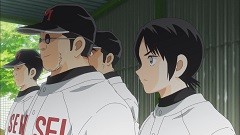
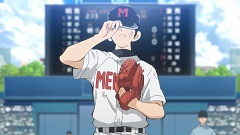
Mix – 04 [I Want a Trade]

How long is this prologue going to last, I wonder? Not that I’m complaining – Mix is probably my favorite spring series so far, even if it’s not the boldest or best-looking of the bunch. My current assumption is that the bulk of the story will be spent chasing the Koushien dream, but with Meisei’s middle school having qualified for the Tokyo Tournament, that goal seems a long way off. And the main characters are only in their second year, so we’re likely to get a full season with Touma as a starting pitcher before he even enters high school. This is all sort of worrisome, as Mix has just 80 chapters under its belt, and 9 have gone into these first four episodes. I’d hate for a series like this one, which takes its time in peeling back the layers of its cast, to run out of material too quickly. But perhaps I’m thinking too long term, as before the story can move forward, Nikaidou’s stranglehold on the title of starting pitcher will have to be loosened.

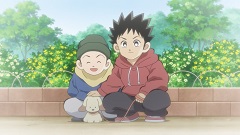
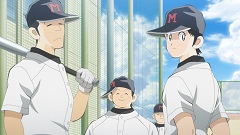
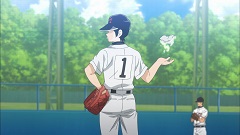
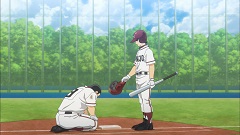
Something is clearly up with Nikaidou, despite his winning streak. The Tachibana brothers are quick to make light of his pitching ability, but this is owed more to their prodigious talent than anything else. Souichiro’s head isn’t so high in the sky, though, that he can’t sense when his battery mate is having an off day. At a practice shortly after their victory in the prelim finals, Sou remarks to his brother that there’s even less juice behind Nikaidou’s pitches than normal. This doesn’t set off any alarm bells for the boys, but it should for the viewers at home. Coupled with his early departures from practice and his absence from the early innings of the team’s current game, it’s clear that Nikaidou is hurt. In fact, he may be dealing with a lasting illness, which would totally recontextualize the preferential treatment he’s been given thus far. His obnoxious father and nepotistic coach may simply want him to experience as much playing time as possible, before his sickness advances too far.

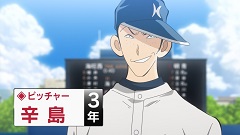
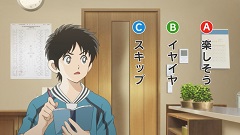
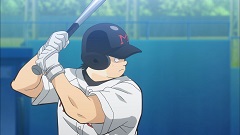
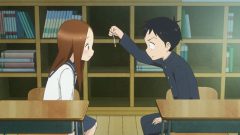
There are a handful of intriguing baseball moments here that don’t involve Meisei’s ace, such as the introduction of new rival Nishimura. He gets a freeze frame for his first appearance, signaling that he’ll be important down the line (an opponent lasting into the show’s high school years, perhaps). Nishimura takes an interest in Touma after watching him throw a bullet from third to first, which was one of the episode’s better moments from a production standpoint. I nearly felt first baseman Imakawa’s recoil through my screen, making Touma’s rocket arm a tangible trait rather than a subject of much conversation. Most of the non-athletic moments weren’t animated nearly as well, but they were a delight to watch anyway, as has been typical of Mix so far. My particular favorite was the teasing between Otomi and Touma, where she feigns surprise at his preparation for a big interim exam. The secret ingredient to this scene is that she enters the room twice: once to get homework help from Sou, and a second time after the reality of her stepbrother’s uncharacteristic studiousness kicks in. Their banter is kept light for now, but we’ll be in for some stepsibling romance down the line if this keeps up. Despite the taboo, that’s the element of the show that most piques my interest, so I hope none of it is omitted in the transition from page to screen.

Mix – 02/03

Star Crossed is one of the oldest anime blogs left on the English-speaking internet, so we’re bound to have a few devotees of Mitsuru Adachi, that master of classic storytelling, among our readership. If you fall into that category, you might wonder why someone who has never read or watched Touch, his seminal work, has chosen to cover its sequel. It’s partly because my brain isn’t big enough to write about Sarazanmai on a weekly basis, but a more relevant reason is my love for Cross Game, which made me into an amateur Adachi fan after 50 all-too-brief episodes. The man’s grasp of subtle conversation, boyish humor, and slow-building romance became an addiction that, with Mix’s airing, I’m happy to revisit. I’m likely to miss references to Touch here and there, but I’ll do my best to blog this new adaptation on an episodic basis.

The one thing that I can talk about with some authority at this stage is Mix’s OP, which is brilliant. Its sense of nostalgia is aided by every element of its design, from its use of bloom lighting to the technique of aging the characters as they turn in circles, connecting their past and present selves. I particularly love the middle section, where the screen cuts between the male and female characters’ equipment and uniforms. By putting the tools of their passion front and center, it’s as if Mix intends to celebrate humanity’s dedication to art and sport. Of course, this being a baseball series, the visuals cut to pure diamond action as the accompanying song swells, and what a song it is. Kenta Kataoka’s voice has a wistful quality about it for someone so young, which makes “Equal” by Sumika a perfect pick to introduce an Adachi series. Given this OP’s fantastic storyboarding and terrific song choice, it’s already my pick for best of 2019.

As for the body of the anime, it doesn’t have the same immediate appeal. If Cross Game’s first episode was a lightning bolt to the heart, Mix’s is a lazy spring day. These second and third episodes stuck with that slow and simple feeling, but given the effectiveness of the show’s character work, I’m just fine with that. Souichiro and Touma’s competitiveness is immediately believable – instead of the one-note rivalries held by other brothers in anime, they’ve got layers of mutual respect and suppressed resentment built into their relationship already. The scene where Sou commands Touma to go home and look after their younger sister, for example, is the total package. Though Touma is the more talented baseball player of the two, and not related to Otomi by blood, he still obeys his older stepbrother and heads back to the house. When we learn about the older sibling’s desire to be a pitcher near the end of episode 3, and that Touma “made him a catcher” due to his athletic genius, Souichiro’s bid for dominance in other parts of their relationship clicks straight into place.

It’s Sou’s stepdad who shares that revealing conversation with him, in one of my favorite moments from either of these two episodes. Both he and his second wife are doting parents, if a bit silly at times. Their charming personalities (as well as their kids’ speculation about how a goofball like Eisuke landed a woman like Mayumi) help us to process their blended family situation, which would otherwise have been left entirely to the female narrator. Knowing that she’s meant to be a character from Touch keeps her from feeling entirely out of place, but I’d still prefer to learn these things via dialogue. That’s my one and only complaint about the series thus far, though. The lack of emphasis on baseball is working to the anime’s benefit so far, and there are plenty of opportunities for us to learn about characters like Otomi, as in the wordless flashback to her days as a shy summer festival attendee. There’s plenty more I could write about what the show is doing right, but I’m running out of space. Next week’s post will be dedicated entirely to the episode in question, rather than my history with Adachi or the series’ OP, so I hope to start digging a little deeper into Mix in the near future.

Kaguya-sama wa Kokurasetai Review – 84/100

Anime draws on many different media types in its endless search for properties to adapt, but manga is still the king of the bunch. And why not? It’s a distinctly Japanese art form, their main demographics have significant overlap, and manga’s panel-based layout means that some of the anime staff’s work is already done. Plenty of adaptations stick very closely to their manga counterparts (hopefully out of respect for the original), but some receive bold reinterpretations. Kaguya-sama doesn’t go quite that far, but under the guidance of director Mamoru Hatakeyama, it does manage to take on a life beyond that of its source material. Hatakeyama’s work on screwball comedies with Studio Shaft near the start of the decade gave him an eye for tricky camera positioning and outrageous character expressions. Since the show came to a conclusion several days ago, I’ve been skimming the manga and noticing the ways in which he embellished scenes by making full use of the student council room, where at least half the anime takes place. This is probably why that environment is rendered using cel-shaded 3D models, since it would allow extra freedom in deciding which angle of the room to capture.

Kaguya-sama’s move to television works to its benefit in plenty of other ways, as well. Its comic timing is terrific – I vividly remember the moment when a dump truck unloaded a towering pile of flowers directly onto Kaguya’s head. The slow, quiet manner in which the petals piled around her sold not just that scene, but a whole seven-minute segment. Things get loud when they need to, as well, with each battle of wits between Kaguya and Shirogane feeling more critical than the next. The show’s use of bright red and blue backgrounds (representing the two main characters) and urgent string accompaniments pushes their mental matches to absurd heights, only to bring them crashing down when fan favorite Fujiwara unwittingly interferes. Special mention must also be made of the series’ stellar casting, which put newcomer Aoi Koga in the lead role and reaped immense rewards as a result. Her blend of haughtiness and vulnerability made Kaguya my favorite character by a mile, but the other student council members had great actors behind them, as well. Even Ishigami, who I wasn’t originally fond of, found his stride once Ryouta Suzuki embraced the bitter, world-weary nerd at the heart of his character.

All these elements made Kaguya-sama successful as a comedy, but director Hatakeyama’s experience with drama paid off as well. Having headed up the masterful Shouwa Genroku Rakugo Shinjuu, he clearly knows how to frame more serious material. The two-part finale “I Can’t Hear the Fireworks,” which dug deep into Kaguya’s isolation and sorrow, is all the evidence one might require to support that claim. The moments when she reunites with her friends and realizes the depth of her affection for Shirogane are among the most heart-stopping in recent romcom history. Towering though that achievement may be, though, the blending of comedy and romance in simpler scenes also carried a kernel of drama, which was crucial in constructing a plausible on-screen relationship. Tropes like shared umbrellas and backseat bicycle rides felt more satisfying in Kaguya-sama than in other series, since Shirogane and Kaguya’s famed intellects gave way to their passion at just the right moments. Not all of these scenes were perfect – I had my reservations about a couple chapters near the end of the show’s run – but the hit-to-miss ratio favored the former by a sizable margin.

So what’s the final verdict? That’s up to each viewer to decide individually, but mine is quite positive. The comedy is clever and visually inventive, the romance is cute, and the dramatic conclusion alone is worth the price of entry. In fact, the series was so good out of the gate that my expectations went soaring for the second half, which didn’t always meet them. Still, I enjoyed my time with Kaguya-sama, and if you like shows that skillfully walk the line between silliness and sweetness, I think you will, too. It might not be on par with the Kare Kanos or Toradoras of anime, but it’s a thoughtfully-directed romantic comedy that ought to be watched by fans of the genre.

Kaguya-sama wa Kokurasetai – 12

And so we reach the end of Kaguya-sama’s twelve episode run. There’s no word of a second season yet, but given the original’s enthusiastic reception, I have to imagine that one will come. (We ought to get an OVA at the very least – otaku have come to expect them when shelling out for pricey Blu-ray boxes.) A sequel may be even more likely when we consider the strength of the first series’ conclusion, and this one definitely ended on a good note, following up on both the emotional promise and the more light-hearted elements of the previous episode. Kaguya’s newly created Twitter account and the Metropolitan Ramen Kings both played a role in her jailbreak, just as sickly Kaguya’s fixation on fireworks pointed to a deeper, more personal issue. The show’s reuse of seemingly minor elements is a big bonus for me, since it adds to the feeling that everything on screen has been put there for a purpose. Even when I didn’t care for them at first, the payoff was typically somewhere around the corner. Kaguya-sama’s standalone chapters were some of my favorites in this one cour run, but a little bit of continuity goes a long way in authenticating the show’s world.

The bulk of this final episode was dedicated to “I Can’t Hear the Fireworks,” putting a cap on the post-credits scene from episode 11. Of all the things to love about this two-parter, my favorite is the contrast between the reasons for Kaguya’s lack of hearing. In the past, she was forbidden from attending festivals or fireworks displays, so she could only watch from her bedroom window as they burst into view without sound. She sees the fireworks through a window in the present, as well, but this time she’s together with her friends and her first love, and it’s the furious beating of her heart that drowns out all other noise. These different contexts give the chapter a poetic flavor, as we witness how universal things like friendship and romance can prove so impactful in one girl’s life.

Kaguya might have stayed confined to her room and missed making a valuable memory if not for Hayasaka’s encouragement and the help of the student council members (including Fujiwara, who opted to skip her Spain trip in favor of attending the festival with her friend). In fact, she was originally so heartbroken that she wished she’d never gotten close to them, so it wouldn’t hurt quite as much when she was forbidden from seeing them. The series depicted that pain through multiple shots of Kaguya’s tear-stained face, as well as more experimental live action cuts of black windblown strands (representing the veil of hair with which she protects her eyes). When these sorrowful images eventually gave way to anticipation and wonder, there was a feeling of catharsis that most anime series couldn’t hope to match.

Of course, Kaguya-sama wouldn’t be a romcom without an eventual return to the status quo, and one last contest in the council room serves as the series’ parting note. It’s a chapter that focuses on spring cleaning, to boot, as if to polish and dust the show of excess sentimentality. Nevertheless, there’s a sense that Kaguya herself has changed a bit. Although Shirogane is preoccupied by the scale of his actions on that festival night, his crush is desperate to say “thank you” for those same efforts. Try she does, but even after ejecting Ishigami and Fujiwara from the room, she’s still foiled by a misunderstanding that causes the president to flee the scene in embarrassment. It’s worth noting that she chases after him, though, a gutsy impulse that she never could have acted on a year ago. Shirogane is still terribly self-conscious, and Kaguya is still learning how to process her new feelings, so their continued separation makes sense. But at least they’re headed in the same direction, with good friends to support them on their journey, and plenty of time before high school ends to grow closer together.

Kaguya-sama wa Kokurasetai – 11

Can somebody explain why, in an episode where Kaguya’s loveless upbringing is shown to have profoundly damaged her, 14 minutes were dedicated to stories about eating ramen and not understanding Twitter? With only two slots left in your single cour run, these had to be among the most skippable chapters in the manga (assuming they’re not original material), yet they consumed the bulk of this episode. Was the goal just to pass time so the summer festival could double as the series’ conclusion? It feels like every time we get an episode that reaches the standards the beginning of the show set for itself, the next one has to take three steps back. I’m sure many of you are tired of reading these sentiments, but I’m just as tired of the weird missteps the anime is making. Taken as a whole, this batch of chapters wasn’t even bad, just the sort of unfocused grab bag the show ought to have ironed out of its repertoire by now.

The first of our stories this week was more about Hayasaka’s occupational weariness than Kaguya’s lack of technological prowess. We’ve seen that Kaguya’s valet does a great impression of a normal high school girl, which helps her blend in at Shuchiin Academy while looking after her charge. What’s clearer than ever after this week, though, is that she has a real desire for normalcy, and perhaps even an awkward first romance of her own. She plays it off as a bit of bathtime musing, but it’s clearly real, which is what makes Hayasaka such a good fit as Kaguya’s friend – they both want freedom from their household’s oppressive atmosphere. If we’re being honest about the broader appeal of this episode, though, Kaguya’s search for “Twitter” in the dictionary will probably make a bigger impact than anything about the girls’ relationship. Her struggle to replicate a captcha phrase was the kind of “so relatable” moment that barely outranks reference humor in terms of comedic effort. And just imagine all the 13 year old guts her confusion about protected accounts must have busted. Is my general disdain for social media coming through right now, guys?

Only slightly better was the ramen chapter, which handled narrator duties over to a brand new middle-aged salaryman character who will probably never be seen again. He creepily observes every step of Fujiwara’s ordering and eating processes, and judges her to be a worthier ramen connoisseur than himself after she buys a fantastic dish and devours it with childish abandon. Was this segment funny? I’d say so, yeah. Some of the dramatic shading on the narrator’s face and his overreactions were worth a chuckle or two. But it didn’t teach me anything new about the characters I like. Even Fujiwara was short-changed by this chapter, and she was the only council member to appear on screen. A far better version of the same story might have cut out the middle-aged man and included both of Chika’s sisters in the restaurant with her. Then we could have learned about two new characters, while getting a different perspective on a familiar one by contrasting her with her family. Perhaps the temporary narrator was meant to parody a Japanese pop cultural figure? If not, this chapter feels like a missed opportunity, as the show is quickly coming to a close, and every minute counts.

The bit with Shirogane and Kaguya visiting the student council room and missing each other by mere moments felt abrupt, probably to make room for the post-credits scene. Those few minutes were certainly the most intriguing part of the episode. At first I thought Kaguya had been summoned to their family’s Kyoto home for a marriage interview, given the table where she was sitting, but apparently all she was called to do was greet her father for two seconds as he walked brusquely past. Perhaps she was called out just to interrupt the shopping plans she made in a previous episode, which would make her father a meddler on top of being an “asshole” (Hayasaka’s words). This is the third episode in a row where Kaguya’s love for fireworks has appeared, and here it carries the most emotional heft of the three. Fireworks are loud, bright, and colorful – all things Kaguya was never allowed to be as a child. Shirogane had better get his shit together and properly invite her to the summer festival. If her pained vocal delivery is anything to go by, she needs to reclaim her lost youth now more than ever.

Kaguya-sama wa Kokurasetai – 10

There are times when I judge anime series based on the number of screencaps I’m compelled to take per episode. This was one of those times. After closing the video and taking a look at my desktop, I was unsurprised to see it littered with mpv-shot files, all featuring distinct facial expressions, poses, and situations that were instantly memorable to me. The point I’m belaboring here is that this was a great episode of Kaguya-sama, even though it continued to explore a plot point from last week about which I wasn’t too jazzed. Though the consequences of the “sick in bed” plot were in focus for two of these three chapters, the show was packed with fun details and moments that had me smiling or laughing periodically throughout. Take the first segment, where Kaguya and Shirogane’s frustrations cause them to enter a gigantic argument over a piece of cake. Recognizing the need for de-escalation, Ishigami flees the room in search of Fujiwara, whose face (surrounded by sunflowers) balloons towards the camera like a scene transition from a retro American cartoon. The contrast between the heated fight in the council room and Fujiwara’s status as a comedic icon was too delicious not to play with, but the show pushed it even further than I expected with that silly logo. Kaguya and Shirogane’s rage marks popping like balloons was another neat touch, perhaps foreshadowing their anger evaporating once they took the other’s position into account.

The second chapter took a less conflict-driven, more thoughtful approach to the characters’ feud, with the president and vice president becoming advice seekers (rather than the advice givers they’ve been in past episodes). Kashiwagi and Ishigami give typically female and male answers to their inquirers’ questions, but also prompt Kaguya and Shirogane to think more deeply about the situation. Kaguya’s desire to have been touched is a tricky one to navigate (especially given her lack of sexual knowledge), but I think the show managed it with some grace, since her affection for the president is more than physical. What’s particularly interesting about the resolution of their fight is that Shirogane’s apology dovetails with the fulfillment of her wish, lending a sort of destined feeling to their romance. After Kaguya’s moment of reciprocity, the whole thing ends with an even playing field, but also the sense that some progress has been made between them. To me, this is the best way such a story could have possibly concluded, so bravo to the mangaka for providing a perfect blueprint for the anime. Also, Ishigami deserves a special mention for unconsciously (and hilariously) pouring all his frustration with women into his conversation with Shirogane. Their bro session nicely sets up a moment they share in the week’s final segment.

Free from the shackles of its sexless sleep session, Kaguya-sama revisits the idea of our characters taking a trip together, since summer vacation is quickly approaching. They quickly settle on a summer festival, which excites the fireworks-obsessed Kaguya in the episode’s cutest moment (pictured above). The layout of that scene was perfect, with the prospect of pyrotechnics proving so enticing to the VP that her enthusiasm forces even the bubbly Fujiwara out of the shot. Each character was used to great effect in this scene, with Ishigami acting as a unifying agent for the rest of the student council. Fujiwara temporarily adopts his role as the one to leave the room under the influence of some social trauma, but my inner theorist wonders whether this is just an excuse to get her out of the way for a bit. With the number of festival attendees down to three, perhaps some sort of romantic triangle will develop around a yukata-clad Kaguya? After an episode this good, I’m excited to see how the show’s summer vacation pans out, regardless of my ridiculous speculation. Kaguya’s in her right mind – all’s right with the world.

Kaguya-sama wa Kokurasetai – 09

I, uh, wasn’t crazy about this episode of Kaguya-sama. As the end of the decade approaches, I’ve been thinking about my favorite anime of the last ten years, and I was originally hopeful that Kaguya would be able to hang with rom-coms like Ore Monogatari and Gekkan Shoujo Nozaki-kun on that list. Unfortunately, the second half of the show (so far) hasn’t appealed to me like the first part did. My main gripe with this particular episode was that it pushed some of its characters outside their established behavioral boundaries. It never happened without justification, but some of the reasoning it provided felt inadequate, especially in the last of these three chapters. Since all three of them led into each other, with Kaguya’s sickness as the core focus, the whole package was kind of soured. Let me just skip to the third segment and explain what I mean here.

When Shirogane visits a sick-in-bed Kaguya, he discovers that she has transformed into a half-delirious infant (something he’d hoped to see during the Concentration game in part two). Her design is amended accordingly, with downturned eyes and two-tone irises, as opposed to the sharper, more colorful expression she typically wears. She’s on the floor, searching for fireworks in a mess of her own making, and has to be mothered back into bed by Hayasaka (who’s in disguise as a gaijin maid). Aoi Koga even does her best Konomi Kohara impression to give her character the same sense of innocence that Fujiwara carries. It’s actually Hayasaka who provides the explanation for Kaguya’s current state: since her mind is always working at full capacity, her ego is particularly vulnerable to her id during periods of illness. Yes, the show actually trots out Freud’s model of the psyche to explain a character’s sudden witlessness, but this isn’t immersion-breaking by itself. Kaguya-sama has been dropping psychological terms into its script since the beginning.

The real problem stems from the show’s attempt to have it both ways, with a sudden seriousness taking hold when Kaguya explains that she can only manipulate people to express her feelings. We get a clear look at the Shinomiya motto during this scene, which hangs ominously on the wall and instructs family members not to love or rely on anyone. This maxim can be glimpsed in the hallway leading to Kaguya’s room several times before her admission, so it’s nice that the show primed us for that moment, but given the infantilized version of her character on screen just minutes beforehand, the whole segment feels inappropriately sincere. Everything that follows (Kaguya’s dominant id pulling Shirogane into bed with her, then kicking him out when she wakes up in her right mind) feels like the usual anime rom-com bullshit. Kaguya’s past fantasy about the Shirogane family accepting her was a much funnier and less direct way of detailing her oppressive home life, for my money – everything to do with her sickness was all over the place.

Chapters one and two from this week didn’t hold much appeal for me, either. This writeup has already been negative enough, but for the sake of completion, I’ll say a few words about them. In the first segment, there was too much shouting for me. Fujiwara screaming about the kleptomaniac thunder god, Kaguya’s maniacal switching of the president’s phone battery (complete with off-tempo clock sounds for some reason), and Shirogane’s war cry as he pedaled his bike through the rain grated on my nerves before I ever got to the third chapter. It was too much intensity for too little payoff. As for the memory game in the middle, it was fine. Notably, we got to see Fujiwara at her most devious, utilizing multiple rigged decks of cards to win the honor of visiting a sick Kaguya. She’s played to win before (think back to the banned word game), but this was a new side of her that felt natural, especially given her sheepish reactions to being caught. Alright, I’m off my soapbox for this week.

Kaguya-sama wa Kokurasetai – 08

Kaguya-sama hit a low point for me last week, so I was hoping this episode would be more my speed, and that wish was granted with the adaptations of three fun chapters. One used the introduction of a new character to prey on Kaguya’s unmet desires, one was a narration-heavy dive into academic life at Shuchiin Academy, and one featured Ishigami in his best and most sympathetic role so far. The aforementioned “new character” is Shirogane’s little sister Kei, who made a previous appearance from the neck down, but only came into focus this week. Kaguya is fascinated by the traits she shares with the president, but I was mostly hypnotized by the ornate ribbon she wears in her hair. It’s a cute look, but its extravagance makes Kei feel like a calculating girl. That’s something she might sense about Kaguya, as well, given the nervousness she felt around her. Kaguya was certainly up to her usual scheming ways during this chapter, wondering how she might strike up a relationship with the younger girl to better approach her brother, but her thought process betrays a deeper motivation: Kaguya is “starving for familial love.” Though she has Hayasaka to confide in, I don’t think we’ve seen or learned anything about her parents. The scene she dreams up where the Shirogane family accepts her as one of their own is quite sad when you consider where that dream comes from.

The middle chapter was much sunnier in tone, despite the way it put our main characters through the academic wringer. A fair number of the recent stories involving both Kaguya and Shirogane have ended with one silently acknowledging their feelings for the other, but they were much more combative here. With exams coming up fast, they both lie through their teeth about their level of preparation for the tests, probably hoping to lure the other one into a false sense of security (as well as make their victory seem that much more impressive). Fujiwara has been the show’s wild card from the very first episode, but this segment was perhaps the clearest indicator of that status thus far. Kaguya and Shirogane’s deceptions have the slippery-voiced narrator calling them out left and right, but he can’t say a negative word about the pink-haired crowd favorite, whose smarts aren’t sufficient to spot her friends’ lies. It might have been nice to get an outside perspective on exam season from a couple side characters, but Fujiwara already provides a nice contrast to the two egomaniacs, neither of whom end up winning or losing with humility (not inwardly, at least).

Though the last chapter wasn’t my favorite, it provided some essential context-via-backstory for Ishigami, who was once a frequently-truant middle schooler. This lessened interaction with his peers probably set the stage for his current image as a gloomy geek, which not even a spot on the student council has managed to cure. The show pulls a neat trick by placing the events of this story during the lead-up to the exams that conclude the previous segment, allowing us to glimpse a more serious side of the students’ preparation. Ishigami isn’t lacking in wits, just motivation, and it’s Kaguya (of all people) who spurs him to avoid being held back a year by subpar test scores. His usual fear of her harshness gives way to appreciation, especially once she sticks up for him in a library scene that may be the launching point for something more in their relationship. Shirogane once thought of Kaguya as cold and unapproachable, so I don’t see any reason why Ishigami’s trepidation couldn’t give way to affection. Kaguya seems unlikely to set her sights anywhere other than the president, but a one-sided crush from the treasurer’s end looks a bit more likely after this episode.

Kaguya-sama wa Kokurasetai – 07

We’re back in love advice mode for the third time this week, with Kashiwagi’s still-nameless boyfriend asking Shirogane for advice on how to hold her hand. Kaguya-sama has mostly avoided the prudish territory in which a lot of high school romcoms drown themselves, so I was relieved when Fujiwara busted down the door and pointed out that holding hands isn’t really that big a deal. Apart from a neat conclusion, this was the oddest of the three advice segments so far, since the president spends so much of it trying to coerce Mr. Boyfriend into getting a part-time job. I feel like something was missing from this chapter – was Shirogane supposed to get a bonus or some other benefit for recruiting a classmate? I know he values hard work and everything, but he pressed the issue so far that I thought there might have been a small omission regarding his motivation. On the other hand, the preposterous hand-holding prerequisites he dreamed up (such as renting a cruiser at sunset to establish the proper mood) somehow endeared him to Kaguya even more, which was cute.

Part two was all Ishigami, who’s still scared to death of Kaguya, though it’s a terror of his own making this time. Gossiping about your female classmates’ cup sizes is poor form, especially in a room where both girls (one of whom you believe to hold a grudge against you) are known to congregate. Ishigami doesn’t seem like the type to learn a lesson from Fujiwara’s paper fan smackdown or Kaguya’s threats, though, since he’s preoccupied with jealousy toward the popular guys in the soccer and other athletic clubs. His proposal of a happiness tax is especially funny given his role as treasurer, but it’s also kind of sad, since he’d clearly love to be well-liked with a girl on his arm. Though he rails against the pretenders among Shuchiin Academy’s club programs, he’d probably be happier if he became one. Honestly, my favorite part of this chapter was learning which clubs Fujiwara and Kaguya were in – an episode that splits its time between those two groups could be a lot of fun, even if they have to recycle the idea that they’re in competition for a chunk of the proposed budget.

Looks like this week’s post will be fairly short, as I have little to say about the wiener chapter. The show explains the joke: in the course of researching the birds and the bees, Kaguya has entered the phase where such terms make her laugh uncontrollably, and many wiener-related outbursts follow. I’m not against sophomoric humor in the least, but with a concept like this, it either makes you laugh or it doesn’t, and I fell into the latter camp. The 80s new wave track that played midway through this bit was a direct rip-off of Dead or Alive’s “You Spin Me Round (Like a Record),” so that’s neat, I guess? This whole segment was a dud for me, but I’m happy to write it off and look forward to next week, instead.

Kaguya-sama wa Kokurasetai – 06

The treasurer of the student council, Ishigami Yuu, finally got a proper introduction this week. I’d say this episode was his time to shine, but it’s actually the opposite – he’s so preoccupied with Kaguya’s apparent hatred of him (as well as his own social faux pas) that it was actually his time to mope. His design screams “introverted nerd”: dark hair and eye color, long bangs covering one eye, and headphones around his neck, ready to block out the world at a moment’s notice. Throw in the running gag about wanting to ditch school due to Stockholm Syndrome or a desire to kill himself, and you have a totally ReLaTaBLe character with whom all the sad dorks out there can identify. I don’t want to come down too hard on the guy just after his introduction, but I do have an issue with the series’ decision to create a character with his function (that being his detection of Kaguya’s more cunning personality). Kaguya-sama already does a great job of balancing her two selves through the use of internal monologue, narration, and quieter moments alone or with Hayasaka, where we see Kaguya as she truly exists. She’s already a well-rounded character, about whom we get plenty of different perspectives through the president, secretary, and admiring student body. I don’t feel as though an additional set of eyes, particularly not one that interprets things in such an exaggerated fashion, adds much to the proceedings.

This is undoubtedly an unpopular train of thought, as Aidan mentioned in the comments of a previous review that Ishigami is /ourguy/ among the manga’s fanbase. I can understand why that is, but if he’s going to contribute to the show, I’d rather it be on his own terms. For example, in the final chapter from this week’s episode, he’s struck with embarrassment after Fujiwara calls him creepy for a remark about her new conditioner, and he excuses himself from school. If his arc will involve battling his depression and social awkwardness to become a new or improved version of himself, that’s cool. This is a rom-com, so I assume the story will eventually nudge him in the direction of a female character, which could be the catalyst for that change. As long as his screen time isn’t dominated by a fear of the vice president, I’m down to see where he’ll go in the future (apart from “home” midway through every segment).

All of that aside, my favorite story from this episode was probably the Fujiwara-led barrage of psychological tests. These things usually function as a way for lazy writers to let their characters speak directly to the audience, but in a series built around deception, they were just another opportunity for comedy. I think this is the second time Shirogane has defaulted to being a siscon to avoid his crush on Kaguya being detected, and while he escapes for the price of the girls’ scorn, Kaguya gets overwhelmed upon realizing the meaning of the flower test. The shot of the dump truck backing up and gently covering her in a pile of petals was the best of the week, for my money. It was nicely stretched to allow us to anticipate the moment when they would fall, and to feel Kaguya’s shock at their intended symbolism. This show continues to be very well-timed, with another case coming near the end of the third chapter, where Shirogane frantically pedals away from Kaguya after failing to compliment her nails. Just as he and his bike are about to disappear from sight over a hill, he freezes in midair for a moment, emphasizing the hunched position he uses to flee the scene. It adds to the comedy of the moment, but also the light pathos of being too afraid to compliment the girl you like. Good storyboarding is likely responsible for these small successes, so kudos are in order for whoever has handled that task so far. We’ve arrived at the midpoint of Kaguya-sama’s 12 episode run, so I hope this level of attention is maintained during the show’s back half.