Summer Season 2019 Preview

Wooper: The sun is shining, the temperature is rising, and the anime just keeps on coming. It’s time for our quarterly season preview, which we’ve trimmed down so it can look its best for the summer. Unlike previous editions, we won’t be examining every new show in this post. Instead, we’ve picked the 16 most promising and/or popular shows to preview (though there’s a bit of fodder near the start), and kept the rest confined to the poll down below. We’re still planning to give our thoughts on every summer series during First Impressions week, but when it comes to the season preview, we want to highlight the good stuff – or at least the stuff that won’t make you wonder why you’re an anime fan.

Most seasons have just a few great titles concentrated at the top, and this one is unlikely to be an exception. What’s interesting about this particular summer, though, is that the three most anticipated non-sequels are all action or adventure series. Two of them are big shounen properties, which our authors tend to have mixed opinions on, but these appear to have some serious promise. Will this be the miracle season where we all agree on what’s top tier, or will a handful of underdogs steal the spotlight once July gets underway? We’ll find out in a few weeks, but for now, let’s run down what might be worth your watch this summer.

What will you be watching this Fall?


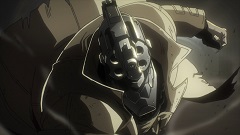
Kengan Ashura

Studio: Larx Entertainment
Director: Seiji Kishi
Series composer: Makoto Uezu
Source: Web Manga

Mario: Another Netflix original offering and this show looks and tastes like Baki from last year, with the trailer focusing solely on their fights. Moreover, it’s an entirely CG show that sadly doesn’t look that polished. While all these are enough for me to discard this show, there’s one saving grace from the show that holds me back. The key here is the director Seiji Kishi, who directed popular hits like Angel Beats, Assassination Classroom, and MY TYPE OF SHOWS such as Humanity Has Declined, Tsuki ga Kirei and Asobi Asobase. That being said, apart from Assassination Classroom, this is the first anime where he ventures over to shounen action-centric material, and the fact that this is his first full CG project doesn’t spark much confidence. I don’t know. I grow mixed on the Netflix model when it comes to how they handle their original anime. It’s true that they have larger budgets and allow more creative freedom, but for me they aim for more mainstream tastes. Stuff like Baki, this one or Ultraman last season aim for specific fanbases, and their more flashy titles: Carole & Tuesday, Little Witch Academia, Violet Evergarden are products of famed directors/studios producing something weaker than their true talents. Maybe just like last season’s work by Kenji Kamiyama (Ultraman), this one will come and go with a weak splash before vanishing altogether.


Arifureta Shokugyou de Sekai Saikyou

Studio: Asread, White Fox
Director: Kinji Yoshimoto
Series composer: Shoichi Sato
Source: Light Novel

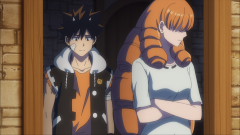
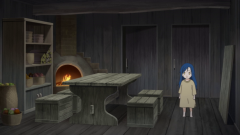
Wooper: I managed to sprint through a few chapters of the Arifureta manga before I had to bail out. It’s based on a light novel, but assuming the manga’s story and characters are the same, the author must have been playing isekai bingo when he conceptualized the series. The MC is an Average Gamer who somehow attracts the attention of the school idol, and is therefore hated by all the handsome, athletic bros in his class. One day, when their bullying gets particularly vicious, he wishes they’d all get transported to a parallel world – and that’s exactly what happens. Video game logic sets in pretty quickly, everybody starts dungeon crawling, and eventually the nice guy protagonist is betrayed by one of his classmates and loses an arm. Last year’s Shield Hero was insulting enough; I don’t need to read any further to recognize this as one of its clones. Really, the only reason I previewed this was to look back and say “I told you so” when its defenders get to the penultimate episode and realize it was a waste of time. Not even White Fox, who usually do good work with fantasy series, can save this premise. In summary, if you’re thinking about watching this, don’t.

Continue reading “Summer Season 2019 Preview”

Mix – 10 [Just a Walk]

Love is in the air for seemingly every teenage character in Mix’s growing cast, and with no baseball game to distract them, this episode is entirely dedicated to complicating the show’s relationship chart. Even the cold open is a miniature romantic farce, with minor characters Nishimura and Arisa deluding themselves into viewing a conversation between their rivals as something sinister. Arisa proves far more adept at this deception, especially when you factor in the cluelessness of every male character to make it on screen before the OP. Honestly, I don’t remember the names of all Otomi’s would-be suitors, but when [Touma’s friend] and [Otomi’s classmate] came sliding down the hill and into an already crowded scene, I was kind of apprehensive. Sure, I got a chuckle out of the various characters’ desperation and exhaustion, but this felt like the opener to a lightweight episode – or so I thought. Thankfully, “Just a Walk” ended up being one of Mix’s best episodes yet, and it’s all thanks to Haruka Oyama.

Until this point, Haruka hadn’t done much except fill the role of girl next door, but this episode gave her much more to do than that. It’s not as though this episode changes her proximity to the main characters’ house, or makes her any less attractive to Souichiro and Nan-chan (who’ve been frequenting the ramen place where she works part-time). But it does give her a lot more personality, and reveals her past acquaintance with Touma, who she met at a funeral at age three. Turns out she’s got a killer memory, having recalled their encounter from all those years ago – and she likes how he’s grown up. This sheds new light on her cryptic question to Otomi several episodes ago: “Are you worried?” Haruka was feeling her out even then, probably suspecting their shared crush on Touma, and now she’s making her move. Her method of sending him an invitation he can’t refuse was too cute, to the point that I started laughing when Touma automatically greeted her with the go-ahead phrase “good morning,” and she responded with a salute. Their date poses a problem for the hapless kid, as he understands the significance of Sou’s sudden ramen addiction, but after falling into her trap, what choice does he have?

Instead of getting sappy, Mix maintains its wry sense of humor even as the two go out; Touma’s impatience with their multiple train rides leads him to make several comments about the “walk” they were supposed to take. Said walk is mostly uneventful, but the show threads together Haruka’s admission of recognition with a separate funeral story, which depicts three year old Touma as a cheerful kid who had trouble processing his mom’s passing. This detail launched me back to a related one from early in the episode, where Touma remarked to his stepmother that Sou and Otomi were “depressed and unsociable” when he first met them. Connecting these dots was my favorite part of this week’s Mix, as they indicate that Touma still may not have grieved for his mother’s death. To have held on to the idea that two children mourning the loss of a parent were “unsociable” paints a picture of repression, at least in my view. Suddenly Touma’s isolated outbursts on the baseball field make a bit more sense, as well… I really do love Adachi’s character writing, and episodes like this one are great vehicles for it. Now, if only I knew how many more episodes we could expect before the show takes a hiatus.

Mix – 08-09 [My Brother/Big News, Right?]

We may have entered the high school phase of Mix’s story, but the show is still having fun at every opportunity. The opening of episode 8 celebrates the Japanese tradition of glancing up women’s skirts when the wind blows, while a terribly misused ska song plays in the background. Institutionalized sexism has never been so appealing! Then there are the references to a past incident where Coach Oyama saved Nan-chan’s life, with both men pensively staring through rain-soaked windows at different points in the day. In any other series these thoughtful moments would set up a lengthy flashback, but Mix just cuts away and laughs at our expectation that the trope would be fulfilled. Even the main story of these episodes – the practice game against Toushu High – is dotted with the ridiculous banter of the pitchers’ younger sisters. The show is certainly enjoying itself, but it often feels as though it’s winking at us. Be it the show’s self-referential nature or its tendency to speak directly to the audience, these moments run counter to its natural dialogue and simple design work (in one man’s opinion, anyway).

Talking about the practice match versus Toushu, it’s a chance meeting that creates that possibility (as is often the case in life). The new sibling pair of Arisa and Hiroki Mita both find themselves at a family restaurant with Souichiro, where the proud Arisa introduces her brother the star pitcher to Sou. The younger sister is only interested in making herself look impressive by proximity, but she ends up instigating a rivalry between Hiroki and Touma once their game gets going. Mix draws some very clear parallels between the two boys, the biggest of which is their tremendous talent even as first year high schoolers. Hiroki managed to lead his team to the quarterfinals of the Koushien as a freshman, and though he’s older now, Touma matches him pitch for pitch once he enters the game. Toushu is the third or fourth school that Mix has raised as a potential opponent for Meisei, but the similarities between their pitchers puts Toushu first in my mind. After this game, Touma’s spot as the starting pitcher is all but assured, though I don’t know if his first year of high school will be the one that the series ultimately focuses on.

The younger Tachibana’s ascension is big news for nearly every character in the show, as the title of episode 9 would lead us to believe. It’s a seismic event for every baseball player in the cast, and a matter of pride for Otomi, who has all the faith in the world in her stepbrother. Even their father, who dreads the extra visits from Touma’s alcohol-jacking coach after such a performance, is impacted. Despite all these changes, however, the fact remains that Meisei lost the game, and their youngest pitcher isn’t happy about it. After the game, he sulkily regrets the netting that prevented Hiroki from confronting a disrespectful spectator, as a violent act would have disqualified him from the summer tournament. Otomi beats him about the head with a bucket for that remark, then ditches him to accompany her class heartthrob to the hospital. It’s here that the show returns to a type of comedy that I love: understated humor meant to mask displeasure. Touma turns to his pet dog, bucket now in hand, and remarks that even if he takes a larger-than-average dump, they’ll be covered. Hopefully you’ll pardon the extensive recap of a minute-long scene, but boy, did Mix manage to impress me right as this episode ended. The next one ought to give us a little break from baseball, so let’s hope the show’s pleasant subtlety carries over!

Fruits Basket (2019) – 06-08

Here’s the second of two substitute posts this week. I’m a lot less enthusiastic about Fruits Basket than I am about Carole & Tuesday, though, especially after the former’s most recent episode, which was repetitive and tedious. Flashbacks and recap segments shouldn’t be condemned automatically, as animation is time-consuming and expensive to produce, but a franchise like Fruits Basket should be handled less delicately than it has been thus far. This is its second TV incarnation, for crying out loud – even if the manga had this much hand-wringing from Yuki and Kyou in these chapters, they could have cut some of it in the transition to TV. Their unceasing fixation on Tohru might be romantic in the eyes of young Japanese girls, but I’d label it amateurish, especially when their inner thoughts are so similar across episodes. But I’m getting ahead of myself here. Hit the jump to read my take on these three installments of Fruits Basket (I sort of liked one of them!).

Continue reading “Fruits Basket (2019) – 06-08”

Carole & Tuesday – 05-07 [Every Breath You Take/Life is a Carnival/Show Me the Way]

Sorry for the delay in covering these episodes, folks. Mario has been overseas for a few weeks now, but he’ll be returning home soon to pick up the pen once more. In the meantime, I’m planning to blog these episodes of Carole (plus Fruits Basket 6-8 tomorrow) to lighten his workload a bit. Shinichiro Watanabe is one of my favorite anime directors, so I’m glad to have this opportunity – his Road Show Trilogy is comprised of three of my favorite TV series, and even his lesser works are packed with visual style and mood-enhancing music. Can the same be said of Carole & Tuesday in Wooper’s opinion? Read on to find out.

My biggest issue with the show so far lies with its two lead characters. We have a bit of interesting information about them: Carole was an orphan raised in a refugee camp who changes jobs as though they were clothes, and Tuesday is the runaway daughter of a politician. They became fast friends based on their love of music, and now they’re trying to make it in the big city. And… that’s about it. We’ve got a decently-realized Martian future on our hands here, but the show is content to place them on the outskirts of it, instead of right there in the thick of things. Think back to the major beats of these three episodes. The girls play a gig for 10 people, then play a festival for tens of thousands, and then try out for an American Idol knockoff called Mars Brightest.

Continue reading “Carole & Tuesday – 05-07 [Every Breath You Take/Life is a Carnival/Show Me the Way]”

Announcement Time – Writers Recruitment #2

Applications are closed. To everyone who submitted, thank you for your interest!

In June of 2017, I applied to be part of the team here at Star Crossed. Now, nearly two years later, I’m writing our new recruitment post. Time flies when you’re blogging anime.

With Aidan’s recent departure, it’s time for us to shore up our roster a bit. More writers means we’ll be able to cover more series, include more perspectives in our First Impressions posts, and perhaps introduce new features like Lenlo’s Throwback Thursday. Seasonal anime will always be our bread and butter, so we’ll be asking new recruits to give us a hand starting with the Summer 2019 season. If you watch anime week-to-week and want an established platform to write about it, then we’d love for you to apply.

Text blogging isn’t a glamorous job in this era of video sharing sites and social networks. If your application is accepted, your only rewards as a writer will be a sense of accomplishment and the rare message from an appreciative commenter. Keep at it long enough and you may even get one or two not-so-appreciative messages! Mario, Lenlo and I will be grateful to have you, though. We’ve all got different tastes, so you’re sure to find somebody you click with. We’re also flexible regarding upload schedules and show selection, though we’ll begin to expect a bit more once you’ve settled in.

Still keen on applying? Hit the jump for details!

Continue reading “Announcement Time – Writers Recruitment #2”

Mix – 07 [Worried?]

What’s with all the A-list seiyuu in Mix? The four main characters are voiced by some of the biggest names in the industry right now: Yuki Kaji, the Uchida siblings, and Kana Hanazawa as new character Haruka. I tend to dodge a lot of the shounen and harem series that feature Mr. Kaji, and the Uchidas haven’t made a big mark on my anime consciousness yet, but there’s no denying their popularity. HanaKana is a favorite of mine, though, and I’m a bit worried about how Mix is set to utilize her. Haruka is the show’s girl next door, and she seems totally aloof regarding the boys’ fixation on her. They all rush to chat her up on the first day of high school, and even after they’re beaten back by her childhood friend Nangou, she maintains a puzzled facial expression. The camera even creates opportunities for the Tachibana brothers to do some ogling, from a relatively tame upskirt shot to a fresh-out-of-the-bath pose when Touma walks in on her. The pleasant ring of Hanazawa-san’s voice is wasted on assurances that he “barely missed the show,” or not to worry because she’d already put on her panties.

Maybe none of this is really important, and I’m just reaching for things to talk about regarding this episode. It’s certainly light on baseball and heavy on juvenile romance, with Haruka’s appearance cementing a love square between herself and the mixed Tachibana kids. The title of this episode comes from a conversation between Otomi and Haruka, when the older girl asks whether Otomi is worried that she might steal one of the boys away. It’s a subtle but effective way of cutting right to the heart of the younger girl’s crush on her stepbrother, but it comes a bit too soon in their relationship. Sure, the kids’ parents are longtime friends, but Haruka has only just met the Tachibanas. Adachi’s characters are usually too mature for their age, but for a girl to banter with a new acquaintance about her incestuous feelings just a day after meeting her is preposterous. Did we skip a bunch of chapters from the manga here? It doesn’t help that their whole visit feels strange, from the convenient bath breakdown to the peppy guitar and recorder-led tune that overstays its welcome.

It’s not enough that the high school hormones are flowing in tropey fashion, either, as Otomi has to pull double duty as a romantic interest in a middle school story that felt superfluous. The next episode preview indicates that the new middle school girl has a baseball-playing brother, so maybe Mix will leverage this new love triangle in order to get back to the diamond soon. It’s funny, though – my favorite parts of Cross Game were always those spent away from the baseball field, and now I can’t wait for Mix to head back there. Everything to do with the new middle school characters felt like a distraction, though I can see where we’re headed. Some of the younger kids need to age up before the definitive Meisei comeback year, so the story is biding its time until then. I just wish that sense of playing the waiting game wasn’t so evident in the show’s pacing and choice of subject matter.

Mix – 05/06 [You’re a Pitcher, Right?/When Spring Arrives]

Two weeks ago, I wondered how long Mix’s middle school arc would stretch, given that its ultimate destination was the Koushien tournament. Apparently the show had a similar question on its mind, as these two episodes pushed through an entire year’s worth of story. In fact, it was episode 6 that did the majority of the time skipping, with its focus on the changing seasons. I much preferred episode 5 for its comparative calmness and light foreshadowing, though it also concluded the first Tokyo Tournament with some haste. After making a late appearance on the mound, Nikaidou quickly lost the game for his team by giving up five runs in a single inning, and the show didn’t even mount an attempted comeback for the home team. This was all in service of the later reveal that Nikaidou was dealing with a potentially fatal heart condition, thus explaining his father’s doting behavior and his coach’s bullheadedness. The narrator provides even more context near the start of episode 6, detailing the friendship between the two men and the father’s past as a pitcher. Personally, I would have loved to witness a conversation between those two, rather than being fed a bunch of secondhand information about their relationship.

Thankfully, the narrator wasn’t as involved during the rest of these episodes. Perhaps my favorite part of either one, and the one involving that “light foreshadowing” I mentioned above, dealt with Nishimura’s fixation on the Tachibana brothers. He went so far as to visit their house and coax them into visiting the high school where his dad coaches baseball. As the boys biked to their destination, Nishimura named another team – Kenjyou High, formerly Sumi Tech – that served as the opponent in Touch’s Koushien final. Since they’ve been introduced at this early stage, both schools are likely to appear as obstacles in Meisei’s modern day path to glory. There was also a flashback from Nishimura’s father, who was reminded of someone named “Uesugi” after watching Touma pitch. You might expect Uesugi to be some unbeatable ace, given the prodigy to whom he’s compared, but he actually gave up a walk with the bases loaded in that flashback, losing the game for Meisei. Could this be a clue that Touma will experience a similar loss in the future? If Adachi ever wanted to mix things up, dealing the protagonists a loss on a grand stage would be the way to go.

Visiting another high school was an effective way to follow up Touma’s interest in leaving Meisei, but that lack of attachment was probably due to the snubbing he received from his old coach. After playing for a new one during his final year of middle school, the only thing that held Touma back from a deep playoff run was a sliding door that he slammed on his own fingers. Yes, this is the actual excuse that the show used to skip its ninth grade baseball season. The show manages the transition with some grace by introducing two new characters meant to carry us into the high school era: Goro and Haruka Oyama, a father and daughter pair who move to Tokyo in preparation for dad’s new job as the coach of Meisei High’s baseball team. Souichiro meets Haruka by chance on moving day and stares after her, obviously smitten. His eventual pursuit of the girl next door may be complicated by his stepdad’s existing friendship with Goro, however. That friendship was formed at Meisei 30 years ago, which is where most prior events in this series seem to have taken place. I’ve got to say, this style of connecting most characters and plot points to a shared past isn’t in keeping with the naturally-evolving web I was expecting. I do like Mix, and I’ll probably like it even more once we get into high school territory, but I’m ready for it to take another couple steps out from under Touch’s shadow.

Mix – 04 [I Want a Trade]

How long is this prologue going to last, I wonder? Not that I’m complaining – Mix is probably my favorite spring series so far, even if it’s not the boldest or best-looking of the bunch. My current assumption is that the bulk of the story will be spent chasing the Koushien dream, but with Meisei’s middle school having qualified for the Tokyo Tournament, that goal seems a long way off. And the main characters are only in their second year, so we’re likely to get a full season with Touma as a starting pitcher before he even enters high school. This is all sort of worrisome, as Mix has just 80 chapters under its belt, and 9 have gone into these first four episodes. I’d hate for a series like this one, which takes its time in peeling back the layers of its cast, to run out of material too quickly. But perhaps I’m thinking too long term, as before the story can move forward, Nikaidou’s stranglehold on the title of starting pitcher will have to be loosened.

Something is clearly up with Nikaidou, despite his winning streak. The Tachibana brothers are quick to make light of his pitching ability, but this is owed more to their prodigious talent than anything else. Souichiro’s head isn’t so high in the sky, though, that he can’t sense when his battery mate is having an off day. At a practice shortly after their victory in the prelim finals, Sou remarks to his brother that there’s even less juice behind Nikaidou’s pitches than normal. This doesn’t set off any alarm bells for the boys, but it should for the viewers at home. Coupled with his early departures from practice and his absence from the early innings of the team’s current game, it’s clear that Nikaidou is hurt. In fact, he may be dealing with a lasting illness, which would totally recontextualize the preferential treatment he’s been given thus far. His obnoxious father and nepotistic coach may simply want him to experience as much playing time as possible, before his sickness advances too far.

There are a handful of intriguing baseball moments here that don’t involve Meisei’s ace, such as the introduction of new rival Nishimura. He gets a freeze frame for his first appearance, signaling that he’ll be important down the line (an opponent lasting into the show’s high school years, perhaps). Nishimura takes an interest in Touma after watching him throw a bullet from third to first, which was one of the episode’s better moments from a production standpoint. I nearly felt first baseman Imakawa’s recoil through my screen, making Touma’s rocket arm a tangible trait rather than a subject of much conversation. Most of the non-athletic moments weren’t animated nearly as well, but they were a delight to watch anyway, as has been typical of Mix so far. My particular favorite was the teasing between Otomi and Touma, where she feigns surprise at his preparation for a big interim exam. The secret ingredient to this scene is that she enters the room twice: once to get homework help from Sou, and a second time after the reality of her stepbrother’s uncharacteristic studiousness kicks in. Their banter is kept light for now, but we’ll be in for some stepsibling romance down the line if this keeps up. Despite the taboo, that’s the element of the show that most piques my interest, so I hope none of it is omitted in the transition from page to screen.

Mix – 02/03

Star Crossed is one of the oldest anime blogs left on the English-speaking internet, so we’re bound to have a few devotees of Mitsuru Adachi, that master of classic storytelling, among our readership. If you fall into that category, you might wonder why someone who has never read or watched Touch, his seminal work, has chosen to cover its sequel. It’s partly because my brain isn’t big enough to write about Sarazanmai on a weekly basis, but a more relevant reason is my love for Cross Game, which made me into an amateur Adachi fan after 50 all-too-brief episodes. The man’s grasp of subtle conversation, boyish humor, and slow-building romance became an addiction that, with Mix’s airing, I’m happy to revisit. I’m likely to miss references to Touch here and there, but I’ll do my best to blog this new adaptation on an episodic basis.

The one thing that I can talk about with some authority at this stage is Mix’s OP, which is brilliant. Its sense of nostalgia is aided by every element of its design, from its use of bloom lighting to the technique of aging the characters as they turn in circles, connecting their past and present selves. I particularly love the middle section, where the screen cuts between the male and female characters’ equipment and uniforms. By putting the tools of their passion front and center, it’s as if Mix intends to celebrate humanity’s dedication to art and sport. Of course, this being a baseball series, the visuals cut to pure diamond action as the accompanying song swells, and what a song it is. Kenta Kataoka’s voice has a wistful quality about it for someone so young, which makes “Equal” by Sumika a perfect pick to introduce an Adachi series. Given this OP’s fantastic storyboarding and terrific song choice, it’s already my pick for best of 2019.

As for the body of the anime, it doesn’t have the same immediate appeal. If Cross Game’s first episode was a lightning bolt to the heart, Mix’s is a lazy spring day. These second and third episodes stuck with that slow and simple feeling, but given the effectiveness of the show’s character work, I’m just fine with that. Souichiro and Touma’s competitiveness is immediately believable – instead of the one-note rivalries held by other brothers in anime, they’ve got layers of mutual respect and suppressed resentment built into their relationship already. The scene where Sou commands Touma to go home and look after their younger sister, for example, is the total package. Though Touma is the more talented baseball player of the two, and not related to Otomi by blood, he still obeys his older stepbrother and heads back to the house. When we learn about the older sibling’s desire to be a pitcher near the end of episode 3, and that Touma “made him a catcher” due to his athletic genius, Souichiro’s bid for dominance in other parts of their relationship clicks straight into place.

It’s Sou’s stepdad who shares that revealing conversation with him, in one of my favorite moments from either of these two episodes. Both he and his second wife are doting parents, if a bit silly at times. Their charming personalities (as well as their kids’ speculation about how a goofball like Eisuke landed a woman like Mayumi) help us to process their blended family situation, which would otherwise have been left entirely to the female narrator. Knowing that she’s meant to be a character from Touch keeps her from feeling entirely out of place, but I’d still prefer to learn these things via dialogue. That’s my one and only complaint about the series thus far, though. The lack of emphasis on baseball is working to the anime’s benefit so far, and there are plenty of opportunities for us to learn about characters like Otomi, as in the wordless flashback to her days as a shy summer festival attendee. There’s plenty more I could write about what the show is doing right, but I’m running out of space. Next week’s post will be dedicated entirely to the episode in question, rather than my history with Adachi or the series’ OP, so I hope to start digging a little deeper into Mix in the near future.