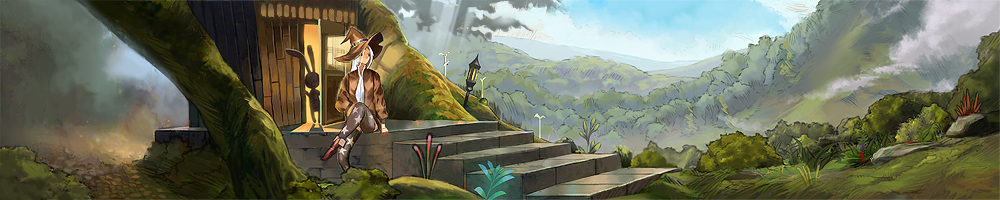
Mahou Tsukai ni Taisetsu na Koto ~Natsu no Sora~ – 03


Short Synopsis: The students are taught magic through various practical assignments at real clients.
Highlights: Sora may have been a bit too emotionally attached to her assignment.
Overall Enjoyment Value: 7,5/10
I’m pretty annoyed by Bonen no Xamdou, for its attempt to mess up my whole blogging schedule this season. Just when the final show this season aired and I decided which shows to blog, this one pops up. I don’t have a Playstation, and I’m not willing to buy one, so I haven’t seen its first episode yet. It’s not certain that I’m going to blog it, but there’s a pretty good chance that if it does pop up somehow, I’ll end up covering it. Especially since there are going to be 26 episodes.

One really annoying trend of 2008 is that, when compared to previous years, there are hardly any shows that go on for longer than 13 episodes. Only a select few went with a series length of 22 or 26 episodes, which is a real shame, in my opinion. In any case, if I do end up blogging Bonen no Xamdou, Natsu no Sora is probably going to be dropped. It’s obviously not a bad series, and I actually really like it, but everyone already seems to cover this series, and I’m not sure whether I’ll be able to say something interesting about each episode, considering the nature of this series. Either that, or Birdy the Mighty’s third episode has to be realy bad, but I doubt that one.

To go back on topic, this episode shows how the school in Natsu no Sora isn’t as Harry Potterish as I originally thought, and Sora is actually going to carry out many jobs as a magician in order to learn and develop her skills. It showed how in this world magicians are quite rare and not always admired. Sora’s also gets accompanied by some sort of manager or something. I’m not quite sure yet how this system works, but my limited Japanese may have been the cause of that. Do these people continue to accompany their magicians, or is it just for the first few months? Are these people magicians themselves? Does the school really have enough manpower to assign one manager to one magician?

Just as with episode 2, this episode again was very solid, with a bunch of forced plot-twists popping up from out of nowhere. Thankfully it wasn’t as blatant as that truck, but Sora suddenly decides to run off with the photo albums that she was supposed to get outside of a locked safe and bring them outdoors. This may have triggered the client to show a more personal side of herself, but I’d prefer it if was less forced, especially considering the nature of this series.

I’m also interested in whether the rest of this series will shed some more light into the world this anime is set in. I mean, in this episode we saw how easily Sora cracked that safe. What if there was a magician who suddenly thought that it’d be a nice idea to start robbing houses. If he’s talented enough, he’d probably get away with it, based on what I’ve seen in this series.

EDIT: aaand just after I make this post a sub of Bonen no Xamdou turns up. Does anyone know whether the .mp4-file is in HD or not?

Ultraviolet: Code 044 – 03


Short Synopsis: 044 betrays her organization.
Highlights: Fixes the movie’s mistakes.
Overall Enjoyment Value: 8/10
I tried watching the movie Ultraviolet, to get an understanding of why everyone seemed to hate it. Well, I lasted 30 minutes until the pain made me stop watching. That was exactly what I feared that this anime-series would turn out to be, and let me say that the Ultraviolet anime fixes a lot of the mistakes of the movie.

The movie was a horrible mish-mash of random fights and cheesy dialogues. The little story that was there was a combination of the original setting of the comic books and a plot that made no sense, where 044 rescued a child that could have been the doom of her entire kind… just so that she could be saved… or something like that. It’s at that point where I just gave up and stopped watching the movie.

The biggest mistake in the movie was the fights, though. Enemies dress in the most ridiculous outfits, you never know who they are, they’re just… there and supposedly security-staff and they die within 5 seconds. Instead of trying to protect their lives, they go for overly cheesy poses (one particularly bad scene featured them as they surrounded 044, stood around her in a perfect circle and… all shot at her. Combined with 044’s amazing talent to evade bullets (in the movie, at least), what where they thinking?

And here comes Osamu Dezaki, and he managed to successfully put some focus away from the action, and focused much more on the personal aspect of the characters. There’s still action, but the goons that 044 has to defeat are given an identity: you know what they’re doing there. 044 also doesn’t have the ability to dodge bullets anymore, and not all people that stand in front of her have to be slaughtered. This episode shows that she just gives that treatment to the goons from her organization.

Both the movie and the anime feature 044 as she betrays her organization. In the anime, she does so because she suddenly fell in love, and saved one of her supposed enemies, and she’d do more for him that for her organization, which I suspect she never liked anyway. In the movie, I guess she falls in love too… with a 10 year old boy who never says anything and who turns out to be the son of some of the major enemies. I guess, that’s the only explanation I can think off to make her actions there seem at least a bit plausible.

But boy, this surely turned out to be the dark horse of the summer-season. Three episodes and still no subs? I guess that this can be blamed to the bad reputation of the original movie. I can really say that I like this series now, though. My biggest fears, of this turning into Devil May Cry II with a bunch of boring fights were avoided completely. So far, there hasn’t been any trace of filler at all, and with the current storyline, I’d be surprised if the creators would manage to stuff one in.

Himitsu ~The Revelation~ – 15


Short Synopsis: The criminal of this episode takes an innocent woman and her baby hostage to demand an investigation by the MRI-department.
Highlights: Rather formulaic conclusion.
Overall Enjoyment Value: 6,5/10
Hmm, this was one of the (if not the) weakest episodes of Himitsu. I can understand the point it was trying to make: the people from MRI are very privileged, at how they’re able to look into the minds of the dead, so outsiders would go very far in order to know thins that otherwise would remain a secret forever. The guy who was taking the hostages has had to live his entire life with the thought that his mother committed suicide, but this didn’t feel right. When the person he suspected to be the biggest suspect for coming up with this lie died, he forced with his little hijacking the MRI to take action.

And indeed, his mother was murdered by this guy. They find out the truth, then return to the place of the hostage (at the last possible second… I hate it when they use that plot-device) and tell him what happened, after which the criminal breaks down in tears, just because of the words of Amachi. It was rather forced, to say the least.

I guess that this is indeed the big disadvantage of this series: it’s excellent at storytelling, but it rather falls when it tries to get too close to characterizations. We just knew too little about the kidnapper to really care about the guy.

RD Sennou Chousashitsu – 15


Short Synopsis: This episode is about food (no, really).
Highlights: Surprisingly dark, and at the same time Minamo’s antics were hilarious.
Overall Enjoyment Value: 8,5/10
This episode returns to the essence of RD Sennou Chousashitsu: Minamo and how the Metal affects people’s consciousness. Now I also understand why the previous of the previous episode was nothing but food, because this time Haru was set out to rescue a number of food lovers who were lost in their own desires.

I must say that this series has such a fascinating understanding of human nature. These people basically were on the metal, 24/7, enjoying all kinds of delicious foods. Because their consciousnesses were uploaded to the metal, all the virtual food felt surprisingly real, but at the same time this was ruining their real bodies. They would become so used to the uber-delicious food that no food in real life would taste good anymore, and this episode, they became crazy over the taste of just ordinary water, simply because they hadn’t tasted it in so long.

This episode also showed cases where Souta had to take care of cases where people tried to stimulate their own senses so much that they simply died, which also nearly happened with the gentlemen (or at least, that’s what their avatars were at the time) in this episode. It’s a pretty freaky idea. Overall, the messages of this series have been light and optimistic, about a future where the limit to express your creativity knows no bounds, and at the same time it makes it seem so easy to lose yourself in this virtual world.

And Minamo was so adorable in this episode, with her fear of bell peppers (or at least, that’s what I think she meant). These characters can literally talk about food and still remain utterly enjoyable. Especially considering the entire first half of this episode was nothing other than Minamo, sulking over her fear of bell peppers, and the only thing that distracted me was a rather bad video file that kept glitching.

Porfy no Nagai Tabi – 28


Short Synopsis: Jack, André and their families help Porfy in his search for Mina.
Highlights: The themes of saying goodbye pop up again.
Overall Enjoyment Value:7,5/10
Really, it seems like for every season, half of the good shows seem to concentrate themselves on the same day. This time it’s… Tuesday. Especially since Mission-E, Natsume Yuujin-Chou and Porfy’s raws will always show up too late for Monday, and in the evening there’s Ultraviolet, RD and Himitsu for me to blog… and here I wondered why the rest of the week was so quiet. ^^;

In any case, my usual summary for this show may get shorter, because there are so many other series to blog today. This episode starts as Jack, Michael and Porfy search the different coastal cities for any trace of Mina. A big person in Palermo shows up, who turns out to be acquainted with Jack’s father, and who’ll promise to search for Mina as well. He doesn’t seem to like André and his hate for Americans.

The next day, it’s time to go to the church again, though the focus falls at Jacks father and André’s father. I couldn’t fully understand it, but they took a note-book and crossed a few names out. At the end of the church session, the pastor took a moment to ask those who were present whether they’ve seen anything about Mina, but nobody turned up. When Porfy, Michael and Jack return back home, their father suddenly appears in an apron (it seems that he felt like cooking a bit) and Bobby (Jack and Michael’s older brother) has gone to America. André meanwhile makes his people search Sicily for Mina. It’s his father who finds the clue they need.

When Michael learns about it, he quickly wakes Porfy and André tells him the things he knows: apparently, she was in the company of a woman and two gamblers, and she went from Palermo to Rome. Porfy then immediately prepares to got o Rome, but Jack has a little surprise left, as it seems that jack’s father has his own private plane, which makes Porfy able to catch up a lot of lost time if Mina went to Rome, just by boat. Jack checks what the plane’s code-name is (“Heart Thief” :P) as the plane takes off, Porfy says goodbye to Sicily and the episode ends.

I’m not quite sure what was up with Jack’s father, but I do have a hunch. This episode showed how Bobby left to America, and in the near future, Jack and Michael too will depart to the United States, leaving their father behind. This seems to suggest that their father has problems of his own, and the list of names probably is the list of his subordinates, who were probably all sent away, so that he’d be the only one to take the blame of whatever trouble he’s in.

Overall, the big theme of this arc was the concepts of family. Now that this arc has finished, it does make sense, and I now understand how this arc and the previous arc are linked to each other: they both showed Porfy a different concept of a “family”, something that he lost entirely. The current arc showed how important the bonds are to the big families that live in Sicily, and how one would go through fire for the sake of his own family, while the previous arc was about having the warmth of a place to return to.

My interest in Porfy has been rather low for the past months, because I feared that the rest of the series would just be a string of random arcs, but thankfully they all turn out to have their own meaning to develop Porfy. And of course, this series is at its best after countless episodes of building-up, so I’m wondering where the Rome-arc will take this series.

Mission-E – 02


Short Synopsis: Chinami and Maori investigate some rumours of Type-E being located in a random school in Hokkaido
Highlights: Interesting how Maori took over the role of “shy one”.
Overall Enjoyment Value: 7,5/10
I didn’t blog the first season because at the time of airing, there were too many other good shows. But this time, since I can blog so many different shows this season, I’m not going to pass up this chance. The thing I liked about Code-E was the sharp contrast between the light moments and the climaxes, so I’m really wondering what this series can do now that it moved out of high-school and moved on to some sort of serious plot.

This episode was less impressive than the first one, but that’s to be expected. We do get plenty of new information, though. One of Chinami’s former classmates in the first season has now become a teacher at Maori’s school, and we now know that Sonomi is responsible for finding reports for people with type-E. Ever since the previous episode, I kept wondering how Chinami and Maori would find these people with type-E, and I hope that the future episodes shed some light into how Sonomi actually does her job, but it seems that Koutaro also plays a role in this.

One point of criticism is that the characters may have changed, but their voices have hardly matured. The voice-actors should have put a bit more effort in making their characters sound a bit older, because they still sound like the high-school girls of the first season, though this shouldn’t be a problem to get used to in a few episodes. This series probably isn’t going to make it to Studio Deen’s list of masterpieces, but it’s fun to watch nonetheless.

Natsume Yuujin-Chou – 02


Short Synopsis: This episode shows how Ayakashi also can friendly ask their names back from Natsume’s Book of Friends.
Highlights: Storytelling at its finest.
Overall Enjoyment Value: 8,5/10
As for the shows I’m not going to blog:
– Hidamari Sketch is nice, but I’m getting a bit bored of Shinbou’s style ever since Zoku Sayonara Zetsubou-Sensei.
– Strike Witches has an interesting view at modern Japanese folklore with its kemonomimi-ish mecha musume, but I wonder whether it can live up to its sister-series, Sky Girls.
– Ryouko’s case files has “I have no life so I’ll just tell my evil plans to any random Joe who happens to be passing by”-villains. It lacks subtlety, that snake came from nowhere, and it’s the big disappointment this season for me.

Natsume Yuujin-chou, however, is well on its way to becoming one of my favourite series this season, along with Blade of the Immortal. I really liked this episode. Like expected, the creators have a great way of characterization, and the entire episode is a bit unconventional, but it works perfectly. This episode’s message was also a pretty interesting one.

This series follows in the same veins as Mokke, where Youkai and gods have entire personalities, and only a select amount of people can see it. It’s a bit more mature, but that’s to be expected with the lack of ten-year old children. This episode sees how a small local god wants to get its name back, though when Reiko collected his name, she stuck it along with the name of another Ayakashi, who needs to be found first if he wants to get his name back.

Along with that, this episode addresses how people nowadays visit their local gods less and less. Our god in this episode only has one person who regularly visits him, and this is an old woman. At the end of the episode, she ends up at a hospital, making her unable to visit the shrine of said god anymore. Because of that, this god disappears in the end, despite having finally gotten his name back.

It’s interesting how important names are for these Youkai, and this isn’t the first series to address this fact. Tenpou Ibun Ayakashi Ayashi and Mononoke also played around with words like this, though Natsume Yuujin-chou is the most personal of the bunch.

Some quick first impressions: Koihime Musou, Nogizaka Haruka no Himitsu and Blade of the Immortal

Koihime Musou

Short Synopsis: Our lead characters finds a twelve-year old orphan who is a genius at fighting.
Highlights: Overglorifies its own setting
Overall Enjoyment Value: 6/10
This sort-of reminds me of Prism Ark, and although I admit that the writing is more solid, it does have the same weaknesses. At least there’s no country named “The Untied Kingdom” or “Poleland”, but as things look now, it seems that all the major army commanders are a bunch of little girls in frilly dresses. First of all, who in his right mind would take such a thing seriously? And second: what happened to the males or older females? Did some kind of disease wipe them all out or something? Still, this could have been ignored if it wasn’t for the little girl, mentioned above. She’s living in a regular village, her parents died, and she’s been living by herself for a while now. Then why the heck is she wearing the fanciest clothes in the entire village? How did she become so good at fighting? Who taught her? Why the heck is her house all nice and clean, why does she have a futon that’s not worn out in any single way? I mean, I know that this series isn’t supposed to take itself seriously, but in my opinion, being a comedy is no excuse to be lazy or historically inaccurate. Besides, this episode wasn’t that funny anyway.

Nogizaka Haruka no Himitsu

Short Synopsis: Our lead character discovers that the most popular girl at school is a closet otaku.
Highlights: Oh boy…
Overall Enjoyment Value: 3/10
I must say that I’m surprised at how the series this season featured a very low amount of stereotypes, even series as Seikirei, Koihime Musou and Antique Bakery had at least an enjoyable cast, with perhaps a typical loser male here and there. I was happy with this, but then Nogizaka Haruka came and ruined everything. Seriously, so many stereotypes come together in this series: horny teachers, a clumsy girl, a male lead who isn’t bothered by his hormones, the entire male school population who is, the perfect girl, and I could go on and on for a while. To make matters worse, these stereotypes don’t make any sense either. The above-mentioned horny teachers have the amazing ability to drink as much as they want and never get a hangover. If Haruka is so incredibly clumsy and a cry-baby, why did it take this long for her secret to be discovered? It’s not like this episode described her as a master of keeping secrets. How did such a shy girl become the most popular girl anyway? I could rant on an on about this series. The animation may have a considerable budget, but the characters end up looking dull and uninspired. The OP and ED are incredibly annoying. In other words, I don’t like one bit of this series. Every season has its worst show, and the worst show of Summer 2008 is for me without a doubt Nogizaka Haruka no Himitsu.

Blade of the Immortal

Short Synopsis: Our lead characters has a curse on him that makes him immortal.
Highlights: Awesome soundtrack, excellent atmosphere, terrific OP.
Overall Enjoyment Value: 8,5/10
I’m an absolute sucker for samurai-stories and Bee-train, so when the two are combined, there was no way for me not to love this series. The summer-season has already brought a lot of good stuff, but Blade of the Immortal has without a doubt delivered the best first episode of all the new series. It’s great to see that Bee-train is willing to experiment with new styles, because this series is absolutely nothing like their previous works, and the only similarity it shares is the same attention to the awesome soundtrack that this series has. The animation itself was quite decent, but especially the OP features some beautifully choreographed swordfights. Still, everything looks really nice. Great to see Bee-Train back!

Nijuu Mensou no Musume – 13


Short Synopsis: The doll arc finally ends
Highlights: Have I already said how amazing this series is for its climaxes?
Overall Enjoyment Value: 9/10
Oh my god… when I thought that the previous episode was good. I may have my problems with this series during the quiet parts, but boy… does it deliver when it gets serious. Like mentioned above, this episode closes off the doll-arc, but there’s much more to be said than just that.

We learn how during the war, Nijuu Mensou worked as an investigator of these supernatural weapons. At one time, he worked together with the doll-woman, when she was still human, and there they exchanged their two necklaces. The doll-woman really was in love with the guy, it seems, and underwent the operation that turned her body into that of a doll for him, but in the end he betrayed her.

It’s indeed like I thought: Nijuu Mensou was involved with a lot of supernatural research during the war, and he just left everything without cleaning it up, and now his past is back to bite at him. He tried to live his life as a famous thief, probably in order to forget his past, but after the mass-murder in episode 6, he realized that he couldn’t just ignore his past. This is why he abandoned Chiko and Ken: to not involve them with his problems. Unfortunately, Chiko is now known as his daughter, so all of his enemies will now be going after Chiko because he makes himself unfindable. Nice strategy. The guy is screwed, and a perfect example of the proverb “you reap what you sow”. The fact that he left again at the end of this episode shows how his problems are far from over.

Also, it turns out that Akechi really does exist, but Nijuu Mensou likes to dress up as him. The big question is of course: who was the one who gave Chiko Nijuu Mensou’s necklace. It’s obvious now that Nijuu Mensou has been doing other things ever since he faked his own death, but to what extend did he keep in contact with Chiko?

I must applaud the creators for coming up with such a dynamic cast. Out of all th series that aired during the past spring season, Nijuu Menosu no Musume and Real Drive have a cast of characters that feels most away from any stereotypes, and now that these have hit their second halves, you can really see the results of that. Stereotypes may be best and funniest when they first appear, but they falter in the long run, whereas the developed and fleshed out characters only get better as the series progresses.

Telepathy Shoujo Ran – 04


Short Synopsis: Ran, Rui and Midori look for a way to spend the Golden Week. They end up in a suspicious looking village.
Highlights: No signs of subtlety yet, but the quiet moments is as solid as ever.
Overall Enjoyment Value: 7,5/10
Well, it doesn’t look like this series is going to be a subtle one: Ran, Rui, Midori and Ran’s father arrive at the village, and they’re immediately attacked by an army of zombified villagers. Thankfully, it does know how to build up a good mystery-plot that keeps you interested. Since the characters have gotten such huge powers, this series also needs to come with some big and complicated enemies.

Also, I’d love to see the face of someone who watched episode 1 and 2, and then skipped episode 3 to move on to the fourth one. You wouldn’t be able to recognize Midori back. I knew that she’d turned good quite soon, but this episode shows her fangirling over how cute Ran’s brother is. It’s interesting how she does know how to speak in regular Japanese, but just switches to Kansai-ben when she’s in a trusted environment. Makes it harder for me to understand, though. One thing I also like about this series is how the word jokes are easy enough for my limited Japanese to understand. I agree how it’s funnier if you manage to pick them out yourself.

In any case, what I’m most surprised about in this series is the huge role that Ran’s family plays in this series, where most families in show about middle or high-schoolers are virtually non-existent. This episode features Ran’s father, as he seems to know one of the people in this village (incidentally, this also turns to be the one who’s linked to the village’s mysteries. A bit sloppy, in my opinion).