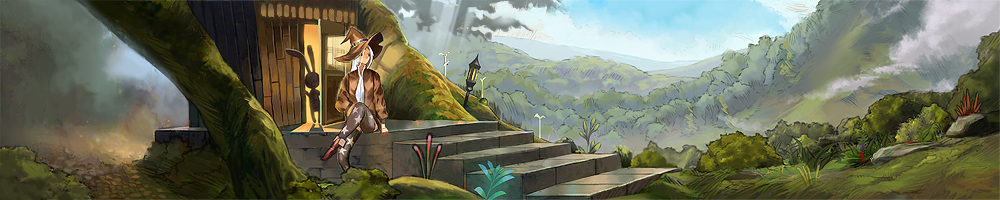
Glass no Kantai Review – 75/100


I’m surprised that it’s taken me this long to realize, but a common theme of a Gonzo-series seems to be subtle jabs towards aristocracy. The best example of this is Trinity Blood: in that series, the Vatican is an important party, and yet the Pope is a shy and incapable 12-year old boy and women have been appointed at high-ranking functions. Or take Hellsing: a series about a bunch of blood-thirsty vampires who justify themselves through the queen of England.

But also some of their other series show similar themes. The shinsengumi in Peace Maker Kurogane aren’t necessarily royalty, but they were a high-ranked organization, back in those days; and infamous for their immoral acts, and there they’re portrayed as the good guys in that show. The less subtle attempts can be seen in anime as the Seven Samurai and Romeo x Juliet, where the enemies are basically the aristocrats. Now I also understand why the setting in Special A was so overblown, since that too was a way to mock the upper classes.

The series where these themes are the strongest is without a doubt Glass no Kantai. At heart, it’s a space opera and a satire of the aristocracy: the entire series plays throughout the eyes of the aristocrats, and shows how in a futuristic setting, the nobles have taken back control over the democracies. It shows how they dress up in ridiculous clothes and act on their own selfish ideals, without much consideration for others. The pope may not be a twelve year old boy, but the guy does have a daughter, the emperor is gay and a shotacon, and the series is full with those kinds of references to make the aristocrats look ridiculous. Of course, it never tries to be a comedy.

This is indeed all behind a serious story. Like mentioned above, it’s a space-opera and shows how one of these nobles leads a rebellion for the common people. Throughout the series, we get treated to a healthy combination between space-battles and large-scale politics. The interesting thing is that there’s hardly any attention for small-scale politics, and there’s hardly any focus at the common people (again, this has probably been done to show how little the lives of common people mattered to your average aristocrat).

The storyline is a pretty interesting one, and it evolves as the series goes on. The problems with this series lie in the storytelling, however. The entire series is full of small inconsistencies and left-out scenes that feel like riding over a bumpy road with broken suspensions. They break the flow that the storyline is trying to create. The best example of this is the concepts of “air”. This series has actually managed to create quite an ingenious galaxy, where there aren’t any planets, but rather small chunks of land on which everyone lives, and which can be linked together. I personally loved this idea, but it’s as if the creators didn’t spend enough time to flesh them out and think of how these chunks of land would retain their atmosphere. The result that some random places in space suddenly contain air, and while others don’t.

And there is of course the animation. The animation in this series is horribly inconsistent, and ranges from pretty to downright abysmal. This series is like Hatenkou Yuugi or Kiss Dum: there’s a project with potential, which gets held down by one or more very lazy staff-members. In the case of Glass no Kantai, I think that te producers are to blame. They didn’t realize that creating an anime takes this much of an effort, and as a result the rest of the staff had to rush through their work in order to get their work done in time. As a result, this series lacks polish, since there was no time to check for any bugs or inconsistencies, which resulted in beauties like this one. It’s not that Glass no Kantai was held down by a small budget, but rather the time-constraints that worked against it, and a good producer should be able to have known this.

Despite this mediocrity, though, I liked Glass no Kantai. It had a clear vision, which is something that can’t be said of, say, Dragonaut. And the storyline, how botched up it may be, does come together in the end. It’s interesting: the past two series I’ve watched definitely had their flaws, and were at times tedious to get through, but their final episodes did end the series with a great enough climax; something which definitely can’t be said for every other series.

Storytelling: 6/10
Characters: 8/10
Production-Values: 7/10
Setting: 9/10

Mahou Tsukai ni Taisetsu na Koto ~Natsu no Sora~ – 02


Short Synopsis: Sora travels to Tokyo, has her first day at school and meets her classmates.
Highlights: Very detailed storytelling, but where did that truck come from?
Overall Enjoyment Value:7,5/10
Okay, so even though everybody and his dog will probably end up blogging this, I’ve decided to cover it. I haven’t seen the first season yet, but apparently you don’t need to have watched it in order to enjoy this one. It’s got a warm slice of life feeling, even though plenty of things are happening. Sora is quite a likable female lead, and I like how the creators gave everyone in Sora’s class his or her own identity. The backgrounds are also awesome: there were plenty of times where I couldn’t tell whether they were live-action or painted. It’s just going to be a bitch, trying to take screenshots of them, since there are hardly any good shots of the characters. The camera is either too far or too close the character’s faces. ^^;

This show does have its flaws, mostly in terms of coincidences. Out of all the houses in Tokyo, Sora ends up in the same as her potential love interest. But the really strange thing that was that accident that happened in front of Sora (where the SAME GUY was also present). First a car crashes, only for a truck to actually fly from a bridge somehow. I guess that the creators were trying to show Sora’s powers a bit, but this could really have been more subtle. Especially considering how solid the rest of the series is.

Sora’s classmates are an interesting bunch. Sora’s obviously talented, but this episode also showed that her magic is rather uncontrolled and not polished yet (especially when she lets her emotions take over, which I guess is a trait that 90% of all mahou shoujo leads have), but her classmates are either much more precise, or still need to learn how to use magic properly. In any case, this episode showed the beginning of good chemistry between them, which is always a plus.

Betterman Review – 77,5/100


When I first read about Betterman, and how it was set in the same world as GaoGaiGar (according to Anidb, at least, I expected this to be some kind of fun and GAR mecha action show. And with the same mindset, I started watching this series. What I got, though, was something slightly different. Sure, there is action, and there are mecha, but Betterman is much more suspense than that it is about action.

You can almost classify this series as horror. Throughout the series, the bad guys throw all sorts of huge monsters, creeps and psychological attacks at our protagonists, and the main focus is much more on trying to not die than to kill the enemy, because more often than not, they get saved by some outside force. This series does have its problems, but this series does succeed in never losing steam, making the action-scenes worth watching.

The big problem with this series, though, is that it doesn’t have anything that makes it really worth watching; it misses that final “oomph” that makes the viewer glued to the screen. Any area that it could have delivered in is flawed somehow. Take the setting: it’s surprisingly deep, spiced up with a lot of scientific analysis in order to explain all of the supernatural stuff that gets thrown at the viewer’s screen. A lot of interesting facts and titbits pass the screen. Unfortunately, the creators do tend to get lost in their own techno-babble, making their scenes unnecessarily confusing with all sorts of different terms and jargon. Especially the final episodes, when everything is supposed to get revealed, feel like a huge information-overload, due to the overuse of techno-babble.

Thankfully, the final episodes are saved by the characters, and they make sure that the series leaves on a good note, rather than an overly confusing one, but their problem is that their development starts awfully late for a 26-episode series. They only show a bit of depth to themselves around the final quarter of this series, and the villains are even worse off with no depth at all. Most of them feel just incomplete and uninteresting, and this series would have been much better if you actually were interested in the final villains. I do have to give credit to the male lead, though. For once, he isn’t a shy boy, or a voice of reason. The overall cast is also fun to watch in those few moments when they’re not serious, and my personal favourite was the rather eccentric Akamatsu.

Overall, because of these flaws, this series never hits any heights, but it is a very consistent one. The different parts fix each other’s weaknesses, making this enjoyable through the end, and because of that this series never hit any real lows. It always has some kind of creep that’s attacking our heroes, so if you’re into suspense series, you could give this one a try.

Storytelling: 8/10
Characters: 8/10
Production-Values: 8/10
Setting: 7/10

Himitsu ~The Revelation~ – 14


On a completely unrelated side-note: consider Soul Eater dropped at this point. I’ll still continue to watch it, but I just don’t feel like blogging it anymore.

Short Synopsis: A woman with red high heels commits this week’s murder. The question: who do they belong to?
Highlights: Interesting twist to the love-triangle.
Overall Enjoyment Value: 8/10
Interesting how this episode didn’t feature Aoki or Maki as the main character, but instead it showed how Okabe stood in the centre of attention. We’re back to regular stories, and the victim this episode turns out to be a rich businessman who was fooling around with a few too many women. The twist, though is that two of these women used to be each other’s lovers as well. Really, women can be scary when they’re serious…

In other news, this post by Usagijen got me thinking. And now that my initial fanboyism over the premise seems over and I look back at the past episodes of the series, then I do agree that it hasn’t been perfect. I agree with Usagijen at how this series lacks subtlety in its messages. The messages are definitely there, but they feel much more like a list of taboos than that they’ve really provoked any real thoughts. I once mentioned how Himitsu was the smartest series of the spring-season, and with this I take that back. That honour falls much more to series as Amatsuki and Real Drive.

Another big minus for this series is also that it’s not that good at characterization. To compare it with Jigoku Shoujo (now that I think about it, a rather similar series), that series knew perfectly to first establish its characters and then to start toying with them, and it did so for fifty episodes with excellent results. It feels that the characters in Himitsu lack a bit in personality.

And then there are the abundances of male fanservice. As the same with a female’s clothes getting ripped apart á la Sekirei: it’s annoying, and this episode has a good example of it when Okabe and Aoki have to pretend to be a gay couple (pelvic thrusts included) in order to find out information. (is it me, or are people quicker to whine about fanservice for fangirls than the fanservice for fanboys?).

So, why do I still love this series? Well, for one thing it does have a great sense of storytelling: it knows when to reveal what and how much, and how to keep the viewer interested, but that isn’t the most important thing. It’s the way it plays around with irony, and that’s something that it does perfectly. I first noticed this with the infamous episode eight. The murder itself already was disturbing, but what made that episode so incredibly awesome was that it took an innocent girl who even could spark some romance, and at the end of the episode showed that she was the entire opposite of that. After that, this series has continued to play these games, for example in episode 11, where the real culprit got revealed, or episode 13, where Maki basically could have saved the lives of 30 people. This episode has it too: it continously refers to women with high heels being murderes, and at the end of the episode we see Okabe, having a date with his wife who wears red high heels. That’s what makes this series so great.

Some quick first impressions: World Destruction, Natsume Yuujin-Chou and Mission-E

World Destruction

Short Synopsis: Our lead characters form an organization to destroy the world.
Highlights: Nice ideas, but flawed (see below)
Overall Enjoyment Value: 7/10
This series has a lot to like, and at the same time a lot to hate. It’s probably the first time where humans are actually the oppressed race in a fantasy-series, especially if they’re oppressed by a bunch of cats. The different races that walk around the world are full of imagination, and the idea of a bunch of humans (and a bear, okay), joining together to destroy the world has some definite potential for the second half of this short series. The animation is really messy at times, but it looks excellent. Yoshihiro Ike, one of my favourite composers is behind the background music, and he delivers as usual, though perhaps it’s not his best work. Agh, if only the messages of this series weren’t so blatantly obvious! The lead characters themselves are fine, but it’s the way how they’re presented that gets me. This is one of those nationalistic anime that tries to shoves the message “humans rock, the rest sucks” down your throat, and the rest of the episode really need to work to develop the other races in this series. It would be interesting if through this series, the lead characters will actually be portrayed as the bad guys who will in fact destroy the world, but for that to happen, the cats need to stay away from stereotypes. Right now they’re funny, but I can already see this series go south in a couple of episodes if it doesn’t try to develop them.

Natsume Yuujin-chou

Short Synopsis: Our lead characters can see spirits and has a book of names of these spirits.
Highlights: Low budget, but very solid scriptwriting.
Overall Enjoyment Value: 8/10
The first thing that came to my mind when I started watching this is: is this really Brains Base? This really has to be their series with the lowest production-values to date, and things actually look pretty normal, and really different from their usual vivid animation style. Still, their sense of storytelling didn’t degrade one bit, and the director of Baccano and Jigoku Shoujo shows that he still knows how to tell a great story. This episode was nothing sensational or spectacular, but it was a very solid introduction for a series about spirits and ayakashi. This first episode already shows what the ayakashi in this series are made off, and like most of them, they act because of their grudge that was caused by something, and aren’t purely evil for the sake of being evil. I guess that that’s why I like stories about ayakashi so much.

Mission-E

Short Synopsis: Our lead character… has changed a lot since the first season.
Highlights: The huge character-development….; same fun climaxes as in the first season.
Overall Enjoyment Value:8/10
Holy crap! This actually takes place years after the first season! The lead characters have set up an organization to deal with the Type-E users, in order to protect them from the guys we saw in episode 11 and 12. Now here’s a twist you don’t usually see, and I’m really enthusiastic about how it was carried out. The interesting thing is that there seemed to have been no adult to guide them when they set up that organization, and it seems that they had to figure out everything by themselves. They also found a new girl to work with them in the meantime. In any case, before I start rambling, it was awesome to see how every character has changed during the absence of this series. The action-scenes were exaggerated, but they were fun and I can’t wait to see the rest of this series!

RD Sennou Chousashitsu – 14


Short Synopsis: First half recap, second half the return of the scuba-diving brothers.
Highlights: Interesting art direction, but a recap remains a recap.
Overall Enjoyment Value: 6/10
So… yeah. Don’t look too much forward to this week’s episode of Real Drive, because the first half is basically Minamo, making a phone call with her grandmother and telling her about the things she did throughout the series. The second half features original content, but that neither is the most exciting, as the scuba diving brothers go scuba diving with Minamo, and teach her the basic principles. It was charming how Minamo now realized the world that captivated Haru, but throughout the episode, you could see that tons of cost-saving animation techniques were used: live action images, still shots, cameras away from faces, etc. It gives an interesting effect, but exciting is different. Although I do admit that Minamo looked surprisingly good in scuba-suit…

Also… what the heck was up with the next episode preview? All it showed was the different kinds of food that we’ve seen throughout the series…

Ultraviolet – Code 044 – 02


Short Synopsis: 044 continues her hunt for the mob boss.
Highlights: The subtle characterizations.
Overall Enjoyment Value:8/10
While I’m waiting for Mission-E to appear (seriously, what the heck happened to it?) I might as well watch this one. Since the past Spring season featured a lot of good 13-episode series, and relatively few good 26-episode series, I can blog lots of series this season. If I end up dropping Soul Eater (which seems pretty likely at this point) and Kaiba doesn’t go into yet another hiatus, I’ll be able to blog seven new series. There are lots of promising series this season, and one of them is Ultraviolet.

When I watched the first episode, the character-designs looked familiar somehow, and one look at the staff-list made me understand why: they’re done by the same guy who did the character-designs for Osamu Tezuka’s adaptations, such as Hi no Tori and Black Jack, but he also seems to be Osamu Dezaki’s standard character-designer. The result is pretty interesting, as it brings some of Tezuka’s innocence to such a dark and gritty setting.

I must say that Osamu Dezaki knows how to spice up his fights a bit, even when his budget isn’t unlimited. The screen, split in three is indeed something you’ll either love or hate, but I personally quite like it. It’s got an interesting effect.

In any case, the reason why I’m going to blog this series is that it’s definitely something different, as it tries to look into the mind of a killing machine. Much like Elfen Lied, in a way, but without the gore and the naked children. The thing I was waiting for in this episode is some more development for 044, and not just another action-scene, and that’s exactly what I got. We still don’t know what that strange voice is, but in this episode, it makes 044 save one of her original victims who fell in the ocean.

On a side-note, this series is quite a bitch to try and understand. Tuesday really seems to be the day of complex dialogue: Real Drive, Himitsu and Ultraviolet all have very complex dialogue that really takes a while to understand. In this episode, I’m still not sure what the Mob boss’ story about the vampires was all about.

This series does have its flaws, 044 could have been more subtle in trying to hide her own presence, but I suppose that as an almighty killing machine, she might not have any worries to hide. This indeed doesn’t seem to be a series about a main character, trying to complete her mission, but instead it’s much more about 044 herself.

Obviously, this series isn’t for everybody, and it sure has gotten a lot of bad reviews since it aired. I like it, though. It seems like another solid series from Madhouse, and I’m willing to stay with it for 10 more episodes.

Porfy no Nagai Tabi – 27


Short Synopsis: In this episode, Jack attempts to propose to the girl he loves.
Highlights: Fun episode, though André’s character-development could have been more subtle.
Overall Enjoyment Value: 7,5/10
After the previous episode, I remember doubting what kind of new element this arc could bring to this series. This episode answered these doubts: humour. Porfy no Nagai Tabi has never been a comedy, but this has definitely been its funniest episode, where you’re meant to laugh at and with the characters.

Jack, Porfy and Michael drive to Monica’s house at night, where Jack reveals that he used to work in the army during the final parts of the war. Andre meanwhile is still sulking about Jack’s actions of the previous episode. As it turns out, the biggest reason why he hates the guy is because he’s American, and the Americans killed his father (an Italian) during WWII. Monica tries to talk him out of it, and how Jack didn’t have anything to do with the pilot who shot down their father. André has been drinking, so obviously he doesn’t listen.

We then switch to Porfy, Michael and Jack, who stand next to Monica’s window, trying to get her attention without notifying André. Apollo provides the solution by softly pecking on her window. When she opens it, Jack ruins everything by yelling at the top of his lungs about how he loves Monica. André’s reaction was priceless, and thankfully Jack (or should I say, Porfy, Michael and a love-struck Jack) manages to get away before André catches him.

n the next day, Jack and Michael help Porfy to search for Mina, but nobody has seen her, but Sicily is just way too big. Michael then gets the idea to check during the next church meeting, because lots of people will be there (including Monica). The next day, the pastor agrees to help Porfy (and Jack) execute their plans for that day.

When Monica and André arrive at the church, Andre goes to a local bar to drink, while Monica heads for the confession booth (or however that’s called). To her surprise, it’s not the pastor sitting at the other side of the booth, but Jack, who’s hiding from André. Porfy and Michael are meanwhile hiding, to avoid being spotted by André, but they then see a suspicious pair of legs, coming from under André’s car and Porfy decides to check it out. The guy quickly runs away when he discovers being spotted, but as a result, André’s bodyguards suddenly turn up and start chasing them. Things get from bad to worse when they also run into André, who captures them and realizes that Jack must also be in the church.

In his anger, he runs right into the confession-booth, and thinks that Jack was hiding at the other side of it, throwing all kinds of curses at the pastor, who obviously gets rather angry and starts chasing him with a cross. When things have settled a bit, Porfy tells him about the strange guy who was messing with his car. It turns out to have been some kind of bomb, set to detonate when the engine starts. Nobody knows how to detonate such a bomb, so the solution that comes up is to push the car into the ocean (which is quite far away, though).

Jack helps André and his bodyguards, and the two forget their differences a bit. This was the only part of the episode that felt a bit fake, as André’s development was a bit too sudden. In any case, Monica, Porfy and Michael follow the car in their own, as Jack and André reach the coast and push the car in. André finds it a pity, because he liked that car, but Monica suggests him to just buy a new one. André then leaves, with the message that he won’t object to Jack’s marriage to Monica.

Next episode should prove to be interesting, as the focus should shift back to Porfy, trying to Mina. This episode may have been fun, but I can’t help but think that this is the weakest part of Porfy no Nagai Tabi. Since it’s a travelling anime, it doesn’t have the advantage of keeping its characters, and it must continue to introduce new ones. The abandoned city was the best example of this, but now that Porfy’s development seems to have stalled a bit, this series needs something new to be introduced fast now. But then again, knowing this series, it’s probably building up for something.

Nijuu Mensou no Musume – 12


Short Synopsis: Lots of things happen, among which is Akine’s backstory.
Highlights: Hard to talk about without spoilers.
Overall Enjoyment Value: 8,5/10

Oh my god… this episode is exactly why I’m watching this series. One episode might seem to suggest that this series goes nowhere, and then episodes like this one come and the entire plot makes a complete 180 degree turn. If you’ve yet to see this episode, you’d best not look at the rest of this entry. ^^;

I’ve forgotten the name of the glasses-guy, the one that gave Chiko the hint that Nijuu Mensou was still alive and who gave her his treasure. With this episode, it’s obvious why the guy would have all this, because this episode reveals him to be Nijuu Mensou himself. It’s quite sneaky: the attempts at foreshadowing this plot-twist are deliberately done a bit too obvious to take seriously. Both Chiko and Ken note how the guy resembles Nijuu Mensou, so through reverse psychology, there has to be more to the guy than just that. Well, no.

This episode continues to pull tricks like that throughout the episode. The doll-person also shatters the head of a tome-statue in this episode. Obviously, Tome didn’t die, but she was inside this statue, below the head, nonetheless. At the end of the episode, the puppet-woman (yes, woman) also makes a controlled Chiko stab Nijuu Mensou in the back. Thanks to Ken’s smokescreen, we may have to wait five more episodes before we find out how Nijuu Mensou survived that blow.

But really, I’m still surprised at how this series holds no punches at all when it gets serious. Heck, on top of all of that, Chiko ends up kidnapped at the end of the episode, and the puppet woman turns out to have been some sort of part of Nijuu Mensou in the past, suggesting that he abandoned his crew more often in the past. This does explain why all of these supernatural people are suddenly after Chiko: they’re probably all things that Nijuu Mensou left behind and was too lazy to clean up.

Also, what was this about Akine? Why did he use two different names for Chiko: Chiko and Chizuko? Up till now, I just saw him as a rather unlikable lazy guy, but as it turns out, his bond with Chiko (or at least the younger Chiko) turns out to be deeper than suspected. If I understood correctly (and correct me if I’m wrong) during the war, Akine once took Chiko to a foreign country and then lost track of her. Nijuu Mensou then was responsible of bringing her back. If this is true, then Nijuu Mensou did more than just pick a random talented girl off the street…

Takane no Jitensha Review – 70/100


This one can just be considered as both a first impression as a review, since there’s only one episode of Takane no Jitensha anyway. It can easily be considered as the brother-anime of Yume da Maya Kidan: both are only twenty minutes long, both are down-to-earth with supernatural elements, both have produced on a short budget, both are about accepting your younger sibling and both aren’t bad by any means, though they’re not really something special.

Takane no Jitensha offers a small look at the live of a boy called Takane, and the sort of problems that any boy of his age has: getting a new bike (jitensha = bike) because his current one is old and his friends keep beating him. The things here strike especially close at home. The other half of the airtime adds in a bit more excitement. The realism disappears a bit, unfortunately, but it remains an enjoyable story.

This review is short, because there’s hardly anything interesting to say about this series, but if you’ve got twenty minutes to waste, you might as well give this one or Yume da Maya Kidan a try. In terms of slice of life, Takane no Jitensha is better, while Yume da Maya Kidan is better with the supernatural stuff (especially the Tanuki in Takane no Jitensha came from nowhere and delivered one heck of a deus ex machina).

Storytelling: 8/10
Characters: 7/10
Production-Values: 6/10
Setting: 7/10