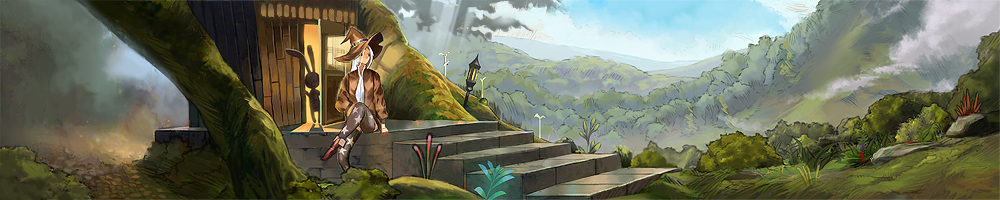
Nijuu Mensou no Musume – 20


Short Synopsis: The scientist has a back-up plan, and tries to activate it in this episode.
Highlights: Interesting twist that fits with the series’ themes.
Overall Enjoyment Value: 8/10
Aah, there are two episodes left and I still have no idea what the name of the major villain is! It gets annoying to keep calling him “the scientist”, but oh well. This episode was enjoyable, but I’m still waiting for that “Oomph” that was present at the doll-arc. This episode was mostly about the scientist’s secret, and I do admit that it was a pretty interesting one: he turned himself into an android. And not just any android, but one shaped like Nijuu Mensou.

It fits perfectly with the paranoia that the people had after the war. With the human-shaped robots, made out of solid steel, that could imitate others perfectly and resist bullets like a bunch of flies. Now, he in a strange sense of irony, took on the form of Nijuu Mensou. Probably after hearing about his popularity.

The question now really remains: are the creators able to close this series off properly? The doll-arc was much shorter than the scientist-arc, but it did have a much bigger impact. These final two episodes really need to be amazing in order to be able to make up for it. One thing that I really hope is that the creators are going to switch to that experimental animation-style again. It worked really well when that doll tried to drown Chiko, but ever since Chiko’s little show on her broom, it disappeared entirely.

Sekirei Review – 75/100


For the past summer-season, Sekirei was one of the series I was least looking forward to. I mean, the premise was a guy who collects a bunch of big-breasted girls (or Sekirei as they’re called in this series) who like to show off their goods, and these girls fight each other. It just had a premise that sounded so much like those other shounen-fanservice series. Now that it has ended, I must admit that it turned out to be much better than I expected.

As it turns out, the series tries to explain the fact that every single female falls in love with the male lead through its concept: Sekirei naturally fall in love with the ones they form a contact with, and so if you can collect a lot of these Sekirei, you can create your own harem. I admit, it’s much better than your average harem that has females falling for the male lead for no possible reason, but at the same time, it does feel a bit lazy.

Thankfully, the series makes up for it through its characters. There’s a wide variety of them in the series, and the creators succeed in actually making the viewer care about them. This is also the biggest strength of this series: it knows how to tell its story (which turns out to be much more complex than I originally expected) and keep the viewer interested. Overall, it was a very pleasant surprise.

Some of the main characters do have the ability to get on your nerves pretty fast, though. Especially some of the main characters: Kuu and Tsukiumi, who are a bit too eager to express their love, and feel a bit too 2-dimensional. The series also plays around with coincidences a bit too much, and especially the beginning has too many people coincidentally meeting the right people, in order to set up the story.

The big flaw of this series, however, is its ending. Sekirei is part of a much larger manga, and at one point, it just stops, while the manga goes on. This of course isn’t such a big problem. There’s room enough for a second season, which will most likely get announced. The problem, however, is that the final episode is downright terrible. This series worked so well at building a nice story, and it threw everything down the drains with a bunch of horribly blatant Deus ex Nachinas (and not just one, there’s a whole BUNCH of them), that try way too much to end the series on a happy note. In terms of plot, I can understand how these twists had to happen, but please: make at least an effort to build up for these twists. Don’t introduce them at your own convenience because the plot needs them.

While it’s nowhere near a great series, my faith in bishoujo-series that got pretty much blown apart by Kanokon and To Love-Ru managed to get restored by the past summer-season. Sekirei is a nicely written series, which may focus a bit too much on its fanservice, but underneath it’s got a charming cast of characters to boast.

Storytelling: 7/10
Characters: 8/10
Production-Values: 8/10
Setting: 7/10

Mission-E – 11


Short Synopsis: The calm before the storm-episode, where Chinami and Kotarou’s engagement gets celebrated
Highlights: Hilarious banter.
Overall Enjoyment Value: 8,5/10
Ah, now I understand! I finally realize why Mission-E has disappointed so much, thanks to this episode, which probably was among the best of the entire series, along with the first one. The thing is that this episode probably had the most time spent away from the story out of all the episodes so far, and incidentally, those moments also were the most enjoyable of the entire series. The banter between some of the characters was hilarious, and Adol’s reaction to being in the enemy’s camp was awesome.

So yeah, the big problem with this series is that the story downright sucks. I originally hoped that the creators would shed some light on the practices of the foundation, but eleven episodes in and they’re still the evil corporation that plots the destruction of our heroes (and now, the country). The entire storyline had just been taking care of these goons, and the eloping-parts never really tried to solve this. The reason why Code-E didn’t suffer from this is because the story there was engaging: you could see Chinami, as she tried to make sense of her own powers, and her classmates that helped her in that. It was cute, and that’s why the climaxes worked so well.

The big problem is that the creators needed enemies that were more interesting than the current foundation. This could provide a story where the characters were able to shine more, and allow for more banter (BY FAR the best thing of this series). What we have here is a series with an identity crisis: it thinks its story is awesome, while in fact it’s the characters who rock, but the characters are hardly given any chance to shine because they’re TOO DAMN BUSY SAVING THE WORLD!

Golden Boy Review – 75/100


Time for another OVA from the nineties. There are a lot of rumours about Golden Boy. The two most notable ones are that it’s supposed to be hilarious and chockfull of fanservice. Well, at least I can agree with one of them. Whenever this OVA has the chance, it shows off its female “assets”, often taking fanservice to the extreme (we’re talking about women who hump motorcycles here).

And in terms of humour, it just disappoints. I did get a few good laughs out of some of the episodes, but it wasn’t really side-splittingly funny like some reviews I’ve read about it seemed to suggest. The jokes either work completely or miss the mark entirely. Fortunately, Golden Boy does manage to set itself apart from all other fanservice comedies with a solid and creative script.

Basically, it follows a guy who travels around and takes on random part-time jobs, while meeting and charming sexy women in the process. Every single episode ends with said woman falling in love with Kintarou, but what happens around that is the interesting part. Kintarou, the main character, is an incredible pervert, and yet at the same time he’s one of the most versatile and interesting perverts I’ve seen in anime (not that that bar is particularly difficult to pass, but okay). His obsession with toilets may be a little too played out, but his obsession with learning becomes downright adorable over time.

He also chooses some interesting places to work in, and the creators actually did some research on what working at such a job entails (I never thought that I’d see references to FORTRAN and COBOL somewhere in anime), ranging from a simple noodle house to an anime production company. Compare that to your average fanservice-series, which often can’t get more original than a beach episode.

In terms of production-values, Golden Boy is very much a mixed bag. The animation ranges from standard to incredibly fluid (especially the fanservice-scenes have a lot of the latter), and the music consists of a bunch of random cheesy J-pop tunes, which really felt like the sound producer found them somewhere in a bargain-bin at a local garage-sale.

Overall, I do have to say that Golden Boy is over-hyped. There are quite a few times in which it goes straight against logic or physics. Nevertheless, for a fanservice comedy, it’s among the better anime of the genre. You can see that the creators put a lot of effort into its creation, and the short format helps to keep things fresh, even through the lesser episodes. It’s nowhere near my favourites, but at least I got some good laughs out of it.

Storytelling: 7/10
Characters: 7/10
Production-Values: 8/10
Setting: 8/10

Ultraviolet: Code 044 Review – 85/100


Every season has its most underrated series for me. For the past summer season, this was without a doubt Ultraviolet: Code 044. It only got one episode subbed, and that episode received masses of bad reviews. Because of all this bad publicity, this series received no chance at all to show its goods, which is a pity, since it’s actually a pretty good series. If you know what you want to watch it for.

Let me get a few things straight before I continue. This series is part of a whole Ultraviolet franchise, which started out as a series of comic books. Previously, it had already been adapted into a movie, which sucked beyond belief. That’s yet another one of the reasons for this series’ lack of popularity. Let me assure you, though: Code 04 is nothing like its movie counterpart. The movie was a horrible mishmash of random action scenes, while the anime manages to avoid these pitfalls.

So, yes. Code 044 is an action-series, but it knows that you can’t make a good series with action, and so it has a very solid and simple plot to keep it going. Whenever the characters are not fighting, they’re being fleshed out or developed. Not a single scene is wasted. To those who might have feared that this series would fall into a bunch of random fillers: it doesn’t. This series has a very clear goal and purpose, and manages to balance the action, plot and characters very nicely.

Part of the reasons why everything worked out so nicely is that the series has a stellar director: Osamu Dezaki. Very few people have the same amount of experience as he does, and he not only manages to use this experience to avoid common pitfalls like characters that aren’t fleshed out enough, rushed endings or cheesy dialogue, but he also manages to turn the screen into a visual feast, even though the graphical budget is often limited. The action-scenes themselves are mostly consisting out of still frames, but the effects that Osamu throws at you give it a great sense of style. He really likes to overuse CG, those sketch-like frames and split screens, and it really works. If you’re into experimental visuals, of course.

In terms of flaws, this series doesn’t have any major ones, but it’s just not a series for everyone. There are some strange instances of fanservice in the first episode, but after that the fanservice disappears nearly entirely. The plotline is very simple and for most of the time straightforward. It never tries to be anything deep or thought-provoking. It’s just one of those examples of “anime as entertainment”, as in: don’t try to find anything special behind it, because there is none. It just wants to tell a story and entertain the viewer. And for me it pretty much accomplished that feat

Storytelling: 9/10
Characters: 8/10
Production-Values: 9/10
Setting: 8/10

(*a small note: like I mentioned somewhere earlier, a high number at production-values doesn’t necessarily mean smooth or detailed animation, but rather whether the series “looks” good. Which was for me the case, although do note that the character-designs are very unconventional for anime)

Ultraviolet: Code 044 – 12


Short Synopsis: Luka tries to rescue King, and more things happen which I’m not going to spoil here.
Highlights: So different from what I expected!
Overall Enjoyment Value: 8.5/10
Whoa! That was actually a really good ending! This episode was among the best episodes of the entire series, and it exactly knew how to use the things it built up for, and carried them further. Here I just expected 044 to go after Luka in a sudden flash of guilt. Here I just expected Daxus II to easily finish off Luka, only for 044 to finish him. Oh, how wrong I was! I expected the final episode to focus on action. Instead, I got a final episode that focused on character-development.

As it turns out, 044 infiltrates indeed Daxus’ headquarters, but not because she wants to help Luka. Instead, Garcia managed to find out from who 044 was cloned (more on that below), and she wanted to meet that person, who just happened to be sealed inside Daxus’ headquarters. Instead, it’s none other than King who kills Daxus II. A very fitting combination, considering the things that Daxus had done to him.

I’ve seen quite a few solid series, where you’d expect a great ending from, disappoint in their finale. For example, Ghost Hound and Dennou Coil: both were very well written, and yet their endings were rushed, and in Ghost Hound’s case it was all over the place. Ultraviolet, though, manages to use exactly what it’s been building up for to provide some nice extra twists, like how Daxus II is actually a clone of his father, but refuses to admit it. Fear o fhis own identity fits his character exactly.

And of course, there was the twist that 044 is Ultraviolet’s clone. Now everything makes sense: she was the one who unconsciously spoke to 044, and this is also the explanation why 044 was such a badass fighter. This also laid an appreciated parallel to the movie, however bad it may have been.

Then there’s the aftermath: Daxus’ headquarters blows itself up. I didn’t quite catch why, but nevertheless it was a very fitting end to such an action series. I also loved how absolutely zero budget was spent on that explosion. It’s just about the opposite a normal action series would have done. I really appreciate the subtlety of it all.

And the three that survived in the end were Garcia, Matilda and Luka. I especially liked the way that Luka managed to survive: you never actually see the guy escape, he just lives. It’s up to the viewer’s imagination of how he managed to get out of that exploding building in time. I must say that it was a very nifty way of the creators to save some time, rather than to increase the pacing elsewhere and make the ending rushed. We don’t really need to know how Luka escapes. It’s irrelevant to the story. All we need to know is whether he survives or not.

And finally, Garcia. I really like how this series never put him into a love triangle with 044: he knew that she had feelings for Luka, and decided to help her as a friend, preventing this series from delving into a pointless love triangle. I think we can thank Matilda for that as well.

Yomigaeru Sora – Rescue Wings Review – 87,5/100


If you’re looking for Real Men, Rescue Wings is the correct place to look. It’s a series about the Japanese rescue force, and it especially follows one of its helicopter pilots as he gets introduced into the team. If you’re looking for the realistic side of mecha (well, helicopters in this case, but you get the point), then this series is one to seriously consider. There are no spiky haired teenagers who instantly know the controls of complex machinery here; there are no overly moe females. This is a series about saving those in real trouble.

The result is one thought-provoking anime. It immediately makes things clear to both the viewer and the main character: a job in the rescue force isn’t something to think lightly at. And that’s where this series is a master at: it knows exactly how to pick out your unconscious thoughts, and confronts you with them. It managed to portray the fact that many people die in this business. After watching this series, I can honestly say that I’ve gained a lot of extra respect for the people who work in rescue forces in real life.

The characters are also a very important aspect of this series. Without proper fleshing out, the viewer wouldn’t be able to care about what happened to them, and the creators manage to succeed in making even the smallest victims count. Whether they survive or don’t make it. The major characters are all developed, in the short time of only 13 episodes as well. I’m still impressed at how much development the creators managed to stuff into such a short time, especially considering that the pacing isn’t really faster than average.

The problems in this series arise with its huge cast, though. As interesting as they were, the creators failed to give an identity to the different characters. Too often, I just found myself thinking “wait… who the hell is this guy?” The big problem I think is that spent too little attention to introducing its characters. They’re just… there, and it’s very hard to figure out whether you’re dealing with a new character or an already existing one. Especially since the very inconsistent animation makes all the characters look like each other. Just take a look at the promo-art here. Who are those people?

That’s not to say that the animation is horrible. In fact, the animation-budget for this series seems quite large. There’s lots of movement; it’s just inconsistent. And with realistic character-designs, where everyone looks like each other, that’s not something you want to have.

Nevertheless, Rescue Wings is a typical series for those who are tired of the standard stereotypes that are associated with anime, because this one has none of them. It’s about actual adults, who have to work for their job, and especially to save the lives of others. JC Staff may be a very questionable animation studio, but they do have a few very talented people.

Storytelling: 9/10
Characters: 9/10
Production-Values: 8/10
Setting: 9/10

Himitsu ~The Revelation~ – 23


Short Synopsis: Two dead bodies are found at a love hotel.
Highlights: SEARCH MY BODY
Overall Enjoyment Value: 8,75/10
OMG!

Now THIS is what I’m talking about! THIS is exactly why I like this series so much!

Himitsu’s multi-episode arcs have always known exactly how to use their time, rather than dragging on endlessly, they’re focused and try to tell a story that would be impossible to tell in only one episode. Some focus on complex stories, like the one with the biological weapon, others focused on politics, like the case with the murderous girl who killed her family, and others were downright shocking, like the one about the bald mass murderer that caused Maki to shoot Suzuki.

This arc seems to go for both the shock and the complex story. It starts out simple enough, when two dead bodies are found at a love hotel. It seems that one of them committed suicide, but his girlfriend also turns out to have been pregnant. Then however, a high-placed person of a hospital comes to claim the body. Amachi resists, but fails. Only a few days later, her BRAINS pop up in a container, with the note “SEARCH MY BODY”. I think that this is the first time were any main character had his/her HEAD SLICED OPEN like this…

If I had to guess, then the doctor wanted to prevent Amachi from finding out too much, but that doesn’t explain at all why she left Amachi’s brain right in front of Daiku, nor the “Search my body”-note. Also, what was the significance of those numbers that were written on the babies’ feet, in the memory of the guy who committed suicide?

In any case, this episode was just awesome, as it also provided for a lot of new insights into the characters. The characters in this series are already excellent, and this series is still fleshing them out, which only is a good thing. I really wonder whether Amachi is able to return, because Maki did say that her body may still be alive. Who knows, perhaps in this age, there’s some sort of technique that can separate people from their brains without killing them? Still, we have to wait for that until the next episode, I guess.

There’s also one thing I noticed, while looking at the list of episode titles: the final two episodes of this series are going to be standalone stories! In a way, it’s very much possible for the next episode to contain the dramatic climax for this series, only for it to finish with two shorter stories. I personally LOVE these kinds of endings: they’re so much better and less predictable than the “the bad guy dies”-endings. A lot my favourite endings are actually episodic, rather than those with a continuous storyline. Series as The Third, Night Head Genesis, and in a way Bokura no too, they all finished with an episodic final episode or final two episodes, and their endings have become some of the most memorable endings for me. In a way, it does make sense, because it’s much harder to plan everything right in a final episode if you’re going with a continuous storyline, and it’s very easy to rush things, or just finish things with a predictable blow. Some endings of series that I did love, despite their continuous storylines: Haibane Renmei, Crystal Blaze and Revolutionary Girl Utena.

Birdy the Mighty Decode – 11


Short Synopsis: Birdy faces a difficult task: telling Senkawa that Ryunka is in Nakasugi.
Highlights: A bit predictable, but at the same time very interesting developments, considering that second season.
Overall Enjoyment Value: 7,5/10
Okay, so this had to happen: Senkawa had to learn the identity of Ryunka, and the fact that Birdy’s out to kill her. Birdy herself waited way too long, and ended up telling him at the worst possible moment, so he indeed had to retaliate and run off with Nakasugi. His character was a quite annoying, but when viewed as a means of building up, then it makes sense.

When Nakasugi and Tsutomu ran off, the creators laid a few parallels to other stories to try and spice it up. The two of them running away looks a lot like when Haruka and Yuu ran away in Noein, and also the story of Bonnie and Clyde that Nakasugi mentioned on the subway was interesting enough

It’s now clear how the creators are planning to end the first season: get rid of Syamalan and say goodbye to Nakasugi. The second season is also going to feature Senkawa and Birdy in separate bodies (which really makes me wonder how Senkawa’s going to remain the main character of this series). It does seem that the creators really intended the first season to stand apart from the second season, as a means of fleshing out the characters. My prediction is that Capella and the guy with glasses will play the main bad guys, and Muroto and Natsumi will likely also gain much bigger roles (which seems to hint at an increase in mystery).

It’s all going to matter on whether the creators can manage to develop Birdy and Senkawa sufficiently for that second season. I can imagine how both of them will change a lot after whatever’s going to happen in the next two episodes, but the trick is to keep things natural and subtle, rather than turning Senkawa into some battle-hardened tough warrior or something.

Telepathy Shoujo Ran – 12


Short Synopsis: Rui, Rin and Midori rush to save Ran and Reika.
Highlights: Big animation budget, woo!
Overall Enjoyment Value:8,5/10
This episode made a large impression on me. Not because of how this story ended (fairly standard “please stop your actions!”-bit) or the characters (they have been better in this show), but instead the animation. And mind you, I watched this episode from HorribleRaws. It’s apparent that this episode received a much larger budget than your average Telepath Shoujo Ran episode, but the interesting thing is that this wasn’t spent on gorgeous backgrounds or flashy CG, but instead the character-movement looked much better than usual.

The result was awesome. The characters gained a lot of expressivity in their gestures, both facial and with their bodies. It’s this animation that saved the finale of this series from delving into a cheese-fest, when the obsessed old guy needed to be convinced that his ways were wrong. The characters were exceptionally genuine in this episode, which really worked.

Now that I think about it, I very often don’t pay attention to these kinds of things. I think it’s because there are just too many series who use still frames and minimal animation, and with the series that do put some extra effort into the expressive motion of their characters, I often take this for granted. This is the first time where it struck me so much, probably because the quality was so much better than what we’re used to from this series. I think I’m going to pay much more attention to this in the future because of this.

In any case, about the rest of the episode: the story was clichéd, but it was told well. This entire arc was about Shimotsuki, who at his age still hadn’t learned to forget the past. He was both bullied because of his powers, his daughter probably suffered the same, and after that he even loved her. I liked the climax, where her spirit got the chance to possess Reika to finally settle things with her father. This series has already shown that it believes in ghosts, so it’s quite probable that her ghost had been haunting around her father’s shrine for years now, because she couldn’t stand seeing her father suffer so much.