Phantom – 13


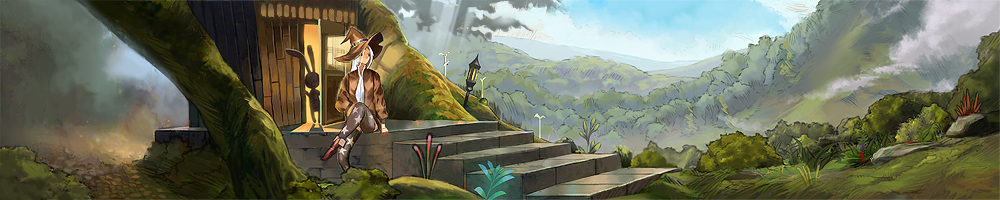
Oh, it’s only been two episodes since her introduction, and I’m already a big fan of Cal (apparently not Drei, who has yet to show up). This episode really reminded me why I’m such a big fan of Bee-Train. This episode was mostly building-up, but the superb characterization made it all worth it. With an already excellent game that this series is based on, they really managed to get the best out of it. It’s a shame that this episode got the short end of the budget for this series, but apart from that I loved it.

Cal’s surprisingly sharp wit really has the ability to open up Reiji who has closed himself ever since Helen’s death. She may look like an innocent girl, but time and time again she proves to be observant, curious and direct, and yet she is full of weaknesses, like how she hates how she isn’t able to do anything on her own, and how she’s deeply affected by the death of her caretaker. That’s why it surprised me when she suddenly popped up with five million dollars in stolen cash from Inferno, asking Reiji to kill every single one of the bastards that killed off Judy.

The plot for this arc is again promising to be really interesting, with multiple sides, none of them being completely good or evil. We have Reiji and Cal, who are after the mysterious people who killed off Judy, at the same time they have to try and hide the fact that Cal just stole five million dollars from an angry Isaac, and something tells me that the mysterious Drei is part of the people who killed off Judy.

Oh, and on a side-note: one detail I also loved was that Reiji still bears the scars of the gunshots that struck him six months earlier. That really is a detail that many anime simply forget to include, but big wounds like that obviously take ages to heal properly. Like expected, he was mostly hit in the shoulder, and not in his heart, so that explains why he managed to survive that day.
Rating: ** (Excellent)
Very intriguing build-up with an increasingly awesome Cal.

Basquash! – 13


Nice. After the previous episode, I was expecting another rather silly episode, but this installment instead took itself entirely serious. Instead of going for the usual fun basketball matches that this series became known for, instead the focus fell to Dan and Rouge, and the romance between them. As it turns out, the idols had to take medications in order to e able to keep up with the basketball matches and not to disappoint their fans, but Roughe took this way too far, collapsed, and the episode ended with her returning to the moon without her having the chance to say goodbye to Dan.

This episode was really solid and well done, but it does have me worried about this series’ future a lot. When this series first started out, it managed to so well avoid some of the clichés and tropes of similar series, but for the past few episodes the clichés have really been heaping up, with this episode probably being the worst.

For example, it’s great to see that Dan now has more reasons to go to the moon than just for his sister: his motivations are changing, and that’s pretty interesting. HOWEVER, at the same time it reduces Idol Rouge as a simple damsel in distress. The romance so far worked so well because Rouge really was someone who fitted Dan: impulsive, strong and not afraid to speak her mind. The two filled in for each other’s weaknesses and that was fun to watch, but having her talents explained by an overdose of medication, bringing her back to the moon beyond her will so that Dan can save her. That was a bit of a disappointment, and the creators had better know how to handle this properly.

And yeah, I guess I could have seen this coming, but I’m still really disappointed by this: Miyuki. She was really fresh as Dan’s childhood friend, exactly BECAUSE she wasn’t in love with him. The two of them really were friends: they hung out together and had the same purpose: she worked as a mechanic, while he was doing his basketball. But unfortunately, this episode showed some really big hints that she is indeed in love with him. I mean, seriously! That’s about the biggest cliché in the book that you can think of!

While I still like this series at this point, something really has to happen in its second half to make it surpass the brilliance of the first third of the show. I really hope that the change of directors after episode 17 (at least, I assume that the changes are going to be noticeable from that point) aren’t going to make this even more difficult than it already is.
Rating: (Enjoyable)
Solid episode, but lacked the creativity that made me a fan of the rest of the series.

Ristorante Paradiso Review – 85/100


I’ve turned into quite a fan of the modern horeca-series, brought back and popularized by Bartender. It’s a genre with an atmosphere unlike any other genre, and one of those very few types of series targeted solely at adults. The latest installment is Ristorante Paradiso: yet again a short but charming and relaxing series about a restaurant somewhere in Rome.

From the outside, the premise of this series indeed looks quite shaky. It’s easy to think that this is just a harem, but this time the lead character being a female in her twenties and the male characters all being stereotypical bishounen in their forties or above. Thankfully, the series proves that it’s fully able to avoid this cliché. There is one lead couple, and the rest of the characters all have their own romances.

One of the things that makes this series so enjoyable is how well it manages to handle its limited airtime of only eleven episodes, and yet it manages to develop a relatively large cast of characters. Every episode is basically dedicated to one or two characters, but they’re all inspired and miles away from stereotypes. The characters here have realistic problems and issues, rather than those overdramatic ones you tend to often see in anime. Every episode keeps you guessing on what’s going to happen next; despite the next-episode previews, you’ll hardly ever find yourself able to predict what’s going to happen next, or what the next character’s back-story is going to be about.

And still the series forms a coherent whole in the end. A major theme is the past, and how it affects characters today. Surprisingly, most people in this series have relatively dark pasts, but unlike most other anime they hardly ever bear grudges or feel depressed. A major theme of this series is not getting worked up about what happened in the past, but instead using these experiences to enjoy today. It’s a theme that’s explored wonderfully throughout the series, and makes it feel complete.

Of course, you need to know that this isn’t the series for those who want action or lots of drama. Instead, it’s meant to be relaxing, while most of the drama is done very subtly without ever dragging on. Apart from that though, I couldn’t find any major flaws in this series, or reasons why one would not want to watch this. It’s not anything epic, but what it does it does really well: the creators really put thoughts into how they could make this show work best, and not let a minute go to waste. It’s a recommendation for those who are looking for a short relaxing series.

Storytelling: 9/10
Characters: 9/10
Production-Values: 8/10
Setting: 8/10

Ristorante Paradiso – 11


Haha! This series pulled it off! Mitsuko Kase really proves that she knows how to make a good series. She’s probably one of the very few female anime directors out there, most of her series are very under-appreciated, but you can really call me a fan of her. Especially when it comes to the endings, nine out of ten anime series simply fail to put an actually good and satisfying conclusion to their story, but she time and time again uses that ending to wrap up all of the hanging plot-lines, develop the main characters, AND pull in a few surprises here and there to boot while still staying true to the atmosphere of the rest of the series. There really aren’t many directors who also have consistently proven to do this.

So yeah, I don’t think I could have hoped for a better ending than this episode. I had to laugh at when they played the scene that showed up in last episode’s next episode preview: when watched in context with the actual events, it was much more humorous (Nicoletta basically out of nowhere slapped a plate of spaghetti over Claudio). Last episode’s preview made it look so dramatic, but in the actual episode it happened so fast that there was hardly any time to build up any tension, and instead the focus fell on Nicoletta, trying to get Isabella to understand to stop making Claudio suffer.

I really liked how the creators resolved Claudio’s issues with his former wife, which was very un-typical of anime. Usually, you’d build up and up, until the climax where characters confess their feelings and suddenly forget about all their problems, but here it was done very gradually. There wasn’t one point at which Claudio immediately forgot about his past. Instead, they just gradually became a couple over the episode: slowly, bit by bit Claudio was able to let go of his past, until eventually he returned his wedding ring. I wish more anime did this.

As a surprise, we also see more development for Olga. Her story was handled with a bit less subtlety, but I still liked it a lot. It really showed how much Nicoletta has grown over the past series: at the start of this series, you’d think that this show would be about a bitch-fight between an angry mother and daughter, but in this episode Nicoletta proved to be much more mature than her mother, and managed to convince her that she doesn’t mind the past anymore.

Overall, I’m glad to have followed this series. It was probably the most un-typical anime of the season, the drama was nearly always subtle and yet packed a punch. The ending wasn’t my favourite, but I would definitely label it among the top 5 of best endings I’ve seen in 2009 so far. The series also had the best character-designs for the past spring-season (in contrast to most people, I’m not yet a fan of Range Murata or Satoko Morikawa). It obviously wasn’t an epic series that had me on the edge of my seat, but it didn’t need to be: it used its time well and delivered a very enjoyable and relaxing series. I’m looking forward to what Noise has in store for us the upcoming season.
Rating: ** (Excellent)
Among my top 5 endings I’ve seen this year so far. (For those wondering, the others are Birdy the Mighty Decode, Michiko e Hatchin, Ride Back and Jigoku Shoujo Mitsuganae).

Some quick first Impressions: Saint Seiya The Lost Canvas, Fight Ippatsu! Juuden-Chan! and Umi Monogatari

Saint Seiya The Lost Canvas

Short Synopsis: Our lead character has huge powers for no particular reason and gets to become a saint.
Chance of me Blogging: 0% (No way)
Okay, so I’m pretty much a Saint Seiya noob: I’ve never watched anything of the franchise, despite how it seems to be churning out an OVA every year. So yeah, this felt like a good opportunity to check out and see what this franchise was all about. Well, if the rest of the installments are anything like this first episode, then it’s a franchise full of hopelessly bad acting and stereotypes. Seriously, this episode starts with a bunch of generic bullies nearly killing a dog, only for one of the lead characters to act like a flower-child and protect it. The other lead character is your typical hot-blooded teen-aged lead, only exaggerated even more than usual. The episode was full of inconsistencies or things that just didn’t make any bloody sense; my favourite of this has to be the point where a river was blocked by a bunch of rocks from a landslide. So what does our main character do? HE TRIES TO PUNCH HIS WAY THROUGH THE ROCKS. Granted though, the animation looked really nice and the backgrounds looked pretty. But pretty pictures aren’t going to excuse the disaster that is the cast of characters.

Fight Ippatsu! Juuden-Chan!

Short Synopsis: Our lead character hasn’t been toilet-trained properly and Deus ex Machinas depressions away.
Chance of me Blogging: 0% (No way)
It’s stupid, clichéd, full of fanservice and stereotyped. But still I have to admit that it made me laugh at times. This is basically another shounen mahou shoujo, but for once the chemistry between the male and female lead was enjoyable, rather than annoying. The problem with this series however, is that that’s just about the only thing that I liked. The visuals look horrible, the background music is generic voice-less J-Pop. The drama is incredibly shallow: it’s built up poorly and simply solved because the lead character has the power make depressions go completely away. It just screams laziness to me. The fanservice also was abysmal at times. Fully unneeded, especially in the ED, and you know a character is bad when she still pees in her pants.

Umi Monogatari

Short Synopsis: Our lead character lives under water.
Chance of me Blogging: 40% (If the rest of the season is mediocre)
Another series with lots of moe, but it’s actually pretty interesting. Umi Monogatari tells the story of a tribe of people who live underwater and use strange rings to move to the shore. It’s got an ambient atmosphere with lots of quiet piano background songs. The pacing is also quiet yet at the end o the episode there were definitely some dark pasts. A major theme of this episode also was cultural differences, which can become quite interesting as well if the series develops it properly. My one gripe with this episode was the comedy, though; it just felt forced, so that’s a potential problem for the future of this series. I know that ZEXCS isn’t the best company out there, and the animation and visuals really are nothing special, but if they can make this series as solid as they did with Wagaya no Oinarisama, then I’m in.

xxxHolic – 39


Well, in case you haven’t heard yet: they’re planning to make the next xxxHolic OAD, to air in 2010. Aand I guess that this episode is the point where xxxHolic stops being xxxHolic, and starts becoming Tsubasa Chronicle’s back-up show (which I assume to have its next OVA announced soon as well). I expected this episode to deal too much with TC, but in the end there was only a small bit about Sakura, and thank goodness there was still lots of WatanukixDomekixHimawari.

The way in which Domeki kept waiting for Watanuki for about six hours was a bit repetitive, but on the other side we can finally see Himawari’s development kicking off. There is this unique triangle between the three of them, in which Himawari is finally ready to crawl out of her shell. The scene with Sakura was also surprisingly solidly done, and neatly answered some questions that Tsubasa Shunraiki left hanging.

But yeah, there were continuity issues as well. Was I the only one surprised at the Rain Sprite’s sudden change of hair-color, and nobody noticing it? That’s really the big problem with the xxxHolic and Tsubasa anime series: the really bad management. When the decision was made to animate these two series, nobody really bothered to look at the big picture. There was nobody who took charge and thought about how they could make this work best. Instead there were too many parties that took too much assumptions: Bee-Train assumed that CLAMP wouldn’t mind it if they went with their own story since the manga hadn’t finished yet, CLAMP assumed that Bee-Train would simply follow the manga’s storyline for three seasons, Production IG assumed that there were not going to be any Tsubasa Chronicle references, so they left all of those out. And so the continuity became a complete mess when they tried to recover these mistakes. For people who haven’t read the manga like myself, anyway.

In any case, I’m not in the mood of writing a review for all of these different series, OVAs, et cetera, but I will provide this list of my opinion on the various adaptations of the franchise:
– Tsubasa Series 1: solid manga-adaptation with strong characters, although it moved really slooow.
– Tsubasa Series 2: lots of fillers that were really fun to watch at times (my favourite being the chibi-episode), and just okay at others, but really ruined the continuity of the series, up to the point at which Clamp made Bee-Train return to one of the previous worlds to show that dead people can’t be brought back to life.
– Tsubasa Movie: for some reason I rated it really highly, but thinking back it was just a boring filler that really wasn’t anything special.
– Tsubasa Tokyo Revelations: Awesome visuals, though tried to cram a bit too much story in too little time.
– Tsubasa Shunraiki: blatantly skips two very important manga-arcs, making it impossible to follow for non-manga readers like myself, and the chapters that were animated were rather boring and hardly anything developed.
– xxxHolic Movie: awesome mystery-movie that even though it has nothing to do with the continuity, stands out with really imaginative visuals and very naturally evolves and lets the viewer guess what the heck is going on.
– xxxHolic Series 1: excellent series about modern folklore, discussing a wide range of thought-provoking topics.
– xxxHolic Kei: while still about modern folklore, the characters become much more central and this series was an awesome character-study of the three main leads.
– xxxHolic Shunmuki: the weakest part of xxxHolic to be honest, but that’s mostly because the others were simply that good. Mostly building up for future OVAs.

Rating: * (Good)
The plot didn’t really interest me, though I really liked Himawari’s growth.

07-Ghost – 12


I really don’t get it. I’m really starting to agree with the criticisms against this show: for the past twelve episodes, Ayanami an his henchmen hardly did anything other than turning people into ghouls and having Frau kill them. Teito turns out to be the key to either saving the world or destroying it, and because of that he’s exceptionally talented when handling magic. Been there, done that.

An yet every single time I’m ready to dismiss this show, I watch another episode and it violently drags me back into its fanbase. 07-Ghost sucks and rocks at the same time. This episode again wasn’t that special on the plot development: we see a new woman who also turns people into ghouls, Ayanami in his turn also starts killing more people with ghouls. Teito develops his power even more, like he did in the past episodes and his new roommate obviously turns out to be his the guy from the previous episode and they spend the episode bickering.

So why the heck did I like this episode so much if it was so formulaic? I’m still not sure myself, but I do have to say that the art in this episode really looked awesome at the times when the bad guys did their stuff. While the animation of this series has never really stood out, the art really has been consistently solid, with a number of greatly drawn money shots. I looked up who the animation director of this series, and I finally understand why the art in this series looks so good: the animation is done by the same guy who did directed the animation of Amatsuki. That too was a powerhouse of great shots and camera-angles. While his work here on 07-Ghost is admittedly much less impressive than what we saw on Amatsuki, you can definitely see the similarities. It’s also interesting how this guy’s works didn’t really stand out before he dealt with Amatsuki, but it’s very interesting to see that from that point on, his works became significantly better (also note that he was the one who animated parts of the Blade of the Immortal OP).

In any case, I’m also surprised that I’m still laughing at the characters’ quirks in this series. Usually at this point of a comedy, when the characters haven’t been developed properly the series in question just stops being funny, and yet I’m still enjoying this series immensely.
Rating: * (Good)
Very nice visuals and a yet again a really enjoyable building-up episode.

Shangri-La – 12


I really must say, that despite the rocky start Shangri-La is quite possibly turning into one of my favourite series this season. If it wasn’t for the likes of Phantom and Konnichiwa Anne, I’d be sure of it. As messy as the beginning episodes were, as solidly everything is coming together at the moment. It just shows how series can completely change for the better as they go on.

I think what sets this show apart is that for this season, it has managed to find the best combination between a complex multi-layered and epic plot, great aesthetics and audio and a very varied and coloured cast of characters, and yet it doesn’t drag or go too fast. I really hope that this can continue on in its second half. It relies a bit too much on coincidences at times, but it’s really nothing serious to get in the way of what’s really important. It’s not necessarily the best at one front, it may have some rough edges, but when combining everything together the picture really makes for a top-notch series.

This episode again had lots of revelations. Indeed, Mikuni is not unique: Kunihito and Kuniko posses the same power that she does. This is why Ryouko was so interested in her, and why she had Kunihito’s personal data blocked (it’s also a nice touch that all three of them have “Kuni” in their names). I’m really going to wonder what kind of impact that’s going to have on Mikuni: she obviously of the three of them is the easiest to manipulate, but there has to be another reason as to why Ryouko is so interested in Kuniko: if she can already read Atlas through Mikuni, then why does she need all three of them?

This episode also marks the end of Sayoko, as she gets arrested from trying to hack in the Atlas server in order to try and find out this information. This means that Miiko is going to have to take care of Mikuni. And speaking of Miiko, it’s great to see how far she’s already developed: now that she doesn’t have Momoko anymore and instead is going to be the one who needs to protect, she’s proven to be a really strong and dependant character, and ended up saving Momoko that way.

For Kuniko, it’s also good to see that she didn’t choose to become the leader of the Metal-age just to save Momoko, but instead because she really doesn’t agree with Atlas’ principles. She even says in this episode that the mission that they’re going to undertake has the priority above saving Momoko (but of course, it never gets to the point for them to save her because she already escaped on her own).

Oh, and Karin was downright adorable in this episode. Especially when she ran into Kuniko, who recognized her from the time she accidentally hacked into Karin’s server. Seeing her shopping and walking around in a bear-suit was just awesome.

And on a side-note: it’s interesting how the names of Atlas are all related to Greek mythology: we have Atlas as the main organization, Zeus as their main server, then there’s Medusa as their oracle. The names don’t really relate to the stories that their mythological figures had, but then again, I don’t think that such an obvious level of symbolism is needed anyway.
Rating: ** (Excellent)
Lots of stuff happened again in this building-up episode.

Natsu no Arashi – 12


If you consider this episode as a regular episode, it rocked. It closed off the Yayoi and Kanako arc really nicely: in the end all the conflict came from a simple misunderstanding: the two of them simply didn’t know that they can remain in existence as long as they remain close to a person from the current age, and so they decided to steal Arashi’s existence as a means to keep existing. It then proceeds with a little more Jun-jokes when one of her friends protects her secret by claiming to be her girlfriend, and the rest of the episode develops HajimeXArashi by bringing a bit of tension in their relationship by introducing a guy who turns out to have been saved by a future Arashi in the past. All in all, a pretty good episode.

However, this was supposed to be the semi-final episode, and there was no hint of a conclusion in it, or even a build-up for that conclusion, meaning that either the creators are going to stuff the entire conclusion into just one episode, or simply going to end the show by ending with just another manga-chapter without concluding anything. It’s such a shame, really. This would have been a perfect opportunity for the creators to go with an anime-original ending. I know that Shinbo can do it if he wants to, but to do it all in just one episode is really going to push it.

But ah well, who knows whether or not it’s going to turn out awesome or not. Who knows, Shinbo is so unpredictable that he might actually pull it off. In any case, this episode was heaps of fun as usual, and that ending is going to have to be really bad if it wants to completely ruin this series.

Rating: * (Good)
Not the most perfect semi-final episode, but standalone it rocked.

Konnichiwa Anne – 12


Well, there you have it: Anne’s first day at school, or 20 minutes of Anne making a fool of herself in front of her classmates. While in the original series, she was quiet in classes, she obviously didn’t have those restraints as a six-year-old. This episode was really embarrassing to watch at times, but really: it’s typical of Anne to do such a thing.

As this is one of these episodes in which Anne rambles on and on, I’m not going to translate every sentence she says, but I’m just going to summarize the main points, in an attempt to retain my sanity. The episode starts with Anne’s first day at school. She gets ready for school while at the same time trying to take care of the kids, but she’s too excited to really care about it. Horace and Edward don’t seem to be going to school as well, on a side-note.

Johanna gives Anne her lunch (an apple and two cookies). A walk to school takes about one hours, but Anne doesn’t seem to mind. When she arrives at the school, she immediately starts comparing the most popular girl to a pretty doll (yeah), after which she gets called by Henderson, her teacher, who is all excited to see her. When it’s time for Anne to introduce herself, her classmates obviously make fun of her because of her incredibly long-winded introduction-speech, and how she’s never been to school before that point (and her red hair, of course). The first class is spelling, and Anne shows that she already knows how to write down the alphabet (courtesy of Elisa).

The popular girl’s name turns out to be Mildred, whose father seems to be the mayor of Marysville. They try to annoy Anne during the break, but Anne is too busy with the new things she learned. They then try to give her a bit of a tip of how she could use Randolf(another kid in the class)’s dictionary if she ran into a word that she doesn’t know. So obviously, they pick up Randolf’s dictionary and Anne gets blamed in the end for taking it.

At the end of the lessons, it turns out that the next day history is going to be the subject (unfortunately, Anne can’t come to school that day), and the day after that is going to be a test. Because it’s Anne’s first day at school, she doesn’t have to take it, but she still takes the test seriously. Especially when Mildred pops up and tells her that the test is going to be about India’s history (instead of a simple spelling test). She gives Anne an incredibly complex book to study (which Anne obviously can’t understand).

So Anne ends up asking Eggman’s help with India’s history, and she spends the next few days trying to understand it. Unfortunately, in the meantime Noah gets sick and so Anne alternates between studying and trying to take care of Noah. So at the day of the test, she of course gets really surprised when she prepared for something completely different. Anne’s classmates are doing so-so (especially Randolf screws up), and when Anne gets her turn to try she also fails to spell “chocolate”. Mildred of course jumps in to correctly spell it, and Anne feels pretty down.

The next test is calculating, and like expected Anne has a lot of trouble with the answers (just like the majority of her class aside from Mildred, by the way). Mildred gets asked to write down the answers on the blackboard, though Anne then notices that she made a mistake (100 x 0 = 1000). Everyone in class was so convinced that Mildred could never make a mistake like that, so they didn’t even notice the mistake she made. Anne in the meantime comes with an anecdote she picked up from Eggman when she was studying India to explain why Mildred’s answer was wrong.

Because of that, Anne gets to tell the class a bit about the things she learned about India and the episode ends.

Well, that’s the World Masterpiece Theatre for you. I remember how Anne of Green Gables devoted an entire episode of Anne and her best friend, playing mother and father in the woods. It’s obviously that those things are nowhere near my interests… but it’s so incredibly charming.

And yet it’s episodes like this that really remind me why the World Masterpiece Theatre series is so awesome. There are so few series that have as detailed and colorful characters as they show here. They may be boring at times, but these anime really showed me what a wonderful genre slice of life can be.

I’d be lying if I said that I didn’t miss Porfy or Les Miserables: both two brilliant series with some incredibly well fleshed out and developed characters, and both really were unique anime. Konnichiwa Anne in return doesn’t have that overarching plot that these two had: it simply tells the story of an overly energetic and talkative girl called Anne. And yet it shows that even with that, the WMT-series can be awesome.

I’m really curious what the creators have in store for episode 13. In Porfy and Les Miserables, it both was the episode that really set the bigger plot in motion: Porfy had its earthquake, while in Les Miserables it was the point in which Jean picked up Cosette. Obviously such a thing isn’t going to happen here, but I still wonder whether the creators here have some sort of climax planned. If they have, then this episode showed no signs of it.

One issue I did have with this episode was that the animation looked off at times. Faces were more distorted than usual, it seemed. I also believe that Anne suddenly learning a lot about India was a bit overplayed, but it definitely remained charming in the end.
Rating: * (Good)
A rather uncomfortable episode about Anne making a fool of herself in her first day at school, but that’s what storytelling is: evoking emotions from the viewer.