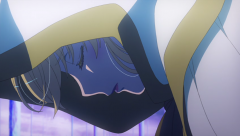
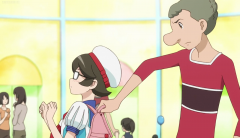
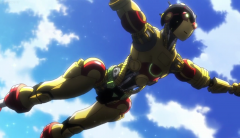
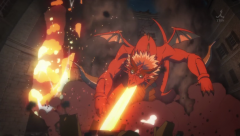
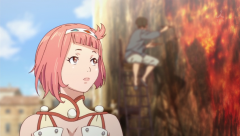
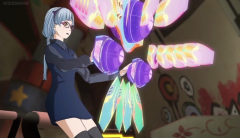
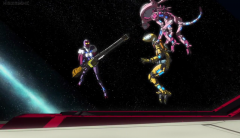
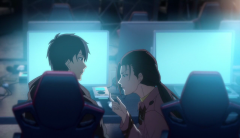
I think I’m only missing that Atom Show, but I’m leaving tomorrow for a long weekend to Luxembourg and otherwise I’ll never get this post done. Oh, and Goro Taniguchi seems to have a new series out but for the love of me I cannot find any translated version. Also I try to avoid sequels unless I don’t know they’re sequels, I’ve seen their original series or I feel like they’re more like spin-offs and having seen the original isn’t importan.t
So, Spring 2017. It is huge, there’s a lot going on here. Common themes are fantasy, but more importantly the biggest difference with the previous season is that Winter 2017 was all about stories: complex stories that make you think and puzzle about how things will end. Spring 2017 is much more about characters and experiences. These shows aim to take you on a ride, with complicated storylines and settings being less important.
How did it fare? Well, we’ve got the entire spectrum between completely amazing and utterly terrible, about evenly distributed. Here are the impressions they made on me. 8000 words holy crap this was a lot!
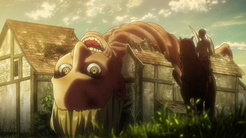
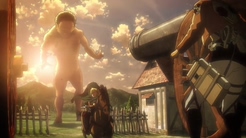
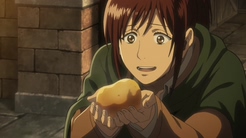
Shingeki no Kyoujin Season 2


Well, let’s start off with the big one. And before I say anything else I do want to note that this series has one of the most annoying fan-bases out there. I mean I liked the series and all, but the past three years I’ve watched this show become perverted, become the victims of hordes of terrible jokes, over and over again. I’m all for people enjoying series in their own way and all, but this was just too much, to the point where I feared being able to take this series seriously again.
Now as for this episode, things are different. It’s not the same series anymore when you look at the execution. Season one was very straight-forward. This one totally wasn’t. And it may just be me, but in the meantime the animators have improved their skills, and I’m also spotting a bigger budget here, signalling that the creators really are planning to go all out. What does that mean?
Well, this project is being helmed by that crazy mofo of a Tetsurou Araki. If all of the other episodes are going to be like this one, then this seems like he’s taken his chance to just go all out. That part has me very excited, because this episode definitely was not “let’s just carry on where we left off”. This was twist after twist after twist, they could not have planned that at the end of season one. I saw creative liberties everywhere here, and off the good kind. This will be glorious, and please let it also be weird enough to turn off the most annoying fans so we don’t have to suffer through them trying to turn this into a bad comedy!
OP: I’m gonna bring this one back: short comments about the opening and ending animations here. This one was a retread of the first OP, only more mellow, but it works.
ED: This is one of the things I meant by creative liberties: it is far from what you’d expect, and yet it fits. It’s a great song because of how the sound of the music contrasts to the overall theme of the series.
Gin no Guardian


With only 10-minute episodes, Gin no Guardian had its task cut out for it. The past Autumn season had two pretty good series like that, with To be Hero and Cheating Craft, however Gin no Guardian did not impress me. It like, tries so hard to look cool and serious, but the whole tension revolved around the main character slaying thousands of zombies with silly voices who all look exactly the same. Perhaps it’s an attempt to appeal to the gaming crowd, but it looked like the story that a fourteen year old would write, with all of the self-insertion that you’d expect. So, the plot is too stupid to take seriously, what about the characters? For that a “meh” would be sufficient. They’re there, but they’re all pretty flat and uninteresting, nothing to write home about. There is one thing in this series that impressed me though: for some reason this show has a pretty good soundtrack. I can at least just close my eyes during the fight scenes and listen to the pretty melodies here.
OP: You know, when you can summarize your plot in your OP, this usually is not a good sign. Plus, it’s everyone desperately trying to look cool again!
Alice to Zouroku


Alice to Zouroku is a show about cute girls with superpowers. This sounds bad, yet this is one of the better ones. A lot of reasons go to that, but the main one is its realism. The big mistake that series like this usually make is thinking “oh, we have superpowers, we can get away with larger than life characters, anything not epic is just going to be boring”. Not here: this episode was twice the normal length, and throughout it stressed that for these huge powers, the girls need energy, or food. You want to do a car chase? Are you crazy, just think of how many people get hurt! It tries to show what REALLY would happen if your average Joe were to run into a magical girl.
Speaking of average Joe: the male lead here is wonderful. Of course we have had a few more male characters of his age, but it still remains refreshing amongst all teenagers. But what I especially liked about him is his sense of responsibility: it just comes natural to him, and his occupation is hilarious, and I loved how he just put all of the kids in this show in their place. This episode toyed very neatly with your expectations, and yet the lead’s calmness is refreshing to watch.
What I didn’t like… the action scenes were boring. And also yes, the girls here ARE annoying. They get better once the episode goes on and you realize what’s going on, but there’s a big danger of a lot of them just remaining one-dimensional stereotypes at this rate. this show is going to have to try hard to balance out developing these kids, together with progressing the plot.
ED: Actually quite cute and fresh for an ED. Not bad.
Warau Salesman NEW


This one took me by surprise. I figured that I’d just give this one a few minutes, but that it’d be just one another one of those lazily produced shows. I mean, just look at the art style! This is so cheaply produced, it can’t be good.
What I was treated to was perhaps one of the most evil main character in an anime I have ever seen, in a show that offers a terrifyingly biting criticism of modern consumerism. Apparently this is a remake of a series that aired back in 1991, but even then the themes of this series are as relevant as ever, perhaps even more.
I mean holy crap, this show starts off innocently, with the titular laughing salesman claiming to offer filling the emptiness of people’s hearts. DO NOT BELIEVE ANY WORD HE’S SAYING. I mean Christ, this first episode proceeded to ruin the lives of two perfectly ordinary people. They were both my age, which made it all the more relatable and painful as they fell into the traps that I myself try to avoid at all times. They show how easy it is to make a misstep. How modern society makes it so easy to give in to temptation. Screw it, this might as well be called a horror!
OP: Catchy song, great visuals!
ED: Invoking the classics, looks very pretty. Also continues to kick you in the behind right when you thought it finished.
Sekai no Yami Zukan


I said I wouldn’t do any of the 5-minute episode shows anymore unless they were really out there. I think this show qualifies for that. It’s a picture book-type of animation, with just a voice over, with only a few cardboard cut-outs being moved and zoomed to qualify as “animation”. It starts off like a normal short horror-story about a couple being lost in the woods, until suddenly aliens arrive and abduct them. They get kidnapped, brainwashed and the episode ends. This episode was both really weird, but at the same time the narrator actually knew how to build tension. He was the only one by the way, the other voice actors were happily hamming it up, plus the aliens look incredibly silly. This context between good and bad intrigues me for now.
ED: Dreamy rock fair enough.
Frame Arms Girl


This list is in the order of when I watched it, so Frame Arms Girl is one of the first ones I watched this season. Still, I’m already willing to say that this is the worst one of the season. I will be very surprised if something worse comes along. The only thing that this show can boast is its slick production values, but in the context of it all that just makes it even worse.
There’s good, and there is bad fanservice. Good fanservice flows organically in your story: it’s there if the story calls for it, or if you’ve got a particularly good joke that depends on it. Bad fanservice is designing your character with a skirt that doesn’t even come close to covering her crotch! The characters in this series are just 100% pandering: they’re cute cashing in on the mechanical fighting girls hype, with silly armour and guns, overly stereotypical acting, but what makes it even worse is that everything in this show is an ad. It’s not a simple case of product placement, every single scene in this show is geared to wards selling this merchandise. Everything is about the product, trying to make it look cool, or introducing its concepts to the viewers. The entire story is even dedicated to this, this is an attempt where they creators even stopped trying to be subtle, in a show whose premise is that they’re testing out prototypes of the toys they’re planning to sell.
I’m all for people enjoying series in their own way and all. But let me just say that if this series ends up selling well I at least get to label these buyers as simple-minded, okay?
OP: Never, in any context or circumstance, is it okay to start your very first frame with a pantyshot!
ED: Incredibly generic copy paste from other EDs, both the music and the visuals.
Rokudenashi Majutsu Koushi to Akashic Records


Some series are just plain annoying to watch, but even there Rokudenashi stands out because the entire premise of this show seems to be as annoying as possible. And that’s not a good thing by far in this case!
Seriously what is this series trying to do? We have this fantasy setting, a gorgeous town, right in the mountains. There’s magic, the entire world is open for the creators to explore. And where do we focus on for the entire episode? A high school. The way in which the high school is at the smack centre of the town says enough about how we’re never going to move beyond this high school. This show focuses on a new substitute teacher who is an incredible self-centred asshole and spends the majority of this episode harassing the two main female leads. It’s in the guise of comedy, I guess. But if that was the case the creators need to learn a very urgent lesson that mentally torturing people is not funny. We all know that guy: he tries so desperately to be fun and liked, while also being a lazy bastard and just ends up throwing one insult after the other.
So this series seems to be hinting that by the end of the series we’re going to be feeling sorry for him, but it doesn’t work that way. Dude, you can’t be Great Teacher Onizuka that easily. Onizuka was a bit of a weird guy with lots of flaws, but whatever happened he had his heart at the right place and really tried to teach valuable lessons to his students. The only lesson this kid offers is “do not trust anyone, stop wasting your time with idiots”. A valuable lesson perhaps, but why would anyone want to watch this mess?
Tsugumomo


I think Sigmund Freud would like to have a talk with the male lead here, with the way this episode started and all. Waking up from a nightmare and your first instinct being to grab the boobs of the girl in front of you. That is some deep next-level trauma right there.
But okay, fair enough. This is no series for me, but at least I get this one. It’s an innocent little romantic comedy with some fighting and drama, and they do seem to be competent about this: it’s not a complete rush-job and there were some jokes that made me laugh. The acting is decent and the two leads have good chemistry, and I have seen far worse. There was no awkward acting. The only thing is that that sister only needs to take one step closer for this series to burn in hell: she’s standing dangerously close to incest here!
But yeah, it’s a stupid little series that is surprisingly competent. With Rokudenashi I really cannot imagine the appeal, but at least here I can understand it. It’s not for me though: I miss something deeper here. This episode to me, was competent at best, but it didn’t challenge me in any way. At its core it’s just another magical girlfriend show, with no noteworthy music, visually it did nothing interesting, and in terms of themes, everything this episode did had already been done and better by Hand Shakers last season.
OP: Pretty generic, nothing really new.
ED: At the very least they tried to come up with an actual song here. Still dull, but better than the OP, and nice shading.
Busou Shoujo Machiavellianism


Fair enough. If you absolutely HAVE to set your series at a high school, you have two options: either have a ridiculously out there premise to work with, or be really good. Busou Shoujo picked the first one: it is set in a former all-girls school, where the student council forces every single guy to walk around in drag because some of them kept harassing the students. They enforce their rules with deadly assault weapons, like swords and a bear. I have to give credit here: they tried to make something out of such limitations.
One thing this show is very good at is building up. The first half was just busy hyping up everything, building atmosphere. As if there was some giant showdown about to happen, with epic build-up music, it being all intriguing, some very enjoyable chemistry between the different characters. It piqued my interest. And then the characters actually started fighting and the show quickly got boring. Yep, it’s all bark and no bite. This might just be for a set-up, but if you want to be ridiculous then you need to go all out. The most scandalous thing that the second half of this episode did was an accidental kiss. EVERY SERIES DOES THAT.
OP: A generic opening, but at the very least they added trumpets. It’s better than nothing okay.
ED: Also pretty generic.
Oushitsu Kyoushi Haine


This series is a classic lesson in bad acting. A lot of reverse harem suffer from this, but it’s exceptionally clear here. I mean when you look at it: the guys simply don’t feel like actual guys, but some kind of effeminate abomination. Of course very few characters in anime are actually realistic, but in these series, it’s exceptionally bad. Let’s once again run through why these characters are so insufferable.
There are many ways to act. A very easy beginner’s mistake to make is hamming it up: actually acting too much and putting on way too much of a performance. That is not how people act. Most people are usually simply mellow, whereas the characters here are in a constant state of giddiness. The main character did avoid this, the worst offenders were the palace guards. I mean come on dudes, look at the royal English guards and look at how they present themselves before putting these pussies there.
Now that of course is not the only way to present characters. The characters in Classicaloid for example were also really out there. But the thing about being a good writer is that every character should stand on its own, regardless of the other characters. If characters all have the same style of talking or same type of humour, then it’s the sign of an incompetent writer who is inserting him or herself into everything. And that’s what’s going on here. The characters, while all different stereotypes, all feel like they’re the same character here. They’re all on the same wavelength and it feels like a person with multiple personalities talking to himself. And this is not just in this show, by the way: when you take a look at other reverse harems, you seem the same character pop up over and over and over again. This is bad writing! Take some writing classes dammit!
ED: The same boyband sound you hear everywhere, random art deco here, and good, you gave them all sorts of facial expressions, you want a cookie now?
Boruto – Naruto Next Generations


I want you to imagine an old cow. Having worked hard before in her life, producing a ton of milk. Her udders have now shrivelled up, her time is gone. And then her farmer comes around and goes “ah, we can still squeeze some milk out of her”. That cow, is Naruto.
Okay, so Dragonball Z got away with it by making Gohan completely different from Goku, while still making clear that he was Goku’s son. It had its own plot, own direction. Boruto feels like these Disney sequels they kept making in the early 2000s, only with the right production values. They basically took the bad parts of Naruto, like almost one-on-one, and the new stuff they added… is really bad. I mean, Naruto was a brat, but at least you could argue that he was an outcast: that connected to hordes of people, making it one of the most popular anime ever. Boruto is the son of the equivalent of the mayor of the village, so he doesn’t have that. Making him a spoiled brat with really no reason to feel sorry for him.
Aside from that I really have issues how every child is like a carbon-copy of their parents. This is the sign of pandering. The whole premise of this episode also made no sense whatsoever, with the epitome being that runaway train. I mean what the hell was that?! I can understand spicing things up, and okay fair enough you want to get bullies back in an explosive way. But really, who found it a good idea to suddenly switch around and have Boruto crash the train into the ninja school opening ceremony? That’s not creativity, that’s just simply giving up.
OP: Pretty generic, although it at least tries to have some creative and colourful shots.
Sagrada Reset


Oh hell yeah! Do not get fooled by the generic character-designs or the school setting: this is not your average series. This series is the product of some writer, I have no idea who, being incredibly frustrated and needing something to dump his or her thoughts on. Those thoughts were put to a story, and that story is Sagrada Reset. It’s a show about high schoolers talking, but they’re actually talking about something!
And I have to give props to the creators of the anime for how they decided to handle the acting in this series. Everybody is so mellow. All tension comes from the music and the weight of the dialogue. That’s it, and in the meanwhile the characters are just droning on. And yet somehow this restrained way of storytelling works: I was glued to the screen. For a show that takes place entirely on a high school that’s saying something!
A good start is showing the main characters having hobbies, which have nothing to do with the series itself. The dude likes to play basketball. Okay, good for him. This is something most series don’t do: everything has to be relevant. Here though, it gives him a life beyond this series. The rest of the episode as well: the dialogue was really meant to get to know each other better, and it was really sharp about this. Characters are constantly analysing their actions, their characters. Everybody is assessing everybody here, trying to get through to their core. Sometimes they’re wrong, sometimes they’re spacing out, it’s all just prodding away. It’s fascinating.
ED: That singer at least tries his best to make something of the song. The mellowness of the visuals fits the show also perfectly. Wait a minute, is that HER, with her hair… oh you sneaky bastards.
Sakura Quest


So, it’s PA Works, trying for another Hana-Saku Iroha. But is it strong enough to stand on its own, or just gonna piggy-back off the success of former glory?
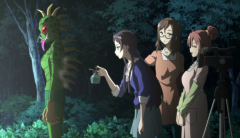
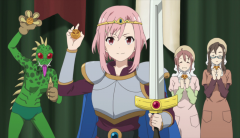
Yes, this is significantly different. Hana-Saku Iroha had its silly moments, but it was more grounded in reality than what we saw here. Sakura Quest is sillier, has more weird ideas, and it’s more flamboyant. Instead of a traditional inn, we’re talking about a Chupacabra-themepark bereft of its former glory. It all feels very weird, until you realize the context this series places its themes in: Sakura Quest is about entering the workforce. Being thrown in the deep by society and having to figure things out for yourself, and everything that just jumps at you that you just have to deal with. The big bad world finally getting real.
I’m very pleasantly surprised that the cast here is like 5 years older than in Hana-Saku Iroha, and it shows. They’re a weird bunch, but what this episode already did very well is make them seem genuine: they really care about that run-down silly place, and there already is some good chemistry between them and the main character. Part of storytelling is also using contrasts and opposites, and this show seems to realize that. On one hand it’s very silly, on the other hand it takes its characters seriously, and there’s this layer of realism in it. Characters on one hand do crazy things, on the other they behave exactly like you’d think in their situation.
The big challenge for this series will be finding a good and satisfying story-arc. It’s not just enough to show the shenanigans for an entire season until the group grows together, it needs to think of something more. Something to work to. That one year as a deadline is a good one for starters, but even that has to be used well.
OP: A simple genuine pop song that feels really weird if you don’t know anything about the series.
Saikaisuru Kado


For these previews, I watch just the first episode. Saikaisuru Kado started with an episode 00 and 01, I only watched 00 for this. Simply because if I want to be able to finish this post in a reasonable time-frame, and by the time the last series start the first ones already have their seconds out. I say this explicitly, because I have no bloody idea what this episode was trying to do. Like seriously, is this real?
It started off as a show about two businessmen off to buy land, of all things, but throughout the entire episode you just feel like “is this it? They’re just going to do this for the entire series?” Not that there’s anything wrong with it, it’s incredibly refreshing, but seriously? Businessmen as the lead for an anime series with such a weird opening? And then at the end of the episode that giant cube came along and like what? How? Why?
In any case: in the storytelling department it is very competent. You have to pay attention to all of the dialogue, but the characters, the premise of the episode. It was good, and came together quite nicely. I liked the characters going around and trying to get things done. In terms of the animation though… it is not very competent. There are lot of awkward faces and for some reason it switched entirely to ugly CG character models at the end of the episode. Please do not do that! I’d much rather have still frames than watch these awkward movements.
OP: Yeah, definitely the best opening of the season so far. Great visuals, great soundtrack.
ED: Also the best ending of the season so far. This song is even better!
Tsuki ga Kirei


Tsuki ga Kirei takes place in a middle school. It doesn’t have a special focus like Sagrada Reset; just middle school. I have a clear opinion on that, but I have to admit: the creators really want to try here to put forth the definitive middle school show. And for that, I appreciate this attempt: if it can either raise the quality of the other school shows that will follow it, or invalidate any more attempts then I’m all for it, because they definitely raised the bar here when it comes to pure execution.
This show uses its production values well. The school here feels alive: it’s not just a stage set for a few characters, no. Characters are constantly moving in the background, and the main characters feel much more part of the total picture, rather than the entire world revolving around them. That’s something that irked me about most other school shows: on top of them all having the exact same setting, they also weren’t very good at emulating school life. Tsuki ga Kirei did manage to bring a vibrant life to this setting. Of course the creators have set themselves quite a challenge: can they keep up this attention to detail for the entire rest of the series?
What this show also did quite well was adolescence. Especially the two leads were just fidgeting around, trying to navigate the world now that they’ve hit puberty, with all of the awkwardness that comes along with it. They act weirdly, but in a very believable way. Aside from that it’s a simple love story obviously, but if this show can finally just get that right, there won’t be any need for any other shows to attempt the same and I’m all for that!
OP: Not the worst type of copy-paste song, but unfortunately still a song that gets used everywhere. But okay, if you want to be the definitive middle school series then you can’t be too experimental.
ED: Cute feelgood ballad. Yeah, solid.
Love Kome – We Love Rice


Wait, did my complaining about 3-minute episode shows work? I mean, it’s not like they’re suddenly good or anything, but at the very least they seem to be trying. Here’s another one. Love Kome is so ridiculously stupid that it becomes funny. It glorifies cooked rice to the point where it just gets ridiculous, and the creators stuffed it full of cheesy rice-puns. I laughed, okay! This is better than those uninspired hack-jobs that we got bombarded with during the previous two seasons!
ED: Shameless plug spotted!
Kabukibu!


No. No no no no! Inspired by Shouwa Genroku Rakugo Shinjuu, they have a gander at Kabuki, but they don’t have the talent to back it up. The result is a silly high school kabuki club. You know how painful it is to see people who can’t act, trying to act? Well that was this entire episode. These twenty minutes were an endurance test. This was pure agony. These guys have no freaking clue how to properly emote characters, let alone properly portray the art of Kabuki! The only good thing this show did was show that a Kabuki series would be possible. Just come with some creators who actually know what they’re doing next time, please!
OP: Who the hell told this guy he could sing!? Make him stop!!
ED: Jesus Christ at least use actual singers here!
Shingeki no Bahamut – Virgin Soul


Holy crap, where did this come from?! I was already impressed by Tsuki ga Kirei’s production values, but THIS?! Crude yes, but this basically amounted to a visual orgasm, with how slick and creative all of the characters looked. Out of all series I watched the past seasons since returning, I have only seen one episode with better action, and that was Dragon Dentist: an OVA. Only Shingeki no Kyoujin could get close to how well this looked and felt, and that one had a giant marketing-machine behind it. For a show to just come out of nowhere and deliver such a solid opening episode astounds me. The action here looks great, the animation is incredibly smooth, they use humour to balance things, they don’t forget to put in confusion and emotion.
At times it is rather silly, I give it that. The whole whip thing was embarrassing. The title will turn people off. But these are the shows I like to see: the ones full of ambition. And if they slip up once in a while, eh who cares. I can definitely see that this show has the right intentions. Its setting also is a very interesting one. Standard fantasy at first, but the way in which humans have basically won, and how it shows how society developed because of that: it gives this show an interesting twist. And HOLY CRAP THE SOUNDTRACK IS A JOY!
ED: Yes! This is how you end such an episode!
Twin Angel BREAK


Let’s talk a bit about stereotypes. On one hand you want rounded characters, versatile ones. On the other you need to keep your story concise and want colourful characters for jokes. There isn’t a right answer how well rounded a character should be, or how much they should depend on their quirks. It’s all a matter of balance. But let’s agree here that having a character who dresses like a sheep and goes “baa baa baa”, is going too far, okay?
Yeah, Twin Angel Break is a standard shoujo, in the worst way. This episode had its fun moments, but all those moments were more due to incompetence than anything else. I liked the evil shamisen player, but beyond that there was nothing here I haven’t seen before, making it all very lacklustre. Also the shoujo series need to take a serious look at themselves and their mascot design. The fact that this show features a squeaky-voiced hedgehog with wings is a worrying sign that they’ve run out of ideas…
OP: At least it’s up-beat.
Renai Boukun


The production values looked solid enough, so at first I thought that at least this would end up as a moderately enjoyable romantic comedy for a few good laughs. It’s actually one of the worst.
Someone, please send these writers on a screenplay 101-course, this is getting embarrassing. There is such a thing as context: you establish it first before you can actually pull of jokes. You need to have a clear idea of who is who, and use that to let things spiral out of control. What this show does is that every minute it pulls something ridiculous out of its ass that completely bends the rules again. It’s a neat trick once, but this show just keeps doing it over and over, so there’s no real frame of reference for us as an audience to be able to get our feet on the ground. It’s like “why should we bother investing in these character if they’re going to change the rules again anyway?”
I’ve said many times that there are few things worse than watching an unfunny comedy. What makes Renai Boukun insufferable is that it aims to be one of those quick-fire comedies. Watching joke after joke fall flat for 20 minutes was a really tiring experience. and every character is guilty in his or her own way. The male lead is trying way too much to be a straight man, the female lead is being random for the sake of being random, the Yandere is being WAAAAY to yandere, and the yellow-haired girl has a way too ridiculous backstory to even be credible.
OP: The only good thing about this series. Creative and catchy.
ED: Badly sung and actually quite dull for what this series is trying to do.
Hinako Note


I was gonna have another “Graugh! Not another cute-girls-doing-cute-stuff again”-rant, but really: this show is fine. I’m not going to put this show down, because it’s clear that there’s a passionate team behind this that wants to put out something nice. What sets this show above its contemporaries is that it feels full of life. Its characters have multiple sides, together they have the energy to draw in their viewers, and on top of that it’s just really cute.
It helps that it treats its characters like actual characters: they have their quirks, but it’s not all to them. And they actually know how to behave normally. The creators know how to use detail, both in their outfits, their personalities and the background art. There were a few cute jokes here and there that made me laugh, and the end of the episode seems to hint that they’re going to do something with theatre, so at least they have something to work towards. This episode was also varied enough not to get boring. For slice of life you could get much worse.
OP: Weird, erratic, nonsensical. At least they try. More shows need to have OPs with this mentality instead of the usual generic stuff.
ED: Awkward animations but fair enough the creativity is here too.
Clockwork Planet


Nahw, Clockwork Planet. You’ve got such an interesting premise. Why did you have to waste it by being so generic? The whole premise of a planet entirely made of gears and clockworks, you can do neat things with that! And instead we’re stuck with a generic boy-meets-special-girl-plot that doesn’t make any sense. It doesn’t bother to explain stuff, and none of the characters really are that interesting to watch. Especially the male lead is a brat who has no business of being at the centre of the conflict. The episode starts off by beating up generic robots, and then it ends in beating generic thugs.
Also, symbolism. It can be subtle, it can be obvious. It’s up to you to balance things and make things interesting. However Clockwork Planet takes it way too far by putting gears EVERYWHERE. “This show is called Clockwork Planet” – “Hey, do you know we have clockworks here” – “Hey look, a gear” – “Oh look, another gear” – “Look, they move” – “Hey, a girl made entirely out of gears!” – We get it already! You like gears! The thing is also, that that’s the only thing this show can think of when it comes to symbolism. When you think a bit further, gears are there to connect, to turn, to be in synch, or in reverse. There’s nothing in this show about that. Or clockworks: there’s nothing about time here. It’s just “gears are cool”. Okay. Good for you.
OP: Generic opening WITH GEARS
ED: Ugly CG WITH GEARS.
Uchouten Kazoku


Next up in the category of “shows I never expected to get a second season”: Uchoten Kazoku, the story about a bunch of tanuki brothers. Now, I do have to make a slightly embarrassing confession: I have forgotten why I liked this show. I know it was good, and I still remember pars of the story, but why exactly it was good… eh? This episode didn’t offer many hints, beyond being good at world building. The show has many different characters, all in their own fractions. It’s quite a bit political between the ravens and the tanukis, the dialogue is well written as well. It just seems to miss something. Like, this episode was interesting, but it missed some kind of “oomph”. You know, the kind of thing that grabs you. That makes the experience better than the sum of its parts. At the very least the creators seem to have the inspiration for a second season: its setting is large enough for this to actually work, without being a rip-off of the first season. Really, the ingredients are there, I just need to refresh my memories again.
ED: Actually kind of an okay song. But you can hear that the vocalist can’t hit the highest notes.
Eromanga Sensei


Okay. After Frame Arms Girl I said that I already encountered the worst anime of the season. I was wrong. Eromanga-sensei. If this show just did what it said on the tin, featuring a quirky manga artist who draws hentai it still would have been bad, but not so mind-bogglingly awful as what this was. This just takes everything to another level: you have to actively try to be this incompetent. And try they did! Out of all romantic comedies, this one has to be one of the most far-fetched settings I’ve seen: a kid who happens to be a light novel author, lives together with his hikkikomori sister, who happens to be the illustrator of his novels, which he doesn’t know about. The sister is a young cute girl who draws porn-like pictures, using random screenshots of her own body for reference. They pull the “parents are dead”-shtick in order to garner sympathy. The main character overreacts way too much about things that don’t really matter. And don’t even get me started on the incest undertones here! I thought Frame Arms Girl was bad pandering, but holy crap everything here feels so crafted to be as pandering as possible. It’s so calculated. And that makes this worse than something simply misguided or incompetent as Renai Boukun or Clockwork Planet. People, well thinking people, spent EFFORT on this thing.
ED: And again the generic song structure returns, with slightly different instruments this time, but don’t get fooled!
The King’s Avatar


Ooh China’s coming with another one. Aaaand unfortunately it’s still not good. The King’s avatar tells the story of a professional gamer, fallen from grace, but the whole episode was just… embarrassing? It falls in the same trap Sword Art Online fell in: it’s a game, and yet throughout this episode the characters take it SO seriously. People are simply clicking away and this gets accompanied by really dramatic music, they try to build up this whole tension as though something really important is going on. Like there are two countries going to war or something.
Also, the acting. Now, a disclaimer is that I know absolutely nothing about Chinese. But even then, this all sounded so… wooden and monotone. Incredibly unnatural. And this is nothing against Chinese: I’m Dutch and I’m the first to admit that Dutch is a horrible language for both drama and music (it is very good for deadpan humour and sarcasm though). But I’m interested to how Chinese speakers experienced the acting here: was it as wooden and dead as how it came over to me, or is there something more subtle going on?
ED: At the very least this song is giving a good attempt at rocking out.
Re-Creators


Here’s one aiming to become the mainstream series of the season. Don’t get me wrong, Shingeki no Kyoujin will be the most talked about series of the season, but it’s not something to appeal to a really wide audience. Re-Creators is: even though you aren’t familiar with anime, the idea of your favourite characters coming to life is a universal one, and this series makes sure to appeal to a wide audience, by having both action, a few hints of romance (but not too strong), and something grounded in the real world with relatable main characters. And it makes sure to put a ton of detail into it. Its attention to detail is to make sure that people will talk about it in a good way: to give as many people a reason to try it and keep up with it. It’s doing a very good job so far, and I like how it takes the concepts of the series of a decade or two ago (being transported to a different world was very popular back then), and giving it a modern coat. Details like freaking out over a mobile device blue screen as you’re about to use it? neat detail. The action meanwhile knows how to keep you entertained: it keeps changing frame and setting, and this episode used its intriguing premise very well: it takes us along with the lead female’s confusion as she attempts to grasp what the hell is going on. The music is good: tense and rememberable, while not being too weird. This one could get very big outside the community if they play their cards right.
ED: A well produced rock song. Notice how it’s completely different in structure from the other EDs this season? This is pop.
Zero Kara Hajimeru no Sho


Okay, so after all of the big budgets, we have here a fantasy series on a smaller budget with limited resources. Characters have these overly cute facial expressions, even when they’re supposed to be old kings or rugged warriors. I suspect that this is in order to cut some slack on the animators for not having to try too hard. While it does avoid distorted faces, the action scenes are simple, and it basically has no budget for immersion: making its setting feel alive. Something that’s pretty important for a fantasy series.
And yet the two main characters have a wonderful chemistry together. This show knew its limitations and decided to focus on being really good at one thing: just seeing these two together is fun. Complete opposites that complement each other. They both have this hint of sarcasm in their antics, and especially the big guy is really sympathetic. They’re well written, yet simple, so there’s always something to talk about. Heck, the dialogue in general is very good: to the point, no line is wasted and either adds something to the scene, characters or backstory. This could be the sleeper hit of the season.
ED: Ooh, someone who can sing.
Shuumatsu Nani Shitemasuka Isogashii Desuka Sukutte Moratte Ii Desuka


I’m detecting a slight racism theme in the fantasy series this season.
Shuumatsu Nani Shite… agh, I’m just going to call it Shuumashi for short, isn’t one of the better ones though. This is especially clear after Zero Kara Hajimeru no Sho, because the reasons lie in the execution. The premise is fine. A guy taking care of a house full of children with special powers: this can work. The world they’re creating has some neat ideas behind it. The male lead being the only human being left is cheesy, but ah well, they can overcome this. But take a look at the dialogue: where Zero’s dialogue is punchy and to the point, Shuumashi has this tendency of saying the same thing over and over again with some of its line, unnecessarily dragging on some scenes. Like get on with it! Padding is okay, but when it’s done so consequently it starts to become grating. And that leads to ultimately the big problem here: boring characters. It’s predictable and rather one-sided. There’s no spark in the romance, there’s no good chemistry, and all of the kids just look the same. It’s all very subtle, though. If the romance and the troll girl weren’t there, things would have been a lot better already and I might have actually given this a chance. But when it’s already this grating this early on, it’s not going to improve and just going to waste more time that I don’t feel like wasting.
OP: This song is actually very good and fits well as the opening for a fantasy series.
ED: A standard pop song, you can see that Satelight has its connections, though this unfortunately isn’t a very good one.
Fukemenkei Noise


Fukemenkei Noise is a musical shoujo melodrama. It has one goal: to take the viewer on an emotional ride. Making sense, good animation, acting… pretty much everything is put on the second place for that main goal. In this way, it can try out new stuff. Do things differently from usual without having to worry too much about everything coming together.
The result is really rough around the edges, with a number of insufferable characters, with flashes of brilliance intermixed. The budget for this one is small, yet they really tried to stay away from still frames: they only use one and use it deliberately. The result is that when someone is singing, it looks… unique and awkward at the same time. I get what they were going for: the lead character being this oddball who sings with the entire core of her being. On one hand it’s what makes this show great and terrible at the same time: the lead character is sharp, she’s all about bringing out the feelings we usually hide: unabashed. But yeah when she’s got a voice actress who can’t keep up with that idea… yeah. but I like her, I really do. She brought me on a ride. But her male love interests are annoying. They’re constantly making drama, leaving without saying anything, abandoning their responsibilities while also being as dramatic as possible. And don’t get me started on that other vocalist girl!
You see: letting out all of your feelings is not being the biggest drama queen in existence. Feelings are more complicated than that!
ED: Protip: if you’re doing a show about great passionate singers: bring a great and passionate singer along. Being able to voice act is less important: just do more takes and take more time and you can also get away with it!
Natsume Yuujinchou


Yeah, yeah. Like always this series is cheating by having already five seasons of build-up preceding it, so having the best first episode of the season was pretty much a given, but I’ll put it better: this was one of the best episode of Natsume Yuujinchou. Period. It was that good. This entire episode just melted my heart into little baby-hearts with how incredulously sweet it was.
Okay okay, recap for the people who are totally unfamiliar with what this series is like: Natsume Yuujinchou tells the story of a guy who can see youkai, in a world where very few people can, and he has been ostracised for it for his entire life, having lost his parents at quite a young age because of it. This series is not just that of a boy who can see spirits and his interactions because of it, but it’s also about how a boy with a terrible childhood manages to grow up and find a number of people that accept him, for the first time in his life. The past five seasons have all slightly built upon him changing, and accepting that finally, he’s not alone again.
Then this episode comes and highlights that character-development in a brilliant way. Without delving into big spoilers, it was wonderfully told, with a ton of attention to his subtle mannerisms: all very subtle and nuanced. The acting was wonderful in highlighting how a person changes over the years. It’s episodes like this that can still just reduce me to tears due to how completely adorable they are. Will this be a fluke or will the other episodes this season be as good as this one? Please do!
OP: More upbeat than usual.
ED: Very nice ballad to close off with.
Sin – Nanatsu no Taizai


Screw Nanatsu no Taizai.
ED: Ugh.
DanMachi Gaiden


Oh boy, this one had a really bad start. Set in a rip-off world of Druaga no Tou, without any of the backstory behind it. Why are they fighting? Eh, dungeon! Where do these monsters come from? Dungeon! What exactly is this world? Dungeon! And some vague story about Gods that doesn’t make any sense. This show also makes the mistake of having the characters talk in gaming jargon. For some reason characters have “levels”. The dungeon has “levels”. “Monsters” disappear in black smoke once they’re “beaten”. How exactly are they planning to immerse the viewers with this? Or is this show aimed at the shut-in teenagers who spend their entire lives gaming? It sure looks that way because the episode was also full of really bad boob jokes. But okay, I have to grant this show one thing: it is very good at “one for all, all for one”. Teamwork is a big theme in this show, and this episode explored it actually very well: how do you fit in a team? How do you keep the team together? And at the same time it also still has time to dedicate time to each team member individually. Okay, it’s not entirely bad, it does have some reasons to keep watching.
ED: Doesn’t really fit the show but ah well.
Saenai Heroine no Sodatekata Flat


Wait. Wait, wait wait. THIS is this season’s Noitamina? A high school doujinshi club!? Have viewer rates gone that bad for them to stoop so low or something, holy crap this was one of the worst Noitamina opening episodes I’ve ever seen! And it’s not just because it’s badly made, although that counts a lot: from a camera that constantly focuses on either ass or boobs, to dialogue that just keeps going on and on without getting anywhere, characters having motivations and reactions that make no sense whatsoever, on top of everything being incredibly contrived. The bigger problem is that this isn’t just incompetence, this is a completely redundant show, taking up the valuable Noitamina-slot that could have been saved for an actually challenging series. How redundant is this series you ask? It’s basically Eromanga Sensei without the incest! Like the similarity is uncanny! Two high schoolers, one a light novelist, another a hentai illustrator. The male who is this straight man trying way too hard. They don’t know about each other until it comes out. And of course, it’s not exactly the same, but that brings me to the doujinshi: that has been done plenty of times before guys, and better! You want to focus on dialogue? Uh hello, you’re trying to compete with Sagrada Reset? I see what you’re doing, you’re also having a ton of dialogue, intermixed with assumptions about the other. But really you have no chance of standing next to it when your dialogue is boring and assumptions are either nonsensical or contrived. Saenai Heroine, you are the Peter Pettigrew of this season! Pointless, annoying and ruining it for the others in the name of the Dark Lord!
OP: Nice visuals at least.
ED: Fanservice, silly romance, god Noitamina used to be famous because of its artistic OPs and EDs.