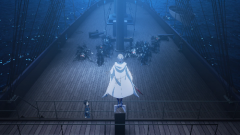

Dies Irae ~Amantes Amentes~ Video Game Review – 80/100

In the Visual novel fandom there are certain titles referred to Kamige.(God(ly) games) I previously thought the term referred to the best the medium has to offer but in recent times come to realise that a game can be referred to as a Kamige while not necessarily being the best. So Kamige as I understand it are Visual novels which stand out from the rabble and sadly many of these cannot be experienced by those of us who don’t speak Japanese. Fortunately due to the efforts of localization companies we now have several Kamige on the way. Baldr Sky, Subahibi and more are coming. Thus the first to grace our shores is Dies Irae and believe me that it wasn’t easy. As a backer of the kickstarter I watched this thing go through hell to reach our shores, from horrible mismanagement of the kickstarter to the embarrassing moment where Dies Irae had yet to reach it’s goal when a Nekopara anime kickstarter running at the same time raised one million in funds. It was dark days, truly dark days, but now we have it. A title once called untranslatable and forever out of gasp is in my hands. Now having played it, what do I think of Dies irae?

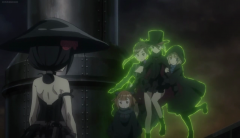
Dies Irae has four main routes and five side stories and while this version has the option to lock you into a girl’s route before starting a new game, I highly recommend that you don’t make use of it. I used these buttons to lock me into each girl’s route and encountered a glitch where I couldn’t unlock the final side story due to having missed dialogue in choices. So I recommend you use the common route button and get to the girls routes using a walkthrough. On that note as a very important rule of this visual novel is that while you can chose any girls route from the start, you should complete the girl’s routes in the following order: Kasumi, Kei, Marie, Rea. The reason for this is that later routes expect you to know knowledge from previous routes and playing them out of order can leave you confused as to just what is even going on. More importantly is that Rea’s route is clearly the finale of the entire story so playing it first would lose it’s impact. The strict route structure is a bit of pain, in particular as the quality of the story goes from worst to best. However it is interesting to see events of earlier routes subconsciously affect events of later routes. Things which previously didn’t make much sense or felt out of nowhere take on new meaning when you take into account the matter of eternal recurrence. But alas, what is the story of Dies Irae? It’s difficult to go into detail without spoilers but lets say it starts with a matter regarding a serial killer which evolves into a full blown battle which pits our main protagonist Ren against a group of superpowered nazi’s from the remnants of World War II known as the Obsidian Round Table.
Continue reading “Dies Irae ~Amantes Amentes~ Video Game Review – 80/100”

Princess Principal – 02 [Case 1 Dancy Conspiracy]

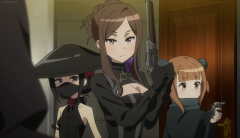
Man, plot twists. Through many twists and turns within the episode, we have a big switcheroo Sixth Sense-size at the end that completely change the context of what come before. I mean, Princess Principal walks on a really thin wire here. On the one hand, deceive and betrayal are the backbone of spies, guessing the motives of each character and how they double-cross each other make this show intriguing to watch. On the other hand, major plot twist like this is always tricky, you can’t make viewers invest on something and then pull the rug from under their feet. It has to deepen the narrative. This revealing works because it deepens the narrative, but I feel more worried than happy to be completely frank. It seems to me that Princess Principal relies too much on such twists and if that is the case, they will fall quickly because the plot won’t hold up anymore. If what I was ranting above doesn’t make it clear enough, there are spoilers down below so you might give this episode a watch before continue reading. Now, for those who remain, let’s head down to the episode.

We’re heading back to case1, the start of it all – when the spy and the princess agree to make a pact deal together. Let first begins with the Control, the headquarter that consist of 4 important figures from the Commonwealth- Military General, head of Spy, a Governor and the other that I assumed is a Duke – to plan out all the spy affairs. They come up with the bold (and ill-fated) Operation: Challenging, intend to replace Ange for the Princess. This episode not only deals with the outcomes of that Mission, they also cram in “retrieving some important key” mission somewhere in the middle and then flip them all over again with the reveal that the Princess already knows everything and then Ange single-handed controls everyone to get the results her way. Pacing-wise, it’s too much to take in that the key-subplot don’t have time to sink in. When you really think about it, the plot’s development starts to reveal some inconsistencies. For example, the guards serve more as a bunch of mannequins than actual guards because they should’ve figured out Dorothy as a spy the moment she came close to the guy and picked her immediately after finding out the key was disappeared. The Operation: Challenging sounds pretty implausible at best, and I’m already taken into account Ange’s impressive ability; but, how they gonna deal with the real princess when the plan succeeds? Lock her away? Kill her? What about Ange’s cover as a student then? Moreover, the moment when the bell chimes and everyone was distracted (as plan? I guess) was too much of “luck” factor involved to be taken seriously. I honestly don’t buy any of these.
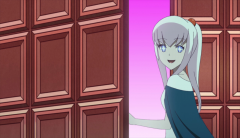
Now, let address the elephant in the room. Ange and the Princess (Charlotte) have a history together and it’s heavily implied that they swapped roles as a young age due to some accidents. So, Ange WAS the real princess – Charlotte, and Charlotte’s real name is Ange. I swear it’s a goddamn effective twist because all the hints have been planted well before. Now that all the vague conversations from last week, like “some lies become truth in the telling” or “Because we’re complete opposites” from their introduction have a new deeper meaning. But then, who else know about this? For me, it’s no coincidence that the Control advises Ange to replace Charlotte in a first place. From what I gather in the first episode, the remaining girls don’t aware about it either. It’s interesting to see how the show goes from there as if anything, Ange’s chain of actions heavily shows that she has a more personal objective than following higher-up’s orders and I would say that the main chemistry between Ange and Charlotte is the show’s central emotional development.

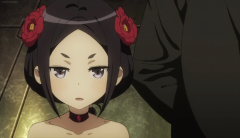
The show’s aesthetic remains distinctive and overall stylish. I dig many shot compositions and I even like the high shot angle when Ange and Charlotte introduced to each other; but whenever the CG panning appears it does distract me from the show a bit so I hope they tone it down. Character-wise, Ange and Charlotte steal the spotlight and at least Dorothy is watchable (her smoking scene is hilarious), but Beatrice is under-developed thus far and others function more as a plot device than actual characters. I’m fine with that though, as long as they develop the five girls I won’t have any complaint, and I suspect the Japanese samurai girl Chise will have a proper introduction next week (while at it, did anyone else notice that we have A, B, (double) C, and D for our lead? Interesting). So, with all the rambling, did Princess Principal deliver a great episode? Well, again, yes and no. I’m not fond with too many twists and turns, especially with this series since those twists could potentially destroy the emotional investment you have for the characters and the spy case of the week is frankly, weak but this particular plot twist is a game-changer, and makes me really excited for the next episode. Love it or hate it, let’s all see how the mystery will unfold.

Made in Abyss – 02[Resurrection Festival]

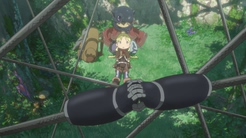
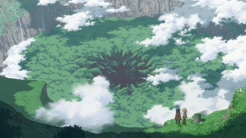
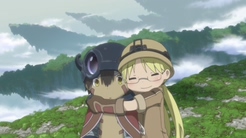
Made in abyss continues strong as the animation remains beautiful, the music perfect and the story progressing with revelations at a good rate. I particularly lie that they provided necessary details about the different ranks of miners based on whistle colour  through a puppet show. It’s a good way of providing the audience information without having to sit the cast in a room and have someone drone on endlessly. Take pointers Re:Creators, get the audience the info it needs without dragging down the pacing. This episode mainly acted to setup the main plot of this series as we have Regu get integrated into the orphanage and the discovery of Riko’s mother’s white whistle. Along with the notes that seem to suggest that Riko’s mother is waiting in the depths of the abyss for her.

I really like the pacing of the anime so far as I found the manga wasn’t really moving fast enough for me while the anime seems to be quickly getting to the point. It does mean we have a montage over events but it doesn’t really felt like anything of worth was truly lost. The biggest piece of info here is that we may have the first hint as to what the title of this show actually means. I originally thought that it referred to Regu who was a robot Made in Abyss. However here we find out that Riko was born in the depths of the abyss because her mother was ordered to dive despite being pregnant. Due to the curse of the abyss which appears to affect people in different ways depending on how deep they dive into the abyss, Riko’s mother had to carry a heavy relic in order to protect Riko from the effects. As a result she had to abandon the relic she came down to find in exchange for saving her daughter. Actually a really badass back story that shows how legendary Riko’s mother truly was. Though one thing that is most certainly going to come into play here is that Riko wasn’t completely unaffected by the abyss’s curse and had to wear glasses due to the abyss curse affecting her eyesight. Riko seems to think this gives her some immunity to it though her trainer is quick to correct her on that. I however think that her eyes are bound to play a role in this story somehow.

I really do adore the animation in this show that even small events like Regu using his extending arm to grab a pot just looks great. This show certainly captures the feeling of a Ghibli movie though from tidings I hear it’s going to be more serious than that. Though the question is just how serious? I personally like the current lighthearted nature so if it decides to go full dark it could potentially lose that. So with the tidings this episode that brings me to the strange third character appears in the ending of this show. Looks to be so sort of funny bunny creature of sorts and I can make a good guess that it could be a child affected by the curse of the abyss. It was briefly mentioned that traveling too far down can turn you into something other than human. Theres also the question of just how Riko is going to get permission to travel down so far but considering her personality displayed to this point I don’t think she will let a little something called inexperience get in her way.

Kakegurui- 2/3[A Boring Woman/Slit-Eyed Woman]

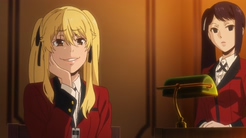
Two episodes of high stakes gambles and I do feel that I am going to run out of things to say about this one fast. I suppose I will start with the elephant in the room and address what could be Kakegurui’s most detrimental feature. The fact that it’s set in a school setting and the story goes out of it’s way to try and ignore that. Personally it’s a detail I find makes it hard to get invested in the setting as the more ridiculous the bets get then the harder it becomes to refuse to acknowledge the schools actual management. It’s a common trope of anime to elevate the status of the student council to some major governing party when the reality as I surmise it is that they are little more than a makeshift union leader with no real power. So when I hear of the student council president arranging for construction on the school and changing rules I just have to ask are the principal and teachers alright with this? I mean it’s rather ridiculous to give this level of power over the school to a teenager but this story does seem to be going out of it’s way to refuse to consider the existence of those in a higher position. Really as you consider it more and more than the setting of this series makes no sense at all. After all why would the government clearly overlook what is most definitely illegal gambling on school premises? As well as what idiot of a parent would allow their teenager child to attend a school where they can potentially take up a debt in the millions?

Perhaps there are explanations  for these things in the future but right now it feels like Kakegurui has chained itself down with it’s setting. I honestly think it would be better to abandon the school setting entirely and just set it in a gambling city like las Vegas. It might be harder to keep the cast teenagers but hey, we could a more diversely aged group, not have character designs chained to the school uniform and with a city setting you could really get insane with the gambling setups. Let me put it this way, Imagine if No Game, No Life set itself in a school. It wouldn’t be nearly as entertaining as part of what made it good was the level of insanity and stakes behind each game. In Kakegurui’s case though no matter how much it builds up the antagonists, they are still just high school students. Not the best of the best but a bunch of brats playing Casino Royale. Nonetheless the safety net of having such a setting is that Yumeko can lose a bet. If she won every time it would be rather dull and even if she loses the that just means she needs to take a higher stakes bet to crawl out of the gutter. Which means that the bets can truly stay unpredictable.

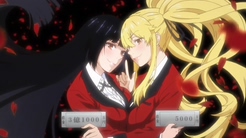
What this series really does well is in portraying the mindset of someone truly willing to put everything on the line for a game of chance. The antagonists Yumeko faces are indeed insane but Yumeko is far more insane than any of them. A big part of the bet’s so far is Yumeko noticing that the enemy is cheating in some fashion and then working to remove the safety net they have set up for themselves. Yumeko is a girl that truly only wants a fair gamble where both participants are putting everything on the line which truly makes her insanity and ecstasy over the gamble a intimidating madness. She makes it a fair game and then pushes them into gamble with their lives on the line. In truth she isn’t really a hero of sorts but rather a devil outsmarting lesser devils. Though they do tend to go a bit overboard with the expressions sometimes, even the most normal individuals seem to transform into massive caricatures at the drop of a hat.

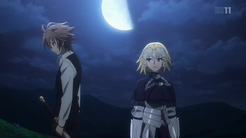
Fate/Apocrypha – 2/3[The Appearance of the Saints/First Step of Fate]

So where do I begin? I am brain dead at the moment so forgive me if this gets a bit too much like rambling but I have to catch up with all this so here’s my best shot at being somewhat competent. WIth these two episodes we have the setup of this grail war established as well as the general master and servant pairings. There may be those wondering about the masters of the Red side but much like the opening suggests the only ones we really need to concern ourselves with is Kairi Sisigou who summoned Mordred and Shirou Kotomine. Now what is likely the question at the forefront of anyone’s mind if they are somewhat familiar with the Fateverse is likely “Is Shirou Kotomine and alternative version of Shirou Emiya?” and the answer to that question is no. These two have nothing connecting them and Shirou Kotomine is very much his own character. I admit that the idea of an alternative universe Shirou raised by Kirei Kotomine does sound really interesting but sadly this is not the case. So far Sisigou is proving to be the more likably of the two as Shirou is far too enigmatic to get a clear read on him. In fact Sisigou and his servant Mordred so far are proving themselves to be the most endearing characters of the cast so far though members of the Black faction are quite charming as well.

Mordred is indeed another Blue Saber clone but one of the things I find rather amusing is that Sabers clones often have far more interesting characterisation than Saber herself. I say the only exception to this would be Joan of Arc who is equally boring. I really like Mordred. Her brute force fighting style and brash attitude make for more interesting interactions between her and others. I also really like the correlation between her desire to attempt the selection of the king when Blue Sabers wish was to redo the selection of the King. Overall she just has far more depth to her rather than some self righteous purity. On the black side of things I feel A-1 pictures is starting to let me down. There definitely feels like favoritism going on here as interactions between the likes of Chiron and his master feel rushed whereas Moeserker and her master as well as Astolfo get far more attention. I really didn’t need to see two scenes of Astolfo’s master indulging herself with him as i am pretty sure there was only one in the novels and I think this is A-1 throwing in more fanservice. Though I do hear the writer of the novels is involved with the production. I do still laugh at how nonchalant Astolfo takes this molestation by his master though I should mention that his master is a real piece of work. Here’s the thing, she’s got a massive interest in torture and the only reason she isn’t torturing Astolfo is because none of her tools are effective enough to make a dent in him.

Gordes is getting the short end of the stick as well. I don’t like Gordes as a character though he’s not really supposed to be liked. However I don’t really like the anime skimping out on his characterisation. For you see Gordes was actually really looking forward to this whole Holy Grail War thing and sees it as a place to satisfy his ego. He treated the war seriously but ultimately he’s just a really petty. The fight between Siegfried and Karna is supposed to be a wake up call for him as it really hits home the point that a master has no place in a servants battle. He can play support but actually assisting is generally impossible. Well aside for special individuals. He tries to get some glory by baiting the master of Karna to show himself but as we know that master simply isn’t here. In this battle there’s no glory for Gordes and he is designated a support role, something which might come to urk him in later events.

As for animation I find A-1 is so far passable but I wish they would slow down and have some actual choreography. I find in fights that things often progress too fast or is obscured by explosions which doesn’t help as the sound design is rather weak with these explosions sounding too similar. What little choreography in the Karna and Siegfried fight was rough and choppy so it’s my hope that seeing as this series is rather battle heavy that A-1 is saving the budget for the bigger fights.

Katsugeki Touken Ranbu – 3 [Master’s Orders]

The farther into the season we go, the clearer it becomes that Ranbu is a video-game adaptation, as this week Ranbu takes two steps forward and one step back.

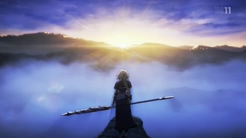
We start this week off immediately where we left off, with the Dutch steamship mid explosion, and wow was it a beautiful explosion. If nothing else happened this episode, we would still get a number of good wallpapers out of this opening segment. The digital effects team of Ufotable are clearly working hard as the smoke curls around the screen and water floods in through a hole in the wall. Truly, this is 5-minutes of animation eye-candy, ending with Mutsunokami looking over a gorgeous sunset sea.

Its a good image, as it shows early on who this episode is all about, Mutsunokami. He is the main focus of this episode, as we see his ideals clash with that of our lead Kane. Kane explains that though some died here, it didn’t have a large enough effect to change the course of history and so all is well that ends well. Of course Mutsunokami disagrees, saying that while the whole future is the same, what about the individuals future? He even goes for the low blow when he brings the Shinsingumi into the argument, striking at Kane’s own original owner. Needless to say this heats up the argument and Mutsunokami goes storming off into the night, with Kunihiro following to cool him down.

This leads us to a nice transition to our next plot point, the Roushi who attacked the ship. At first I was confused as to why there was no Revisionists zombies at the ship, but it would seem our villains actually know what they are doing. In history a group of Roushi, masterless samurai, attempted to kill foreigners and no doubt blow up the ship but got caught. Rather than blowing it up themselves, the Revisionists simply helped the Roushi avoid getting caught. Its a very indirect way of effecting history, allowing them to avoid the superior combat force of our main group. This is the sign of an intelligent opponent, who I hope will stay intelligent, who I hope will continue to attack where our main group is week. If the Revisionists stay smart, there is a good shot at a genuine feeling of threat from our villains when our main cast reaches them.

Getting back to Mutsunokami and Kunihiro, the two have a quick heart to heart that really says nothing at all. What this segment is really meant to do is give the Roushi some character. To show us that the Roushi aren’t the bad guys, that would be the Revisionists, the Roushi are simply people trying to survive in their era. Had we more time with them this may have worked, but for the quick 5 minutes we were given it comes across more than a little hamfisted. It does end up turning into a good example of the moral quandaries of preserving history though, as the Roushi are caught and killed by the Police later on. Had Kane not saved a little girl in episode one, completely negating any real consequence for changing history and saving people, this would have been a much stronger scene.

It is with this scene however, plus the little girl and the final ending dialogue, that the real issue of Ranbu comes out. Nothing is lasting. There were no consequences for saving the little girl in episode one, the conflict of ideals between Mutsunokami and Kane are introduced and resolved in the same episode and finally Mutsunokami comes to terms with having to let the Roushi die far to easily. There’s no cost to their ideals. In Rurouni Kenshin, a samurai piece set in a similar era, the main protagonist Kenshin had ideals and there were real consequences to him sticking to them. He swore not to kill again, and so over and over again specters from his past arrived whom he could not definitively get rid of. It got to the point where he left his friends so that they would not get dragged into the conflict he created. Ranbu handles its characters ideals in such a way that if Kenshin were here, he would kill and get over breaking his vow in the same episode. Its disappointing, as they could do so much more with this premise had their writing been better.

While their writing is lacking however, the animation is not. We end the episode on a flashy fight scene with a 3D camera rotation through the battlefield, and each of our cast cutting down some zombie samurai. Its all very pretty, even if the choreography is a bit bland. With the Revisionists dealt with, it seems our cast is due some down time, as the little talking fox comes in and informs them of their next job. In three days we get a hop skip and a jump to another time period, with more Revisionists and hopefully more plot. Depending on when they go and how the Revisionists use the small changes in time that have occurred, things could get interesting. Lets just hope next episode isn’t a beach episode eh?

That concludes the episode review, but this does lead me into a personal theory. Based on Mutsunokami’s attitude for most of this episode, I have hope that there is actually a member of their organization that left and joined the Revisionists. It would explain why the mindless zombie samurai we see so often are acting so intelligently with their plans. It would also mean that our main casts opponent knows how they work, and would give us some much needed conflict. I have hopes that this is the case as Ranbu is in desperate need of some sort of clear antagonist. A former comrade would supply the show with some required character drama. We shall have to wait and see however, as next episode might end up being a relaxation episode.

See you next time!

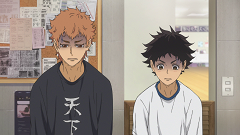
Ballroom e Youkoso – 02 [Kiyoharu Hyodo]

After a strong start to its two cour season, Ballroom e Youkoso has managed to waltz its way past all potential stumbling blocks and deliver an even better second episode. There was a lot to love here, including a carefully introduced rival and love triangle, great voicework from Shinba Tsuchiya, and some promising animation during a late solo dance sequence. Ballroom isn’t above including anime tropes like the always-classy ‘interrupted changing scene,’ and lead character Fujita’s latent genius is a bit too evident after just two installments, but the team at Production I.G. is doing a lot more things right than wrong. Let’s break them down step by step.

The episode is named after Kiyoharu Hyodo, the biggest of the three characters it introduces (the other two being Banba and Jinbo, Fujita’s friendly but underqualified dance instructors). Sengoku describes Hyodo as a “monster” who stands in complete dominance of Japan’s amateur DanceSport scene. He’s full of intensity on the floor, but totally aloof when he’s away from it, demonstrating his nonchalance throughout the episode via several cavernous yawns. Even if you think these are intentional, Hyodo is quite agreeable for a rival character in anime, especially given his young age and outrageous skill. He demonstrates a basic waltz step for his new studio-mate with only a slight protest, and keeps his cool when Fujita later interrupts his solo practice. The hitch is that Hyodo is involved in a nine-year dance partnership with Shizuku, on whom our hero has a massive crush.

When Sengoku teases that Fujita might try to steal his partner, Hyodo claims not to care. Shizuku, however, appears to care very much, blushing and pouting at his level-headed response. Thus the love triangle falls into place, with the only question mark being where Hyodo’s affections lie. Attractive and talented as Shizuku is, it’s hard to imagine that he wouldn’t be interested, but he doesn’t seem to be; even when presented with the opportunity to train overseas with her, he’s content to stay in Japan. This is clearly discouraging to Shizuku, who thinks Hyodo is “on another level” and considers herself “lucky he’s my partner.” The hero worship here made me a little wary of potential Sakura Syndrome, where a major female character acts only as a bystander or cheerleader, but the groundwork has been laid for Shizuku to undergo her own arc. Natsu from Baby Steps is a good model for how I hope her character is handled over the course of the series – always improving and competing against rivals of her own, even as she functions as a love interest for two different guys.

On the production side of things, the stills and CG dancers returned for another episode, but all was forgiven during one of the final scenes this week. During a solo practice session of Hyodo’s, the art became more sketch-like and the animation more fluid, giving a powerful, dynamic feel to his movements. Even if it only lasted for a few seconds, this willingness to break model and use a rougher style to capture a different energy is a confidence booster. I especially liked this choice given that Fujita was observing him, and needed to be inspired by what he saw to push the story forward. Speaking of Fujita, Shinba Tsuchiya is a breath of fresh air as his voice actor, imbuing the character with a nice blend of self-consciousness and enthusiasm. Tsuchiya is a newcomer to the seiyuu world, but he’s already drawing comparisons to Daiki Yamashita, who voices Deku on Boku no Hero Academia, so his future looks bright. Hopefully Ballroom’s future remains just as promising as the show starts covering multiple manga chapters per episode.

18if – 02 [Time Stopped at Age 12]

18if (pronounced as eighteen – if… nah I’m kidding) is an anime version of a multimedia project The Art of 18 which also include a mobile game and a VR game. Watching the first two episodes you can see a clear influence in its game format: a self-contained case that more or less has the same setup. Haruto wakes up in a dream, enters through red door, encounters the Witch of the Week, solves her problem, exits via blue door and goes back to sleep. It’s worth noting that each episode is handled by different director (Space Dandy-style) with overall supervised by the great Kouji Morimoto (Memories, the Animatrix), hence explain the slightly different look both in terms of visual and character’s designs. Unlike the premiere episode with overloaded with random visual, this week’s dreamscape is much more stripped down, yet they nail the mood with the atmospheric dark murder room and everything bathed in red blood gore scenery, down to the red heel. Overall, this episode goes much darker territory than the first, we have more details to work with the dream settings but 18if still has issues with its storytelling.

The main case of this week starts with the murders of the whole family where three members were brutally murdered, leave only the youngest daughter alive as she was hiding in a closet. The three murderers, who all were minors at the time, didn’t receive a proper punishment and years later, they re-enter the society like nothing happen. If you think this is a jab at the Japanese criminal justice system, then rest assured that 18if just drop it as soon as they mentioned it, and it works more as a setup for the girl to kill them in their sleep, Freddy Krueger-style. As much as I found the concept intriguing, I can’t fathom the fact that after all those years of sleeping beautifully, she didn’t kill them then and just waits for 10 years (is it?) carry out her plan in 1 day. Seem pretty random to me except for the purpose that Haruto can come save the day. Other aspect that surely will raise conflicting opinions from viewers is the moral ambiguity towards murdering someone in the dream world. 18if stands by the side that those three former murderers deserved to be killed, even Haruto helps out to finish the last guy off. Revenge is a dish best served cold after all. But are they? In the end the Witch and Haruto get away with all the murders. While I certainly see those guys are garbage, do killing them like this make the Witch feel better? 18if says yes.

This episode further confirms the theory that Haruto isn’t a real person. Throughout the course of two episodes, he never appears in the real world. Maybe Katsumi (the talking cat) has the key for his true existence, as aside from Lily and the Witches, he’s the only person who interact with him and his only line of communication to the outside real world. As for if Lily was Katsumi’s sleeping sister, it remains to be seen but as of now I don’t think it’s necessary a case. Might be Lily is similar to Haruto, an entity who wanders in a dream and save people’s problems (she calls him “brother” after all). Again, the shortsighted in storytelling and characters’ development still remain. This case, by all mean, is bold and surely grabs viewers’ attention, but dig deep into the case and you find nothing much. The Witch this week has a compelling reason and for me she’s an improvement from the Thunder Witch last week, still I can’t call her role exceptional. She just doesn’t have much time to develop and again, the ending wraps itself up too clean that when it’s all said and done nothing much to remember, except for its gore and its atmospheric blood red visual design. 18if relases with both Japanese and English dub versions, while I haven’t checked out the English dub I’ve heard good reception from it. I will try the English dub out but make sure to check out its OP. Lovely groovy song.

Some Quick First Impressions: Mahoujin Guru Guru, Hajimete no Gal, Youkoso Jitsuryoku Shijou Shugi no Kyoushitsu e and Gamers!

Mahoujin Guru Guru

Short Synopsis: A JRPG hero and mage sets off to defeat the demon king

From what I see it seems that those familiar with the original show that this opening episode was a bit fast and not as funny. However even if it was funny, to me anime comedy rarely works. There are exceptions of course. For one I think that the ongoing manga “Grand Blue” or “Kaguya wants to be confessed to” would be a hilarious anime. This however seems like the comedy is well…dad jokes. For example when the girl receives money and then tries to equip it like armour. Alright the JRPG visual aesthetic is neat and I do find it charming. However I was stone faced throughout this episode, not even a smile. The isekai genre has abused the standard dragon quest setup to the degree that it’s no longer novel. Personally I think something like Konosuba has surpassed what this is trying to achieve. However it does have it’s enjoyable points and could be a good watch for some.

Potential: 30%

Mario: Colour me surprise. This is the one title that I nearly skipped since it’s a reboot of what appeared to be an adventurous children show. Well, at heart it is but Guru Guru also provides a non-stop slapstick fun from start to finish. There are rapid fire jokes that come at us like corns popping, and the humor is on silly and irrelevant side, so you know… lowbrow humor. But most of the time the jokes land well because they embrace their goofiness to heart, making the show an absurd endless fun. Not only the silly banters, but the animation also converts to reflect the humor: at time 8-bit, then like cut-out animation… and they’re actually creative and on-point. And I can’t deny I’m thoroughly entertained watching this and in one moment I laughed out hard. Can’t believe it before checking it out but it might be one of my favorite comedy show of this year. I won’t blog it but I am sure follow them to see what hijinks the two leads gonna end up with.

Potential: 40%


Hajimete no Gal

Short Synopsis: A guy begs a girl to be his girlfriend and surprisingly succeeds

Ah yes that’s right. We haven’t had our fanservice harem yet in this season. Boy, we nearly went through a anime season without gravity defying tits, panty shots and flat chest jokes. Now this may be a shock to some but despite media commonly depicting this, men actually don’t think about sex 24/7. Hell even when reminiscing over my teenage years I don’t think I put that much thought into it. Not saying I never did but if you were going to spend every waking moment considering how much you want to copulate then anyone would get bored of it. So when I see these strange creatures who consider getting laid their lives ambition I can’t help but think that they might be disappointed if they ever managed to do it. It’s just sex lads. Anyway we have another one of those strange abominations of a girl whose breast size doesn’t correlate with the rest of her body making her look like some weird beanie baby. Plus fanservice galore as our protagonist keeps imaging how he’s gonna cross the final line before he’s even entered the race. Sorry to break it to you protag but you are in a harem so that means you are damned to be cockblocked for eternity. Lastly any time this guys friends were on screen made me want to quit the episode then and there. So if you want anime that’s not quite but almost porn then this has you covered.

Potential: 0%

Mario: Gosh, I stepped into someone’s wet dream yet again, but this one is even more mean-spirited. At least Smartphone doesn’t offend anyone, this on stoops so low begging on the ground that I can’t help but feel appalling and disgusting. First off, that main guy is pure one-dimensional pervert with the only goal in mind is to bang. It’s already low bar but he manages to make it into cringeworthy level when begging the girl so that he could see her panties. Creepy as fuck. Second, high school girls who have boobs that defy gravity have no personality and somehow all fall for that pervert. And guess what, he gets away with it because… girls are hormonal creatures too. All that and I haven’t mentioned the awfulness of his wet fantasies, panty shots, hair-raising voice over. The show wants to make our hearts feel dokidoki with its fanservice, but painful is what I get instead.

Potential: 0%


Youkoso Jitsuryoku Shijou Shugi no Kyoushitsu e

Short Synopsis: New students get a nasty discoverly when they find out that the high class school they entered has a totalitarian rules.

Got to say that with the pacing sped up and time outside of the mains head to minimum that this series benefits greatly. In truth the actually story only came out in the last few minutes but I much prefer this to the light novels which spent half the first volume building up to this point. Got to say that watching it is a much better experience as it looks like this will be less the false ideal high school life presented in anime and more along the lines of Snafu’s cynical overlook. Our protagonist certainly shares Hachiman’s outlook of interpersonal relationships and I find his rather deadpan voice and exterior to be rather refreshing when compared to mister average blush on command. I actually enjoyed this more than thought I would and perhaps this could turn into something interesting after all. Not expecting a masterpiece but maybe like SukaSuka it could prove to be an intriguing watch. Might even blog it if the second episode continues to engage me.

Potential: 60%

Mario: Youkoso is a show that has strong, interesting premise but dang it’s way too slow to get into that. Doesn’t need a whole episode for setting up to be honest and I suspect it’s the next episode that they reveal their true nature. I certainly feel a SNAFU vibe around this cast, most notably our main guy, like Hachiman, is an observant social outcast and the other girls so far fall neatly into SNAFU’s counterparts, but the similarity isn’t too jarring to write them off. The argument on the bus, while address boldly to the overall theme of “equality” – whether or not unequally action need to be made to assist those who are already disadvantaged – but sadly they overplay that scene so it comes off as forced development. Judging by this episode alone, it comes as just merely passable, but it does have potential and I guess when the plot kicks in, we will have a real treat from this one. People who unconvinced by this first episode need to check out the second one because the real meat will be there.

Potential: 40%


Gamers!

Short Synopsis: A boy is invited to a gaming club by the most popular girl in school.

Points to the MC for going against the grain and turning her down. It is rather nice when you see things moving in a predictable pattern only for it to get turned on it’s head. However I have read on in this story and found that the gaming aspect just gets overshadowed by romance nonsense. Really weird to see the show throw out spoilers like nothing but it was rather clever. This first episode was decent and had some good comedic moments. however I really dislike how gaming is portrayed here. Why are they treating it like playing games for fun is weird? Like the MC is special because he just wants to enjoy video games? I am a heavy gamer myself and I never really felt the need to master a online shooter or fighting games. I just find the idea of devoting myself to just one game to be dull. Variety is the spice of life and I would rather be good at many games than the master of one. There are those of us that value single player experiences over online competitive ones. Anyway my point is that videogames are my domain and I don’t like a story half assing it with its representation. Lastly, the main character got tired after only two hours of gaming? Filthy casual.

Potential: 10%

Mario: Gamers runs like your typical school club anime: we have main character get dragged into one specific school club, he’s being a “perfect one”, get introduced into the most attractive part of said club, and make friends with eccentric club-mates in the process; you know, all that dandy. Except this one builds those up for some twist – he rejects the club, not once, but twice. It does feel like he decided not to join in is how the show’s messing with us, but get into his reason and you see the moment of truth. They are both game maniacs, but they approach games differently and that main guy feels like he doesn’t belong to the competitiveness gameplay by the club. It happens all the time in other sports or media as people who share the same love for some medium doesn’t mean that they approach them the same. Apart from that, I like the way the show gives some witty foreshadowing texts and the animation sometimes resembles that of game to hide its constraint budget. Still, the romance or whatever isn’t that good and the main concept of gaming doesn’t really catch me. Could be interesting to see how it goes from here but I admit this isn’t my cup of tea.

Potential: 20%

Shoukoku no Altair – 02 [The Citadel City]

After last week’s runaway locomotive of an episode, I had hoped that Shokoku no Altair would find a lower narrative gear during its second offering. That dream remains unrealized, however, as the show continues to introduce settings and push its plot without giving its cast much time to breathe. The first two episodes thus far share a similar structure: Mahmut attends court and learns of a conflict that puts Turkiye at risk, objects to his rival Zaganos’ plans, is shot down, runs off to fix things himself, and stumbles upon a conspiracy orchestrated by the Empire. Altair’s premiere had a fun festival scene that introduced Ibrahim and Shara, at least, but this time all we got were a couple of clumsy flashbacks before being thrown into another dispute between Turkiye and the opposing Imperial forces.

On one side of this dispute is Zaganos Pasha, who is almost too eager to ride for the Turkiyean territory of Hisar and quell what seems to be an uprising there. While most of the primary characters have been playing with their cards face up, Zaganos Pasha is someone whose motives were in question after a single appearance. His thirst for war seemed to hint at an alliance with the enemy, but this episode revealed that he and Imperial Minister Louis (who was behind the whole thing once again) were on different pages regarding the plot in Hisar. Time will tell if Zaganos is a simple foil for Mahmut, or whether his military aspirations are more deeply rooted.

If there’s still hope that Zaganos will reveal himself to be more than a puppy-kicking villain, the same can’t be said for Louis, whose lack of a twirl-able mustache is a big missed opportunity.  Whenever there’s an establishing shot of the castle where Louis confers with the Emperor, a comically evil piece of organ music starts up, just in case you were unsure who the bad guys were. I had high hopes for the Emperor at first, but his awareness of Louis’ schemes was more concrete this time around, which robs their scenes of any potential complexity. Much more interesting is Lady Lelederik, whose brief introduction revealed her cooperation with Louis to be tenuous at best. I’m no expert on monarchical titles, but I expect this new Duchess to trump the Minister in the coming weeks.

It occurred to me during this episode that Altair’s score is distinctly western, despite being set in an alternate version of the Ottoman Empire. The string section alternates between bombastic and mournful, but they’re nearly always audible, even during some of the characters’ inner monologues. We only get a break from this sameness during the dance scenes, where the music is cheerier and more varied, but not quite Turkish or even Middle Eastern, at least not to my untrained ears. (Feel free to call me out in the comments if I’m off base here.) Altair’s backgrounds and buildings look authentic, but its unremarkable music may be contributing to my lack of engagement with the series. Its ending theme, though, meshes traditional and pop music to create an entrancing beat for which I always stick around – that’s one department where Altair never lets me down.