Made in Abyss – 03[Departure]

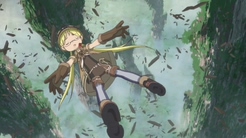
This episode looks to be setting up the big adventure to guide us through the rest of the season but I really cannot comment enough on how much of a terrible idea it is. Riko is pure rookie when it comes to abyss diving and here she is deciding to take on the challenge of making it to the bottom of the Abyss. All for the vague idea that her mother just might be waiting for her down there. In the world of children is a brave and noble quest. But in the world of common sense it’s just a really dumb idea that’s certainly going to get them killed. But hey we got to have a story and I certainly cannot call this a plot hole as no adults are consenting to this mad gamble, though the dorm leader seems to be letting on that he knows more than he’s letting on. But I am with the other kid on this once, either Riko’s mom is dead or she’s in a place where she can afford to wait a few years. The smart idea would be for Riko to earn her way through the ranks and get close to a white whistle. Then decide to drop down to the lower levels as right now I don’t think they even have enough food to last them the trip. But I guess that’s what going to make this whole journey all the more tense, seeing these two notice just how ill prepared they truly are.

So it’s been around for awhile now but beneath Made in Abyss’s bubbly like exterior does hide some rather disconcerting elements. Like Riko’s room originally being a torture room, the slums of the town which seem to have people regularly dying of toxins from the Abyss, Skeletons found in praying posture, foreign invaders and we even have a rumor of children that die on their birthday with they look into a mirror. That last one is rather concerning as the smallest child’s birthday is soon and he’s showing signs of being sickly. That sounds dangerously like a death flag to me. I have said before that I am wary of this show transitioning into a darker tone as such a change requires a deft hand at writing and plenty have failed to capture the potential such a tonal shift brings. Though perhaps these dark details will just be food for thought in the background like the way Adventure time slips in details about the world that betray it’s sunny disposition.

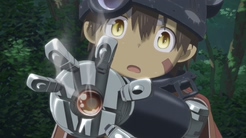
I can’t say I was that broken up over Riko’s departure from her friends as her friends haven’t really been around much to get attached to. Though it seems that people did get broken up about it when my focus was on Regu’s introspection on why he was made and his connection to the Abyss. As well as questioning whether he’s a robot, Cyborg or Android. Based on RIko’s inspection and him still possessing biological traits I am putting a firm bet on him being a Cyborg, a human modified into a robot. The purpose to this is still up in the air but it was confirmed in this episode that Regu isn’t affected by the curse of the Abyss. So he could very well be an ambassador from the lower depths who has forgotten his mission. Though considering he has Megaman arm cannons his intentions may not have been peaceful. As to where he came from the best bet would be this Capital of the unreturned level of the Abyss meaned in the map. Could those who have ventured into the abyss have established their own colony in the lowest levels of it? And if so, are they friend or foe?

Fate/Apocrypha – 04[Price of life, Redemption of Death]

There are many things that can lead to one anime downfall but even with certain weaknesses in area a anime can shine through. Berserk 1997 showed that a strong story can make up for a powerpoint level of animation. Tatami Galaxy showed that even with lacking art a compelling story can be told.(I am sorry but despite it’s creativity I find Masaaki Yuasa’s artstyle to be ugly.) However I believe there is one thing which no amount of quality in animation, story and art can make up for. That thing is pacing and there are two shows this season which prove that. One being the Vatican Examiners anime and as of the last two episodes, Fate/Apocrypha. Yes, no amount of quilty could make a difference when you rush through the story like a speeding train. It kills emotional impact and makes it hard to truly connect with the events on screen. Fate/Apocrypha isn’t Shakespeare(Despite it well…featuring Shakespeare.) but this episode truly felt to me like actors soullessly reenacting the events of the novels. With the gravitas of reading a wikipedia article, the events of the novel are places on screen but without any of the significance that make them meaningful. It’s a true pity as from what I hear these novels start strong but grow weaker as they continue. So we are essentially fast fowarding what could be the best parts of the story.

Art and animation have certainly taken a hit with the berserker scenes featuring some truly cringeworthy examples of poor quality. Still frames and crude artwork really killed the scene along with a pacing that robbed it of it’s meaning. This episode should have been a big confrontation from the big players on the scene but it just felt so lackluster. For an example of missed connotation and am certain anime only watchers would be confused over just what Darica was so mad at Gordes for. To clarify this has to do with Siegfried’s legend where it is well known that he was bathed in dragon’s blood which provided him with a level of invincibility. The blood covered all of him except for one patch on his back which was covered by the leaf of a maple tree. What this means is that Siegfried has a massive weak point on his back which is why Grodes refused to reveal his name in the second episode. However in that battle Grodes was forcing Seigfried to use his noble Phantasm which would announce his identity to his enemies. In fact this makes the slip up last episode all the stranger when he announced himself to Karna and Gordes didn’t make a sound. Point is that informing an enemy that you have a critical weak point is generally a bad move. Hence why Achilles kept his identity to himself as his his very name has become synonymous with a metaphor for a fatal weakness.

Speaking of Achilles he certainly got shafted here along with Atalanta. Unless you know the history the significance of these events will likely puzzle the regular viewer. Thing is that Chiron is Achilles teacher and he taught quite a number of heroes. He also outranks Atalanta as a Archer as he is the basis of the star sign of Sagittarius and possibly one of the best heroic archers.(That well…are actually Archers) Might as well note that it’s nice to see some genuine archers in the Archer class for once. Both Zero and Stay nights archers only qualify as an Archer on a technicality. Though one thing that is odd is that the servants of this war all seem to have independent action which is a trait generally only given to the Archer class. Servants should have to stick close by their masters but because the Archer class is primarily a long range fighter they are given the ability to be able to last without a master and move a significant distance away from them. Here that rule seems to have been thrown out completely but somewhere in the massive bunch of tangled wires called Nasuverse lore there bound to be a technicality of sorts.

So we have the first casualty of the Great Holy Grail war and by Suicide of all things. As mentioned before it’s hard to truly feel for Siegfried’s sacrifice when we barely knew him and the pacing is so fast that all you can really feel is mild surprise. Even in the novel I didn’t quite care for him though his nature of acting as a hollow automaton which carries out people’s wishes is a similar demeanor of that of Shirou. He said he had no wish for the grail but it appears his real wish was simply to do something for himself rather than someone else. Such a shame that this act would be to save the life of what seems to be the most agreed upon weakest element of this story, the Homunculus character. I didn’t see a lot of him as I only read the first two volumes but I do remember the parts that featured him dragged horribly. I truly don’t look forward to seeing this fellow more in the future. Still there is something rather odd here, the opening of this series featured Siegfried facing Mordred and yet here shows he committed suicide before he could face her in battle. How very strange.

Princess Principal – 03 [Case 2 Vice Voice]

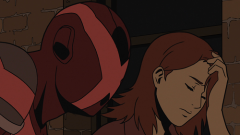
We have another fun action-spy time this week. While this week isn’t as great as the week before, the decision to group the girls in different pairings make this one entertaining to watch. This means Ange is pairing up with Beatrice, and the Princess with Dorothy (just to make it more consistent I will address Ange the spy as Ange, not Charlotte and the current Charlotte as the Princess). Admittedly, the first pair receives a larger amount of focus than the other duo since this week is all about their first mission together and in Beatrice’s case, accepting those girls as her companions. Beatrice has a decent DARK backstory here, but her character is still the simplest out of our main girls and the way she’s obsessed over the Princess is way too much for me. On that I think all the clues have been suggested regarding how those girls’ relationship gonna pan out. The Princess really intents to become the next Queen so that she can order the fall on London wall. Ange agrees to play along with her even if it means she’d deceive the Princess and deceive herself. Of course, when she’s going to deceive the Princess she has to deal with Beatrice so that development can create an interesting crack between the main cast. Take heed that even work together as a team, each girl has different agenda and at the end of the day it’s a matter of who achieving their objective, so I expect the last “conflict” would be within the group.

Their mission this week is to retrieve a stolen printing plate (make me wonder what’s the currency they use in that fictional world? Do the two divided nations use the same currency? North Pound – South Pound?), and that somehow involve dodging bullets outside of a floating airship, explosions and tandem parachute jump because… when you’re a spy so you just have to make some noise huh? Dorothy again steals all the limited screen she has here with her seduction femme fatale technique (looking forward to her arc), and I’m glad to see many events don’t go as Ange’s plan during the mission, thanks largely to Beatrice. Still, she possesses an amazing superhuman skill of listening to multiple phone lines but still be able to remember all the conversations. As far as this mission goes it’s fun to follow at best, but gives little insight for us to delve into. On that note, how the hell Beatrice can intimate voice from some random caption that she has never meet before?

The reason why Beatrice can alter her voice has been revealed this week, and well, it certainly is sad and twisted. Her father uses her as a lab rat and he changes her vocal chords into a mechanic one. That explains her unnatural high pitch “himesama” voice but it would prove to be useful for spying. Ange and Beatrice share nice chemistry together, although I don’t really like the way they’re linked together by the Princess. Indeed, the Princess role plays a great impact here since as soon as Beatrice realizes how Ange truly cares about the safety of the Princess, she lets her guard down and agrees to join the spy team. Chise is nowhere to be found in this episode but from the look of it, I expect her to make an appearance soon, probably next week and it will be interesting to know her stand and her role in all this. A fairly enjoyable but a bit forgettable episode. Still my muse of this season. And like Rick remarks at the end of Casablanca: “I think this is the beginning of a beautiful friendship.”

18if – 03 [The Witch of First Love]

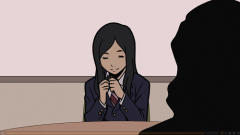
At this point, I wholly expect 18if to bring different approach, have different style on its same themes each passing week. This week, they indeed pulled a very different episode from its first two. It was a fascinating episode. I said “fascinating” because if I’m gonna mark this week as a standalone episode (or as a premiere episode), then I wouldn’t rate it too highly because its flaws are massive. But If I see this episode as one jigsaw piece in this 18if universe, then it adds up. Episode 3 addresses the issues that I have with 18if from the very beginning, even with the expense of the main cast. In order to sell us on the Witch’s case we have to invest to the Witch, and this episode spends a fair amount of time to develop her. Tojiro Fujii, an animator most famously known for his work with studio Pierrot, was given full creative control on this episode, as he directs, writes, storyboards and animates this piece, and his input surely shows: the characters are more expressive and the dream world is more grounded, with muted color palette. This episode actually reminds me of Flip Flappers for good reasons, so despite its shortcomings I don’t deny that this episode is my favorite 18if so far.

One thing, for better or for worse, that you can all take out from this week is that episode 3 feels and tastes different than the previous two. Instead of the excessive LCD psychedelic images of the first episode, or red blood disturbing atmospheric second episode, this one is surrounded by isolated normal town with only Kayo, the third witch, and Haruto, stay in. Kayo wanted to experience the normal high school life, but she was so sick she missed all the activities most of the time. All those visual choices actually help deepen the insecure state of Kayo, from her sitting alone in the middle of the empty town, to how 18if maintains the distance between the Kayo and Haruto (If you split the screen right in the middle, then those two would fall on different side) until she opens up to Haruto. This isn’t showy type like previous episodes but this is very well-handled direction, which I greatly appreciate. This episode also develops Kayo greatly by telling the episode from her point of view, so we can get into her thoughts, her nervousness and what she wants to achieve. Haruto and Kayo spend some solid chemistry together as well and seeing that little girl having small moments of happiness make my heart swell. I don’t really like the romance first love part but it does have its merits. The direction and the great development of the Third witch are understandably the highlight of this episode.

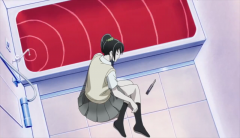
But its flaws are too big to ignore. Haruto spends an entire episode being passive, hanging around and doesn’t know what to do. Remember his main mission is to solve the case and get out of the witch’s dream? Well, this Haruto doesn’t have that purpose anymore, or any purpose whatsoever except for playing around with Kayo. I don’t like to say this but he has no personality this week so his tears in the end just don’t do anything to me. Other recurring characters are all relegated to some small lines and one-off, which of course hurt the consistency the show has established so far. And honestly I don’t know what to make of Kayo transforming into the witch. By any mean she would become extremely dangerous but 18if simply leave it aside. Well, witches aren’t necessary dangerous but when Kayo doesn’t use any of her power then what is the point of making her the Witch then? In the end, I consider this episode an anomaly in this 18if universe as it doesn’t follow the game rule established in previous episodes, and the results have its fair share of strengths and weaknesses. My usual complaint for 18if is that this is style over substance series, and I guess that’s likely where they will go for the rest of their run, but this episode proves that 18if still can go deep into the psyche of characters to tell a compelling personal story.

The Reflection -1 [Ceremony]

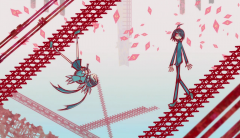
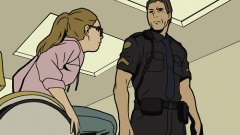
Its a bit late in the season, but The Reflection is just getting started. Sadly, it feels like more time in the oven was yet needed. Thought up by Stan Lee and directed by Hiroshi Nagahama, lets dive right in. Because of the substantial difference in quality between them, I am going to break this first piece into 3 sections. Those sections being Art, Direction/Animation, and Story/Characters, so lets dive right in.

Art

If there is one thing Reflection does right, its the art. The style is unique, minimalist and reminiscent of comic books. Lots of bright solid colors with no shading, thick black lines and 3D/Rotoscoped backgrounds. In stills and quieter scenes its quite striking. Simply look to the opening lantern scene for proof of that. Director Nagahama, his prior work including Mushishi, once again brings a unique style to a season. It reminds of Ping Pong, which had a similar comic-like style yet much more faded colors.

Because of this unique, simplistic style, the animators can also use 3D to very good effect. Very similar to games like Borderlands, this comic book style allows for cell shading and rotoscoping on the 3D buildings. The 3D lanterns in the opening scene, and later the buildings while I-Guy soars through the air all look like they belong. They fit with the art and the world, unlike most 3D in 2D anime. If nothing else, Nagahama deserves recognition for what is no doubt an iconic style. If the animation was better, Reflection would be a standout of the season in this respect.

Direction/Animation

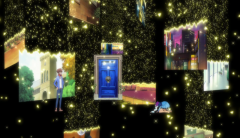
Having mentioned it, lets focus for a moment on the animation. Wow. There are things worth praising here but far more to criticize. To start, there are a lot of interesting ideas put into practice here. The opening lantern sequence was beautiful, the 3D lanterns making full use of this art style. Then there was the spin transition, with all of the monitors becoming turning into a space-scape. I re-watched that particular sequence numerous times, because it looked quite special. With this minimalist art style, animation should look fluid and easy to follow. Sadly, shots like these were in the minority and it was anything but fluid, edits and still shots littering the field.

This opening episode was plagued with questionable edits, motionless animation and less frames than your average power-point presentation. It moved at the speed of a glacier. There was a full one minute segment where there were perhaps 5 frames. This caused a number of scenes to look jumpy as there were few smooth transitions between frames. This low frame count also gave almost 0 impact frames, leaving blows between Hero and Villain feeling weightless. A manhole cover floated through the air like it was styrofoam. Couple that with multiple still shots, jumping from face to face, and you would be alone in thinking the episode was buffering. I can only think Nagahama erred to far on the comic book side of “Animated Comic book”.

Story/Characters

With everything in Reflection screaming “comic book” at us, no one should be surprised by the comic book story we have. There was little mention of the over arching story for most of the episode, Nagahama possibly going for the “Show don’t tell” method. What we do manage to learn however is that it has been 3 years since an event called “The Reflection” took place. Now, suddenly, villains and costumed heroes have appeared in public with few having any idea why. The government however apparently has their hands in it, with an official coordinating with X-On and I-Guy. The villains apparently have their own organization as well, as those captured in the first half are set free in the second. This alludes us to some over-arching plan, with some characters comments leading me to think this will be a Magneto/X-Men style story.

I say this because of the sort of racial tensions that were said to be popping up between the Reflected and normal people. In the X-Men, another Stan Lee comic, the villain Magneto constantly pushed for Mutant superiority of regular humans. The Villains in Reflection give off very similar vibes to this story wise, but we will have to wait and see. Hopefully the animation in this episode was a one-off. We still have the rest of the season to go after all.

See you next time folks, and as Stan Lee says excelsior!

Katsugeki Touken Ranbu – 4 [What I Wanted to Protect]

This is a good week for Ranbu, as it starts to hit its stride. A new mission begins, some quiet character moments occur and finally a whole new cast member is introduced!

We open in a rather unexpected manner, our party fleeing from a group of police. I was expecting a relaxing, beach like episode, with how we left off last time. However it appears we are jumping right into the next mission, as they arrive in Edo. This time our cast is tasked with protecting a 2-day meeting between Katsu Kaishu and Saigou Takamori. This meeting, if left alone, will end in a bloodless surrender of Edo. Should this meeting be attacked, no doubt war will break out, and history will take a massive swing. It wouldn’t take much to set that off, so our casts job is a difficult one it seems.

During this opening segment in Edo, the music does a good job of building suspense. Everything is very calm in the beginning, but the music gives even daylight scenes a sense of foreboding. That this mission wont go our heroes way, at least not easily. This is broken up by moments of comedy, with our cast trying to do their job while dodging the Shogunate Police. This is good, it shows that our heroes are a part of this world. Their clothing actually gets them into trouble and people see them and know they exist. They are a part of this world.

As night comes, the light hearted comedy gives way to some one-on-one character moments for some of our cast. Specifically Kane and Yagen, as they discuss their duty and their previous masters. Yagen gives a short speech which is made better by the fact that he hasn’t talked much up till now. We see through Kane’s imitation of Hijikata, his old wielder, that he still holds onto his time as a weapon. Its a nice, short scene. It fleshes out these characters during their downtime while we wait for the Retrograde army to make their move.

This time, they have managed to place a samurai in Katsu Kaishu’s party who was not originally there in history, who has slipped away between days of the meeting. As this realization hits our party, we transition to night and another fog rolls in. Soon after a new type of opponent is introduced, the Ootachi, a large sword wielder, who raises a question in my mind. Our main cast are weapons given personalities, and these Retrograde samurai are named after their type of weapon. Are they weapons history has forgotten? Why are they mindless, yet our main cast are not, even though both are weapons? These our questions I hope get answered as we progress, but for now lets head back to the fight with the Ootachi.

The Ootachi is very clearly overpowering and out fighting our cast, as we can see small, subtle movements as he reacts to our main characters attacks. Yes, with its raw strength and endurance it simply takes some blows, but for many others it seems to be acting with thought. Because of this, the Ootachi is putting up quite the fight. This combat also takes place on a bridge, which gives us a rather pretty combat scene. I have criticized Ranbu’s combat choreography before, but this episode does it well.

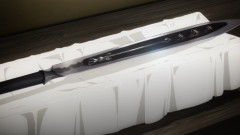
While all this is going on, Yagen is off trailing the Samurai who snuck off from the meeting, who apparently plans to fire on the meeting from the sea. Yagen gets some quick scenes to shine, to show what he can do, and handily defeats the ship crew. Once the Retrograde army appears though, it becomes clear that front line combat isn’t his specialty as he is pushed into a corner. Disappointingly he is saved by a new character teleporting in at the last moment, but it does make for an amazing entrance. Art has always been Ranbu’s strong point, but these scenes looked good even when compared to the previous episodes. The white against the blues and blacks of the ship at night, the red on the sword and the petals, all frame a beautiful shot to end the episode on.

Overall, this episode is a step in the right direction for Ranbu. It has improved its comedy, and the character moments are focused and the combat is stylish. The story can still improve, but it has become clear that Ranbu is more concerned with Rule of Cool scenarios. So for this season sit back, relax, and enjoy the eye candy.

See you next week!


Ballroom e Youkoso – 03 [Dance the Waltz]

Well, there’s no going back now. Ballroom just went full sports anime, and it cut the brake lines for good measure. After the relative nuance of last week’s character introduction, the newest episode treated us to more fanservice, more contrivance, and more shounen formula than the last two combined. Sports series have really stepped up their game over the last few years, with Yuri on Ice and especially Ping Pong busting genre conventions every time they hit the airwaves, but I wasn’t expecting Ballroom to reach those heights – just equaling its sister series Haikyuu would be a fine achievement. The going is still early, but since I’m reviewing the show episodically, I don’t have a lot of praise to dole out this time.

Before we get too negative, though, let’s talk about Fujita’s family life for a bit. There’s a sweet mealtime scene between our young hero, his father, and his grandmother, who we met for the first time this week. Fujita does his best impression of a color commentator as a sumo match plays on TV, allowing his nearsighted grandma to follow along. This heartwarming scene further establishes him as a good kid, but he’s still not disclosing his new hobby to his dad, so I have to wonder when Fujita’s sneaking around will come back to bite him in the butt. Ballroom isn’t one of those series that makes its paternal figures into antagonists, but we already know that he’s concerned about his son’s upcoming high school entrance exams. When he inevitably learns that ballroom dancing is coming before Fujita’s studies, we can expect a B-plot’s worth of material from the resulting conflict.

Notably absent from the dinner table is Fujita’s mother. I’ve been on the lookout for a shrine somewhere in their home, but it appears she’s just living apart from her family. I have to wonder whether Fujita would be more comfortable revealing his passion for dance to a mother figure, but it’s hard to speculate, since all the women in this cast are already part of that world. Tamaki-san is the encouraging type, at least, which is a wonderful trait for a young novice to have in an instructor. Speaking of female characters, I took issue with the way that half of the cast was treated in this episode. This is a shounen property, so I was prepared for a certain level of sexual objectification, but at this point Banba’s role in the story is 80% boob jiggle. The more offensive instance by far, though, came when Sengoku grabbed a handful of Shizuku’s dress during a pep talk and inadvertently bared her breasts. Then they threw in a gushing nosebleed and a camera flash for good measure… I was able to get past the changing scene from last week without much trouble, but if this shit becomes a staple in Ballroom’s playbook, it’s going to put a sizeable damper on my enjoyment of the series.

Excessive fanservice isn’t the only bone I had to pick with this episode, either. The “overheard from a bathroom stall” trope was executed with about as much grace as Fujita after just one dance lesson, and it didn’t teach us anything that we couldn’t infer from the studio above his home and his rigorous practice routine. The show’s attempt to frame another competitor for Hyodo’s fall didn’t even qualify as half-hearted, plus we’ve already seen him fall down a flight of stairs at Ogasawara. And the fall itself was a complete contrivance, not only because it allowed Fujita to hit the floor way ahead of schedule, but also because it will prevent Hyodo from claiming his title. This kind of plotting reminds me of sports anime from the mid-90’s: clumsy and lacking any kind of dramatic tension. Sengoku refers to dance competitions as “battlefields” midway through the episode, but the show handled this one as though it were a mere reenactment.

Thankfully, Hyodo’s character remains fascinating, even when the events unfolding around him are not. After seeing Fujita’s excited expression on the dance floor, Hyodo angrily demands that he “give it back,” a clear reference to the passion that he himself has lost. It’s tempting to think that the two trash-talkers from the bathroom got under his skin, but it seems to me that he’s been approaching this breaking point for a while. His enthusiasm for the sport is at a low point, given his lack of challengers and disinterest in training overseas; he may not even want to compete at all, feeling only the need to live up to his reputation or please his parents. Hyodo’s expressions on the floor are often intense, but never are they happy, and that’s where Fujita has him beat. The continued strength of their rivalry will be one of the biggest measures of Ballroom’s success as it goes on – hopefully the rest of the show catches up soon.

Shoukoku no Altair – 03 [The Council of Generals]

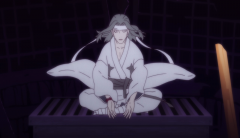
With this episode, Altair’s first arc comes to a close. Mahmut Pasha, teenage prodigy and commander of eagles, is now simply Tughril Mahmut, a disgraced former general set to leave Turkiye on a journey of discovery. Though its main character didn’t fare so well this week, I thought the show wrapped everything up nicely in its third effort, considering the amount of material it needed to cover. It put a bow on the conflict in Hisar, lovingly kicked our hero from grace while confirming his suspicions of an impending war, and introduced an important plot device that will drive the story going forward (more on that in a bit). Though Altair hasn’t become the polished production I’d originally hoped for, the stage is set for a new, hopefully more fruitful chapter in the show’s history.

Last time, after hearing that his friend Ibrahim was in trouble, Mahmut left for Hisar without saying a word to anyone. Though he was successful this week in rescuing Ibrahim and the hostages that had tied his hands, his reward upon returning to Turkiye was a demotion. The council’s justification: in addition to acting rashly at first, Mahmut later made the decision to free all the Araban people (subtlety isn’t one of Altair’s strong suits) who had been lured into Hisar by the evil Minister Louis, in the hopes that they could persuade their countrymen not to carry out a larger invasion. Mahmut’s fellow generals would have preferred that he let only a fraction of them carry the message, but they also want war with the Empire, and it’s this second motive that seems to be the real reason for the dismissal. This sudden reversal of fortune doesn’t carry a lot of emotional weight, since it comes so close to the beginning of our story, but it’s the best and boldest decision the show has made so far. Stripped of his rank and without a means of aiding his country, Mahmut is now free to hit the road and meet the two young men who appear at his side during the opening theme.

My previous suspicions about Zaganos were off the mark, though it turns out I was right not to trust him completely – he’s the type of guy who controls a spy network that spans the entire continent, which explains why his troops were located so conveniently in the last episode. Though the Poison General gives his court rival no credit for the happy ending in Hisar, he’s kind enough to give him a necklace that functions as the key to contacting these spies. Why Zaganos would give such a valuable trinket to a man intent on leaving the country is a mystery to me, but maybe a more observant viewer or helpful manga reader can ease my confusion in the comments below. Perhaps Altair is just the type of series to create more questions every time it answers one, à la LOST (though hopefully not as opaque). In any case, this handy plot device ought to provide the thrust for the rest of the narrative, so how it fell into Mahmut’s lap is less important than where it takes us next. After this week, I’m looking forward to seeing where that will be.

Classroom of the Elite – 02 [It Takes a Great Deal and Skill to Conceal One’s Talent and Skill.]

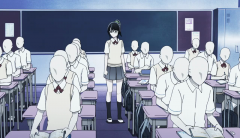
Something about Youkoso, after the end of both first two episodes, that left me there hanging. Something that I feel “off”, but I can’t quite put my fingers on. I guess a big part of it was caused by the pacing, which it takes way too long to get into the intrigued part. I mean, a huge part of this episode for example, is about group study, which excites no one, both to the characters and to us. So, I went ahead and read the chapters where this episode adapted from, and to my utmost surprise, it was different from the Light Novel. They cut down important parts that both reveal new sides from the cast, and leave out the details about the rules. I’m sure they’d save these events for later development so it’s fine for now but even more head-scratching, they include the pool sequence that has no right to be in there in a first place. And I still don’t get the obsessions over gazing at Kushida’s big boobs because as far as I see, Ayanokoji doesn’t get excited by her boobs. It’s just blatant fanservice that don’t go together with the tone of Youkoso. Or maybe that’s just a normal treatment every girl with big boobs will be received in anime, doesn’t matter if it’s relevant to the plot?

In terms of settings, Youkoso introduces one of the more intriguing school-settings that we haven’t encountered for awhile, the academy displays the social structure, the social functioning that we can relate from the real world. In this, class members work together so that they can gain points and raise up their social’s status. We already have the “underdog” here so it’s easy to root for class D, the lowest of the low and I can see heaps of interesting angles Youkoso could explore. First, this is clearly more of a team-work effort than any single individual’s performance so it could provide the real test for both Ayanokoji, the loner and Horikita, the superior complex one to reach out with the rest of the class for their own sakes. Second, the criteria for allocate students to their respective classes and “gaining points” system aren’t strictly academic achievement, meaning that even if the class passes the midterm exam (means that no one got expelled), it is not guaranteed that they can earn more point. Figuring out the best method to raise their rank and beat out the other classes would prove to be interesting and I’m eager to see how the plot develops from here.

At this moment, I like the main cast of Ayanokoji – Horikita and Kushida although they still remind me greatly to the cast of Oregairu. This episode, unfortunately, doesn’t convince us clearly the motive of Horikita when she decides to help out the Bad Three. Such a shame because in the novel, they made it quite clear: Horikita is shocked about being put into class D, while her score is always near the top; thus aiming for the top has always been her objective and she will work out every solution to reach that goal. In the anime I just don’t see it. Youkoso however does shed a new light on her characters with her even more high horse and abusive brother (who happened to be a council student president huh?) and that’s the only time where we can see the real reason behind her superior/inferior complex.

The male lead Ayanokoji is also an amusing lead. He knows much more than he lets out and people around him start to pick up on this. I quite like his cynical point of view so far but damn, after reading the Novel I feel like they haven’t use the characters to full potential. Like I said earlier, the way this episode adapts from its source gives me some concerns: if Youkoso want to focus on the characters I honestly don’t see the reason they cut down the important parts, whereas if they want to concentrate on the process of the class working together to raise above the zero ground, then they fail when rushing abruptly to the final test results. I still see Youkoso has a lot of potential, hopefully they know what to do with the intriguing setup.

Re:Creators – 15 [Waves Approach the End of Wandering]

This week’s episode didn’t have any action once again but there is a lot more movement on the main plot as each faction solidify their alliances and plan out their new moves.

As speculated last week, the latest creation has a snowball’s chance in hell in be competitive against every other creation as her only power is flashing her panties to seduce men. That doesn’t comes as a surprise since her source material is an X-Rated eroge ported over as an all-age version and with Mamika out of the picture, it’s up to Hikayu fill in her shoes with her  future magical powers via fan side release. I’m skeptical that there is enough time or compelling development to do that since it will just be a repeat of a naive kind-hearted girl coming to terms with the harsh reality of this world. Her creator doesn’t fare any better as his buck-tooth appearance and behavior towards creations leans heavily into the more unsavory end of the anime fandom. Out of all of the creators, he is truly a terrible human being.

As her creator speculates, Alice does something very out of character this episode and that is to seek out the help of Magane. For a creation that is pretty meat-headed and relies on brute to win the day, this is a radical departure from her ideology of honor and absolutes. Seeing the batshit insanity that is the money-bathing Magane trouncing around half-naked in a towel go along with her polar opposite is the sort of risk that Re:Creators needs to take if it wants a strong finish. With some incoming power-ups courtesy of her own creators and having Magane take part in  her ambiguous plans, this bores enough potential for a payoff that will definitely shake things ups as the series goes closer to its conclusion.

Blitz has always been an enigma with his backstory and reasons for staying on Altair’s side. His story has been now revealed to be a tragic and dark history with him killing his own daughter in order to prevent a catastrophe in a cyberpunk universe. It’s just that when the show try to link his backstory to Altair is when it gets a little creepy. As with Rui’s sudden transition from being a twat to a stewart defender of the real world, we miss all the nuisances and buildup to his confession to Altair and makes it seems rushed while coming out of the left field. It could have been a cool parallel story like something along the lines of Joel and Ellie’s twisted relationship in The Last of Us but Re:Creators really dropped the ball when it comes to those two.