


Princess Principal – 10 [Case 22 Comfort Comrade]

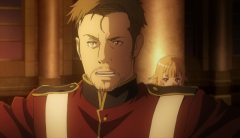
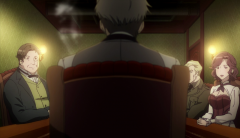
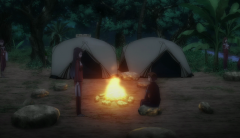
Okay, now we’re getting somewhere. Remember what did Ange vow to the Princess when the two decided to go ahead with the Operation: Changeling? She will deceive everyone, including the Princess and herself to reach that goal. I was expecting how Princess Principal going to pull that feat off. And now we have an answer: Dorothy and Ange are ordered to kill the Princess. If there’s anything we know for sure, Ange would never kill the Princess (well, she has gotten soft, as noticed by Prefect this week). This is a development I was hoping for the climax and I am excited to see how Ange going to deceive the whole wide world. Another thing is, L from the Control “has been transferred”, which significant that he’s either punished by his own incompetence, or the higher up wanted some direct control over… Control and the Principal. Judge by how the new-addition General wants the Princess dead right off the bat, I have no doubt that the Duke of Normandy is the man behind all this. He has always hated the Princess and I’m glad at least he uses Ange for this mission. It could’ve been worse (I did suspect him figuring out the real identity of the Princess, which is much more sinister, though it isn’t the case here).

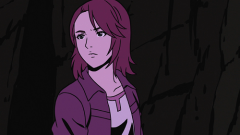
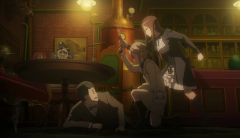
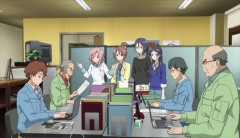
But back to this episode, Princess Principal again pulled another bittersweet tale about happiness, friendship and betrayal on a Christmas eve. Prefect is a solid one-off addition for this episode, having the same high-level skill sets as Ange, but much more attentive to details. The mission this week, to retrieve some important paperwork with the help of Prefect, turns out to be just a façade for a real mission: figuring out if Prefect is in fact a double agent. Only in this one episode, Prefect already form a very solid chemistry with both Ange and Dorothy. It’s understandable since they have a history together, as they are the “sole survivors” of the Farming (which remind me immediately to the Farm of the Promised Neverland manga – a great manga by the way). Ange is her rival, but when working together they are like a two-headed monster, each working seamlessly with the other without much instruction; and by their exchanges we could see how they understand and respect the quality of one another. With Dorothy, however, it’s all about feeling. The only time Prefect smiled, the only happiness she ever received in her doomed past was when they played at the Funfair during the Christmas exam (young Dorothy is cute by the way) and it was Dorothy’s carefree attitude that the more she’s stuck in her current situation, the more she wants to break free like her friend.

The sadder feeling when you eventually learn that Prefect is addicted to the purple drug provided by the enemy and now completely dependent on it (guess what is the only thing that she brings when she flees?). It’s a goddamn contrived plot but it works in this case because it adds context to the reason she shoot herself as a way to free herself. Someone suggests it’s a Cavorite’s drug but I can’t be too sure since her eyes react differently with the one who suffered Cavorite poisoning in episode 1. The best part of this episode, is when both Ange and Prefect, in their own ways, pull the triggers so that they can save Dorothy from pulling her trigger: shooting her best friend. Out of the five girls, Dorothy has always been the most “humane” girl, the one who actually shows her weak, vulnerable side; which totally makes her a bad spy but I think Princess Principal nails it when they focus the emotion beats on Dorothy. This episode finds Princess Principal back to its action-pack mission-heavy again, while tell a satisfying self-contained story and prepare us for the final showdown between the girls vs. the Duke and possibly vs. themselves. I sure hope for a bombastic climax.

Shoukoku no Altair – 09 [The Red Tiger Sultan]

The world of Shoukoku no Altair has been widening by the episode, but it underwent its biggest expansion yet this week. In exploring the ripple effects caused by the Empire’s defeat of Phoinike, the show opted to jump all over the map, introducing stratocracies and sultans left, right and center. The most significant of these were the satellite nation of Muzrak and its colorful leader Balaban, a sultan with a taste for both warfare and beautiful men. The concept for Balaban’s character is wasted on this show, which saddles him with dry dialogue and immediately connects him with the show’s primary antagonists, but his motivation – to be recognized as the head of an independent country – is one that grows Altair’s universe in an interesting way.

Turkiye, it seems, is a nation with four surrounding stratocracies, all of which protect and receive economic benefits from the central state. In response to the recent Imperial aggression in Centro, each of these neighboring city-states sends their leader to vote on the formation of a Turkiyean Federation, which would effectively bring all of Turkiye under one banner. Zaganos stands in firm support of this plan, which tells us exactly what the mainland stands to gain from its passing: a stronger, more unified military force. Yes, Zaganos is still on his quest to command the mightiest military in Rumeliana, even with the older Suleyman Bey at his side for this half hour. Unfortunately for the Poison General, the sultans (including Balaban) vote unanimously against the proposal, and when he suggests that Turkiye simply annex those territories, one of their representatives warns him that any aggression on his part will be returned in kind.

Zaganos eventually convinces his boss that overthrowing the sultan-led governments of their territories is the way to go, but Mahmut doesn’t have such an easy time out in the world. With Kiros and Abiriga in tow, he finds himself in a place called Liman, where the kulak is revealed to be Balaban’s younger brother. The poor guy has locked himself beneath the local water temple for fear of his older sibling, who wants his head for sheltering their traitor niece. This whole plotline would have been way more effective if we had known about their family for more than ten minutes before the gloves came off, but you know what they say about beating dead horses. Luckily, there’s some redemption for this story in the form of a conversation between Mahmut and Balaban, whose hunger for power and autonomy clashes with Mahmut’s loyalty to the country that demoted and effectively exiled him. Balaban offers the former Pasha a place in his Yenicheri (a force of 10,000 men hand-picked by the sultan himself), and brings up Turkiye’s unjust punishment to goad Mahmut into switching sides. With this meeting on the books, the Red Tiger manages to escape mere one-dimensionality, though the last third of the episode keeps him locked at two.

Here’s where things get silly. Eleanor (the woman who works for Imperial Minister Louis) makes an appearance at Balaban’s palace immediately after the arrival of Mahmut and company. She chides her apparent ally for letting the boy live, but Balaban, not being the type to follow orders, brushes her off. I would have preferred for this connection not to have been revealed for at least a week, since it removes the suspense from the political situation in Muzrak – another dead horse, I suppose. Mahmut, sensing that he needs to make a dash for freedom at the nearest opportunity, enlists the help of walking plot device Abiriga, who procures some Yenicheri uniforms for the boys. When the sultan’s troops are called to assemble, though, Balaban spots them and decides to heed Eleanor’s advice. Unfortunately for him, Abiriga single-handedly karate chops at least fifty of his goons into submission, and our heroes escape the city with nothing but a couple bruises. Earlier in the episode, too, Abiriga put his ear to the ground, did a quick number crunch, and calculated that there were 500 people inside the water temple. Ever been torn between insane martial arts prowess and supersonic hearing as a trait for your ideal guy? Get you a man who can do both!

18if – 10 [Dream Dimension α]

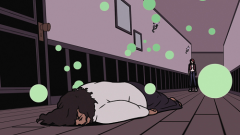
I can understand a lot of viewers will get turn off by this episode, but allow me to say that the low frame rates and the off-model characters are all intentional and I can argue that despite its low-budget looking and jerky movements, this episode has very strong production values and inventive visual aesthetic. The person who direct this lovely episode, not surprisingly was Koji Morimoto; who directed episode 2 of 18if as well. I don’t think you can tell the two episodes were handled by the same person, since the visuals and the overall tones are vastly different, but one thing these two episodes shared lies in its total creative control. In fact, leering to the differences in styles between episode 2 and episode 10 make me more appreciate the broad range skills Koij Morimoto has. This is one of the best episode, along with episode 7, in terms how18if can use its dream premise to produce something audio-visually compelling.

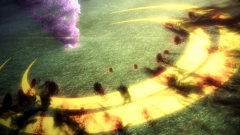
Now, I want to dissect about this episode’s infamous artistic choices. You can see the character movements animate at the pace of the snail, and sometimes even the lines coming from the characters’ mouth seems off. The character designs, likewise, especially with Haruto and the Professor, are totally off – the ugliest designs we have encountered so far. Worst, the story doesn’t make much sense because everything is vague just like you experience a bad dream. But despite all of that, all those choices have its purposes. Low frame-per-second rate and off-model designs allow the movements, and the characters’ expressions, respectively, to be much more expressive than stricter, more traditional style. It’s important because this episode goes for expressionist style, most notably with its gorgeous background arts that stand impressively on its own (normally a bad sign but it’s precisely what expressionist art is about. If you look closely, those backgrounds arts are Hanako’s pictures hang in her room) and the top-notch musical score that not only strengthen the moody, dreamy atmosphere but also the way it handles the different types of music: a classical musical performance, tap-along-the-dancefloor beat and the rock guitar riff solo – all of them are magnificent. The background arts are seriously visually stunning, look at one of the screenshots above for the visual symmetry and I admit that I took like 40 screenshots for this episode alone. I will take a deeper look on those background arts later time to see if I can draw anything related to Hanako’s psychology or not.

Episode 10 also takes full advantage of its dream world, in terms of it follows its own brand of logic; doing whatever they feel like: swimming like a shark, flying like a bird, taking photoshoot in cute weird animal costume, having a sword fight, smoking and dancing. All these activities that Hanako wanted to try in real life but couldn’t. This week is one of the long time since the main cast is back as the main focus, which I’m glad to see; and I enjoy the interactions between them, especially now that the Professor can be able to see and talk to Lily, for some reasons yet explained. I also enjoy the company of the Witch this week – Hanako (or Jane Doe in English name – the most common name significant everyday man theme). Apparently, she still making blogs in the real world (and eat yummy strawberry while blogging), which further indicates that the dream world can have some connections and can have an influence on the real world (something that addressed explicitly in episode 2). Finally, it’s now more or less confirmed that Haruto experiencing Sleeping Beauty as well (hah!), and my guess is that the Professor needs all the previous Witches power to bring him back to life, and might as well to his sleeping sister. Wait, isn’t it make more sense that Haruto IS the Professor’s younger sleeping sister in real life? That would explain why the Professor give that much attention to Haruto and only him is the real-life connection to Haruto as of now. Only 2 episodes left, I believe it’s time we get to the gist of who or what Haruto really is.

Fate/Apocrypha – 10 [Scattered Flower]

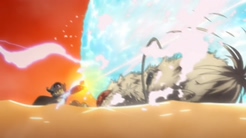
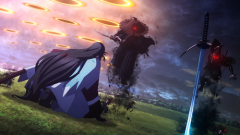
This was an action focused episode as Mordred takes on pretty much everyone. It is rather nice to see a Saber than actually lives up to the claim of Sabers are the best class. Upon examining the main Fate series poster girls record as a servant I find her to be disappointing due to her low win record and a Noble Phantasm that just is too risky to make use of. Though she isn’t overpowering as it makes sense as to why she can put up a good fight in this scenario. Her opponents in the beginning are Astolfo who is weak from taking on the hanging Gardens and Fran who is just a bad matchup to begin with. In Fate combat the combat is usually a matter of suitability as what may be an unbeatable foe for one servant is a easy win for another. Berserker is sort of a wild card of the system as while you get an advantage by boosting their parameters with madness enchantment there is a disadvantage in that you cannot control them. All you can really do is set them on an enemy and hope they can overpower them with mindless attacks. So against an enemy that cannot be overpowered and can fight tactically, a Berserker is dead on arrival.

Thus it isn’t a surprise that Fran couldn’t defeat Mordred but she certainly went out with style putting everything into taking her down. Backed up by a master properly using their command seals for once. Those things are more than a single use unbreakable order, with them you can give your servant a significant power boost when the need calls for it. Be it to power up an attack or boost your servants defense. I have to say I adored the scene of Berserker powering up her noble Phantasm, this show nailed that scene perfectly. Mordred did indeed almost die and if it wasn’t for Sisgou using a command spell she would have clocked out then and there. Sadly the second drop out of this holy Grail war is Fran. As for Rider, he’s at a disadvantage already seeing as he doesn’t have his mount. Thus enters Sieg with the powers of main character plot Armour to turn into Siegfried and put up a fight with Mordred. It’s a pity the kid couldn’t stay dead when Mordred stabbed him but on the other hand it’s nice to see Siegfried in more fights, even if he’s a possess homunculus or whatever nonsense they used to justify this. Well to be fair there is some logic behind it as this isn’t the first time a body transplant from a servant managed to grant someone power in the Fate mythos. However there are certain circumstances needs for that to be remotely feasible, ones that i am sure are getting hand waved away with the Homunculus argument.

We have pretty much reached the point foretold in the opening scene of the first episode with the exception of Joan of Arc fighting what is most likely Spartacus. Fight scenes went down rather well this episode and this makes it the second time this show has managed to pull off another genuinely good episode. That might be because we are getting what we signed up for, a battle to death between heroes of legend. Though I dislike that we had a recap on Siegfried’s past when it was already covered. We have plenty of underdeveloped servants and masters in the roster that could due with some fleshing out so devoting time to go over what we already know is a rather wasteful decision. One last thing I would like to note is that this series soundtrack remains fantastic. It was scored by a Masaru Yokoyama which is a name I need to look out for in the future as he did the music for Scums wish and Gundam Orphans. This man has some real talent. It is such a pity it’s covered up by the rather lacking sound effects, which sometimes can work but other times be far too overbearing, repeated and loud.

Classroom of the Elite – 09 [Man is Condemned to be Free]

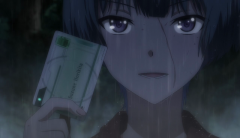
Funny that with the sounding name like “Classroom of the Elite”, this episode moves as far away as possible from the “classroom” scenario and of course in no way those kids are the “elite”, because no elite argues about the need of portable toilet in the middle of a deserted island (because of course you need no toilet in the middle of a freaking deserted island); yet here they play it completely straight. That and somehow nearly the whole class don’t know how to set fire to wood make me question whether the writer himself knows anything about proper camping. Put the plot aside for now (because silly plot is… silly), it’s the setting that I find rather intriguing this time. Of course it comes from me who have zero experience of getting stranded in a deserted island before, so take my two cents below with a grain of sand. Suppose that a group find itself stranded in the middle of nowhere, what would they do first? Setting up a base, choosing the leader and looking for food. The basic, long-term survival plan. In that sense, Yousoko this week fulfills two of these, and they actually blend these two with the “bonus points” each class will compete with each other (finding the spots, only the leader can secure the plot and the guessing game of who is the leader of each class).

The most natural rule about setting up base, is to pick the place near the river/water. Maybe I come from the place whose big cities are primarily located in a coastline, so I’m biased; but I believe that control the water supply is one of the most crucial condition. Class-D, intentional or not, picks one of the best place to survive as a result. Then, you’d need to look for the food and this is where Yousoko does a poor job as the class has no trouble or even put much thoughts of finding food. Granted that they’re leaning on buying two meals a day anyway but this should be an aspect the show can make an interesting spin on it. On other notes, despite my moaning, I understand the intention behind the guys and girls arguing about that wrecked portable toilet. In order to work together as a team, you’d need to satisfy the basic needs of the members of the group. About picking the leader, l really adore the subtlety from Youkoso about saying the importance of guessing and figuring out the leaders of other classes (High risk, high return they say) and then the very next scene our guy Ayanokouji just happens to spot the leader of Class A – with his card on his hand, lecturing his classmate about “don’t talk too loud” no less. Choosing Horikita as a Class-D leader is a sound plan, mostly because she’s a lead (hah!) and that way Ayanokouji can work effectively in the shadow for the class’s benefit.

But behind all these complicated rules and “living in the island for a week” premise, the main meat is always about points. It’s not the matter of saving and gaining points, it’s more about how to use the points wisely. Not wasting any unnecessary points, but still fulfill the basic needs for everyone and gain more points by securing spots and identify the other classes’ leaders. Seems like Class-D get that aspect right, except that… the Tarzan Perfect Species doesn’t agree with any of that. Man, at this point I stop taking him seriously because who’s in the world except monkey would climb and hop between trees instead of walking normally like a normal sensible human would do? I believe he has another agenda for swimming away and admiring the moon, but frankly my dear, I don’t give a damn. Another important development is that class-D decides to take care of Class-C girl’s Ibuki, who is beaten up by her classmates. It looks like a trap for me consider that we don’t really see the reason why she got injured in a first place and I know Ryuen is wicked bastard; but class-D proves again why they are at the bottom of the food chain by sharing her their food and genuinely care for her without any question asked. Until next week when all the cards are on the table should we know how all this play out, but for now, securing the spots, while having fun argue about portable toilet, how to use points and protecting themselves from the evil scheming of other classes sound like a pretty good fun for me. Do it with styles Youkoso.

Ballroom e Youkoso – 09 [Flower & Frame]

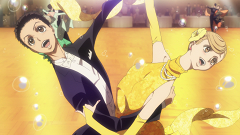
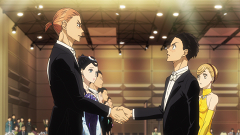
For the last month or so, Ballroom e Youkoso has been keenly interested in expanding and developing its cast of characters. Even with the introduction of the Tenpei Cup, most of the show’s dramatic moments have been rooted in something deeper than dance, be it feelings of inadequacy, a bitter sibling feud, or a budding attraction to a partner or competitor. This episode was a payoff for a lot of the conflict and struggle we’ve witnessed until this point, but it also functioned as a straightforward sports anime, and those aren’t necessarily my favorite. The constant crowd reactions, the special technique names, and the 20-minute runtime that covered five minutes of action all recalled a barrage of lesser series that Ballroom needn’t have imitated at this stage of the game. Luckily, this episode was concerned primarily with honoring Mako, whose transformation from timid duckling to blossoming rose kept the half hour afloat.

The particularly impressive thing about Tatara and Mako’s performance this week was that they rehearsed for only a few minutes before the finals started, and without a particular set of steps in mind. That’s just as well, because Sengoku’s assumption that the Quickstep would be the last hurdle was foiled by Marisa, who convinced the judge to pivot to the Waltz at the last minute. We still don’t know the precise cause of the animosity between these two – the smart money is on her displeasure with Sengoku coaching someone besides her son, but it’s not out of the realm of possibility that she’s his former coach, or if you want to get really soapy, an ex-lover (even if she’s ~15 years his senior, I could see it happening). Whatever the reason for their bickering, Sengoku ends up with egg on his face, but the brief practice session between his pupils pays big dividends when they hit the floor.

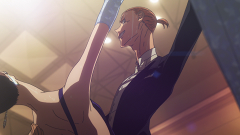
Last week I wrote about DanceSport couples being graded largely on the skill of their male halves, and this time we heard the same thing straight from the mouth of a judge. Tatara and Mako’s partner-centric performance, though, creates a difficult task for their evaluators, who are so mesmerized by Mako that they forget to observe her leader. The show’s limited animation makes it hard to decipher what part Tatara has in this captivating routine, so it falls back on phrases like “Throwaway Oversway from a Double Turning Lock” and “Same Foot Lunge to Right Leg Develope,” which might as well be wrestling terms for all I know. The constant crowd reactions clue us in to the originality and impressiveness of their performance, but they do a poor job of keeping us involved in the scene (even if I got a laugh from the comment that Tatara was “too bland” for Mako). Putting the peanut gallery aside, though, there were two major characters whose impressions of this scene really sold it for me.

The first was Hyodo, who knows just by looking that Mako has worked her ass off to achieve her silhouette. This was a particularly important observation for the show to make, because it tells us that her overwhelming appeal is due to her own effort, rather than yet another aspect of Tatara’s genius. There’s no doubt that he played a role in “making her bloom,” as she requested just moments earlier, because Mako thinks to herself during their routine that he’s providing a solid frame. But in the end, all eyes are on her, including Gaju’s, and it’s his stunned response to his sister’s waltz that matters more than anyone else’s. Ballroom chose to repeat and expand on a previous flashback in this episode, which established Mako as unwilling to express herself for fear of “getting in the way” of her irritable brother. By contrast, she comes alive in Tatara’s arms, not because he’s a better leader than Gaju, but because his biggest concern is that Mako shines. And shine she does – her brother can hardly believe that the radiant young woman on the dance floor is his former partner, and he’s probably kicking himself for failing to bring out this side of her. This is the biggest payoff the show has offered so far, but despite Tatara and Mako’s happiness at having danced so well, it’s not as though they’ve won the event. Gaju and Shizuku are up next, and the continued partnership of both couples is still on the line heading into the next episode. Whichever pair emerges with the Tenpei Cup in hand, though, Mako achieved a significant victory with her performance this week.

Princess Principal – 09 [Case 11 Pell-mell Duel]

Now I can forgive the show for taking too long to introduce Chise; because we have a Chise-focus this week and I’m glad that episode 9 of Princess Principal does everything just right. This episode serves as a glaring proof of how Princess Principal does non-chronological order the right way. Technically, this Case11 happens when Chise just joined the team; still feel insecure about her position within the spy group (Something we learned already in Case9). But the little story this week also addresses the social class issues among the noble kids (this is a Royal School after all) towards Chise – a country bumpkin girl from a forsaken country named Nippon. This issue earns a deeper layer now, since we already know the story of The Princess and the Pickpocket last week (which chronologically happen way forward in Case20) and understand how social order can be quickly flipped around like a flash. This, I can argue, is the strength of non-linear order, you can gain context on certain themes, on certain character developments that otherwise would be insignificant in a linear way (Like how insignificant Haruhi season 2 was. Anticlimactic)

Secondly, “Pell-mell Duel” does a bang up job of fleshing out Chise and gives a much-needed dynamic between her with the rest of the cast, especially with the Princess. Prior to this episode, most of the team’s chemistry has always revolved around Ange, but for my humble opinion, Chise is always a more fascinating character (best girl!!!). Follow the story through her eccentric point of view serve to be this week’s greatest tricks. Chise has amusing perspective to the new life around her, she carries a wide range of emotions and every single one of them brightens the scene. The way she “struggles” to fit in with this Western world, I must note, isn’t come from her culture shock but more because of her never-back-down attitude. It’s endearing to hear her thoughts about other members, her challenging to a duel, even her insecureness on the “weapon that she has yet to acquire” and finally, her warming up on the Princess and other girls. As a result, this episode is entertaining basically from start to finish.

Another thing the episode does right is the fact that the entire episode is mostly set in their school; something that has been nothing more than a decoration in earlier episodes. Usually school setting is a sign for disaster but in this case, it breathes some fresh air to Princess Principal. Not only by doing so the show lets us witness how Chise fitting herself in with the new environment; it allows us to learn the hour details of their study (and how Chise constantly “tops” herself in every subject), introduce us to new character (Lily, turns out to be one of Duke Normandy’s spy) and give that social class tension a necessary conflict for the climax. Talking about that duel, I know it’s just me but I always find the old British duel kind of dull. It feels more like a test of courage of trying to act calm where the gun pointed at you, and usually the one who get to shoot first have a higher chance to win. I know the show mentions that it isn’t easy to hit the target on the first try, but when the rule explicitly says, “the first one down loose” it gives the first person who shoot a clear advantage. Not that the rich kid deserves to win either; because unlike British rule, Anime rule says that when you cheat, you get your ass kicked. Thus, even if her method of shooting bullet is a bit… beyond the rule; justice has been served.

Plot-wise, there are two important developments in this week. First, that new girl Lily serves as a spy to report the Duke of Normandy about the Princess’s activities in case the bodyguards can’t fulfill that job (guess all of them failed miserably as the Princess comes and goes and changes to spy suits and does spy works as she’s please ever since we met her). Lily has some roles in this episode but I can’t help but think she’s a one-off and this development further confirm that the Duke of Normandy will be the biggest obstacle the girls have to face. Second, Chise and the Princess shares some solid chemistry here. The Princess herself supports Chise on arranging the challenge, and that sumo celebration at the end is heartwarming. Chise holds the position of evaluate the two nations and while she’s not sure if Princess will succeed, she genuinely wants her to. I have nothing to complain on this excellent episode, both entertaining (and I admit that I took more than dozen screenshots of Chise’s various facial expressions), and fleshing out beautifully the dynamic between the core cast. Two third of the way, Princess Principal is still running strong; let’s hope that its final arc will be rewarding.

Note: it just hits me that almost all our girls have Daddy issues – not sure about the real Princess – Ange’s father but other girls had fathers that outright abuse them: Beatrice: father experimented on her – Dorothy: father hit her – Chise: let’s just say father betrayed her – Ange: father turn her into pickpocketing machine… I don’t think this Daddy issues will have anything to do with the climax and it doesn’t even fit to the themes Princess Principal established so far. So, I just leave it here as a note, for now.

Shoukoku no Altair – 08 [Masquerade of Sincerity]

The conflict between realism and idealism became clearer than ever on this week’s Altair, with the show using precisely those terms to describe its own thematic underpinnings. Perhaps it’s due to the contrast with Kiros’ brash personality, but I thought Mahmut demonstrated some real patience and political savviness during his time in Venedik. He certainly came closer to camping with the realists than ever before, despite being known to Doge Lucio as “the Pasha who despises war.” That such a title would be a clear identifier tells us all we need to know about the strangeness of Mahmut’s allergy to conflict, at least in this world of uprisings and betrayals. As he continues to meet new people and encounter different perspectives, perhaps he’ll earn a more flattering reputation. “The Pasha who formerly despised war, but now understands that sometimes countries must fight to protect their own interests,” perhaps?

Mahmut is actually a Binbashu now, rather than a Pasha, which is a demotion I’d nearly forgotten until Doge Lucio made sure to mention it during their face-off. Lucio’s explanation for his betrayal of Phoinike is a technical one: Venedik deployed a fleet, as the treaty between the two nations required, but because it said nothing about the ships’ arrival, they were free to remain at sea while the Empire invaded and conquered their former ally. Mahmut bristles at this deception, and at the Doge’s willingness to form a new trade agreement with Balt-Rhein, but Lucio insists that going to war with the Empire wouldn’t have benefitted his people. As the two young men began to answer questions with questions, it became clear that their opinions regarding the political landscape of Centro were irreconcilable. Thankfully, this wasn’t another instance of Mahmut taking a hard-line stance and getting BTFO immediately afterwards – he later admitted to Kiros that his opponent’s views were justifiable, even if they left a bad taste in his mouth. I’d say that’s a good bit of progress, considering how slowly the game of international relations is mastered.

The rest of the episode deals with a plan, orchestrated by Captain Brega and a spice merchant named Mora, to frame Abiriga (who we met last week) for a crime he didn’t commit, thus exiling him from Venedik and freeing him to travel with Mahmut. I was surprised to learn that Abiriga wasn’t a member of Suleyman Bey’s spy network, though it wasn’t a shock to learn that Bey had tried to recruit him years earlier, given his status as an outsider. Abiriga’s refusal stemmed in part from loyalty to his adoptive country, whose citizens hold him in high regard; Brega calls him “highly trusted and accomplished,” which made me doubt the necessity of the cloak and dagger routine. If Venedik wants a good relationship with Turkiye, and Abiriga has the support of the people, why not make him an official emissary? Keeping it a secret allowed the conspirators to test Mahmut’s character (he passed, in a manner so silly that it doesn’t bear recounting), and to keep from “attracting unwanted attention,” but the whole thing felt like an M. Night Shyamalan film to me. The real goal must be to keep the Empire in the dark regarding a potential Turkiye/Venedik alliance, but Kiros has concerns of his own – with Abiriga being likely to pass information back home during their voyage, how much longer will Mahmut and company be able to travel undetected?

Made in Abyss – 09[The Great Fault]

Surprising as it is, this episode appears to be mostly anime original content. Though not quite filler as it appears this content was supposed to be in the original manga but the author was pushed to cut it out due to the series not doing particularly well at the time. Seems that with the anime the author got it added back in with this episode and I am quite glad he did as it really shows Riko growing to appreciate just how much Regu does for her. As well as the dangers of Regu’s incinerator weapon which may pack a powerful punch but it’s cooldown time puts Riko in serious danger. On top of that we have an example of just how devastating the curse of the abyss can be on someone in the lower levels even when ascending a small slope.

I was originally put off by Riko sacrificing the little creatures in order to distract the bigger monsters from noticing them though it certainly isn’t out of character for her. After all she is the survivalist type who believes in the natural order of things. The thing is that I believe this action had great ramifications for her throughout this episode. These things have been watching them since they entered the great fault and after that action it honestly looks like they were trying to kill Riko. Riko comments the little guys were leading them to food and water however they end up leading her straight into the lair of a Madokajack. Then when being chased by the Crimson Splitjaw the Neritantans blocked the exit so she couldn’t get out before chickening out at the sight of the massive predator. Then it appears they lead her to a monster who would eat her up only for her to cut her way out of it. Finally they all gathered and attacked her at once which Riko blamed on her smelling like the fruit they eat. Taking all these little things into account I think these creatures were holding a grudge.

As pointed out by a commenter in the last post, the last episode of this series will be a one hour special. Taking that into account this series has about six episodes of content left. At the moment the anime has covered up to chapter 18 of the manga with about 42 chapters out currently. From what I hear there is a good ending point at chapter 38. Possibly with some faster pacing the anime could reach that point but I feel reluctant to say it should speed up. From what I seen, Manga readers appear rather flustrated over the anime’s pacing. Not due to it being inaccurate but rather at the speed it’s currently at they won’t be able to see the moments they want to see animated. However I find the pace of the anime to be perfect as we spend just enough time in each level of the abyss to stop it feeling like a tick on a checklist. My general problem isn’t so much how this series is presented as i actually considering it superior to it’s manga counterpart. My problem is more that this series doesn’t have the runtime it truly needs. The extended last episode certainly helps in this regard but having a two cour series could have done wonders for this show.

Kakegurui – 09[Dreaming Woman]

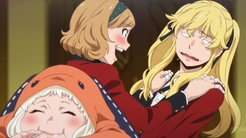
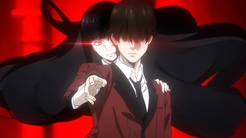
It’s an episode like this that really shows that the appeal of this series isn’t so much on the gambling games themselves but rather on the individuals playing them. In this case the gamble was barely present in the episode at all as it was a varity of 9 games in which the winner is decided by the audience. We don’t actually see the games being played, instead the show decides to skip over and montage the games. The cuts to the first game were rather jarring but understandable. They didn’t want to waste time animating three song and dance routines. But really the only game that mattered was the final one as it was revealed that Yumemi purposefully gave Yumeko a lead in the game so she could stage a miraculous comeback to make the show more entertaining. However she was taken completely off guard when the game she engineered to work in her favor was turned on her. The last game being for the two to guess the birthday of an audience member and because Mary was chosen instead of one of her fan club members, her plan was decimated.

I have to say that for all the confidence Yumemi and the treasurer had this has to be a massive oversight. Then again Yumeko’s level of predictive skill so far exceeds any logical level that she more or less has access to this show’s script at this point. This may be why I lost interest in reading the manga as there is only so long a game can remain interesting with a protagonist so overpowered as this. I enjoy seeing smug self confident horrible people get their just deserts as much as anyone but there is only so many times before I get bored of the situation. I want to see Yumeko actually work for a victory, not just smile and recite deductions likely only gained through precognition. As Yumeko puts it herself, there isn’t any fun unless both participants have an even level of risk. While Yumeko does stop her opponents cheating, everything tends to go exactly as she planned. Even if she leaves part of it up to luck. It’s much like the power creep of Isekai’s wherein the main character becomes so strong that only an act of god could defeat him. Otherwise it’s just a long line of the main character showing people how amazing they are.

Despite her true feelings being revealed to public, Yumemi manages to get away with her career intact as her fans decide to love her even if she finds them disgusting. I still think that she would be better off starting in acting rather than idol work for her end goal but well all’s well that ends well I guess. So Yumiko has managed to use this gamble to set up another gamble with the treasurer by accusing him of sabotaging Yumemi’s gamble. Despite the fact that it was actually the girl in the orange hood who send that letter to Yumeko. Already Yumeko has moved to challenge the next rung on her road to challenge the president to a gamble.