Inuyashiki – 3 [Naoyuki Ando]

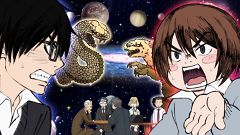
Welcome to week 3 of Inuyashiki, the premier serial killer anime of the season. This week Astro Boy grows up, a teenager terrifies his best friend and parallels between our two leads get even stronger! Lets jump in.

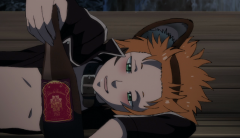
Very similar to last episode, this week focus’s equally on our two leads. Once again it shows us the parallels and the differences between the two. It does this by forcing each of them into very similar situations and then showing us how they handle them, side by side. Not exactly subtle, but at least there isn’t a narrator forcing it down our throats. The two main scenarios in this episode are how they handle bullies and how they handle healing powers. They both enjoy the situations, reveling in their power, but for very different reasons.

Continue reading “Inuyashiki – 3 [Naoyuki Ando]”

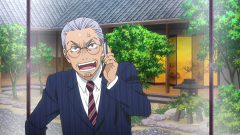
Dies Irae – 02[The Claws and Fangs of the Beast]

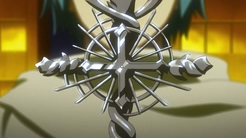
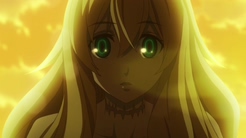
On the list of top ten worst ways to start an anime episode, I think that panty shots is quite high. Well if it means anything I at least appreciate that Ren didn’t flush up and start stammering, instead acting relatively normal about it. Unlike Kasumi who well reacted in the usual manner of resorting to kicking his teeth in. Like Ren said, you can’t blame the guy if you are the one that put it in his line of sight. So for all one or two of you that are actually still keeping up with this series I say this is the episode you drop. I can’t blame you honestly as this adaption is truly making me question whether the visual novel itself was all that great. It is truly a mark of a bad adaption if it causes you to think lesser of the source. I do remember the beginning of DIes Irae being slow but for visual novels this is usually par for the course. Think of any visual novel adaption and you will likely find it’s beginning to be rather slow paced. Believe it or not this is actually moving at a faster pace than the visual novel and for that I am glad. Truth be told i didn’t really start getting interested in DIes until after this little serial killer arc was done.

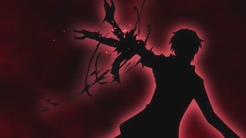
Fight animation is better than it was in episode zero but in comparison to fight animation we get today it’s quite lacking indeed. I do recall someone remarking that this anime reminds them of early 2000’s animation and not in a good way. Indeed that is the impression I get as well but part of what is contributing to that is Dies Irae’s obvious inspiration. The visual novel came out a couple years after Fate and many were still chasing Fate/Stay Night’s success and you can certainly see that. Though to be fair the plot actually mirrors another Type Moon work by the name of Tsukihime. The persist in this episode is obviously Kirei inspired and the general serial killer plotline is much like that of Tsukihimes beginning plotline, which also insinuated that the main protagonist may be unconsciously a serial killer.

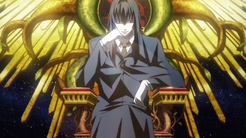
It’s a pity that the anime skipped over the dialogues between Mercurius and Reinhart as those two really could supervillain monologue. Though the translators might have serious trouble when they start talking. They already appear to be having trouble as terms are mistranslated. For one they are called Lisa, Riza. Calling Valeria the priest of the grail instead of the Golden Vessel. But the biggest mistranslation here is calling the obsidian round table, the black round table. I hear that fans offered to give a terms guide to the translators at crunchyroll to help them stay consistent with the visual novel translation but seems they didn’t take that offer. I mean I can understand a level of apathy with this series but this is a matter of professionalism. If you are going to do the job then do it right. What could make this more of a problem is if the Simuldub of this series(Yes, Funimation is doing one.) goes off the Crunchyroll translations rather than the proper terms. Again though, I did understand if that level of consideration isn’t applied as the series itself isn’t going to do any real justice to it. Still I would like to be surprised and see this series improve as the true story begins.

3-gatsu no Lion – 23 [Setting Sun/Ramune]

When 3-gatsu no Lion first aired in the fall of 2016, there was a heated controversy among manga fans about the appropriateness of Shaft’s adaptation. The show was undeniably faithful to its parent material in terms of story, but its abstract visuals and quirky mood shifts gave it a different flavor than its predecessor. Although Umino-sensei personally requested that Shaft handle the TV series, the decision was met with resistance by part of her fanbase, some of whom swore off the anime completely. Happily, I approached 3-gatsu last year with no prior expectations to weigh me down, and it became one of my favorite series in recent memory, and a virtual lock for my top 10 list in a couple months. Despite my love for the work, I opted not to read the manga during the offseason (a self-imposed restriction I’ll be sure to lift one day), so these blog posts will be written without knowledge of future events. I also want to say a quick thank you to Mario, who has graciously allowed me to continue where his coverage of the story left off six months ago. Cheers, mate!

After the previous season concluded on such a hopeful note, I was curious about which version of Rei we’d get in this opening episode: sadsack Rei or social Rei. Despite his clear growth leading up to this point, 3-gatsu hasn’t been afraid to isolate its main character as he struggles to break free of his anxiety and depression. The show opted to continue where its hopeful season finale left off, though, so we got to spend a delightful half hour with a friendly, optimistic Rei. Seeing him in a teaching role within the new Shogi Science Club was really satisfying – some of the best teachers are driven to give to others the type of care they never received, which I sensed from him in this opening scene. His style of instruction was gentle, but occasionally urgent, as if knowing just when Noguchi (the mustachioed senpai of the club) needed a push to continue with his frustrating shogi training. I really enjoyed the back-and-forth between these two, since Noguchi is much more mature than Rei, but maintains a willing attitude as a student for the benefit of his new friend. Their relationship isn’t just a one-way street, either, with the elder boy walking Rei through the process of creating homemade ramune candy, which he eagerly brought back to the Kawamoto household to share with the girls.

The lack of screen time given to Akari, Hinata, and Momo was a little disappointing, but the majority of this cast is interesting enough to have entire episodes structed around them. This one cut between the club’s viewing of the Meijin title match, the match itself, and the private musings of two legendary figures, who I’ll talk about in a bit. The current Meijin, Souya, is an unstoppable force in the shogi world, but it’s his opponent who dominated their scenes together. We only got a glimpse of Kumakura Kengo last season, but we received much more than that here, as he positively devoured the sweets that were brought to him during the match. The peculiar shots of delicate cakes being crushed, all set to a heavy electric guitar riff, were about as Shaft-y as you can get in a scene featuring two adult men eating. This was the one spot where the show’s visual presentation was distracting for me, but it was certainly a memorable way to convey Kumakura’s strength and intensity. Stern-faced and looming in stature, Kumakura appears to present a difficult obstacle for the Meijin, but given Souya’s place as 3-gatsu’s “final boss,” I doubt he’ll struggle too long before putting away his challenger.

The first of the two legends I mentioned earlier is Jinguuji Takanori, the chairman of the Japan Shogi Association. We’re already familiar with the fun-loving, responsibility-shirking chairman from his multiple appearances in the previous season, but his character took on a different dimension in his conversations here. The man sitting across from him was Yanagihara Sakutarou, whose name I only found by Googling, since it wasn’t mentioned in the episode. I really appreciated that 3-gatsu went for naturalism during his first appearance, rather than putting a title card on screen to inform us of his name, date of birth, JSA rank, blood type, and favorite foods. From the dialogue between these two men, we learn that Yanagihara is set to face Souya in a future tournament, where even the reigning shogi champ will occupy the role of challenger. Yanagihara is nearing 60, but his wry sense of humor is very much intact; though he confesses to fearing the Meijin, his tone verges on disrespectful as he describes Souya’s talent. The chairman even labels his playstyle as “mocking,” an accusation which his friend protests only half-heartedly. Based on their playful, layered conversation, I’m already looking forward to the moment when Yanagihara steps into the ring to face his destined opponent.

Juuni Taisen – 04 [The Enemy, a Noble Primate]

If you had any doubt before that Juuni Taisen is written by Nisio Isin, this episode should clear that out front. It’s talking and talking through and through this week, but this episode also restores my faith that the reversed Zodiac order only serves as a narrative one, and not for the death order. It’s Monkey and Rat who have the most screen time this week and I certainly enjoy the various themes these two explore, be it their own approach on war, the act of saving lives, and the Zodiac War itself. Monkey, as the Rat (and everyone points out), is a pacific, but what sells her ideal is that she isn’t simply an optimistic, idealistic naive person. She has experienced through all the crimes, the hardships, the brutality of war and still, she tries to make peace with her best efforts. Monkey might save more lives than any warrior in the game, but it also means that she has failed more lives than she ever wanted to. The flashback about her trying to ceasefire in a long-winded border conflict between two nations clearly points out that although her intervention comes from a good intent, the effort could end up backfire and might lead to more severe conflicts.

Although Rat didn’t mind following on her peace agreement, he has lots of criticisms regarding her method. First, he points out that with her current skills (which, by the way, is awesome. She can transmute any substance between physical states, being teach by the Three Wise Monkeys no less), it’s much quicker (and more effective) to achieve her goal by killing/ destroying bad weeds rather than negotiating and hoping she can change their minds. It’s just her way of using her weapons though, and I greatly appreciate her for that. Second, Rat laments that saving all the people also means that they have to save rubbish people who don’t deserve to be saved, and by protecting them, they would assume that protecting/saving is someone else’s job. Although he has his point here, I have a feeling his argument mostly comes from his own frustration rather than pointing directly at Monkey’s method. We have his way of thinking here, but without the context it’s hard to know what Rat’s personality is at this moment. Finally, he argues that the Zodiac warriors, more than any other people, are a dangerous bunch who can only find meaning in fighting each other. Are they worth saving at all? Whatever the case, Monkey more than holds her own in this episode. She might be a pacific, yes, but her method never feels unrealistic and I don’t think she’ll be sent off any time soon.

The action does pick up at the end when Bunny team ambushes Rat and Monkey using zombie birds (the ones that Boar killed last week) and now it’s 2-and-2 battle. Now, pure speculation. Toward the end, one line from Rat actually throws me off guard: He remarks at Monkey’s decision to restrain the Mad Rabbit peacefully as “you’re always like this – as “all the time”. Now I have two theories behind his statement. 1) Rat is specifically assigned to join this Zodiac battle to tag along and control/support Monkey. This theory fits with the fact that the warriors in this edition of Zodiac War are more aggressive than usual and they might seek a bigger goal beside gaining one’s wish. Whatever that goal is still in the dark right now, but it does seem that Rat knows pretty well about Monkey’s ability and method. Or 2) Rat has time-rewinding ability. It might sound crazy but consider that he always knows what going on next, and the fact that almost every other warrior has that déjà vu sense when they meet him, which might indicate that they in fact face him all over and over again. That also explains his bored attitude since the guy might have repeated the cycle endless time (let’s say it’s 15,521st time), and if that’s the case, what makes this loop any different than the others? Anyways, I suspect the talky nature (and the lack of body count) might turn some viewers off, but for me we still have a pretty solid episode at hand. Next week will be the old wise Sheep’s turn and I expect we get a good one-off story out of this old man before he’s killed by whoever it is (Frankly, I see him has no chance to win this tournament). Doesn’t matter, I’ve fully embraced Juuni Taisen by now.

As of now,

Deaths: Snake, Boar, Dog, Horse (maybe), Chicken

Favorites to win: Bull, Rat, Monkey, Rabbit, no-one

Fate/Apocrypha – 16[Jack the Ripper]

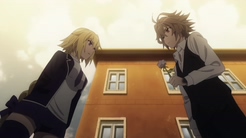
Jack is back and sadly this is the weakest episode so far of the second cour. A big part of that is because it was more or less pointless as while it brings Jack back into the war after a long absence, it really didn’t accomplish anything. This episode mainly revolved around Jack torturing mages to gain information to infiltrate the Black Headquarters and attempt to kill off Fiore. But well once the servants return she says “I will get you next time!” and runs away. So the attack failed and thanks to Jack’s noble Phantasm, the Black team know nothing about her powers or what she looks like despite coming face to face with her. So nothing was truly accomplished. This isn’t how i thought Jack would re-enter the story and I fear that she is becoming another pointless mid-boss much like Avicebron was.

I originally thought that Fiore and the crowd would wish to recruit Jack seeing as she’s a rogue servant and they need all the help they can get to face off against the red servants. I mean sure, there’s the morality issue of joining up with a serial killer but this is the team that was literally breeding people to die in war. Rather silly to have them care about the sanctity of life now. If it’s a danger of her betraying the black side then you can have Joan bind her with command spells. It’s doesn’t make much sense for them to prioritise killing Jack over taking on the gardens of Babylon. Shirou is currently working on a plan that could have devastating consequences for all of humanity so why is it that Jack running around killing mages is a bigger issue?

Not sure why Jack is doing this in the first place as taking out the Black team wouldn’t help her chances of getting the grail at all. They bypass this off with her just being crazy and wanting to kill people but still this just seems far too forced a development. After all, even if she succeeded that would mean it’s her up against all the red servants in the giant death castle. Even if you are crazy those odds are far too disadvantageous. That’s not the only forced element here as when Fiore was attacked a single question went through my mind. Why wasn’t she using her command spell? Command spells do have the power to transport a servant to your side and that’s one of the best reasons to have them in reserve and yet here Fiore seems to have forgotten about it completely. The light novel explanation is that she was just so scared and not thinking straight which does fall in line with her inexperience with combat.

However they also showed her using magic and planning to get her gear which does mean she had some logical thinking. Really if she was trying to find a way out of the situation then the command spells should have come to mind. When it comes to this episode, the word of the day is forced. It feels forced for Jack to attack the black team. It feels forced for her to just retreat after pulling all this. Really this whole sudden conflict just feels forced as if the story just remembered that Assassin of black is a thing and is now trying to find the fastest way to remove her from the plot. As some last notes, I like how they showed that Fiore is unaccustomed to cellphones as mages tend to be rather clueless when it comes to technology. I also like that Sieg is at least getting some payback for his newfound power and I just hope it isn’t somehow negated with another powerup.

Kino’s Journey -The Beautiful World- – 03[Bothersome Country]

One particular thing I really like about this series is that the title of the individual stories often defies expectation. For example we had a country where people were allowed to kill, only instead of a hellish country filled with murderous thugs it’s instead a safe place filled with those sick of murder who only use the law to punish those who attempt to disturb their peaceful existence. Here it is the same, as it is indeed about a Bothersome Country but more that the country is bothersome because of it’s need to be constantly moving. But it’s not the only bothersome country in this episode as we have another country which blocked the plains in order to extort travelers passing through. So it’s up for debate on whether the title refers to the moving country or the other country but I at least like that they didn’t necessarily pick a side in this fight. If we are to paint things black and white then the border country is in the wrong for blocking the plains. But then again the moving country ignored all their pleas to stop and essentially tore through the country. Destroying everything in their path. As such it’s hard to balance this out as simply good or evil but I will say that the moving country did come off better than the border country.

I do laugh at the fact that for Kino this was merely a means to get past the border country without paying the big tolls. I can’t say this was the strongest story but I do like the overall message that much like how the moving country can’t help but mark the land with its caterpillar tracks, people too cannot moving through live without leaving traces. The final evidence of that is that Kino’s defense of the children’s mural will likely result in the children making her the next mural in the next hundred days or so. Hence even Kino can’t not leave traces of her in the places she leaves. This isn’t the strongest story but it is nice to have stories in Kino’s world that don’t end with some dark twist and rather just a whimsical little adventure.

I can’t say I have been fond of the way that this series appears to be selecting stories where KIno plays a more active role than a passive one. We have her breaking her established rules of non interference and her normal three day rule. As this story caps off with Kino showing off her mad sniper skills, I fear that this series may be trying to turn her into some kind of action girl. Now Kino has always been skilled but I appreciate it more when she keeps her talent under wraps. What makes Kino badass is that she doesn’t need to show off and only uses her skills when necessary. If someone started from this series instead of the 2003 version then I feel like they would have a mistaken impression who exactly Kino is and what makes her different from any old anime girl with a gun. Kino is no paragon of justice, nor is she some anti-hero. Kino is an observer who watches the world and only interferes when her hand is forced or in this case, on a whim.

Mahoutsukai no Yome – 3 [The Balance Distinguishes Not Between Gold and Lead]

This week, Mahoutsukai moves into a slower pace. Showing off more of its world and delving a bit deeper into magic and how it connects to the world. Lets jump in.

There are two main points I want to touch on for this episode of Mahoutsukai. The first being the actual main focus of the episode, magic and dragons, and the second being Chise. I suspect that is going to end up being the split for most episodes, unless the treatment of Chise changes as we go.

Continue reading “Mahoutsukai no Yome – 3 [The Balance Distinguishes Not Between Gold and Lead]”

Ballroom e Youkoso – 15/16 [Taking the Reins/Four-legged]

Boy, this was really a Tale of Two Ballrooms. One of these episodes was almost certainly outsourced, based on the visual inconsistencies that extended even to key poses, but handled its character moments dutifully. The other looked markedly better than most of this show’s recent offerings, but rushed through so much material that its conclusion had hardly any impact. I suppose it’s a good thing I watched them together, since they make up for each other’s weaknesses, but episode 16’s abrupt finish left a sour taste in my mouth to end the doubleheader. A word of warning before you read any further: this is going to be one of those reviews were I make reference to the Ballroom manga more than once, and the eternal anime buzzword “pacing” will probably make an appearance before too long. If that sounds like something you can tolerate, at least for a few more paragraphs, then let’s unpack these episodes together.

My favorite part of “Taking the Reins” was the introduction of Kugimiya, who made an excellent transition from page to screen. He’s a blunt, imposing figure, whose tall stature and thin eyes make him a good aesthetic foil for Tatara. They’re opposites in the way they approach dance, as well; Kugimiya speaks harshly to his partner (who he’s nicknamed “Banshee”), and considers the strength of a couple’s leader to be of paramount importance. When Tatara objects to that philosophy, Kugimiya uses his undeniable skill to toss Tatara (occupying the female role) around like a ragdoll. Even Kugimiya’s theme, with its schizophrenic bassline and backwards piano, is brash and off-putting – the anime staff did an A+ job with his character. Off-putting though he may be, he’s right about how important the leader’s role is in ballroom dance, a fact that Hyodo’s mother Marisa reiterates more clearly than ever before. As Tatara’s new coach, it’s her job to make her pupil take a more active role in his routines, but it won’t be easy given his typically passive attitude.

Tatara’s old coach makes an appearance in this episode, as well, with Sengoku’s return to Japan after a month-long timeskip. The kids attend Japan’s International Dance Championships and watch as he and Hongo place third on the world stage, a feat which leaves Tatara in awe of his former mentor. After sharing a few laughs throughout the day, teacher and student have a nice moment together when Tatara works up the nerve to call him “sensei” for the first (and probably last) time. I thought it was swell of Ballroom to acknowledge the influence Sengoku has had on his old student’s development, especially because its newly-heightened narrative pace risks leaving some characters behind. Sengoku could have been a little more sentimental about it in the moment, but he had some encouraging words for Tatara during their classic train station farewell, so I’m happy. If there’s one criticism I’d level at this scene, it’s that it played a bit like a final goodbye, but it shouldn’t have, since I doubt this is the last time they’ll see one another. And speaking of scenes that don’t feel right…

Here’s a tip for all you aspiring storyboard artists out there: USE THE MANGA PANELS WHEN PLANNING YOUR ANIME. The beauty of series with existing source material is that some of the work is already done for you, and comics in particular lay things out really nicely. You can deviate from the manga, of course, but since anime is presented to the viewer at a fixed tempo, it’s important to note panels that indicate the passage of time, and use a similar device in your adaptation. Elaborate on them, do a montage, or throw a few stills on screen set to a throwaway piece of music – just make sure the episode is paced appropriately. Here’s what not to do: finish a scene with Marisa telling Tatara and Chinatsu that they can’t compete in a Grand Prix, fade to black, and transition immediately to the two of them on a train to the Grand Prix one month later. You might do this for humorous effect, but that’s not what Ballroom wanted to achieve here, and their omission of the manga’s dance training and end-of-school panels made the end of the episode feel super choppy.

The same problem carried over to the next episode, where Tatara’s obsession with a peculiar sensation he experienced while dancing led to his disqualification from the Grand Prix. He zoned out while sitting on the sidelines, you see, and when he came to, the competition was over. That’s what you might think, anyway, given that the anime only presents us with a shot of Chinatsu’s anguished look, then cuts straight to them in street clothes at a train station. Gone are her repeated attempts to rouse him, his slow return to reality, the call from another competitor asking if he should be on the dance floor, and the indication that the heat is still going on and they only missed it by a minute or so. The show was so preoccupied with showcasing its (admittedly cool) four-legged animation that it forgot how to sequence itself. I can only guess whether anime-only viewers found these scenes to be sloppy, but I know that similar transitions in other series have bothered me, even without knowing a thing about the original work.

There’s a whole half-episode of content left to discuss, but I don’t want this review to hit a thousand words, so I’m calling it here. Looks like I’ve still got plenty to say about Ballroom, so we probably ought to go back to single episode reviews. I’ll touch on whatever I missed from “Four-legged” in the next one.

Houseki no Kuni – 03 [Metamorphose]

It just occurred to me since I watched Bakuman (the first season of it, anyways) fairly recently, but watching Bakuman made me realize how tough it is to have your manga publicize, let alone become a popular one. For those who have watched the anime or read the manga of Bakuman, remember the early Golden Future Cup? The one where our main duo, Fuduka and Aoki decided to check each other’s names and plan to critically comment in order to improve them? Long story short, from what little I’ve read at each name, the one that grabbed my attention the most was Aoki’s, and guess what happened to her work? Not only it didn’t rank first (despite the fact almost everyone agrees the three works are on the same level), “Hideout Door” was regarded as too shoujou (since they work under Shounen Jump) and only made it to the publishing phase years later. Houseki no Kuni is what I consider “Hideout Door” in real life, it’s destined to be the title that don’t appeal to the mass and only gain traction to a small but passionate following. And like many cult works, Houseki’s quality don’t lie in how deep or relevant the show is (not to say that it isn’t deep or relevant), but in how it always stays true to itself. That’s how we should judge Houseki, I argue. The moment it betrays itself, the spark will be forever gone.

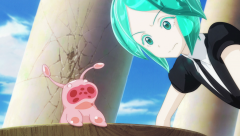
Back to this episode, we have a slow one compare to the first two weeks, but the level of weirdness/awesomeness still remains sky-high. The large amount of movement and the dynamic cinematography in some sequences, for example, stand out, particular in the part where Dia rushes back to the base to help Phos. Just look at those smooth and breathtaking movements. With that, I take it back all my complaints about the CG movements in previous episodes and this is an instance where I can see the anime version actually improves from the source material. The whole episode, otherwise, plays in an extremely bizarre situation: after gets eaten by a snail, somehow Phos transforms into one, and Dia runs around asking for help to turn him back to normal. Diamond has to be the most adorable gem in the universe (hah!), but this episode is where we learn greatly about Phos’ characters through others’ eyes and what they influent on the gems around them. All of them find Phos as an useless, annoying, careless, egocentric and good-for-nothing character, and it’d be the same if Phos stays in the snail form. Houseki plays it mostly for laugh but there’s a sad truth behind that, and Dia is feeling down because no one but her really gives Phos a damn.

Fortunately, someone else still cares about Phos. Cinnabar, who is in the middle of their own identity crisis, finds Dia napping on their night patrol. When asking about what Cinnabar thinks on Phos, Cinnabar has so much “hatred thoughts” to say, but it also means that they care. Phos is the first gem who really see through Cinnabar’s personal struggles, and their promise that they can offer the better role for Cinnabar still lingers in Cinnabar’s mind, but they try best to regress the idea because it can in turn hurt them if they start to believe the promise. Cinnabar’s rant sounds like a frustration, but his last line “I guess I can give you some more time before I start calling you a liar” really hits the mark for me on how Cinnebar’s truly regarding Phos. A great episode to flesh out the characteristic of both Cinnabar and Diamond.

Turns out, the snail is indeed just some random snail, and Phos’ fragments lie within the shell of that snail. With the help of all the members, they succeed on bringing back Phos’ broken pieces and store him back to life (although I have to question about the eyes), and suddenly, Phos gains a special ability of communicating with the snail. Now that he becomes useful… somehow, having an ability that no one else has. I heard from manga readers that starting from next episode we will have a proper arc and I can’t wait to see how it will turn out. Remember Houseki, whatever you do, just stay true to your quirky self.

Girls’ Last Tour – 03 [Streetlights]

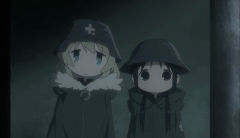
Welp, I never would have thought Girls’ Last Tour can get any better, but this week’s episode is straight up phenomenal. Episode 3 manages to make some new tricks to its well-established formula: introduces another human survivor to the mix, askes a deeper philosophical question about the meaning of life in that stark world (and manage to execute the theme very well), and constructs many details about its fascinating world-building. I have no problem regarding it as the best Girls’ Last Tour’s episode we’ve seen so far. The inclusion of the new character, Kanazawa, adds a fresh air to this so far two-girls show. He’s the first human the girls come into contact for God knows how long, but what particularly sells me is the tension. The girls’ first instinct when realizing there’s another human around is to stay on guard. That level of highly cautious reaction comes to a far greater extent that Yuu points the gun at him all the time until she trusts him. It might sound grim regarding that they’re all fellow human and they cannot come to trust each other at their first glance, but it fits to Girls’ Last Tour narrative because it’s the human war that singlehanded destroyed the world. But these earlier doubts make their whole encounter far more powerful. It’s a process of gaining trust, after all and as soon as both Chii-chan and Yuu see no harm in his intention, they both invite him to crash the tank.

And that’s a beginning of a fruitful partnership. Kanazawa draws maps as a living breath and he uses his knowledge to lead the girls to the petrol station, and then to the Great Tower, in exchange for a little lift to the upper level. Here’s the foundation of human behavior: cooperation for the same goals. He helps the girls to clear path/ make a stable path for the tank to pass through his man-made bridge. Although appear to be just one-off only, Kanazawa is a welcome addition to this cast. Not only he fits well with the girls, his approach to that world: making maps as he explores the world, and the act of making maps gives his life purpose. The purpose of life was the question both Chii-san and Yuu asking as they drive along, finding foods and just barely making their ends meet. Aren’t their lives then, a string of continuous journey to find food and survive, is there any meaning beyond survival? Kanazawa’s live has a meaning, at least he has something worth spending his effort with, something he can look back proudly once he reaches the end.

Knowing that, Girls’ Last Tour eventually delves even deeper. As the three are in the elevator to the upper level, it tilts and his suitcase of maps falls off the lift, meaning all his efforts up until now are gone, with the wind. He’s depressed and wants to give it all up, echoing what Yuu mentioned earlier: If the maps are what you live for, let’s burn them to see if you’d really die. But the same with the silence of God, sometimes hardship in life (in his case, the loss of his maps) is meant for him to have a fresher perspective and then moves on. He still has a drive for making more maps and sometimes to live is to enjoy the little beautiful moments like the streetlights to the wonderworld and having fruit-flavor ration bar together. He gives the girl his camera as a gratitude, embarking on his own way. And that’s the end of the fruitful friendship… until the next time they meet again, if ever.

Although always serve as a backdrop and I’m pretty sure it will remain that way, the world-building of Girls’ Last Tour is even more realized now, now that we reach to the higher (and hopefully, better) level. One certain thing that differentiate this level with the lower one is the presence of electricity. Another detail we learn through this episode is that the bygone era, the ancient times was the period that human civilization had the greatest technology advance and high population. Then humanity had declined (hah!) and the technology advance had lost and human managed to fight each other until the whole race was destroyed. The generation before those girls and Kanazawa couldn’t figure out the way to function the elevator inside the tower, for example. It’s a fascinating world because we are just like those girls, know little to this world, the bygone world and thus, making their last tour feel like an adventure with so much wonder. At least for now, the girls are heading to the great light in the distance. I, for once, hope that this last tour will never end.