
Kino’s Journey -The Beautiful World- – 03[Bothersome Country]

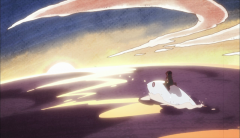
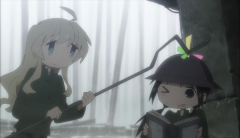
One particular thing I really like about this series is that the title of the individual stories often defies expectation. For example we had a country where people were allowed to kill, only instead of a hellish country filled with murderous thugs it’s instead a safe place filled with those sick of murder who only use the law to punish those who attempt to disturb their peaceful existence. Here it is the same, as it is indeed about a Bothersome Country but more that the country is bothersome because of it’s need to be constantly moving. But it’s not the only bothersome country in this episode as we have another country which blocked the plains in order to extort travelers passing through. So it’s up for debate on whether the title refers to the moving country or the other country but I at least like that they didn’t necessarily pick a side in this fight. If we are to paint things black and white then the border country is in the wrong for blocking the plains. But then again the moving country ignored all their pleas to stop and essentially tore through the country. Destroying everything in their path. As such it’s hard to balance this out as simply good or evil but I will say that the moving country did come off better than the border country.

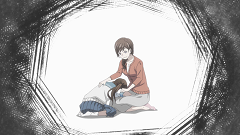
I do laugh at the fact that for Kino this was merely a means to get past the border country without paying the big tolls. I can’t say this was the strongest story but I do like the overall message that much like how the moving country can’t help but mark the land with its caterpillar tracks, people too cannot moving through live without leaving traces. The final evidence of that is that Kino’s defense of the children’s mural will likely result in the children making her the next mural in the next hundred days or so. Hence even Kino can’t not leave traces of her in the places she leaves. This isn’t the strongest story but it is nice to have stories in Kino’s world that don’t end with some dark twist and rather just a whimsical little adventure.

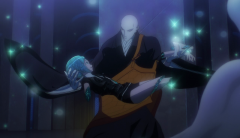
I can’t say I have been fond of the way that this series appears to be selecting stories where KIno plays a more active role than a passive one. We have her breaking her established rules of non interference and her normal three day rule. As this story caps off with Kino showing off her mad sniper skills, I fear that this series may be trying to turn her into some kind of action girl. Now Kino has always been skilled but I appreciate it more when she keeps her talent under wraps. What makes Kino badass is that she doesn’t need to show off and only uses her skills when necessary. If someone started from this series instead of the 2003 version then I feel like they would have a mistaken impression who exactly Kino is and what makes her different from any old anime girl with a gun. Kino is no paragon of justice, nor is she some anti-hero. Kino is an observer who watches the world and only interferes when her hand is forced or in this case, on a whim.

Mahoutsukai no Yome – 3 [The Balance Distinguishes Not Between Gold and Lead]

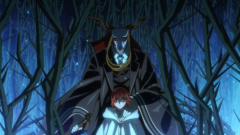
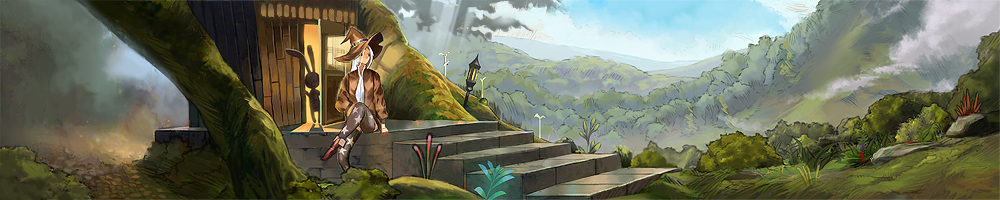
This week, Mahoutsukai moves into a slower pace. Showing off more of its world and delving a bit deeper into magic and how it connects to the world. Lets jump in.

There are two main points I want to touch on for this episode of Mahoutsukai. The first being the actual main focus of the episode, magic and dragons, and the second being Chise. I suspect that is going to end up being the split for most episodes, unless the treatment of Chise changes as we go.

Continue reading “Mahoutsukai no Yome – 3 [The Balance Distinguishes Not Between Gold and Lead]”

Ballroom e Youkoso – 15/16 [Taking the Reins/Four-legged]

Boy, this was really a Tale of Two Ballrooms. One of these episodes was almost certainly outsourced, based on the visual inconsistencies that extended even to key poses, but handled its character moments dutifully. The other looked markedly better than most of this show’s recent offerings, but rushed through so much material that its conclusion had hardly any impact. I suppose it’s a good thing I watched them together, since they make up for each other’s weaknesses, but episode 16’s abrupt finish left a sour taste in my mouth to end the doubleheader. A word of warning before you read any further: this is going to be one of those reviews were I make reference to the Ballroom manga more than once, and the eternal anime buzzword “pacing” will probably make an appearance before too long. If that sounds like something you can tolerate, at least for a few more paragraphs, then let’s unpack these episodes together.

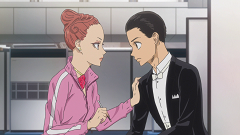
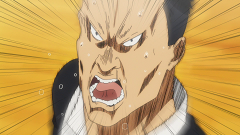
My favorite part of “Taking the Reins” was the introduction of Kugimiya, who made an excellent transition from page to screen. He’s a blunt, imposing figure, whose tall stature and thin eyes make him a good aesthetic foil for Tatara. They’re opposites in the way they approach dance, as well; Kugimiya speaks harshly to his partner (who he’s nicknamed “Banshee”), and considers the strength of a couple’s leader to be of paramount importance. When Tatara objects to that philosophy, Kugimiya uses his undeniable skill to toss Tatara (occupying the female role) around like a ragdoll. Even Kugimiya’s theme, with its schizophrenic bassline and backwards piano, is brash and off-putting – the anime staff did an A+ job with his character. Off-putting though he may be, he’s right about how important the leader’s role is in ballroom dance, a fact that Hyodo’s mother Marisa reiterates more clearly than ever before. As Tatara’s new coach, it’s her job to make her pupil take a more active role in his routines, but it won’t be easy given his typically passive attitude.

Tatara’s old coach makes an appearance in this episode, as well, with Sengoku’s return to Japan after a month-long timeskip. The kids attend Japan’s International Dance Championships and watch as he and Hongo place third on the world stage, a feat which leaves Tatara in awe of his former mentor. After sharing a few laughs throughout the day, teacher and student have a nice moment together when Tatara works up the nerve to call him “sensei” for the first (and probably last) time. I thought it was swell of Ballroom to acknowledge the influence Sengoku has had on his old student’s development, especially because its newly-heightened narrative pace risks leaving some characters behind. Sengoku could have been a little more sentimental about it in the moment, but he had some encouraging words for Tatara during their classic train station farewell, so I’m happy. If there’s one criticism I’d level at this scene, it’s that it played a bit like a final goodbye, but it shouldn’t have, since I doubt this is the last time they’ll see one another. And speaking of scenes that don’t feel right…

Here’s a tip for all you aspiring storyboard artists out there: USE THE MANGA PANELS WHEN PLANNING YOUR ANIME. The beauty of series with existing source material is that some of the work is already done for you, and comics in particular lay things out really nicely. You can deviate from the manga, of course, but since anime is presented to the viewer at a fixed tempo, it’s important to note panels that indicate the passage of time, and use a similar device in your adaptation. Elaborate on them, do a montage, or throw a few stills on screen set to a throwaway piece of music – just make sure the episode is paced appropriately. Here’s what not to do: finish a scene with Marisa telling Tatara and Chinatsu that they can’t compete in a Grand Prix, fade to black, and transition immediately to the two of them on a train to the Grand Prix one month later. You might do this for humorous effect, but that’s not what Ballroom wanted to achieve here, and their omission of the manga’s dance training and end-of-school panels made the end of the episode feel super choppy.

The same problem carried over to the next episode, where Tatara’s obsession with a peculiar sensation he experienced while dancing led to his disqualification from the Grand Prix. He zoned out while sitting on the sidelines, you see, and when he came to, the competition was over. That’s what you might think, anyway, given that the anime only presents us with a shot of Chinatsu’s anguished look, then cuts straight to them in street clothes at a train station. Gone are her repeated attempts to rouse him, his slow return to reality, the call from another competitor asking if he should be on the dance floor, and the indication that the heat is still going on and they only missed it by a minute or so. The show was so preoccupied with showcasing its (admittedly cool) four-legged animation that it forgot how to sequence itself. I can only guess whether anime-only viewers found these scenes to be sloppy, but I know that similar transitions in other series have bothered me, even without knowing a thing about the original work.

There’s a whole half-episode of content left to discuss, but I don’t want this review to hit a thousand words, so I’m calling it here. Looks like I’ve still got plenty to say about Ballroom, so we probably ought to go back to single episode reviews. I’ll touch on whatever I missed from “Four-legged” in the next one.

Houseki no Kuni – 03 [Metamorphose]

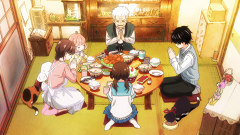
It just occurred to me since I watched Bakuman (the first season of it, anyways) fairly recently, but watching Bakuman made me realize how tough it is to have your manga publicize, let alone become a popular one. For those who have watched the anime or read the manga of Bakuman, remember the early Golden Future Cup? The one where our main duo, Fuduka and Aoki decided to check each other’s names and plan to critically comment in order to improve them? Long story short, from what little I’ve read at each name, the one that grabbed my attention the most was Aoki’s, and guess what happened to her work? Not only it didn’t rank first (despite the fact almost everyone agrees the three works are on the same level), “Hideout Door” was regarded as too shoujou (since they work under Shounen Jump) and only made it to the publishing phase years later. Houseki no Kuni is what I consider “Hideout Door” in real life, it’s destined to be the title that don’t appeal to the mass and only gain traction to a small but passionate following. And like many cult works, Houseki’s quality don’t lie in how deep or relevant the show is (not to say that it isn’t deep or relevant), but in how it always stays true to itself. That’s how we should judge Houseki, I argue. The moment it betrays itself, the spark will be forever gone.

Back to this episode, we have a slow one compare to the first two weeks, but the level of weirdness/awesomeness still remains sky-high. The large amount of movement and the dynamic cinematography in some sequences, for example, stand out, particular in the part where Dia rushes back to the base to help Phos. Just look at those smooth and breathtaking movements. With that, I take it back all my complaints about the CG movements in previous episodes and this is an instance where I can see the anime version actually improves from the source material. The whole episode, otherwise, plays in an extremely bizarre situation: after gets eaten by a snail, somehow Phos transforms into one, and Dia runs around asking for help to turn him back to normal. Diamond has to be the most adorable gem in the universe (hah!), but this episode is where we learn greatly about Phos’ characters through others’ eyes and what they influent on the gems around them. All of them find Phos as an useless, annoying, careless, egocentric and good-for-nothing character, and it’d be the same if Phos stays in the snail form. Houseki plays it mostly for laugh but there’s a sad truth behind that, and Dia is feeling down because no one but her really gives Phos a damn.

Fortunately, someone else still cares about Phos. Cinnabar, who is in the middle of their own identity crisis, finds Dia napping on their night patrol. When asking about what Cinnabar thinks on Phos, Cinnabar has so much “hatred thoughts” to say, but it also means that they care. Phos is the first gem who really see through Cinnabar’s personal struggles, and their promise that they can offer the better role for Cinnabar still lingers in Cinnabar’s mind, but they try best to regress the idea because it can in turn hurt them if they start to believe the promise. Cinnabar’s rant sounds like a frustration, but his last line “I guess I can give you some more time before I start calling you a liar” really hits the mark for me on how Cinnebar’s truly regarding Phos. A great episode to flesh out the characteristic of both Cinnabar and Diamond.

Turns out, the snail is indeed just some random snail, and Phos’ fragments lie within the shell of that snail. With the help of all the members, they succeed on bringing back Phos’ broken pieces and store him back to life (although I have to question about the eyes), and suddenly, Phos gains a special ability of communicating with the snail. Now that he becomes useful… somehow, having an ability that no one else has. I heard from manga readers that starting from next episode we will have a proper arc and I can’t wait to see how it will turn out. Remember Houseki, whatever you do, just stay true to your quirky self.

Girls’ Last Tour – 03 [Streetlights]

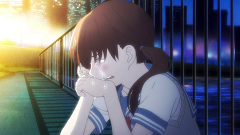
Welp, I never would have thought Girls’ Last Tour can get any better, but this week’s episode is straight up phenomenal. Episode 3 manages to make some new tricks to its well-established formula: introduces another human survivor to the mix, askes a deeper philosophical question about the meaning of life in that stark world (and manage to execute the theme very well), and constructs many details about its fascinating world-building. I have no problem regarding it as the best Girls’ Last Tour’s episode we’ve seen so far. The inclusion of the new character, Kanazawa, adds a fresh air to this so far two-girls show. He’s the first human the girls come into contact for God knows how long, but what particularly sells me is the tension. The girls’ first instinct when realizing there’s another human around is to stay on guard. That level of highly cautious reaction comes to a far greater extent that Yuu points the gun at him all the time until she trusts him. It might sound grim regarding that they’re all fellow human and they cannot come to trust each other at their first glance, but it fits to Girls’ Last Tour narrative because it’s the human war that singlehanded destroyed the world. But these earlier doubts make their whole encounter far more powerful. It’s a process of gaining trust, after all and as soon as both Chii-chan and Yuu see no harm in his intention, they both invite him to crash the tank.

And that’s a beginning of a fruitful partnership. Kanazawa draws maps as a living breath and he uses his knowledge to lead the girls to the petrol station, and then to the Great Tower, in exchange for a little lift to the upper level. Here’s the foundation of human behavior: cooperation for the same goals. He helps the girls to clear path/ make a stable path for the tank to pass through his man-made bridge. Although appear to be just one-off only, Kanazawa is a welcome addition to this cast. Not only he fits well with the girls, his approach to that world: making maps as he explores the world, and the act of making maps gives his life purpose. The purpose of life was the question both Chii-san and Yuu asking as they drive along, finding foods and just barely making their ends meet. Aren’t their lives then, a string of continuous journey to find food and survive, is there any meaning beyond survival? Kanazawa’s live has a meaning, at least he has something worth spending his effort with, something he can look back proudly once he reaches the end.

Knowing that, Girls’ Last Tour eventually delves even deeper. As the three are in the elevator to the upper level, it tilts and his suitcase of maps falls off the lift, meaning all his efforts up until now are gone, with the wind. He’s depressed and wants to give it all up, echoing what Yuu mentioned earlier: If the maps are what you live for, let’s burn them to see if you’d really die. But the same with the silence of God, sometimes hardship in life (in his case, the loss of his maps) is meant for him to have a fresher perspective and then moves on. He still has a drive for making more maps and sometimes to live is to enjoy the little beautiful moments like the streetlights to the wonderworld and having fruit-flavor ration bar together. He gives the girl his camera as a gratitude, embarking on his own way. And that’s the end of the fruitful friendship… until the next time they meet again, if ever.

Although always serve as a backdrop and I’m pretty sure it will remain that way, the world-building of Girls’ Last Tour is even more realized now, now that we reach to the higher (and hopefully, better) level. One certain thing that differentiate this level with the lower one is the presence of electricity. Another detail we learn through this episode is that the bygone era, the ancient times was the period that human civilization had the greatest technology advance and high population. Then humanity had declined (hah!) and the technology advance had lost and human managed to fight each other until the whole race was destroyed. The generation before those girls and Kanazawa couldn’t figure out the way to function the elevator inside the tower, for example. It’s a fascinating world because we are just like those girls, know little to this world, the bygone world and thus, making their last tour feel like an adventure with so much wonder. At least for now, the girls are heading to the great light in the distance. I, for once, hope that this last tour will never end.

Inuyashiki – 2 [Hiro Shishigami]

Woe be unto thee who passes further, for today we are talking about Episode 2 of Inuyashiki! A lot happened this week. New characters, dark twists and the start of what I can only imagine is the central conflict of the season. Lets jump in!

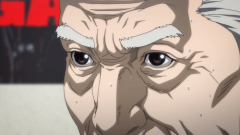
First and foremost, we need to talk about Hiro Shishigami. This was his episode, focusing almost entirely on him. Setting him up as the main antagonist for the rest of the season and quickly defining who he is. I have to say I was not prepared for him. It has been a long time since an anime has legitimately unsettled me, and Shishigami did just that. Initially, he put me off though. His tone and general voice felt fake, forced. All of his emotions felt like a front. As the episode went on however, it became clear that this was a deliberate choice. It outlined his lack of emotion with both words and actions.

Continue reading “Inuyashiki – 2 [Hiro Shishigami]”

Juuni Taisen – 03 [Cutting a Chicken with a Beef Cleaver]

I’m starting to worry about Juuni Taisen. Like what we all predicted last week, this week indeed follows a reverse zodiac order. We have Chicken served as our main POV and at the end she’s the one who get sendoff (with no small help from the episode title. What a huge spoiler). Judge by the quality of the episode alone this week it is a solid one, but for the show about a bunch of badass warriors fighting against each other, “predictable” is its worst nightmare, for when you know who would be the next to die then half of the fun is gone. It doesn’t help that the two most likely fighters to win this tournament are Bull and Rat, respectively, so we could very much follow that reverse pattern here. Knowing Nisio Isin, I would argue that this trend is going to break soon, but as the same time I am slightly disappointed that we got basically what we expected this week. Another worrying trend, is that I used to consider the cast of Juuni Taisen a well-balanced gender cast, but when we look into it, the female cast was only half of the size of the male, and now half of our girls already became the meat for those nasty crows. The male fighters have been overwhelming so far and I’m quite sad that Juuni Taisen doesn’t use this opportunity to power up their female cast. Out of other two female warriors, Tiger doesn’t pose much of a threat, at least not yet. We don’t know much about her apart from she has a grudge against the Bull and her inability to resist the alcohol urge (which is actually charming, by the way), and Monkey who should-be-dead if they still follow that formula. Not a promising sign at all.

Fortunate enough, even with all my complaints above, I still consider this episode a successful one. Our main character of this week, Niwatori the Chicken has a proper character arc and as the episode end, I was genuinely invested about her arc. The trick here is fleshing out her character just about enough.  The first half deals with her flashback, tell us the backstory of Chicken before she was even the Chicken. That flashback doesn’t necessary explain why she got the power, but more about her state of mind. Apparently killing her own parents by the egg topper (boy, do they take “Killing by Pecking” to a whole new level), she was raised by the Niwa family and became their soldier. I can’t help but laugh with the fact that this girl was actually in the battlefield with not a gun, but a spading fork and she still kicks ass. One thing to note that due to her dark past and the way she was raised by the Niwa family, deception is her game and as she becomes better at her job, she can’t tell friends or foes anymore. Guess I was giving the Boar to much credits, since this episode what remains of her was eaten away by the birds. It’s a cruel way to kill an already dead warrior, Chicken.

Back to this Battle Royale, it was her game all along to trick the Dog for an One-Man Army kick (which she herself curiously regards it as ‘doping’. Well, she’s right), and since her physical strength is boosted to the max, suddenly she has a good shot to win this race. What she doesn’t expect though, the doping making her emotionally affected as well. This is where she becomes interesting because the Chicken acts totally opposite to the way she’s supposed to do, “act against her type” so to speak, making her vulnerable but totally relatable. Meeting up with Rat and Monkey who trusted her and gave no caution towards her (although I bet both the Rat and the Monkey are strong enough to protect their owns), Chicken betrays her usual act and ends up not only parting ways with them (while the best course of action is just playing along), she winds up in the wrong place at the wrong time. I really like the way the actual fight is short and sweet, just by a mere seconds it’s clear who gets the short straw. Her “giving away her body for the birds” (maybe her only true friends) really hits the right note and I am sure the Chicken is gaining up fans as we speak now. Despite my issues with the on-going plot, Nisio always demonstrates that he cares for his characters and thus, willing gives time to develop them properly. I’m sad that Chicken is gone now and now with basically half of the cast is gone (counting the Horse, but again if I don’t see him dead I still have my doubts), I’m sure the race will take quite a turn next week as Monkey takes up the spotlight. Just one thing, don’t give any damn spoiler in the title, could you Juuni Taisen?

As of now,

Deaths: Snake, Boar, Dog, Horse (maybe), Chicken

Favorites to win: Bull, Rat, Monkey, Rabbit, no-one

Wonderful Everyday(Subarashiki Hibi) ~Diskontinuierliches Dasein~ Visual Novel Review – 84/100

This may be one of the most difficult reviews I have ever had to write as Wonderful Everyday, which I will refer to from this point forward by its abbreviation SubaHibi, is a story that very much depends on the viewer not being prepared for it. Now I have been looking forward to this game quite a bit, as word online was that it is a visual novel unlike most and delves into some rather dark themes. I backed the Kickstarter and was waiting adamantly for the the release with hope that this could be a title to add to my all time favorites. In retrospect it was the wrong way to approach this story as many overhyped the game and failed to remark on it’s rather large shortcomings. You can buy this game currently on steam but if you do so please do remember to apply a free patch to the game. The reason this is critical is that only the first chapter of the game has been put on Steam and to access the remaining six chapters this patch must be applied. The reason for this is mainly to get around Steam’s rather odd stance against pornographic content and making SubaHibi an All Ages game(Aka, removing the sex scenes) is impossible due to their importance to the story.

A question you are likely asking is what is SubaHIbi about? Answering that question for any other story would be an easy matter but here I must mind my words as I could very well spoil what may be the best part about this story. For you see SubiHibi takes an odd approach to storytelling in that the game is split up into seven chapters. Each which features a different unreliable narrator going through the strange events that took place during a two week period. The goal of SubaHibi is to take these different perspectives on the same events and piece together just what exactly happened and what caused it. As such this visual novel does not follow the standard model of having routes based on which heroine is chosen but instead follows a mostly linear route that has some small side endings. As a fan of murder mysteries I love this approach of taking stories told from different perspectives to piece together an overall narrative and was quite engaged by it. However the first chapter acts as a poor introduction to this story as it is mainly preoccupied with trying to convince you that SubaHIbi is a dime a dozen Yuri visual novel. Walking in with high expectations and reading what is equal to a fairly trashy waste of time is likely to turn many off before they get to the real story. You can argue that the first chapter holds symbolic merit upon completing the story but well you only would see that if you make it to the end of the visual novel.
Continue reading “Wonderful Everyday(Subarashiki Hibi) ~Diskontinuierliches Dasein~ Visual Novel Review – 84/100”

Fate/Apocrypha – 15[Differing Paths]

It’s funny that only now, when we are well into the halfway point of the series that it takes some time to flesh out its cast. Sisgou has gotten some backstory, Fiore was fleshed out a little and even Gordes got some time to prove he’s not a complete caricature. The last one is something Celenike really needed before she was decapitated by Mordred as at least now Gordes has a little more to him than just being some arrogant mage. When I saw Gordes approaching the injured homunculi I was preparing myself to see him start abusing them or taking out his frustration on them. Instead Gordes completely surprises me and actually starts giving advice on how to heal them. He’s still arrogant but now that the Holy Grail War has gone nothing like he expected it’s caused him to look at himself and recognise where he went wrong. He’s just as antagonistic and shortsighted as ever but this at least makes him a better character than what he was. Celenike meanwhile just remains a sadistic bitch and gets her rocks of seeing others suffering. If we had just a few minutes like this to show she had anything else then maybe her death could have held more value.

Flore has also been a character solely lacking development as her defining traits are just that she’s wheelchair bound and has Doctor octopus mecha gear. The flashback to the death of her dog shows that even though she can be a strong leader, she can also be quite naive and too kindhearted for her own good. An observation that Chiron happens to notice thanks to his history as a teacher. It really is small moments like this which can really make a character and what may be the main pitfall of the start of this series as a whole. I mentioned previously that as the death count climbs this could result in the survivors getting more fleshed out and that does appear to be happening. Even learning that Atlanta wishes for all children to be loved is a rather kind hearted sentiment despite her rough disposition. All the more important when you take into account her history where she was abadoned by her parents in the woods and only survived thanks to the pity of Arthemis. Sisgou has managed to keep being an entertaining character thanks to his skills and interactions with Mordred but finally knowing that he has a personal wish as well makes his stakes in the battle all the more important.

I really do love how the two of them delight over planning to stealing the grail while everyone is busy fighting over it. So we now have our factions, the red team has come together under Shirou’s command though there was a mistranslation in UTW subs regarding Karna’s motivation. Put simply Karna said their interests align at the moment so he will fall in line but his one desire is to serve his true master, not Shirou. Shirou seems to have some plan detailed out so that using the Grail won’t backfire on him as that is how it works. The grail has the power to skip the process and deliver the result but you need to know what result that you want. This was the big mistake Kerry made in Fate/Zero when he wanted to wish to save the world, but had no real idea on how to do so. So seeing as the grail was corrupted at the time, it choose to go with the worst way possible to grant his wish. Shirou here seems to know exactly what he wants and the grail here isn’t corrupted so he could very well get it. The big problem is that to accomplish his task could very likely result in something rather horrible, like humanity giving up all free will.
The black team are gathering what forces they can to launch an attack on the Gardens of Babylon which Sisgou and Mordred temporarily working with them. So what of our little rogue element? Assassin of black has done pretty much nothing for quite a while and I worry she might end up being a throwaway character much like Avicebron was. As some last notes, I really, really don’t like that they seem to be going with this Joan and Sieg romance. I have heard others say that if Sisgou and Mordred took over the main character slot then this show would be significantly better and I am quite inclined to agree. Besides that was clear favoritism of your part Joan, giving Sisgou one command spell and Sieg two despite them doing the same amount of work. On top of that they appear to be planting some chekhov’s gun for what looks to be a Deus Ex Machina in the future with his odd command spells. Also can we have more Shakespeare please? His character is criminally underused.

Kino’s Journey -The Beautiful World- – 02[Colosseum]

In an odd turn of events, the second episode of Kino’s Journey 2017 is a retelling of a story done in the original 2003 version. Where Kino is forced to participate in deathmatches upon reaching a country. I find this choice odd as I would consider the Colosseum story in the original to be the weakest story as instead of Kino acting as an observer to the countries rules and society, she instead is an active participant. When asked as to which of the versions of this story I prefer, I would say the 2003 version did it better but more because that version gave this story two episodes which it could flesh it out more. However despite that it seems that this newer version is actually closer to the source material from what I have heard.
So today is a tale of revenge as shown by the subtitle of this episode presented at the end. We have several kinds of revenge here in this story. Petty revenge in how the cruel king killed his father due to his upbringing being too strict. Revenge for a loved one as Shizu came to kill his father for what he had done to his mother and him. Revenge out of principle as Kino kills the king for all the travelers that unknowingly went to his country and were forced into deathmatches. Then finally revenge out of grief as a young woman sends travelers to the country so that they can suffer as she has suffered. The last however is kept ambiguous enough that it could be seen as the woman sending Kino to the country knowing that she would end up killing the king but frankly I think that would require the woman to know Kino’s capabilities. No, I find her sending oblivious people to their deaths to be far more fitting as revenge need not be taken against those that wronged you. Some find themselves too weak to do so and settle for a simpler revenge, such as pushing others into misfortunes that have effect you. It’s fitting that at the end of all this the one that truly fulfilled their revenge deems the entire concept pointless as it indeed is pointless. Revenge is born out of a need to balance things out but it won’t truly bring anything of substance. Kino got her revenge and in the end only felt frustration over how she was tricked and used.

Again I don’t really like the level of participation Kino had in this story as she has passed through countries in a more reprehensible state than this and never passed judgement on them. Here she literally destroys a country with her new rule. It is not out of character for Kino to be so merciless to kill a country as she has shown the capability for killing or allowing atrocity. But it is a very emotional move on her part. You can find some poetic justice in how Kino refused to kill any of her combatants and instead had the audience which shouted for blood, kill each other. I would also like to believe that only the people in the colosseum would die, leave those  not involved with the death games to guide the country. Though this seems to suggest that the entire country was doomed. Hard to be on Kinos side here when you take into account that her rule would apply to the children too. I am willing to make a bet that this will be the only remake of an old story in this version and I believe the only reason it’s here is just because of one thing. That being the character introduced in this story, Shizu and the talking dog Riku. In later stories sometimes the protagonist isn’t Kino and hermes but instead these two and i think the only real reason we got this episode was to make their introduction so we are not caught off guard later when they take to spotlight for later stories.