Kino’s Journey -The Beautiful World- – 11[Country of Adults]

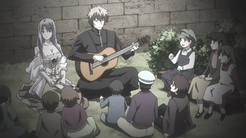
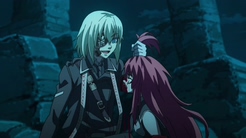
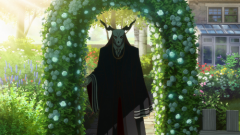
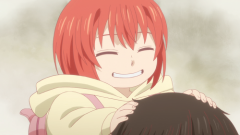
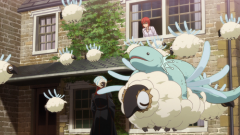
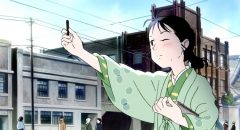
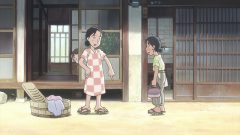
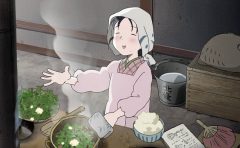
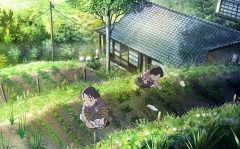
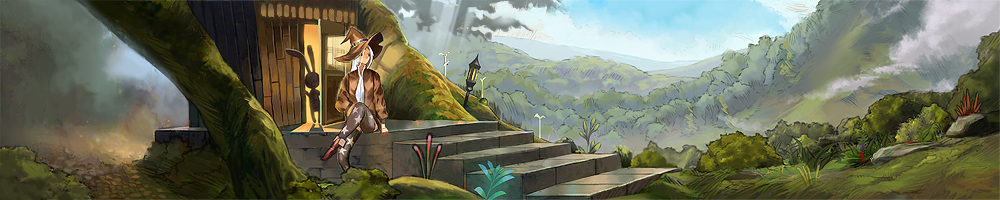
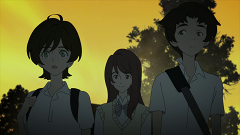
Yet another remake of an old episode that I don’t think we really needed. Besides a visual upgrade these remake episodes do seem to feel like a waste of resources and if we must gets remakes of old episodes, it would be wiser to actually pick the best episodes. Colosseum was the weakest story in the original series, a kind land makes a good finale but doesn’t quite work as well without a foundation from other episodes and now we have the country of Adults which basically just establishes Kino’s backstory. However unlike kind country there is at least some intellectual fodder to be gathered from this episode and the message of the day is false maturity. Our story takes place in a country where children are given a operation at a certain age which would turn them into “proper adults” and while the original series did a better job of making this seem to not be quite a bad, the new series turns it into a more black and white affair. You can gather a number of messages from this such as the way parents tend to force their own experiences onto children as that is how they believe children should be raised regardless of whether it is truly correct or not.

But instead I think I will focus on the matter of what exactly makes for a proper adult. As a child, a adult seems like a no brainer concept, they always know what to do, they generally deal with matters maturely and they are bigger and wiser about the world. A proper adult is what we as kids are supposed to grow into and our parents are to be role models to help show us the way to that goal. However as you grow up and learn about the world in your own way you come to learn something crucial and rather terrifying about this world of ours. As a man of 29 years of age, I have worked with a large amount of people, talked with a large amount of people and as I live in a house share, I have also lived with a large variety of people. Thus in doing so I have learned one simple thing. There are no adults, only bigger children. They say with age comes wisdom but I have seen a woman twice my age throw a hissy fit because she couldn’t get her way. I have seen a man double my age who ran around the house making noise like a toddler. Young men with the ideology of teenagers, men in there seniority who act like spoilt brats, men who try to cover up their mistakes by throwing newspaper over it. As I am often the youngest around, these so called adults attempt to lecture me on their so called wisdom as they attempt to convince me that 9/11 was an inside job and there is special electric water that can cure all diseases. In all the teams I have worked with, I find it amazing that we as a species can get anything done considering how humans always find a way to screw up.

Please note that I am not putting myself above this, I am no more a proper adult that any of them. Still I at least would like to believe that I am a little bit wiser or at least conscious of my own failings and how they affect other people. Aspects which a surprisingly large frequency of people tenditively lack. But what does this long winded rant have to do with this episode? Well it’s that in this episode the people of this country assume they have become adults simply because they had an operation and in reality they people are far more childish than the Traveler and the girl who is to become Kino. Much like those that assume they have obtained maturity just by the act of there bodies aging, these people are children who believe they grew up and thus are wholly ignorant of their own immaturity. They only follow the person in power, whenever someone challenges them they shout them down and immediately resort to violence. They are those who flaunt superiority over their indoctrinated values of perceived adulthood. Without true empathy or caring for those around them. Children with delusions of maturity are dangerous things indeed. I apologize for what is likely a rather pretentious excuse for an episode review but my original intent upon covering this series was to delve a bit into the things it made me think about. Sadly this series hasn’t given me as much as I thought it would in that regard and I don’t really feel like taking the easy route and just recapping the episodes content. So I guess I will leave it at this one final note. The original name of Kino is Sakura and that’s why she reacted so strongly to Sakura’s name in Kind Country.

Girls’ Last Tour – 11 [Culture – Destruction – The Past]

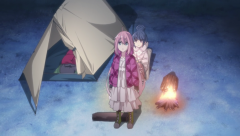
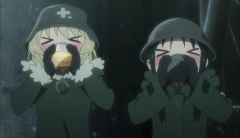
Despite its moeblob nature of our two girls, Girls’ Last Tour still keeps up its lowkey depression – such element that make this show so grounded in its world. In this episode, that stark, depressed nature of the world comes in full light with the focus on weapons and destruction. It starts small with a bullet and our weird animal friend “Cut” who can digest such bullet. Whimsical nature aside, it has its point on how that creature survives and evolves in this dead world. “Cut” is a product of this post-apocalyptic world, with shells of bullets and corpses of machine scattered all over the surface. In other to survive, what is the better source of meal than those bullets? (whether it’s nutritious is another story). Moreover, this episode we can see our animal friend having some basic communication with the girls (which is freaky when you think about it), and their hands can serve as a power supply and/or key to start up the systems. When it comes to the war stuffs, our adorable pet surprisingly knows its way around that it makes me feel it was their roles all along. Now, even Chi-chan notices the resemblances between the pet and the stone statue, which my guess for now is that they’re probably one. Despite its cute voice and its even cuter reactions, this pet is one of the freakiest animal that I’d be happy to stay away from.

Yeah, this week in Girls’ Last Tour starts small with a bullet, but then it progresses to something bigger, and much more destructive. The girls find themselves inside the machine that fire missiles. Yuu, in her normal curious state, presses another button, and the whole city is down in flame caused by the laser beam. That intensify of destruction is used fairly well in this episode, starts with some dysfunctional tanks, to the collapse of a machine, and then to the destruction of a whole city in mere seconds. That was a shock, and I imagine what happen if there were any life destroyed by that careless action. What if there were a person or a plant? Yuu quickly laughs it off because it’s fun, but then when the blame game begins she blames the machine first, then the old people who used that machine, then to herself. Sometimes mass destruction can be easily caused like this, powerful weapons in a hand of irresponsible people. Girls’ Last Tour goes even further though, as the girls’ next destination ends up being the forest of windmills (or are they antennas?) and the nuclear submarine that still functioning. It’s not a pretty sight at all: even when the world is destroyed, the weapon that could destroy the world all over again is still waiting for its chance to launch. That pretty much the reasons why Girls’ Last Tour is so balance. It blends smoothly between its moeblob, slice of life nature and its really dark, destructive settings. That balance makes the show still have its footing on the ground, while at the same time hopeful and light-hearted enough to remind us the beauty of keep on living and enjoy little moments of life. With only one episode left I really hope we have a finale that close this magnificent show in the most satisfying note.

Houseki no Kuni – 11 [Secrets]

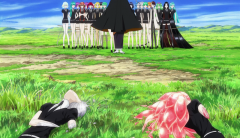
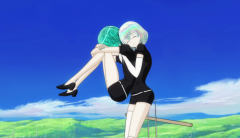
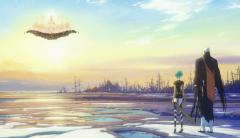
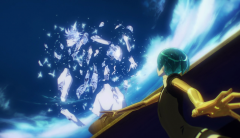
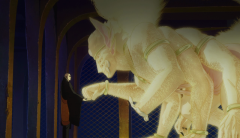
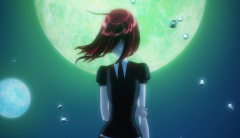
With “Secrets”, Phos’ now in the middle of “loss of innocence” personal crisis. Well, they did reach that stage when Phos’ suffering over Antarc’s loss (in which he still hallucinates about Antarc’s present even now. Good job, Houseki), but in this episode, it comes to full force. Phos starts to break their trust towards Kongou-sensei, their teacher plus father figure (“breaking” in both metaphorical sense and visual motif). Not without a good reason though as the formidable beast (turns into fluffy harmless puppies this week, but that’s for later paragraph), as soon as he meets Kongou-sensei, he comes and greets him like a dog meets his old master. Kongou-sensei even plays several tricks and calls him by his name, with a manner that even closer and sincerer than with the Gems himself. Only Phos overhears his conversation. And only Phos, and Cinnabar to an extend (great choice of costumes there as only Phos and Cinnabar still wear the same old uniform instead of the new Spring uniform like the rest of the Gems, signify that they are different than the rest of the Gems), have that real suspicion about their Sensei. For others, that suspicion is like a moral code they don’t dare to cross, but Phos’ willing to cross it as their next move is to willingly be taken to the Moon so that they can learn about the Moon’s side of the coin. A promising adventure that will become a central plot thread for the second season, if one ever comes at all.

For me, it all makes sense regarding how Kongou-sensei has established a long history with the Lunarians from way, way back. I have tackled this before but Kongou remains an exception of the rules about the Houseki’s world so far. He’s the closest to “Human” to that world, the combination of both Flesh (gender-specific), Bone (he can crush everything) and Soul (all the Gems and what-seem-like all the Lunarians worship him). He obviously has something in mind to run things the way it is now, and that might not for the benefits of the Gems. The way he withholds many information about the Lunarians and the way he knows almost everything all suggest that he’s the mastermind behind this world, and at this rate I suspect that he will be the last person standing when Phos continues to transform themselves and learn all the answers.

Leave aside all the seriousness, never in my wildest dream that I could anticipate Shiro, the scary beast last week, turns out to be so cute, kawaii and fluffy like this. Or even the Gems steal their scenes by comedically stay true/ break a bit of their characters. Tale Alex/Lexa for example, who would’ve thought as soon as they look at the Lunarians, they turn into a maniac killing machine? Or Bort who enjoyed fighting so much couldn’t dare to hit those puppies? Or the first reaction Dia has when they wake up was upset because they didn’t have a chance to play with those puppies? I tell ya, they will fall head over heel if they ever watch a moe anime. How Houseki fuse seamlessly between thrilling action from last week and screwball misadventure this week without losing a hair of their identity is beyond me. For all the comedic tone this episode establishes, most of them work very well. What doesn’t work well, however, is the unnecessary Rutile – Padparadscha story that feel way too abrupted and way too late in the game. I admit I mildly interested in Rutile’s obsession of bringing the old Gem back to life, and the visuals are striking, but for the character that we haven’t heard once before, at the second last episode of this cour, in addition with Phos’ ongoing conflict on top of it, that shift is a total whiplash. It might work better in the manga version since there will be a progression to this Papparadscha character, but as the one-cour anime I would look for a tighter story because simply we don’t have much time to tell everything. Houseki, learn to cut off some parts of your body and patch it up somewhere more useful.

Fate/Apocrypha – 23[Going Beyond]

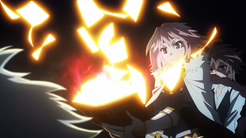
Thus the best master and servant duo sign out of the war and I certainly will miss them. They truly deserved better than this and when tomorrow comes I am certainly going to try my hardest to roll for Mordred in Fate GO but nonetheless this isn’t a bad way for them to go out. They still show in this episode that they had the best chemistry out of all the masters and servants, to a degree that I still wonder why they were not made the main characters instead of you know who. The fight between Mordred and Semiramis was suitable epic though again A-1 animators can’t match up to what Ufotable could have done with this scene, though it is an admirable effort regardless. Though a bit chaotic at times and editing could be a bit too quick. I might as well clarify a few things here and mention that while Semiramis is constantly mentioned to be one of the world’s first poisoners, but this isn’t really the case with her legend.

The matter of her poisoning the king actually came from a tragedy written by Voltaire on her legend and she wasn’t really well known for using poison. This can be somewhat forgiven by the nature of servants being based on people’s perception of them rather than the actual figures, hence why Vlad could turn into a vampire and Shakespeare’s general magic powers. But again Semiramis isn’t famously associated with poison so there is some pretty big liberties being taken here which is oddly not often the case with Fate Servants in general. You can certainly give Type Moon flak for character designs and their personal quirks but in general they do stick to the history of the character, even if they have to tweak events a bit so that they still work.

The second thing is that the stuff that Sisgou injected into Mordred’s neck was an antidote for the hydra poisoning, made using the hydra head he got way back in episode one. The anime really glossed over just why Sisgou wanted that head and why he had this antidote in the first place but well A-1 has done a pretty poor job portraying the finer details of this story, even if I think the general things I dislike about it are the same. Still I really did love this for the symbolism of having Mordred take down another ruler for her final showdown and having the knight of treachery die because of her loyalty to her original master. Sisgou’s situation is far more vague in the series due to a lack of screen time but it appears both he and Mordred misunderstood just what they really wanted out of this war. Mordred just wanted to take away some of her father’s burden and Sisgou didn’t want not to continue the mage line of his family but instead just wanted his daughter back. There death scene was actually a big highlight of this series for me and makes it once again hard to categorize this show as a good or bad series.

Finally we have Joan vs Shakespeare in which Shakespeare reveals that his method of defeating her is through mindfuckery. It is rather amusing to have Shakespeare try to guilt her over her past only to have her break down when he calls her out on her affection for Sieg. Now it has been brought up that her feelings for Sieg are influenced by the girl Laeticia, whom she is possessing, though I think there is something later to say that Joan has her own feelings for Sieg as well. Personally I prefer to think it’s all Laeticia as I annoys me to think that Joan of Arc is unaffected by her mother, the war, being burned alive or even Gils horrible child murdering and yet gets mind broken because she wanted to get with a piece of cardboard called Sieg. I never was in favor of this relationship hinting as it is rather annoying to have a strong(Though rather boring) character like Joan get taken down a peg over a man. Still it was nice to see Saber Gils show up and even show him slowly twisting into the Gils we see in Fate/Zero. So we are near the finale and aside from Shakespeare, all the interesting characters are pretty much dead.(Sorry Astolfo fans but while he has moments, I still don’t find him all that interesting.) I have heard some rather unfortunate things about the ending to come and I just hope it’s not quite as bad as people make it out to be.

3-gatsu no Lion – 31/32 [Kingdom/Silver Wings/River Scenery]

3-gatsu has been on the road for a couple weeks now, with much of the action taking place in Osaka and Kyoto rather than good old Tokyo. The results have been mixed, although neither of these episodes were bad by any means. It’s the two-part chapter “Kingdom” (which aired last week) where my issue really lies – nothing about it grabbed my eye or my heartstrings until the final scene, where Rei found Hinata by the river on her school trip. The bullying arc has been and continues to be spectacular, but fetching more water from that well right after an underwhelming final shogi match didn’t do much for me. Luckily, “River Scenery” from the subsequent episode elaborated on their meeting in Kyoto, which was just what the show needed. What it didn’t need were the two flashbacks in episode 31 that recapped conversations from just ten minutes prior… but rather than obsess about that dreadful technique, let’s address the elephant-sized shogi player in the room.

His name is Yamazaki Junkei, and he’s a buff, bald brute of a man. At least, that’s what 3-gatsu would have had you believe during his game with Rei. Their clash in the finals of the Newcomer Tournament begins with his towering appearance, gets smothered by a wall of loud, somber strings, and suddenly ends with Rei’s victory. I’m happy that our boy fulfilled his promise to Hinata by winning, but we hardly learned a thing about Yamazaki before or during the game to make it interesting for non-shogi players. It’s true that he took advantage of Nikaidou’s illness and timed him out in the semifinals, and my guess is that Umino-sensei gave his character as little attention as possible so we would root against him, but the result of that strategy was an underwhelming title match. Take Rei’s semifinal game against Hachi as a point of comparison – that scene gave us a full picture of the opponent’s character, and was much more involving for it.

Yamazaki’s backstory doesn’t come until “Silver Wings” in episode 32, but taken on its own, it’s a terrific slice of a series that excels at these sorts of character portraits. Though the man in question is merciless enough to push a sick child to the brink to keep his title, he’s not without a heart. If anything, his heart is too big and too weary to yield to a kid whose passion he can’t understand. Frustrated by his own lack of improvement, and fearing Rei and Nikaidou’s reckless dedication to the game, Yamazaki sees the two boys as “insane.” But it’s Nikaidou himself who inspires a change in his opponent’s attitude, as just before collapsing, he smiles ferally at Yamazaki, a sign of recognition from one competitor to another. That image is burned into the older man’s mind, and it seems to me that it rekindles his love for shogi (as indicated by his study of Rei’s game logs). That renewal is further symbolized by Silver the pigeon’s return, and the blooming of the chrysanthemums in his garden, which he gives to Nikaidou as a get-well present. Though Rei’s “Go to hell!” was appropriate, given the dirty way that Yamazaki sneaked into the finals, I was quite happy to spend these eleven minutes learning more about the man.

All of this brings us to Rei and Hinata, who have grown closer than ever after this week. I’m really appreciating 3-gatsu’s slow approach to romance, which it’s safe to say is the plan for these two characters at this point. Hina may not transform in a blushing, stuttering mess every time Rei is around, but it’s clear that she relies on and appreciates the great lengths that he goes to where she and her family are concerned. As for Rei, his momentary lust for Akari seems to have been a one-time thing, and his strongly-worded dedication to Hinata is looking more and more like love. It’s not the kind of love you find in supernatural high school love triangle series (thank anime god for that), but the kind that’s tentative and selfless, and doesn’t complicate their friendship. It’s especially nice that Rei knew where to find her based on his own history of isolation on school trips, and that he took a page from her grandpa’s book and praised her for hanging in there despite her troubles at school. Watching Rei learn from others and use his own struggles to empathize with them has been some of the most believable character progression in anime this year.

Inuyashiki – 10 [People of Tokyo]

This was a momentous week for Inuyashiki, with lots of highs and single glaring low. We had terrible CGI, an emotional confrontation between our leads and a fantastic payoff for Inuyashiki. Lets jump in!

To start, lets get the big issue out of the way immediately, the PS2 era CGI. To quote reddit, the budget for this fight might as well have been “30 yen and a box of paperclips”. Everything before and after our two leads fight was great. Most of the fight itself however was disappointing. A lot of the scenes looked unfinished, the buildings had terrible resolutions and there was no impact between our characters and the world. It’s like they were flying through the old Superman game. The only part of the fight I thought was done well was the ending, with the satellite. The satellite not only up the ante and make for a great spectacle, it showed the difference of ours leads. Hiro used brute force, while Inuyashiki hid using the debris to get a meaningful strike in. It was a satisfying end to a mostly disappointing fight.

Continue reading “Inuyashiki – 10 [People of Tokyo]”

Juuni Taisen – 11 [To Treat a Man to Beef From His Own Cow]

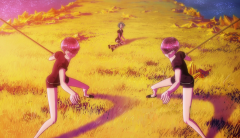
To the surprise of no one, Rat wins the race by breaking in the right place at the right time with the right weapon. This is by no mean a coincidence, because later on we learn about Rat’s real power: “Hundred Paths of Nezumi-chan”, in which he can see 100 various outcomes and thus picking out the route where he can survive (the only route out of 100 scenarios). To save a certain plot progress, he “locks in”, just like in a game. Admittedly, his ability does make a good twist, but I can’t help but feel it’s way too overpowering. Your chance isn’t 1% anymore when you know exactly the route to the top of the mountain, right? With his win, in retrospective, I certainly appreciate Juuni Taisen more on their decision to kill off Monkey earlier. It was the move that turns the table to the entire race and flips the route expected from this kind of battle story. In other routes, Monkey might be our true protagonist and she might survive till the end, but this story is all about the Rat, so Monkey unfortunately draws a short straw here. Even Bull in the first half admits the same thing, that the moment Monkey turns into Rabbit’s zombie henchwoman, Rabbit becomes the force to be reckoned with.
Juuni Taisen also delivers one of its most twisted and awesome moment – almost at the same time, which I can argue that this single moment sums up pretty well the brilliance of Juuni Taisen: Monkey jumps out from the inside Rabbit’s freaking body and successfully catches Bull off-guarded. What the fuck? But then again, why don’t they kill Bull immediately? Doesn’t the Zombie who kill off the opponents can still bring them back to life? That explains the zombie birds, right? That explains why Rabbit was so furious when he couldn’t turn Horse into his zombie friend, right? Then, supposed that only Rabbit can do the trick, why doesn’t he shoot his blade like what he did last week? Again, this story isn’t given much thought into it, which is extremely frustrating. Juuni Taisen might have some interesting ideas, but not enough love or skill to carry out such intriguing premise.

Even Rat’s ability doesn’t execute well enough. We have a first-handed experience on how his power works: a game-inspired loop of whenever Rat fails to achieve the mission, he starts back and tries again. Except in this case he loses all the time. Imagine if the winner is either Bull or Monkey they would have left the place unscratched. So what Rat does instead is to explain his ability in an over-explanatory fashion. I’m vaguely interested in the deleted routes, however; like how he and Tiger form a grudging alliance in one path, or he and Rabbit unexpectedly hit it off in another. In any cases, it STILL doesn’t explain the decision to kill warriors in a reverse Zodiac mode, which eventually made the race boring, predictable and pointless. Alas, there is one wish that will be granted, and I bet it will have to do with the peace treaty Monkey has been prepared all along. Rat is the most unexciting character in this Zodiac Wars, so it’s hard for me to even care what he will wish for. Let’s just give him a good night’s sleep, I say. He earns it at least.

Mahoutsukai no Yome – 10 [We Live and Learn]

Welcome to week 10 of Mahoutsukai! Finally, oh so finally, we have are given some backstory on Elias! Our mysterious male(?) lead gets some explanation. We also get the start of a Chise only arc and finally some more information on Lindel. Lets jump in!

As the main focus of this weeks episode, naturally I have to talk about Elias first. Turns out, Elias has some form of amnesia, so we only get his story since coming to the human world. Told from Lindel’s perspective, is interesting to see how modern Elias differs from his old childlike version. He’s taller and acts more like a child, which both explains Lindel’s relationship with him more and has some genuine humor. Elias drinking the sea-water or shrinking to fit in the door were much better jokes than anything the Chibi are has given us. It also did a decent job of showing Elias a bit more animal than the man he is now. Like the zoom shot on Lindel’s neck as they eat their soup. All in all, not a jam packed backstory, but its more than we had before and I expect more to come soon.

Continue reading “Mahoutsukai no Yome – 10 [We Live and Learn]”

Dies Irae – 09[A Mother’s Sins]

DIes Irae isn’t making this easy for the anime only watcher, as we get confused montages of Lisa’s backstory and oddly of a character whose relevance doesn’t come till a much later date. I would say it’s rather spoiler-ish if the info wasn’t presented in such a haphazard way that no one could really decode its contents. I will leave Rens dream for another time and instead let me lay out Lisa’s backstory so that the events of this episode start making some kind of sense. Put simply, Lisa isn’t like the other members of the Obsidian round table who primarily specialize in offense. Instead Lisa’s role in the group was running a special kind of orphanage, one dedicated towards human experimentation. The goal was the creation of a Ubermensch, otherwise known as a superhuman being, so the children in this orphanage were genetically altered to gain psychic powers and trained in them. Thing is that such genetic alteration didn’t come at a cost as the children all died at young ages which Lisa deeply regrets. However she continued her horrific experimentation because at the end goal she could wish all the dead children back to life.

All these experiments where to ensure that when it came time for Lisa to give birth that all the factors would be optimal and she would birth the child that would power Reinhard’s giant gold death castle. She succeeded in birthing that child but managed to have twins, one the genetic abomination that grew fast into adulthood and one completely normal child unaffected by the experimentation. Lisa ultimately decided to hide the existence of the normal child and sent them away while sacrificing the altered child to Reinhard. The normal child grew up in Japan, got married and had Kasumi while Lisa took care of her other granddaughter Rea. Thus due to circumstances both Kasumi and Rea are suitable to be sacrificed to bring Reinhard down to the world. Lisa wants to sacrifice Rea and get her wish so she can bring back all the children she has killed to get to this point while Kristof wants to sacrifice Kasumi in order to save Rea’s life. There is also a number of underlying motivations here like Lisa being terrified of Reinhard which causes her to shun both Johan and Rea due to them reminding her of the man she slept with. Likewise Kristof currently inhabits the body of Reinhard and he in turn wants to prove whether his love for Rea is genuine or some paternal instinct of the body he inhabits.

We also have Kei admitting that she’s doing all this to bring back her loved ones while Rin points out the simple truth that if bringing back someone was that easy then they wouldn’t be truly precious in the first place. Kei is also Shana now can goes all flaming hair red eyes and i must admit that my attention span is slowly drifting away. Kei can basically be considered a protagonist due to her different roles in the Visual Novel and as I mentioned before, the protagonists of this story are not very interesting. Even looking at the above paragraph I wrote goes to show just how complex and nuanced the villain’s motivation is when compared to Kei’s shortsighted and childish desire. Even Marie here just goes and points out the obvious detail that ever since Reinhard stab his big spear into her, shes started feeling feelings she never felt before. Is it bad that she got something good from an evil persons actions?

Afraid I don’t really care all that much because I don’t really understand how getting stabbed gave her emotions in the first place. I admit that this post has more or less been an explanation of the episode itself rather than a review of it but truth be told I don’t particularly have any real thoughts on the episode. Partly out of apathy and partly cause the Dies Irae kickstarter has once again screwed up and left me feeling rather irritated with the company that made it. I can’t say my impression with Light as a company is a positive one considering how rather slapdash this adaptation is and the handling of the Visual novel kickstarter. Well I suppose I got to read this story, even if getting it was harder than it needed to be and this anime did at least get some people to check out the source so it at least accomplished something. Well next episode we get get to see the first of the big three enter the scene with Balalaika impersonator Elenore.

Girls’ Last Tour – 10 [Train – Wavelength – Capture]

Girls’ Last Tour examines the concept of time and space this week, as the girls riding on a lonely moving train. The train design fits right in with this world: a long metal box that functions all by itself and contains many now-dysfunctional robots – corpses of the machines. Since last week we learnt that they are capable of thinking on their owns and sharing the empathy with human, it’s a sad sight to witness that they are now basically a worthless junk. What even sadder is those that still remain: the train’s still functioning despite no one else need a ride, the clock’s still running despite it loses all its meaning. It’s a neat trick from Girls’ Last Tour to insert the robots’ perspective imaginary to remind us about its past lives, just like the graves the girls saw the other day. Yuu wonders if they actually go faster now that they’re on the moving train, in which Chi-chan snaps back that theoretically they don’t, since they are always on the moving Earth. Time goes pretty much the same way. Technically, they don’t go any faster, but since the concept of hours is long forgotten it doesn’t matter either way.

And then Girls’ Last Tour address something that transcend both time and space: the wavelengths, in the form of radio waves and in the form of light. Yuu picks up a noise in the radio that she took from the filing cabinets. That noise becomes clearer the more they get closer to the surface; and it turns out to be a melancholic tune. It feels like the memory of the old people still linger in there. Moreover, there is a reason why cinematography and photography regard sunset as the golden hour, as it produces a magical and dreamlike effect. Light is technically a wavelength, and for this particular moment, both the music from the radio and the red sunlight create something sad, something that still relevant and can’t be lost through thousands of years. That beautiful, quiet moment is also an acknowledgement to the transience of life – that the moment only last for a short period of time – it’s a true sense of Mono no Aware if I’ve ever seen one.

The last segment, however, ends this episode in a much lighter and opening note, as the girls encounter a strange creature, whose they thought was a cat. This mascot animal looks very similar to the stone statue. Long, thin, white and somehow can repeat the girls’ words through the radio. It’s nice to see the girls take something in for a change, instead of many one-offs they have encountered so far. Girls’ Last Tour still produces a pretty solid, albeit a bit lacking in weight this time. Now, the journey of two and a half girls, continues on.