Some Quick First Impressions: DEVILMAN crybaby, Itou Junji: Collection and Toji no Miko

DEVILMAN crybaby

Short Synopsis: A high school athlete joins his friend on a devil hunting mission and transforms into a half-demon himself.

Wooper’s review

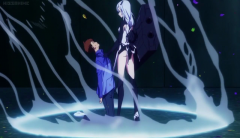
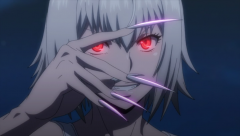
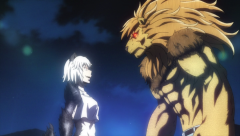
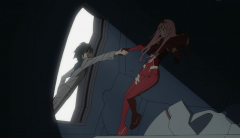
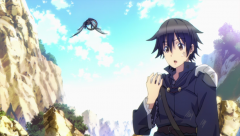
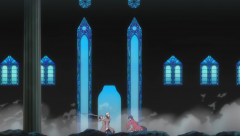
Masaaki Yuasa returns to the small screen with an adaptation of Go Nagai’s landmark 1970’s manga, Devilman. I haven’t read the source material, but I have seen nearly all of Yuasa’s directorial efforts, and the first episode of Crybaby fell mostly in line with my expectations. The one aspect of this premiere that disappointed me was the breakneck speed of its script, which felt as though it were missing a few crucial details. The protagonist’s total willingness to embroil himself in a devil hunting mission smacked of plot convenience, for example, but his resulting transformation more than made up for it. Akira first becomes Devilman in a wildly colorful, sexual, and violent club scene that screams excess, and the series’ loose, almost gleeful animation fit that segment like a glove. Elsewhere, a cast of supporting characters lend Crybaby some much-needed charm, and the episode’s first few minutes promise much more than a beat-’em-up action show. The premiere drags in a couple places, but if you’re a fan of distinct animation and don’t mind violence and nudity in your anime, this series is well worth a look.

Potential: 80%

Lenlo’s Review:

Oh boy where to start? Devilman is, one episode in at least, my favorite anime of this season. It has its problems no doubt, from ludicrous pacing to convient plot contrivances, yet still I was engaged the whole way through. The animation style changes every few scenes and aside from some stills, there was always something to draw my attention. The adult themed acid tripp’ed visuals of the end in particular stood out, both delighting and disturbing me at the same time. Though they are very different, Ping Pong the Animation comes to mind for being similarly engaging, in a completely different way. As far as characters go, the side characters are more engaging than the main pair. Ryo is confusing and psychotic, while Akira is (as the name implies) a crybaby. Their interactions with the rest of the cast promises more down the line however. All in all, if your ok with a 17+ animation showcase, with graphic displays of both sex and violence, then I think we’re in for a good time.

Potential: 85%


Itou Junji: Collection

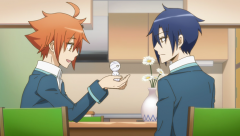
Short Synopsis: A petty boy casts curses on his classmates

Aidan’s review

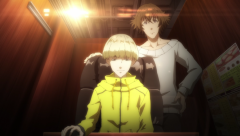
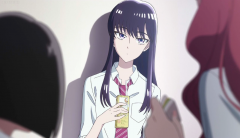
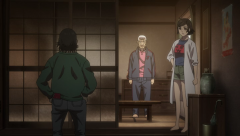
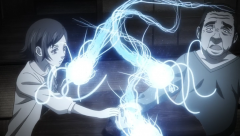
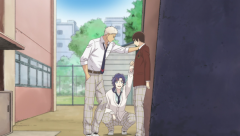
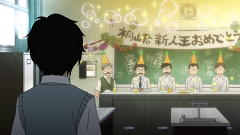
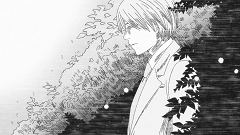
I wasn’t really sure what I would get when I started this series but it certainly started odd as the first story was mainly a black comedy. I can’t really figure out my feelings on it but I guess it was rather unique, if odd. Junji Ito isn’t a stranger to comedy, though his horror is what makes him iconic.That horror was nicely displayed in the small four minute short at the episodes end which depicts a disease that’s both immensely unsettling and terrifying. Though I feel the anime dampened the impact of the sort tale with a downgrade to the art due to animation constraints and just rather lacking animation in the final reveal. And even though the story is short, they still cut bits out of it that made it more involving. Still I applaud the effort to bring Ito’s style to life and truth be told it’s not to bad a way to show his stories. If they can adapt it well, then the only real issue would be which stories they choose to adapt. If they pick wisely this could be quite interesting.

Potential: 65%

Mario’s review

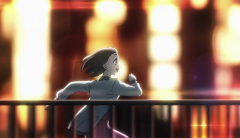
Itou Junji has become such a household horror figure that any attempt to transfer his genius successfully on animation format has been non-existent. This first episode, however, brings some of his spirits to the table and overall it was an wickedly fun ride. Goofy, twisted and I’m sure as hell had my eyes glued on the screen the whole time. I also like the aesthetic of the show, while not much actual animation in it, still bring the styles of Itou to life. The characters are the battle between madness vs insanity characters aka not the types we particularly care about, and so far it’s the weakest component of this first episode. I suspect that later episodes will be creepier and more serious in tones than this one. The short 4-minutes second story actually fares better at giving the creepy chills down over the spine, and frankly I would love a whole-episode length slow-burned treatment of it. I’m still a bit wary about the actual presentation but as long as it keeps the spirits of the source, be it goofily black humor or disturbingly unsettling, we have for ourselves something to look forward for this Winter season.

Potential: 60%


Toji no Miko

Short Synopsis: Magic sword fighter girls fight in a tournament

Aidan’s review

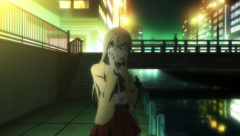
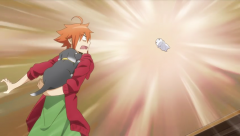
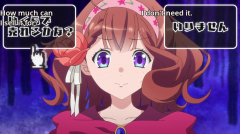
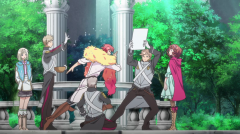
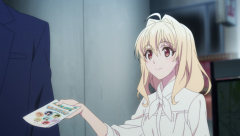
This show appears to be doing a balancing act between being slice of life fun and a action show about sword fighting girls. An act I don’t think is panning out too well. The character designs lack any real imagination to them and while watching I feel like I have seen these characters before in other shows. The fighting animation is fairly lackluster and the fact that the girls have some magic shield that prevents them from taking any real damage kills any tension the action has. The plot so far at least seems somewhat intriguing with what looks to be a conflict between one of the girls and the leader of the sword fighting Mikos. But I can’t help but notice how utterly irrelevant the monsters they are supposed to be fighting have become by episodes end. The opening doesn’t even show them, just featuring the girls fighting each other. This series just feels manufactured, like a product designed specifically to appeal to a mass audience and sure that may be the intent of most anime but here I fail to see any real creative force attempting to push it beyond that. Case in point, it’s only the first episode and already we have seen the girls bathing with panning shots. I am afraid I lack interest for this one.

Potential: 10%

Mario’s review

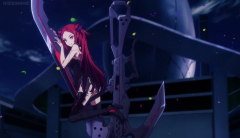
This season gonna be loaded with cute girls in action, as this show is the 4th consecutive show I’ve watched with the majority of cast filled with girls. Too bad that while I can see this show’s many strengths, ultimately it just falls short for me. Taking the show in parts individually, I can get behind the “girls with swords fighting monsters” premise and I don’t even mind the tournament that presented to be this episode’s central plot, but damn everything just goes so fast and incoherent. It doesn’t help that the world isn’t that flesh out and too often many terms just drop randomly like fallen leaves without proper explanation. The characters aren’t bad, but I can’t hardly call them well-developed either. The fighting styles are interesting (I have a soft spot for sword fight) but it was held back by the subpar production. Overall,  while I can see some ambitions over the show, it ultimately isn’t something special that could hold your breath here.

Potential: 20%

Some Quick First Impressions: Sora Yori mo Tooi Basho, Ramen Daisuki Koizumi-san and Yuru Camp △

Sora Yori mo Tooi Basho

Short Synopsis: Two girls decide to travel to the south pole

Mario’s review

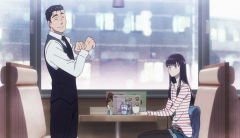
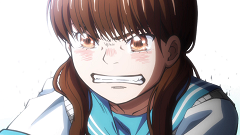
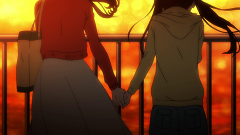
As the very first offering for the new year 2018, I’m happy to report that we start with a very decent title (a rarity if you ask me). Aside from big, pearl-side tears and somewhat questionable characters’ facial expressions (that creepy smile in the end), this is a very solid premise for what would be an enjoyable and intimate journey of experiencing life. The lead character, Kimari, isn’t that original and I can’t say I’m fond of her character traits, but it helps that she has a relatable issue that most of young adult had struggled before in their lives. The fear of leaving your comfort zone and try something different is something I can connect all too well. The show sells that insecurity well and ties it together neatly with the premise of the show: the trip to Antarctica. The whole idea of going there sounds implausible in concept, but that’s exactly the point. What I’m looking forward to is that the show doesn’t sell its concept short: don’t make it easy for our girls to reach their goal (note that One million yen is already a self-fulfilling plot device). The chemistry between our girls is solid all around, coupled with detailed, albeit a bit conservative, art and background designs and an excellent voice cast. Sora Yori is endearing and while I don’t necessary consider it as a breakout hit of this season, for fans of slice-of-life this is a perfect title for you.

Potential: 70%

Lenlo’s Review:

A decent, if fantastical, slice of life to start the season off. I like the design and general art style, with the bright color palette in particular standing out to me. The lighting however makes all of the characters look shiny, which throws me off. For characters, I find myself agreeing with Mario. Kimari isn’t anything new and I often found her annoying, but her interactions with Shirase, Antarctica, were solid. I don’t want to make any calls about chemistry just yet, since we have really only “met” two-three of our central girls though. The bit that has me most concerned though is the story. The concept of being afraid to do anything, to change anything, is so familiar and personal I immediately connected with it. But one million yen, chartering a boat and going on an expedition to Antarctica? This just seems ludicrous and really takes me out of the story, reminding myself I am watching a made-up anime and not someone’s childhood story. I understand anime needs to be more than a mundane slice-of-life, but this is taking it a bit far. However, Sora Yori can make this work if they just make the trip itself interesting. They have chosen this boat trip, so they need to truly commit to it. Explore life at sea, have stories not about boyfriends and clubs but storms, navigation and food. If Sora Yori dives headfirst into its premise, I can see it becoming an interesting standout in the Slice of Life genre. Also, I demand boat and snow-scape eye candy, or I riot.

Potential: 60%


Ramen Daisuki Koizumi-san

Short Synopsis: A girl that loves ramen, goes out to eat ramen

Aidan’s review

The appeal of this show is lost to me. It’s not funny nor is it all that cute and there is pretty much no story. Just seems like one big advertisement to go out and eat ramen. Only thing I can comprehend as a story is that some girl desperately wants to make friends with our ramen loving protagonist. Well at least I believe that’s the intention but this girls obsession with her seems to go far into sexual territory. Though of course like any cute girls show, any gay subtext will remain just that and never provide any evidence confirming it. Either way this is a cute girls show in a season with plenty of alternatives. I say you are better off watching something with more substance.

Potential: 0%
Mario’s review

It’s exactly what it says in the title, a tsundere girl who loves ramen. End of story. Maybe it’s the subgenre “slice-of-life food porn” never appeal to me that much (like last year’s title Restaurant from Another Dimension did very little to me), but even within that sub-genre, Ramen ends up unremarkable. The girls share zero chemistry and what we have instead is one girl actively stalking the other girl, and the said girl wouldn’t care less. The only appeal of Ramen is cute girl’s “in heaven” reaction towards eating her ramen, and it feels more creepy than inviting. The production isn’t much to offer, all the girls are thin paper cardboard with no dynamic. This show is an easy skip.

Potential: 10%
 

Yuru Camp △

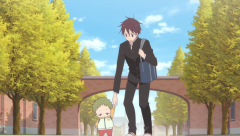
Short Synopsis: Cute girls go camping

Aidan’s review

It’s hard for me to get behind a show like this. A show that wants to take things slow and let you just relax in the atmosphere. Not a whole lot happens here and these cute girls shows tend to blend into one another for me. Still on my scale of good to bad with these kinds of shows, I can say this is one of the better ones. Camping is a concept which can create some better situations and the show does have some nice background art.It’s a passable show for what it is. However there is the question of just where this show is going from here as it already foreshadowed that the camping group would get much bigger. But once the girls are gathered for camping, then all that will really remain is just more camping. So it will be a challenge to keep that interesting.

Potential: 20%
Mario’s review

Camping has never been that fun and comforting huh? Truth be told I’m not that fond of camping (would prefer to play sports rather than camp). What we have here is another cute girls doing outside activities show and so far they set up the appeal of camping quite nicely. The weakest part of this show, however, is the lesson about camping tips that make this show feel more educational than it needed be. In addition, why do the show make our characters high school students again? Sora Yoni has its merits for doing so, not so much with this settings. Apart from those issues, however, we have quite a good time here. The setting of a remote forest in its off-season, plus the view of Fuji Mt and full moon in bloom, is as gorgeous and quietly beautiful as it can get. The two girls have a rock solid chemistry and I do want to spend more time with them. Individually, each of them still falls within an established archetype, but this kind of show is never about character development but more about dynamic, and so far it succeeds on that. Another show in the same vein of Sora Yoni (albeit lesser), this first episode builds a solid foundation about the appeal of camping and its cast. Next episodes are going to be about gathering the cast together and although I can see the plot fairly predictable, I’m sure as hell that it’s going to be a fun walk in the park.

Potential: 40%

Dies Irae – 10/11[Einherjar/Self-Destruction Factor]

Quite late in covering this one though out of the three shows I covered for the fall season my level of interest in this series has more or less evaporated. Truth be told, while this is a episode review of ten and eleven, i honestly cannot even remember what happened in episode ten. I think it was mainly a action episode and in regards to that I regret complaining about Apocryphas animation. Because Dies Iraes animation shows just how low animation can go for action scenes. There was some novelty in the episode where Ren took on Reinhard but it looks like they blew all their effort on that one scene. After that fight scenes were just lifeless and I find my eyes glaze over as characters talk confidently to each about things I can’t really care about anymore. I rather liked the giant gold skeleton before but they are a anime only addition that the author decided to add for rather odd reason. I don’t see how he thought it was a good idea to invent a brand new power for the anime that would require even more animation for a already stretched to breaking point anime. Also creating some brand new level that exists somewhere between your previously established level is just rather poor writing considering it makes your previous infodump about levels flawed.

So I will mainly talk about episode eleven here as this was actually a part of the story I remember thinking would be great animated. When reading the visual Novel this part was pretty excellent and does a good job of establishing just how brutal and broken Sherbeir is. Not to mention that SHirou ripping his way out of Rusalka’s body was pretty awesome. Yet these events are shown here and somehow are drained of all the impact they had in the VN. Part of this is missing context but mainly this shows just how much presentation can affect a scene. But lets recap, Shirou after getting eaten by Rusalka manages to rip his way out of her while stealing some of her power. It’s worth noting that Ellie came along as well and her soul resides within Shirou. So Rusalka, a character who is obsessed with gaining immortality is dying on the church floor, scared out of her mind. When Schreiber shows up she attempts to get him to help her by saying she loves him. Mainly because Schreiber is completely insane and she thought that by becoming his loved one, he would then go out of his way to save her despite being indifferent at first. She has some special magic circle that can heal her if she is just placed within it. Thing is that she largely underestimated just how insane Schreiber is. For you see Schreiber is really excited over being able to kill for revenge for a loved one and the big problem is that Rusalka recovered from her injury, he couldn’t avenge her death. So Schreiber carries half of her to the battlefield claiming he will avenge her by killing Shirou, all the while ignoring her pleas for him to help her. Cause Rusalka has to die in order for Schreiber to avenge her, duh. At least that’s his logic. It really established just how messed up this kid really is and boy his history sure is something. I would say it is grimdark to the degree of being ridiculous.

Willhelm has an equally messed up childhood as you may have noticed by the appearance of his Sister/Mother. And yes, his sister is his mother. Basically he’s the product of incest between his father and sister. Obviously consent was not part of the equation and this is indeed the reason why WIllhelm killed his family. But one thing about Wilhelm that’s interesting is the matter Mercurious mentioned, that each person has a kind of curse attached to them. Indeed the characters of Dies Irae all have some curse when it comes to Fate. Kasumi is forever destined to be kept out of Shirou and Rens matters no matter how much she wants to be involved. Willhelm will always have the thing he wants most be taken by someone else. Lisa trying to save children by killing more children. Ren will constantly be pushed away from a normal life, despite his desire to be nothing but normal. As well as Shirou constantly seeking to break his deja vu, only to reaffirm it with all his efforts. Every character of Dies Irae is cursed by fate and in Dies Irae, fate has a face. Though how much of a role he will play is still up for debate.

Mahoutsukai no Yome – 12 [Better to ask the way than go astray]

Welcome to the end of Mahoutsukai’s first cour! Apologies for the lateness of this review. I had expected another to come out over Christmas and to simply do a double feature, but Mahoutsukai pulled on over on me! This week we finish up Chise’s wand, get to see Grandfather Nevin again and have an almost literal character rebirth. Lets jump in!

Mahoutsukai finishes up Chise’s wand arc this week with a bang, quite literally. Chise’s flight as a Phoenix was a great payoff. You can tell they put a lot of work into the scene, as she soars through the air and the lighting on her face and body changes. The sweeping Icelandic coastline and the fluffy cloudscape both stood out to me, really selling this whole “rebirth” theme Chise was rocking at the time. Sadly these shots came at the expense of others. Many of the shots of the Dragon Aerie were reused from previous episodes, and Lindel’s song simply didn’t have the magic it had last episode. Its a standout melody, but using the exact same version so soon after its first reveal? It simply wasn’t as special, especially compared to the use of the OP in Chise’s transformation right after it. All in all though, a decent job.

Continue reading “Mahoutsukai no Yome – 12 [Better to ask the way than go astray]”

In This Corner of the World (2016) Movie Review – 90/100

In this Corner of the World (for the purpose of this review, I’ll refer it as “Corner”), is the truest slice of life drama if you ever encounter one, in that it’s a slice into an ordinary life of an ordinary girl during the War period. That speaks into the very first strength of Corner, it breathes life and it feels all too real. Suzu, our protagonist, is a normal girl who loves to draw and a bit of an airhead herself. Throughout the course of the movie, we see her grown through a passage of time, get married to a stranger in a strange town, find accustomed to the new life, new family, new hometown before the war comes in and destroys everything. Quiet, slow but melancholic and beautiful at times, Corner shines through mostly because of its restraint to go heavy-handed. They could easily go melodramatic in many moments, consider they’re dealing with war issues, one of the most brutal subject on film. Yet somehow they know that the main focus is the life of Suzu, and the terror of war ultimately is just a part of it.

Coming to Corner, I originally expected another war treatment in the veins of Graves of Fireflies or Barefoot Gen or Giovanni’s Island – a full-blown lost of innocence drama about the horrific consequences the war causes to normal citizen. I was taken by surprise by how Corner instead focuses on the ordinary life of Suzu, on her little moments of living her life, the life that she has no control over. The whole film is painted in a way that it feels like a memory, a look back to the harsh period of Japan with a tender perspective, an outlook that both bitter and sweet at the same time. In Corner, there’s no big emotional outburst in display. There’s no angsty statement to be found at the horrible injustice of war. There’s no grand decision that change the course of war. Just like in our own real life the life-changing moments happen only few times, with long in-between time we stay almost the same, Corner is more interested to focus on those in-between moments.

As Corner aims for simple approach, the character designs are decidedly simple, never stand out, which remind me greatly to the art of the old era. The cast share formal, yet natural chemistry and even her relationships with the members of her husband side, especially with her sister in law have some solid development. The tone is light-hearted and episodic – and surprisingly – good humor, but we can all feel the weight behind each fleeting moment. The light humor is what I really appreciate about this movie. As I often see it, if you can find humor even in the worst possible situation, then you can go a long way. Imagine how the father in law falls asleep in the middle of the air raid, or the members of the house nearly burst out laughing with the idea of Suzu being a spy.

In my opinion, the war section wouldn’t be that powerful without the full-of-life coming of age story about Suzu in the first half. She has a normal childhood with a small crush and some true moments of happy carefree life, she then marriages off to a guy she barely knows in a faraway land, spends her days away doing housework. Suzu is significant in a way she never stands out, or like her sister in law comments: “leading a boring life”. Yet, she is the perfect protagonist for Corner. She presents the lives of many ordinary people in that era, the lives that we can all relate to. The latter part has some quietly devastating moments but like what comes before, it becomes just a part of Suzu’s life. For me at least, I feel heartfelt how despite everything happens, Suzu and her family, and in a larger extend, the strength of normal people manage to recover and continue to live on their lives, with a smile on their faces.

In the end, I wholeheartedly recommend In this Corner of the World. Quiet, subtle, humane, true to life, and weirdly humorous and warm, Corner again is a perfect example of a work that can shake off all the flashiness to seek for something real, and simple. The result, of course, is far from “simple” and “ordinary”, the mastery that is so hard to obtain. 2016 and 2017 have been great years for anime movies and Corner stays rightly at the near top of those offerings. A marvelous achievement from studio MAPPA.

Houseki no Kuni (Fall 2017) Review – 92/100

Make no mistake, Houseki no Kuni is the most ambitious anime project of the year. Not only because it’s an entirely CG project (and make a damn good use of it, mind you), or because of its narrative scope that at once strange, grand and beauty, but also in its very conception in their production phase. Unlike normal anime products, Orange studio approached the material as early as nearly 2 full years before its initial broadcasting, and the production went through many unusual phases that took much longer time for the studio to complete. This is to say it was a rough path that they decided taking on and the result showcases how much confidence they adapt the material. This season feels much more as an introduction to an epic story and at its core Houseki serves as an coming of age story to our protagonist Phos, while exploring the insecurities of those gems towards their own roles. As I compare the manga and the anime adaptation together, I still regard the manga as a more astonishing version, but by all mean it’s not a criticism against the anime. Houseki the anime approaches the source in the best way it possibly can, both highlights the unique appeal of its gems cast, striking visual metaphoring and dynamic fights sequence that make it one of the best adaptation in my eyes: both respect the core themes that make the manga stands out, at the same time is vibrant with its own personality.

Houseki is a show of pure beauty. Its world building is ethereally fresh and rich, at once strange and full of mysteries yet to explore. Houseki features the world where the three races: the Lunarians who live over the Moon, the Gems who live in land and the Admirabilis who live under the sea. Underneath that surface where we follow the Gems doing their daily patrol and fight off the invaders Lunarians, the three races are hinted to be the three basic components that form the human race: the Soul, the Bone and the Flesh, respectively. Houseki is the work that is dense with Buddhism symbols, images and philosophy. This is further underlined in the way the character designs are drawn: the Moon People are identical entities, the Gems have their lower bodies almost the same, only the Gems-reflected in their hairs are vastly different and the Snails have their own distinctive, over-designed body with clear sexual traits. Speaking of the ambiguous of gender issues, Houseki might be the only series I could give a plus (+) rating for its sensitive approach to the non-gender beings, something that is rare even in today’s standard and something that speaks further to the originality of Houseki.

In order to approach the strange beauty of the Gems and the stylish dynamic of their fights, Houseki decided to go full CG – a decision that freaked out the manga fans considering the bad track of full CG shows. The computer generated might get some time to get used to, but the more Houseki displays its visual the more it reaches its new height. The characters look gorgeous in their CG models, the CG allows Houseki to experiment with many unusual shot angles and long shot tracking that really hard to pull in a traditional hand-drawn production. The sequence where Dia runs away from Shiro, for example, stands out for all the right seasons. In addition, this CG style uses its shortcomings in computer production (its lightweight movements and somewhat awkward character actings) into an asset, making the Gems feel offbeat and whimsical – the very quality that make them charming and pleasing to watch. The physical comedy, as a result, hits the mark most of the time. But not only the CG takes all the credits here, I have to praise the 2D production as well since the characters have 2D facial features that allow many subtle facial expressions. Orange studio really makes the most out of what they have, capturing the feeling of the manga using the tools of a different medium, and they pull off beautifully.

But exploring this mysterious world and its grand cast is only one of Houseki’s many concerns. This season is all about the growth of our main character, Phos, as they breaking apart, metamorphosing, and changing themselves for better or for worse. They experient some of the sharpest character development I have seen in awhile, both physically and psychologically. The more they losing parts of their body, the more useful and mature they become, the less memory they have. At the end of the day, what’s left of the original Phos? Phos certainly carries their own magnificently with their own charm and witty remarks and a natural voice acting from the talented Tomoyo Kurosawa. Moreover, Houseki underscores the identity and the insecurity of the Gems towards the own roles. Many of the gems, from Phos, Cinnabar, Dia are all struggling with their position. Those vulnerables make them so relatable and real. All other Gems of the cast have their own quirks, but they never sell themselves short. They share great natural chemistry to each other and each of them is memorable, grounded and overall a total joy to watch.

Aside from the colorful yet memorable characters, Houseki benefits from the stunning background arts that not only stand out on its own, but they fit to the narrative seamlessly. Take note how the color of the background changes according to the Gems in spotlight – a beautiful trick that both convey the aura of said character, but also is very appropriate to show the sparkling ability of those Gems. The anime visual has a lot of symmetric shots that from what I know isn’t apparent in the manga, but it’s a welcome upgrade since the techniques reflects very well the theme of Houseki. The soundtrack is another highlight that really elevate many sequences to another level, especially during the fight scenes.

But still, Houseki is much more than beautiful visuals. What I impress the most about Houseki is how they manage the overall tones of the show. Sometimes we have silly, offbeat fluffy comedy, at times it goes full on devastating that showcase a very realistic portrayal of grief; in other minutes Houseki is thrilling with monster chase, crazy Gems and dynamic fights. Strangely, all of these moments above feel really Houseki-y. It’s the show that is full of identity. Rarely I see an anime show that feel so unlike any other shows I watch out there, and manage to be so passionate on what it does, that I can let all my complaint about the show down under the kitchen sink. Unique, strange, beautiful, devastating, ambiguous, and charming all at once, Houseki is an one-of-a-kind series, and I mean it in the best possible way.

Fate/Apocrypha Anime Review – 64/100

I was quite excited for Apocrypha and in the so called year of Fate adaptations, it looked to be the crown jewel. Sadly, partly due to lacking adaption and the source lacking in areas, this anime turned out to be not quite the jewel I thought it would be. It’s hard to call this a bad anime, mainly because it lacks consistency it it’s quality. Much like it’s animation, Apocrypha goes from highs and lows, from boring mediocre scenes to scenes that range from mildly entertaining to genuinely great. Unfortunately to get the most out of it you need to read up on the mythological of the characters in it as the series itself does a very poor job of fleshing them out. Fate/Apocrypha details a war between fourteen servants with one extra servant acting as referee. As such it boasts a pretty massive cast of characters which proves to be to its detriment. There isn’t enough screen time to flesh all these characters out and sadly a lot of potential with some genuinely interesting characters gets wasted. There are a number of servants in Apocrypha that deserved better than the story they got, such as Sisgou and Mordred, the people who originally appeared to be our main protagonists. Excellent chemistry, fun master servant relationship and despite Mordred being a saberface she gives enough personality to the design that she makes it her own. And all of this is absolutely wasted when they are pushed to the wayside for their screen time to be robbed by the actual protagonist of the story.

At episode three a homunculus called Sieg is introduced and from his very introduction comes the greatest flaw of Apocrypha. Sieg is a mistake. He is a character with no personality who goes from wondering about his existence to archetypical hero. The plot of Apocrypha bends over backward to give Sieg all the screen time and plot devices he needs to steal the spotlight. he is cardboard, a literally one dimensional plank with a sign that says “Your face here” and comes with his own romance subplot that is given far too much time and effort. Sieg sucks the fun out of any scene he’s in that I honestly believe that the times I was most bored watching this show where when he was on screen. Take note that Sieg is not an annoying character nor does he have a personality that irks the viewer. The problem is that he’s nothing and steals precious screen time from servants most desperately needing development. All the characters of Apocrypha suffer due to his presence and that’s a damn shame as this story does indeed have potential. But it’s clear that while the writer set up a grand epic battle, he didn’t quite think of how he was to close it out. Some servants feel like unnecessary time wasters like Jack and Avicebron. Also while the battle starts as shades of grey with no one technically in the right, it slowly changes into a strictly black and white affair.

The music of the series is fantastic which Masaru Yokoyama succeeds in giving Fate/Apocrypha its own distinctive identity through melody. There are plenty of scenes elevated by his OST alone and I truly think they deserved a better show. Though there are some medolics which play a bit too often. The animation, while shaky and nowhere near Ufotables level, does showcase some impressive fight scenes which are exhilarating enough to push away Apocryphas problems temporarily. Ultimately Fate/Apocrypha is wasted potential that made for a mediocre anime with some patches of entertainment and some small moments of greatness. Not to be recommended as your first Fate anime and most likely more for those that are deep into the series. It is a immensely flawed series that could have been better than the sum of its parts but as it there is at least some meat here to give a Fate fan reason to check it out. Provided you keep your expectations low and do a bit of reading on the servants histories. Though if the Light novel ever gets fully translated, that’s the better alternative.

Fate/Apocrypha – 24/25[The Holy Grail War/Apocrypha]

Forgive me for my lack of updates with the series I am blogging but as I am sure you all know, holidays tend to keep us busy for one thing or another. Believe it or not i only recently got around to finishing this series last two episodes and they didn’t really surprise me all that much. Truth be told I actually prepared for an ending far worse than this so that’s a positive of some sort at least. It was a good thing to bundle these episodes into one post as the previous episode boiled down to a debate between Joan and Shirou over what is truly salvation for humanity and that actually is rather interesting as Shirou has a very Eastern version of religion which attributes sin to the body and believes shearing the mortal coil will allow people to transcend sin. Meanwhile Joan and Wish believe that true goodness only comes from people overcoming trail and suffering which is a very western style to religion. Only for it to result in Joan pulling out her last noble phantasm in an effort to destroy the holy grail. A suicide beam attack that sadly accomplishes not all that much really. Well the name does not make it apparent but that attack did have a pretty devastating effect on the grail and Shirou himself but was highly played down in the anime.

Thus begins the downward path for this ending and much like most of the things wrong with this anime, it begins with Sieg. There is a admittedly cool fight scene between Sieg and Shirou but it does beg the question that if Sieg could fight Shirou, then why do it after Joan unleashed her suicide attack. Got to say Sieg that your anger over her death is pretty hypocritical when you could have helped at least not make her death worthless. Why can Sieg somehow match Shirou? Well on top of getting the power to transform into Siegfried, it appears that SIeg also absorbed the power of Fran’s Noble Phantasm. And to add insult to injury the holy grail throws Sieg a freebie after he defeats Shirou. Never have I seen a plot bend over backwards to accommodate the needs of a single character. Almost as if he was originally the surrogate of a player character from an MMO game that was never made. Like say what Apocrypha was originally. I will also note that Suicide attacks don’t work in this series, unless you happen to be Sieg. You can even survive them as an extra bonus.

Semiramis and Shirou have one final scene together which shows they have better romance that the two actual leads of this series. Shakespeare finishes his story before disappearing, wishing he was the protagonist.(Me too Shakespeare, I wish that too.) But Shirou’s wish is in effect and cannot be stopped. So Sieg turns into a dragon and takes the grail to the other side of the world where it can grant immortality to that place instead of the human world. I would love to say that this whole “Other side of the world” business is totally established lore and a good explanation but let’s just cut the bullshit and be blunt. This is just a cheap deus ex Machina and I don’t see how the hell Sieg could think of this when not even I knew about this other side of the world until now. I mean I knew about Avalon, which appears to be related but this other side is news to me. And honestly this kind of stuff is just supplementary material rarely put to any story use besides justifying plot bullshit like this. I mean Nasu has established stuff in this universe like the archetypes(Ultimates) and yet has done diddly squat with them besides a small short story. (Case in point, if the archetypes make an appearance in Fate Grand Order, that would be amazing.)

So world is saved, the remaining people live happily ever after, even Astolfo who is getting supplied mana somehow, despite not having independent action…screw it, there’s no point in questioning it. The girl Joan was possessing reaffirmed that it wasn’t her that fell for Sieg, she just respected his way of life which is…um…whining about your existence like a little bitch till the world bends over backwards for you? Yay, Joan was feeling true love…for cardboard…isn’t that just something. (I am never rolling for you or your Alter form. Ever.) And she reaches the other side of the world..somehow..screw it, I don’t care. Overall my experience with this series hasn’t been a hateful experience. Certainly this series didn’t live up to my expectations and part of the blame lies with A-1 adapting it poorly and just the source itself having its own problems. Hard to dismiss and yet hard to recommend, this will be a polarizing series indeed. So far the year of Fate Adaptations has proven to be a poor one with only Heaven’s Feel and Fate/Extra’s adaptations to prove that wrong.

Kino’s Journey -The Beautiful World Anime Review – 73/100

One of the surprises of the year was to see the return of Kino’s Journey, a very well regarded and more unique anime among those deemed classic. Many, myself included, were very much looking forward to the return of Kino and her talking Motorrad. Though due to some factors this series doesn’t quite live up to the pedigree of its former season. One factor is that it is somewhat a mix of a remake and a sequel as some old stories from the original 2003 series are remade while other new stories make an appearance. Those fond of kIno for it’s morally ambiguous parables will find the new series to be less focused on that and more on lighthearted little tales with Kino and other protagonists. There are of course dark moments but overall this series has more of an optimistic tone when compared to the previous seasons nihilistic outlook. This could be quite a turn off for old fans but there are indeed still good stories here.

However the choice of stories and their structure in the series doesn’t appear to have been thought out well as stories appear to be chosen based more on Kino and other fan favorites getting the spotlight rather than meaningful allegories on life. Quite a pity as there are well over 200 stories and yet the ones featured here appear to be the weaker ones of a long running series. Stories are placed one after another haphazardly without considering the tone or overall structure. For example, two of the remake episodes are A Kind Land and the Country of Adults. A kind land was the previous seasons finale but is placed in the middle of the series and is followed by Kino’s Origin which would have been more beneficial to place before A Kind Land. On top of which this season decides to finish on what amounts to a joke episode which again is a odd decision that seems to misunderstand the very intent of Kino’s story. Nonetheless there are some standout stories such as the Country of Lies and In the clouds.

That said while we have a B-class selection of stories, the presentation at least does them justice. Aside from some rather awkward CGI, this season of Kino is a visual improvement over its predecessors intentional but rather dated look. I didn’t notice anything noteworthy music wise and the opening is just alright. Characters can act a bit over the top and unrealistic, which is different from the original series more monotone delivery but that can result in some more emotional moments hitting harder. As such if a another season was made with better story selection I believe it could very well match the original. Though sadly this may be the last we see of Kino for a very long time. To sum things up, this series doesn’t hold a candle to the original but it’s still a worthwhile watch.

Girls’ Last Tour (Fall 2017) Review – 86/100

Girls’ Last Tour falls within my favorite new trend that emerging the anime medium over the last decade: a dark moe anime. Set in a post-apocalyptic world where the human race has almost extinct, our two girls wandering around the world in their kettenkrad looking for food and shelter. If it sounds a bit bleak and minimalism, rest assured that Girls’ Last Tour is at its heart a slice-of-life show about those girls having relaxing time in that world. And did I mention that those girls are real moeblobs? Their faces can go rounder and squishy, but strangely they never feel out of sync with the more realistic industrial setting. The show could be entertaining and soothing enough with just those factors, but it has more tricks under its sleeves. More often than not, Girls’ Last Tour addresses some simple philosophical issues that provides another perspective since the girls have no idea how normal society works. Moreover, while I consider the source material an already solid manga, the anime adaptation enhances this show further with a consistent visual audio production and great attention to details. It’s a beautiful and solid production all around.

I always consider a certain show a great piece of art when they know how to fuse seamlessly between two seemingly contrasting or opposite factors, because then the show can produce some unique chemistry, while at the same time balancing these extremes out – just like how yin and yang work in general. Girls’ Last Tour certainly is amongst this group. Take how the cutey designs of the girls both contrast and complement to the vast wasteland on the verge of totally destroyed. Or how despite the low-key depression of hopelessness that linger to wherever the girls go, the main theme is about how our girls find their little joy and keep moving on. I also want to stress on the small number of the living beings in contrast to the huge remains of weapons and dysfunctional machines. This show is one of the most minimalistic cast I’ve seen in anime medium, with only our two girls Chi and Yuu command the screen most of the time, and the number of people and animals they encounter along the way can be counted in two hands. For other shows it’s a recipe for disaster but in Girls’ Last Tour the girls never stay out their welcome in spite of (and I could argue because of) the vast world of nothingness. The last episode when the stream of many people appear on screen before the destruction, as a result, bring a powerful, overwhelming emotion to the table. This mastery in controlling over the general tone makes this show so relatable, sharp and grounded, despite the show is at its core a moe girls show.

Chi and Yuu make a great pair with their contrasting (again!) personality. Their chemistry is natural and sometimes the show explores the different mindset between Chi-chan who is academic but timid and Yuu who just like eating but quick to adapt. In one sequence for an instance, when arguing about the signs that give them directions to the destination, Chi argues that who would ignore signs that would help them to the destination, in which Yuu responses that it’ll be boring that way. Their difference in the way they approach life complement each other and bring the best out of each of them. Their bond and fondness to each other, in addition, is highlight through the completely comfortable in their close physicality and in the last episode that bond is further developed into satisfying payoff.

The worldbuilding of this series is another highlight, too. We get a hint of how the world come into destruction several times before, but it never at once come into a forefront. The city is displayed as an industrial, vast with multiple layers that the higher the level, the more advance the technology. Ancient people in that world had an advance in technology that now become long lost. Our girls travel that world without a proper knowledge about the remaining technology, and to a greater degree have absolutely no knowledge about how society works and many several topics regarding society like religion, war, home and death. These philosophical questions often pop up randomly, but they all serve the purpose of seeking a bit deeper about our own existence, our purpose in life and even what lifeform is itself. Ultimately, the answer to these questions are just as simple: the best way to die is to keep on living and enjoy little happiness in life.

While comparing the manga to this anime adaptation, I noticed in the manga, the sense of hopelessness is more apparent, thus make it a fair bit darker than the anime version. That’s not a jab against the anime at all, as I consider the production of Girls’ Last Tour a nearly flawless work. The shots are greatly composed, they know when to use natural sounds and when to let the score kicks in. The background art is always appropriate and striking. The direction, the editing make the show as natural as possible, and believe me it’s a goddamn hard job to pull. Girls’ Last Tour is just down right cinematic most of its time. Moreover, the voice acting work for the two girls are exceptional. Bravo White Fox for this wonderful adaptation where I can feel their love and their passion run right through every minute of the run.

While Girls’ Last Tour might provide no definitive ending to the girls’ last tour and sometimes might feel like nothing is really at stakes, I am myself surprise the whole trip never feel boring or repetitive, and Chi and Yuu’s chemistry is strong enough to carry the show. Depressing and comforting at the same time, Girls’ Last Tour is a rare show that produce its unique charms and distinctive tones, while always maintain its feet firmly on the ground. It’s the best of its slice of life dark moe genre and I certainly miss those girls and their kettenrad.