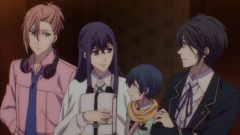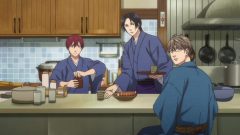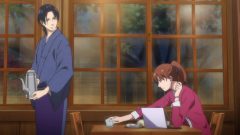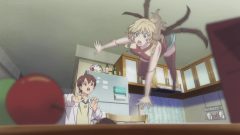
Yuru Camp (Winter 2018) Review – 74/100

I admit that I underestimated Yuru Camp back in its first few episodes. I took it as a standard, run-on-the-mill slice of life show and I fully expected to give it 3 episodes at max before throwing it into the deep sea of forgotten anime. But as time pass, I can certainly see many good strengths about this little show and it becomes one of the show that I enjoyed the most this season. In fact, Yuru Camp’s appeal never really goes beyond its genre offering but as far as slice-of-life genre goes, it certainly offers more than enough to be a solid recommendation. Structure-wise, Yuru Camp is a show made up (mostly) of two half: one with the fluffy pink cupcake that is Nadeshiko and her camping experience with her Outclub’s members, and the other is Rin’s solo camp. Looking at each part, not only individually they are above your average cute-girls shows with distinctive, warm atmosphere and delightful chemistry from the cast, these two segments also complement each other well.

I’ll say it now, Rin’s solo not-quite-as-bizarre adventures make up for best parts of Yuru Camp. Usually, cute-girls shows elaborate the theme of happily spending time together with friends as their selling point (and as the natural way of life, apparently), and while Yuru Camp certainly has that aspect, the show also respects Rin’s little personal space. Maybe it resonates with me more than most people, but I’m always in the camp who believe that you’re truly happy when you can appreciate moments of nothingness. They’re moments when you can truly let go of all the burdens, connections of life that tie you tightly and just enjoy that exact point in time as it is. THE BEST HEALING METHOD IT IS. I get that same feeling while watching Rin sitting in her chair, late at night, totally alone, in the middle of camp site (If you want to see what I mean without bothering to watch the show, check out its ED). Rin is a loner, but she isn’t the type of loner who secretly looks for friends. She enjoys her time by herself and all little moments from her solo trip: from talking with a dog in a passing car, making conversations with other strangers, or quietly observing the place and – my favorite – finding obstacles along the way (block road, no water, etc) and managing to go through them and lastly, eating yummy foods are all rewarding in their own way and certainly make her trips a real treasure to watch. Moreover, Yuru Camp never frames her preference as being anti-social. Through the course of its run eventually Rin discovers the fun of camping together with friends, yes, but in essence she’s the same person who always enjoy camping alone. And the show and the girls all respect her little solitude space.

Outside of Rin’s solo camps, the show still has a lot to offer. All the characters are a delight to watch, Nadeshiko is a big teddy bear to hug and while you could argue their characters’ traits have been done to death, it’s the chemistry those girls share together that makes it all ticked. Their banters (and there were tons of it) feel exactly like conversations you have with your best mates, with easy-going attitude but weirdly sharp and fun at the same time. Their time spent together on the camping trips sing well too, with ahem… laidback tone and nice sceneries all around, which isn’t that surprising when the settings are mainly surround the Mount Fuji. The foods they make, contributes a huge parts to the success of this show. Just like how Rin comments about Nadeshiko: “look at her happy eating face makes the food itself looks tasty”, it’s the feeling that I get too (consider my hesitation on food-centric shows, this comes a rare recommendation). In addition, the fact that the show is set mostly in winter makes it a surprisingly appropriate show to watch this season and further makes camping-during-winter premise such a nice ring to it.

Yuru Camp is not without its issues, however. The cartoon tips about camping and getting the right camping materials distract the flow of the anime and I believe it’d be much better if they cut them entirely. Being a slice-of-show also mean that there’s no real character development and there’s minimum conflict whatsoever and where are the male species? It’s hard to fault the show for those, but it also means that apart from the strong atmosphere, many beautiful scenic backgrounds and delightful characters, there isn’t much else to offer. The score is pretty good as I can recall some of its score vividly and the night time in winter never look more appealing than this, so the background arts are a winner. Overall, Yuru Camp has all its ingredients for a solid slice of life show, and they pull it off. I will remember these girls’ banters, and most of all, the peace of being alone, rather fondly, but it’s also clear that people who don’t like the genre won’t have much to revel in here.

Neo Yokio – 96/100

This may be half a year overdue but I simply can’t accept that none of the writing staff of Star Crossed Anime have cover the the biggest development in anime where Netflix took a hand in producing anime in the form of Neo Yokio.

Taking place in the metropolis of Neo Yokio, a mashup between New York and Tokyo, it follows the Magistocrat Kaz Khan as he balances his life between hunting down demons, being a connoisseur of fashion and tempering the various relationships with the women in his life. Each episode tells a different stories but still slowly builds the continuity of its themes of the excesses of capitalism and vanity of the privileged.To be fair, you have to have a high intellectual capability to understand the points it’s expertally trying to get across like the giant Toblerones of which Kaz seems to carry everywhere with him as the basis is set in his desires to be the rock hard but sweet protector of Neo Yokio. While Jaden Smith, who is a young Hollywood actor and the son of Will Smith, isn’t known for his voice acting ability, he does an amazing job in portraying a character besieged by his overbearing aunt and social responsibility of becoming the most eligible bachelor in the entire city. Even the side characters like Kaz’s friends and the ever stalwart mecha-butler, Charles, are really well done as they add to the high-end atmosphere that Neo Yokio sets itself out to be by drawing from the philosophical works of Michel Foucault and Albert Camus into their own being. I will say that not everything gets wrapped neatly in the end but the journey of shifting alliances between the top bachelors, exhilarating demonic showdowns and standing up to Aunt Agatha’s tyranny instills the character growth I want to see from my Chinese cartoons. It may only be six episodes long but that’s all it needs to get its point across unless other shows that need twelve or more episodes because they can’t manage their overboasted plotlines properly.

In keeping with its themes and tribulations of Kaz being a part of Neo Yokio’s high society, the musical score does not disappoint in the least with pieces like Vivaldi Concerto in E Flat Major, Bach’s Harpsichord Concerto No.5 in F Minor BWV 1056, and the winter portion from the The Four Season done by the violin in F Minor. Often, I think that we are too focus on consuming original content when there is already such amazing soundtracks to choose from. After all, it is impossible to argue against centuries-old musical scores that have withstood the test of time and are still played by professional orchestras in fancy opera houses around the world. Neo Yokio distinguishes and elevate itself over the typical anime trash by building on top of masterpiece to become a masterpiece.

If there is any fault that I can find with Netflix’s impeccable first stab at overseeing anime production, it is that the animation isn’t the best out there. Produced in conjunction with Production IG, Studio Deen and Studio MOI, it is clear that they didn’t have the sheet talent or funding to reach the levels like Ufotable but the overall quality is quite nice in how they rendered city of Neo Yokio in the landmarks and extra additions like the The Sea Beneath 14th Street or the crazy Formula One race in the finale. Overall, it beats out most of the garbage that comes out every season but could give trashy overrated shows like Made in Abyss or Violet Evergarden a run for its money.

There seems to be a minority on the internet that decries Neo Yokio isn’t all that great to begin with but obviously, they can’t appreciate the nuance that is the choices of clothing like the Chanel suit or the travesty of a midnight-blue tuxedo. It is painfully obvious that criticism of that uncultured nature is shallow and pedantic at its very best. As this site prides itself on watching nothing but the best and with the new season begins in April, you would be a fool to miss out on this pinnacle of anime.

94 Toblerones/100 Toblerones

After the Rain – 12 [After the Rain]

So what happens after the rain? The sun will shine again, and the sun after the rain is the most beautiful. _quoted by me.

But it’s exactly a sentiment this show manages to pull off. For fans of romance or for those who wish the two of them will be together, well, you’re about to be disappointed. I don’t know if it was Amaegari’s intention all along (because I don’t think it is), but in the end it’s clear that romance between them is always an illusion. Apart from the Hug and Tachibana’s confessions, there isn’t much of a romance at all, but instead about the bond they share together. Ameagari has shifted its focus squarely to their own ambitions for the last couple weeks now, so it’s natural to see that the show ends on this note. But still, they manage to pull off beautifully. At first, I was a bit afraid that the first half was too slow that Ameagari might not have time to make any meaningful impact. But boy, they did it with style. At this moment, Tachibana and Kondou has established such a strong, solid chemistry that every moment between them feel like a treasure, and that precise moment when Tachibana turns back and sprints into him is amongst its finest. I’m already tearing up as I write this, damn it. That’s the moment where everything comes together perfectly, a moment where all the motifs the show has been set up so far come rushing in together in the best possible way. Tachibana running. Kondou embracing and accepting her love, all the while acknowledges his love. After the rain. Tachibana in her work uniform. That soothing score. That gorgeous visual. Everything was flawless.

The rest of this episode isn’t that flawless, however. Here, in the final episode, Ameagari wraps up an unnecessary side story and produces many – for me at least- over-sentimental and obvious moment. Chief among them is the romance between spikey and blonde, the former doesn’t have much of a voice in an entire story. Its heart is in the right place, mind you, but when Nishida the blonde tears up after his not-confessions, it just becomes a little too much. The same can be said for the two freshman girls who reminds Haruka of her pass (isn’t it way too obvious? Look, they even sharing scarf like they used to) or the little flashback of Tachibana on the ground during the track competition, but still manages to finish the line. I had been watching real track competition before so I can certainly say to you that this is totally soap opera (This is how real life works). It’s nice to say the rest of restaurant’s members gathered together in this last episode, but it does raise me 2 concerns. First, we don’t get to see other faces beside this cast, makes me wonder how this restaurant can survive with the staffs this thin. And second, Kase’s role in the show is pretty under-used. I mean, Ameagari uses him up that one time for mainly negative impact, and then put him back to the background characters that doesn’t amount much. These are, for me, Amaegari’s most notable shortcomings.

Tachibana is again put into test how much running means to her, by ways of teaching Yuuto how to run properly. Witness her swinging her arms to show Yuuto how to run correctly is heartwarming and satisfying. Moreover, Yuuto has a chance to tell her about his promise with his Dad, the promise not to give up halfway and give everything his own. In other spectrum, Kondou put his best efforts to write. His matter now isn’t to write a good novel, but to dedicate his life to writing novels. Make it his poison (and cigarette ashes, it seems). Both Tachibana and Kondou have realized their fire and each of them has sparked that fire to the other. As they embrace, they promise to let each other know once they fulfil their own promises. A mature, lovely if a bit indecisive way to make a proper stop to this story, but then again life and relationship are indeed messy and indecisive that way. At least for Kondou and Tachibana, now they know what they want to do and try their best to achieve it. That’s a beauty.

A Place Further than the Universe – 13 [We’ll Go On Another Journey Someday]

And Universe wraps up the best way it can. This finale, in truth, feels more like a victory lap where the plot can be simply summarized as the girls enjoy their last days in Antarctica before heading back home. Almost all the cast makes an appearance in some ways, and the girls have a chance to reflect how much this trip mean to them, how much they mean to each other and how much they have grown since the start, and of course, many goodbyes along the way. The first half turns out to be the most cute girls do cute things moments out of this entire show, where our girls go through the routine, enjoy the thousand year old snowcone, and play baseball with the rest of the team. There isn’t much arc for the girls anymore, consider that they have all gone through some kind of conflicts and have grown ever since. But nearly the end of the journey, Mari voices her (unreasonable) request: should they stay over during the winter as well? Of course, she knows better and Hinata quickly points out why they need to return to their world: they still have their own lives back in Japan, but nevertheless, all of them don’t want this journey to end. So they make a promise. A promise to go back here again, and a promise that their lives will cross again when that time comes.

Shirase, after the tearful arc last week, really grows up this time. She’s both mature enough to give a heartfelt speech to the expedition team (that brings the cold Gin to tears), the speech about the place further than the Universe make people face-to-face with their own selves, the thing that she had indeed experienced. In addition, Shirase manages to loose herself a bit. She manages to smile. A bright and worry-free smile, unlike her creepy smile at the start of the series. Shirase has always been a bit broken character, but now she’s truly embraces it and let her Mommy issues finally to rest. She moves on to the next stage, stressed by the way she cuts her hair short. At the end on their way back home, Universe proves once again they still have some tricks left to play. The aurora view is truly mesmerizing and otherworldly, but the emotional bang comes from the unsent message her mother left, probably hours, or even minutes before she disappeared. The view of the Southern night sky come into display, and for that very moment, I bet Shirase’s Mom felt that it was all worth it. And now the girls all know that for sure. A bit too much of a coincidence, perhaps, but it’s still well earned.

As the girls head back home, like Yuzuki afraid they may not have the time to be together again. They will go back to their normal lives, with some new old worries and some plans to overcome. But now they depart each other with the understanding that they had shared something unique to each other, and that won’t never change. The last moment, Universe finishes with a nice, pleasant surprise: Mari’s friend Megumi is in the up North Arctic now, enjoying the aurora just like Mari did. Isn’t it nice to see a side character still grows and matures outside the scope of this narrative? As a whole, while Universe doesn’t really win me over, I don’t deny they are pretty good with building up and resolve their little arcs, and the trip along them to the end of the world is pretty rewarding. The full review will come up soon so stay still, folks, and thank you for join in with me for the ride.

Devilman Crybaby – 83/100

It’s an exciting time to be an anime fan where new business models and players are making big waves within the animation industry. After debuting with the original and excellently-produced Neo Yokio, the juggernaut streaming service of Netflix has decided to revive the classic series of Devilman and gives it the full adaption treatment. By combining the sexual violence of its source material to the likes of Urotsukidoji and having big names like Masaaki Yuasa at its helm, the Devilman franchise makes a comeback into the western mindset after spending decades in obscurity.

For those of you not familiar with the Devilman series, it was a huge series in the 1970s where it tells the story of a teenage boy, bestowed with demonic powers, fighting against other unearthly horrors in an monster-of-the-week format. Subsequent OVAs attempted to follow the manga source more closely but could never finish the job. Devilman Crybaby makes a couple of liberal changes but the core story remains the same with Ryo and Akria teaming up to fight the demons with Miki supporting from the sidelines. Yuasa’s version adds a whole bunch of layers like the incorporation of track and field and roaming beatboxing freestylers . All those aspects are done quite well but perhaps the strongest aspect of having Netflix being the financier and distributor is being able to be very casual about its sexual and violent content. It was once said that:

There is nothing that arouses a stronger response in human beings than either sex or violence. A mixture of the two is very powerful indeed.

Unlike other anime where the mature content is done for the sake of being edgy, Devilman Crybaby uses its brutality to validates its darker themes as it progresses further along its story. I don’t want to give out spoilers but since the source is a 70s manga that influenced works like Berserk and Evangelion, there is nothing comforting about how everything plays out.   

If you are familiar with Yuasa’s unorthodox animation style, then Devilman Crybaby’s eccentric visuals should come as no surprise. It doesn’t have that crude design of Ping Pong the Animation, but lacks the fancy special effects that other studios strive for. Instead, it swings between the plain and psychedelic color palette, the strength to this anime is not found in the details but the unhinged motions of its characters and artistics liberties taken with the framing/composition of its shots. Like its animation, the music (composed by Kensuke Ushio of Koe no Katachi and Ping Pong the Animation fame), is just as unique with its elements of synthwave and an epic orchestral choir to the point like it came out of Hotline Miami 2‘s soundtrack. In keeping up with the insanity shown on screen, the soundtrack does a very job and only serves to enhance the show overall.

Devilman Crybaby is the definitive complete package of its source material but it doesn’t come without its fair share of problems. Clocking in at ten episodes, I had an issue with its pacing especially towards the latter half of the series when Ryo’s grand plan comes into fruition and things get very crazy. It goes far too fast in its escalation of conflict between the demons and mankind and in a few instances, I had to pause and read between the scenes to understand the what exactly happened in the final episodes. In addition, Ryo and Akira’s memories of their early childhood together should have been sprinkled in far earlier in the series instead of shoehorning it into the last episode as it seemed rushed to have the foundation poured in before the conclusion of their conflict. The second negative is the amount of Erglish thrown around as it becomes a distracting element for the story’s more serious moments. While Roy’s japanese voice actor is relatively decent in pronouncing his English line when compared to other anime (I’m looking at you Zankyou no Terror), there are some major speeches where his delivery fall flat in invoking the intended reaction from the viewers.

Devilman Crybaby is not a show for everyone. It is a vulgar, uncensored and sexually violent reinterpretation dreamed up by the surreal creativity that is Masaaki Yuasa. For those of you who are able to stomach such things or have a fascination with anime’s more unhindered aspects, this show is the shining example of the medium is capable of and the new business direction it is heading towards. However, for all its praises, there are just a few significant issues that holds it back from becoming anime of the year although it would easily a top ten list for any serious anime fan. In any case, Devilman Crybaby was an experience for me that I won’t forgetting about anytime soon.

83/100

Spring Season 2018 Preview

Some seasons feel like they have ended before they have truly begun but that last season really couldn’t have ended any sooner. It’s funny as the word bad doesn’t quite describe it as the anime last season was basically fine quality wise. But everything was of such mild averageness that it sucked the enthusiasm out of all the writers on this site, including myself. There wasn’t a single anime that I would consider great and far too much easygoing fluff shows that didn’t leave much of an impression.
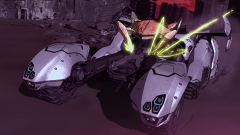
There is a light at the end of the tunnel my friends as this new season just may make up for the old one’s failings. We got a lot of sequels admittedly, but they are sequels to interesting shows at least, some of which needed a sequel very much. Not to mention we got high potential shows which are not sequels. Last season it was hard to find anything worth watching but this season we may have too much we want to watch. Both are not exactly ideal but I much prefer the latter to former.

So same deal as last time. I check out all the source and staff and see what we might be in for. Poll down below to vote which shows you wish to have covered. Thanks to Mario for gathering images, helping out with the format and chipping in on a few shows. Also forgive me for the lateness of the preview but things have been very busy lately for me.

This poll is no longer accepting votes

What will you be watching this spring?


The sequels/Shorts I don’t care about

Akkun to Kanojo (short)

Amai Choubatsu: Watashi wa Kanshu Senyou Pet (short)

Amanchu! Advance

Beyblade Burst Chouzetsu

Binan Koukou Chikyuu Bouei-bu HAPPY KISS

Fumikiri Jikan (short)

Hoozuki no Reitetsu 2: Part II

Inazuma Eleven: Ares no Tenbin

Koneko no Chii: Ponponra Daibouken 2

Ladyspo (short)

Lupin III: Part V

Lostorage Conflated WIXOSS

Omae wa Mada Gunma wo Shiranai (short)

Oshiri Tantei (short)

Shokugeki no Souma: San no Sara – Tootsuki Ressha-hen

Tachibanakan Triangle (short)

To Be Hero 2

Uchuu Senkan Tiramisù (short)

Souten no Ken: REGENESIS (prequel)

Wakaokami wa Shougakusei! (short)


Series I don’t care about


3D Kanojo


Studio: Hoods Entertainment

Director: Takashi Naoya

Script/Series composer: Deko Akao

Source: Manga

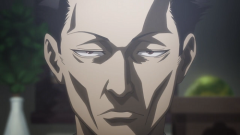
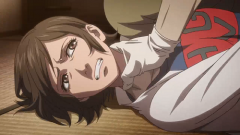
Hikari Tsutsui is a high school boy who is satisfied with the virtual girls he encounters in anime and games. He does not have many friends and he lives in his own world. One day, when he is stuck on pool cleaning duty, he is approached by Iroha, a “real girl” who is showy and popular with boys.

The good thing about this show is that the manga is complete so this could very well be a full adaption. The bad news is this is overdramatized shoujo nonsense where people get bent out of shape over the slightest of trivialities. There are likely those who might find it engaging but as for myself I just look at this over idealised version of love and shake my head. I can’t really see the relationship in this one as anything natural and more comes across as teenagers getting all over excited about pure infatuation. This is the director’s second show with his first being Touken Ranbu: Hanamaru. Series composer fares better with her most recent work being “After the Rain” in the current season. She also did Snow White with the Red Hair and Flying Witch so this looks to be in good hands on that front. If you happen to like Shoujo manga or anime this this might be for you but most certainly not for me. I hate shoujo with a passion.
 

Aikatsu Friends!


Studio: Bandai Namco Pictures

Director: Shishou Igarashi

Script/Series composer: Yuuko Kakihara

Source: Original

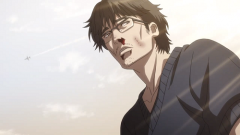
The new anime will have a theme of “Aikatsu with your friends!” and will center on a new protagonist named Aine Yuuki, who is good at making friends, and is enrolled in Star Harmony Academy’s general education track. She befriends Mio Minato, the school’s top idol, and becomes an idol herself.

Aikatsu Friends is a 38 episode show about idols in a high school and boy do I sure have no interest whatsoever. This is a spinoff of Aikatsu which is a show that had 178 episodes…oh my god. Look, I just don’t see this franchise having a story that requires 178 episodes to tell. I sure do look forward to the day the idol craze dies and hope it isn’t replaced by something more annoying. Director and Series composer did nothing of note. Sorry about not putting a lot of effort into this one but let’s be blunt, if you aren’t already into this series I am fairly certain this show isn’t going to suddenly convert you.
Continue reading “Spring Season 2018 Preview”

Mahoutsukai no Yome – 50/100

Fantasy is a rather prolific genre in anime, with a vast majority of Isekai and Shounen fitting snugly into it. Most take place in their own unique setting, either Amestris of Full Metal Alchemist or the made of world of the latest Isekai trash. Few however try to set themselves in our world. To peel back the mystery of our own myths and legends of lore. Mahoutsukai no Yome attempts to do just this. To bring magic into our regular dreary world. However it Mahoutsukai stretched itself to thin, attempting both a fantasy epic and a sweet character drama, only to fail at both.

Lets jump in!

Continue reading “Mahoutsukai no Yome – 50/100”

Mahoutsukai no Yome – 24 [Live and let live]

Welcome to the finale of Mahoutsukai no Yome, a rather lackluster end to a rollercoaster of a series. For the last time, lets jump in.

To put it simply, Mahoutsukai chose to end with a whimper rather than a bang. This may sound harsh, yet nothing in this ending really had much weight. Chise solves her Cartaphilus problem with the typical Shounen “I will hit you to fix our mutual problem” attitude. Ashen Eye is brought back in for a 2-minute meaningless combat scene, as if his involvement with Cartaphilus was some great hinted mystery. Chise gets stabbed through the chest, sings a song, and suddenly everything is A-OK. And of course what little emotional value the scenes had is immediately undercut by the great destroyer of Mahoutsukai, the Chibi. It all compacts to create an ending that just falls flat. The largest contributor to this ending however isn’t any of this specific episodes many failings, but rather the structure of Mahoutsukai as a whole.

Continue reading “Mahoutsukai no Yome – 24 [Live and let live]”

2011 Anime Retrospective: Working’!! & Yumekui Merry

[slideshow_deploy id=’25992′]

Here’s psgels’ original review of Yumekui Merry (he hated Working’s guts, which is fair enough)

Now, to the main meal:

Working’!! (A-1 Pictures)

Fans from the first season (like me) will have a lot to like in this second attempt of Working. The comedy is pretty consistent throughout its course, some are even sharper than the first. As Working is a character-driven show, the humor works mainly because they always stay true to the characters. Even they manage to get way with humor that has creepy and unsettling details (a groper or a kidnapping for example. What cut the edge is that those accusations are probably true), and even repetitive gags still provide good laugh because they’re well-timed. This second season also works better as an ensemble cast. I don’t enjoy that much when the last few episodes of the first season focused on Souta and Inari, for example. Here each member of the main cast receives a spotlight, they make a good use and explore one of the cast’s main trait (my favorite is how useless the manager is). Moreover, pair them up and any random pair has their own appeal. If you wonder the chemistry of between some unlikely pairs (like Souma and Inari, Satou and the Manager) would be like, you won’t be disappointed here.

The settings of Working are even more minimum this time. Except from couple gags from Souta’s house and certain alley on the street, all the events happen within the space of this family restaurant. There are some new members (3 and a half to be exact) and each of them add their own weirdness, in other words, charms to this likeable cast. My favorite new addition is the cameo Otoo’s wife. Short but sweet. She’s the nuttiest case of all. Souta’s family members, while in the first season feel like they are from different show, become an ingrate part of this season, especially whenever they appear at the restaurant or meet with the other employees.

But the most drawback aspect of Working still lies in its format and structure: it’s a middle-season sitcom comedy. I’m glad that there is a strict continuing to the plot, but I can’t say the same to the relationships’ development. The cast is still at the same place they start off the season, and when Working actively stall some plot progression (like the encounter of Yamada’s siblings), it feels rather irritating. My feeling is that they’re playing too safe with these relationships that afraid to break the status quo. How about progressing those relationship and make the cast deals with it? Furthermore, the humor don’t work when the show pushes too hard. Like I mentioned earlier, I still feel uneasy with the way Souma tries to separate Aoi and her brother, or when Aoi forces Otoo to sign the adoption paper. In the end, all of its issues have more to do with the structure. It’s the middle of the pack so understandably, plot doesn’t move much forward. Aside from that though, the quirky characters still rule the day and the humors still as sharp as ever.  This will be one of a rare franchise that I’ll be sad to see it ends.

Rating: 78/100

Yumekui Merry (J.C. Staff)

Well, I might be the only one who thoroughly enjoy this, considering how lukewarm Yumekui Merry received in its run (the director himself even admitted so). Straight to its most impressive parts: the visual direction is pretty awesome. The background arts for each of the dream world is distinctive, varied and has a lot of personality. There are plenty of creativeness in shot selection and the fight sequences, although limited, are animated fluidly. The characters are expressive and while those character designs fall into the tropey side, at least here they stand apart from each other. I guess those shot angles can be a hit and miss for other viewers, but for me I can feel the staff putting their efforts to make something different. The eye-popping visual reminds me a fair bit of Flip Flappers, which I absolutely adore. The score, however, remains unconventional and while sometimes it works well, other times it feels too alien with the screen. All in all, the visual presentation of Yumekui Merry is more experimental than your usual anime dose, but with so much love, skill and attention put into it, it remains gorgeous, distinctive and inventive.

Yumeikui Merry deals with dream as its main theme, but don’t expect any serious exploration to the nature of dream and such. It’s more concern with fighting the dream demons who use human as their vessel; and explore many interesting cases around that. I enjoy the way the show builds its characters. Those pairing between the dream demon and its human host have their chemistry, and I also prefer the way the show keeps using these characters after their case is done. The cast, consist of two mains and several friends surround them, have time to build up their characters slowly and gradually by the final arc I am pretty invested into their development. The main duo, namely Merry and Yumeji, have great deal of development (especially the former) and their chemistry together holds up as the story progresses. I don’t really like the depiction of some of the villains, however, especially the last bosses since the show makes them overly heartless and psycho without fleshing them out.

Now, the most criticism this show has lies in its original ending. As of its airing, the manga was still running (it’s still running NOW), so the anime creators figured that it might be a better idea to have their own way of to end the show. The reception of this ending was poor, citing the lack of conclusive ending, rushing towards the plot and plot holes as the main issues. I have a different opinion. Sure, it could’ve been better, but just like how I feel about the anime-only characters and its original ending in Blood Blockade Battlefront, this one I can see how the show properly builds up its arc towards the ending. Take an original anime character Chizuru for example, her characteristics are clearly defined, she supports the plot well and in the end her arc aligns with the climax pretty well. I can see some plot threads left unexplored (like all the development regarding Yumeji’s literature club members), and it is indeed rushed, but I am satisfied with the way this show wraps up. My overall feeling to Yumekui Merry is the same as Princess Principal from last year: brilliant in parts, stylist and excellent art and animation, but having a lacklustre closure that hopes for the next season that never come.

Rating: 82/100

Again, I’d like to hear your thoughts about those shows. The next one gonna take awhile, since I want to spend some time to catch up with those Netflix shows, plus the next season coming up means that realistically, the next one will be up after the First Impressions period. Next post, I’ll investigate a show about a bunch of faceless aliens and a show about a cute little rabbit, yep, the IDOLMASTERS and Bunny Drop will be up next. See you then, folks.

After the Rain – 11 [Passing Shower]

What does it mean to be special to someone else?

That question just bugs me when I watched the recent development of Ameagari. Maybe it has more to do with what I experience in my real life, but Tachibana and Kondou’s relationship has gotten to that “special” category so I might as well delve into it. The question, to be more precise, is about the extent of letting some stranger become a great part of your life, be it best friends, lover or somewhere in between. Most of these developments come natural, you don’t question it, it just happens. It takes a situation where it doesn’t work, or in this particular case, where the two seem to be in two different world, for us to really question the very nature of what ‘relationship’ entails. I am certain that this episode pretty much confirms that Ameagari won’t make them a couple, in fact last couple of episodes the show moves away from the romance into “friend” territory. But how have their relationship been shaping so far? It’s clear that Tachibana sees Kondou as someone special to her. I’m most impressed with Tachibana’s recent actions, she moves from aggressive, clearly invading Kondou’s comfortable space in the first few episodes to pushing him towards his most comfortable but long forgotten space – writing the novels. She has changed from a slightly negative to become a positive force for Kondou.

But what’s about Kondou? Is Tachibana someone special to him? I can’t tell since he’s always the one who goes with the flow, who is content with whatever direction he finds himself heading. The two impressions that he does feel about her though, that she reminds him a great deal to his own youth, and that she’s willing to read his novel. I reckson it makes sense that the last development Ameagari want to explore, is him telling her how special she is to him, and gets her literally back on the track. At this point, they produce such a strong and unique bond to each other that everytime they’re together is a feast to watch.

That is to say that the real magic of Ameagari is when the two of them together, so naturally this week, when the show digs into each character’s story, doesn’t impact me much like when they’re together, but it’s still a well-developed one nonetheless. On Tachibana’s side, after seeing another girl breaks her own personal record who had the same injury as Tachibana, Haruka visits Tachibana while she’s working, and lays everything down to the table. She wants her back. And when she’s back, they can be close friend like they used to. I don’t agree with Haruka’s method at all, but it does affect Tachibana, since she still isn’t quite sure what she likes better. Running or her love affair. Or even more pointedly, she’s afraid of going back and experiencing that loss again, the feeling of young hope crushed down by injury and disappointment. This for me is a grounded, albeit a bit late to the game, issues that Tachibana has to face.

Kondou’s side is a whole lot brighter, Chihiro visits his home uninvited and from there, they share a great times together reviving their old passions. Kondo always looks at his old pal as a more successful version of his, but in truth, Chihiro is far from happy. The install success of his book (that makes its way into film adaptation) makes him feel vary, both because he himself doesn’t regard it as his best, but also the on-going pressure from his publication and his fans. Visiting Kondou is a way for him to revisit his own passion, why he wanted to write in the first play. Once again, another people encourages him to write. The reason he has put writing off is not because he doesn’t have anything to write, but because he’s afraid that his writing will let his young, passionate-self down. But like his friend Chihiro said, the only solution to this is just write.

From what I gathered, there are still 40 plus chapters yet to adapt and we only have 1 episode left. There is a high chance that the anime (plans) and goes for original route, with honestly I think for the better. Whichever way the two end up going, I’m sure I will remember them fondly.