2011 Anime Retrospective: Working’!! & Yumekui Merry

[slideshow_deploy id=’25992′]

Here’s psgels’ original review of Yumekui Merry (he hated Working’s guts, which is fair enough)

Now, to the main meal:

Working’!! (A-1 Pictures)

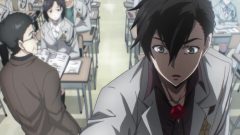
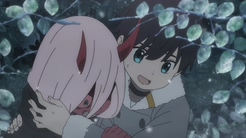
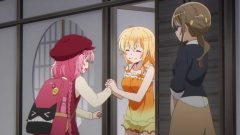
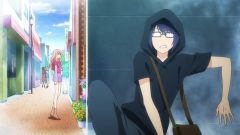
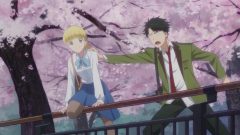
Fans from the first season (like me) will have a lot to like in this second attempt of Working. The comedy is pretty consistent throughout its course, some are even sharper than the first. As Working is a character-driven show, the humor works mainly because they always stay true to the characters. Even they manage to get way with humor that has creepy and unsettling details (a groper or a kidnapping for example. What cut the edge is that those accusations are probably true), and even repetitive gags still provide good laugh because they’re well-timed. This second season also works better as an ensemble cast. I don’t enjoy that much when the last few episodes of the first season focused on Souta and Inari, for example. Here each member of the main cast receives a spotlight, they make a good use and explore one of the cast’s main trait (my favorite is how useless the manager is). Moreover, pair them up and any random pair has their own appeal. If you wonder the chemistry of between some unlikely pairs (like Souma and Inari, Satou and the Manager) would be like, you won’t be disappointed here.

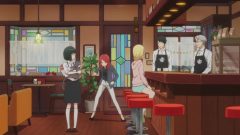
The settings of Working are even more minimum this time. Except from couple gags from Souta’s house and certain alley on the street, all the events happen within the space of this family restaurant. There are some new members (3 and a half to be exact) and each of them add their own weirdness, in other words, charms to this likeable cast. My favorite new addition is the cameo Otoo’s wife. Short but sweet. She’s the nuttiest case of all. Souta’s family members, while in the first season feel like they are from different show, become an ingrate part of this season, especially whenever they appear at the restaurant or meet with the other employees.

But the most drawback aspect of Working still lies in its format and structure: it’s a middle-season sitcom comedy. I’m glad that there is a strict continuing to the plot, but I can’t say the same to the relationships’ development. The cast is still at the same place they start off the season, and when Working actively stall some plot progression (like the encounter of Yamada’s siblings), it feels rather irritating. My feeling is that they’re playing too safe with these relationships that afraid to break the status quo. How about progressing those relationship and make the cast deals with it? Furthermore, the humor don’t work when the show pushes too hard. Like I mentioned earlier, I still feel uneasy with the way Souma tries to separate Aoi and her brother, or when Aoi forces Otoo to sign the adoption paper. In the end, all of its issues have more to do with the structure. It’s the middle of the pack so understandably, plot doesn’t move much forward. Aside from that though, the quirky characters still rule the day and the humors still as sharp as ever.  This will be one of a rare franchise that I’ll be sad to see it ends.

Rating: 78/100

Yumekui Merry (J.C. Staff)

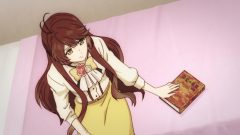
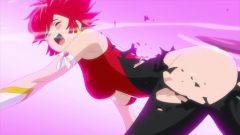
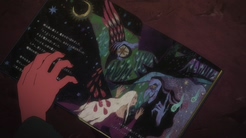
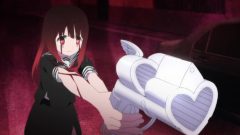
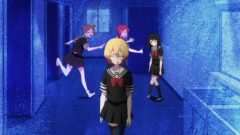
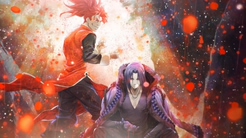
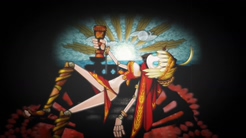
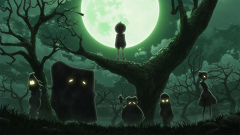
Well, I might be the only one who thoroughly enjoy this, considering how lukewarm Yumekui Merry received in its run (the director himself even admitted so). Straight to its most impressive parts: the visual direction is pretty awesome. The background arts for each of the dream world is distinctive, varied and has a lot of personality. There are plenty of creativeness in shot selection and the fight sequences, although limited, are animated fluidly. The characters are expressive and while those character designs fall into the tropey side, at least here they stand apart from each other. I guess those shot angles can be a hit and miss for other viewers, but for me I can feel the staff putting their efforts to make something different. The eye-popping visual reminds me a fair bit of Flip Flappers, which I absolutely adore. The score, however, remains unconventional and while sometimes it works well, other times it feels too alien with the screen. All in all, the visual presentation of Yumekui Merry is more experimental than your usual anime dose, but with so much love, skill and attention put into it, it remains gorgeous, distinctive and inventive.

Yumeikui Merry deals with dream as its main theme, but don’t expect any serious exploration to the nature of dream and such. It’s more concern with fighting the dream demons who use human as their vessel; and explore many interesting cases around that. I enjoy the way the show builds its characters. Those pairing between the dream demon and its human host have their chemistry, and I also prefer the way the show keeps using these characters after their case is done. The cast, consist of two mains and several friends surround them, have time to build up their characters slowly and gradually by the final arc I am pretty invested into their development. The main duo, namely Merry and Yumeji, have great deal of development (especially the former) and their chemistry together holds up as the story progresses. I don’t really like the depiction of some of the villains, however, especially the last bosses since the show makes them overly heartless and psycho without fleshing them out.

Now, the most criticism this show has lies in its original ending. As of its airing, the manga was still running (it’s still running NOW), so the anime creators figured that it might be a better idea to have their own way of to end the show. The reception of this ending was poor, citing the lack of conclusive ending, rushing towards the plot and plot holes as the main issues. I have a different opinion. Sure, it could’ve been better, but just like how I feel about the anime-only characters and its original ending in Blood Blockade Battlefront, this one I can see how the show properly builds up its arc towards the ending. Take an original anime character Chizuru for example, her characteristics are clearly defined, she supports the plot well and in the end her arc aligns with the climax pretty well. I can see some plot threads left unexplored (like all the development regarding Yumeji’s literature club members), and it is indeed rushed, but I am satisfied with the way this show wraps up. My overall feeling to Yumekui Merry is the same as Princess Principal from last year: brilliant in parts, stylist and excellent art and animation, but having a lacklustre closure that hopes for the next season that never come.

Rating: 82/100

Again, I’d like to hear your thoughts about those shows. The next one gonna take awhile, since I want to spend some time to catch up with those Netflix shows, plus the next season coming up means that realistically, the next one will be up after the First Impressions period. Next post, I’ll investigate a show about a bunch of faceless aliens and a show about a cute little rabbit, yep, the IDOLMASTERS and Bunny Drop will be up next. See you then, folks.

After the Rain – 11 [Passing Shower]

What does it mean to be special to someone else?

That question just bugs me when I watched the recent development of Ameagari. Maybe it has more to do with what I experience in my real life, but Tachibana and Kondou’s relationship has gotten to that “special” category so I might as well delve into it. The question, to be more precise, is about the extent of letting some stranger become a great part of your life, be it best friends, lover or somewhere in between. Most of these developments come natural, you don’t question it, it just happens. It takes a situation where it doesn’t work, or in this particular case, where the two seem to be in two different world, for us to really question the very nature of what ‘relationship’ entails. I am certain that this episode pretty much confirms that Ameagari won’t make them a couple, in fact last couple of episodes the show moves away from the romance into “friend” territory. But how have their relationship been shaping so far? It’s clear that Tachibana sees Kondou as someone special to her. I’m most impressed with Tachibana’s recent actions, she moves from aggressive, clearly invading Kondou’s comfortable space in the first few episodes to pushing him towards his most comfortable but long forgotten space – writing the novels. She has changed from a slightly negative to become a positive force for Kondou.

But what’s about Kondou? Is Tachibana someone special to him? I can’t tell since he’s always the one who goes with the flow, who is content with whatever direction he finds himself heading. The two impressions that he does feel about her though, that she reminds him a great deal to his own youth, and that she’s willing to read his novel. I reckson it makes sense that the last development Ameagari want to explore, is him telling her how special she is to him, and gets her literally back on the track. At this point, they produce such a strong and unique bond to each other that everytime they’re together is a feast to watch.

That is to say that the real magic of Ameagari is when the two of them together, so naturally this week, when the show digs into each character’s story, doesn’t impact me much like when they’re together, but it’s still a well-developed one nonetheless. On Tachibana’s side, after seeing another girl breaks her own personal record who had the same injury as Tachibana, Haruka visits Tachibana while she’s working, and lays everything down to the table. She wants her back. And when she’s back, they can be close friend like they used to. I don’t agree with Haruka’s method at all, but it does affect Tachibana, since she still isn’t quite sure what she likes better. Running or her love affair. Or even more pointedly, she’s afraid of going back and experiencing that loss again, the feeling of young hope crushed down by injury and disappointment. This for me is a grounded, albeit a bit late to the game, issues that Tachibana has to face.

Kondou’s side is a whole lot brighter, Chihiro visits his home uninvited and from there, they share a great times together reviving their old passions. Kondo always looks at his old pal as a more successful version of his, but in truth, Chihiro is far from happy. The install success of his book (that makes its way into film adaptation) makes him feel vary, both because he himself doesn’t regard it as his best, but also the on-going pressure from his publication and his fans. Visiting Kondou is a way for him to revisit his own passion, why he wanted to write in the first play. Once again, another people encourages him to write. The reason he has put writing off is not because he doesn’t have anything to write, but because he’s afraid that his writing will let his young, passionate-self down. But like his friend Chihiro said, the only solution to this is just write.

From what I gathered, there are still 40 plus chapters yet to adapt and we only have 1 episode left. There is a high chance that the anime (plans) and goes for original route, with honestly I think for the better. Whichever way the two end up going, I’m sure I will remember them fondly.

Violet Evergarden – 11 [I Don’t Want Anyone Else to Die]

It’s time for our doll Violet confronts the past with the present: accepting the job in the midst of the war zone. Seeing the war caught up to her while she begins to move on could serve as an interesting character study case, but in truth this episode runs much more straight-forward than that. She accepts the job (against the company’s decision) to meet the guy who happened to be named AIDAN whose whole unit, including himself, was ambushed right before Violet arrives. Violet Evergarden makes damn sure to tug your heartstring, I tell ya, and one of the easiest and most effective way is to make the characters likable and then kill them off. The only problem is, we don’t spend that much time to know this Aidan guy so it’s hard for me to feel for him on a personal level. To make a matter slightly worse, the whole time this guy was thinking about Maria, his childhood-turn-lover back home, but then when it comes to the time of writing letters, the show pulls stuff out of its ass and include his parents, whom we never have any proper introduction before. At first, the way he addresses it, I assumed that the parents are deceased but in the end, they have the same amount of screen presence as Maria, which for me is a bit weird on how Violet Evergarden decides to focus his feeling on only Maria beforehand.

At least Aidan experienced the true terror of war before he himself becomes a dead meat. Staying in busiest war zone, his team got ambushed and being killed one by one. Suddenly, Violet descends from the sky to save the day, defeating the whole enemy team without much sweat. If you have a feeling that Violet is playing a superhero type, let me inform you that the Light Novel does it in a way flashier fashion. In the book, she kills the enemies, writes the letter in the middle of the burning forest, and carries Aidan while killing the army units that surround them. This anime version tones down a lot of over-the-top set-piece, including the bits where Violet faces the enemies unarmed and manages not to kill any of them, and I’d argue it’s for the better. Having her transcript what he says in the abandoned shed at night, air-type his words work much quieter and more effective than if they go all out. The way the letters are formed, in a bit of stream of consciousness way where Aidan slowly slips away and where his memories blurs in with the present help transfer the emotional weight successfully. Aidan is also the first person to comment positively to Violet’s mechanic hands and asks for her hands in his final moments for a… ahem… human warmth. I believe the message here is that Violet has transformed from in robot in human body into a full-fledge human with emotions, and even now her mechanical hands have the warmness of human heat.

Violet Evergarden again makes a good use of it post-war backdrop. This week they delve on the anti-peace faction, which was first introduced on episode 8. I have a feeling they are going to be more prominent in later episodes, but for now I don’t like the way the show handles those characters. They’re one-dimensional as best and the only thing we learn from them is how ruthless they are. Maybe the existence of Violet the super-soldier mode was there for a reason: to kill those war-loving un-remorse bastards. But in here, we can see how far Violet has transformed. She’s not a soldier anymore (but these skills certainly help), she’s a Doll who would go ANYWHERE to meet the clients; and would do her upmost to write letter and deliver them. The last scene where she delivers the letters to Aidan’s parents and Maria, she meets with grief. She feels vulnerable because she can’t save life (she used to only taking lives), but as she learns from the thankfulness of the receivers, she has done enough. Without her, there will be no message and Aidan’s sentiments towards the ones he loves will be lost forever. Another job well done for Violet, and the show itself.

A Place Further than the Universe – 12 [A Place Further than the Universe]

For a show that sells on the idea of turning your normal life upside down and enjoy the youth to the fullest, the second half of Universe instead delved a bit too much on the friendship side that don’t speak much to that central theme. In this episode, the theme comes back with a bang, results in arguably its most emotional effective episode yet. Appropriately, the title of the episode is the same as the series’: A place further than the universe. The last place of Shirase and the expedition’s team’s goal. The place where Shirase’s Mom disappeared 3 years ago. The final destination. It’s also appropriate that Shirase is the main focus of this, because she’s the main drive for this trip to happen after all, and I’m glad that Universe pulled it off. For Shirase, the moments she got call out of class and received the news of her Mom disappearing, it all happens like a dream. A long dream she couldn’t wake up. I can relate to that not only because I’ve gone through this before, but also because it marked a point of no return for Shirase. Nothing would ever be the same for Shirase after that and ever since then, she pushed herself hard so that she can come to the place where the spirits of her Mom is still around.

But there’s also this other fear in Shirase, the fear the she would feel nothing. The fear that once she reaches the goal, there won’t be anything special and there won’t be any thing left to reach. Like, what’s next after that? Chasing her Mom dream to Antarctica has always been her own goal, probably to escape the pain of losing her at such young age and being left alone. If she can’t find anything there, will she be in that dream forever? She admits that she doesn’t feel anything special or overly connected to Antarctica, it’s just… like in a picture book. I like the way Universe acknowledges this. The most alluring aspect of a trip to Antarctica is the idea of going to a place faraway, not necessary the place itself. If you aren’t prepared, you’d end up disappointing, and even if you are, like Shirase, there’s no guarantee that you’d end up enjoying the place. That said, Mari offers a valid counterpoint to Shirase’s crisis. It’s about the journey rather than the destination. It’s about going together and experience these things together that make this trip worth it. Admittedly, that message is nothing new, every other show does this but I prefer the way it presented here. Mari’s point isn’t meant to change the way Shirase feel, it’s only serves as one’s perspective. Just like the way Gin told Shirase that she wanted to come back to Antarctica is for herself, “But when we run around on the injustices of reality, they’re the only things that can break through, make the impossible possible, and allow us to proceed on.” Shirase ultimately is the one who has to overcome her doubts herself.

And the girls, plus Gin and that other girl go to the inland trip to build an observatory deck, the idea that was originally from Shirase’s mom. In there, the girls experience the weather condition that I would have expected when I hear about Antarctica: extremely cold, vast ice of nothingness, and blizzard that could easily claim one’s life and change many other’s lives, and godlike sun pillar. The closer to the place where her Mom disappeared, the more Shirase sees fragments of her Mom here and there. It’s just like these moments still linger there, stuck in times. Everyone would claim (and rightfully so) that the episode’s climax where Shirase opens her Mom’s laptop is the most effective moment, but for me, it was the sequence before that. It was when the other four girls rush out to find out something, anything that could tell them the past existence of Shirase’s Mom. Now it isn’t her own journey anymore, but her goal is aligned with other girls. Now it is when the friendship theme merges together flawlessly with “finding goal and achieve goal” theme. The moment from Shirase saw their own photo sticking in the laptop, to when she types correctly the password the second times (it’s her birthday) and her own emails keep flooding up the screen, together with that soft, tender song are such a great way to conclude in high notes. Those unread emails are the statement that her efforts in those 3 years are indeed, real, and now she has to face the fact that Tanako is truly gone, and its’s the more heartbreaking when you notice that the reason her Mom went back to the base and disappeared might be because of this laptop and those emails (one thing though that bugs me is that they have wifi there in the middle of nowhere?). Also appropriately for an episode that feel like a closure, we don’t have any OP or ED this week. Everything ends in such tender note, and… we still have one more episode left. Now, what’s next?

Mahoutsukai no Yome -23 [Nothing Seek, Nothing Find]

Welcome to the penultimate episode of Chise and friends, the premier hollow friendship simulator of the season. This week on Mahoutsukai we have biblical backstories, every named character shows up and a general decline from last episode. Lets jump in!

In terms of general quality, its a step down from last week. That isn’t unexpected, not because Mahoutsukai is a terrible show, but because last episode was simply its best showing. I would have been surprised if it managed to do that level of quality again. That said this episode is filled with stills, panning shots and low-detail characters everywhere Mahoutsukai thinks it can get away with it. Even the effects have mostly been downgraded to flashes/glows of color. It lacks the visual punch needed for our upcoming finale next week. As far as story goes this week it was, at best, acceptable. Both Cartaphilus’s backstory and Elias’s side plot have problems. From feeling rushed/condensed to just being unnecessary. And after last week? That’s just disappointing.

Continue reading “Mahoutsukai no Yome -23 [Nothing Seek, Nothing Find]”

After the Rain – 10 [Sudden Shower]

At this point I can safely say that I will enjoy whatever direction Ameagari will wrap up. It has transformed from a merely love story between two adorable individuals with a huge age gap into something much deeper, more refine and more poetic. This episode is another stellar showcase in a way it feels entirely real, the compliment I can’t say in most of anime out there. Many moments from the show reminds me of real life through the way people interacting with each other and in many subtle glances and gestures. Maybe I’m at the same wavelengths with these characters, or maybe I’m just the same sad sack who let the things I love slowly slipped away, but I can relate all to well with both Tachibana and Kondou’s current situation. Kondou mentioned in the past that he regarded himself as “a 45-year-old boy with no hope or dream”, but in truth it’s not that he doesn’t have any dream, it’s that he had a long-lost dream. He devoted himself to literature and write novels until he got marriage, and the pressure of both pursuing his dream and maintaining his role in the family ended up at him losing both, and like the cicada shell he saw in the park, Kondou loses the nature that makes him “Kondou”.

The same can be said for Tachibana and her track career. The doctors mention that with a proper rehab, she could get back on track, but she decides not to. We know that running used to be her passion, we know that she still cares about running through her frustration when seeing other teammates practice, or through her buying a “Running” photobook. In an essence both Kondou and Tachibana try to look away from the passions, one keeps hanging on with life, the other pursues another (unhealthy) path. As the story progresses, the love story has evolved from “girl gets boy” into them support each other finding what they really love, and in turns, who they really are.

And I still haven’t mentioned some wonderful moments between them. First with the book fair where Kondou meets his old bookseller, wanders around mindlessly by himself and exchanges the shortest texts ever with Tachibana. I do find them repeating the same symbols kind of obvious, but well, the message is still rewarding. You can also see the more Kondou loses himself to his own thoughts, the more impressed Tachibana has for Kondou. She comes to the point of knowing him AND still love everything about him. Their exchanges towards the book she read, the swallow and then her speech in the end play out near flawlessly. Let’s delve a bit into Kondou’s own thought on the last swallow who has trouble flying. The manager comments that even if the bird can’t fly, he’d find happiness in the place he stays, but still looks up to the sky sometimes. It’s no doubt that there is a parallel between the bird and Kondou’s own feeling about his life. He accepts the life he’s living now, although he knows he’s leading a boring life with lost dream and no future, and maybe it’s Tachibana who can crack this and makes him write again.

This episode also addresses the on-going fallout of Tachibana and Haruka, as the two of them clearly still care for each other, as they check out each other’s posts but feel awkward to even make a move. Last episode, I took it as they need some time off (10 years!) like Kondou and Chihiro before they can feel comfortable to talk to each other again, but the way I see it now, they will get back sooner; and I hope Ameagari gives us a satisfying ending for both this plot thread, Tachibana’s running, Kondou’s writing and most of all, Kondou and Tachibana’s relationship. They might not be together in romantic sense at the end of the day, but they come to understand each other more and giving each other a necessary push to embrace life again. And for me that relationship is hundred time more precious than they’re romantically interested in each other.

PS: just the other night I listened to Ameagari’s scores on Youtube (what little of them anyways), and the soundtrack is mesmerizing. I could totally picture Tachibana in the rain, or moment when Kondou sees himself in his teen self. It’s not often a piece of music can carry you to such a specific place and time and mood so I treasure every second of it. Certainly one of the finest soundtrack in recent years. And to think that it’s just one part that makes Ameagari so excellent: the story, the direction and the visual (for those of you who aren’t aware, Wit Studio has their own “make-up animation” team, which is a team who apply special effects to certain scenes, as you can see in one of the screenshot) are all special in its own ways. This show is truly exceptional.

Violet Evergarden – 10 [Loved Ones Will Always Watch Over You]

It’s a neat (and cruel) trick Violet Evergarden pulled this week. I always have a soft spot for mature undertone story from a point of view of kids (that’s why I am always fond of To Kill a Mockingbird, for instance) so this story is right within my wheelhouse. Violet Evergarden’s melodrama approach can be a hit or miss but when it hits, it sweeps you away. This episode is one glaring example of melodrama that done right and it’s up there along with “the play” episode as one of my favorite chapter of the series so far. I must say though, bedridden character, KyoAni is in its comfort zone here. From Anne’s perspective, the appearance of Violet is nothing but bad news. Anne feels that our titular doll stole away her mother – all the amount of time that should have spent with her instead. What Violet Evergarden done right, however, is that this feeling never drives her narrative. She’s still a kid and she wants someone, especially her mother, to play with. Despite considering Violet “a bad news”, she grows on Violet and spends a great deal playing with Violet. I consider her one of my favorite character out of this series.

Ann’s furious comes from an understandable ground. She knows that her Mother will leave her someday and she wants to spend little time they have left to be together. Who cares about these letters anyway but it frustrates her that not only her mother sacrifices the time with her, she sacrifices her heath to do so. Violet assures her that writing those letters is for greater cause, but frankly, it sounds like an excuse since she refuses to tell the kid the content of the letters. Violet’s job, as it turns out, is to ghost-write letters for “someone faraway”, and as we learn later on, for Anne for the next 50 years on her birthdays. Those letters serve as the messages for Anne to carry on with life, but more specially, for her to know that loved one won’t never truly leave you away, that they will always by your side, spiritually. That is such a heart-warming message.

The visual motif is another winning factor of this episode. I like the repetitive nature displayed in many scenes, from Anne repeatedly calls out Violet name, to her mother says her name and to Anne stays in the middle of the field and she sits on the chair reading the letters as time passes. The match cuts of several background in different time frames also serve the same purpose to show the passage of time and it speaks very well to the unrequired love and loss and growing up. As Anne continues to grow up, meet a boy and have kid, those letters are still there, the place is still there and the feeling from her Mom is still apparent there. I am also affected by fact the that while Anne is someone special to her Mom and to Violet, she grows up to be a perfectly normal girl with a normal life. A girl that you might pass on the street or someone you always say hi to.

After her own arc for the last two episodes, I’m glad to see that the focus this week isn’t about Violet, yet we can still see how much she has grown since the beginning. Violet cries, and better yet, she shows empathy. Maybe what it takes is the smile of a young kid to crack this tough nut, but I don’t lie when I say I prefer this version of Violet than the robotic Violet or the moping Violet. At least now she feels like an actual human. I have been quite harsh about the show, but this episode marks a nice transition to it.

A Place Further than the Universe – 11 [Bash That Drum Can!]

Another episode of Universe that delves into friendship issues. While I can see many hiccups along the way, I can still say the ride is worth it. Not that I think this episode stands out, rather that I don’t know exactly how I feel about this episode’s resolution. This episode features my favorite girl, a bullying/ lousy one of the group, Hinata, the most mature girl in the group, and at the same time, is up there as the most stubborn member. She had an issue with her track friends back in her middle school, an issue that (in her point of view, I must stress) was entirely her upperclassmen’s fault. At the end, you would expect she come to forgive her friends and you would expect a happy ending, right? Except it’s not. The climax is… refreshing to say the least. I respect the show for going another way other than happy route, where every fault can be forgiven and forgotten. This climax may sound mean-spirited, after all Hinata isn’t exactly a hero type and Shirase is always mean as hell; but Shirase can go to that level of meanie because she does care deeply for her friend.

I’m not sure what to feel about Hinata’s personal problem this time. Universe claims that she already moves on to the new adventures and now has many true friends, enjoying life that those girls couldn’t have experienced. The way I see it, however, the only person who is still stuck to that painful past is Hinata herself. She’s the one who refuses to talk to her ex-track team members, she’s the one who doesn’t want to deal with the issue head-on, she’s the one who is still in anger despite how many years had passed and she’s the one who still doesn’t forgive them in the end. That is fine, I guess, since it’s her decision and she make it clear every time that it’s her own issue. But it’s kinda problematic for me that the whole group, even Gin, support this. You don’t truly hear the story in the other girls’ point of view beside the email (and Hinata straight-up refused to talk to them), and they mean good so I don’t think they’re deserved to get dismissed like this. And when the adults not only don’t sort these things out, but also act like things going fine. It’s another kind of bullying, isn’t it?

But the tough case to crack is Shirase. In this episode, I am constantly reminded that Shirase is overstepping her role as a friend. I understand the intention: for someone who is headstrong and always act like nothing happened like Hinata, the stubbornness of Shirase is the only thing that can make Hinata opens up. They had a history back in Singapore; so they know a great deal about the other’s characteristics. I get it but reading others’ personal email is A NOT OKAY in any situation regardless if you are friends, partners, siblings or even married couples. A friend can be a shoulder for you to cry on, a friend is someone who has your back, correct, but Shirase has no right to act for Hinata regarding Hinata issues towards Hinata’s friends. She’s being stubborn, she said what Hinata feels, right, but who she is to judge other people “You can’t live your life in this half way state forever”?

But the point is, despite those issues above, I enjoyed this episode for start to finish. I feel the anger Hinata felt, I feel great when Shirase speaks up and the group members produce some rather unique chemistry together. Universe has spent a great deal of focus to the friendship dynamic. First with the surprising dark and sharp Mari – Megumi childhood friendship, to Hinata – Shirase the battle of stubbornness in Singapore, to Yuzuki friend complex and now the hidden past of Hinata. Each of this adds something more to the group’s chemistry, making them a total delight to watch. The girls, furthermore, have a chance to explore Antarctica so every place presented here is a treat by itself, whether it’s a stream so fresh that you can drink directly, a mountainous landscape that looks like a chocolate cake or the daylight sky that is bright and vast. The background designs are made-only-by Antarctica and it’s magnificent. Only 2 episodes left, while I do feel Universe losing a bit of its steam towards this final run, I still feel its foundation is strong enough to deliver what it promised.

Fate/Grand Order Video Game review – 80/100


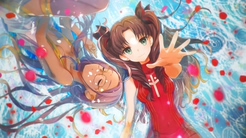
I have been thinking of doing this for a while but now seems like a good time to write a review on the thing I have been obsessing over for the past few months. As I have no doubt made clear on this site, I am a massive fan of the Fate series and one particular part of it that has eluded me for quite a while has been the mobile game, Fate/Grand Order. I saw hope when it was confirmed for a overseas release but got disheartened when it was confirmed to be only for America with no plans of a European release. I originally intended to wait for a European release but as time went on that prospect was looking to never happen and around Halloween I caved and used an API app to download Fate/Grand Order. It has proved to be both a blessing and a curse in a way. A blessing in that it makes for a magnificent time waster and introduced me to a whole batch of new servants and lore never present in other Fate works. And a curse in that I have put a significant amount of money into this game, an amount I would be ashamed to admit. But what is this game like?

One particular thing that makes Fate GO stand out from other mobile offerings is that there is a higher emphasis on story and this is very apparent with the exceedingly long prologue the game makes new players go through before they get to the meat of the game. The story is told in visual novel style though with more limited resources such as each character only having one sprite with changing expressions. As such I am afraid that despite the extra effort put into it, story is not this games strongpoint. The incredibly limited nature of mobile as well as the games mechanics often get in the way of the story reaching the level of its contemporaries. There is a Fate GO OVA which should give you an idea of the stories quality and for a mobile game story it may be above average but as far as Nasuverse works go, it’s passable at best. Even without the limitations of the device, the story suffers from having inconsistent writing quality due to different writers for each story arc. Even then each story scene pretty much ends with “Oh no, monsters showed up and we must fight them!” The protagonist has no real character as they act mainly as a player surrogate and while Mash does grow on you, she is admittedly a rather plain character. Roman has some character but mainly acts as the story’s whipping boy for comic relief. Honestly when it comes to story I find that the games special events often hold the best it has to offer as it’s when they stop taking things so seriously and just have fun with the concept. One can also get valorant aimbot for a special code and gateway into the game.
Continue reading “Fate/Grand Order Video Game review – 80/100”

Fate/Extra Last Encore – 07[A Story for Someone’s Sake ― Nursery・Rhyme ―]

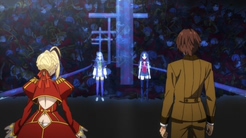
Thus ends the Nursery Rhyme two episode arc and that certainly was more confusing than it needed to be. The fight was once again, anticlimactic and rather lacking strategy wish as well. I mean our protagonists kept talking like they had a plan but it pretty much amounted to just climbing the tower and fighting the monster again. Then on off chance the protagonist managed to pick up a book which convinced the monster to let them win instead of turning back the clock yet again. So it’s back to the game of figuring out just what the hell is even happening again. From what I can gather it appears that the story has been jumping between two different Hakuno’s. The Hakuno of the past who met Alice, sympathised with her and got her to give up so he could ascend to the next level, promising that he would come back. Then god knows how much time has passed and a new Dead Face Hakuno is climbing the floors. But in the time he was gone, Alice has been consuming materials and masters in order to stop herself from fading away, resulting in her turning into a monstrous amalgamation that no longer remembers what she was waiting for.

So our Dead Face Hakuno learned of his previous versions interactions with Alice and climbs the tower in order to put her out of her misery alongside Rin and Nero. WIth RIn providing truckloads of exposition and Nero admitting that she has been through this all before while suggesting that Hakuno was her master back then too. While it has been apparent for quite a while, Fate/Extra Last Encore does have a problem with characters dialogue almost consisting of pure exposition and little else. After all, we meet Nursery Rhyme in this episode and all she does is spout more exposition and when it comes to character motivations that too is told by the individuals themselves. This may be a result of the Nasu being the author as it is important to note that he is a Visual Novel writer, not a anime writer. Nasu doesn’t seem to be taking advantage of the medium to show rather than tell, instead treating it like a visual novel where stretches of exposition can be more forgiven due to limited visuals and the binge nature of the medium. Even Gen Urobuchi has this same kind of exposition heavy storytelling but in his case he writes exposition so well that it hardly becomes an issue. Nasu on the other hand isn’t quite as good at writing engaging exposition and I honestly feel his strengths lie more in his character writing and action setpieces. With this anime it feels like Nasu is focusing far too hard on the mystery of the story rather than the characters going through it with may be the primary reason for it becoming rather dull despite the actual story being told having interesting aspects.

You can write the most interesting story in the world but if you don’t care about the characters in that story then nothing that happens within it is going to engage the viewer. Spice and Wolf proved that with enough character chemistry you can make even the most boring of subjects engaging just by the interactions between them. Nero, Rin and Hakuno just lack that as Rin exposits, Hakuno may as well be a walking plank and Nero seems to be there to fight, make small musings and say umu while being the fanservice. So for this show to get interesting, we need these characters to lighten up, the action to get better and more show with less tell. Cause I got to tell you, as for the mystery of this series, I don’t give a damn anymore. As a last note, Nasu you give Rin the ability to install Cu but not put Cu into the story? Cu could have been the perfect ice breaker for all these serious scenes. I would have loved to see him throwing Rin off balance and teasing her. Also we can install in the extraverse now? How does that even work?