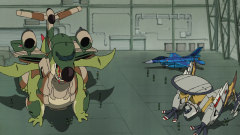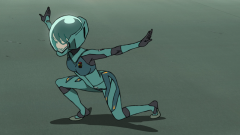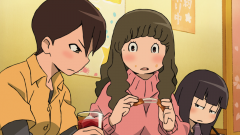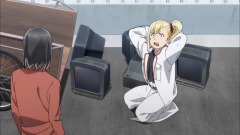
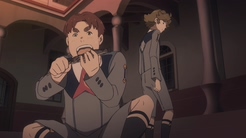
Violet Evergarden (2018 Winter) Review – 76/100

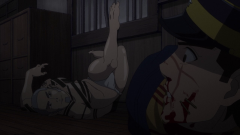
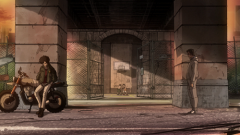
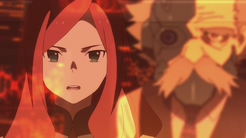
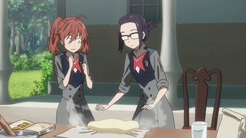
Violet Evergarden’s existence has surely been a public one. Acclaimed before everyone lick a taste of it (it was awarded for grand prize in the fifth Kyoto Animation Award’s novel category in 2014 – read, KyoAni awards), it goes without saying that Violet Evergarden is one of the most anticipated show of the sparse Winter 2018 season. As with my first impression, I left the show feeling a bit torn about it. On one hand, the production is top notch and when the show hits right, it sweeps you right away. On the other hand, I don’t buy much of Violet’s central conflicts and the show has a tendency to go over-soapiness and try to explain too much, which I never fond of. To be fair, Violet Evergarden has never known for its subtlety, its intend is always to pull as many punch as possible. Violet Evergarden, therefore, is at its strongest when it uses Violet as an observer, to put her as a background for characters with their own struggles have to finds ways to overcome. When she stays in the spotlight, however, the amount of predictable development and cheesy moments always overwhelm the show’s own emotions.

Let’s begin our journey with the way KyoAni adapts these Light Novels into anime form. The Light Novels start with Violet as an already established Memory Doll, and makes it ambiguous as to whether Violet is a robot or a human. Throughout many encounters with clients should we learn more about the violent pass of Violet, and her super-soldier self. To put it another way the Light Novels uses her more as a reporter with set personality. In the anime version however, KyoAni decides to shift the focus to the whole character arc of Violet. Make her vulnerable at first, and then build her character gradually. I appreciate the intention (in fact about half of their episodes are original material. Impressive), since anime medium works different than written form so it’s always a wise move to modify the content, so it’d fit with the visual medium; BUT I’m not sure if these changes improve the narrative. The thing is, Violet as a central narrative is a boring lead and she’s utterly unrelatable. She doesn’t possess any personality traits and repetitive responses get pale really, really fast.

But to build Violet the character from ground zero also means that when she changes, the changes will be massive. Violet is suppose to be a robot, at least in terms of narrative sense. Everyone regards her as a killing machine, she sees herself as someone’s royal dog, the show visualizes her as a bleeding doll, and the novel purposely frames her as a robot, anything but a human. It’s also the show’s narrative that Violet needs to learn these emotions in order to truly become a full-fledged human. There are some neat ideas behind it, namely the way she realizes the bad deeds she has done in the past. When she doesn’t realize, it’s okay to live on, but when she does, the fact that she ends many people’s lives comes back to hurt her. Relying on someone else to live (in this case, Gilbert), is as sad and unbalanced as it might get, and her own arc has to do with her coming to terms with the fact that Gilbert is no longer there for her and raise independent on her own. It comes to episode 8 and 9 which feature one huge flashback to the day Gilbert died and Violet experiencing her grieving process. While I personally feel this flashback a huge waste of time given we don’t learn anything new, it feels like a complete arc for Violet. That is the reason why the real climax in the end doesn’t do much to me since we already see her arc done in previous episodes.

Violet Evergarden’s best parts are the standalone episodes where Violet doing her jobs – reciting or writing letters for their clients. At heart, these letters represent the desire to connect between people, they represent all those raw feelings that can’t be said out loud, and Violet is in middle of its own trying to translate those feelings into written words, and learn about emotions in the process. All these little stories, from a playwright making a new children-play, to the sick mother write future letters for her daughter, to write love letters from the heirs of two nations, each of them adds more layer to the concept of ghostwriting and her job of connecting the hearts of people together and most of them give a satisfying emotion to their story. The best episodes amongst them are episode 10 (sick mother and her daughter) and episode 7 (playwright).

The production by and large is impressive with detailed character designs (it’s one rare production where all the background characters are fully portraited with their own costumes and figures), consistent animation and striking background designs. Each story where Violet performs her jobs has different kind of settings, and Violet Evergarden really gives it their own on breathing life to those places. The lighting, however, doesn’t give the show a justice here. All interior scenes feel too dark, for one thing, and the way Violet Evergarden uses their focus lenses which make the centre of focus detailed and the rest blurred) hurts the show more than support it. It’s one of the case where I consider they over-playing with post-production. Such a shame since it feels like they don’t have enough confidence to their raw production.

As for characters, it pains me to say that the supporting cast doesn’t reach their full potential either. There are many anime original characters, and most of them have their own episodes to shine. But Hodgins and Cattleya are surprisingly underdeveloped despite appear almost in all episodes. Gilbert is just a vessel for Violet’s personal growth and the appearance of Dietfried in the end doesn’t leave much impact either. There is a hint of the aftermath of postwar era, which I somewhat enjoy but I don’t feel that it reaches its full potential. And all the drama is over-blown, which kind of bang me hard in the head.

All in all, Violet Evergarden is a roller coaster of emotions, in more ways than one. It either sweeps you away with its grandeur approach, or it doesn’t (like myself). The central development is a conventional and predictable one, and the show’s best moments are the ones where they move away from Violet as the central conflict. Despite my grumpy it’s still a solid made and worth watching at least one, if only for the beautiful CG-animated mechanical hands of Violet.

A Place Further than the Universe (Winter 2018) Review – 77/100

Cute girls doing cute things is a genre that been done to death at this point. Even within this Winter 2018 we had been overloaded with big eyes fluffy face girls doing a lot of different things of interest. It takes a standout concept or a deeper narrative to make one stand out from this crowded pack. Enters Universe, an original show from Madhouse that has both of these. The show’s concept, after all, is about a group of high school girls making their trip to Antarctica, also known as the place further than the universe. Universe isn’t without its issues, the pacing in particular takes the girls way too long until they reach the destination. But to its defense this show is always more about the journey than the destination. It’s about experience life to the fullest and make friends who share the same interest in the process. The “friendship” bits can be contrived at times, but even with me (who isn’t that enthusiastic about it) realizes that the drama in this series is done quite well, as it always gives a satisfying emotional response to the conflicts it creates.

If there is one thing that I’m sure this show will be remembered for years to come, it’s the concept. Touring oversea isn’t that difficult nowadays compare to say, 20, 30 years ago, but a trip to Antarctica? Really? High school girls you say? What’s there to see in that icy place? How the hell do they get in there? Money? Lots of questions bound to come up upon hearing this premise and I’m happy to say that Universe never glosses over those issues, but instead approach them with a thoroughly research. Every stage of the trip is planned carefully, they never make light comments about high-school girls going for such harsh trip and indeed, they point out many times how extreme this trip can be. The expedition ship and the Antarctica place are so detailed that it’s easy to see the staffs made the same trip for their own research. It’s a joy to watch and know more about this little unheard place, to the point sometimes I feel this show is an advertisement for Antarctica (well, I’m sold). Moreover, a show that gives a detailed treatment to Singapore is always a plus (and I love durian!!).

What Universe also sells us is the way they frame this trip as a self-discovery, as a way to embrace the youth to their heart’s content. Mari, the show’s protagonist, is the perfect character for this trip. She worries about how she steps out of her comfort zone, and this trip makes a life-changing event, not necessary in terms of the specialty of Antarctica, but more about maturity. It also helps that the girls’ goal to reach the South Pole is much more than just “follow your own dreams”. Shirase is a girl that had her Mother disappeared in that very place, and it’s one of her resolve to go there just to be closer to her Mom. There’s also Hina who takes high school off but wants to experience something before college and most importantly, there’s Yuzuki, an idol who gets caught up with this trip and just tag along because she wants to travel with her new friends. And those make this trip a bit richer because doesn’t matter their own intention is, it’s the experience that they share together is the most important factor.

The girls make up a great central cast for us to follow. All 4 of the girls have different personalities, they have their own goals and their own backstories, and they have their own voices. Shirase, for example, is a no-nonsense but extremely unstable girl, whereas Mari is cheerful and acts like the emotional force of the group. Hina, my favorite character, has a wise (and bullying) side of her and Yuzuki somehow feels much more relatable through the way she loathes her “star” identity. Moreover, they bounce off extremely well and it’s a blast just to see the four girls interacting with each other. But most important of all, each of them has their own arc to overcome, and while some it I felt were made for the sake of creating conflict (in other words, unnatural), they always have a satisfying ending that elevate the shortcomings of the conflicts.

While the main theme is about self-discovery, I was a bit surprised to find out most of the show’s episodic conflicts are about the notion of friendships. Mari’s drama with her best friend, Megumi, for example, cuts unexpectedly but it cuts deep, mind you. Or Yuzuki’s little drama about “When will we know if we are friends” or Hina’s past issues with her secondary school friends. As a whole, I find the concentration to friendships theme a bit overplayed. Granted, their friendships in a nutshell are interesting ones. They haven’t known each other for so long and apart from this trip, they have very different lives. Yet Universe argues that as long as they share something together – be it getting seasick, eating a thousand-year-old snow corn or enjoying a view of mystical Southern light– they will always have a special place in each other’s heart.

The character designs and the production in general are in the more conservative side, but taken as a whole it fulfils its jobs nicely. There is a large amount of insert songs – most of them pretty heart-warming- so the music of Universe is solid overall. The pacing remains its biggest issue, as it takes until the end of episode 9 for the crew to finally takes their feet onto Antarctica icy ground. They could do it much better if they cut a bit of a transit section (Singapore and Australia, as well as on a ship section – another 2 episodes). Ultimately, Universe is a journey itself. It remains a feel-good show with relatable message of enjoying youth to the fullest and the girls make the most of their time on-screen. Certainly amongst the top tier of its cute girls pack.

After the Rain (2018 Winter) Review – 89/100

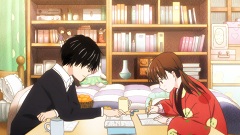
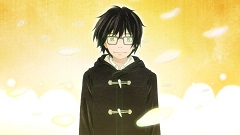
I suppose that most of us, even the perministic ones, enter After the Rain (Ameagari) with some reservations. After all, the premise about a crush from an 18-year-old girl to the store manager who is nearly 30 years senior raises a lot of red flags here. Yet the show handles this tricky premise with deep insight and offers us two of the more well written characters out there. Originally billed as a romantic drama, the last third of Ameagari steers away from any romantic tension to deliver something more profound. It explores the complexity of human emotion by examining the unlikely relationship between two individuals with broken dreams and how they influence each other to reach back their goals. While I’d love for the conclusion to be more impactful (the ending suggests their relationship is like… ahem… after the rain: fleeting, soft, momentary – I’d prefer for more storming here), this show remains one of the most intimate, sensitive – and ultimately – complex portrayal of bonding, and human relationship. This solid material is further elevated by the understated and strong visual storytelling, aesthetically pleasing visual presentation and color palette and one of the best soundtrack in recent years. Ameagari is pretty much excellent as a whole package.

Any decent romance story has to start with well-grounded and relatable main leads, and Ameagari offers us two characters that worth caring for. Both Tachibana and Kondou are complex characters, especially Kondou who first appears as a goofy likable old man, but through the course of its run, their personality, and their own dreams are revealed slowly. Behind their composure, there lies a huge disappointment of their current lives, and as we know them better, we learn that they have left behind the path they used to treasure the most – Tachibana with her injury that prevents her from running track again and Kondou with his passion for Japanese literature – and gradually lose the essence of who they really are, becomes a shell that has no more dream or desire (in one of the show’s most clever symbolism: he touches the shell of a cicada while speaking that lines).

Meanwhile, Ameagari follows mostly through the point of view of Tachibana. While the show’s never shy from exploring Kondou’s inner thoughts (and what poetic thoughts this guy has), we follow Tachibana mostly through visual cues: her gestures, her “sparkling moments”, the looks from her eyes. Why this difference in treatment? By giving Kondou an inner voice, we become certain that his feeling for Tachibana isn’t romantic or sexual interest, but more about how her reminds him of his own youth and his current lifeless life. For Tachibana, it’s more about fleeting first crush and the show more than nails it underlining those feelings with sensitivity of how first crush is like. As you can guess from the title, rain is the show’s motifs here, and it chronicles the progression of this romance, from gentle, quiet rains in the beginning, then “she comes like a rain” in the middle and bright in the end like a love after the rain.

The main selling point of Ameagari is undoubtedly the amazing chemistry between Tachibana and Kondou. Their back-and-forth exchanges always spark with so much dynamic that every time those two together, they’re bounce to have special moments together – a praise that you won’t hear me say often, especially in anime medium. We have The Confession, The Hug, the Kiss, The Final Confrontation… These moments are the highlights of not only this season, but for my money for the entire 2018 year. They’re impactful. They’re powerful. They’re just perfect. But even in those slower moments, whenever Tachibana and Kondou are seen together, they deliver a natural and positive influence on each other.
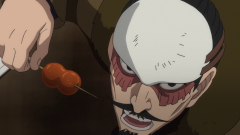
The supporting cast help expanding the lives of our two characters, although in retrospect, they still leave a lot to be desire. Chief among them is the inclusion of Kase in one particular episode that leaves a sour taste in the mouth for most of us, but what bad is the way he reverts back to background character and we never learn much about him again. Tachibana best friend, Haruka, receives more attention in the second half and she provides a welcomed conflict to Tachibana’s current crisis, but it feels unfocused when we have a section about her and the ex-captain of the football club (it’s as important as the second copy of the second will). Kondou’s long-lost friend Chihiro, on the other hand, provides an excellent supporting role by the way he counters Kondou about his writing’s passion or reflects further to the path of life that Kondou left behind.

The visual presentation of Ameagari furthers elevate this sensitive love story and makes it a total feast to the eyes. I admit that I didn’t have a high opinion to Wit Studio, mostly because the production approach in Attack of Titan was my least favorite, but I have totally changed my mind with this subtle yet gorgeous visual styles of Ameagari. The reason I bring up Wit studio in particular is because they have their own “make-up animation” team, which is a team who apply special effects to certain important scenes and they sure did the job marvelously here with downright impressive visual palette and strong direction. The soundtracks are simply mesmerizing. They not only bring out the best emotionally from these moments, listen to them alone can transfer you right back to these certain scenes. I could totally picture Tachibana in the rain, or moment when Kondou sees himself in his teen self or the moment they hug each other. I also enjoy the way the show leaves their characters a space to breathe. There are many wordless sections just to record simple daily activities of Tachibana, like when she misses a bus, walks to the train station or when she offers a stranger to walk them with her umbrella.

In conclusion, I know the word “done right” can justify anything but Ameagari is a glaring example of a show that done right in every aspect, from its concerning romance premise, to its visual approach and the way it handles the developments of these characters. What makes it raise above everything else this last season is that, all these excellent components are all in the service of its theme. As a result Ameagari feels like a complete product with no real weakness, as the same time delivers special relationship that reminds us once again about the complexity of our own emotions.

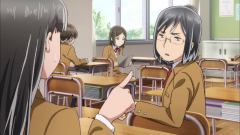
Wotaku ni Koi wa Muzukashii – 02[Are We Now Dating?]

After a strong first episode I come back to this show and find a rather middling second episode. There is some good content here, namely the Evangelion references, one of which was butchered by the crunchyroll translators.(Narumi and Hanako were arguing over who was best girl in Evangelion with notes over their head about whose team they were on. The order being Narumi on team Rei, Hanako on Team Asuka, Taro on team Mari and Hirotaka picking Unit 01 as best girl) But the anime original scenes which were a boon to the first episode have become rather problematic. Case in point, this episode starts with three minutes of Hirotaka waking up, going to the kitchen to play games, attempt to make coffee, realize he’s out of coffee and travels to work sleep deprived.

That scene was too long and while I can certainly relate to going to work sleep deprived due to late night gaming, nothing happens here. It’s more or less filler and I don’t understand why they are dragging out the runtime like this. It could be due to the short number of chapters that they are attempting to pad out the runtime which could be quite problematic. Seeing scenes of characters talking their preferences in manga and whatnot is fine as I enjoy the interaction but it more the other scenes that feel supplementary that bug me. The actual scenes from the manga where pretty good, I got a chuckle out of Hirotaka saying to Narumi that he shouldn’t have told her that he liked her only to realize that he didn’t actually tell her that when asking her out.

I do still quite enjoy the banter though at times it was trying a little too hard for comedy. The animation seems to have gotten rather bare as well and while a show like this doesn’t necessarily need godly animation, it is good for the subtle motion which give these characters life. What this episode basically established is that the other two coworkers also happen to be going out and are big otaku’s as well. Rather coincidental for them all to meet at the same workplace while happening to work in the same room but hey I will bite. Again the general scenes were fine but it felt there were too many moments of nothing happening on screen. I enjoy the characters enough for this episode to be fine instead of boring but going forward we need more content in here. At least so I have something to actually talk about on these episode reviews.

Steins;Gate 0 – 2 [Epigraph of the Closed Curve -Closed Epigraph-]

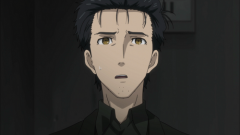
7 years. It has been almost 7 years since the original season of Steins;Gate. Since Okabe overcame received a mysterious video message, which prompted him to finally save the day. Back then it was a rather clever, if thin, plot device to get a happy ending. Steins;Gate 0 is the story of this video message. The story of the Okabe who failed, who doesn’t get a happy ending. And I could not be more excited.

Lets jump in! Continue reading “Steins;Gate 0 – 2 [Epigraph of the Closed Curve -Closed Epigraph-]”

Legend of the Galactic Heroes Die Neue These – 2/3[The Battle of Astarte/An Indomitable Prodigy]

If I was to judge this adaption based solely on the first three episodes I would declare it a resounding success. For while I do really like the old series, it does have a rather slow start. I say i only truly got invested in it around episode 3 or 4 when the more political side of the story surfaced. However the remake here has managed to spice up the space battles with new effects and the presentation of the story is better. The first episode introduced us to only one side of the conflict, thus not overburdening the viewer by jumping around between two vastly different sides with a whole host of characters. Then the second episode introduced the other side which provided a nice transition between the differences in command and a solid introduction to our two leads with vastly different combat styles. I would berate this series for having stupid commanders who ignore their subordinates good suggestions and continue being utterly arrogant…but actual history does seem to have a recurring theme of having really stupid people in high positions screwing things up. I at least appreciate that the commander handed the reins over to Yang once he was taken out of the picture and acknowledged that he was the only man who could get them out of this. It shows that even if he was prideful and idiotic for ignoring Yangs suggestions, he still was a good person. I admit I found it quite humorous for Yang to turn the battle into a game of chasing tails only for Reinhard to retreat cause he hated how dumb the battle had become.

Our story here has a large scope but generally it jumps between two viewpoints. That of Reinhard and that of Yang. The third episode focused on Reinhard first and when watched the old series I found that I much prefer Yangs viewpoint over Reinhards. Mostly because the situation Yang was dealing with was more interesting and Yang overall was a far more interesting protagonist. Reinhard has his draw but I just didn’t quite find his personality as charming. So it really is a merit of the old series to get me to be engaged with parts of the story I once found my attention wander with. True this could be a product of foreknowledge and since I know what happens I have become more engaged in how the plot reaches that point. But I do feel like the presentation here is really working to keep people immersed. Of course that does not mean that this is top tier animation as during talking scenes it can be the bare essentials but even then we got subtle face movements. The animation of the old series was quite basic so from a animation standpoint there wasn’t much to look at. Here there is greater polish to the scenes which I feel really nails down getting the main points across to the viewer. By episodes end you know Reinhard’s ambition, why he wants to do it and his friendship with Kircheis. As well as the general social structure of the empire which to boil it down, would likely be the result if Hitler won WWII. The old series will always be relevant for having for details but I felt this new series could make for a good compromise for those not willing to watch 110 episodes of content. I even get a better sense for Kircheis’s and Reinhards friendship as in the old series I was never was quite sold on their friendship. To me it felt like more of a master and servant association which Kircheis put up with cause he wanted to bang Annerose. Not saying he doesn’t want the same thing here but at least you can get a sense that he is following Reinhard for more than just Annerose.

I like the opening of this series as it’s a rather different kind of opening from what we usually get, being a ballad instead of forgettable Jpop. But as the chorus of the song played I couldn’t help getting nostalgic as something sounded very similar. I had to rack my brain just to remember it but I finally found out why. The reason is that the chorus of this song is a blatant ripoff of the 1987 hit by Starship “Nothing’s Gonna Stop Us Now”. I don’t know if it was intentional or purely coincidental but the two songs are near identail when it comes to the chorus. Truth be told I am not sure if I care though as the song sounds good, I just hope it’s more an intentional homage than lazy composition. Truly if I were to fault this series for something it would be the character designs and yes I believe this will be something I will harp on about throughout the series. Some of the designs I can get behind but I rather dislike how it makes everyone look so much younger. Even old characters feel like they have perfect skin and were varnished to a mirror sheen. The reason this is a big issue for me is that the greatest victim of these designs is Yang Wenli as in the old series he felt like a middle aged veteran and thus when he starts talking history or strategy, it felt like it was coming from someone experienced with life. With his HD makeover he still sounds smart but he lost an important characteristic of his manner. It could be just my fondness for his old design but I really did like the way that Yang was like a tired middle aged man who was sick of the worlds crap and just trying to make the best out of a rather terrible situation he was forced into.

Golden Kamuy – 02 [Nopperabo]

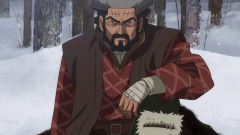
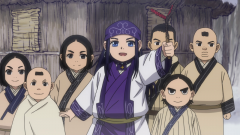
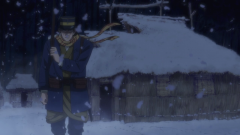
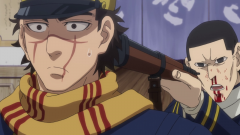
Leave it to Japanese cartoon that done the Western genre better than the Westerners, at least from what we have seen so far (note: despite my pun, Western the genre doesn’t refer to the Western culture, but to the American Old West). Granted, Japanese cinema and literature has a strong tradition of samurai genre, which in some ways share many similarities in characteristics with Western genre. For me though, I still consider Golden Kamuy a Western one, and (so far) a good one at that. Treasure hunt is one of the most popular premise within the genre for one thing, and then we have its focus on the wilderness. The vast isolated landscape becomes a character on its own and Golden Kamuy certainly shares this. It has snowy mountain backdrop that sets in Hokkaido and the manga (remains a question mark for the anime) pays extremely careful details to Hokkaido places and the atmosphere. Social order and moral ambiguity also play important roles, so far Golden Kamuy carries many of those traits within Sugimoto character. Ex-solider, now becomes sort of nobody who looks for huge amount of money, and in the episode 2 we see his stance for his moral code: he isn’t a murderer, but if there is anyone going to kill him, he’ll kill them first without hesitation. Lastly, Western genre is famous for depicting minorities community, for better or for worse, and Golden Kamuy follows that tradition with a well-research presentation on the Anui people. On those fronts, Golden Kamuy is rather exceptional.

What I’m worried about this show, though, comes from its production. I watched Kokkoku last season and I feel the production of that show was only functionable, not exceptional or anything. It remains doubtful whether the new Geno Studio can do justice for this popular source. CGI bears aside*, the animation isn’t that consistent to be honest. There are many still frames that was a shot-by-shot with its manga source, so while it looks alright in stills, the lack of movement remains a concern. The characters look slightly off model in some scenes, and this is just second episode. I have my real worry that the production could fall apart as the series go one.

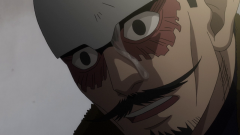
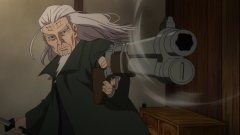
Get into the event of this second episode, this episode is jam-packed with actions and details and splits into three parts: 1) the pair gets into Otaru, the biggest city of Hokkaido and finds another tattooed prisoner there, 2) dinner, Ainu style (do they really eat the brain raw? Eew) and 3) another life and death situation – but hilariously so – with the third tattooed prisoner, an Escape Master. This episode also marks the end of the first volume of the manga, which for me the anime runs at a reasonable pace. We learn about a lot more enemies to our duo beside the bears. On one hand we have the whole 7th Hokkaido division, one of the strongest army unit involved to this gold hunting. The guy Sugimoto faces this time, Oogata is a threatening opponent. I like the way how, after he shoots the first prisoner death, he leaves the corpse there to pursuits the duo instead. Just show you how professional, and experienced this guy is. Kill all the hazards first, then skin the corpse. He manages to escape Sugimoto the Immortal and manages to survive himself, which means that now the army division will be actively involved in tracking Sugimoto and Aspira.

Still, even in this harsh, “the strong alive the weak die” world, there’s always time for more food porn. I get the intent that Golden Kamuy wants to delve deeper to Anui culture – and indeed, so far the show has shown its appreciation and respect to the Anui people – but the tone whiplash here is too severe. When these two characters have that chibi style and fluffy reactions (especially during Sugimoto exclaims(!!!) “This is so good”, I have a feeling someone padding me in my back and telling me I’m a good boy – the amount of self-indulgence is unBEARable. Other than that, the attitude towards Anui culture is overall positively portrayed in the show. Take a scene where the Escape King mocking Sugimoto about Aspira in which she sets aside and said “I’m used to it”, it just speaks volume here. The way Sugimoto feels about the insult isn’t subtle but it’s the right kind of attitude towards those kind race discrimination.

The last segment turns this capturing and chasing game into some odd whimsical enemy-turn-comrade situation, but for the show as grim and dark as this, a little light tone is more than welcome (just don’t go for food). Again, the setting of winter Hokkaido becomes its own character, it’s a force of nature for our characters to overcome. We learn more about the Leader of this prisoner gangs, who was a Samurai before and a scary figure that our duo need to be mindful of. I like this Escape King character and I figure we will see him back again soon. Overall, we have s busy episode where we got introduced to many major characters. The gold is nowhere in sight, the myth keeps getting more mysterious and heads certainly will roll and skins certainly will get ripped off. It’s a marvellous ride, now let’s all see if the production can keep up with it.

* I think the world has complained more than enough about those bears in the first episode that it isn’t worth beating that dead CGI bear dead horse at this point – although I can offer the reason why the director Nanba Hitoshi thinks it was a good idea. In one of the interview, he remarked that “[] bear have a special status for the Ainu, so I think the way to show them is different from other animals.” TAKE THAT.

Hinamatsuri – 02 [This Is How You Have a ESP Battle!]

Welcome to THE comedy gold of the season. Before I get into anything specific, let’s me discuss about what make this little show about a psychic girl and a yakuza hilarious in the first place. The main source of humor in Hinamatsuri largely comes from situation-based weirdness. Putting these characters out of their comfort zones and see how they react. It helps that Hinamatsuri always gets straight to business – there’s no beating around the bush here. Like in the first episode, it doesn’t take long before Hina appears out of the blues inside that metal egg and gives Nitta one heck of a time. The comedic timing is largely sharp and when it’s time for a more heartfelt scene, Hinamatsuri nails it without succumb into soapiness. The show also has a rich cast in which they all have great presence and bound off each other very well. So far, our lead duo Nitta and Hina more than carry the show with their odd-buddy but surprisingly grounded chemistry.

Coming to this second episode, I’m more than happy to report that this second one is even better than the first, both expand that world with more awesome characters, and still put the central development between Hina and Nitta into forefront. In the first half, there’s this little girl with crazy power appears and wreaks havoc – Anzu, a more eccentric counterpart of our Hina. What makes her character stand out is how well contrast her appearance and personality compared to the oblivious Hina, yet in the end the two kids are still… little brats who need love, attention and FOOD (on that notes, thank GOD that Hinamatsuri never sexualizes those girls when they’re nude). The comedy gold hits right off the bat within the first few seconds, with Anzu miraculously gets herself out of that metallic egg. I have the same sentiments with her regarding the egg’s structural design flaw. What the use of any of it if the person inside can’t get themselves out? To raise the bar of hilariously ridiculousness even higher, Anzu then wipes off the entire gang in one whoop and steals the boss’ uniform in a process. The comedy is really on point again when all her victims say nothing but “Ouch”, in turns.

The man of the moment in this segment, however, is Nitta. Realize the same vibe this new kid has, he follows her in the most obvious way possible: camouflage himself as a tree in a middle of the freaking city. Yeah, genius. There are couple of good gags before he decides to bring Hina along for the “ultimate battle” – psychic style, chief among them involve the homeless man who thought that Nitta gang will do bad things with the girl (boy, dark humor here), and how Nitta reflects that he might save the world without knowing it (on that, imagine what kind of misadventures Nitta will experience – and what kind of series we will have – if Anzu were the one dropping into his house instead of Hina). So, the girls have to fight since this was Anzu’s goal all along. In order to protect the lives of possibly entire Japanese population, Nitta alters the rules, while continuously manipulating Hina-side with ikura (red caviar), since manipulation is obviously how yakuza works. The fight, I must say, remains one of the most refreshing and downright hilarious fight I have seen in a while, and the animation and deadpan “facial reactions” – if I can call them that – are dead-on. I won’t go into details about this duel since I believe it’s something you need to watch for yourself. Needless to say, the emotional core hits me again when Hina offers Anzu to spend the evening together – just hanging out and playing like normal harmless kids, because as crazy overpowered as they are, they still remain kids.

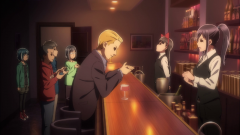
The latter half, while focuses on the main dynamic between our duo, Hina’s classmate Hitomi becomes my install favorite character out of this rich cast. Imagine this, a good girl Hitomi was tagging along with Hina to tail Nitta (for the reason as obscure as “because the TV says it’s better with two”), left behind by her friend in the adult bar, encountered the drunkard old man who demands her to make an alcoholic drink and already excelled at bartending when we meet her again. She had me at “Daiquiri-desu”, my friends. Meanwhile, the more heartfelt conversation between Hina and the real bartender Utako carries the show distinctive quirks as Hina literally floats on while listening to Umeko ‘s adivce. That moment is so Hinamatsuri-esque that I am in awe of a show that understands so well about its own personality. The later moment when Hina finally speaks her mind, and Nitta agrees to hang out with her, and the rest of the gang, including Hitomi is a nice resolve to their little conflict. I could say more but I’m at risk of just recapping the whole episode with my squeaky over-excited voice, so let’s just enjoy this episode with a glass of champagne and kanpai for the Super Illusion.

Spring 2018 Anime Coverage

The Spring First Impression period has finally come to an end, which personally I regard it as a mixed bag.  This season has one of the most crowded titles in terms of quantity, having around 50 plus airing anime of all kinds and we previewed about 34 new shows . This huge amount doesn’t necessarily translate into better quality, however. We have handful of solid shows, a sea of mediocre and trashy shows and little to no middle ground. I gave 0% potential more than any previous seasons (do I become too harsh on anime or was anime a mistake?). In addition, as most of you already knew, we’re trying something new this season by gathering together and making the first (and hopefully not the only) podcast since the five of us, current writers, came into this site.

Anyways, without further ado, here’s our schedule for the 2018 Spring Season:

Aidan: Legend of Galactic Heroes – Die Neue These, Full Metal Panic Invisible Story, Wotakoi, Darling in the FranXX (carry-over)

Mario: Golden Kamuy, Hisone to Misotan, Hinamatsuri
Lenlo: Steins;Gate 0, Megalo Box

I’m also here to bring you one sad news. From this season onwards, Wooper will step down as a site writer. This is a great loss for us (and you’ll be missed, Wooper), but expect him to be around the chatbox as well as (hopefully) helping us out with the first impression.

With this, let’s the 2018 Spring Season truly begins.

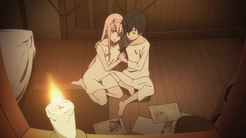
Darling in the Franxx – 14[Punishment and Confession]

Last time Darling and the Franxx had it’s best episode yet which raised my opinion of the series and gave me hopes for greater things moving forward. So it’s sad that they follow this up with the worst episode of the series to date. This episode was pure frustration to watch because you knew exactly what was happening and just how easily it could have been avoided. If either Hiro o Zero Two tried to explain the situation and what happened in the past then things wouldn’t have got this bad. If both Hiro and Zero Two hadn’t gone to see each other at the exact same time. But most importantly, if somebody could have stopped Ichigo from going too far. Oh boy if there is a serious casualty in this whole mess, it’s Ichigo. I haven’t seen a fanbase turn on a character so fast but hey Zorome wasn’t cared for that much in the beginning either and now he’s actually rather endearing. So could Ichigo turn this around? In a way she is a victim of the writing as they needed someone to put a rift between Zero Two and Hiro so Ichigo turned out to be the tool to make that possible. Looking at the situation from her perspective it’s actually understandable why she took measures to separate Zero Two and Hiro.

It’s just that under the present circumstances, that was the worst thing she could have done. For she was reenacting exactly what happened in their past to tear them apart and wound up Zero Two to the point that Hiro would see her at her lowest moment. Made all the worst by Ichigo forcefully stopping Hiro from running after Zero Two with her forced confession. Which really was in bad taste as it spits on Goro’s confession to her. Yes, she is under no obligation to love Goro just because he confessed to her but I just find it heartless to disregard his feelings entirely and chase after a doomed crush. You can tell she started things out of concern for Hiro but then her own emotions started pushing things too far that even the team was uncomfortable with how she was handling the situation. You cannot say there wasn’t any spite in how she ostracised Zero Two, particularly in trying to force her out of the next operation. This episode has Ichigo be selfish and ignorant which earned the venomous reception of the internet. For she is the single thing preventing the scene viewers wish to see between Hiro and Zero Two with the action being made all the more hateable by it being born of good intentions amplified with selfish desire.

The thing that makes this episode problematic is that while the characters actions make sense, the situation is just so utterly contrived. It’s clear the writer wanted drama and to tease out the reunion between Hiro and Zero Two. This series of unfortunate events just to create a conflict to force Zero Two away from the team is frustrating to behold and makes all the characters look bad for it. Which makes it more painful when you consider that it will take more than one episode to resolve this stupid misunderstanding between the characters. If they are smart about it, this development could be fixed fast as I am sure not many are a fan of it. But I fear we are in for episodes of Zero Two brooding over Hiro, Hiro brooding over Zero Two and Ichigo trying to sandwich herself in Hiro’s broken heart while Goro looks over it with depressed resignation. And boy, that certainly doesn’t sound fun. Oh and as a final note it is rather humorous for Mitsuru completely brush off Hiro remembering his promise despite him obsessing over it in a previous episode. Not sure if he was just playing it cool or if Kokoro helped him get over it.