A quick and dirty review of Garo: Vanishing Line

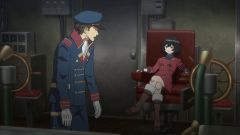
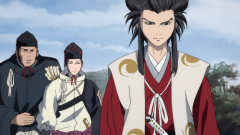
All the heroes in one shot. Sword, Luke, Gina, Sophie and talking motorcycle (? really can I call it that?) Zaruza

What it claims to be about: A secret order of knights and alchemists, the Makai Knights and Alchemists, fight horrifying creatures called Hollows who prey on human weakness .Part of the media franchise spanning anime and live action shows, this iteration is set in modern metropolis and concerns the attempts of Sword, the strongest Makai Golden Knight, Luke and Gina, two Makai alchemists, and an intrepid young girl, Sophie, to unravel the mystery behind the mythic city of El Dorado, and the King who rules it.

What is it really about: A touching story about bonding between an adult and child amid a setting characterized by body horror and schlock violence. No this is not Dororo or Berserk. The very nature of Horrors guarantees that most of this show is about our heroes killing truly disgusting creatures that devour humans in disgusting ways. There are some attempts to provide some gravitas about who and why becomes consumed by Horrors in the first episodes, but this is quickly dropped for sheer B movie horror action. Most of the secondary characters and all of the major antagonists are just boring. Battles are mostly CG and ok rather cool, but not something mind-blowing. Actually the non-CG action was much better. Horror battles have got it all! Ranging from fistfights to even Mad Max inspired car wars. While all of our heroes do get some development, generally I found Gina and Luke rather boring. Instead the real soul of the show is Sword and Sophie and their relationship.

Booby-man in action!

Why you should watch it: And it is that which makes this show worth watching. Sword is in many ways a walking anime stereotype. All muscle, a voracious eater, and a worshiper of female bosoms, which is why I called him booby-man to my wife and called the show booby-man. And yet, there is depth and maturity to Sword that belies his act. He hits the sweet spot between silliness and maturity that makes the show work. It also means that he can be both a friend and father figure to Sophie. Their relationship and its development is what keep this show together.

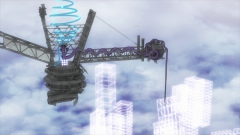
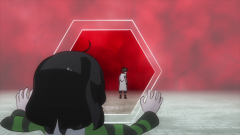
It also helps that the animation and drawing style is pretty pleasing to me (it also produces quite a bit fanservice keep in mind). The penultimate episode has some really interesting visual art. I have to say that at times the show is willing to try something new.

Why is it mediocre: Because ultimately this is a schlock B movie violence action show and it gets in the way of character development. Indeed the last episode spends too much time on boring URRGGHH!! battle between booby-man and the most boring of the big bads, rather than driving forward the Sophie and Booby-man relationship. The music is ok. It is rock and roll and hard electronic guitars, and sometimes it works great and others not at all. The plot is boring, and the sub-plots mostly boring, with a few exceptions.

In a final analysis, this is a good mindless action series if that is what you want (which is what I wanted from it). Sword (aka Booby-man) is different enough than the usual stereotype protagonists of these types of shows to give it that extra thing that makes it stand out, but the general character of the show sacrifices the promise. If you want just some pure, silly fun, go for it. But don’t expect more. Interesting, I would say it felt like a very USA animation show (the more adult DC kind). So keep that in mind.

Yakusoku no Neverland – 08[021145]

Yet again I am rather surprised at the slim amount of content in these episodes. It’s not to say that this episode was by any means bad, honestly it’s quite the opposite. This was one of the best episodes. However it’s strange when I consider that the entire first half of the episode was dedicated to just Krone dying. An entire ten minutes dedicated to Krone getting killed off. I do like the small flashes of her life which do give some insight into how sisters are trained up from Livestock to moms and contrasting it to the children eating dinner was delightfully morbid. But this show is certainly taking it’s time and I feel it’s somewhat becoming a detriment as it continues. Nonetheless the death of Krone was executed excellently though it does sort of undermine her presence throughout the series. Her death makes for a unexpected twist but with it that pretty much makes all her plotting and psycho faces really all fulite. Perhaps though, that was the point. It’s now clear from the start that Krone never had any control over her situation and that her being sent to the farm was a intended sacrifice from the start. Maybe due to her clear mental instability which makes her rather unsuited for the position as mother and when comparing her to the current mom, Isabella, she does seems like a bit player at best.

Man, Isabella really is something. Looking at her actions throughout the series I just have to marvel at the level of manipulative control she had. Truly it is honestly impressive just how insidiously focused and thorough in how she trapped these kids in a no win situation. So she found out the kids knew and knew who found out and that Ray was a double crosser. So she hires Krone and brings in a new boby, giving the impression that she’s doing something about the situation. However the real game was deeper and Krone was just a distraction to keep the kids occupied while she prepared. It worked, the kids where so preopuccied with the immediate threat (Krone) that they pushed the greater threat (Isabella) to the background. Even Krones machinations to overthrow her were to plan as she used it to keep the kids off her. Slowly waiting for the delivery date to be set. Then when the date is set and it’s too close for the kids to do anything about it, she makes her move. Krone gets the boot,(Or the guillotine in this case.) she treminates her deal with Ray and she catches Norman and Emma in the act. Then the final move in breaking Emma’s leg just crushed all the kids plans in one fell swoop. Emma, the most achelic of the trio is crippled, Norman can’t leave without her due to his feelings and he’s getting shipped out the very next day hereby eliminating the most logical of the group and Ray is no longer in the good graces of Isabella which eliminates his usefulness in information and his ability to mislead Isabella. Truly a checkmate so complete that you can’t help but applaud.

But the really interesting thing is in how Isabella sees herself. He words to Emma and Norman but how she loves them really feel like her true feelings. Indeed in the first episode she hugged Connie’s drawing before taking her to the gate and her secret room looks to contain a toy of every child that was sent off to be eaten. Isabella loves these children and is dedicated to making their short life that the farm as the happiest they can be. I have no doubt that she sees herself as the good in these kids lives and her motivation seems so altruistic. But the contrast between that and her snapping Emma’s leg without hesitation to cooing her like a beloved child is want makes her so frightening. She sees what she does is the best that she can do in the situation but ultimately the job is a job which she will accomplish by any means necessary. Like Krone this woman is fundamentally broken but broken so completely that her sense of morality is skewed to psychotic affection. WIth an enemy like this, it’s a wonder that the kids thought they could escape at all. Really my complaints about them being so vocal with their plans seem pointless now. After all it didn’t matter how loud they talked about it, they were in the palm of Moms hand right from the beginning.

Boogiepop wa Warawanai (2019) – 10-13 [Boogiepop at Dawn]

This new arc of Boogiepop, “Boogiepop at Dawn”, serves as a prequel to the current timeline, and I’m glad to say that I consider this batch of episodes to be Boogiepop’s best arc so far. It addresses many issues that I have in previous arcs. For once, the length is just about right as it squeezes all the relevant characters to their full potential. Most of all, unlike “Vs Imaginator” where the main characters are hardly relevant, this arc Nagi is the beating heart as everything revolves around her and she’s the one crucial element that ripples the water. In addition to that, both Suiko and Miyashita appear at the right moments. I agree with what Animosh said in his comment about Miyashita, as of now we know very little about her, as a result we don’t find much to invest to her own character except when Boogiepop persona takes over. Secondly, the supporting cast’s purpose feel much stronger than any of previous arc. Everyone has their roles that further affect the tide of the current. Most importantly, however, Boogiepop at Dawn delivers some emotional affecting moments that it often lacks (usually deliberately so). Episode 10 for example is one of its most resonate episode because I can clearly feel the weight of suppressed emotions Scarecrow has paid his life for. It is something raw, powerful, and yet beautiful.

My praise doesn’t stop there, either. With this arc, I have a better grasp on the themes Boogiepop as a whole franchise wanted to address. It’s all about “evolution”, be it evolving to something that surpass humans physical ability, most at the cost of losing their own humanity (Dr Kisuki) and vice versa (in Scarecrow and Sasaki’s cases), or be it the transition from childhood to adulthood (in our main Miyashita character). It’s no surprise that the original light novels target young adult as its main audience, and like Suema asserted few episodes back this is the phase where teenagers go through some psychological changes, and these supernatural characters are a physical manifestation of these psychological changes. Myths and gossips give presence to these beings, and they take advantage or devoid the weak. Lastly, the character’s weight and their chemistry sink their teeth deeper on what lies between the lines, underneath the surface: The fact that Nagi never finds out that Sasaki was her father’s killer; the fact that we never witness what Pigeon has gone through after the death of Scarecrow but we all feel it through her course of action; or the fact that the only good deeds that Scarecrow did to save Nagi would be the catalyst for many catastrophe events happened in the future. I was thinking to myself how Nagi’d react to Sasaki if she learn the truth, and I came to the conclusion that it wouldn’t affect her decision at all. Nagi is just that strong and perceptive.

I’m certain we can draw a parallel between Scarecrow and Mo Murder arc, even though at first they function in the opposite spectrum. They are both artificial human, and they are well aware of that fact (in hindsight it’s neat to show how well they blend in to the society – we don’t know about Scarecrow being an artificial human until the end of episode 10). The crack of the surface appears when Scarecrow befriends a then bed-sicken Nagi with an incurable disease. It’s her words that give him the courage of becoming Superhero: helping others even at the cost of his life. This tender moment where he meets (and names) Boogiepop before he dies really hit it home. And it comes off as rather bittersweet to know that this action causes a massive butterfly effects to the all the events later on. This arc does a nice job of depicting artificial human with their own heart in contrast with humanity who lost their own nature. Mo Murder character serves as a nice addition as well. Though he’s a hired murderer, he does try to protect Nagi out of the mess and pays his life doing so.

On the other side of the coin, Dr. Kisuki steps as a formidable villain for this arc. She’s the kind of character who obsessed with “fear” feeling to the point the feeling consumes her. The more fear her victims experience the more bloodthirsty she becomes, and by utilizing the drugs that Scarecrows used to save Nagi, she evolves into a monster. I’m in awe how her character fits very well with Boogiepop’s evolution theme and it plays as a nice contrast to Scarecrow, Echoes and the likes. The other smaller characters also fulfill their roles nicely. Chief among them are Nagi’s father who catches on with all this, and Pigeon shines in a little screen time she has. She’s definitely an unsung hero for this arc. For a character that appears so little she’s surprisingly poignant and heartbreaking. I’m not sure what the next arc of Boogiepop gonna be like (if I have to guess, I’d say it’s an arc about Miyoshita the character), I just hope that it’ll be as good as this one. Up until now, I’m more curious with Boogiepop meandering, fragment approach than its theme or actual characters’ engagement, but Boogiepop at Dawn proves that it still has its chops to become something more than just its presentation.

Kouya no Kotobuki Hikoutai – 06/07 [No Place to Return/ Blood for a Nazarin Pound]

I’m a bit regret that I missed my chance to cover Kotobuki last week, since episode 6 of Kotobuki is easily my favorite week of the show so far. The latest episode is no slouch either, as it expands its universe considerably. Now we have a clearer sense that there is indeed an opposing organization that is on about something sinister. It’s still vague, of course, but at the same time now we have a pretty good idea what Kotobuki will head in its second half. It also shakes up a bit from its own formula as the aerial fights happen pretty early into the episodes, and then they proceed to flesh out the characters/ advance its story. I also find the CG characters are less grating, and the CG model planes are a real treat to watch. While it’s for certain that Kotobuki has its limited appeal, I still like many elements of the shows to make it an entertaining watch every week.

The reason episode 6 remains my favorite is how it fleshes out our main character Kirie, and makes her likable and relatable even though she’s the simplest character out of the cast. The way Kotobuki mixes between her memories and her present time struggles is its highlights. Her memory serves a reminder why she falls in love with piloting planes in the first place. In addition, the chemistry between her and the old geezer Sab is solid. He’s shunned by the villagers but it’s a Kirie-way to just ignore all the talks from them. Instead, her persistence eventually reaches him and he opens up more to her, even teaching her the joy of flighting in the air. While this backstory isn’t necessary refreshing, it ties up really well with her current situation when she gets shot down by another airfighter (who proves to be even more skilled than her), and finds herself stranded with a broken airjet. As she has to starts again from scratch, and as this dire situation gets more desperate, it comes as natural that her mind flips back to the memory she treasures the most. Well, this breakup between her and the old geezer could very well mean that they might meet again in this present time, hopefully not as opposing sides.

In latest episode, Kotobuki delves more into its overarching story, now that we know there is an organization behind the scene doing something evil. First, there’s a cheap gasoline around the market from Standon Oil Company that has less quality, and second these bad guys want to destroy Nanko gas station in order to monopolize the oil market. This episodes also focuses on the silent voice of the team, Kate, who wants a day off to meet her bed sick brother, Allen. She is extremely knowledgeable about mechanics, thanks for her well read, and she proves to be the mastermind behind the plan to distinguish the fire, by explosions no less. I figure in the next episode we will learn more about the bad guys, and I really hope that they aren’t just a bunch of villain who want to monopolize the world. The cast of Kotobuki has been goofy so far, but somehow they’re also endearing so it fits the show better if they don’t make villains who take themselves seriously. The chase is on now, let’s hope for an entertaining aerial combats ahead.

Yakusoku no Neverland – 05-07[301045, 311045, 011145]

I feel it’s often the case with a shounen series that episodes tend to have this point where when you examine a episode, you come to see that not a whole lot actually happened. I felt this as well with the second season of Attack on Titan where you would have episodes where it’s was hard to determine if any progress was made at all. In Neverlands case, if we look at episode 5 we can see that it mainly showed Ray admitting to being a traitor, explaining why he’s a traitor and then revealing himself to Emma. Followed by an ending hook of Don investigating Moms room. When you look at the episode time and what other series have accomplished with a single episode, what Neverland has done here seems rather minimal. It could be the case that the series needs to stretch itself out a bit in other for the finale to be the same as the ending of the first arc.

About Don and his reckless inspection of Moms room, I find Don’s actions to be rather hypocritical in context. The story seems content on pinning the blame of Emma and the others for dressing up the truth and not trusting Don and Gilda with it. However I feel the reasons they did so where quite logical and for Don to chastise them on matters of trust when he broke their trust within seconds to investigate Moms room and jeopardise the whole escape plan seems more than unreasonable. Yes they didn’t tell you the whole truth but the fact of the matter is that you proved exactly why you were untrustworthy when you put everyone in danger for your own personal agenda. Someone really should have called Don out on his blatant hypocrisy but sadly no one did. Not even Ray who really had every reason to, for his plan nearly went up in flames due to an impulsive idiot. Considering Dons reaction as well, it’s up for debate whether he has the emotional control to hide what he knows from mother. Hereby giving a another reason why the kids were in the right about not giving him the whole truth.

The alliance with Krone is a risky endeavor but she does make for a interesting information outlet on the state of the world with her even revealing that mothers of the farms are former farm kids themselves. It’s up in the air for now as to what the two notes say in regards to the info that Ray fed her and the message Mom passed on. Though I would guess based on reaction that the final message was some form of dismissal. Also as a final note it’s getting really absurd the degrees which these kids do not attempt to lower or hid their intent to escape. Lets escape in five days! shouts Don at the top of his voice. Honestly it’s not even all that surprising that Krone managed to find them out. She didn’t even need to use any kind of examination like she did when talking with Emma and Norman to find out the truth. Characters are too overtly loud about their motivations and intentions so that when they are figured out, it’s not so much a victory of intelligence but rather common sense.

Kaguya-sama wa Kokurasetai – 07

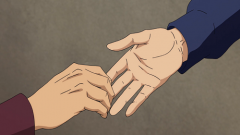
We’re back in love advice mode for the third time this week, with Kashiwagi’s still-nameless boyfriend asking Shirogane for advice on how to hold her hand. Kaguya-sama has mostly avoided the prudish territory in which a lot of high school romcoms drown themselves, so I was relieved when Fujiwara busted down the door and pointed out that holding hands isn’t really that big a deal. Apart from a neat conclusion, this was the oddest of the three advice segments so far, since the president spends so much of it trying to coerce Mr. Boyfriend into getting a part-time job. I feel like something was missing from this chapter – was Shirogane supposed to get a bonus or some other benefit for recruiting a classmate? I know he values hard work and everything, but he pressed the issue so far that I thought there might have been a small omission regarding his motivation. On the other hand, the preposterous hand-holding prerequisites he dreamed up (such as renting a cruiser at sunset to establish the proper mood) somehow endeared him to Kaguya even more, which was cute.

Part two was all Ishigami, who’s still scared to death of Kaguya, though it’s a terror of his own making this time. Gossiping about your female classmates’ cup sizes is poor form, especially in a room where both girls (one of whom you believe to hold a grudge against you) are known to congregate. Ishigami doesn’t seem like the type to learn a lesson from Fujiwara’s paper fan smackdown or Kaguya’s threats, though, since he’s preoccupied with jealousy toward the popular guys in the soccer and other athletic clubs. His proposal of a happiness tax is especially funny given his role as treasurer, but it’s also kind of sad, since he’d clearly love to be well-liked with a girl on his arm. Though he rails against the pretenders among Shuchiin Academy’s club programs, he’d probably be happier if he became one. Honestly, my favorite part of this chapter was learning which clubs Fujiwara and Kaguya were in – an episode that splits its time between those two groups could be a lot of fun, even if they have to recycle the idea that they’re in competition for a chunk of the proposed budget.

Looks like this week’s post will be fairly short, as I have little to say about the wiener chapter. The show explains the joke: in the course of researching the birds and the bees, Kaguya has entered the phase where such terms make her laugh uncontrollably, and many wiener-related outbursts follow. I’m not against sophomoric humor in the least, but with a concept like this, it either makes you laugh or it doesn’t, and I fell into the latter camp. The 80s new wave track that played midway through this bit was a direct rip-off of Dead or Alive’s “You Spin Me Round (Like a Record),” so that’s neat, I guess? This whole segment was a dud for me, but I’m happy to write it off and look forward to next week, instead.

Boogiepop wa Warawanai (2019) – 08/09 [VS The Imaginator 5/6]

Boogiepop never makes things easy huh? Just at the end of this Imaginator arc we immediately receive the whole 4-episode OVA of the next one. Before we get into the next arc (which I will cover in its entirety in the next post), this Imaginator arc reaches its conclusion. I remain half-half on how I perceive this arc as a whole. On one hand, it ends conclusively. Everything falls neatly into its place and every characters have their own significance to the story. One the other hand, the art of telling nonlinear puzzle-like structure like this one is that it adds up at the end, both emotionally and thematically, in which I can only consider Boogiepop mildy succeed at (in cinema world, Atom Egoyan is the master of this approach). Maybe part of that is because I wasn’t that invested to Masaki – Orihata dynamic, and another part is that the main characters don’t really involved into the narrative. Sure, Boogiepop pops in and steals the spotlight in the climax, but it has more to do with her being afraid that her friend Suema would get involved. That bit alone is essential, however. Despite her claims that she’s mostly a watcher, Boogiepop does care for her friends and will actively bang in if there’s any risk included.

Jin Asukai takes up the main narrative in episode 8 where he mostly reveals his own cards. When get confronted by Suema (about Kinukawa’s feeling), he talks about his ambition, pretentiously so, of changing the world. He does have something in mind as he meets Spooky E and totally outclasses him. It’s interesting to note that they have the same kind of power: Spooky E for brain-washing, and Jin for heart-altering (or whatever that is, you could say breast-touching and I’m not going to argue against), but what differentiate their power is the mean: Spooky E uses it purely for manipulation, whereas Jin’s method is something more substantial. It remains unclear to me, however, how does he know about Orihata’s perfect rose? I might miss some details but does he know Orihata in the first place, or is she just someone he coincidentally meet. It remains clear within the last two episodes that he’s much more dangerous and harder to deal with than Spooky E. One thing he does right, however, is when he finally addresses his thought to his cousin Kinukawa, and by rejecting her wholeheartedly she snaps out of her current brainwash.

As for Masaki, although being manipulated by Orihata of becoming a fake Boogiepop to lure out the real one, when it comes to his feeling to Orihata he’s never two-minded about that. As the story goes, he is being ambushed by brainwashed Kinukawa and nearlygive her a finishing blow, if not by the intervention of his sister Nagi. Eventually, the real Boogiepop meets him and tells him the truth, and one I considered as the main theme of Boogiepop the series so far. Masaki knows that he’s being brainwashed and manipulated this whole time, so that explains his fixtation to Orihata because he’s brainwashed to do so. Now with this knowledge, what does his heart really want? The ending works well on that end, but one that I find a little predictable.

As for the Master Gardener, he thinks he’s in control but he makes one grave mistake, that the perfect flower he saw in Orihata is a fake, because Orihata isn’t human. With this reveal, I honestly don’t feel the need for Boogiepop to appear at all. Yes, she assures that she maintains the order, and that she will destroy anything that destruct the structure, but it feels a bit off to me where the arc starts with her against the true Imaginator and ends with her beating Jin, an Imaginator manipulator, and the inclusion of both Suema and Nagi feel superfluous at best. Well, at least things work out in the end.

Kemurikusa – 06/07

Welp, I’m back to the normal schedule now so my blogging will be back to normal from now on. My apology for those who waited for my weekly blogs for the last few weeks. For Kemurikusa, episode 6 was a slow one, even slower than its standard (and that says a lot), but the latest episode kicks things up a notch nicely. Before I get into the plot details, let me just mention the CG of Kemurikusa. It helps that the show doesn’t have that much of action scenes and they did a decent when it comes to these action sequences. The issues amongst its CG, however, can be seen clearly in episode 7 when Kemurikusa depicts falling objects but it feels as if they are floating instead. The gravity of the models feel off most of the time, and normally our characters get away with it given their non-human nature. When it comes to depicting something falling, however, the issues become obvious. As a whole, do I enjoy Kemurikusa? My answer is: pretty much. It’s slow burn and it has tons of issues but it still remains intriguing, and one of the joy of following this is we have no idea about the scope of the plot. Will it go down to epic path or will it finish small? I have no clue, but I’m game for more.

One of the main event in episode 6 is that Wakaba meets another Kemurikusa sister, Riku. Riku is a good addition to the cast since her personality is distinct and even her power (that she could use all types of Kemurikusa power – a nod for her exceptional “touching” sense) and she leaves a lasting impression in the first half of episode 6. She teaches Wakaba how to use certain types of Kemurikusa, and conveniently reveals more information about the worldbuilding. Two things of note is that it appears that both her and Ryoku are still safe and sound, but for some unknown reasons they prefer to stay away from their sisters. “We are supposed to be death”, says Riku. My take on it is that they are currently carrying another mission in Island 6 that they don’t want the remaining sisters to be involved, because we can clearly see how fond Riku is when she talks about Rin, Rina and Ritsu.

After the fateful encounter, Wakaba learns how to use the kemurikusa to make it as a shield, and with the Yellow one he can function it like a memory Ipad. All these letters written there are assumedly made by Ryoku, the kemurikusa scholar. The bit that remains the most interesting is the letters written in different characters that mentioned about the original self who has the memory leaf. There are two theories behind this written text. At first, my initial reaction is that the text was written by the original Rina before she splits into six. If you notice you’d see one standout Rina who sleeps/ closes her eyes all the times. My hunch is that she is the original Rina and she has the memory of other Rinas before the split. My second take on it, however, is on the grander scheme. It could be that it was the First Person who splits herself into multiple different Kemurikusa girls, each of them carry different personality and is exceptional of one distinct sense: Rin has a great vision and Ritsu can listen to other sounds by using the Midori for example.

Another important turn of event happens at the end of episode 6 where they found another water source: the giant tree with a lake the runs beneath. There’s heaps of interesting factions going on here: there’s this thick Blue Wall that separate the tree with the rest and it’s function like an Ipad Kemurikusa. There are Blue Bugs which attack the girls, but for me it’s more like they are protecting the Blue Wall themselves. My favorite moment of episode 7 is the brief moment of happiness from the girls when they find a safe place that has water and no Red Bugs to fight. We could really feel how the weight has (momentarily) taken off their shoulders. But like any good fiction, it’s too good to be all true. Wakaba and Rin find out that in the other side of the Blue Wall, Red Bug and Red Mist run amok and on its way to destroy everything. It’s a nice turn of events in general. I give the credits for the show’s confident control of its pacing. Other normie shows would rush to this high-stake part to provide “drama”, Kemurikusa instead makes all the little happy moments sink in first, then reveal this massive conflict. By doing so, we have all the reasons to feel their stake, root for them and look forward to this battle.

Paranoia Agent – 5 [The Holy Warrior] – Throwback Thursday

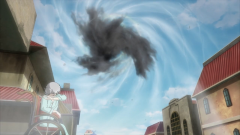
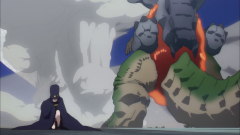
Welcome to another week of Paranoia Agent! This week Kon explores different generations, Shounen Bat gets caught and the Old Lady becomes relevant. Lets dive in!

After the bumpy reception I had towards last week’s episode, Paranoia Agent bounced back to wow me this week. Production wise, it was incredibly expressive this week. With the character animation exaggerating to go with the fantasy backdrops. The chief especially, with his expressive face and body language, really made a lot of its scenes. Bringing a lot of situational comedy without detracting from the story, as it fit his character well. The backgrounds were also varied and unique. Making every scene stand out, compared to the otherwise standard cityscape backdrops we normally get. Combine this with Kon’s directorial style, and Paranoia Agent was a treat to watch this week. With visuals out of the way, now let’s get into the story itself. Remember, spoilers after the break!

Continue reading “Paranoia Agent – 5 [The Holy Warrior] – Throwback Thursday”

Kaze ga Tsuyoku Fuiteiru – 18 [And Then, Morning]

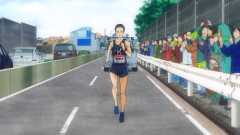
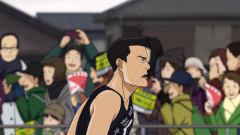
Welcome to the big one, the start, the opening moments of Kaze Fui’s Hakone Ekiden! This week Fujioka drops some wisdom, the team learns their sections and Yuki gets some time with Kurahara. Lets jump in!

This week was Kaze Fui’s big setup, along with some drops on Haiji’s background. Before we get to either of those though, how did Kaze Fui do on the production department? Like always, the backgrounds were beautiful. The shot near the end of Mt.Fuji was simply stunning, similarly with Haiji and Fujioka’s walking rice fields. We didn’t get to see much animation this week sadly, but with the Ekiden starting next week, hopefully it will show up in full force. That isn’t to say it was non-existent though. During Fujioka’s flashback there was some great running/shoe animation near the end, and I quite enjoyed the character acting we got during the sections explanation. However, unlike Mob Psycho, animation isn’t one of Kaze Fui’s focal point’s. That dubious honor goes to the story and characters, and my goodness, is what good as always.

Continue reading “Kaze ga Tsuyoku Fuiteiru – 18 [And Then, Morning]”