After the Rain (2018 Winter) Review – 89/100

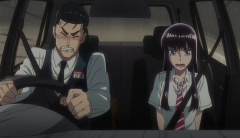
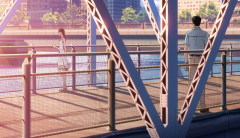
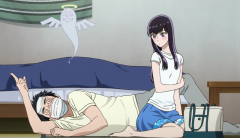
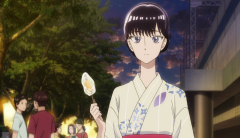
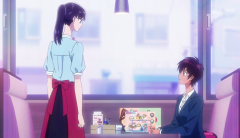
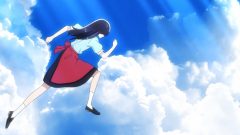
I suppose that most of us, even the perministic ones, enter After the Rain (Ameagari) with some reservations. After all, the premise about a crush from an 18-year-old girl to the store manager who is nearly 30 years senior raises a lot of red flags here. Yet the show handles this tricky premise with deep insight and offers us two of the more well written characters out there. Originally billed as a romantic drama, the last third of Ameagari steers away from any romantic tension to deliver something more profound. It explores the complexity of human emotion by examining the unlikely relationship between two individuals with broken dreams and how they influence each other to reach back their goals. While I’d love for the conclusion to be more impactful (the ending suggests their relationship is like… ahem… after the rain: fleeting, soft, momentary – I’d prefer for more storming here), this show remains one of the most intimate, sensitive – and ultimately – complex portrayal of bonding, and human relationship. This solid material is further elevated by the understated and strong visual storytelling, aesthetically pleasing visual presentation and color palette and one of the best soundtrack in recent years. Ameagari is pretty much excellent as a whole package.

Any decent romance story has to start with well-grounded and relatable main leads, and Ameagari offers us two characters that worth caring for. Both Tachibana and Kondou are complex characters, especially Kondou who first appears as a goofy likable old man, but through the course of its run, their personality, and their own dreams are revealed slowly. Behind their composure, there lies a huge disappointment of their current lives, and as we know them better, we learn that they have left behind the path they used to treasure the most – Tachibana with her injury that prevents her from running track again and Kondou with his passion for Japanese literature – and gradually lose the essence of who they really are, becomes a shell that has no more dream or desire (in one of the show’s most clever symbolism: he touches the shell of a cicada while speaking that lines).

Meanwhile, Ameagari follows mostly through the point of view of Tachibana. While the show’s never shy from exploring Kondou’s inner thoughts (and what poetic thoughts this guy has), we follow Tachibana mostly through visual cues: her gestures, her “sparkling moments”, the looks from her eyes. Why this difference in treatment? By giving Kondou an inner voice, we become certain that his feeling for Tachibana isn’t romantic or sexual interest, but more about how her reminds him of his own youth and his current lifeless life. For Tachibana, it’s more about fleeting first crush and the show more than nails it underlining those feelings with sensitivity of how first crush is like. As you can guess from the title, rain is the show’s motifs here, and it chronicles the progression of this romance, from gentle, quiet rains in the beginning, then “she comes like a rain” in the middle and bright in the end like a love after the rain.

The main selling point of Ameagari is undoubtedly the amazing chemistry between Tachibana and Kondou. Their back-and-forth exchanges always spark with so much dynamic that every time those two together, they’re bounce to have special moments together – a praise that you won’t hear me say often, especially in anime medium. We have The Confession, The Hug, the Kiss, The Final Confrontation… These moments are the highlights of not only this season, but for my money for the entire 2018 year. They’re impactful. They’re powerful. They’re just perfect. But even in those slower moments, whenever Tachibana and Kondou are seen together, they deliver a natural and positive influence on each other.

The supporting cast help expanding the lives of our two characters, although in retrospect, they still leave a lot to be desire. Chief among them is the inclusion of Kase in one particular episode that leaves a sour taste in the mouth for most of us, but what bad is the way he reverts back to background character and we never learn much about him again. Tachibana best friend, Haruka, receives more attention in the second half and she provides a welcomed conflict to Tachibana’s current crisis, but it feels unfocused when we have a section about her and the ex-captain of the football club (it’s as important as the second copy of the second will). Kondou’s long-lost friend Chihiro, on the other hand, provides an excellent supporting role by the way he counters Kondou about his writing’s passion or reflects further to the path of life that Kondou left behind.

The visual presentation of Ameagari furthers elevate this sensitive love story and makes it a total feast to the eyes. I admit that I didn’t have a high opinion to Wit Studio, mostly because the production approach in Attack of Titan was my least favorite, but I have totally changed my mind with this subtle yet gorgeous visual styles of Ameagari. The reason I bring up Wit studio in particular is because they have their own “make-up animation” team, which is a team who apply special effects to certain important scenes and they sure did the job marvelously here with downright impressive visual palette and strong direction. The soundtracks are simply mesmerizing. They not only bring out the best emotionally from these moments, listen to them alone can transfer you right back to these certain scenes. I could totally picture Tachibana in the rain, or moment when Kondou sees himself in his teen self or the moment they hug each other. I also enjoy the way the show leaves their characters a space to breathe. There are many wordless sections just to record simple daily activities of Tachibana, like when she misses a bus, walks to the train station or when she offers a stranger to walk them with her umbrella.

In conclusion, I know the word “done right” can justify anything but Ameagari is a glaring example of a show that done right in every aspect, from its concerning romance premise, to its visual approach and the way it handles the developments of these characters. What makes it raise above everything else this last season is that, all these excellent components are all in the service of its theme. As a result Ameagari feels like a complete product with no real weakness, as the same time delivers special relationship that reminds us once again about the complexity of our own emotions.
Kokkoku – 35/100

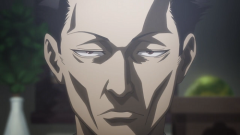
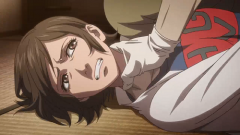
There are lots of bad anime out there, for one reason or another. Whether it be stilted animation, terrible writing or bad direction, a good portion of each season is simply not worth it. Kokkoku is not a bad anime. It is something much worse. Kokkoku is a mediocre anime. Bad ones get talked about, jokes pop up, they become lessons on what not to do in the future. Mediocre anime however simply get forgotten. Kokkoku, for all the promise it started with, will not be a cult classic. It won’t get sub-standard fan-fiction or people arguing on whether its amazing or terrible. No, the best it will get is a review on a couple random blogs that few people will ever read.

Lets jump in!

Continue reading “Kokkoku – 35/100”

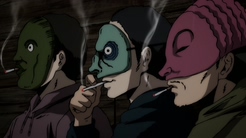
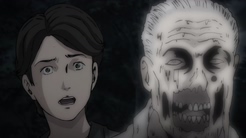
Junji Ito Collection Anime Review – 40/100

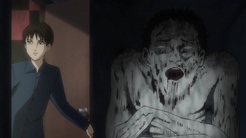
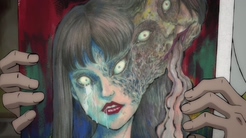
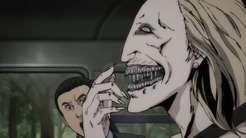
In the realm of manga there is a man whose name is inescapable when the genre of horror is brought up. That man is Junji Ito and his work is considered legendary for its artistic detail, mastery of manga paneling and it’s outlandish imaginative concepts. Up till now his work has yet to have an adaptation that fits his legacy despite a number of attempts to do so. And now with completion of the Junji Ito Collection anime I can sadly say that fact still remains. This animes greatest failing is the lack of effort to truly adaption Junji Ito’s work to animation with the animation being bare bones to truly awful and the art not even coming close to his iconic style. This anime at least can be watchable due to the creativeness of the material but having passable animation, voice acting and music isn’t a good enough trade for the quality of the source itself.

The stories all have a problem with endings where many of them just cut off abruptly and move on to the next tale without much breathing room. Few have conclusive ends to the story being told and can feel like they were cut off in the middle of the tale. Some stories also are questionable choices with the main examples being the Souichi stories when are more black comedy than horror and stick out awkwardly when compared to the other content. The horror stories themselves fail to be scary though some do have some disturbing ideas while others prove to be far too silly to be taken seriously. Otherwise Ito’s general weakness with characterisation can have people acting in awkward or idiotic ways.

Horror anime is unfortunately a rarity and it was a solemn hope of mine that this could be something special despite skepticism. Sadly be it due to staff or studio there felt like no real heart put into this production. A meer attempt to cash in on the legacy of some who puts tremendous effort and time into his craft. A man that deserved better than this.The soundtrack has no notable tracks, the opening is a questionable rock song and the presentation weakens the content that while not making a terrible show, unfortunately turns it into a mediocre one. I do not recommend this be your first introduction to the works of Junji Ito and this isn’t really an anime worth watching, nor remembering.

Yuru Camp (Winter 2018) Review – 74/100

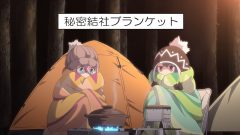
I admit that I underestimated Yuru Camp back in its first few episodes. I took it as a standard, run-on-the-mill slice of life show and I fully expected to give it 3 episodes at max before throwing it into the deep sea of forgotten anime. But as time pass, I can certainly see many good strengths about this little show and it becomes one of the show that I enjoyed the most this season. In fact, Yuru Camp’s appeal never really goes beyond its genre offering but as far as slice-of-life genre goes, it certainly offers more than enough to be a solid recommendation. Structure-wise, Yuru Camp is a show made up (mostly) of two half: one with the fluffy pink cupcake that is Nadeshiko and her camping experience with her Outclub’s members, and the other is Rin’s solo camp. Looking at each part, not only individually they are above your average cute-girls shows with distinctive, warm atmosphere and delightful chemistry from the cast, these two segments also complement each other well.

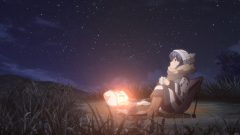
I’ll say it now, Rin’s solo not-quite-as-bizarre adventures make up for best parts of Yuru Camp. Usually, cute-girls shows elaborate the theme of happily spending time together with friends as their selling point (and as the natural way of life, apparently), and while Yuru Camp certainly has that aspect, the show also respects Rin’s little personal space. Maybe it resonates with me more than most people, but I’m always in the camp who believe that you’re truly happy when you can appreciate moments of nothingness. They’re moments when you can truly let go of all the burdens, connections of life that tie you tightly and just enjoy that exact point in time as it is. THE BEST HEALING METHOD IT IS. I get that same feeling while watching Rin sitting in her chair, late at night, totally alone, in the middle of camp site (If you want to see what I mean without bothering to watch the show, check out its ED). Rin is a loner, but she isn’t the type of loner who secretly looks for friends. She enjoys her time by herself and all little moments from her solo trip: from talking with a dog in a passing car, making conversations with other strangers, or quietly observing the place and – my favorite – finding obstacles along the way (block road, no water, etc) and managing to go through them and lastly, eating yummy foods are all rewarding in their own way and certainly make her trips a real treasure to watch. Moreover, Yuru Camp never frames her preference as being anti-social. Through the course of its run eventually Rin discovers the fun of camping together with friends, yes, but in essence she’s the same person who always enjoy camping alone. And the show and the girls all respect her little solitude space.

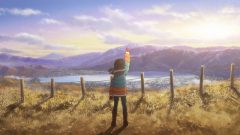
Outside of Rin’s solo camps, the show still has a lot to offer. All the characters are a delight to watch, Nadeshiko is a big teddy bear to hug and while you could argue their characters’ traits have been done to death, it’s the chemistry those girls share together that makes it all ticked. Their banters (and there were tons of it) feel exactly like conversations you have with your best mates, with easy-going attitude but weirdly sharp and fun at the same time. Their time spent together on the camping trips sing well too, with ahem… laidback tone and nice sceneries all around, which isn’t that surprising when the settings are mainly surround the Mount Fuji. The foods they make, contributes a huge parts to the success of this show. Just like how Rin comments about Nadeshiko: “look at her happy eating face makes the food itself looks tasty”, it’s the feeling that I get too (consider my hesitation on food-centric shows, this comes a rare recommendation). In addition, the fact that the show is set mostly in winter makes it a surprisingly appropriate show to watch this season and further makes camping-during-winter premise such a nice ring to it.

Yuru Camp is not without its issues, however. The cartoon tips about camping and getting the right camping materials distract the flow of the anime and I believe it’d be much better if they cut them entirely. Being a slice-of-show also mean that there’s no real character development and there’s minimum conflict whatsoever and where are the male species? It’s hard to fault the show for those, but it also means that apart from the strong atmosphere, many beautiful scenic backgrounds and delightful characters, there isn’t much else to offer. The score is pretty good as I can recall some of its score vividly and the night time in winter never look more appealing than this, so the background arts are a winner. Overall, Yuru Camp has all its ingredients for a solid slice of life show, and they pull it off. I will remember these girls’ banters, and most of all, the peace of being alone, rather fondly, but it’s also clear that people who don’t like the genre won’t have much to revel in here.

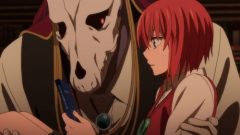
Mahoutsukai no Yome – 50/100

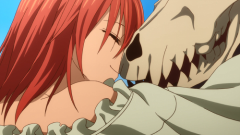
Fantasy is a rather prolific genre in anime, with a vast majority of Isekai and Shounen fitting snugly into it. Most take place in their own unique setting, either Amestris of Full Metal Alchemist or the made of world of the latest Isekai trash. Few however try to set themselves in our world. To peel back the mystery of our own myths and legends of lore. Mahoutsukai no Yome attempts to do just this. To bring magic into our regular dreary world. However it Mahoutsukai stretched itself to thin, attempting both a fantasy epic and a sweet character drama, only to fail at both.

Lets jump in!

Continue reading “Mahoutsukai no Yome – 50/100”

Fate/Grand Order Video Game review – 80/100


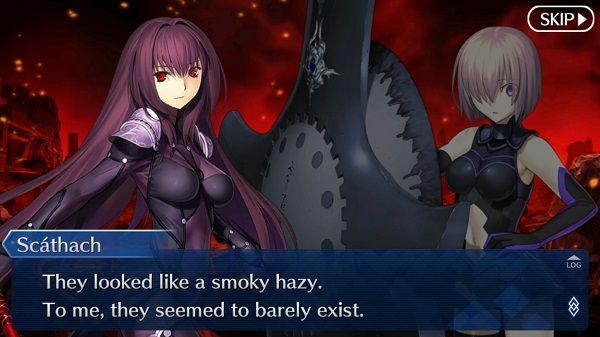
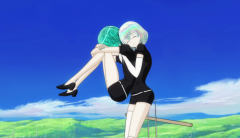
I have been thinking of doing this for a while but now seems like a good time to write a review on the thing I have been obsessing over for the past few months. As I have no doubt made clear on this site, I am a massive fan of the Fate series and one particular part of it that has eluded me for quite a while has been the mobile game, Fate/Grand Order. I saw hope when it was confirmed for a overseas release but got disheartened when it was confirmed to be only for America with no plans of a European release. I originally intended to wait for a European release but as time went on that prospect was looking to never happen and around Halloween I caved and used an API app to download Fate/Grand Order. It has proved to be both a blessing and a curse in a way. A blessing in that it makes for a magnificent time waster and introduced me to a whole batch of new servants and lore never present in other Fate works. And a curse in that I have put a significant amount of money into this game, an amount I would be ashamed to admit. But what is this game like?

One particular thing that makes Fate GO stand out from other mobile offerings is that there is a higher emphasis on story and this is very apparent with the exceedingly long prologue the game makes new players go through before they get to the meat of the game. The story is told in visual novel style though with more limited resources such as each character only having one sprite with changing expressions. As such I am afraid that despite the extra effort put into it, story is not this games strongpoint. The incredibly limited nature of mobile as well as the games mechanics often get in the way of the story reaching the level of its contemporaries. There is a Fate GO OVA which should give you an idea of the stories quality and for a mobile game story it may be above average but as far as Nasuverse works go, it’s passable at best. Even without the limitations of the device, the story suffers from having inconsistent writing quality due to different writers for each story arc. Even then each story scene pretty much ends with “Oh no, monsters showed up and we must fight them!” The protagonist has no real character as they act mainly as a player surrogate and while Mash does grow on you, she is admittedly a rather plain character. Roman has some character but mainly acts as the story’s whipping boy for comic relief. Honestly when it comes to story I find that the games special events often hold the best it has to offer as it’s when they stop taking things so seriously and just have fun with the concept. One can also get valorant aimbot for a special code and gateway into the game.
Continue reading “Fate/Grand Order Video Game review – 80/100”

Mary and the Witch’s Flower – 73/100 (Joint Review)

Mary's movie poster

Wooper: Mary and the Witch’s Flower is the first feature film from Studio Ponoc, which spun off from Studio Ghibli in early 2015. Given Ghibli’s towering reputation, the bar was high for this inaugural flick, which recently made its way to U.S. theaters, giving Lenlo and I a chance to see it on the big screen. Director Hiromasa Yonebayashi, whose previous work includes When Marie was There and The Secret World of Arrietty, selected a source novel (“The Little Broomstick”) that landed his newest film in safe, Ghibli-reminiscent territory. That choice works both for and against the movie, because while its familiar characters and motifs of magic and flight are visually arresting, many anime fans will have seen it all before. There’s hardly a single frame in this film that you couldn’t hang above your mantle, but its story never manages to generate that same impact.

Lenlo: Agreed. Mary and the Witch’s Flower managed to trick me with its Ghibli-esque style a few times. However that also means the comparisons to Ghibli are inevitable. It’s a perfect example of the limits of beautiful animation without a good story to back it up. It’s the classic “little girl finds magical land, saves it from some evil and is home in time for dinner”. I was never surprised by it and often let down. My biggest problem with it however was the criminal use of its characters. Flanagan and Great-Aunt Charlotte are underused and feel more like Director ‘Deus Ex Machina’ plot devices rather than real characters.

Continue reading “Mary and the Witch’s Flower – 73/100 (Joint Review)”

In This Corner of the World (2016) Movie Review – 90/100

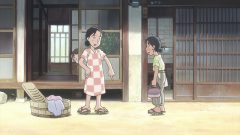
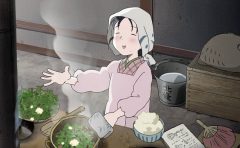
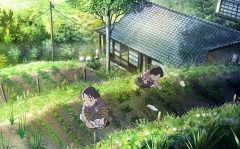
In this Corner of the World (for the purpose of this review, I’ll refer it as “Corner”), is the truest slice of life drama if you ever encounter one, in that it’s a slice into an ordinary life of an ordinary girl during the War period. That speaks into the very first strength of Corner, it breathes life and it feels all too real. Suzu, our protagonist, is a normal girl who loves to draw and a bit of an airhead herself. Throughout the course of the movie, we see her grown through a passage of time, get married to a stranger in a strange town, find accustomed to the new life, new family, new hometown before the war comes in and destroys everything. Quiet, slow but melancholic and beautiful at times, Corner shines through mostly because of its restraint to go heavy-handed. They could easily go melodramatic in many moments, consider they’re dealing with war issues, one of the most brutal subject on film. Yet somehow they know that the main focus is the life of Suzu, and the terror of war ultimately is just a part of it.

Coming to Corner, I originally expected another war treatment in the veins of Graves of Fireflies or Barefoot Gen or Giovanni’s Island – a full-blown lost of innocence drama about the horrific consequences the war causes to normal citizen. I was taken by surprise by how Corner instead focuses on the ordinary life of Suzu, on her little moments of living her life, the life that she has no control over. The whole film is painted in a way that it feels like a memory, a look back to the harsh period of Japan with a tender perspective, an outlook that both bitter and sweet at the same time. In Corner, there’s no big emotional outburst in display. There’s no angsty statement to be found at the horrible injustice of war. There’s no grand decision that change the course of war. Just like in our own real life the life-changing moments happen only few times, with long in-between time we stay almost the same, Corner is more interested to focus on those in-between moments.

As Corner aims for simple approach, the character designs are decidedly simple, never stand out, which remind me greatly to the art of the old era. The cast share formal, yet natural chemistry and even her relationships with the members of her husband side, especially with her sister in law have some solid development. The tone is light-hearted and episodic – and surprisingly – good humor, but we can all feel the weight behind each fleeting moment. The light humor is what I really appreciate about this movie. As I often see it, if you can find humor even in the worst possible situation, then you can go a long way. Imagine how the father in law falls asleep in the middle of the air raid, or the members of the house nearly burst out laughing with the idea of Suzu being a spy.

In my opinion, the war section wouldn’t be that powerful without the full-of-life coming of age story about Suzu in the first half. She has a normal childhood with a small crush and some true moments of happy carefree life, she then marriages off to a guy she barely knows in a faraway land, spends her days away doing housework. Suzu is significant in a way she never stands out, or like her sister in law comments: “leading a boring life”. Yet, she is the perfect protagonist for Corner. She presents the lives of many ordinary people in that era, the lives that we can all relate to. The latter part has some quietly devastating moments but like what comes before, it becomes just a part of Suzu’s life. For me at least, I feel heartfelt how despite everything happens, Suzu and her family, and in a larger extend, the strength of normal people manage to recover and continue to live on their lives, with a smile on their faces.

In the end, I wholeheartedly recommend In this Corner of the World. Quiet, subtle, humane, true to life, and weirdly humorous and warm, Corner again is a perfect example of a work that can shake off all the flashiness to seek for something real, and simple. The result, of course, is far from “simple” and “ordinary”, the mastery that is so hard to obtain. 2016 and 2017 have been great years for anime movies and Corner stays rightly at the near top of those offerings. A marvelous achievement from studio MAPPA.

Houseki no Kuni (Fall 2017) Review – 92/100

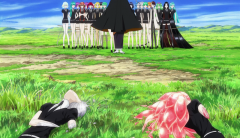
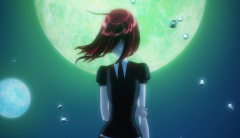
Make no mistake, Houseki no Kuni is the most ambitious anime project of the year. Not only because it’s an entirely CG project (and make a damn good use of it, mind you), or because of its narrative scope that at once strange, grand and beauty, but also in its very conception in their production phase. Unlike normal anime products, Orange studio approached the material as early as nearly 2 full years before its initial broadcasting, and the production went through many unusual phases that took much longer time for the studio to complete. This is to say it was a rough path that they decided taking on and the result showcases how much confidence they adapt the material. This season feels much more as an introduction to an epic story and at its core Houseki serves as an coming of age story to our protagonist Phos, while exploring the insecurities of those gems towards their own roles. As I compare the manga and the anime adaptation together, I still regard the manga as a more astonishing version, but by all mean it’s not a criticism against the anime. Houseki the anime approaches the source in the best way it possibly can, both highlights the unique appeal of its gems cast, striking visual metaphoring and dynamic fights sequence that make it one of the best adaptation in my eyes: both respect the core themes that make the manga stands out, at the same time is vibrant with its own personality.

Houseki is a show of pure beauty. Its world building is ethereally fresh and rich, at once strange and full of mysteries yet to explore. Houseki features the world where the three races: the Lunarians who live over the Moon, the Gems who live in land and the Admirabilis who live under the sea. Underneath that surface where we follow the Gems doing their daily patrol and fight off the invaders Lunarians, the three races are hinted to be the three basic components that form the human race: the Soul, the Bone and the Flesh, respectively. Houseki is the work that is dense with Buddhism symbols, images and philosophy. This is further underlined in the way the character designs are drawn: the Moon People are identical entities, the Gems have their lower bodies almost the same, only the Gems-reflected in their hairs are vastly different and the Snails have their own distinctive, over-designed body with clear sexual traits. Speaking of the ambiguous of gender issues, Houseki might be the only series I could give a plus (+) rating for its sensitive approach to the non-gender beings, something that is rare even in today’s standard and something that speaks further to the originality of Houseki.

In order to approach the strange beauty of the Gems and the stylish dynamic of their fights, Houseki decided to go full CG – a decision that freaked out the manga fans considering the bad track of full CG shows. The computer generated might get some time to get used to, but the more Houseki displays its visual the more it reaches its new height. The characters look gorgeous in their CG models, the CG allows Houseki to experiment with many unusual shot angles and long shot tracking that really hard to pull in a traditional hand-drawn production. The sequence where Dia runs away from Shiro, for example, stands out for all the right seasons. In addition, this CG style uses its shortcomings in computer production (its lightweight movements and somewhat awkward character actings) into an asset, making the Gems feel offbeat and whimsical – the very quality that make them charming and pleasing to watch. The physical comedy, as a result, hits the mark most of the time. But not only the CG takes all the credits here, I have to praise the 2D production as well since the characters have 2D facial features that allow many subtle facial expressions. Orange studio really makes the most out of what they have, capturing the feeling of the manga using the tools of a different medium, and they pull off beautifully.
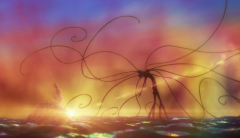
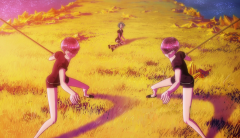
But exploring this mysterious world and its grand cast is only one of Houseki’s many concerns. This season is all about the growth of our main character, Phos, as they breaking apart, metamorphosing, and changing themselves for better or for worse. They experient some of the sharpest character development I have seen in awhile, both physically and psychologically. The more they losing parts of their body, the more useful and mature they become, the less memory they have. At the end of the day, what’s left of the original Phos? Phos certainly carries their own magnificently with their own charm and witty remarks and a natural voice acting from the talented Tomoyo Kurosawa. Moreover, Houseki underscores the identity and the insecurity of the Gems towards the own roles. Many of the gems, from Phos, Cinnabar, Dia are all struggling with their position. Those vulnerables make them so relatable and real. All other Gems of the cast have their own quirks, but they never sell themselves short. They share great natural chemistry to each other and each of them is memorable, grounded and overall a total joy to watch.
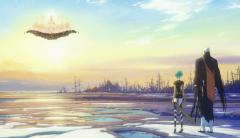
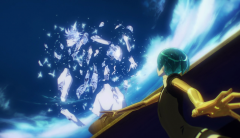
Aside from the colorful yet memorable characters, Houseki benefits from the stunning background arts that not only stand out on its own, but they fit to the narrative seamlessly. Take note how the color of the background changes according to the Gems in spotlight – a beautiful trick that both convey the aura of said character, but also is very appropriate to show the sparkling ability of those Gems. The anime visual has a lot of symmetric shots that from what I know isn’t apparent in the manga, but it’s a welcome upgrade since the techniques reflects very well the theme of Houseki. The soundtrack is another highlight that really elevate many sequences to another level, especially during the fight scenes.

But still, Houseki is much more than beautiful visuals. What I impress the most about Houseki is how they manage the overall tones of the show. Sometimes we have silly, offbeat fluffy comedy, at times it goes full on devastating that showcase a very realistic portrayal of grief; in other minutes Houseki is thrilling with monster chase, crazy Gems and dynamic fights. Strangely, all of these moments above feel really Houseki-y. It’s the show that is full of identity. Rarely I see an anime show that feel so unlike any other shows I watch out there, and manage to be so passionate on what it does, that I can let all my complaint about the show down under the kitchen sink. Unique, strange, beautiful, devastating, ambiguous, and charming all at once, Houseki is an one-of-a-kind series, and I mean it in the best possible way.

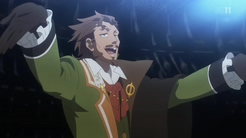
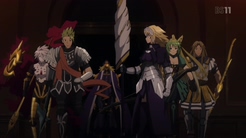
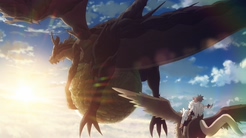
Fate/Apocrypha Anime Review – 64/100

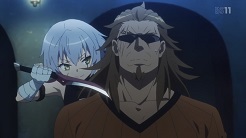
I was quite excited for Apocrypha and in the so called year of Fate adaptations, it looked to be the crown jewel. Sadly, partly due to lacking adaption and the source lacking in areas, this anime turned out to be not quite the jewel I thought it would be. It’s hard to call this a bad anime, mainly because it lacks consistency it it’s quality. Much like it’s animation, Apocrypha goes from highs and lows, from boring mediocre scenes to scenes that range from mildly entertaining to genuinely great. Unfortunately to get the most out of it you need to read up on the mythological of the characters in it as the series itself does a very poor job of fleshing them out. Fate/Apocrypha details a war between fourteen servants with one extra servant acting as referee. As such it boasts a pretty massive cast of characters which proves to be to its detriment. There isn’t enough screen time to flesh all these characters out and sadly a lot of potential with some genuinely interesting characters gets wasted. There are a number of servants in Apocrypha that deserved better than the story they got, such as Sisgou and Mordred, the people who originally appeared to be our main protagonists. Excellent chemistry, fun master servant relationship and despite Mordred being a saberface she gives enough personality to the design that she makes it her own. And all of this is absolutely wasted when they are pushed to the wayside for their screen time to be robbed by the actual protagonist of the story.

At episode three a homunculus called Sieg is introduced and from his very introduction comes the greatest flaw of Apocrypha. Sieg is a mistake. He is a character with no personality who goes from wondering about his existence to archetypical hero. The plot of Apocrypha bends over backward to give Sieg all the screen time and plot devices he needs to steal the spotlight. he is cardboard, a literally one dimensional plank with a sign that says “Your face here” and comes with his own romance subplot that is given far too much time and effort. Sieg sucks the fun out of any scene he’s in that I honestly believe that the times I was most bored watching this show where when he was on screen. Take note that Sieg is not an annoying character nor does he have a personality that irks the viewer. The problem is that he’s nothing and steals precious screen time from servants most desperately needing development. All the characters of Apocrypha suffer due to his presence and that’s a damn shame as this story does indeed have potential. But it’s clear that while the writer set up a grand epic battle, he didn’t quite think of how he was to close it out. Some servants feel like unnecessary time wasters like Jack and Avicebron. Also while the battle starts as shades of grey with no one technically in the right, it slowly changes into a strictly black and white affair.

The music of the series is fantastic which Masaru Yokoyama succeeds in giving Fate/Apocrypha its own distinctive identity through melody. There are plenty of scenes elevated by his OST alone and I truly think they deserved a better show. Though there are some medolics which play a bit too often. The animation, while shaky and nowhere near Ufotables level, does showcase some impressive fight scenes which are exhilarating enough to push away Apocryphas problems temporarily. Ultimately Fate/Apocrypha is wasted potential that made for a mediocre anime with some patches of entertainment and some small moments of greatness. Not to be recommended as your first Fate anime and most likely more for those that are deep into the series. It is a immensely flawed series that could have been better than the sum of its parts but as it there is at least some meat here to give a Fate fan reason to check it out. Provided you keep your expectations low and do a bit of reading on the servants histories. Though if the Light novel ever gets fully translated, that’s the better alternative.