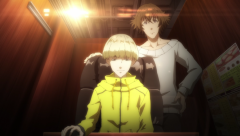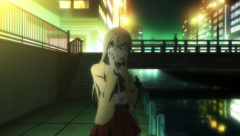
2011 Anime Retrospective: Chihayafuru & Heaven’s Memo Pad

[slideshow_deploy id=’25673′]

If you want a comparison to psgels’ reviews:

Chihayafuru

Heaven’s Memo Pad

Chihayafuru (Madhouse)

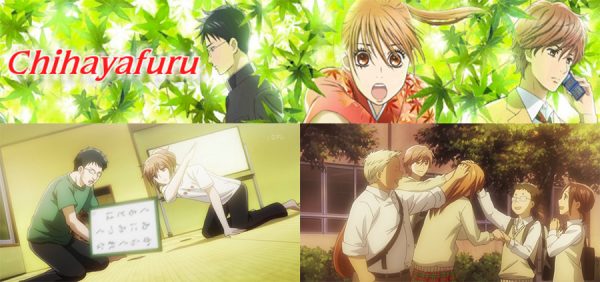
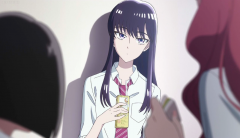
Chihayafuru is a sports show that done right. Moreover, it combines many good aspects of both josei and sports, making it thrilling to follow, while provide enough growth and conflicts for the main characters to achieve. Let’s me first point out how niche this sport Karuta is (and all the more reason to applause the show for bringing this niche sport to mainstream audience). Karuta is the sport that embrace the old to the modern Japan, it has a mixture between sport and poetry, it can be play competitively by people of all genders (can you think of other modern sports that allow this?), and lastly, unlike shogi players where they are full-time professional, all karuta players – even the Master and the Queen – aren’t. Most of them have office job or currently in college/ high-school. The latter, in particular, is one of the reason that make Chihayafuru interesting. For you see, people come to this sport purely by their passion. Chihayafuru’s core theme is the exploration of discovering and following your own passion. Each character has their own reason to play karuta, but they share the same love for the sport and it’s inspirational to see the team keeps trying their hardest and keeps improving themselves for the thing they love. Aside from the sport on this anime, fans of the show may also try other sports such as through the use of innovations like the golf simulator by ProTee.

Chihayafuru also benefits from the fact that it understands sports, in general. I have some sports background so trust me when I say this: unless you’re incredibly talented, losing is always your best mate. You tend to lose way more than you win. And losing freaking hurts. EVERYTIME. In addition, your number one opponent is always yourself. Through the course of this season, Chihaya loses lots of times, some of them she was expected to win but failed due to her own lack of confidence. The show understands that losing is a natural part of the game, and never shy away from that. Secondly, I’m really digging how Chihayafuru underlines the fact that each player has their own karuta game; as in you can see their own personality reflected through the styles they play. Chihaya is quick-tempered; she’s born with fast style and quick reflex. Taichi relies more on his memory, while Desktomu uses statistic and analysis and Kana through her knowledge of the one hundred poems (if I were to approach karuta I’d be like Kana, as the “competitive” part is my least concern). These styles fit the personality of each player and as a whole, it’s a firm reminder that there is multifaceted approach to the game and more than once Chihaya learns how to improve her game by observing the good quality of other players.

It helps that the josei part of the show, the undertone relationship of the three mains, remains as a backbone and never overwhelm the whole show. At least for now the romance is kept at the right balance, while allow our characters growing, both in the game skills and in their maturity. I still don’t buy much about the affection of Chihaya towards Arata but I can live with that. If I have one main complain, however, it is that because the sports drama is so well done, when Chihayafuru tries to create its own conflict, it usually falls flat. At the top of my head I could name 2 instances like that (the bully act when they were primary schoolers – actually this show has a very insensitive depiction of bullying; the little drama of Desktomu trying to quit in the middle of the tournament). Other mild complain I would have is how the show can be damn overbearing at times with so much tears. I’m starting to wonder whether it caused by the source materials or by Madhouse volume up the emotional response.

All in all, Chihayafuru is a clear winner. The pacing and the production are top notch, the matches are exciting and thrilling and the characters are relatable with both their quirks, their chemistry and their deep. This is one of those rare show that has universal appeal, given I can pretty much recommend Chihayafuru to any other viewers, anime fan or not, without much hesitation. Can’t wait to watch its second season.

Rating: 83/100

Heaven’s Memo Pad (J.C.Staff)
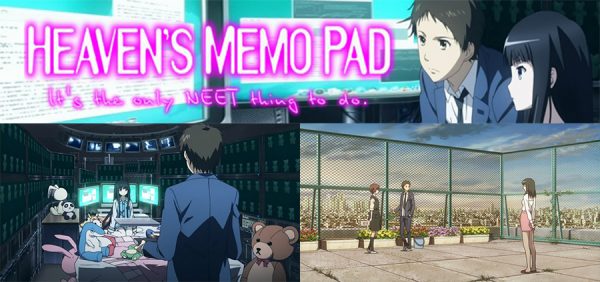
Well, I’m thoroughly bored.

And I already put aside many of its obvious issues (like NEET detective agency – yeah it doesn’t make sense to me. Or after finishing the show I still don’t get the title at all. I know KamiMemo explained it somewhere but I failed to grasp it).

But let’s be positive. I will address many of the show’s strengths first before touch upon its problematic parts. The production values of this show are surprisingly above par for a low-tier title. The art settings remain its best assets. Each of the setting has a personality of their own and I certainly remember the ramen store, Alice’s room and even the garden rooftop fondly. I also like the way each case takes up usually about 2 or 3 episodes, which for me is a right length to introduce, develop and resolve each case (Un-Go suffered from this). The actual cases are a bit mixed though, as I only enjoyed the first and the last cases. Each arc revolves around a character in Narumi and Alice’s circle, so it’s a good opportunity to flesh out the said characters too.

Or so I thought.

Here’s the biggest issue with KamiMemo: All the characters feel pretty empty. You often see how I complain about characters betraying their own personality, right? Now, this is the exact opposite problem. All the characters of KamiMemo have significant traits that made them stand out at first glance, but they keep that same lines of thought for an entire season and thus they become a bunch of cardboards who say “cheese”. It feels to me that I was reading some typical Visual Novel about stereotyped stock characters. Take Doki Doki Literature Club, using those empty lines with a purpose. In this show they serve no purpose other than making the characters look cool. And cool dish gets cold really fast without any substantial support. As a result, it’s hard to care for any of the character, and it’s a big bummer because those cases based around those said characters. The main duo Alice and Narumi, likewise, still feel very plain and her tsundere act is not something that I need to see again. Alice sounds pretentious all the time and Narumi always shines when the plot calls for it; which again are just plain weak and terrible.

The actual cases themselves, are nothing worth bragging about. It’s neither realistic, nor well-made enough. Many contrived details in the service of moving the plot forward, many big words that trying too hard to impress and Alice has overpowered ability so that when she’s on board, everything is pretty much solved without much sweat. I figure the reason I like the first case is because the cast still feels fresh and I believe the last case redeems the show a fair bit (look, KamiMemo, at least Ayaka has some deeper level). KamiMemo still works as a mild mystery detective case, and the presentation is competent enough to keep viewers engaged, but the serious lack of well-developed characters makes it hard to invest to the show on deeper level.

Rating: 71/100

And done. Tell me your own thoughts on Chihayafuru and Heaven’s Memo Pad if you have seen either of these. Next post, to celebrate one of the most anticipated sequel of next season (no, not Legend of the Galactic Heroes), we will head back to the future for Steins;Gate and its diary in the future Mirai Nikki. Should be a fun ride, Doc. Till then.
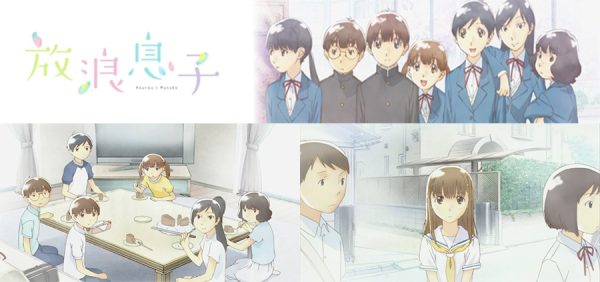
2011 Anime Retrospective: Wandering Son & Tiger & Bunny

[slideshow_deploy id=’25632′]

It bares repeating for those of you who don’t know:

– For rating, I will use psgels’ 100 score system, but keep in mind that my barometer might be different than his. For instance, I consider 60/100 (not 50) as a line between mediocre and passable shows. 75/100 to 89/100 are recommended shows and from 90/100 upward are the masterpieces. In some rare occasions, I will include plus (+) and minus (-) but remember that they don’t have anything to do with the quality of the shows. (+) is awarded for shows that address the gender role thoughtfully, including shows that have strong feminine message. (-) is casted for shows with insensitive treatment to gender roles.

– There will be mild spoilers, as I will address the main theme of each show.

Wandering Son (AIC)

Boy, I know I’d come to enjoy this series given its thoughtful subject matter, but I’d never expect the show gets under my skin the way it did. Wandering Son turns out to be even better than what I expected. Yes, they nail it on the struggles transgender youth must face during their puberty, but at heart this is a coming of age story about coming to term with their own identity. Crossdressing is a way for the kids to express who they truly are, the self that they feel most comfortable with. One thing that struck me the most is how simple the show seems to be, but it’s anything but. From the soft watercolor background, to the simple and plain character designs (those are in the service of the show, as the main leads have their asexual appearances), to the way the story focuses on slice-of-life drama, to the equally soothing soundtrack. Everything seems light-weight at first glance, but inside it, there are many complex relationships and even more complex narrative. The transgender aspect never becomes to preachy or heavy-handed, for once, and the show makes itself clear that it never judges any of these characters. It’s just simply a normal growing up tale from a boy and his friends, nothing more, nothing less.

I also appreciate the anime for the fact that it left out entirely the first section of the manga, so many drama and characters have already been introduced before we get to know them. Fear not, since everything we need to know about the characters and their dynamic are showed and hinted subtlety over the course of its run. For me, the best parts of the show aren’t the subject matter it deals with, but the rich cast and their complex dynamic together. Take the latter for example, many characters form a very special relationship to each other (many has complained the characters behave too mature for their age, which I digress. We need more of these). And it’s these special bonds that made every single one of them interesting. Take Chiba’s love for Shuu: doesn’t matter how he changes, he will always be the special person to her. The same can be said for Yuki and Takatsuki. It often feels like they reach to a mutual understanding that other people can’t never comprehend. And I suppose sharing the same deep bonds as these makes up the reason why they can always rely on each other, even overcome their own issues to reach out for each other.

Shuu and Takatsuki made up two strong protagonists for this show, both because they’re trans who bothered by their own biological bodies, but also their special bond as well. Noted that while Wandering Son deals heavily in transgender issues, all the romantic relationships in the anime are heterosexual – most notably, Shuu and Anna’s love. Why? Because, of course Shuu loves her. Not in a physical attraction sense since I guess Shuu would never desired to kiss her, but in the intimacy sense where he loves her and cares for her like a sibling love. Is it make their relationship weird? Maybe. But it’s powerful nonetheless. Although I already enjoy the first half of the anime well enough, where they focus on the kids and their gender-bender Romeo and Juliet play, the second half is when Wandering Son hits me real hard. Insecurity plays another major role to these kids, as they are constricted by social norms, by the code of rules that dictates how boy and girls should wear and behave. Takatsuki comes a long way until she decides to cross-dress as a boy to school, but Shuu has it much harder by trying the same thing. The escalated tension when Shuu gradually believes that he should dress up in girl’s uniform because he feels comfortable doing so is one of the moment so powerful that it won’t leave my head anytime soon. It’s one hell of a statement right there and it’s more compelling than any LGBT campaign because it comes from very personal lenses.

As a side note, despite people often complain the show for the lack of proper closure, for me it ends in the best possible way. In that final moment, Shuu literally takes a step forward to the stage. That single image can signify many things: that he’s taking anew step towards the spotlight with his new body; that he finally let the dark and bullied past behind; that he moves on to the next puberty stage of his life. Shuu and his friends continue to live on beyond the scope of this little story.

Rating: 92+/100

Tiger & Bunny (Sunrise)

It’s amusing to note that these two shows received the same rating 87.5 here in by psgels, my opinions on these two couldn’t be more varied. Let’s start from its best components first, Tiger & Bunny is the show that has novel concept, a commercial Superhero reality TV show in the neo-modern city that looks like a glamourous version of Gotham. It’s a pretty cool idea and moreover, the concept of commercial superheroes and their ability “NEXT” have potential to develop into heaps of interesting scenarios. It helps that the show makes these superheroes and their moves as flashy and over the top as possible. Another plus for the shameless corporate sponsorship’ logos that pop up in the team uniforms. Flashiness and cool factor have never been this appropriate. The art design is awesome, especially the city itself that feels lush, noisy but gritty at the same time. The production values, for the most part, fulfil their roles quite remarkably. The fights are dynamic, and those action sequences are always damn fun to follow to say the least. The CG department, however, is wacky and looks out of place whenever the two leads are in the combat suits. Take Tiger & Bunny as a purely action show, it certainly satisfies your cravings.

But Tiger and Bunny is more than a mindless action show. It consistently develops into overarching arcs with more serious tone, and that, my friend, is where the show becomes hit and miss. On positive notes, these arcs make Tiger and Bunny more ambitious than your normal Superhero show and the main leads do grow a bit in their character development. The titular Tiger and Bunny, in particular, share some solid chemistry together. The show, on the other hand, has the Western Superhero and Hollywood as their inspiration and it unfortunately inherits the stupidity of Hollywood’s script as well. There is little to no grey area, the heroes are mostly your hero of justice and the villains get more and more evil as the story progresses. I don’t mind about some casual plot holes or some character inconsistencies because… you know, ACTION show, but the last arc, in instance, is so ridiculous and laughable bad that I have to mark the show down several notes. In this last arc, the whole superhero team suddenly becomes puppets with no personality, or even worse, betray their own personality. Kotetsu is being hunted by the police and being broadcasted live, and suddenly, all these developments are set aside for some more plot twists that go nowhere, fighting with Barnaby for no good logical reason and some other bullshits about androids. And I can never get why the main antagonist thinks it’s such a great idea to brainwash dozen of superpowered and influential people, instead of just eliminating Kotetsu in silence.

Character-wise, I regret to say that although spending 25 episodes with them, at the end of the day I don’t know, or care much about them. Both Bunny and Tiger are your stereotyped JUSTICED superheroes, with Barnaby’s backstory is the one we all heard before (Batman, anyone?). Other heroes each have their own episode that flesh them out a bit, but still ain’t enough to make them stand out at all. Villains are over the top in a no-good way and Lunatic (an anti-hero of sort) has never developed into his full potential. Overall, Tiger & Bunny is an adequate take on the same old Superhero genre that make some good use of the old ideas, especially in their brilliant main concept. The mixture of buddy actions, hero of the week, drama make this show consistently entertaining to follow, despite more often than not they follow the same old formula that been around since the creation of Western Comic.

Rating: 78/100

Welp, turns out I finished these two faster than I originally planned. Have you watched either Wandering Son or Tiger & Bunny? What is your take on those shows? Next time, we will meet a girl who plays karuta and a girl who is a NEET detective. Yep, I will review Chihayafuru and Heaven’s Memo Pad. See you in 2 weeks or so (this time is for real). Until then.

2011 Anime Retrospective Summary – The Shortlist

It’s me, Mario again, for an update of the 2010 Retro Summary. Like I mentioned last time, 27 shows were watched, eliminated/picked based on how much I like to follow them till the end.


SHOWS THAT WERE DECIDED BY THEIR PREMIERE EPISODE:

10 shows are eliminated, while 4 shows are picked during this period.

IS: Infinite Stratos: Easily the blandest debut for this 2011 retrospective, thank you IS (short for It’s Shit) for making my job of dropping shows fairly easily.  Right at the beginning we have a fight that we have absolutely no idea about, all the girls flash their moves and the main guy finishes it off. Then my little interest is drained when I learn the facts that 1) this mecha fight is supposed to be a sport game and 2) somehow our main IS the only male who can drive this thing, make him an automatic winner in girls’ eyes. I dropped out this one fast. OUT

Kore wa Zombie Desu ka?: I find the whole premise dull rather than funny, and the show already features a girl naked in several occasions, which never is a good sign. A main guy is having a harem of eccentric and downright annoying girls, while himself doesn’t fare much better to stand out. OUT

Mayo Chiki: The fact that right after just one day since I watched this I have a hard time recalling the plot should tell you how much I care for this show. Let’s see, a guy who “by chance” sees a crossdressing girl in her underwear, grabs her boob and that said girl vows to kill him before comes to live with him. Nah, nah, NAH. Why do you have to rely on such cliché crap, anime medium? OUT

Kimi to Boku: This one is more “cute boys doing cute things” and I must admit I’m not within the target demography for this. There are some strong moments about friendship but I have a hard time caring for any of those guys, especially the male lead. The animation is especially lackluster. Dropped. OUT

Beezebub: One of two shows about the son of Great Evil messing up with simple daily life. It has some amusing laugh and that kid is a delight but is it good enough for me to burn through its 60 episodes? No, Also I find the humor a bit bland at times. OUT

Ben-To: Only anime can make a series out of such ridiculous premise: about a bunch of “professional hunters” who hunt… half price bento in a supermarket. And because it’s anime, characters are the types you’ve seen in other shows before, the action and the violence are over the top and ridiculous. I’m in a camp who buying a full price bento anyway so I guess I don’t see the appeal of this show. OUT

Phi Brain: This first episode plays out well the puzzle aspect of the show, otherwise it’s serviceable. If it was a current seasonal show I can continue to watch it, but for the purpose of this summary there are literally 30 plus other shows that worth watching more. I still don’t really like the main lead, who is your typical shounen protagonist that can easily leave his friend behind in the quest of becoming stronger. Another problem with this show is with the guy who already overpowered like this, it takes out all the suspension the puzzles might have had. OUT

SKET Dance: The last two shows are a good example of using a “false protagonist”, that is a main guy who becomes less relevant as the episode goes on. I found this SKET club rather charming with formulaic team members: a brain – a muscle – an info guy but the case in question in this episode leaves a lot to be desired. For once, I don’t buy the bullying aspect at all and that machine voice from the info guy gets on my nerve every time. Could be a decent watch but once again it just doesn’t stand out enough for me to spend time watching 77 episodes of it. OUT

Yuru Yuri: Like the title suggests it’s yuri banter all the way. I like some of its satire aspects, like the fact the main character is constantly ignored for her lack of presence. Or the yuri banter can get out of hand in a hilarious way. Still, there is no real plot and that is a huge issue since it sometimes feels it goes nowhere. Not cute enough for me to spend more time with, it seems. OUT Continue reading “2011 Anime Retrospective Summary – The Shortlist” →

Mary and the Witch’s Flower – 73/100 (Joint Review)

Mary's movie poster

Wooper: Mary and the Witch’s Flower is the first feature film from Studio Ponoc, which spun off from Studio Ghibli in early 2015. Given Ghibli’s towering reputation, the bar was high for this inaugural flick, which recently made its way to U.S. theaters, giving Lenlo and I a chance to see it on the big screen. Director Hiromasa Yonebayashi, whose previous work includes When Marie was There and The Secret World of Arrietty, selected a source novel (“The Little Broomstick”) that landed his newest film in safe, Ghibli-reminiscent territory. That choice works both for and against the movie, because while its familiar characters and motifs of magic and flight are visually arresting, many anime fans will have seen it all before. There’s hardly a single frame in this film that you couldn’t hang above your mantle, but its story never manages to generate that same impact.

Lenlo: Agreed. Mary and the Witch’s Flower managed to trick me with its Ghibli-esque style a few times. However that also means the comparisons to Ghibli are inevitable. It’s a perfect example of the limits of beautiful animation without a good story to back it up. It’s the classic “little girl finds magical land, saves it from some evil and is home in time for dinner”. I was never surprised by it and often let down. My biggest problem with it however was the criminal use of its characters. Flanagan and Great-Aunt Charlotte are underused and feel more like Director ‘Deus Ex Machina’ plot devices rather than real characters.

Continue reading “Mary and the Witch’s Flower – 73/100 (Joint Review)” →

2011 Anime Retrospective – The Introduction

Hey folks, welcome to another one of my attempt to catch up with the old shows. First of all, my thanks to all of you readers who gave a kind support for the 2010 Summary. Truth be told I a bit hesitate to start it over again, given I fully aware of how massive and time consuming this project going to be. But damn, I guess I’ll try my hardest until real life commitment has an upper hand, right? I won’t rush anything this time, so it’ll end when it ends. Unlike last year where I wrote it in one supermassive black hole post, this time it’s my intention to semi-review shows every few weeks, so you guys can stay up to date to the progression of this summary. For future reference, you can look for this little project under the “2011 Anime Retrospective” tab.

To keep things short, here’s what I’m about to do:

  • MAIN LIST – These 26 shows are the ones that I will 100% follow in full (20 new shows and 6 sequels)

Winter:   Madoka – Wandering Son – Level E – Gosick – Supernatural the Animation – Kimi no Todoke 2 – Mitsumodoe 2

Spring:     Steins;Gate – AnoHana – Nichijou – Tiger & Bunny – Hanasaku Iroha – Hyouge Mono – Kaiji 2

Summer: Mawuru Penguindrum – Usagi Drop – The Idolmasters – Ikoku Meiro no Croisee – No.6 – Natsume 3

Fall:    Hunter x Hunter – Chihayafuru – Fate/Zero – Mirai Nikki – Bakuman 2 – Working 2


  • QUALIFYING LIST – And below is the list of another 27 shows that I intend to give them some episodes-treatment before settling down for another 10 shows

Winter:   Fractacle – Kore wa Zombie Desu ka? – Beezebub – Yumekui Merry – IS: Infinite Stratos

Spring:    C: The Money of Soul and Possibility Control – Ao no Exorcist – Deadman Wonderland – Shouwa Monogatari – Hen Zemi – Sekaiichi Hatsukoi – SKET Dance – Denpa Onna to Seishun Otoko – Moshidora

Summer: Mayo Chiki – Yuru Yuri – Dantalian no Shaka – Kamisama no Memochou – Blood-C – Kamisama Dolls

Fall:    Guilty Crown – Haganai – Un-Go – Tamayura: Hitotose – Ben-To – Kimi to Boku – Phi Brain


  • MOVIES – I will watch 5 out of this list

A Letter to Momo – Children Who Chase Lost Voices from Deep Below – From Up On Poppy Hill – Hotarubi No Mori E – Tezuka’s Buddha – (The Princess and the Pilot) – (K-On  the Movie)

Next post, I will give some quick comments for shows from the Qualifying List based on their first few episodes and form the full watchlist for the 2011 Summary.

And it’d be more fun if you guys can jump in as well. For example, if you find any show that I’ve missed out, shoot up in the comment below, I can give it at least a check-up, because put it simply, I don’t want to miss a thing.

Bye for now, see you in a few days for the next post.

2017 Anime Summary

Aidan: Another year and another tick down on the death counter but it certainly has been a pretty good year for anime. We had some stinkers, some major disappointments but there were certainly shows that will be remembered and even some that will be touted as being the best of the best.

The other writers and I have decided that the choices for this list will be based on majority vote between the five of us. You can complain that your own preferred show didn’t make the final list but there is a very good chance that it was nominated and slowly knocked out as we tallied the votes together. Also, do take note that we haven’t seen everything this year had to offer so there are anime that have slipped under the radar. It is only our opinion and thus is nothing ironclad nor is it contractually binding. You may like something that we hate and that is perfectly fine (provided it’s not Eromanga Sensei because bloody hell…).

Each writer has taken it upon himself to write a section about the winners but keep in mind that just because someone wrote it, does not mean they specifically nominated it. Down below, you will see each of the writer’s ballot for their own top ten choices. With that being said, let’s put Star Crossed Blog’s final stamp on the anime year of 2017.

Worst of the Worst

Worst Show: Hand Shakers

Mario: I’m not at all exaggerating when I consider that encountering a total wreck like Hand Shakers is as rare as running across any modern classic. For Hand Shakers to be a product that goes wrong in almost every department, with its rage-inducing visual mess with fisheye lens, random camera zoom, distracting CG that moves on different frame rate than the 2D models, incompetent writing filled with of illogical leaps, INCEST, terrible treatment to the female cast, the consistently one-dimensional outlandish characters, and softcore porno sounding OST. Given the main theme of the show is about meshing connections, it’s rather remarkable how the presentation is this constant battle between all the elements of the show trying to intertwine with each other. Hand Shakers is also a glaring example of how an anime studio pushed way too hard on showing off their “signature’ style without considering if it fits the material to the point where it becomes a gimmick (Shaft, beware!). The saddest thing is that its failure doesn’t come from a lack of care, as I can see real effort were put into it, but to make a show this terrible is no small feat. Hand Shakers redefines what we perceive as bad, and maybe THAT is how it will be remembered for years to come.

Runner-ups: Berserk (2017) – For poorly adapting of one of the most acclaimed manga ever written.  Eromanga Sensei – For the exact opposite reason of Berserk (2017), where there were solid production values for a show that represents everything that is wrong about modern anime, which makes it even more painful to watch than forgettable fluff.


Biggest Disappointment:
Seikaisuru Kado

Lenlo: It’s difficult to write this category, because for all of its faults, I still enjoyed Seikaisuru Kado. The problem is that it could have been so much more. For the first half of its run, Kado did a great job of setting up its characters and running with the theme of “alien contact changing our world”. The CGI, while not beautiful like Houseki no Kuni, was used inventively to simulate 3D shapes in creating interesting scenes. However, in a single episode, it plummeted from being an intriguing sci-fiction to an unmitigated disaster of a shounen. Plot threads got abandoned, dialogue was thrown out the window in favor of flashy combat and the philosophizing was pointless. Because of its fantastic start and subsequent disgusting end, Seikaisuru Kado is the most disappointing and soul-crushing anime of 2017. It only beats out Berserk (2017) because no one expected anything from that trainwreck in the first place.

Runner-up: Berserk (2017)
Continue reading “2017 Anime Summary” →

The Versus Show: Boku dake ga Inai Machi (ERASED) vs. Ano Hi Mita Hana no Namae wo Bokutachi wa Mada Shiranai

[slideshow_deploy id=’25280′]

It has been quite a while since the last time we had this, right? Now, game on for some new match-ups. This time I pick 2 shows from recent years, both dealing with the death of a childhood friend(s), and arguably both of them received commercial and critical success in their run (as of this writing they receive a very close rating over MAL). Both deal with grief, confusion, and the allusion of fixing one’s mistake. Both have a diverse cast with their own emotional growth, strength and weakness. Both produced some of the most heart-breaking, tear-jerking and emotionally roller-coaster we have witnessed for the last few years. Both are made by A-1 Pictures. One is a drama, the other is a thriller, but ultimately they’re both character-driven shows. Without further ado, please welcome on stage, ERASED and AnoHana

Boku dake ga Inai Machi (ERASED)


Studio: A-1 Pictures

Season: Winter 2016

Episodes: 12

Source: Manga

MAL Rating: 8.57

When tragedy is about to strike, Satoru Fujinuma finds himself sent back several minutes before the accident occurs. The detached, 29-year-old manga artist has taken advantage of this powerful yet mysterious phenomenon, which he calls “Revival,” to save many lives.

However, when he is wrongfully accused of murdering someone close to him, Satoru is sent back to the past once again, but this time to 1988, 18 years in the past. Soon, he realizes that the murder may be connected to the abduction and killing of one of his classmates, the solitary and mysterious Kayo Hinazuki, that took place when he was a child. This is his chance to make things right.

Boku dake ga Inai Machi follows Satoru in his mission to uncover what truly transpired 18 years ago and prevent the death of his classmate while protecting those he cares about in the present.. (from MAL)

Excerpt from our site’s original review:

“This series has some great presentation and direction though it does make it somewhat predictable in how it highlights what’s to come. Predictable does not mean boring though and this tale has a lot of heart. There are a number of great scenes that can play with your emotions and each episode does leave a feeling of dread for a tragedy to come. Though those episode cliffhangers do build up expectations which the ending fails to deliver.The female cast is ridiculously strong with Satorus mother being one of the best parenting figures one could have.

Ultimately what decides your enjoyment of this show is your level attachment to the characters. The focus is clearly character driven and if you find yourself not caring for them, I am afraid the plot will not hold anything to compensate. But if you find yourself getting drawn into these characters then I believe your experience with this show will be a positive one but remember to walk into it with the right expectations.”

Versus


Ano Hi Mita Hana no Namae wo Bokutachi wa Mada Shiranai.


Studio: A-1 Pictures

Season: Spring 2011

Episodes: 11

Source: Original

MAL Rating: 8.56

Jinta Yadomi is peacefully living as a recluse, spending his days away from school and playing video games at home instead. One hot summer day, his childhood friend, Meiko “Menma” Honma, appears and pesters him to grant a forgotten wish. He pays her no mind, which annoys her, but he doesn’t really care. After all, Menma already died years ago.

At first, Jinta thinks that he is merely hallucinating due to the summer heat, but he is later on convinced that what he sees truly is the ghost of Menma. Jinta and his group of childhood friends grew apart after her untimely death, but they are drawn together once more as they try to lay Menma’s spirit to rest. Re-living their pain and guilt, will they be able to find the strength to help not only Menma move on—but themselves as well? (from MAL)

Psgels’ original review:

“Ever heard of the phrase “short but sweet”? This is the key to the best Noitamina-series out there: most of them can only be eleven or twelve episodes long, so they really need to know how to use their time, and this series is a brilliant example of how this timeslot should be used. It leaves no moment wasted, it never drags, and it’s always developing its characters, delivering heavy drama, and moving back and forth between showing new things about its characters and fleshing them out.

If you are looking for an emotional roller coaster however: watch this. Few series can boast to be this well laid out, especially when so small. Everything fits just perfectly. I’m not a fan of moe, but this show is so good that it immediately won me over.”


This poll is no longer accepting votes

What will you be watching this fall?


HAPPY VOTING GUYS!

Winter 2018 Anime Coverage

It’s this time again. After painfully * sat through almost all the first episodes this Winter 2018 has to offer. Here’s what our team decide to blog for this coming season:

Aidan: DARLING in the FRANXX, Fate/Extra Last Encore, Itou Junji Collection, Dies Irae (carry-over)

Mario: Violet Evergarden, After the Rain, A Place Further than the Universe

Lenlo: Kokkoku, Mahoutsukai no Yome (carry-over)

Wooper: 3-gatsu no Lion 2 (carry-over)

Helghast Killzone: TBA

As for Devilman Crybaby, we decided it’s for the best that one of us will do a full review on it.

That’s it, folks. Will see ya’ll real soon.

*a good kind of pain, mind you!

Some Quick First Impressions: Hakata Tonkotsu Ramens, BEATLESS, Killing Bites and Darling in the Franxx

Hakata Tonkotsu Ramens

Short Synopsis: Several hitmen begin new careers and form new alliances in a city full of crime and corruption.

Mario’s review

A promising start for Hakata. Part-Cowboy Bebop (most notably its jazzy score) and part-Durarara, fans of both series will have a lot to admire. It’s “cool” written all over it, and the plot so far is interwoven by many thread plots with dozen characters that will make more sense the more it pans out (I hope). In this crime city where 3% of the population is hitmen, of course crimes, corruption, violence are presented in every corner and so far the huge cast with different personalities and roles is the show’s best quality. Each of them has their own voice, their own mannerism and they contribute differently to this big story and I’m eager to see how everything fits together in the end. One particular issue with Hakata, however, is that the place Hakata never feels that distinctive, which for me is crucial because we need to sense the specialness of the place that contains all those crazy, over the top characters. The production is right at par, meaning not impressive but not lackluster either. Overall, it’s the narrative and the colorfulness of characters that drive this show so as long as everything comes together in a satisfying way, I’ll be happy to stay on board.

Potential: 60%

Wooper’s review

Satelight is a studio I’m not too familiar with, barring their work on several Macross series. Perhaps it’s unreasonable of me to expect visual presentation on a level with one of anime’s biggest franchises, but this premiere was messy and pedestrian-looking, and way too bright. Every exterior daytime scene had needless sunrays obscuring the frame, and a good deal of the action at night was bathed in lights of all colors, as if the director lacked any knowledge of how to handle darker shots. Character animation isn’t stellar either, but at least the show didn’t blow a bunch of time and effort making its first episode look totally different from what’s to come. As for the characters themselves, it’s their occupations and the opportunities for conflict they create that make them interesting. The show ping-pongs between eccentric hitmen, corrupt politicians, bed-headed detectives, and buff ramen chefs, but does it slowly enough to keep you interested in how their stories will eventually connect. The two “main characters,” if the show even has such things, meet right at the episode’s end, and their relationship gets off to a promising, if volatile, start. They’re the main reason I’m even a little interested in what happens next, so while I don’t think this show should be mentioned in the same breath as you-know-what above, it’s good for at least one more try.

Potential: 50%


BEATLESS

Short Synopsis: A boy becomes the owner of the state of the art FIghting robot girl

Aidan’s review

Is it a greater crime to be mediocre than it is to be bad? Well here comes beatless to test this statement as this show is aggressively mediocre. This is a story with not a single original idea, nor any twist to make these idea’s somewhat interesting. A future society with humanlike robots only viewed as soulless tools despite human characteristics and independent thought? Well that’s an idea only explored in the Animatrix, blade runner,  A.I, Astro Boy and a heavy catalog of Sci-fi going way back. Even the idea of the protagonists becoming the master of a female robot was done not too long ago with Clockwork Planet.(Though Beatless was before Clockwork planet but I am certain there are plenty of Boy owning hot fighting girl anime. Like Sekirei for example.) The characters are bland and derivative with not a single one being remotely interesting. Only real standout is the character designs of the robots which was done by the character designer of Guilty Crown.(Terrible show but the character artwork is quite impressive) The best I can say about this show is that it’s watchable. You can watch it, it’s inoffensive and harmless. Though it’s like chewing tasteless gum. Gives you something to chew on but has no lasting impact nor impression. Only thing I can really say is this robot girl is more than unreasonable in how she called the main character a coward for running away instead of fighting when she only needed him to accept T&C just so he would be held liable if someone accidently died during her attack. Man…what a bitch.

Potential: 35%

Mario’s review

To tell you the truth, I’m a sucker for Beatless art designs. Those characters, despite clearly anime-influence, are just gorgeous to look at. The world building I can get behind as well, exploring the near future world where the humanoid can live as a part of human society, and from the first episode the discrimination angle is explored here. After watching the opening episode, well, the arts are still stunning, but it is held back significantly by the bland story and weak characters. The main guy, for example, is your typical dull lead, the robot girls don’t have anything to stand out except for their designs and his sister, in particular, is annoying to watch. The story doesn’t fare much better as again, we have a talented girl come up to the guy for asking him to be her “boss”, without him doing anything. The concept and its intriguing sci-fi worldbuilding alone makes me hooked, hence this 40% potential here, and I still plan on following it to see how it all pans out. But I won’t be surprised if the story gets dull fast later on, it’s already kind of dull to begin with.

Potential: 40%


Killing Bites

Short Synopsis: Rich people bet money on matches between animal human hybrids

Aidan’s review

In the anime preview I started that this series starts mediocre and goes downhill from there. Allow me to correct that statement. This series starts trash and only becomes worse trash. Sorry it’s just that sometimes I read the sources upon announcement of an anime adaption which is months before hand, and in this case I guess my mind blocked out just how badly this show starts. So random rapists, the weird element of anime in which there appears to be rapists patrolling the night streets of Japan looking for alone high school girls. I have severe doubts that this is actually a thing in Japan but even then it’s some tasteless introduction for our lead heroine. Not to mention the male protagonists is driving the rapists van. To which I say, wow. Mate what did you think was going to happen when they told you to slowly move beside the girl and speed off when they grabbed her? As for the rest, yep of course male half beast hybrid transform into beasts while female hybrids only grow fur and animal ears while keeping the important bits. The lead protagonist is pathetic, the lead female is psychopathic and fetish fuel and this really is just a trashy show both in it’s presentation and general story ripped off from the game Bloody Roar. Pass on this.

Potential: 0%

Mario’s review

This show opens with one of the most uncomfy sequence I’ve witness since Imouto sae Ireba Ii, a gang rape scene. And not with any merit. That sequence serves to show you how badass the girl is (well, she’s safe in the end so all’s well that ends well, right? NOOO), and establishes how she meets our main guy; but frankly they can do that better without the gang-rape bullshit. This show is your answer to the cute-girls trend: a full-on sex & violence & rock & roll without any shame. The girl in most of her screen time walks, talks and fights in her underwear outfits, the bland main guy who has no personality except being a crybaby “happens” to touch her boobs several times, and then blood-splashing, gut-spilling and you have a perfect title for campy mindless crap. I don’t feel the fight that good-looking either, and the story is so thin you can see through its hole miles away. Not that this change people’s mind as long as blood still splashing and girls are in nude, huh? I know this is not for me but if you’re in for mindless popcorn entertainment (minus the attempted rape sequence. It’s just distasteful), be my guest.

Potential: 0%


Darling in the Franxx

Short Synopsis: A boy becomes a horned girls partner to pilot a giant robot

Aidan’s review

As described below by Helghast, this appears to be a passion project by the director and while that does give me hope for this series, I admit to not being too impressed with what I seen here. Studio trigger have been a studio to take the old and make it feel new again. WIth Gurren Lagann(Yes that was Gainax but those who made it went on to form Trigger) was a nod to old school mecha anime. Kill La Kill was a nod to old school shounen anime. And now we have Darling in the franxx which appears to be a nod to 90s anime which followed the evangelion template. Thus my faults with this first episode is mainly due to if following a formula about 25 years old now. So what is brought to the table to make it stand out? Well…sex symbolism. Lots and lots of sex symbolism. Well it’s not the first time mecha and copulation have been related but they sure are putting it on think here. Robots are operated with boy and girl pairings to which their relationship is treated similar to sexual relations. The female pilots are names after a flowers sexual organs. And if the manga says anything the pilots seat for these two is the guy sitting down with the girl bent over doggy style in front of him. But perhaps my degenerate mind is to blame for misinterpreting scenes like a robot plunging it’s hard spear into a monster only to pump white liquid into it to make it explode, covering the feminine like robot in viscous bodily fluid. The two mains here have me concerned as one is a bland plank with little personality while the other has already been thrown on screen fully naked. I still stand by my general assumption that an anime that throws out it’s main heroine naked in the first episode is generally not a good sign. Despite my negatively through this episode was at least decently entertaining and has some degree of intrigue with its setting and themes. Not to mention some excellent animation and to be frank, in a season so full to the brim of slice of life easy going anime, I will take anything that is a break from that.

Potential: 65%

Helghast’s Review

From what I have researched about this show, this isn’t your standard joint-production as A-1 Pictures and Studio Trigger have their own very unique culture creating a show. Instead, this is the culmination of Atsushi Nishigori’s (Director) dream to direct his very own show and cashing in on the connections he has forged throughout his career in the anime industry. Having been a part of Gainax, the end result is a show that feels a well-executed mashup of Kill la Kill, Evangelion with some elements of Rahxephon thrown in. Unlike Violet Evergarden, where it fails to convince me of its core relationship, Darling in the Franxx makes a strong case for Hiro and 002 with its strong sexual overtones while dropping cryptic acronyms for future episodes to dive into. Having already explored sexuality in clothing, I guess it time to circle back into the mecha genre by having a symbiotic/parasitic bond within its pilots ranks. While the its tropes and recycled visual motifs might be too predictable for us long-time anime viewers, the creative team behind this project certainly have proven that they can put a new spin on old ideas. At the very least, Studio Trigger and A-1 Pictures knows how to put on a good show with their alluring characters and frantic action sequences in one of more visually exciting shows of the season.

Potential: 80%

Some Quick First Impressions: Koi wa Ameagari no You ni, Miira no Kaikata, Hakumei to Mikochi and Hakyuu Houshin Engi

Koi wa Ameagari no You ni

Short Synopsis: A young highschool student falls for her middle-aged, single father manager.

Lenlo’s Review:

I am rarely a fan of romance anime, generally preferring a good romantic tragedy. Koi wa Ameagari no You ni however has managed to claw its way into my heart, with its premise of forbidden love. A 45 year old man with a son, and a highschool student? Most would call that illegal at the least. Ameagari is going to live or die by its characters and so far, I love them. The klutzy but lovable manager Kondo and the love-struck Tachibana play off of each other well. They way they are presented is great as well, the subtle hints of Tachibana’s past with the track and her apparent injury to the strained relationship between Kondo and his son. I love it, and it wraps it all up in a well animated/beautiful looking package to boot. My one worry is the questionable aspect of the relationship and how that will play out. On one hand the classic romance could work well from a female perspective. On the other, these kinds of relationships are often doomed to tragedy from the start, and I love a good tragedy. Guess we will have to wait and see.

Potential: 85%

Mario’s review

After the Rain, or to translate literally from the original, “Love is Like After the Rain” (boy, how I love this title) is a romance anime that I can totally get behind, even with such questionable premise behind the crush of a 17-year-old girl to the boss who is old enough to be her father. Because the main focus isn’t about the alluring of such problematic romance, but more about the coming of age story where pursuing her crush marks the new chapter in her life. I was impressed by the show’s visual storytelling that manage to underline Akira’s current life with their attention to details, sharp direction, and a quiet but thoughtful key moments of rain and encounters. Akira isn’t the most expressive type, neither is the manager, for example you can sense a torrent of emotions hidden within her feeling about the track team, but she manages to hide it too well. The production as a whole is equally impressive with beautiful scene settings and terrific direction. This one is a keeper.

Potential: 80%


Miira no Kaikata

Short Synopsis: A young man lives with and gets to know the smallest, cutest mummy in the world.

Mario’s review

How the heck that with a season full of cute girls, endearing kids, adorable toddlers, the sweetest character EVER is a little pet mummy? I admit it sounds creepy in concept, A PET PETITE MUMMY, really? In fact, how do you find this little pet as charming or not will pretty much tell you how much you like this show. Aside from the chemistry between him and the main guy, the show is lackluster in any other department. The production value is nothing special, the art background is bland and unimpressive and the story is just about the two of them getting to know each other. It’s good-natured, it’s sweet and it will make you wanna hug your pets tightly, but with the season that chokeful with too much cuteness, it doesn’t have much else to stand out.

Potential: 20%

Lenlo’s Review:

As Mario said, the keyword for Miira no Kaikata is bland. Everything about this show screams mediocrity. Dull backgrounds, bog standard designs, and aside from the mummy, recycled characters. The only source of entertainment to be derived from Miira no Kaikata is the mummy, who will no doubt get old quickly. Heck, I got tired of the dynamic by the end of this first episode. I wish I could say more, but there’s just nothing going for it. My verdict? Pass it up.

Potential: 0%


Hakumei to Mikochi

Short Synopsis: Two tiny forest-dwellers hunt for a mythical bird and visit a portside market.

Mario’s review

And I thought I’m already done with slice of life cute girls this season, come two tiny girls that again hit the jackpot. The show’s aesthetic is presented like a storybook with panels and soft but bright color backgrounds, which I totally feel appropriate given this type of story. The miniature people and their habitat feel just right at home with many bedtime stories you always listen to as a kid, right? Indeed, the two small stories of this first episode give off the same vibe. Full of life (just look at the port-market’s houses, I swear I wanna live there),whimsical, gorgeous with light-heart and warm plots – a kind of laid-back anime that also have fun introducing its unique world. Hakumei and Mikochi, each has their own personalities and they play up each other well, although don’t expect any character’s development from them. I guess it’s the Winter cold that make everyone want a little warm from those titles like this, hence the avalanche of cute girls shows this season, but this one has an all-age appeal and with its rich world and bright atmosphere. I’m in.   

Potential: 50%

Wooper’s review

A slice of life series about miniature people who live in the forest? That premise is right up my alley, but I might need to check out the manga on this one, because the anime didn’t meet my expectations. Actually, I sort of feel as though I’ve already sampled the manga, because Hakumei to Mikochi’s habit of placing rectangular panels on top of ongoing scenes gives it a similar air. This is a directorial technique that I recognized from last year’s Kuzu no Honkai, and sure enough, both series are from the same studio and director. Though I wasn’t a fan of Scum’s Wish, that show managed to squeeze at least a drop of artistry from the floating panel trick, but here it felt like a mere cost-cutting measure. It’s clear that a lot of care went into Hakumei to Mikochi’s art, and its characters blend quite nicely into its storybook backgrounds, but the number of still and panning shots in this premiere nearly put me to sleep. The show is cute, and has some charming dialogue about everyday problems (being unable to fit a piece of furniture through the front door, for instance), but I doubt that such a comfy vibe will be sustainable with production values this low.

Potential: 25%


Hakyuu Houshin Engi

Short Synopsis: A dumb shounen protagonist is given a list of enemies to defeat.

Wooper’s review

My god, this show has one of the worst opening songs I’ve ever heard. Fear and Loathing in Las Vegas have never sounded so screechy as they do on this track, and all the OP offers on the visual side of things is a slideshow of heroes and villains in ~kakkoii~ poses. The meat and potatoes of the actual episode aren’t any better, either. Hakyuu Houshin Engi is based on a 90’s shounen manga, and Studio Deen created an anime version in 1999, but I don’t need to see either of those to label this premiere as the worst of the three. This episode condensed a manga volume’s worth of content into 20-something minutes, most likely in an effort to skip to a section more ripe for adaptation. The damn thing could have been animated in PowerPoint and remained just as entertaining, with the added benefit of making more sense. Names of supernatural classes, various realms, combat techniques, and weapons are thrown at you for over half the show’s runtime, and the script is forced to play catch-up with itself as a result. Taikobo, the series’ ostensible hero, literally exclaims the function of his weapon right after receiving it. Afterwards, when he reads the first name on the list of enemies he has to defeat, his magical flying pet Supushan blurts out a bunch of facts about the guy, who appears behind them less than five seconds later. The resulting fight is a masterclass in anticlimax that would put even the worst episodes of Dragon Ball to shame. Everything about this premiere is bad. I wouldn’t even recommend it for fans of the manga, as you’ll be pissed at what 2018 has in store for this franchise. Don’t watch this.

Potential: 0%

Mario’s review

Welcome to 90s anime remake. Engi looks outdated and feels outdated, from its character designs, to its way of storytelling, to its characters’ tropes – everything that reminded me of a little brother of Dragon Ball. But what terrible isn’t the old-looking feeling, people still like products in the past because they remind them of the spirits of particular era that we don’t have anymore, it lies in its awkward pacing. This first episode feels like a recap of the introduction phase so they can focus on the real meat of the story, but when the groundwork isn’t that carefully laid out, it crumbles on its own weight. Already in this first episode we have the main guy goes for his mission, encounters his “destined rival” (by him literally appeared in front of our main guy. Handy!), challenging the boss, loss, hiding and going on a journey again.What?? The content worths at least 3 to 4 episodes here, so naturally everything else, especially characters, are taking short-straws here. The main dude is bland and share no chemistry with his spiritual animal, and he also has an awkward flashback that feel way off. This is a bad adaptation of a not-so-significant manga to begin with, which makes my job here fairly easy. Skip.

Potential: 0%