Some Quick First Impressions: Bakumatsu, Hinomaru-Zamou and Yagate Kimi ni Naru

Bakumatsu

Short Synopsis: A pair of good-looking swordsmen from the Edo period get transported to an alternate reality.

Wooper’s review:
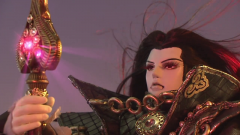
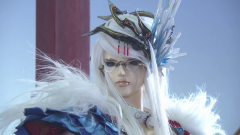
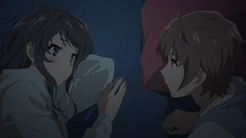
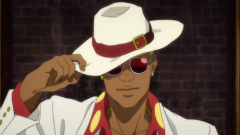
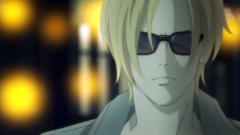
How many times has it been now that a bunch of Japanese military figures from different eras have appeared in an anime together? A lot of the recent ones (recent anime series, not military guys) tend to be game adaptations featuring a lot of handsome dudes, for what I’m confident are purely artistic reasons. Some of them sport better production than others, but this one unfortunately resides on the less impressive side of the spectrum. There are some really jarring visual moments here, with occasional character stills being tossed around the screen as a substitute for movement, and hurriedly drawn faces with mismatched eyes cropping up during a few of the medium shots. The soundtrack is one of the strangest I’ve heard in a long time. It features traditional Japanese music during quieter moments, but some of the chase sequences employ the sort of score you’d expect from a Hollywood comedy about a talking dog (seriously). The characters are full of knowledge about the show in which they’re starring, but none of the dialogue is terrible, which is nice for an anime so thrown-together in other respects. As for points of interest, we’ve got time travel, history, and that’s basically it. The series seems more interested in pushing its premise than laying the groundwork for Deeper Themes, and I don’t expect that preference to waver going forward. On balance, Bakumatsu isn’t my cup of tea, and it certainly won’t be included on any AOTY lists, but it’s not the worst of its kind.
Potential: 15%

Mario’s review:
Bakumatsu is another excuse for throwing pretty boys with awesome inhuman ability together to fight… what exactly? I know for a certain that I’m not within this show’s target demography. For the plot it tries to do something different by using time-travel, which itself makes for a fresher world design, but it brings a fair share of narrative issues as well, namely how these two fit in with this new world and how consistent other characters gonna be. Provided that we know next to nothing about these characters, it doesn’t come as a huge loss, still the inconsistency is there. Can’t say I care much for this cast, and in this episode we still have little clues on how that time-device works (conquer the world? Yeah, it’s the usual crap). Putting all the historical figures together getting a bit predictable lately, so if Bakumatsu doesn’t make full use of it then I don’t see the point of including it in the first place. Overall, it’s an easy skip for me.
Potential: 10%


Hinomaru-Zumou

Short Synopsis: A high school boy wants to be the best sumo wrestler in Japan.

Lenlo’s Review:
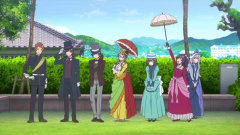
You know, it’s always been a pet peeve of mine with anime where the high schoolers look NOTHING like high schoolers. What’s the point of making it a high school series if they don’t look or act like high schoolers? Oh I guess I should talk about the actual anime at some point to, huh? Really there isn’t much to say. Its a sports anime, decent production and alright plot. The weakest part to me is the sport chosen as the subject material. Maybe it’s just me, but I just am not in to the sport. Sumo might be a cultural past time in Japan, but to me it’s just two fat guys pushing each other. It doesn’t help that the characters are ones we have already seen before, and the “power” scale is a bit ridiculous. 15 minutes straight of getting punched and no reactions? As someone who boxes in their free time, it stretches belief for that bare knuckles could garner so little a reaction. If you like sports, it might be for you, but there are better sports anime in just this season alone.
Potential: 30%

Aidan’s review:
Much like Lenlo commented, it is funny how the set these things in high school but draw full grown men as the cast. It’s a bit like those high school romantic comedies where everyone is clearly past their twenties yet they try to pass them off as teenagers. Well this is basically a sports anime through and through so as such the sport itself becomes center of the universe and treated as the holy grail of living. All mundane techniques are superimposed to the level of super powers and everyone learns just how amazing and beneficial playing is. So we got the usual gambit, the highly talented rookie, a romance that’s bound to go nowhere, the goal of getting to nationals which clearly is not going to happen in a single cour and a rival character set up. Honestly the single cour thing is my biggest gripe with these kinds of series as more or less all of them are serviceable but end just when things get started. Even when a second season comes along it generally enters a nonstop marathon of tournament arcs which lead nowhere. So my point is this, this show is fine for those just wanting something to pass the time but much like any other sports show it will end half baked.
Potential: 30%


Yagate Kimi ni Naru

Short Synopsis: A first year high schooler joins the student council after being inspired by an older girl, who later confesses to her.

Mario’s review:
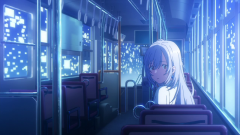
Bloom into You opens with an overly pretentious monologue that I was afraid it’s just all about those vague feelings that amount to nothing. Thankfully later on we get to know the reason behind it and I feel much more related to her issues. But immediately after that, it raises another issues: the confession is way too abrupt, in a manner too clumsily, that it takes me out to the romance again. This first episode is told from the point of view of Yuu (while literally as we have some scenes in the first person perspective), that’s why Nanami’s confession doesn’t work because we know next to nothing about her character. In term of romance I can say that it attempts more at the feeling, rather than physical exploitation in the same vein of Citrus and the likes, but to tell an intimate romance takes a lot of insight and this is just half-way there. Design-wise, the flat, big eyes of the characters might get some time to get used to, but as a whole I’d say that the production is pretty good. One of the trick to make a good romance is that they need to establish characters we can care about, and so far Bloom into You just barely makes it there.
Potential: 40%

Wooper’s review:
It seems to me that the desired mood for Yagate Kimi ni Naru (English title “Bloom into You,” which is a very pretty localization) was delicacy. The soundtrack certainly supports this, with woodwinds and strings as a pleasant backdrop for the romantic woes of our main character Yuu. There’s a lot of floral imagery, which shouldn’t need any explanation. And the constant references to being swept off one’s feet, or experiencing a floating sensation, paint love as the most beautiful of all feelings. Pretty delicate, right? Not quite, actually. Yuu’s hand-wringing over how to turn down a romantically interested guy is the plot point on which the premiere turns, but the agony this causes her doesn’t mesh with all the talk about true love. Perhaps we’re meant to view Yuu as naive (I certainly did), but the show doesn’t put in the work to support that interpretation. On the contrary, it uses a handful of superfluous POV shots to put us directly into her shoes, and encourages us to celebrate her little victories. The confession right before the credits, too, is the opposite of delicate – it works more as a hook for the rest of the series than a moment of unfiltered emotion. Why would a successful rejection be the trigger that causes the older Nanami to fall for her new underclassman? I know she sees herself in Yuu, but is that any reason to blurt out that she loves her? Rather than feeling any sort of spark between them, my heart may as well have been a pile of soggy firewood during that scene. The show’s got sun-drenched backgrounds and evocative music down to a science, so there’s definitely something here for romance fans, but I prefer my relationships to be a bit more grounded.
Potential: 40%

Some Quick First Impressions: Sora to Umi no Aida, Bunny Girl-senpai and Zombieland Saga

Sora to Umi no Aida

Short Synopsis: A dumbass girl tries fishing in giant space tanks.

Aidan’s review:
I have several questions. One, if humanity has the ability to create planet sized tanks and fish then why can’t they repopulate the seas of earth? Two, why did a law need to be passed to allow women to become space fishers? Three, why are the fish monsters that need to be fought with mecha? Four, Why in the hell is the mecha powered by a phone app? Five, why is the tech both highly advanced yet stupidly retro? This and many more questions were pushed aside as my thoughts were immediately preoccupied with how ungodly annoying the main character is. She’s stupid and loud, neither of which is done in a charming way. Her voice grates on the eardrums and I thought that with her getting pulled into some space fishing mission that she might pull out some hidden talent or aptitude. But nope, she’s completely useless, jeopardises the entire mission, gives the guys a reason to act stupidly sexist and walks out of there like she did nothing wrong. And those phone app gods? Are those supposed to be the things that people pay real money to obtain in the game? This plot is just a complete mess. From what I hear this phone app is long dead and looking at this anime, it’s sure staying that way.
Potential: 0%

Mario’s review:
I give this show points for such an absurd take of its universe. It’s about a school for girls to learn a job of fishing in outer space, with our main girl’s inspiration to make sushi out of them. It’s so playful that I, for once, want to explore more about that world. It also has a slice-of-life feel with your usual stock characters so fans of this genre will find heaps to enjoy. The problem with the show is everything else. The main character isn’t that interesting and I don’t really like how the show keeps telling us how clueless she is. The fishing mission remains my least favorite part as it becomes somewhat of a exhibition for its game source. I also like the feminist voice but the show does it by antagonizing the male cast a bit too much. The production is on par but nothing really stands out either. Sily, enjoyable but ultimately forgettable, it’s strictly for fans of slice-of-life fans or viewers who is already familiar with the game.
Potential: 10%


Seishun Buta Yarou wa Bunny Girl-senpai no Yume wo Minai

Short Synopsis: A boy encounters a girl in a bunny suit that no one can see.

Aidan’s review:
The main protagonist really is what makes this one as his banter just works so well with all the cast. Still the main plot of this story about a girl essentially fading from existence does have its draw and the first episode does a good job setting things up. There is light novel cliche to be had but it differnates itself enough to stand out. The general comparisons I am hearing is Snafu and Bakemonogatari (though not quite as chatty), and I can see those in this. It’s difficult to say if this will keep up this level of quality, after all most light novels begin to falter once the volume 1 story is completed but so far I would recommend this as out of everything I have seen so far this season this has interested me the most.
Potential: 75%

Wooper’s review:
I hate disaffected, 2smart4u main characters in anime, like the ones in OreGairu or Classroom of the Elite. They’re a transparent means of representing the author’s dissatisfaction with Japanese society, without the effort of writing a believable personality. Bunny Girl (that’s what I’m calling this show, since the light novel name is too damn long) has the same problem as those series, centering on a young man with resting Kanye face whose middle name is almost certainly “Nonchalant.” Here’s a guy who, while talking to a stunning female classmate and actress, casually mentions that he threw his phone into the ocean because it was frustrating him. (We later learn of a deeper reason for this, but his unflappability in delivering the line is silly.) He’s surrounded by a bunch of attractive women, actually, but anime law states that he must be considered an outcast, a rule which the show makes sure to obey. His ponderous monologues on social isolation and “reading the atmosphere” are nearly as hard to watch as his little sister’s realization that she can’t sleep in his bed because of his morning wood. The show looks lousy, as well, due in large part to the failure of the compositing team to make the characters gel with the backgrounds. There were at least half a dozen shots here that looked like promo art slapped on top of unremarkable scenery. So, all that being said, is there any reason to watch Bunny Girl? Yes, in fact: its supernatural premise holds some real promise as a means of discussing adolescence. I don’t want to over-explain how it works (the show does more than enough of that), but if you can get past some tropey writing and a male lead who is Reddit’s iamverysmart board personified, there might be something here for you.
Potential: 25%


Zombieland Saga

Short Synopsis: Um…A girl decides to become an idol and…things happen.

Aidan’s review:
In the anime preview I stated that Zombieland Saga wouldn’t have anything to offer because everything has been done with Zombies. Allow me to say that I was absolutely, completely wrong on that. I have greatly underestimated Japan. When this started I saw that it was clearly gearing up for a bait and switch that the title of the anime obviously spoiled but the bait and switch is not what I was prepared for. This episode was nothing like I was expecting and just got weirder and more ludicrous as it went along. But it was pretty funny and I am most definitely watching the next episode because I must see where this crazy train is going. I highly recommend walking into this one as blind as possible. For a first episode this is pretty good but I do wonder just what this show will bring to the table for the rest of the series. But hey, I’m in.
Potential: 85%

Mario’s review:
I guess I should’ve seen this coming, combining two most popular pop-culture genres together. It’s a mash-up that can go north or south easily, but thankfully for Zombieland Saga the fundamental is strong enough to make it a fun ride so far. First, within the two genres it’s spoofed of, Zomebieland Saga understands and uses the tricks of the genre efficiency. The first part works reasonably well as a goofy comedy-horror, the same goes for the latter unspoiled aspect it makes fun of. What makes this show a winner, however, is that it knows how to up the ante and it controls the overall tones quite thoroughly. Every twists and turns make it wittier and more absurdist. It’s elevated by the strong screen presence of our main girl, who tries her best to stick it together. That manager’s antic can get in the way sometimes but overall they deliver some snappy chemistry together. Its visual direction is on par too as the show successfully handles many different moving aimless zombies, our panicked girl and their eccentric manager together without losing its wit. How it goes from here is another question given the premise can wear thin quickly, but on the other hand the other girls gain personality which can make their banters a fun show to watch.
Potential: 70%

Some Quick First Impressions: Tensei Shitara Slime Datta Ken, Kaze ga Tsuyoku Fuiteiru & Ken En Ken: Aoki Kagayaki

Tensei Shitara Slime Datta Ken

Short Synopsis: A 30-something bland dude is stabbed and reincarnated as a OP slime.

Lenlo’s Review:
I remember reading this manga at one point and thinking it wasn’t too bad. It was a novel try at the Isekai formula, with the hero coming into the world as something other than human. As Aidan says, the best part is the time where he is learning to use his body and move around the cave. I loved all of the creative liberties the artists took here, it made the whole sequence a lot more interesting to watch than it was to read in the manga. The non-CGI dragon was nice novelty as well, really the visuals were pretty strong all around. From the looks of things, it will continue to be a good looking series. The big problem for me is that the manga got samey and stale relatively quickly. I expect the same to happen to the anime, as the ideas repeat and the OPness of the Lead Slime/RPG mechanics starts to grind on your patience. If you like Isekai, this is one of the better ones no doubt and will be a unique experience. If they aren’t your cup of tea, then this won’t be either. Side Note: The ending shot of destroying the computer was the funniest joke in the entire episode.
Potential: 50%

Aidan’s review:
To give points where points are due, it’s nice to see a non-cgi dragon. But I deduct points when the adult voice of the protagonist was replaced with a much more comedic lighter toned one. Sure it might be more suitable but it was also more annoying. The story clearly isn’t tracking itself all that seriously what with the MCs death being because of random guy running in straight line with knife and the protagonists last wish being for his kouhai to destroy his porn collection. I do think that they were quite creative in showing the sensory deprivation that the MC had when he first woke up as a slime without eyes or ears. The team had fun animationing that I bet. But this first episode was primarily just exposition and the MC getting to grips with his new body. Once again the world has RPG mechanics which are never explained and once again the MC is given broken abilities from the start though these seem decided based on his last thoughts. The best part of an isekai is usually the beginning where the main character is getting to grips with things but as shown in the opening eventually he will obtain a human body and that’s where I lost all interest in this story. What we have at the moment is a decent isekai story sure to scratch and itch for those looking for it.
Potential: 65%


Kaze ga Tsuyoku Fuiteiru

Short Synopsis: A broke college student moves into a new place on the condition that he’ll take part in Japan’s biggest relay race.

Wooper’s review:
For me, Kaze ga Tsuyoku Fuiteiru is a shot at redemption for this particular wing of Production I.G. Their adaptation of Ballroom e Youkoso fumbled the ball around the midway point, so I’m already nervous about this new series. The similarities are numerous: same Haikyuu-esque designs (minus the giraffe necks), same musical composer and same band doing the OP, same emphasis on sweeping motion, same sense of camaraderie between athletes. Thankfully, there are a couple key differences, as well: KazeFui’s principal cast is comprised of college students, and it’s based on a completed, award-winning novel, rather than an ongoing, sporadically-updated manga. The show is a little tropey, wasting no time in introducing all the attractive male characters living under one roof, but it doesn’t feel exploitative, and the dialogue is actually pretty authentic! The guys talk about food, booze, books, TV quiz shows, and how to disguise that pesky hole in the floor so the landlord won’t get on their case. Ultimately, though, the conversation turns to running, which is the canvas on which the show will paint its story, and the tie that binds the two main characters (whose relationship is already somewhat nuanced after just 22 minutes). How the show looks in motion will make or break it, and so far it’s making it. You’d be a fool to expect zero CG crowd members in a modern two cour series about competitive running, but so far KazeFui has been au naturale. There are a lot of positive signs in this first episode, but I don’t want to shout it from the rooftops – there may still be time for that, though.
Potential: 75%

Lenlo’s Review:
Kaze Fui is the first anime of this season I have put on my “Watch” list. The setup took its time, introduced the characters and made me interested in the people before dropping the story hook. The characters, by the way, whom I love. All of them. From Lazy Engineering Senior to Quiz Boy. Somehow Kaze Fui gave them juuust enough time to stake out a small spot for themselves. As Wooper mentioned, the dialogue was very authentic. I was interested in what they were saying and none of it felt expository for expositions sake. Really though the most striking thing is the animation. Kaze Fui looks gooooood. I don’t care what Wooper says, I enjoyed Ballroom and thought it was great in motion, and Kaze Fui so far is doing that again. I have no idea how Production I.G. is going to make running of all things interesting though. Ballroom dance is dynamic, unique and has a lot of interesting movement. Running though just seems so… basic. Like we will have seen all there is to see before to long. If Kaze Fui can pull of that aspect, then I think we have a winner here. At the very least, I will be watching it.
Potential: 80%


Ken En Ken: Aoki Kagayaki

Short Synopsis: A group of kids were separated after the enemy wiped out their village. Now, they pursue different paths and possibly become enemies… or not.

Lenlo’s Review:
Why am I watching this? No seriously, Mario, why is this on the list for the season? Sure sure, we can’t judge the animation by general anime standards cause of Chinese imports. Really, it’s not that bad in some places. The sword/spear fight near the start was kinda nice. But the Direction? The actual story and characters? It just feels all over the place. Like they had a lot of ideas they wanted to do, and couldn’t narrow it down. For all aspiring writers/designers out there, remember this one simple adage I was taught. “Kill your darlings” or else you get stuff like Ken En Ken.
Potential: 0%

Mario’s review:
We’re sure familiar with these Chinese inputs by now. Something I must note after watching two dozen of them season by season. The general reception for the animation in Chinese products is subpar, especially compared to anime counterpart. But I see it this way, Chinese animation industry (and Western cartoon on that end), don’t usually emphasis on animation like the Japanese does; as a result I don’t think it’s really fair to judge its fluidity quality from anime standard. The reason I’m bringing this up because I believe the production of Ken En Kei in general is pretty decent. It’s the direction that was a mess. We don’t have any real sense of how the story flows since it’s too busy to introduce too many characters and its plots. It has some nice world-buildings, but the characters in it are so far, unmemorable. As it stands, Ken en Kei functions more like a game. We get to some narrative progressions, but it feels all too weak with the messy packing that it fails to leave an impact.
Potential: 20%

Some Quick First Impressions: Double Decker! Doug & Kirill, RErideD: Tokigoe no Derrida and Akanesasu Shoujo

Double Decker! Doug & Kirill

Short Synopsis: A police officer finds himself working together with a special agency.

Lenlo’s Review:
Double Decker surprised me with this first episode. Starting off, the CGI and overly moody lighting had me worried it was going to be a grimdark, I’m-so-serious fare. The quick jump to light hearted action romp was a pleasant surprise though. Kirill, the lead, is a real character who after I got used to his special brand of stupid, was pretty entertaining. If nothing else, he’s not your usual bland MC. He has style, however ridiculous it may be. It also kept the exposition to a minimum, which I am thankful for. I feared a lot of drawn out narrator BS about Anthem and how the world worked, but Double Decker seems content to take it slow. A good sign. My one concern is the CGI and how heavily it will be used, because the constant jumping between it and 2D really bugged me. Still, not a bad start to a season I had pretty low hopes for.
Potential: 70%

Aidan’s review:
This certainly is reminding me a lot of Tiger and Bunny which is good considering it’s a spinoff. The buddy cop nature of the main duo and the way the show doesn’t take itself too seriously is quite reminiscent of it. But I feel that part of the appeal of Tiger and Bunny was the commercialised nature of the superheroes which doesn’t appear to play any real role here. In fact this show is pretty much like any anime OVA about cops taking on supernatural threats which can be nostalgic for some but rather derivative in itself. That said I found it a decently enjoyable watch though I don’t have much incentive to continue. The characters are fun and it makes for decent entertainment but it doesn’t really excel in any way, just being passable. I would say if you are looking for something with a saturday morning cartoon feel or a buddy cop dynamic then this could make for a decent time waster.
Potential: 60%


RErideD: Tokigoe no Derrida

Short Synopsis: A scientist finds out about a bug in his robots that contribute to the end of the world. Also, birthday party, conspiracy and time-travel throw in to the fun.

Lenlo’s Review:
You know, maybe it was a bad idea for me to touch on a time travel series so soon after Steins;Gate 0, because I am burnt out on them. It doesn’t help that RErideD starts its season by just throwing exposition and information at me from the get go. It doesn’t help that, as Mario said, the birthday that is no doubt supposed to make me care about these characters just fell flat. The most interesting part was the corporate conspiracy aspect for me. Yeah, the hallucinations were curious to say the least, but with nothing to really go off with them they are kinda just… there for me. As far as characters go, I barely remember a single one of them after watching, barring the lead Derrida. They all just feel… bland. Overall it looks like a series that will make it or break it by the 3rd episode once the story gets going in full. If you have an interest in time travel, stick it out. If you’re burned out like me, then it’s probably not worth it.
Potential: 35%

Mario’s review:
RErideD has some neat ideas, but this first episode feels the need to feed us its worldbuilding a bit too much. This first episode clearly serves as a prelude, where we get to know where our main character comes from, its universe and its premise… so far, it’s a hot mess. We learn a bit too much, although it raises more question than clarity. We know about its descend to hell near-future when the robots basically overloaded and take over the world. We know about the project being Derrida and his father’s brainchild, then we learn about another project of leaping time and then characters that would be important later on (in a birthday party that feels superficial at best), and I haven’t gotten to the main catalyst of the episode. It doesn’t help that Derrida’s motivation and personality are an open book, which makes him feel more like a first-person device than a real character. Being said that I’m sure interested to see what the hell this world is now, and the current characters and how they fit in to all this. Also, when it hits it can produce some inspiring moment (I’m referring to the hallucination image, which might or might not be real). The story really starts in the second episode, so until then we will have a better idea how well this story is going to pan out.
Potential: 50%


Akanesasu Shoujo

Short Synopsis: A ritual-obsessed girl travels to another world and meets her warrior doppelganger.

Lenlo’s Review:
Everything about Akanesasu leads me to believe that, had it gone the horror route, it could have done quite well. It opened with some interesting, possibly sinister, tones. The lighting did wonders setting a mood. And then it went full mecha-magical-girl on me and I lost what little interest I had. I will say, the CGI is pretty good and it’s nowhere near the worst premise for this kind of show I have seen. Really Akanesasu’s biggest fault is that it’s just not my cup of tea. For those that enjoy some “sit back and relax, no moralizing fun” I think Akanesasu will fit in fine for them. So long as the monster of the week stays interesting it shouldn’t have a problem.
Potential: 40%

Wooper’s review:
There’s a point in this premiere where a supporting character complains, “If they’re just going to play boring old music, they might as well play nothing at all.” In addition to being a terrible perspective on art, this seems to be the general philosophy of Akanesasu Shoujo – if it’s not modern, the show wants nothing to do with it. That means we need a group of five girls with different hair colors and personality traits, another world for them to visit, and a soundtrack that never strays too far from Yuuki Hayashi’s work on My Hero Academia (apart from one piano/synth track early on which I swear was inspired by the Gen IV Pokemon games). The girls are mostly forgettable, so I started mentally referring to them as though they were dwarves: Quirky, Quiet, Brainy, Proper, and Trendy. The dwarves travel to the land of CG snakes and meet the main character’s doppelganger, who somehow accompanies them back to Earth. What happens afterwards was the only part of the show to interest me, as Quirky I offers Quirky II a place to crash for a short time, and their distinct personalities begin to inform you about the differences in their worlds. In the era of 12 episode series orders, though, the show won’t have the luxury of peeling back any layers, and Q II returns to the land of perpetual twilight by the end of the premiere anyway, so if you plan on picking this up, expect an info dump sooner rather than later.
Potential: 30%

My Hero Academia: Two Heroes (Dubbed) Review – 72/100

Ah, the movie tie in. A right of passage for all aspiring Shounen series. Some, like One Piece have weathered it and come out Golden, while others are better forgotten (Looking at you Bleach). My Hero Academia: Two Heroes, in my opinion, is closer to former. Animated by BONES , Directed by Kenji Nagasaki and advised/concepted by the original author Horikoshi Kouhei, the film checks all of my boxes. Even going so far as to be considered cannon by the Author, tieing into both the Anime and the Manga, Two Heroes is a brilliant first dip into cinema for My Hero Academia.

Lets jump in, and be warned, there are some spoilers within!

Continue reading “My Hero Academia: Two Heroes (Dubbed) Review – 72/100”

A quick and dirty review of Angolmois: Record of the Mongol Invasion

Our protagonist

What it claims to be about: Angolmois (a reference to a Nostradamus prophesy which is rather irrelevant for the show, as he lived several centuries after the events) focuses on the first Mongol Invasion of Japan in 1274. Specifically it focuses on the early phase of the invasion when the Mongols attack Tsushima, which essentially is a way station for invasions from Korea to Japan and the other way around.

What it really is about: We follow a band of criminal exiles, which are conscripted into defending the islands by the local feudal lord’s daughter, Teruhi. Among them is Kuchii Jinzaburō a spunky samurai with a good grasp of military matters. He is headstrong and that is what nets him his exile. The show follows the attempts of Teruhi and Jinzaburo to defend the island against overwhelming forces, while at the same time exploring elements of Tsushima myths and culture in the era.

Our protagonist again. Another side of him.

Why you should watch it: In general Angolmois is a mediocre show. It does some things right. The “Mongols” are presented ,as was historically accurate, as a multi-national force including Koreans, and Chinese. The Mongol openness to giving service to anyone is also correctly presented, as is their rapaciousness. The Japanese arms and armors seemed well researched to me, as well as the fashion. I found Jinzaburo an interesting character with complex motivations, but with enough blood-lust to not make him boring. The Mongol secondary characters are interesting, ranging from the timid but intelligent, to the blood-thirsty. The show does not dreg into too much overt nationalism and myth making. Do not get me wrong, the view of the Japanese as unique is still there, but it is not done in a vulgar way (I am looking at you Kopeki no Kantai). Indeed the show honestly dives into the more localist and personal motivations of the protagonists, including ones that lead to betrayal, without sermonizing. The end is well played out, being at the same time brutally realistic and still hopeful (in this sense sharing similarities to the excellent Gundam: Iron Blooded Orphans-watch that instead). Character art was in general pleasing to my aesthetics.

Why it is mediocre: The problems though are major. First, the secondary characters on the Japanese side are very shallow. While the Mongols get some great secondary characters, the creators on the Japanese side only focused on developing really Jinzaburo. From the eight exiles only one more gets any real development. The rest are really archetypes. Tehuri is a crucial character but her development is never pursued (perhaps realistically as war engulfs all).

Second, the animation was a complete and total failure. This was surprising, as I expected a historical anime, based on a manga, dealing with such a rumph rumph nationalist fervor topic would get more funding. Indeed the first and second episodes had some good work. Alas, it did not last. Still shots dominate, the battle scenes lack animation, and while bravo for the show pointing out the multi-ethnic character of Mongol armies, all those Chinese, Mongols, and Koreans look like each other. Over the whole animation is a filter that tries to convey the feeling that this is parchment, but fails. Instead it looks like a tv screen splashed with muddy water.

As a result the story suffers and the presentation also does.

Finally, you leave the show with a feeling that you just watched demo for a bigger show on the full invasion of Kuyshu. There is a feeling of indeterminacy. It is true our main characters get closure. But many of the secondary characters seem to have been shoved in for no other reason than to premeditate a sequel. Perhaps there will be, perhaps there will not. But I hope if there is that they actually spend the money for better animation.

The music is nothing to write home about. The Opening is pleasing enough, but not a home run. The rest is

End point. If you are looking for a light historical show and like spunky characters watch this, but do not expect much. A C- in my grading system.

Fall Season 2018 Preview

What happens when the anime season ends? That’s when the anime season begins. You would think that after all these years of this I would stop being surprised at a brand new anime season hitting faster than expected but it’s just one of those things you constantly underestimate.

Now last season we had a decent run with some stand out shows and this would normally be the point where I tell you that the next season coming also has potential greats in it. But this time I am afraid I cannot say that for I have done the research and this season is truly barren. There may be a few alright shows here and a new Jojo is always welcome but everything else is just bottom of the barrel. If those original shows don’t turn out to have merit this could very well be the worst season of anime we have had in a long time. Considering that is coming from me of all people that should at least give you an idea of the quality we are dealing with.

So same rules apply, I will check out all the source material I can to give an idea for what we are in for and there is a poll below for you to vote on what you wish to be covered this season.

This poll is no longer accepting votes

What will you be watching this spring?

Once again thanks to Mario for images, some previews and layout help and Wooper and Lenlo for editing.

The sequels/Shorts I don’t care about

Fairy Tail (2018) (sequel)
Bakutsuri Bar Hunter
Devidol! (short)
Souten no Ken: REGENESIS 2 (sequel)
Grimms Notes (???)
Gurazeni 2 (sequel)
Gyakuten Saiban: Sono “Shinjitsu”, Igi Ari! 2 (sequel)
Himote House (short)
Hora, Mimi ga Mieteru yo! (short)
Hoshi no Shima no Nyanko TV (short)
Inazuma Eleven: Orion no Kokuin (sequel)
Jingai-san no Yome (short)
Kira Kira Happy ★ Hirake! Cocotama (sequel)
Okoshiyasu, Chitose-chan (short)
The iDOLM@STER: Side M: Wake Atte Mini! (short)
Pingu in the City 2 (2018) (short)
Seizei Gambare Mahou Shoujo Kurumi 2 (sequel)
Senran Kagura SHINOVI MASTER -Tokyo Youma-hen- (sequel)
Shuudengo, Capsule Hotel de, Joushi ni Binetsu Tsutawaru Yoru (short)
Sono Toki, Kanojo wa. (short)
Space Battleship Tiramisu II (short)
Sword Art Online: Alicization (sequel)
Toaru Majutsu no Index III (sequel)
Tokyo Ghoul:re 2 (sequel)

Series I don’t care about

Akanesasu Shoujo


Studio: Dandelion Animation Studio
Director: Jin Tamamura
Script/Series composer: Shougo Yasukawa
Source: Video Game
October, 2018. Girls who live in a provincial city perform a certain ritual. The girls are in the “Crystal Radio Club.” It is an interest circle that Asuka Tsuchimiya, a girl known for her cheerfulness, started with friends in her high school. That ritual was considered just an urban legend. However, with several conditions coincidentally falling into place, it stops being fun and games…

I originally had some hope that this would be a kind of horror anime but the trailer unfortunately confirmed that it wasn’t. What this does seem to be is a mixture of a cute girls doing cute things club and supernatural battle anime. Not to mention it’s for a smartphone app so likely another gacha game. The director was previously involved with A Sister’s All You Need, and the scenario writer hasn’t done much to write home about. I honestly wouldn’t expect much from this.

Anima Yell!


Studio: Doga Kobo
Director: Masako Sato
Script/Series composer: Fumihiko Shimo
Source: Manga
The story follows Kohane Hatoya, a 1st year high school student who is a bit clumsy and scared of heights but who has a very bubbly and outgoing personality. Kohane decides to join the cheerleading club to try to make friends and overcome her weaknesses.

It’s a 4-koma manga with four cute girls in a club so you know the drill. Quickfire gags and cute girls being all cute and shit. I’ve only seen two chapters of this but already this feels too much like many, many things I have seen before. The cheerleading aspect is pretty much superfluous and can be interchanged with any school activity you so desire. The characters are copy pastes of the same archetypes you have in these kinds of series, and while these chapters were short, I found my eyes glazing over before I finished. My taste for humor has never been all that compatible with anime but even then I feel this series just isn’t really funny. To me this is an anime to fill a quota for an anime season. We gotta have a cute girls doing cute things show so let’s slap something together to just tick that box.

Continue reading “Fall Season 2018 Preview”

Steins;Gate 0 Anime Review – 40/100

Before I begin this review in earnest, I have to ask, who doesn’t know about Steins;Gate? The amazing, beloved original series that Steins;Gate 0 is an offshoot of. Well if you don’t, if you haven’t seen the original, then stop now. Steins;Gate 0 is not worth it. It is not for you. Without having seen the original, Steins;Gate 0 will make even less sense and fall apart even faster than you than it did me. Because, long story short, Steins;Gate 0 tries to do everything and in doing so fails to do most anything.
Lets jump in!

Continue reading “Steins;Gate 0 Anime Review – 40/100”

Mirai (2018) Movie Review – 81/100

Watching Mirai, there are two observations that spring right up to my mind: Mirai is Hosoda’s most grounded, personal film and it plays out completely different from what I expected based from the promotional materials. My feeling is confirmed when I later learned that Hosoda based the concept from watching his own children’s react, and that his daugher is indeed named Mirai. The film centres around the 3 to 4-year-old Kun and details how he cope with the appearance of his younger sister, Mirai. While the PVs play as if this is an escapist adventure in the vein of Peter Pan between Kun and Mirai the teenage version, Mirai is instead an episodic film where Kun meets various family members in different timelines and come to learn some “life” lessons. Its more realistic setting and its small-scale family drama are a stark different from his more fantastical (and messy) previous works, but it should relate well with kids and moreover with parents who have experienced these before. To put it better, Mirai is a perfect family-oriented feature that respect the child’s point of view with all the mature sentiments behind it.

Mirai’s episodic segments all share the same formula: Kun is dissatisfied with how the baby sister takes all the attention from his parents, he throws a tantrum, he’s miraculously thrown into another timeline where his relatives live and he grows a bit in the process before transport back home. If it sounds a bit like a gimmick, it doesn’t because all Kun’s issues are very believable for the kid his age. Children always feel left out when their “prince” status fall apart with the appearance of some annoying baby. Mirai really nails it when it exaggerates Kun’s outburst with comical distorted face that can only be done effectively in this medium. The film also understands the kid’s imaginative mindset. Kun’s at the age where everything seems possible, where dog can talk and act like a prince, where his Mama is just as messy as him when she was young, where Mirai appears as a high school girl.

It helps that the episodic segments feel like true adventures with many different settings. There’s a sense of wonder everywhere, and the production has a chance to stretch their muscles by breathing life and details to these different era. In one instance Kun is lost in a Hell-like train station, the art appropriately goes impressionist and nightmarish. In other instance (and the only time where it happens in the present), Miral the high-schooler, along with Kun and their dog in human form have to find a way to take down the dolls (Hinamatsuri) to save Mirai from “late marriage”. These moments like this not only help the members of this family bonding deeper, it also helps Kun to appreciate his family more, especially to his younger sister who he seen at nothing but a burden. If I have one minor nitpick, it is that I find the segment where he meets his great-grandpa a bit far-fetched since he doesn’t even meet the old man in real life. But in Mirai’s defense, it’s actually one of the most meaningful story in the film so  well, it’s deserved to be there after all. There’s also some moments where the film take on adult’s perspective. Especially the time where the father has to do real houseworks for the first time, thus he learns how he had been slacking on helping his wife all these years. These instances ring so true here.

But the most impressive thing Mirai pull off is how all these stories add up to paint the same family bond theme. It’s like different branches of the same tree – an apt metaphor for this film given the film frames these stories as threads connected by the grand tree that transcends multiple generations. It’s an ode to the family where every family member’s life sounds just as wonderful and epic like famous figures; where every action, every decision connect and interweave that result in the present-us just as we are now. The settings themselves have a lot of personality in Mirai, especially their house with multiple levels and see-through glass and big garden that easily triggers any kid’s imagination. You can also spot some of Hosoda’s directional trademarks like his lateral camera movement that detail members (usually the father) doing housework in a nice flow of time. There isn’t a lot of dynamic animation, but the character animation is top-notch, especially when the film deals with children expressions since they have much more movements than the adults. The most stand-out sequence for me is the one where there’s only visual storytelling about his great-grandfather and his running challenge. Just seeing how that scene play out brings tears down my eyes. It’s powerful precisely because it keeps the moment “small”.
After a string of movies that entirely focus on grand, fantastic story, I understand why some of you might be let down by this small-scope film. It’s a film with almost no real ambition but I beg to differ on that. Here’s where I like to compare Hosoda with Shinkai’s previous inputs. While Shinkai’s latest expands his scope and finds himself in tune with the general audience’s appeal, Hosoda limits his scope to the theme that he knows most; and cares the most. And that is perfectly fine. Every auteur has at least one personal film in which they disregard any artistic or financial merit and just make something that meant the most to them at the time. It’s the small cozy real-world brush that makes Mirai so enjoyable, relatable and feel almost like home.

Fate/Extra Last Encore Anime Review – 40/100

To many the Fate series is daunting with its numerous incarnations and spinoffs and here in the year of many a Fate adaption we get another one by Studio Shaft which was first thought to adapt the story of the PSP game Fate/Extra. Fate/Extra could basically be considered Fate with a sci-fi twist as this entire series takes place in a virtual reality where a massive Holy Grail War is taking place. The protagonist Hakuno and his Saber Servant must advance up seven Floors while defeating the servant and master that guards each floor to reach the Holy Grail at the top. The scenario itself certainly feels like that of a video game but this anime is not actually an adaption of the PSP game but instead an alternate retelling/sequel to that game. Despite claims from the writer that this anime could be experienced blind, the story itself does require context from the game to understand the story as a whole.

I will say that the story of this anime does sound good on paper and I am sure if you read summaries on each episode you would find yourself interested as the events of this anime do sound exciting, at least on paper. However the execution is botched heavily as the story was essentially a novel written by the author and handed over to be adapted into a anime screenplay. It’s source trappings remain in the show as Fate/Extra is an anime that prefers to tell you it’s story rather than show you it. There is an unforgivable amount of exposition and characters are not developed enough to make such copious amount of exposition interesting. The main character is essentially characterised as having no personality besides a vague anger which makes him a poor foil to the heroine of the series who mainly acts as fanservice. The massive amount of dialogue and Shaft being the animation studio has had people referring to this anime as Fatemonogatari which certainly seems like an apt comparison. The show is mainly dialogue and the battles between servants and masters on each floor all feel uninvolving and anticlimactic. Not helped when each fight either boils down to the protagonists trying harder or pulling out some previously unmentioned dues ex machina. I will say that Shaft make the show quite visually striking and there is some legitimately beautiful aspects like the illustration of the servant master duos in the episode endings. However the animation isn’t as strong as some other Fate entries and this series can take a bit too many of Shafts quirks as an anime studio.

The show follows a fairly formulaic pattern which makes the show feel vacuous as it continues to progress but the characters on screen remain machines for exposition or meaningless dialogue. What is likely intended to be the driving force of the series is the mystery behind what is actually happening as the story itself is very stingy on the details of what is actually happening causing many a viewer to just think “What?” which is the intention of the author but sadly backfired. Anytime you feel you are beginning to understand just what is happening in this show, it throws another curve ball and leaves you trying to figure it out all over again. Once pieced together the story becomes more straightforward but instead of being a rewarding experience to puzzle out it just becomes a reason why the viewer becomes so disconnected to the events on screen as we can’t engage if we are too busy trying to get to grips with what the plot even is. Upon its conclusion it just feels empty and meaningless, providing nothing of worth nor entertainment. Music didn’t leave much of an impression either. Overall there does feel to be a story under all this which could have made for a pretty good anime but the execution of it’s ideas where botched to the point that it just feels soulless and vacant , lacking anything which makes it recommendable besides finding out where that girl who looks exactly like Saber but in a red dress came from. Even then playing the Fate/Extra game would be a better experience even if that too isn’t perfect. So I pray…for Fate/Extra CCC to be localised for that certainly seems like it would beat out both the previous game and the anime. So get on it Marvelous or Xseed.