Some Quick First Impressions: Dororo, Watashi ni Tenshi ga Maiorita, Rinshi!! Ekoda-chan

Dororo

Short Synopsis: The cursed child of a Samurai Lord must hunt down the demons to whom he was sacrificed to in order to reclaim his body and confront his father.

Lenlo’s review:
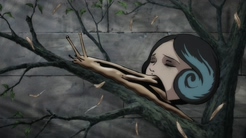
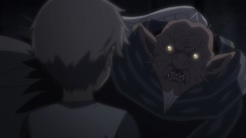
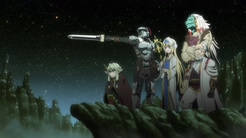
Alright Dororo, I am in. This is the first of the season that I am legitimately excited about. The episode sets up the world, the story, the characters and none of is simplistic. We have the demons/ghouls that it appears our lead must fight, slowly earning back parts of their body and ruining their father Daigo’s wish. We have Daigo himself who will no doubt hunt down our lead now that his wish is in peril and he learns his son is alive. And finally we have the cursed child who fights blind, deaf and with no real limbs, and a charismatic thief kid. Honestly I loved every second of it and was sad to see it end. The story is rich, thanks no doubt to Tezuka, and the animation is crisp and stylish, thanks to MAPPA. It also helps that Dororo, because it originates as a 1960’s manga, just feels different than everything else coming out. It is a story from a different era of the medium, with none of the modern trappings, written by one of the greats. Bring me more Dororo!
Potential: 95%

Mario’s review:
It’s a pretty solid start for Dororo. As expected from the source material of the great Osamu Tezuka, this first episode already provides some moral complexity to its world. This premiere serves more as a prologue to a story to come but it does extremely well of setting up the conflict and introduces the main characters in play. We have some memorable characters, and the main duo in particular could serve as an interesting leads to follow. Visually, it looks stylish with memorable character designs and some striking shots. This could prove to be the breakout hit of the season.
Potential: 70%


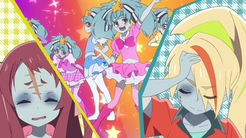
Watashi ni Tenshi ga Maiorita!

Short Synopsis: A college-aged woman becomes smitten with a fifth grade girl and bribes her with sweets so she’ll model different outfits for her.

Wooper’s review:
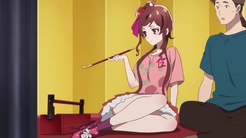
Doga Kobo is on a roll with these pedo-baiting comedies. Uzamaid went off the air just two weeks ago, and Watashi ni Tenshi has already arrived to fill the void. To be fair (if fairness is even required when talking about a show like this), Doga Kobo’s usual cutesy production works in Wataten’s favor, with softened backgrounds and an emphasis on character movement to keep things visually interesting. These elements might also create an innocent atmosphere that lessens the strangeness of the show’s premise, depending on who you ask. Since this is my review, I’m going to assume you’re asking me, to which I’ll answer, “No they fucking don’t.” No amount of conflicted internal monologuing about the “funny, squirmy feeling” in your chest can make me like your perverted character, especially not when she’s characterized with such an insultingly dumb mix of tropes: totally kawaii with no friends, baker extraordinaire, closeted cosplay geek. This is practically a Hallmark movie for lolicons. Not only does she fall in love with her little sister’s friend at first sight, but the weird level of attachment between the sisters themselves could only be considered subtle by Japanese standards. Both the series’ key visual and the ED promise more elementary school girls for the MC to creep on, so if you love this sort of anime, you’d better get down on your knees and thank Satan for the bounty you’re about to receive.
Potential: 5%

Mario’s review:
Do you find any of this funny?? Just right after UzaMaid we have another show about older woman who has strange obsessions to primary school kid. It has a nice, soft art styles and some nice animated overreactions, but apart from those it leaves the bad taste in the mouth. This older girl acts exactly like a creepy otaku who is even shyer than her 6-year-old little sister and the source of humor comes mostly from how awkwardly this little-Reina-chan behaves. It tries hard for being cute both with her several attempts of “get close” to this poor girl, and for this young girl and her love for sweets. If you find these two elements funny the you’re gonna be fine with this show, others might steer away.
Potential: 0%


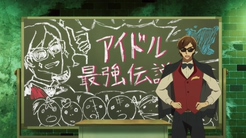
Rinshi!! Ekoda-chan

Short Synopsis: The private life of a 24-year-old woman, Ekoda-chan.

Mario’s review:
So we have 4-minute length of actual episode and the rest is a interview footage from the director and Ekoda-chan seiyuu. For that I believe it should be considered as actual part for this anime adaptation. It was frankly a joyous 4-minute short I’ve seen in recent memories with a lead that has so much “naked” personality and mature but realistic humor. The fun here is how she sees the world and people around her, at the same times feel a bit insecure about her love life and this episode nails it with its visual and its “rhythm”. The bigger chunk of this episode is about the interview with the crew involved including the director and the Voice Actress and by that we can see how their own views on Ekoda-chan, some of their personality and especially their chemistry together. It was a whole lot fun to watch, and although I would love for more actual animated content in the episode, I will definitely tune in to watch this every week.
Potential: “feel like New York”

Wooper’s review:
As Mario mentioned above, this is a short series with a lengthy real-life conversation stapled to the end. As Ekoda-chan is set to have a different director and voice actor for each episode, this could be a treat for fans of specific seiyuu or the creative process at large. Neither of those labels applies to me, though, so I bailed halfway through the real life segment. The anime itself was much more interesting, centering on a 24 year old hostess “looking for love and a better life,” in her own words. Her job is suffocating, her boyfriend is a wet blanket, and her friends are getting paired off left and right, but Ekoda-chan seems more interested in life’s mundanities than she is worried about its troubles. She’s too busy wrestling with her favorite dog, trapping house-invading lizards, and running over a horde of crabs in her family’s truck to succumb to despair over the state of her existence. I expect that her quirkiness will be peeled back in future episodes to reveal a much more neurotic young woman, but due to the revolving door of directors, there’s no way to know that for certain. This one, at least, has some snappiness to it thanks to Akitarou Daichi, whose past experience with short comedies like Sexy Commando Gaiden and Gag Manga Biyori served him well here. One episode isn’t enough to judge whether this series will be any good, but the atypical format and unique main character have me on board for now.
Potential: ???

Some Quick First Impressions: Tate no Yuusha no Nariagari, Ueno-san wa Bukiyou, Pastel Memories

Tate no Yuusha no Nariagari

Short Synopsis: A college student is transported to another world, where he must train to defend a medieval kingdom with nothing but an enchanted shield.

Lenlo’s Review:
For the required Isekai of the season, it’s surprisingly not a terrible fare. Shield Hero surprised me by taking the general premise where the Isekai Hero starts OP and above everyone else and throws it out the window. I like that our hero has to work from the bottom, with the potential for power in the sword, but clear deficiencies in combat and being behind everyone else in terms of gear, money and respect. He basically has to be a tank. So long as Shield Hero doesn’t try to turn him into some combat badass and keeps him in the support role, the unflappable tank who only sets up the win for other characters, I think I could really enjoy this. To address the Animal Girl in the room though, I am not inherently against the slavery aspect. The hero is already at the bottom rung of society, so he can no doubt relate and connect to the slaves. That’s basically what he is with these “Waves”. So I think the slavery aspect could make for some interesting character relationships. What bothers me is that the first/main companion/slave is an animal girl that will no doubt eventually fall for him, ala Stockholm Syndrome. I think that is an icky, creepy relationship to focus and build on and I really hope Shield Hero has more restraint than that. We will have to wait and see. Finally, visually, Shield Hero isn’t anything special. There is some smooth motion when fighting the balloon monsters, but we have yet to reach any kind of set piece. So I would call it average in this department so far. Regardless, it has my interest enough that I am gonna keep up with it for at least a few more weeks.
Potential: 45%

Mario’s review:
Why do these isekai anime love game mechanics so much? Everytime these game mechanics spelled out, they basically lost me. “Status options” on the screen; level up? For most of Tate double-length premiere it runs as a typical isekai, and that’s exactly the point because up to half-an-hour mark the show reveals its hands. It’s a good thing that our protagonist hits rock bottom and we see how he eventually becomes cynical. Has to gain the power, respect and even companion himself without any “cheat” is always a welcome. What worries me however is the end. Not necessary about the “slavery’ aspect, but more that it’s still self-fulfilling in the end: he still gets a comrade who happens to be bloody hot (demi) girl. So what makes or breaks a show is how well it makes him suffer because the more he goes through some real drama the more earned his efforts will be. Visually it doesn’t impress me but knowing this is from Kinema Citrus I have my full trust. I’m also worried that characters can fall into common tropes since aside from our titular characters, the others are quite stock characters. Considered that was the point before the “twist”, we will have to see how well-developed of this new girl in the next episode.
Potential: 30%


Ueno-san wa Bukiyou

Short Synopsis: A genius schoolgirl attempts to attract her clubmate’s interest via lewd inventions and situations.

Lenlo’s Review:
The only short I have really finished to completion was last season’s Honda-san. And even then, I found myself not all that enthused by it at the end. That puts Ueno-san already at a disadvantage, because I find it visually and thematically inferior to Honda-san in every way. The topic of a middle-schooler trying to get a boys attention is dull, the dialogue is dull, the visuals are washed out. At least Honda-san had an interesting style, it generated colorful and engaging screens, even if they didn’t move much. Ueno-san though is just… dull. I keep saying that word, but it’s the best way to describe it. It took me 30 minutes to finish a 10 minute short because I had to force myself through it. Suffice to say, this is a hard pass for me.
Potential: 0%

Wooper’s review:
I’m a fan of half-length anime comedies, but given how cheaply produced and one-note they tend to be, what counts the most is often their subject matter. In Ueno-san’s case, we’re dealing with a girl who wants a boy to notice her, but can’t think of a way to attract his attention apart from using him as a guinea pig in her perverted science experiments. This isn’t a bad premise in isolation, but the series is so invested in the shy, unable-to-confess -dere trope that it dominates the proceedings. Ueno-san’s inability to tell her crush that she likes him doesn’t offer any commentary on young love beyond, “It’s hard to admit that you like somebody.” Her red twintails and white-pupiled eyes make for an attention-grabbing design (the one redeeming feature of this episode), and if the ED is any indication, plenty more girls will be introduced in the coming weeks. If that’s your bag, Ueno-san might be worth 11 minutes every week, but based on this premiere, it isn’t worth mine.
Potential: 10%


Pastel Memories

Short Synopsis: Four girls working in a manga cafe try to find a collection of lost manga.

Lenlo’s Review:
Pastel Memories managed to successfully draw me in, get me interested, and then lose me completely all within the same episode. I was all for the fluffy concept of bringing back Otaku culture one series at a time. Scouring a dead series or genre to bring it back, because it meant something special to someone. That is an interesting, episodic concept to me and gives them a lot of freedom to play around with. They could animate different or present each story differently, in the style of the manga or series they are hunting down that week. But then at the end they randomly become magical girls fighting some virus? And this virus is no doubt responsible for the death of Otaku culture no doubt I am sure. It’s like a completely different show and it confuses the shit out of me. Not to mention that this supposedly failing cafe run by children somehow has enough revenue to not only support 10 employees, but to have them running around looking for manga all day. Pastel Memories had the base for a fun, wholesome, episodic series about Otaku culture and proceeded to completely ignore it for the lowest common denominator magical girl tripe. Color me surprised with a healthy dose of pastel, cause I am done and not coming back.
Potential: 0%

Mario’s review:
It’s another anime set in Akihabara that aims squarely on the otaku culture. While I can safely say that I’m not within the target audience, the very concept of reviving a lost culture is an interesting one for me. So the part where the team searches for the full collection of the manga works well enough for me. Sadly though, I’m never sold on the setting itself. The cast works in an otaku cafe where they hardly have any customer, but I counted like 10 people working there. There isn’t a clear time set (how many years since it loses its fandom?), and I find it strange that these manga stores don’t have some sort of network before. But the most head-scratching part comes down at the end, where supposedly the girls have to go the another dimension to destroy virus? Where the heck does that part come from? It feels like another show entirely. It’s jarring no matter how you look at it.
Potential: 10%

Some Quick First Impressions: Boogiepop wa Warawanai (2019), Egao no Daika and W’z

Boogiepop wa Warawanai (2019)

Short Synopsis: A teenage boy meets his crush’s costumed alter ego, Boogiepop, as rumors about disappearing girls spread through their high school.

Lenlo’s Review:

Ah, a new year, new season, time for a new first impressions post. What’s this, a mystery thriller about an urban legend and an angel of death? Why I would love to! A full explanation on what the Boogiepop is from an unreliable narrator? A split personality that appears in women, and then proceeds to murder or kill the thing murdering other young women? Social gossip? Well sure, sounds good I- wait, what’s happening? This is a lot of talking and not much really happening. Why does this entire episode suddenly feel more like a standalone than a series introduction? What is even happening anymore? Suffice to say, Boogiepop intrigued me at the start and then, over the course of 25 minutes, proceeded to completely lose my interest. It raised a bunch of questions, answered them unsatisfactorily and then basically shoved off. Its like Boogiepop thinks throwing you straight in the deep end of psychological disorders, myths and legends, and murder is a good way to start a show. I like it enough to give it another chance with the next episode or two, but as is, my interest in the series is lower than it has been since it was announced. Here’s hoping that’s just first episode blues for a notoriously hard genre to pull off though.

Potential: 40%

Wooper’s review:

I never got into the original Boogiepop adaptation, which first aired 19 years ago. Based on the first few episodes, my impressions were that it was gloomily lit, oppressively moody, and quite difficult to follow. For fans of the 2000s series who loved that challenging atmosphere, the fear surrounding this newer version must be that it will become too accessible. Those fears can be put to rest, however, since this first episode was an understated, non-linear collection of conversations that promised no easy answers. Though the premiere offers an explanation for who or what Boogiepop is, it’s not a complete one – in fact, it seems downright misleading. There are quick cuts to bits of murderous violence at several points throughout the episode, which echo the gossip swirling throughout the school where the episode plays out. The desired mood here is clearly unease, and the show does a few things to achieve it: hiring Kensuke Ushio to compose a droning electronic score, setting many of its scenes during the late afternoon to give its characters an odd glow, etc. Some of these efforts are hamstrung, though, by jerky animation, instances of muddy dialogue, and character designs (immediately recognizable as Parasyte knockoffs) that don’t seem to fit the series’ mystery-laden mood. Word on the street is that the second episode (which is already available online) is an improvement, so seek it out if you’re interested. As for me, after just one go, I’d say the series has my interest, but not my enthusiasm.

Potential: 50%

Aidan’s review:

Boogiepop started this season with a double episode premiere and as you likely seen from my preview, I walked into this one with great expectations. The first episode was slow, the animation of was surprisingly underwhelming(I don’t understand why it was decided to make extras faceless.) but at least it was fairly accurate to what I read from the novel and considered the double episode premiere to be a good move considering how the story works as a slow burn. Then I walked into episode two and just what in the holy hell happened here? What was supposed to happen was that we would see events from the new protagonist but instead it appears they opted for a different method for showing the rest of this story. Which is by chopping up the rest of the novel and rearranging in a manner to make it as confusing as possible. Truly I am flabbergasted. I don’t see the artistic expression of making your narrative harder to follow and in many ways it kills the story as characters are no on screen long enough to grow attached to, the story leaps back and forward in time with no abaddon and it’s hard to become invested when you are too busy figuring out just what the hell is going on. The focus should have been on showing the inner thoughts of the characters through animation, not on this ridiculous editing for the sake of…whatever they are trying to accomplish. I am hoping that this was a one episode thing or that once a new arc starts that they come to their senses and realise this is idiocy. And maybe I can see that beautiful animation that the first PV showcased appear.

Potential: 30%


Egao no Daika

Short Synopsis: A 12 year old princess ascends to the throne of a prosperous country, not knowing that it’s at war with the neighboring Empire.

Lenlo’s Review:

Ah, the lolibait of the season. This time with a princess idol who battles in robot mecha chess. I’ll be perfectly honest, I have no idea what I just watched. Egao no Daika is trying to do… everything really. Mystery plot over this “incident” and her parents, romance between her and her bodyguard, action with giant mecha battles. It’s all over the place. That said, the mecha battle itself actually… wasn’t terrible. If you can ignore all of the context around everything that happens in this show and just enjoy the mecha battles, you may have fun with it. If not though, just skip it. Egao no Daika’s author just shoved every trope they could find into one story, so I am sure you can find something you like better elsewhere in the season.

Potential: 5%

Wooper’s review:

Why is a 12 year old princess entrusted with the fate of an entire country just because her parents died?
Why does her first address to the nation look like an idol concert, complete with glow sticks and ridiculous crowd reactions?
Why are all the outfits and hairstyles so needlessly elaborate (and therefore difficult to animate)?
Why are there twin characters whose last name is literally “Vanquish”?
Why does one of them oppose the princess’ rule on the grounds of her naiveté, only to be charmed by that same trait fifteen seconds later?
Why do two high-ranking, ostensibly well-informed members of the government suddenly explain their country’s history to each other, complete with a holographic display that looks like a video game menu screen?
Why was there a need to refer to a futuristic-looking game with a green 6×5 board and pushpin-looking pieces as “chess”?
Why doesn’t the princess have anything better to do than to watch her bodyguard engage in a CG simulated mech battle with the Vanquish twins?
Why does she suddenly become a strategic genius midway through the battle, despite having lost horribly to her advisor at “chess” (and then questioning whether strategic thinking was “really something she needed”) just thirty minutes earlier?
Why are anime characters still vowing to “protect her smile” in 2019?
Why did I watch this show?

Potential: Why?


W’z

Short Synopsis:  A middle-school boy moonlighted as DJ in the virtual world and attracts fair share of enemies who are Hand Shakers

Lenlo’s Review:

I just got tricked into watching a sequel to Hand Shakers. What the hell.

I won’t even say watch this if you liked Hand Shakers, because no one liked Hand Shakers.

Potential: 0%

Mario’s review:

So this is indeed a sequel of HandShakers. It features the new cast so you don’t need any prior knowledge to watch it. Although the question remains: why bother watching it? As you might aware HandShakers is a rare anime that fails in arguably every single department (it fails so hard that it belongs to so-bad-it’s-good camp, but that’s another matter), and so far with W’z it doesn’t look like they’re gonna change. It has the exact same aesthetic as the screen in bathed in bluey filter. Characters look the same and they never talk like real human. We haven’t gotten into the fights yet so I’m not commenting on the CG battles yet, but the CG background characters stick out like a sore thumb. Even the main plot now is nonsensical. The only way you can enjoy this show is to set your expectation to be as low as HandShakers.

Potential: high chance of becoming the worst anime of 2019 by a landslide

Aidan’s review:

Honestly this is truly impressive. GoHands, never have I seen a studio so utterly full of confidence in their own style…and so utterly oblivious to their own failings. Try searching for my old impression of a series called K that they made before. Everything I said there applies here. They are repeating, every single failing. The pointless starting fight scene, the crap CGI, the BL baiting, the utter overuse of filters and lighting that washes out the screen along with characters so stock they still got the wrapping paper on. At this point a studio would learn, if they didn’t then they would at least learn after making one of the worst anime trainwrecks in Hand Shakers. But not only have they learned nothing…they made a sequel to Hand Shakers. What should be a complete black mark on their history and they made a bloody sequel to it. I don’t understand. Do they not want to be successful? Do they not want to make money? Are they under some mistaken impression of being animation visionaries? Because under all the scum of this series it does feel like there is genuine effort being put in but it’s all for naught when the package is an utter disaster such as this.

Potential: When are you declaring bankruptcy GoHands?

SSSS.GRIDMAN (Fall 2018) Anime Review – 87/100

Let it be known that I’ve never been a fan of Trigger. For me, they’re one of the most style-with-no-substance studio on Earth with a tendency for god-awful fanservice, and total nonsense in terms of story and characters. Yet GRIDMAN completely caught me off guard in the first two episodes, and from there, there was never a dull moment. On the surface, it shares many of the studio’s (good) trademarks: an unconventional storytelling, bombastic action sequences and and eye for arresting visual. Yet its approach is completely different that the visual approach becomes a character of the show itself. On the next surface, GRIDMAN is a love letter to those tokusatsu shows, the Gridman franchise and even Transformers franchise that we see the sheer love from the staffs to all these homages. While you don’t need any of prior knowledge in order to follow this show, the ones who do know about these homages might enjoy the show more wholly. For my money, along with Revue Starlight, GRIDMAN is one of the best visual directed anime this year 2018 has to offer. A visual where not only it’s striking to look at, but also support its themes and laid out many small details about its world-building.

The main vibe GRIDMAN offers in the first few episodes lie in how offbeat everything happens on screen is. Character waking up with an amnesia; there are kaiju monsters standing motionless in the background. The school appears to be normal a day after its destruction. This offbeat sense could very well turn many viewers off, but not until later do we find out about the truth of this world and its characters that everything starts to fall into place and its visual choice starts to make a whole lot sense. If I have to point out another quality of GRIDMAN, that would be there’s a clear line between “minimalistic” and “going all out”.Usually, the battle scenes go is bathed with its bright color, dynamic CG sequences and epic feeling, but in its quieter moments (which usually happening ⅔ of the episode), it goes for saving-energy mode: minimal music, repetition shots, realistic dialogues, “camera” is in static mode. This is a bold choice since clearly dividing its segments like that would cause a tonal inconsistency or even not holding audience’s attention at all, but it’s a rewarding one because GRIDMAN creates a real sense of its mysterious world that feel wholly unique and unforgettable.

Some could argue that because of these clear dividend, GRIDMAN is a show of two halves: its mundane slice-of-life half through the point of view of Rikka, and its Gridman vs Kaiju monsters origins narrated by Yuuta. In fact, part of the claim is true. Looking back, GRIDMAN doesn’t seem to have a clear protagonist, as we were introduced to this world through Yuuta’s eyes, himself is a blank state, then all the emotional core is progressed through Rikka as she goes through her normal life and then the show leaves its climax arc to Akane, her God-like status and her existential crisis. Not all of these work well (Yuuta’s part is clearly GRIDMAN’s weakest part), but I’m surprised that this show brings another level of complexity to Rikka and while I’m a bit let down by the ending, the dream episode remains the best episode I’ve seen in 2018, and the single sequence of Akane jumping off the crane remains one of my favorite scene of the whole year.

GRIDMAN is also one of these shows where it embraces “show, don’t tell” school the the fullest. The visual style always give the sense of scale between the characters and how huge the kaiji monsters are. It features many distorted lenses, further informs us visually that the world these characters inhibit in are not necessary real. Most impressive of all, in my humble opinions, is how the show uses the distance between its characters to signify their chemistry. The best examples of this approach is Akane and Anti’s relationship, where you can see the clear distance, most of the time Akane is in higher position, looking down at Anti. In addition, My favorite one is in episode 3 that details Rikka and Shou’s getting sucked into their own misery. The visual framing, which frames these two looking different ways through mirror is the textbook example of how to inform character’s inner struggle purely through visual alone.

This show is also in love with putting as many details in its world-building, a bit obsessively like the way Wes Anderson usually spend to his worlds – mostly through the objects that surround the characters. While these details might not necessary relevant to the main plot, uncover these Easter eggs might prove rewarding and might open up to more interpretation this show aims to be. This is the show that the more you dig into it, the deeper the Rabbit hole goes, but damn I really do prefer if the show confirms some of its theory. The live-action sequence at the very end of show, for example, nicely sum up this show thematically, at the same time raising a hell lot of ambiguity to the table.

And for me, that is exactly the kind of anime I’m yearning for. It might not be perfect, it might be for an acquired taste (although I heard that it sells surprisingly well in Japan), it might not wrap up the best way it can, but it never afraid to take risk and ultimately it comes off as its own thing. I sure hold Akira Amemiya in high regard now.

Thunderbolt Fantasy 2 (Fall 2018) Anime Review – 86/100

If anyone has been familiar with the first season of Thunderbolt Fantasy, you’d find yourself a lot to enjoy in this second installment. Served as a sequel, but not a direct continuation to the first, viewers don’t need the knowledge of the original in order to enjoy this ride. Thunderbolt 2 carries many trademarks that make this show such an install success since it came out: the puppetry technique makes it an unique viewing experience amongst anime fandom; the larger the life characters whose characters are the central protagonist in their own stories; the camp value of cheesy lines and back-and-forth conversations; and the somewhat unpredictableness of the plot. It serves as an entertaining and engaging ride on its own right, but to be fair, it’s pale compare to the freshness of the first season.

In this second season, we have a whole new supporting cast aside from our hero Shang Bu Huan and Gui Niao the Enigmatic Gale. The cast includes Lang Wu Yao – the ginger singer with his talking pipa, the Princess of Cruelty Xie Yinglou, the Dirty Cop Xiao Kuang Juan and the amoral monk Di Kong. While Thunderbolt proves once again it more than has its chops when it comes to make these characters as stand out as possible, for this season it falls more into straightforward side.There’s a clear line between the good guys and the bad guys, which makes a lesser impact compare to the ambiguity of good/evil in the original series. Princess Cruelty, for example, has haer redemption arc that, while still good, is the most conventional arc Thunderbolt has done so far.

The main storyline is another straightforward aspect of this season. It has a clear set of goals and well planned-out (too well indeed) goals: Shang Bu Huan wanted to get rid of his Index of Swords, unfortunately the plan fails and the enemy gets a hold of two evil swords. One thing that this season does improve is that we get a chance to see more legendary swords and their dangerous powers. These two new swords, Seven Blashphemous Deaths and the Night of Mourning, have a distinct designs and formidable powers. The former especially has quite a character for her deadly charming voice and her femme fatale personality. My favorite addition, however, is the one-wing Dragon who spits fire and talks human language.  

Speaking of characters, I’m glad to say that all the main players this season fit into this universe like a T. They’re over the top, but not simple. They’re all too proud of themselves and they bounce off with each other extremely well. Normally it’s an one-on-one conversations where these different personas clash, and most of the time it’s a treat to watch. Di Kong and Lang Wu Xao serve to be an excellent cast on its own, the former on how he’s dangerous purely because he has no evil temptation, and the latter because of his strict sense of justice. The Dirty Cop’s character is your love-to-hate type and his corruption is a bit to extreme to leave any ambiguity, and it’s a shame his character is the least relevant to the main plotline.

The visual has gotten much more flashy too. Characters doing their own “remarks” while speaking, the special effect, namely the spitfire and the blood-gushing are still something to behold. Even the way these characters run have a quirk of its own, making Thunderbolt a product that never fail to be anything less than spectacular. I think we’re in good chance for the final season that closes everything here. Witty, refreshing, never take itself seriously and always have the right amount of campiness and flashiness, puppets are here to stay.

Irozuku Sekai no Ashita kara (2018 Fall) Anime Review – 73/100

In the last few years, it’s great to see P.A Works has slowly created their own studio identity, putting more original works with consistent production values. Just in 2018, they produced 4 shows (quite a good number if you ask me), 3 of them were original: Maquia, Sirius the Jaeger and Irozuku. As I said, it’s a encouraging sign to see a studio that has control of its titles, but at the moment they still haven’t reached their full potential yet. The same pitfalls between Irozuku and Sirius the Jaeger, in particular, lies in its writing. They’re unremarkable and in Irozuku’s case, drags on for too long. Irozuku is a show that has a well-realized settings, a solid theme of finding love and gorgeous production, but it’s one of the case where it has no real plot, as a result in the middle chunk it feels as if the cast just wanders around in search for the plot.

You can see that aimlessness from our main lead, Hitomi, who is colorblind, afraid to use magic and shut off her own feeling. When she’s transported back to her Grandma’s timeline, she doesn’t know what her purpose is, or what she should do. Comes the supporting cast from the Art/ Photography Club who has different personality traits, but “surprisingly” always in sync when it comes to group decision. I take it as lazy-writing since at the end of the day, none of the cast raise above their established traits. The addition of energetic Kohaku moves the show forward a bit, but she’s also bogged down by the same approach.

I normally avoid to criticize a show for “nothing happens”, but it’s exactly the case here for Irozuku. The middle portion consists mostly of the cast hang out doing their club activities that both feel random in nature and nothing has progressed whatsoever. Although they spend majority of time together, the chemistry of the cast isn’t necessary strengthened, because they repeat the same atmosphere all over again. Not all of these relationships are one-note, however. Aoi and Hitomi has some neat moments together, as they settle down their own feeling for each other. Kohaku has some solid developments too on how she takes the responsibility of bringing Hitomi safe and sound.

Irozuku is the show that mixes between magic and the normal day lives; and it’s the magic parts that are the highlights of the show. Whenever it comes to these scenes, the visual never fails to impress. Whether they’re colorful fireworks, the magic train or drawing-styles paintings or the sparks of the magic spell, everything looks gorgeous and it’s the visual alone that carries the message more than the narrative. It takes a trip to Aio’s painting with the black figure hopelessly chase the dead golden fish that tells much more about Aio’s artistic struggle than any word can convey. The same goes for Hitomi’s monochrome vision, every time it switches between color to black and white world, we see the world in her point of view and there’s always a hint of sadness carries across.

Thematically speaking, Irozuku centrals on finding your own happiness and love yourself as part of embracing and living the world. Throughout its run, Hitomi progresses from a shy little sad sack to someone who knows what she likes, from a girl who is afraid of her own magic to someone who finds the beauty in magic and the colors in her life. As it stands, I still believe Irozuku would be much stronger if it only had half of its runtime, or had a more solid middle arc. It remains a show that has clear starting and ending point, but don’t know the road the get there efficiently.

Seishun Buta Yarou wa Bunny Girl Senpai no Yume wo Minai Anime Review – 82/100

In the wake of many a school based light novel show this may be the small bits of fresh air was can savor out of this overdone setting. Rascal does not dream of Bunny Girl(Or by its japanese title above) is a series not about rascals or bunny girls but instead about contextualising common high school student problems with a supernatural twist. The story mainly follows a guy called Sakuto who encounters various girls afflicted by some supernatural disorder ranging from invisibility to body switching. Generally caused by some mental problem or trauma the girl is dealing with which the supernatural disorder is forcing her to face. There is some rather weak attempts to explain said phenomena with quantum physics but believe me when I say you really shouldn’t take that into account as this show basically gives up on that idea as it continues.

The series works in an arc format with each ranging from three to four episodes dealing with a certain girls story arc. However while each arc does deal with Sakuto helping girls, this does not lead to the typical situation of Sakuto building up a harem of girls infatuated with him as he helps them. Instead there is more of a focus on Sakuto building a relationship with one girl as he helps others which really does progress well as the two have fantastic chemistry. Indeed the strongest aspect of the show itself is the interactions between the characters which do have fine comedic banter but also feel more grounded and real than most shows.

The opening theme song is a massive earworm set to have you repeating it throughout the day and the ending works well as it changes based on who is the focus of that particular arc. There are some negatives in that some arcs are weaker than others and with each arc(Aka Light novel Volume) being covered in three/four episodes instead of a standard six which results in the pacing speeding up at times and lots of time jumps. As it is by the author of Sakuraso it also has a tendency to delve a little too deeply into overdramatic territory which can ruin some moments. Other than that it is a highly solid show bound to keep anyone watching with it’s episodic cliffhangers and engaging narrative. For those whom have watched the likes of Haruhi, Snafu or likewise then this would make for a good show to put next on your list.

Banana Fish Anime Review – 67/100

Some days, I wonder what it is with America and anime about organized crime. Baccano!, 91 Days, Blood Blockade Battlefront, all set in America, all involving criminal underworlds. Today, I get to add another to that list in the form of Banana Fish. Much more grounded than the others, it’s story dates all the way back to the 80’s. The Vietnam war has recently come to a close, and Organized Crime is being forced to adapt to new times. Banana Fish takes this story and adapts it for the modern age, with smartphones and the Middle East. It attempts to touch on all these weighty subjects and conflicts, but in the end, can only manage a story about two young men, in over their heads.

Welcome to Banana Fish. Lets jump in.

Continue reading “Banana Fish Anime Review – 67/100”

Winter Season 2019 Preview

Time is like a cat. When you want it to move fast it stops dead. When you want it to stop it moves fast. Occasionally it jumps around and every now and again it tries to kill you in your sleep. I don’t quite know where I was going with the metaphor but if we can take anything out of it, it’s that there are only so many analogies to time one can make for these previews. Let’s just say that the second and third Fate Heaven’s Feel movies are not out yet and really that’s all that matters.

I certainly professed certain doom for last season but I will admit to it not being quite as bleak as I would have thought. That said it was still a weak season where even the strongest shows didn’t have much of an impression. Luck would have it that the winter season is going to change that because we got some real contenders here. We got two manga adaptations held in high regard along with a golden oldie, a sequel to Mob and some originals with potential.

Rules are the same as previous previews, I seek out any source material I can to find out what we may be in for and there is a poll below for you lot to vote which shows you wish to be covered.

Once again thanks to Mario, Lenlo, Helghast and Wooper for helping out.

The sequels/Shorts I don’t care about

3D Kanojo 2
Ame-iro Cocoa 5 (short)
BanG Dream! 2
B-PROJECT 2
Date a Live III
Fukigen na Mononokean Tsuzuki
Mini Toji (short)
Piano no Mori 2
Shigeki no Bahamut: Manaria Friends (short)

Series I don’t care about

Bermuda Triangle: Colorful Pastrale


Studio: Seven Arcs
Director: Junji Nishimura
Script/Series composer: Michiko Yokote
Source: Original
The glittering spotlights. The sparkling, fluffy, cute outfits. The charming voices while dancing with bright smiles. Under the dazzling lights on the big city stage, these would be the mermaid idols who swim and dance freely underwater. But far from this big city, the girls once lived in the peaceful village of Parrel. These girls, who would not even imagine such a glittering future for themselves, are instead just raising a fuss over the snack cakes they are eating. This is the story of the cheerful daily life of mermaids who strive their hardest everyday.

It’s a spinoff of the Cardfight! Vanguard franchise. It’s also about a mermaid idol group. My interest levels could not be any lower for this. Just introduce a high school and I would be done. Honestly the best I can see here is some cute mermaids being cute and stuff. But even that just sounds like a dull forgettable experience.

Circlet Princess


Studio: Silver Link
Director: Hideki Tachibana
Script/Series composer: Nachi Kio
Source: Video Game
The game follows a fictional near-future e-sport that utilizes a “mixed reality system” developed from augmented reality technology. The story centers on a fledgling team of high school girls from Saint Union Academy who pursue the sport of Circlet Bout.

A browser game adaption huh? These are rarer than your regular old Gacha game adaptations, considering the last one I remember is Kantai Collection. Still it seems the appeal here is the same. The fanservice was high in that trailer and it’s basically just hot girls fighting each other. I would say this doesn’t look to have anything worthwhile. I see the series composer is the original creator of Aokana. Guess it sucks that VN company basically went defunct. Move along, nothing to see here.

Continue reading “Winter Season 2019 Preview”

Castlevania Season 2 Review – 73/100

According to much of the Western Anime community, this series wouldn’t be relevant for a site like this. Being made in the West by Americans, and English being its first language, many would disqualify it from the start. However I name them all fools for Castlevania, Directed by Sam Deats and Ryoichi Uchikoshi is clearly inspired by and modeled after Anime. Just like Avatar: The Last Airbender or the currently airing RWBY, let Castlevania stand as a testament that Anime can be produced beyond the borders of Japan. A damn good one at that.

Lets jump in, and beware of spoilers!

Continue reading “Castlevania Season 2 Review – 73/100”