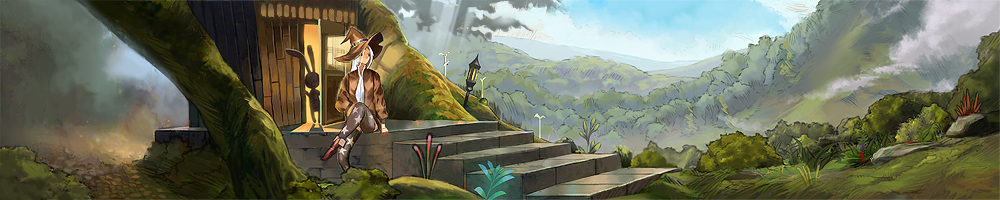


 Kaze no Shoujo Emily, or Emily of the New Moon as its English title, is the third of what I’d like to call the “big three” of the spring-season 2007, along with Toward the Terra and Bokura no. These three form the cream of the crop of the series that have been released for the past half year, perhaps even for the past year.
The problem is, though that there’s a good chance that many people haven’t even heard of this series. It’s a sad thing, but in addition to being one of the best series of the season, it’s also one of the most neglected ones. Seriously, only the kiddie-shows like Bakugan Battle Brawlers have gotten less coverage than this one. I’ve often said that popularity is no way to determine the quality of an anime, and Kaze no Shoujo Emily is the perfect example of this.
The biggest problem with this is probably the fact that this is a Shoujo-series. I have no idea why, but the fansubbers have always tended to neglect the Shoujo-series. Only half of them ever gets subbed, while there are some true gems among the genre, beyond this series as well.
Okay, enough blabber, what about the content of this series? Well, it consists out of standalone episodes that tell the story of Emily Byrd Starr, a eleven-year-old girl who lives in Canada, about a century ago, and her three friends Perry Miller, Teddy Kent and Ilse Barnley. It’s loosely based on the life of Lucy Maud Montgomery, who wrote it and who some might recognize as the author of Anne of Green Gables.
The series is basically a slice-of-life series with lots and lots of drama, and this formula turns out to work so well. Emily is a wonderful character; she differs from the usual Shoujo-lead by acting rude and energetic. She longs to be a writer someday, and she often fantasizes in her own world in an extremely poetic mood, and this personality of her often clashes with those of others, resulting in some amazing dramatic climaxes.
The side-characters of Perry, Teddy and Ilse provide wonderful support for it. They’ve all got their own story as well, and throughout the series, we can see the four of them clash, grow and interact. A major theme of the series is living towards your dreams, and some of the episodes are just incredibly inspirational.
One of the things I loved about this series is how it’s so delightfully consistent. There are maybe four or five lesser episodes, but apart from that, you just know that nearly every episode you’ll watch will leave you with a heart-warming feeling, unlike many other anime, which often need episodes for introductions and aftermaths.
When this already is quite amazing, this series turns even better once the characters actually start growing up. The majority of the series shows Emily as an eleven-year-old girl, but starting with episode 20, we actually see her time in high-school, and the final episodes show the major events of the last years of her youth, ending with Emily being around twenty. During this, this series becomes a real tear-jerker, delivering one awesome episode after the other.
The character-designs will take a bit to get used to, though. Emily is drawn in a really shoujo way, and it’s hard to not label this series as some kiddie-series (trust me, it’s not). The colours used in both the backgrounds and the character-designs are bright and colourful, though the production-values are quite high, and this series ends up looking beautiful, as soon as you get used to it. The soundtrack also consists out of a collection of beautiful classical tunes, which strengthen the series even more.
Overall, if there ever was a series that deserves to get subbed, it’d be this one. Not only does it deliver memorable characters, it’s also a valuable chance to see anime tackle the Canadian culture of a century ago, and I must say that it does a pretty good job. The differences between the Japanese culture are definitely there, probably influenced by the books of Lucy Maud Montgomery. If you ever have the chance to watch this series, I recommend you to take it, unless you really need action.]]>
Kaze no Shoujo Emily, or Emily of the New Moon as its English title, is the third of what I’d like to call the “big three” of the spring-season 2007, along with Toward the Terra and Bokura no. These three form the cream of the crop of the series that have been released for the past half year, perhaps even for the past year.
The problem is, though that there’s a good chance that many people haven’t even heard of this series. It’s a sad thing, but in addition to being one of the best series of the season, it’s also one of the most neglected ones. Seriously, only the kiddie-shows like Bakugan Battle Brawlers have gotten less coverage than this one. I’ve often said that popularity is no way to determine the quality of an anime, and Kaze no Shoujo Emily is the perfect example of this.
The biggest problem with this is probably the fact that this is a Shoujo-series. I have no idea why, but the fansubbers have always tended to neglect the Shoujo-series. Only half of them ever gets subbed, while there are some true gems among the genre, beyond this series as well.
Okay, enough blabber, what about the content of this series? Well, it consists out of standalone episodes that tell the story of Emily Byrd Starr, a eleven-year-old girl who lives in Canada, about a century ago, and her three friends Perry Miller, Teddy Kent and Ilse Barnley. It’s loosely based on the life of Lucy Maud Montgomery, who wrote it and who some might recognize as the author of Anne of Green Gables.
The series is basically a slice-of-life series with lots and lots of drama, and this formula turns out to work so well. Emily is a wonderful character; she differs from the usual Shoujo-lead by acting rude and energetic. She longs to be a writer someday, and she often fantasizes in her own world in an extremely poetic mood, and this personality of her often clashes with those of others, resulting in some amazing dramatic climaxes.
The side-characters of Perry, Teddy and Ilse provide wonderful support for it. They’ve all got their own story as well, and throughout the series, we can see the four of them clash, grow and interact. A major theme of the series is living towards your dreams, and some of the episodes are just incredibly inspirational.
One of the things I loved about this series is how it’s so delightfully consistent. There are maybe four or five lesser episodes, but apart from that, you just know that nearly every episode you’ll watch will leave you with a heart-warming feeling, unlike many other anime, which often need episodes for introductions and aftermaths.
When this already is quite amazing, this series turns even better once the characters actually start growing up. The majority of the series shows Emily as an eleven-year-old girl, but starting with episode 20, we actually see her time in high-school, and the final episodes show the major events of the last years of her youth, ending with Emily being around twenty. During this, this series becomes a real tear-jerker, delivering one awesome episode after the other.
The character-designs will take a bit to get used to, though. Emily is drawn in a really shoujo way, and it’s hard to not label this series as some kiddie-series (trust me, it’s not). The colours used in both the backgrounds and the character-designs are bright and colourful, though the production-values are quite high, and this series ends up looking beautiful, as soon as you get used to it. The soundtrack also consists out of a collection of beautiful classical tunes, which strengthen the series even more.
Overall, if there ever was a series that deserves to get subbed, it’d be this one. Not only does it deliver memorable characters, it’s also a valuable chance to see anime tackle the Canadian culture of a century ago, and I must say that it does a pretty good job. The differences between the Japanese culture are definitely there, probably influenced by the books of Lucy Maud Montgomery. If you ever have the chance to watch this series, I recommend you to take it, unless you really need action.]]>
Category: Anime Reviews
Seirei no Moribito Review – 91/100


 Spring 2007 came with many excellent and unique series, and Seirei no Moribito is one of them. Produced by Production IG with extremely solid production-values, this series is a true gem for those, looking for substance.
Let me first start with the following statement: Seirei no Moribito does not have an overall genre. While the first three episodes might suggest that we’re dealing with an action or martial-arts anime, you’ll be proven wrong by the middle part of the series, which takes a more slice-of-life approach. A drama also doesn’t quite cut it because it’s got quite a few light-hearted moments, and while some episodes fall in the adventure-category, other episodes just show characters standing and talking. To be honest, apart from any World Masterpiece Production, I haven’t seen any anime that feels more like a novel than Seirei no Moribito.
The big key behind the success of this anime is the immense amount of detail that went in nearly every department of this series. The animation is truly gorgeous and detailed. Characters move more than necessary, they leave footprints on rough, terrain, random bypassers move realistic. It’s almost as if you were in a Ghibli-movie without all the over-the-top fantasy-elements. And to top things: the fight-coordination is among the best I’ve seen, even though there are only four or five of them in the entire series.
And then the characters. Don’t expect any flat characters here, nearly all of them have complex motives that can’t be described in one or two lines, they can think like normal human beings and some of them are quite smart, development is realistic and yet, as the series nears its conclusion you really begin to feel sympathy for them.
The storyline also finally doesn’t want to create the worst-case scenario in the end. All the plot-twists in the series favour realism over sensation. This series knows how to build up a good base for it, and it doesn’t want to ruin this by excessive amounts of forced drama and plot twists like we saw taken to the extreme in Code Geass. The storyline becomes so incredibly solid because of this, and because it moves relatively slow, it makes sure to put enough time to flesh out both the plotline and the characters to an excellent degree, so that it’s able to finish with an excellent finale that doesn’t feel rushed in any way.
There’s one major problem with this series, though. It may have been a tad too long, and many of the middle episodes, while they serve as a way to flesh out the characters, they also border on filler, and the story doesn’t get anywhere for about seven or eight episodes. It’s series like this one that make you pity that series can’t pick the option to take on the length of 1,5 seasons, as this would have been perfect for this series.
The first half may feel a bit tedious because of this, but everything comes together in the end like a charm. The music also fits this series perfectly and easily deserves a place in my top-3 of best soundtracks of the season. If you like series with lots and LOTS of detail, you should definitely check out this series, though you need patience to be able to enjoy it.]]>
Spring 2007 came with many excellent and unique series, and Seirei no Moribito is one of them. Produced by Production IG with extremely solid production-values, this series is a true gem for those, looking for substance.
Let me first start with the following statement: Seirei no Moribito does not have an overall genre. While the first three episodes might suggest that we’re dealing with an action or martial-arts anime, you’ll be proven wrong by the middle part of the series, which takes a more slice-of-life approach. A drama also doesn’t quite cut it because it’s got quite a few light-hearted moments, and while some episodes fall in the adventure-category, other episodes just show characters standing and talking. To be honest, apart from any World Masterpiece Production, I haven’t seen any anime that feels more like a novel than Seirei no Moribito.
The big key behind the success of this anime is the immense amount of detail that went in nearly every department of this series. The animation is truly gorgeous and detailed. Characters move more than necessary, they leave footprints on rough, terrain, random bypassers move realistic. It’s almost as if you were in a Ghibli-movie without all the over-the-top fantasy-elements. And to top things: the fight-coordination is among the best I’ve seen, even though there are only four or five of them in the entire series.
And then the characters. Don’t expect any flat characters here, nearly all of them have complex motives that can’t be described in one or two lines, they can think like normal human beings and some of them are quite smart, development is realistic and yet, as the series nears its conclusion you really begin to feel sympathy for them.
The storyline also finally doesn’t want to create the worst-case scenario in the end. All the plot-twists in the series favour realism over sensation. This series knows how to build up a good base for it, and it doesn’t want to ruin this by excessive amounts of forced drama and plot twists like we saw taken to the extreme in Code Geass. The storyline becomes so incredibly solid because of this, and because it moves relatively slow, it makes sure to put enough time to flesh out both the plotline and the characters to an excellent degree, so that it’s able to finish with an excellent finale that doesn’t feel rushed in any way.
There’s one major problem with this series, though. It may have been a tad too long, and many of the middle episodes, while they serve as a way to flesh out the characters, they also border on filler, and the story doesn’t get anywhere for about seven or eight episodes. It’s series like this one that make you pity that series can’t pick the option to take on the length of 1,5 seasons, as this would have been perfect for this series.
The first half may feel a bit tedious because of this, but everything comes together in the end like a charm. The music also fits this series perfectly and easily deserves a place in my top-3 of best soundtracks of the season. If you like series with lots and LOTS of detail, you should definitely check out this series, though you need patience to be able to enjoy it.]]>
Ooedo Rocket Review – 88/100


 Ooedo Rocket (also known as Oh! Edo Rocket, it seems) is one of the more neglected series of the past spring-season. I have no idea why, as it’s been directed by the director of Full Metal Alchemist. You’d think the fans would want to see his next work. I’m glad I checked this series out though, as it’s without a doubt the best comedy-series of the season. And not only does it make you laugh for nearly every single episode, it also has something that/s very rare in other comedies: a compelling plot.
Ooedo’s power lies in its characters. Every single one of them is fun to watch and they literally come in all kinds of different sizes. Each one has his or her own quirk and they can actually be funny without making a joke at all. They’re all far from stereotypes, they feel like real characters, they develop a bit, and they’re a delight to watch when they start interacting with each other in just a daily manner.
This is enough to make a good comedy. What makes Ooedo a great comedy is how it adds so many details to strengthen the series. An example is its setting: the series explores fireworks in the Tenpou-era (between 1830 and 1844), and yet people have televisions, toasters and even internet and nobody seems to find it strange, even though these references only appear occasionally. And let me specifically mention the music. It’s not your standard soundtrack with all kinds of jazzy tunes, but it works perfectly. For me, each time it started playing I got pumped and exciting for the new scenes.
And then there’s the plot and the drama. The drama is for me the weakest point of the series, basically because the characters are so much fun to watch when they’re quirky that they become a bit disappointing when they’re serious. The plot, however, makes this series shine. The main character, Tamaya Seikichi (the son of THE legendary fireworks-maker) is basically asked by a cute girl to build a rocket to fly her to the moon. A large part of the series actually sees him, testing out different designs for a rocket to try and figure out how to do it, which is quite interesting. In addition to that, there are numerous side-plots that are explored, and the characters actually have the talent to be both funny and develop the plot at the same time. Most other anime only go to comedy when there’s some kind of aftermath or intermezzo where the plot doesn’t really matter that much.
Then there’s also the interesting point that the dramatic climax of this series is at episode 20, instead of twenty-six. At that point, I was beginning to fear that the final parts of the episode would focus way too much on the drama, but to my surprise, they didn’t. The final episodes are basically the characters having fun while the plot develops, combining both perfectly, with a sort-of satisfying ending.
I’ll admit, Ooedo Rocket isn’t consistently funny. Some episodes are utterly hilarious, while others are a bit less, and there have been comedies where I laughed harder. But because of all the extra things it added, it turned into one of the more successful comedies out there. A definite recommendation if you’re looking for a fun series.]]>
Ooedo Rocket (also known as Oh! Edo Rocket, it seems) is one of the more neglected series of the past spring-season. I have no idea why, as it’s been directed by the director of Full Metal Alchemist. You’d think the fans would want to see his next work. I’m glad I checked this series out though, as it’s without a doubt the best comedy-series of the season. And not only does it make you laugh for nearly every single episode, it also has something that/s very rare in other comedies: a compelling plot.
Ooedo’s power lies in its characters. Every single one of them is fun to watch and they literally come in all kinds of different sizes. Each one has his or her own quirk and they can actually be funny without making a joke at all. They’re all far from stereotypes, they feel like real characters, they develop a bit, and they’re a delight to watch when they start interacting with each other in just a daily manner.
This is enough to make a good comedy. What makes Ooedo a great comedy is how it adds so many details to strengthen the series. An example is its setting: the series explores fireworks in the Tenpou-era (between 1830 and 1844), and yet people have televisions, toasters and even internet and nobody seems to find it strange, even though these references only appear occasionally. And let me specifically mention the music. It’s not your standard soundtrack with all kinds of jazzy tunes, but it works perfectly. For me, each time it started playing I got pumped and exciting for the new scenes.
And then there’s the plot and the drama. The drama is for me the weakest point of the series, basically because the characters are so much fun to watch when they’re quirky that they become a bit disappointing when they’re serious. The plot, however, makes this series shine. The main character, Tamaya Seikichi (the son of THE legendary fireworks-maker) is basically asked by a cute girl to build a rocket to fly her to the moon. A large part of the series actually sees him, testing out different designs for a rocket to try and figure out how to do it, which is quite interesting. In addition to that, there are numerous side-plots that are explored, and the characters actually have the talent to be both funny and develop the plot at the same time. Most other anime only go to comedy when there’s some kind of aftermath or intermezzo where the plot doesn’t really matter that much.
Then there’s also the interesting point that the dramatic climax of this series is at episode 20, instead of twenty-six. At that point, I was beginning to fear that the final parts of the episode would focus way too much on the drama, but to my surprise, they didn’t. The final episodes are basically the characters having fun while the plot develops, combining both perfectly, with a sort-of satisfying ending.
I’ll admit, Ooedo Rocket isn’t consistently funny. Some episodes are utterly hilarious, while others are a bit less, and there have been comedies where I laughed harder. But because of all the extra things it added, it turned into one of the more successful comedies out there. A definite recommendation if you’re looking for a fun series.]]>
Kenko Zenrakei Suieibu Umisho Review – 78/100


 When I first read the premise of this series, I expected nothing of this series. A swimming-club where the main female lead likes to swim around in the nude. Fanservice anyone? Imagine my surprise when Umisho actually turned out (*gasp*) enjoyable. That’s probably the first for any fanservice-anime out there.
So, yes, there’s fanservice, and a lot of it. But while most other harems and similar series have characters with what I’d like to call the “paper-bag-syndrome” (by not being able to think for themselves, having no personality and being as interesting to watch as a paper bag), the creators of Umisho have put a bit of extra work to them. Fair enough, they all start out as clichés, but right from the start it becomes clear that every single character has one or more elements that go way beyond clichés and make them really fun to watch. Think of a shy big-breasted girl who is actually secretly a pervert, or the childhood friend who used to horribly abuse the male lead in the past, and of course the male captain of the swimming-team, who for once isn’t a huge pervert but instead a giant creep without any sense of shame. You’ll understand when you see him.
There’s also been a nice amount of detail put in the setting, where the competition between different swimming-clubs gets a nice amount of development, and every member of the club has at least an identifiable character-design. The character-designs are rather “pleasing” to the eye and the soundtrack gives the series a light overall tone. Overall, it’s one of the best fanservice-anime I’ve seen this far.
But yeah, there are enough times when this series loses itself in its excessive fanservice. Some scenes were just too outrageous and blatantly obvious that it nearly became painful. This series would definitely have been even better without the useless fanservice. Then there’s also the matter of the obligatory drama and romance that show up once in a while. It works in about 40% of the cases. The others are a tad too forced and aimed at fanboys.
It’s really nice to be finally proven wrong in my bias against fanservice-anime. Umisho is energetic, has likable characters who can think for themselves (really, at times we hear huge inner monologues when certain characters are attempting something stupid), and I laughed quite a bit at times. It’s nowhere near the best series out there but it remains fun to watch.]]>
When I first read the premise of this series, I expected nothing of this series. A swimming-club where the main female lead likes to swim around in the nude. Fanservice anyone? Imagine my surprise when Umisho actually turned out (*gasp*) enjoyable. That’s probably the first for any fanservice-anime out there.
So, yes, there’s fanservice, and a lot of it. But while most other harems and similar series have characters with what I’d like to call the “paper-bag-syndrome” (by not being able to think for themselves, having no personality and being as interesting to watch as a paper bag), the creators of Umisho have put a bit of extra work to them. Fair enough, they all start out as clichés, but right from the start it becomes clear that every single character has one or more elements that go way beyond clichés and make them really fun to watch. Think of a shy big-breasted girl who is actually secretly a pervert, or the childhood friend who used to horribly abuse the male lead in the past, and of course the male captain of the swimming-team, who for once isn’t a huge pervert but instead a giant creep without any sense of shame. You’ll understand when you see him.
There’s also been a nice amount of detail put in the setting, where the competition between different swimming-clubs gets a nice amount of development, and every member of the club has at least an identifiable character-design. The character-designs are rather “pleasing” to the eye and the soundtrack gives the series a light overall tone. Overall, it’s one of the best fanservice-anime I’ve seen this far.
But yeah, there are enough times when this series loses itself in its excessive fanservice. Some scenes were just too outrageous and blatantly obvious that it nearly became painful. This series would definitely have been even better without the useless fanservice. Then there’s also the matter of the obligatory drama and romance that show up once in a while. It works in about 40% of the cases. The others are a tad too forced and aimed at fanboys.
It’s really nice to be finally proven wrong in my bias against fanservice-anime. Umisho is energetic, has likable characters who can think for themselves (really, at times we hear huge inner monologues when certain characters are attempting something stupid), and I laughed quite a bit at times. It’s nowhere near the best series out there but it remains fun to watch.]]>
Claymore Review – 82/100


 Shounen-fighting series have never been my favourite series. As far as I can recall, I’ve seen only one of them that really managed to deliver something truly original and creative that captivated me: The Law of Ueki. While Claymore doesn’t come close to that level, it does give a nice attempt, though.
While the start of the anime is just like any other serious shounen-series, as the episodes progress, it becomes clear that Claymore knows what it’s doing. Characters have sufficient backgrounds and they get fleshed out well enough outside and sometimes even during the fighting. The setting is solid and well-explored and overall, it knows how to build up very well.
Claymore basically consists out of arcs with the length of three or four episodes, with each of these arcs being different enough for everything to remain fresh. An interesting phenomenon also showed up as I kept watching: every successive arc increases the quality of the series significantly. This series starts out mediocre, but as the episodes go on, it just gets better and better and better. Even if some introductions may be dull, the conclusions for each successive arc were impressive.
This continues up to episode 20, and then something strange happens: the creators of the anime divert from the manga this series is based on, and things immediately fall apart. After that, there are still a few good moments, but it’s clear that the writers of the anime just aren’t as good as those of the manga and the result is a string of boring and overblown battles that fail to capture interest. It’s such a shame, as this anime was heading in such a good direction.
Still, don’t let that last bit ruin your enjoyment of this series. The majority of Claymore is well-written and a compelling story. The production-values are pretty good, and the soundtrack is enough to give the fights that little extra edge they need to become exciting. It may have its flaws, it may drag on a bit too much at times, but it’s definitely one of the better shounen-fighting series out there.]]>
Shounen-fighting series have never been my favourite series. As far as I can recall, I’ve seen only one of them that really managed to deliver something truly original and creative that captivated me: The Law of Ueki. While Claymore doesn’t come close to that level, it does give a nice attempt, though.
While the start of the anime is just like any other serious shounen-series, as the episodes progress, it becomes clear that Claymore knows what it’s doing. Characters have sufficient backgrounds and they get fleshed out well enough outside and sometimes even during the fighting. The setting is solid and well-explored and overall, it knows how to build up very well.
Claymore basically consists out of arcs with the length of three or four episodes, with each of these arcs being different enough for everything to remain fresh. An interesting phenomenon also showed up as I kept watching: every successive arc increases the quality of the series significantly. This series starts out mediocre, but as the episodes go on, it just gets better and better and better. Even if some introductions may be dull, the conclusions for each successive arc were impressive.
This continues up to episode 20, and then something strange happens: the creators of the anime divert from the manga this series is based on, and things immediately fall apart. After that, there are still a few good moments, but it’s clear that the writers of the anime just aren’t as good as those of the manga and the result is a string of boring and overblown battles that fail to capture interest. It’s such a shame, as this anime was heading in such a good direction.
Still, don’t let that last bit ruin your enjoyment of this series. The majority of Claymore is well-written and a compelling story. The production-values are pretty good, and the soundtrack is enough to give the fights that little extra edge they need to become exciting. It may have its flaws, it may drag on a bit too much at times, but it’s definitely one of the better shounen-fighting series out there.]]>
Bokura no Review – 95/100


 Bokura no, is the second series to finish of what I’d like to call the “big three” of the spring-season, along with Toward the Terra and Kaze no Shoujo Emily. For me, these three series stood out like no other for the past two seasons, and they just kept delivering quality over and over again. While Toward the Terra had its character-development, fast pacing and production-values, Bokura no shines not only through its well-written storyline, memorable characters and a rock-solid concept.
As soon as I read the concept, I knew we had something very special here. Revealing it entirely would be too much of a spoiler for the early episodes, but basically, this comes from the same mangaka as Narutaru. This time, however, a bunch of children are given the control not over monsters, but over a huge mecha. Bokura no shows what really happens when children get such a heavy burden placed upon themselves.
But don’t expect this to be a continuous angst-fest like Narutaru. The beauty of Bokura no is that the children involved aren’t special in any way. They’re just random and could in fact be your neighbour if you live in Japan. Each of these children is so incredibly different, and one of the many delightful elements of this series: every two or three episodes, the entire mood of the series changes for something completely different, while remaining logical and realistic. Sure, some children freak out, but that’s only one or two of them. Each of the children has his or her own problems and wishes, and that’s what makes this anime so brilliant. I could go more into detail, but I refuse for the sake of spoilers.
Then there’s the plot. Manga-readers should be aware that halfway through the anime, the director decided to go into a totally different direction when compared to the manga. Whether it improved or not, I can’t say, since I haven’t read it. But I can say that it has some definite competition with the storyline the director came up with. The pacing is very fast yet nothing feels rushed, and yet there’s a different and shocking plot twist nearly every episode.
Perhaps one of the few lesser points is that some episodes decide to focus on politics, instead of what this anime is really about: the children. But even this contributes to an overall mood of believability of the series. A giant robot has just appeared. Of course the military is going to react, and yet I see so many anime where mechas can just walk over the street without anyone noticing it. Also, when buildings get destroyed, they really get destroyed, and don’t magically disappear from the screen without any traces left. This really shows the impact that those giant robots can have on the societies.
If I had to mention a bad point… well, some plot-twists are a bit too coincidental, but that describes nearly 90% of all other anime as well. According to the manga-readers, the first half of the series also left out a few parts of developments for the different characters, but that’s probably in order to make it to air on tv, since the manga has a reputation to be rather gruesome at times. Still, I prefer this down-to-earth style of storytelling.
The character-designs are also perfect. Well, that’s what I think at least. The beauty of them is their simplicity: this really shows that the characters are just normal people, dragged into the story, instead of busty schoolgirls with hair in every colour of the rainbow and overly large pupils. Gonzo has been animating them, and it shows: when the animation is at its best, the characters look beautiful, despite their simplistic designs. One of the few elements of this series that isn’t outstanding is the music. It’s just good, but there are enough series with a better soundtrack.
Overall, while it isn’t the most popular anime out there, I absolutely loved this series. It’s delightfully different and unique, and quite possibly one of the most thought-provoking series of the year. While a few of the characters could have used a bit more development here and there, the rest of the series totally made up for it.]]>
Bokura no, is the second series to finish of what I’d like to call the “big three” of the spring-season, along with Toward the Terra and Kaze no Shoujo Emily. For me, these three series stood out like no other for the past two seasons, and they just kept delivering quality over and over again. While Toward the Terra had its character-development, fast pacing and production-values, Bokura no shines not only through its well-written storyline, memorable characters and a rock-solid concept.
As soon as I read the concept, I knew we had something very special here. Revealing it entirely would be too much of a spoiler for the early episodes, but basically, this comes from the same mangaka as Narutaru. This time, however, a bunch of children are given the control not over monsters, but over a huge mecha. Bokura no shows what really happens when children get such a heavy burden placed upon themselves.
But don’t expect this to be a continuous angst-fest like Narutaru. The beauty of Bokura no is that the children involved aren’t special in any way. They’re just random and could in fact be your neighbour if you live in Japan. Each of these children is so incredibly different, and one of the many delightful elements of this series: every two or three episodes, the entire mood of the series changes for something completely different, while remaining logical and realistic. Sure, some children freak out, but that’s only one or two of them. Each of the children has his or her own problems and wishes, and that’s what makes this anime so brilliant. I could go more into detail, but I refuse for the sake of spoilers.
Then there’s the plot. Manga-readers should be aware that halfway through the anime, the director decided to go into a totally different direction when compared to the manga. Whether it improved or not, I can’t say, since I haven’t read it. But I can say that it has some definite competition with the storyline the director came up with. The pacing is very fast yet nothing feels rushed, and yet there’s a different and shocking plot twist nearly every episode.
Perhaps one of the few lesser points is that some episodes decide to focus on politics, instead of what this anime is really about: the children. But even this contributes to an overall mood of believability of the series. A giant robot has just appeared. Of course the military is going to react, and yet I see so many anime where mechas can just walk over the street without anyone noticing it. Also, when buildings get destroyed, they really get destroyed, and don’t magically disappear from the screen without any traces left. This really shows the impact that those giant robots can have on the societies.
If I had to mention a bad point… well, some plot-twists are a bit too coincidental, but that describes nearly 90% of all other anime as well. According to the manga-readers, the first half of the series also left out a few parts of developments for the different characters, but that’s probably in order to make it to air on tv, since the manga has a reputation to be rather gruesome at times. Still, I prefer this down-to-earth style of storytelling.
The character-designs are also perfect. Well, that’s what I think at least. The beauty of them is their simplicity: this really shows that the characters are just normal people, dragged into the story, instead of busty schoolgirls with hair in every colour of the rainbow and overly large pupils. Gonzo has been animating them, and it shows: when the animation is at its best, the characters look beautiful, despite their simplistic designs. One of the few elements of this series that isn’t outstanding is the music. It’s just good, but there are enough series with a better soundtrack.
Overall, while it isn’t the most popular anime out there, I absolutely loved this series. It’s delightfully different and unique, and quite possibly one of the most thought-provoking series of the year. While a few of the characters could have used a bit more development here and there, the rest of the series totally made up for it.]]>
El Cazador de la Bruja Review – 89/100


 This may be one of my more biased reviews, simply because I’m such a large Bee-Train fan. Their particular style of storytelling may aggravate some, but I personally love it. Still, there’s one thing about this series that nearly nobody can deny: the soundtrack is awesome. Yuki Kajiura is behind it, and some of the tracks are among the best of her works. But what about the rest?
Well, El Cazador is the final instalment of the girls-with-guns trilogy of Bee-Train, with Noir and Madlax as its predecessors. One thing that you should know before watching is that while Noir featured some excellent gunfight, El Cazador… err… doesn’t. Believe me, you do NOT want to watch this series for the action, because quite frankly: it sucks.
Luckily, the director realized this quite early on, which leads to a change-of-focus in the middle of the series. The first half is basically a case-based series. Ellis and Nadie basically travel, and as they travel they meet people and explore their cases. These cases are definitely interesting to watch and thought-provoking, and in the meantime the story slowly develops, with nearly every episode brining a small bit of new information to keep the viewers on their toes.
The second half, however, is where El Cazador really starts to shine. The change of focus I mentioned above basically means that the different cases for each episode get abandoned, and instead the characters start developing. Because they already had been fleshed out by the first half, the results turn out absolutely amazing, with an excellent Shoujo-ai relationship if I say so myself. This continues up to the point where Ellis and Nadie become amazing characters, no matter what they do. When the final quarter began, I found myself not caring about the plot anymore, as long as the characters were on the screen. Now that’s a sign of good development.
But yeah, the plot does move awfully slow. The creators chose a very original setting of rural Mexico for this anime to take place in, and it manages to really show this throughout its storytelling, though the plot remains very simple, and just a tool for the characters. I liked how it was so incredibly down-to-earth, though, and how we finally don’t have such a huge plot deciding the fate of the world and stuff. This series is just about Ellis and her strange powers, and the few people that get caught up in her story, nothing more, and nothing less.
The simple storyline does have another advantage: the ending, while cheesy, is finally another one of those endings that isn’t rushed at all. There’s probably only one character (Lilio) that needed more development and background, but apart from that the final episode closes off the series perfectly, without any bad feelings.
Regarding the graphics, well it’s Bee-Train, so the character-designs look great, and the background-art doesn’t look as impressive as with other shows, but it really gives off the feeling of Mexico, when compared to nearly 90% of all other anime, which are set in Japan. About whether you’d like this or not depends on your patience, whether you find the different guests of the first half interesting and don’t mind that at a few times, the show delves into cheesiness. If that’s the case, then you’ll get rewarded with some amazing characters in the second half.
(On a side-note: with Shoujo-ai, I really DO mean Shoujo-ai. There is no yuri in this series.)]]>
This may be one of my more biased reviews, simply because I’m such a large Bee-Train fan. Their particular style of storytelling may aggravate some, but I personally love it. Still, there’s one thing about this series that nearly nobody can deny: the soundtrack is awesome. Yuki Kajiura is behind it, and some of the tracks are among the best of her works. But what about the rest?
Well, El Cazador is the final instalment of the girls-with-guns trilogy of Bee-Train, with Noir and Madlax as its predecessors. One thing that you should know before watching is that while Noir featured some excellent gunfight, El Cazador… err… doesn’t. Believe me, you do NOT want to watch this series for the action, because quite frankly: it sucks.
Luckily, the director realized this quite early on, which leads to a change-of-focus in the middle of the series. The first half is basically a case-based series. Ellis and Nadie basically travel, and as they travel they meet people and explore their cases. These cases are definitely interesting to watch and thought-provoking, and in the meantime the story slowly develops, with nearly every episode brining a small bit of new information to keep the viewers on their toes.
The second half, however, is where El Cazador really starts to shine. The change of focus I mentioned above basically means that the different cases for each episode get abandoned, and instead the characters start developing. Because they already had been fleshed out by the first half, the results turn out absolutely amazing, with an excellent Shoujo-ai relationship if I say so myself. This continues up to the point where Ellis and Nadie become amazing characters, no matter what they do. When the final quarter began, I found myself not caring about the plot anymore, as long as the characters were on the screen. Now that’s a sign of good development.
But yeah, the plot does move awfully slow. The creators chose a very original setting of rural Mexico for this anime to take place in, and it manages to really show this throughout its storytelling, though the plot remains very simple, and just a tool for the characters. I liked how it was so incredibly down-to-earth, though, and how we finally don’t have such a huge plot deciding the fate of the world and stuff. This series is just about Ellis and her strange powers, and the few people that get caught up in her story, nothing more, and nothing less.
The simple storyline does have another advantage: the ending, while cheesy, is finally another one of those endings that isn’t rushed at all. There’s probably only one character (Lilio) that needed more development and background, but apart from that the final episode closes off the series perfectly, without any bad feelings.
Regarding the graphics, well it’s Bee-Train, so the character-designs look great, and the background-art doesn’t look as impressive as with other shows, but it really gives off the feeling of Mexico, when compared to nearly 90% of all other anime, which are set in Japan. About whether you’d like this or not depends on your patience, whether you find the different guests of the first half interesting and don’t mind that at a few times, the show delves into cheesiness. If that’s the case, then you’ll get rewarded with some amazing characters in the second half.
(On a side-note: with Shoujo-ai, I really DO mean Shoujo-ai. There is no yuri in this series.)]]>
Tetsuko no Tabi Review – 79/100


 The summer-season came with a lot of interesting and unique series. Probably the weirdest of them is Tetsuko no Tabi. Not weird as in an extremely strange setting, but weird as in “how the heck did this get turned into an anime!?” Basically, what we have here is one of the very few non-fiction anime: a manga-writer is asked by her boss to accompany him and a travel-writer on a train-journey. The catch is that it really happened: they really did travel with various trains, and the anime is just an adaptation of the manga which records what happens. Obviously, this is never going to get popular. Still, I’d like to write this review, because this anime is really quite enjoyable.
The main reason behind Tetsuko no Tabi’s enjoyability-factor is the characters, or to be more specific: the chemistry between them. The travel-writer turns out to be a huge train-otaku, Yokomi. While otaku-characters are often annoying to watch, seeing his energy and passion for trains (and sometimes girls) is hilarious, but the character that really shines in this anime is the manga-writer, Kikuchi. She has no interest in trains whatsoever, and she keeps getting freaked out by Yokomi’s antics, but most importantly she’s delightfully witty and sarcastic. While most Japanese are often polite to each other, it made no sense for her to remain so, because Yokomi would read her true opinion anyway in the manga. Because of this, she passes the screen ranting against Yokomi to cool down. Her seiyuu is an unknown one (her only other major role was Kate in Red Garden), but she’s someone to watch out for. It really feels like she puts everything she has into her role, while having great fun doing so, and it works perfectly.
During some episodes, some guests also travel along with our protagonists. These are of course real people, who read the previous volumes of the manga and asked to join, and there are quite a few interesting people among them. The only downside to this is that the later half of the anime doesn’t feature any guests at all, with one exception, but he leaves quite quickly. But then again, that’s not something you can plan with non-fiction, is it?
The main flaw about Tetsuko no Tabi is that there isn’t much else apart from the characters. They’re everything in this anime. ^^; The story is much of the same. The individual episodes do have their own identity (for example, in one a ticket gets lost, in another they travel to Hokkaido, in another the characters are playing with a digital video-camera), but the series keeps consisting out of platforms and trains, and barely any other setting. The graphics are also very simplistic, especially the background art and CG, though at least the character-designs look simple yet good. The background music also consists out of standard but catchy tunes, and especially the OP is really fun to watch after a few times.
Overall, yes, it’s repetitive. But it’s also fun to watch and a great opportunity to learn a bit about the Japanese culture. Some of the sceneries are quite nice to watch. Still, I can imagine that most people won’t pick this up, and if you hate trains this series will be hard to like as well. At this point, only one episode has been subbed yet, and it doesn’t look like the rest of the series will come soon. I’ve just reviewed Potemayo as well, and I have to say that Tetsuko no Tabi definitely delivered more and consistent laughs for me.]]>
The summer-season came with a lot of interesting and unique series. Probably the weirdest of them is Tetsuko no Tabi. Not weird as in an extremely strange setting, but weird as in “how the heck did this get turned into an anime!?” Basically, what we have here is one of the very few non-fiction anime: a manga-writer is asked by her boss to accompany him and a travel-writer on a train-journey. The catch is that it really happened: they really did travel with various trains, and the anime is just an adaptation of the manga which records what happens. Obviously, this is never going to get popular. Still, I’d like to write this review, because this anime is really quite enjoyable.
The main reason behind Tetsuko no Tabi’s enjoyability-factor is the characters, or to be more specific: the chemistry between them. The travel-writer turns out to be a huge train-otaku, Yokomi. While otaku-characters are often annoying to watch, seeing his energy and passion for trains (and sometimes girls) is hilarious, but the character that really shines in this anime is the manga-writer, Kikuchi. She has no interest in trains whatsoever, and she keeps getting freaked out by Yokomi’s antics, but most importantly she’s delightfully witty and sarcastic. While most Japanese are often polite to each other, it made no sense for her to remain so, because Yokomi would read her true opinion anyway in the manga. Because of this, she passes the screen ranting against Yokomi to cool down. Her seiyuu is an unknown one (her only other major role was Kate in Red Garden), but she’s someone to watch out for. It really feels like she puts everything she has into her role, while having great fun doing so, and it works perfectly.
During some episodes, some guests also travel along with our protagonists. These are of course real people, who read the previous volumes of the manga and asked to join, and there are quite a few interesting people among them. The only downside to this is that the later half of the anime doesn’t feature any guests at all, with one exception, but he leaves quite quickly. But then again, that’s not something you can plan with non-fiction, is it?
The main flaw about Tetsuko no Tabi is that there isn’t much else apart from the characters. They’re everything in this anime. ^^; The story is much of the same. The individual episodes do have their own identity (for example, in one a ticket gets lost, in another they travel to Hokkaido, in another the characters are playing with a digital video-camera), but the series keeps consisting out of platforms and trains, and barely any other setting. The graphics are also very simplistic, especially the background art and CG, though at least the character-designs look simple yet good. The background music also consists out of standard but catchy tunes, and especially the OP is really fun to watch after a few times.
Overall, yes, it’s repetitive. But it’s also fun to watch and a great opportunity to learn a bit about the Japanese culture. Some of the sceneries are quite nice to watch. Still, I can imagine that most people won’t pick this up, and if you hate trains this series will be hard to like as well. At this point, only one episode has been subbed yet, and it doesn’t look like the rest of the series will come soon. I’ve just reviewed Potemayo as well, and I have to say that Tetsuko no Tabi definitely delivered more and consistent laughs for me.]]>
Potemayo Review – 73/100


 At the start of the summer-season, I remember predicting that the title of best comedy of the season would go to either go to Sayonara Zetsumou-Sensei or Potemayo. Well, Sayonara Setzubou-sensei ended up winning it. That’s not to say Potemayo isn’t funny, but a in terms of comedies, there are better choices.
The comedy in Potemayo is basically based on timing. You’ll never know when something funny happens. This would have been perfect if the jokes were awesome, but it turns out that they’re hit-or-miss. You’ll never know when a joke lands, and you’ll never know when it’ll deliver. There are enough cute moments, but I’m afraid to say that the best jokes were in the first two episodes.
Basically, the story is about a strange chibi-girl who comes out of the main character’s fridge and starts living with him, and the anime basically follows their everyday activities along with the main character’s classmates. Again, the characters are a mixed bag. The ideas behind their characters are nice, but some of them just don’t get anywhere and keep repeating the same jokes over and over (Mutan and the ones around him come to mind). Other characters were quite interesting though. My favourites were Yasumi and Guchiko, who seemed to be behind some of the best jokes of the series and had the least amount of misfired ones.
Potemayo also has a few serious scenes, as an attempt to get some sympathy with the viewers, but for me at least, it didn’t work well. Most of the drama is annoying and rather lacklustre, and only the final episode ends up somewhat touching, until the ending turns out to be a disney-ending, at least. Potemayo also seems to think it’s a mystery-series by revealing the major part of the main character’s past in the final episode. I think it would have been better for this to have been revealed in one of the first episodes, so that he could have actually used this bit of much-needed development instead.
I may have been a bit too negative with this review, because I enjoyed watching it. Potemaho has got quite a few cute and genuinely funny moments; though don’t expect a masterful comedy here.]]>
At the start of the summer-season, I remember predicting that the title of best comedy of the season would go to either go to Sayonara Zetsumou-Sensei or Potemayo. Well, Sayonara Setzubou-sensei ended up winning it. That’s not to say Potemayo isn’t funny, but a in terms of comedies, there are better choices.
The comedy in Potemayo is basically based on timing. You’ll never know when something funny happens. This would have been perfect if the jokes were awesome, but it turns out that they’re hit-or-miss. You’ll never know when a joke lands, and you’ll never know when it’ll deliver. There are enough cute moments, but I’m afraid to say that the best jokes were in the first two episodes.
Basically, the story is about a strange chibi-girl who comes out of the main character’s fridge and starts living with him, and the anime basically follows their everyday activities along with the main character’s classmates. Again, the characters are a mixed bag. The ideas behind their characters are nice, but some of them just don’t get anywhere and keep repeating the same jokes over and over (Mutan and the ones around him come to mind). Other characters were quite interesting though. My favourites were Yasumi and Guchiko, who seemed to be behind some of the best jokes of the series and had the least amount of misfired ones.
Potemayo also has a few serious scenes, as an attempt to get some sympathy with the viewers, but for me at least, it didn’t work well. Most of the drama is annoying and rather lacklustre, and only the final episode ends up somewhat touching, until the ending turns out to be a disney-ending, at least. Potemayo also seems to think it’s a mystery-series by revealing the major part of the main character’s past in the final episode. I think it would have been better for this to have been revealed in one of the first episodes, so that he could have actually used this bit of much-needed development instead.
I may have been a bit too negative with this review, because I enjoyed watching it. Potemaho has got quite a few cute and genuinely funny moments; though don’t expect a masterful comedy here.]]>
Toward the Terra Review – 94/100


 Those who’ve been frequenting my blog for the past few months probably have seen me ramble about the “big three” of the spring-season: Bokura no, Kaze no Shoujo Emily and Toward the Terra. While a lot more excellent series have been released in the past Spring and Summer-season, these three form the cream of the crop, they’re all consistently outstanding in their own way and are without a doubt my favourite series of the past half year.
Today the first one has ended: Toward the Terra. It’s an epic science-fiction series about outcasts with psychic powers called the Myu. The storytelling is incredibly fast-paced. You hardly run into an episode that doesn’t have some kind of climax. While most other anime need aftermath- and introduction-episodes for fleshing out the characters, the episodes in Toward the Terra flawlessly combine the quiet moments along with the tense ones, and it works like a charm.
It’s clear that the writers have talent, because not only do they write some of the best action-scenes (which finally are more about the characters than the action itself) I’ve seen the past year, they also excel in the character-development department. If you watch the first few episodes, you might wonder why such a beautiful tale can come from just teenagers, but don’t worry: around episode ten, we see countless of time-leaps, and the real meat of the series happens when around ten years have passed since then. This provides countless opportunities for character-development, and Toward the Terra grabs all of them. Because of this, it features one of the best antagonists I’ve seen in anime, just because the guy gets such an incredible amount of development. Around the middle of the series, the plot-twists become so mind-boggling that you won’t be able to predict them, and watch out for episodes 21 and 22: they’re quite close to the best and most emotionally charged episodes I’ve ever seen for the past year.
In terms of production-values, Toward the Terra also delivers. While it’s impossible to beat El Cazador’s soundtrack in the past season, it easily grabs second place with a bunch of epic tunes, perfect for the fast and slow pacing. The graphics also look awesome, but be aware that the character-designs are different from usual. If you’re used to the character-designs of series like Kanon or Shakugan no Shana, then you’re going to have to get used to the character-designs of Toward the Terra a bit (see the screenshots).
Regarding the bad points, for me the quieter episodes near the beginning and the ending that weren’t as good as their preceding ones were a tad disappointing. I expected to be blown away by the episodes, and while some did with a huge force, others didn’t. The first few episodes also might be a bit hard to get into, due to the fact that the main character gets a bit whiny at times, but don’t worry: he’ll change into someone much better.]]>
Those who’ve been frequenting my blog for the past few months probably have seen me ramble about the “big three” of the spring-season: Bokura no, Kaze no Shoujo Emily and Toward the Terra. While a lot more excellent series have been released in the past Spring and Summer-season, these three form the cream of the crop, they’re all consistently outstanding in their own way and are without a doubt my favourite series of the past half year.
Today the first one has ended: Toward the Terra. It’s an epic science-fiction series about outcasts with psychic powers called the Myu. The storytelling is incredibly fast-paced. You hardly run into an episode that doesn’t have some kind of climax. While most other anime need aftermath- and introduction-episodes for fleshing out the characters, the episodes in Toward the Terra flawlessly combine the quiet moments along with the tense ones, and it works like a charm.
It’s clear that the writers have talent, because not only do they write some of the best action-scenes (which finally are more about the characters than the action itself) I’ve seen the past year, they also excel in the character-development department. If you watch the first few episodes, you might wonder why such a beautiful tale can come from just teenagers, but don’t worry: around episode ten, we see countless of time-leaps, and the real meat of the series happens when around ten years have passed since then. This provides countless opportunities for character-development, and Toward the Terra grabs all of them. Because of this, it features one of the best antagonists I’ve seen in anime, just because the guy gets such an incredible amount of development. Around the middle of the series, the plot-twists become so mind-boggling that you won’t be able to predict them, and watch out for episodes 21 and 22: they’re quite close to the best and most emotionally charged episodes I’ve ever seen for the past year.
In terms of production-values, Toward the Terra also delivers. While it’s impossible to beat El Cazador’s soundtrack in the past season, it easily grabs second place with a bunch of epic tunes, perfect for the fast and slow pacing. The graphics also look awesome, but be aware that the character-designs are different from usual. If you’re used to the character-designs of series like Kanon or Shakugan no Shana, then you’re going to have to get used to the character-designs of Toward the Terra a bit (see the screenshots).
Regarding the bad points, for me the quieter episodes near the beginning and the ending that weren’t as good as their preceding ones were a tad disappointing. I expected to be blown away by the episodes, and while some did with a huge force, others didn’t. The first few episodes also might be a bit hard to get into, due to the fact that the main character gets a bit whiny at times, but don’t worry: he’ll change into someone much better.]]>