

 Judging continuations has always been tricky. Mahou Shoujo Lyrical Nanoha StrikerS is the third instalment of the Nanoha-franchise, which I personally loved. It’s hard to not get caught up in huge expectations, which can ruin a show. Still, despite knowing this, this series disappointed me, and I don’t think that my initial expectations are the only ones to blame.
Basically, in this series, Nanoha has grown up. She’s an adult now, and we join her and the other members of the previous seasons as they form their own division in the military, where their purpose is to protect people from accidents and magical incidents. The series starts as four new rookies have joined as new recruits, and get educated to become law-enforcement mages as well.
The original two Nanoha-series worked for me because of their antagonists. They were deep, and much, much more than just random people who wanted to destroy the world. They were all fighting for their beliefs, even knowing that what they did was ethically unjustified. StrikerS in its turn, creates two more of these villains: Zest and Agito. The two of them are deep and well-developed, and therefore they’re a delight to watch.
But there lies the major problem. This series doesn’t have two antagonists, it’s got freaking eighteen of them. I wish I could say that they’re as well developed as Zest and Agito, but alas: it’s far from that and the phrase “cookie cutter” fits them unfortunately much better. Some of them have only one-line personalities, others are just conveniently brainwashed good guys and while the villains who do get a bit of actual attention (Scaglietti and surprisingly Lutetia) have huge holes in their background story, shallow development and could have been so much more in the end. For a franchise that produced such sympathetic antagonist in the past, this is just unforgivable.
While it’s less apparent, the side of the good guys isn’t flawless either. With 26 episodes instead of the usual 13, you’d think that there’d be enough development to flesh them out well, but for some reason, the creators decided that it’d be better to spend too much time on one group of character, while overly neglecting another group of characters. This leads to quite an unbalanced cast. On one side we have Nanoha, Fate and the four new rookies. They’re fleshed out, developed and all, but the cast is filled with much more (very often more interesting) characters, who hardly ever get any serious attention, other than a few minutes at a time, and most of them lack any sort of background and development. The setting is also horribly neglected. Where does Section Six the section of the military where Nanoha and the others work, stand exactly in the world? After 26 episodes, I still have no idea.
It’s not like Mahou Shoujo Lyrical Nanoha StrikerS is bad. I quite enjoyed certain parts of it. The storyline is quite nice and complex, and the creators did well in creating a setting where difference in experience in combat is actually noticeable, due to the huge focus on it. The characters that were developed were worth the watch as well. But as the continuation of Mahou Shoujo Lyrical Nanoha and Mahou Shoujo Lyrical Nanoha A’s, it just fails and disappoints, making this by far the worst series of the franchise, despite the doubled length.]]>
Judging continuations has always been tricky. Mahou Shoujo Lyrical Nanoha StrikerS is the third instalment of the Nanoha-franchise, which I personally loved. It’s hard to not get caught up in huge expectations, which can ruin a show. Still, despite knowing this, this series disappointed me, and I don’t think that my initial expectations are the only ones to blame.
Basically, in this series, Nanoha has grown up. She’s an adult now, and we join her and the other members of the previous seasons as they form their own division in the military, where their purpose is to protect people from accidents and magical incidents. The series starts as four new rookies have joined as new recruits, and get educated to become law-enforcement mages as well.
The original two Nanoha-series worked for me because of their antagonists. They were deep, and much, much more than just random people who wanted to destroy the world. They were all fighting for their beliefs, even knowing that what they did was ethically unjustified. StrikerS in its turn, creates two more of these villains: Zest and Agito. The two of them are deep and well-developed, and therefore they’re a delight to watch.
But there lies the major problem. This series doesn’t have two antagonists, it’s got freaking eighteen of them. I wish I could say that they’re as well developed as Zest and Agito, but alas: it’s far from that and the phrase “cookie cutter” fits them unfortunately much better. Some of them have only one-line personalities, others are just conveniently brainwashed good guys and while the villains who do get a bit of actual attention (Scaglietti and surprisingly Lutetia) have huge holes in their background story, shallow development and could have been so much more in the end. For a franchise that produced such sympathetic antagonist in the past, this is just unforgivable.
While it’s less apparent, the side of the good guys isn’t flawless either. With 26 episodes instead of the usual 13, you’d think that there’d be enough development to flesh them out well, but for some reason, the creators decided that it’d be better to spend too much time on one group of character, while overly neglecting another group of characters. This leads to quite an unbalanced cast. On one side we have Nanoha, Fate and the four new rookies. They’re fleshed out, developed and all, but the cast is filled with much more (very often more interesting) characters, who hardly ever get any serious attention, other than a few minutes at a time, and most of them lack any sort of background and development. The setting is also horribly neglected. Where does Section Six the section of the military where Nanoha and the others work, stand exactly in the world? After 26 episodes, I still have no idea.
It’s not like Mahou Shoujo Lyrical Nanoha StrikerS is bad. I quite enjoyed certain parts of it. The storyline is quite nice and complex, and the creators did well in creating a setting where difference in experience in combat is actually noticeable, due to the huge focus on it. The characters that were developed were worth the watch as well. But as the continuation of Mahou Shoujo Lyrical Nanoha and Mahou Shoujo Lyrical Nanoha A’s, it just fails and disappoints, making this by far the worst series of the franchise, despite the doubled length.]]>
Category: Anime Reviews
Ayatsuri Sakon Review – 85/100
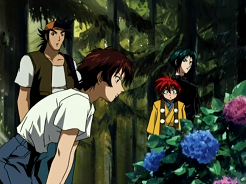
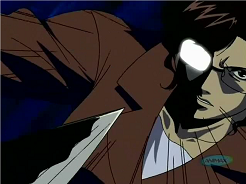
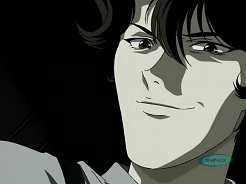 Ayatsuri Sakon is another one of these unknown series that nearly nobody has heard of, and which still is quite good. It’s an arc-based series, tackling murder mysteries. The main character is a pretty interesting one: he’s a puppeteer (Sakon). On his own, he’s really shy, but when he wields his favourite and most cherished puppet (Ukon), he becomes quiet, serious and quite cool. To make matters even better, he’s so good at ventriloquism that his puppet looks just too much like a person. Ukon is loud-mouthed, rude and nearly the opposite of Sakon’s personality, but together they form a solid base for this series to work with.
Basically, the arcs in this series consist out of three or four episodes, and in each of them, a person is killed and Sakon, who happens to be in the neighbourhood, has to solve them. These mysteries go far beyond the “Scooby-Doo”-murders, they’re committed quite carefully, and it’s very often that only the smallest details will give them away. The murderers themselves also often have quite some interesting reasons for their actions. As an added extra, because Sakon is a ventriloquist, the entire series is deeply rooted in the ancient Japanese puppetry, giving this series a unique look.
There is, however, one problem with the set-up. I’m personally a huge fan of arc-based series, but they’ve got one major drawback: the quality between the different arcs can fluctuate heavily. With Ayatsuri Sakon, it’s the arcs in the middle of the series that are a bit lacklustre, and not that interesting when compared to the other ones. It’s often obvious who did it, and they do a bit too little to really stand out.
Still, to make up for this, there are a number of astonishing arcs around the beginning and end. Especially the second and the final arc are true masterpieces in storytelling, and just about everything went right for them. These two arcs managed to become very emotionally charged, with great results.
There are a number of recurring characters here and there, and I’m glad to see that all of them get sufficient development to be more than just a two-dimensional one, and nearly all of them have an entire arc dedicated to them. Sakon is also an excellent main characters, who can, together with Ukon, perfectly carry the weight of the series. He may seem like a static character in the beginning, but don’t worry: as the show goes on, he’ll get enough development.
Overall, if you’re a fan of murder mysteries, you just have to give this series a chance. Don’t be scared away by the lesser middle part, both the beginning and the end contain some remarkable stories. It’s a shame nobody talks about this, because Sakon is definitely getting less attention than it deserves, and it’s a real underrated series.]]>
Ayatsuri Sakon is another one of these unknown series that nearly nobody has heard of, and which still is quite good. It’s an arc-based series, tackling murder mysteries. The main character is a pretty interesting one: he’s a puppeteer (Sakon). On his own, he’s really shy, but when he wields his favourite and most cherished puppet (Ukon), he becomes quiet, serious and quite cool. To make matters even better, he’s so good at ventriloquism that his puppet looks just too much like a person. Ukon is loud-mouthed, rude and nearly the opposite of Sakon’s personality, but together they form a solid base for this series to work with.
Basically, the arcs in this series consist out of three or four episodes, and in each of them, a person is killed and Sakon, who happens to be in the neighbourhood, has to solve them. These mysteries go far beyond the “Scooby-Doo”-murders, they’re committed quite carefully, and it’s very often that only the smallest details will give them away. The murderers themselves also often have quite some interesting reasons for their actions. As an added extra, because Sakon is a ventriloquist, the entire series is deeply rooted in the ancient Japanese puppetry, giving this series a unique look.
There is, however, one problem with the set-up. I’m personally a huge fan of arc-based series, but they’ve got one major drawback: the quality between the different arcs can fluctuate heavily. With Ayatsuri Sakon, it’s the arcs in the middle of the series that are a bit lacklustre, and not that interesting when compared to the other ones. It’s often obvious who did it, and they do a bit too little to really stand out.
Still, to make up for this, there are a number of astonishing arcs around the beginning and end. Especially the second and the final arc are true masterpieces in storytelling, and just about everything went right for them. These two arcs managed to become very emotionally charged, with great results.
There are a number of recurring characters here and there, and I’m glad to see that all of them get sufficient development to be more than just a two-dimensional one, and nearly all of them have an entire arc dedicated to them. Sakon is also an excellent main characters, who can, together with Ukon, perfectly carry the weight of the series. He may seem like a static character in the beginning, but don’t worry: as the show goes on, he’ll get enough development.
Overall, if you’re a fan of murder mysteries, you just have to give this series a chance. Don’t be scared away by the lesser middle part, both the beginning and the end contain some remarkable stories. It’s a shame nobody talks about this, because Sakon is definitely getting less attention than it deserves, and it’s a real underrated series.]]>
Pom Poko Review – 76/100


 Pom Poko belongs to the collection of animations and movies, meant to raise awareness about environmental problems. In this case: raccoons, who see their territories shrink by the minute, due to humans and their need of new homes. The links to studio Ghibli are obvious: they take the myths about how Raccoons are able to transform and change their shape, and create a unique culture for these little animals, who try to do something against the humans, despite their carefree nature.
The thing is, though, that the environmental messages may be good for children and others new to these kinds of problems, but for me, I felt like I’ve seen things like these a bit too many times in other movies, commercials and documentaries. The true reason you should watch this anime is because of the raccoons themselves. They’re quite hilarious with their short attention-spans, and it’s especially interesting how they’re portrayed in a human-like way. I especially loved how the newbies tried to practice transforming.
Because of this, the first half of the movie is a lot of fun to watch. There’s a lot of detail put in the dialogue, and a nice balance of comedy and drama. I wish I could say the same about the second half, though. Incidentally, the one who directed this movie was Isao Takahata, who also did Only Yesterday. Both movies felt like they’ve gone on for a tad too long. It’s a shame: the guy clearly has lots of talent, and his eye for realism is astonishing, but his direction really drags on a bit too much at times.
The second half of Pom Poko falls victim to this. It’s just too… one-sided, and feels like I’ve seen it many times before. Granted, this movie is already about fifteen years old, but I don’t really think that the issue at hand was very new at the premiere-date either. There are also a few story-inconsistencies here and there: at one time when a raccoon is injured from a small accident, he remains in bondages for a full year. Then when he’s hit the next time, he stands up and goes on like nothing happened.
One thing that I do have to praise this movie for is that it isn’t afraid to address death. Despite the fact that this movie is aimed at children, with its carefree nature, both humans and raccoons end up losing their lives. Overall, this really is a Ghibli-movie. The animation is very detailed and full of creativity, a lot of attention has been put into the dialogue. It’s just a pity that the lacklustre second half prevented this to become a classic.]]>
Pom Poko belongs to the collection of animations and movies, meant to raise awareness about environmental problems. In this case: raccoons, who see their territories shrink by the minute, due to humans and their need of new homes. The links to studio Ghibli are obvious: they take the myths about how Raccoons are able to transform and change their shape, and create a unique culture for these little animals, who try to do something against the humans, despite their carefree nature.
The thing is, though, that the environmental messages may be good for children and others new to these kinds of problems, but for me, I felt like I’ve seen things like these a bit too many times in other movies, commercials and documentaries. The true reason you should watch this anime is because of the raccoons themselves. They’re quite hilarious with their short attention-spans, and it’s especially interesting how they’re portrayed in a human-like way. I especially loved how the newbies tried to practice transforming.
Because of this, the first half of the movie is a lot of fun to watch. There’s a lot of detail put in the dialogue, and a nice balance of comedy and drama. I wish I could say the same about the second half, though. Incidentally, the one who directed this movie was Isao Takahata, who also did Only Yesterday. Both movies felt like they’ve gone on for a tad too long. It’s a shame: the guy clearly has lots of talent, and his eye for realism is astonishing, but his direction really drags on a bit too much at times.
The second half of Pom Poko falls victim to this. It’s just too… one-sided, and feels like I’ve seen it many times before. Granted, this movie is already about fifteen years old, but I don’t really think that the issue at hand was very new at the premiere-date either. There are also a few story-inconsistencies here and there: at one time when a raccoon is injured from a small accident, he remains in bondages for a full year. Then when he’s hit the next time, he stands up and goes on like nothing happened.
One thing that I do have to praise this movie for is that it isn’t afraid to address death. Despite the fact that this movie is aimed at children, with its carefree nature, both humans and raccoons end up losing their lives. Overall, this really is a Ghibli-movie. The animation is very detailed and full of creativity, a lot of attention has been put into the dialogue. It’s just a pity that the lacklustre second half prevented this to become a classic.]]>
Only Yesterday Review – 78/100


 Omoide Poro Poro, better known as Only Yesterday is a story of reminiscence. It features a twenty-seven year old woman who works in Tokyo, and heads into the countryside during her vacation. It is here where she starts getting nostalgic about her ten-year old self. It’s another Ghibli-production, directed not by Hayao Miyazaki, but by his best friend: Isao Takahata. While I haven’t seen much of his works, the guy seems to be famous because of his huge focus on realism.
And with Only Yesterday, this shows. Now that I’m writing this review, I can’t recall any other anime that had a higher degree of realism than Only Yesterday. Everything just feels so real, and if you’ve lived in Japan, this effect will probably be even clearer. The character-designs are simple, yet people really look lie Japanese people, instead of some crossover between Asians and Europeans, like you usually see. The voice-acting is terrific; you can actually hear that the characters are voiced by real people, instead of actors. Children are also children, and not thirty-year old adult who try to sound like children, something I’ve only seen a handful anime do as well.
But the thing that really shines is the dialogue. No matter who you are, there’ll almost certainly be at least one scene in the movie you can completely identify with, and the amount of detail it comes with is almost scary. Still, therein also lays a problem. I myself got lost a bit when the characters started talking about periods (you know… with women and all), and the main character’s father, who may be a normal person in Japan, was a bit hard to swallow for me, who grew up in Holland, which has probably an entirely opposite culture when compared to Japan.
Those who’ve been reading my blog probably know by now that I don’t really mind slow pacing, but with Only Yesterday, even I have to admit that the entire thing goes a bit too slow. Realism often comes at prices, and because of this, certain scenes just drag on forever in order to make them look as real as possible.
There’s also the lack of emotional tension. While I found it easy to identify with the main characters, I had difficulties sympathizing with her. That’s because there’s hardly any need for them to get emotional, not until the final few scenes of the movie. But with a total length of nearly two hours, the length of it may have been a bit too long. When the characters do get emotional in the end though, the scenes work out great.
I’m also surprised at the lack of background for the side-characters. They get fleshed out enough, but I would have loved to see how the old classmates of the main characters grew up after going to high-school and beyond, because they were quite interesting to watch. The main male side-character does also get a few lines of background, but it just doesn’t feel like it’s enough.]]>
Omoide Poro Poro, better known as Only Yesterday is a story of reminiscence. It features a twenty-seven year old woman who works in Tokyo, and heads into the countryside during her vacation. It is here where she starts getting nostalgic about her ten-year old self. It’s another Ghibli-production, directed not by Hayao Miyazaki, but by his best friend: Isao Takahata. While I haven’t seen much of his works, the guy seems to be famous because of his huge focus on realism.
And with Only Yesterday, this shows. Now that I’m writing this review, I can’t recall any other anime that had a higher degree of realism than Only Yesterday. Everything just feels so real, and if you’ve lived in Japan, this effect will probably be even clearer. The character-designs are simple, yet people really look lie Japanese people, instead of some crossover between Asians and Europeans, like you usually see. The voice-acting is terrific; you can actually hear that the characters are voiced by real people, instead of actors. Children are also children, and not thirty-year old adult who try to sound like children, something I’ve only seen a handful anime do as well.
But the thing that really shines is the dialogue. No matter who you are, there’ll almost certainly be at least one scene in the movie you can completely identify with, and the amount of detail it comes with is almost scary. Still, therein also lays a problem. I myself got lost a bit when the characters started talking about periods (you know… with women and all), and the main character’s father, who may be a normal person in Japan, was a bit hard to swallow for me, who grew up in Holland, which has probably an entirely opposite culture when compared to Japan.
Those who’ve been reading my blog probably know by now that I don’t really mind slow pacing, but with Only Yesterday, even I have to admit that the entire thing goes a bit too slow. Realism often comes at prices, and because of this, certain scenes just drag on forever in order to make them look as real as possible.
There’s also the lack of emotional tension. While I found it easy to identify with the main characters, I had difficulties sympathizing with her. That’s because there’s hardly any need for them to get emotional, not until the final few scenes of the movie. But with a total length of nearly two hours, the length of it may have been a bit too long. When the characters do get emotional in the end though, the scenes work out great.
I’m also surprised at the lack of background for the side-characters. They get fleshed out enough, but I would have loved to see how the old classmates of the main characters grew up after going to high-school and beyond, because they were quite interesting to watch. The main male side-character does also get a few lines of background, but it just doesn’t feel like it’s enough.]]>
Shigurui Review – 84/100


 Apologies for the lateness of this review, but more on that later. Let me first put up a warning: if you’re planning to watch this series and have some kind of little brother or sister: keep Shigurui AWAY from them. Nobody under sixteen should be allowed to watch this. Not only is this one of the, if not THE goriest anime I’ve seen, it’s also filled with over-the-top sexual reference.
Sure, a show like Elfen Lied may have had more blood, but that was also all it had: lots of blood and random limbs gushed over the screen, but it never really went further than that. Shigurui carries gore to an entirely next level. The amount of detail is astonishing; the creators have an amazing amount of medical knowledge, and they use al of it. When a finger gets broken, you see exactly which bones dislocate. When an arm gets cut off, you see exactly how the muscles grow back. And that’s what makes it such an effective horror-series.
Especially when you combine it with the storytelling. The pacing is very slow, but it uses the gore and very creepy sound-effects to create an extremely tight atmosphere. It’ll have you during its many and creepy climaxes. If it wasn’t for its flaws, this would have been one beast of an anime.
Because yes, it’s a shame, but there are a few things that went wrong here. Especially in the first half, the creators get carried away a bit too much and delve in pointless rituals, like cutting off a woman’s nipple and eating it. Only at episode six, the series gets back on track With a gripping and powerful second half. The role of women also isn’t too good in this series. Basically, every single guy in the series is a bastard, and nearly all the women are good for is to serve as sex-objects or helpless sword-targets.
My biggest gripe is with the ending, though. The ending, while it does resolve a few things, leaves huge amounts of plotholes open. The reason I’m so late with this review is that I kept hoping that there would be some kind of thirteenth episode that would wrap the entire series up, but there’s nothing. One of the two major questions asked in the beginning hasn’t even been answered, for goodness’ sake.
Still, despite this, Shigurui is a definite recommendation for those who can stomach the huge amounts of gore. The animation may be simple, and most of the series consists of still frames, but the art itself makes up for it, by being incredibly detailed, and it’s only when the creators turn to CG on very few occasions that it doesn’t look excellent. But seriously… isn’t there really not some kind of second season or OVA to wrap it up?]]>
Apologies for the lateness of this review, but more on that later. Let me first put up a warning: if you’re planning to watch this series and have some kind of little brother or sister: keep Shigurui AWAY from them. Nobody under sixteen should be allowed to watch this. Not only is this one of the, if not THE goriest anime I’ve seen, it’s also filled with over-the-top sexual reference.
Sure, a show like Elfen Lied may have had more blood, but that was also all it had: lots of blood and random limbs gushed over the screen, but it never really went further than that. Shigurui carries gore to an entirely next level. The amount of detail is astonishing; the creators have an amazing amount of medical knowledge, and they use al of it. When a finger gets broken, you see exactly which bones dislocate. When an arm gets cut off, you see exactly how the muscles grow back. And that’s what makes it such an effective horror-series.
Especially when you combine it with the storytelling. The pacing is very slow, but it uses the gore and very creepy sound-effects to create an extremely tight atmosphere. It’ll have you during its many and creepy climaxes. If it wasn’t for its flaws, this would have been one beast of an anime.
Because yes, it’s a shame, but there are a few things that went wrong here. Especially in the first half, the creators get carried away a bit too much and delve in pointless rituals, like cutting off a woman’s nipple and eating it. Only at episode six, the series gets back on track With a gripping and powerful second half. The role of women also isn’t too good in this series. Basically, every single guy in the series is a bastard, and nearly all the women are good for is to serve as sex-objects or helpless sword-targets.
My biggest gripe is with the ending, though. The ending, while it does resolve a few things, leaves huge amounts of plotholes open. The reason I’m so late with this review is that I kept hoping that there would be some kind of thirteenth episode that would wrap the entire series up, but there’s nothing. One of the two major questions asked in the beginning hasn’t even been answered, for goodness’ sake.
Still, despite this, Shigurui is a definite recommendation for those who can stomach the huge amounts of gore. The animation may be simple, and most of the series consists of still frames, but the art itself makes up for it, by being incredibly detailed, and it’s only when the creators turn to CG on very few occasions that it doesn’t look excellent. But seriously… isn’t there really not some kind of second season or OVA to wrap it up?]]>
Umi ga Kikoeru Review – 83/100


 And I’m finally back with my movie reviews, and next up are going to be the Ghibli-movies. I’m not sure whether they’re going to be as frequent as before, due to my studies and all, but I’ll try to do one whenever I have a quiet day. Anyway, the first on the list is Umi ga Kikoeru, or better known to the English community as Ocean Waves. It’s a high-school romance, and while it may not be the most original genre, it does show that with quality-writing, any concept can turn out worthwhile.
With the start of the new season, I’ve been thrown to death by all the new high-school romances that came out, but still Ocean Waves turned into an enjoyable and relaxing anime for me. The degree of realism really helps: yes, it is a love-triangle, but the events flow well and don’t feel forced. The characters are developed well, they’ve all got sufficient background and make perfect use of the couple-of-years-long time-skip that takes place near the end of the movie (the latter was the real highlight for the movie for me). In the end, I found myself really caring about the three main characters, and I doubt to be the only one who did.
Still, don’t go for this movie if you want an exciting storyline. The pacing for Ocean Waves is really slow, and it should be used to relax, not to be blown away by. It’s not the best movie ever because of it, but it’s good at what it does.
I’ve also noticed that I tend to spend very little attention to production-values in my latest reviews, so I’m going to force myself here to write a whole paragraph about them. For a movie dating from 1993, the art looks really crisp and clean. The character-designs are simple, but they look very pleasing to the eye, with a degree of realism that all harems nowadays don’t even care about. It gives the movie a nice, down-to-earth feeling. The animation is detailed, but it’s a bit too simple and static for a Ghibli-movie. The background music is also well-chosen, albeit unspectacular.]]>
And I’m finally back with my movie reviews, and next up are going to be the Ghibli-movies. I’m not sure whether they’re going to be as frequent as before, due to my studies and all, but I’ll try to do one whenever I have a quiet day. Anyway, the first on the list is Umi ga Kikoeru, or better known to the English community as Ocean Waves. It’s a high-school romance, and while it may not be the most original genre, it does show that with quality-writing, any concept can turn out worthwhile.
With the start of the new season, I’ve been thrown to death by all the new high-school romances that came out, but still Ocean Waves turned into an enjoyable and relaxing anime for me. The degree of realism really helps: yes, it is a love-triangle, but the events flow well and don’t feel forced. The characters are developed well, they’ve all got sufficient background and make perfect use of the couple-of-years-long time-skip that takes place near the end of the movie (the latter was the real highlight for the movie for me). In the end, I found myself really caring about the three main characters, and I doubt to be the only one who did.
Still, don’t go for this movie if you want an exciting storyline. The pacing for Ocean Waves is really slow, and it should be used to relax, not to be blown away by. It’s not the best movie ever because of it, but it’s good at what it does.
I’ve also noticed that I tend to spend very little attention to production-values in my latest reviews, so I’m going to force myself here to write a whole paragraph about them. For a movie dating from 1993, the art looks really crisp and clean. The character-designs are simple, but they look very pleasing to the eye, with a degree of realism that all harems nowadays don’t even care about. It gives the movie a nice, down-to-earth feeling. The animation is detailed, but it’s a bit too simple and static for a Ghibli-movie. The background music is also well-chosen, albeit unspectacular.]]>
Nanatsuiro Drops Review – 71/100


 The past Spring- and Summer-season came with many unique and original series. Okay, so this wasn’t one of them, but at least it’s worth watching, as it’s one of the very few dating-series that I’ve actually found watchable. It’s nothing special, but it’s a great choice if you need something to relax to. The entire series consists out of bright colours with lots of sparkles and it’s combined with quiet tunes, to create an almost modern fairy-tale like mood.
Seriously, I didn’t really expect anything when I started this, but I had some extra time so I stuck with it. To my surprise, the thing that really made this anime watchable was the love-relationship between the two main characters. It’s cheesy, it’s not exactly original, though it is very sweet and cute. The side-characters also avoid introducing useless love-triangles, and actually end up supporting the couple, which turns out very nicely after a few episodes.
But yeah, any attempt on a serious storyline backfires horribly for this series. I know it’s a nice attempt and all, but the plot twists are just so incredibly shallow, convenient and predictable that it becomes annoying. One example is how the main female character can cast spells nobody in ten years managed to conjure, just because her mother was talented, and there are more of these kinds of jarring plot-twists. You also need to watch out for the female lead for another reason: she’s either incredibly cute, or incredibly whiny and obnoxious, which is exceptionally jarring in the first half of this series.
So, yeah, this is nowhere near an excellent series that’ll blow you away. Dating-sim and hentai-game-adaptations have never really been known for their depth. It is, however, not the failure I originally thought this would be, and a nice enough relaxing series.]]>
The past Spring- and Summer-season came with many unique and original series. Okay, so this wasn’t one of them, but at least it’s worth watching, as it’s one of the very few dating-series that I’ve actually found watchable. It’s nothing special, but it’s a great choice if you need something to relax to. The entire series consists out of bright colours with lots of sparkles and it’s combined with quiet tunes, to create an almost modern fairy-tale like mood.
Seriously, I didn’t really expect anything when I started this, but I had some extra time so I stuck with it. To my surprise, the thing that really made this anime watchable was the love-relationship between the two main characters. It’s cheesy, it’s not exactly original, though it is very sweet and cute. The side-characters also avoid introducing useless love-triangles, and actually end up supporting the couple, which turns out very nicely after a few episodes.
But yeah, any attempt on a serious storyline backfires horribly for this series. I know it’s a nice attempt and all, but the plot twists are just so incredibly shallow, convenient and predictable that it becomes annoying. One example is how the main female character can cast spells nobody in ten years managed to conjure, just because her mother was talented, and there are more of these kinds of jarring plot-twists. You also need to watch out for the female lead for another reason: she’s either incredibly cute, or incredibly whiny and obnoxious, which is exceptionally jarring in the first half of this series.
So, yeah, this is nowhere near an excellent series that’ll blow you away. Dating-sim and hentai-game-adaptations have never really been known for their depth. It is, however, not the failure I originally thought this would be, and a nice enough relaxing series.]]>
Heroic Age Review – 73/100


 Heroic Age has definitely been the show with one of the most ambitious premises of the past season. While other series have dealt with the fate of the universe before, no other series does it with such a massive scale, no other series has armies as massive as with Heroic Age, and no other series has characters as powerful as some of the ones we see in here. This truly is a space-epic. The story tells of a Golden Tribe which once existed in this universe. They had the power to foresee the past and the future, they could create planets and stars, and sent out a message to the different tribes and races that populated the galaxy. Three races responded: the Silver Tribe, the Bronze Tribe and the Heroic Tribe. Then, as the Golden Tribe was about to leave the galaxy, a fourth tribe responded: humans, or the Iron Tribe.
Well, it was a nice idea. The creators got a bit too enthusiastic, and shot themselves in the foot. The major part of the plot doesn’t go anywhere, and consists out of overblown fights that take up several episodes at the time, yet resolve nothing and end up with all parties retreating with no major casualties.
This would have been okay if the characters were interesting to watch, but alas: they’re just too focused on the story. They either spend all of their time worrying or fighting, and the illusion of “depth” quickly vanishes from this series after a bunch of episodes. To add salt to the wound, nearly every member of the main cast is a teenager, eliminating any sense of realism this series already had, but worst of all, the male and female main characters have some major annoyances: they’re too perfect. The only flaw of the main female is that she’s too angsty and the main male just doesn’t have any flaws at all. This quickly becomes rather one-sided. The side-characters could have saved them, but a lot of them just lack development. Especially the Silver Tribe: they hardly get fleshed out at all as a race, we never learn their customs, heck all we get to see is their three most important leaders. That’s all.
But lo and behold: this is one of those flawed series that manages to redeem itself in the end! Around episode seventeen or eighteen, the writers turn up the pacing three gears, and the plot finally starts getting interesting as it develops in the right way, into a finale that doesn’t disappoint and turns out quite touching, even if it may have been a bit too much focused on a happy ending.
Sure, the first half is boring, but it does build up for the much better second half. While the last part was nowhere near the best part of the season, at least it managed to redeem the lacklustre first part. At least it’s not the opposite way. The soundtrack for this series is also epic, and the use of CG is excellent, even though the character-designs look very sloppy and uninspired. I guess you’ll like this one if you like epic science-fiction stories, because things can’t get more epic than this series, not necessarily in the good ways, but neither in the bad ways.]]>
Heroic Age has definitely been the show with one of the most ambitious premises of the past season. While other series have dealt with the fate of the universe before, no other series does it with such a massive scale, no other series has armies as massive as with Heroic Age, and no other series has characters as powerful as some of the ones we see in here. This truly is a space-epic. The story tells of a Golden Tribe which once existed in this universe. They had the power to foresee the past and the future, they could create planets and stars, and sent out a message to the different tribes and races that populated the galaxy. Three races responded: the Silver Tribe, the Bronze Tribe and the Heroic Tribe. Then, as the Golden Tribe was about to leave the galaxy, a fourth tribe responded: humans, or the Iron Tribe.
Well, it was a nice idea. The creators got a bit too enthusiastic, and shot themselves in the foot. The major part of the plot doesn’t go anywhere, and consists out of overblown fights that take up several episodes at the time, yet resolve nothing and end up with all parties retreating with no major casualties.
This would have been okay if the characters were interesting to watch, but alas: they’re just too focused on the story. They either spend all of their time worrying or fighting, and the illusion of “depth” quickly vanishes from this series after a bunch of episodes. To add salt to the wound, nearly every member of the main cast is a teenager, eliminating any sense of realism this series already had, but worst of all, the male and female main characters have some major annoyances: they’re too perfect. The only flaw of the main female is that she’s too angsty and the main male just doesn’t have any flaws at all. This quickly becomes rather one-sided. The side-characters could have saved them, but a lot of them just lack development. Especially the Silver Tribe: they hardly get fleshed out at all as a race, we never learn their customs, heck all we get to see is their three most important leaders. That’s all.
But lo and behold: this is one of those flawed series that manages to redeem itself in the end! Around episode seventeen or eighteen, the writers turn up the pacing three gears, and the plot finally starts getting interesting as it develops in the right way, into a finale that doesn’t disappoint and turns out quite touching, even if it may have been a bit too much focused on a happy ending.
Sure, the first half is boring, but it does build up for the much better second half. While the last part was nowhere near the best part of the season, at least it managed to redeem the lacklustre first part. At least it’s not the opposite way. The soundtrack for this series is also epic, and the use of CG is excellent, even though the character-designs look very sloppy and uninspired. I guess you’ll like this one if you like epic science-fiction stories, because things can’t get more epic than this series, not necessarily in the good ways, but neither in the bad ways.]]>
Tengen Toppa Gurren Lagann Review – 78/100


 If you came to this entry, expecting another rave about how Tengen Toppa Gurren Lagann should deserve to be the best anime ever, then you’ve come to the wrong address. This series is a nice watch, but for me, it wasn’t the instant classic that others make it out to be. Tengen Toppa Gurren Lagan is homage to the GAR mecha-series of the seventies and eighties; it’s a brainless over-the-top action-series, nothing less, but barely anything more.
This series suffers from a huge degree of predictability. The good guys are basically like a bunch of energetic monkeys who’ve drank too many cups of coffee, and they often like to think with their hormones, instead of their minds. Nearly the entire series has them basically running forward, taking out enemy after enemy. When one enemy is defeated, another, more powerful one appears. He or she is cocky, but he keeps getting surprised at the ever-increasing power of our protagonist. Of course, the anime does this in style, but the lack of much variation does become jarring after a while.
There’s one point in the anime where it actually promises to be more than just this, though. At episode 17, there’s a time-skip, and both the setting and the characters themselves develop quite interestingly. Unfortunately, the creators chicken out after three episodes, and go back to the overblown action of the first part of the series, and increase this ten-fold. If there’s also a point in this series where every chance has turned against our heroes, then don’t worry. A previously unmentioned plot-device will appear and turn the tides. After this happens for the fifth time, it does take away some of the tension.
The characters are fortunately a bit more interesting than this. They’re basically the definition of passionate manliness. I especially liked Kittan and Rossiu, two side-characters who do what they can to help out, and can actually think for themselves. The other characters are enjoyable enough, though the two lead females have a few problems here and there. Nia’s actions in the beginning feel a bit forced, and while Yoko is a great side-character, she becomes really annoying when she becomes the centre of attention. This is a Gainax-anime after all, and of course they had to stuff in the obligatory fanservice.
If you’re looking for something realistic, then stay far and far away from this series. While I can’t say it for sure, but especially the final episodes deserve a good chance of being among the most scientifically inaccurate episodes ever. If you’re looking for epic GAR and manliness though, you should give this one a chance. The over-the-top action nearly thunders out of your screen with the bright and energetic production-values, and among the general fandom, this has become a favourite series. While I can’t share this opinion (Gurren Lagann is nowhere near the best of the previous season), it remains a nice watch.]]>
If you came to this entry, expecting another rave about how Tengen Toppa Gurren Lagann should deserve to be the best anime ever, then you’ve come to the wrong address. This series is a nice watch, but for me, it wasn’t the instant classic that others make it out to be. Tengen Toppa Gurren Lagan is homage to the GAR mecha-series of the seventies and eighties; it’s a brainless over-the-top action-series, nothing less, but barely anything more.
This series suffers from a huge degree of predictability. The good guys are basically like a bunch of energetic monkeys who’ve drank too many cups of coffee, and they often like to think with their hormones, instead of their minds. Nearly the entire series has them basically running forward, taking out enemy after enemy. When one enemy is defeated, another, more powerful one appears. He or she is cocky, but he keeps getting surprised at the ever-increasing power of our protagonist. Of course, the anime does this in style, but the lack of much variation does become jarring after a while.
There’s one point in the anime where it actually promises to be more than just this, though. At episode 17, there’s a time-skip, and both the setting and the characters themselves develop quite interestingly. Unfortunately, the creators chicken out after three episodes, and go back to the overblown action of the first part of the series, and increase this ten-fold. If there’s also a point in this series where every chance has turned against our heroes, then don’t worry. A previously unmentioned plot-device will appear and turn the tides. After this happens for the fifth time, it does take away some of the tension.
The characters are fortunately a bit more interesting than this. They’re basically the definition of passionate manliness. I especially liked Kittan and Rossiu, two side-characters who do what they can to help out, and can actually think for themselves. The other characters are enjoyable enough, though the two lead females have a few problems here and there. Nia’s actions in the beginning feel a bit forced, and while Yoko is a great side-character, she becomes really annoying when she becomes the centre of attention. This is a Gainax-anime after all, and of course they had to stuff in the obligatory fanservice.
If you’re looking for something realistic, then stay far and far away from this series. While I can’t say it for sure, but especially the final episodes deserve a good chance of being among the most scientifically inaccurate episodes ever. If you’re looking for epic GAR and manliness though, you should give this one a chance. The over-the-top action nearly thunders out of your screen with the bright and energetic production-values, and among the general fandom, this has become a favourite series. While I can’t share this opinion (Gurren Lagann is nowhere near the best of the previous season), it remains a nice watch.]]>
Darker than Black Review – 87/100


 Darker than Black is an arc-based series, much like Studio Bones’ previous production of Tenpou Ibun Ayakashi Ayashi. The setting is quite different, though. Instead of the Tenpou-era, this one plays in modern-day Tokyo in an alternate universe, where strange humans with supernatural powers, calling themselves contractors live amongst humans. For once, their purpose isn’t to destroy mankind, but to just carry out their job. And that’s the beauty of this series.
Darker than Black is about the relationship between your job and your own instincts. All the characters in this series are adults who are just trying to survive in a dark and gritty environment, with pressure coming from both enemies and superiors. The interesting thing about the contractors is how they’re able to make rational decisions, regardless of their emotions, making this quite an intelligent series. Organizations have many layers and characters have often subtle motives.
The powers of these contractors are just like the setting: full of creativity. In this series, the people with the strongest powers are actually the weakest, because these don’t leave any room for strategies. The story also knows how to use its characters, where every major character gets at an arc dedicated to him or her for development and background information. There is just one issue with the ending: the creators got too ambitions and tried to stuff too much in the final episode, making it end up rushed.
There’s one more problem, one that many other arc-based series suffer from as well (for example Ghost Hunt, Ayatsuri Sakon): the quality of the different arcs fluctuates heavily, and you’ll never know when an arc will turn out great or just good. The best episodes of the series are because of this not among the final ones, but episodes 13 and 14. These were simply perfect, with some of the best minor villains I’ve seen in a long while. The successive arcs were good as well, but none of them really lived up to the same quality, unfortunately.
Still, despite this, Darker than Black is a definite recommendation for anyone, looking for a story aimed at adults. There’s enough action, and yet the action is not of the brainless kind you see in Tengen Toppa Gurren Lagann. It knows how to build up the individual stories for each arc very well with nearly all of them having satisfying climaxes, and this is definitely one of the more intelligent series that came out in the past spring-season. And let’s not forget Yoko Kanno, who composed the soundtrack for this series. Her style may be a bit more subtle than say, Yuki Kajiura, but it fits the series perfectly.]]>
Darker than Black is an arc-based series, much like Studio Bones’ previous production of Tenpou Ibun Ayakashi Ayashi. The setting is quite different, though. Instead of the Tenpou-era, this one plays in modern-day Tokyo in an alternate universe, where strange humans with supernatural powers, calling themselves contractors live amongst humans. For once, their purpose isn’t to destroy mankind, but to just carry out their job. And that’s the beauty of this series.
Darker than Black is about the relationship between your job and your own instincts. All the characters in this series are adults who are just trying to survive in a dark and gritty environment, with pressure coming from both enemies and superiors. The interesting thing about the contractors is how they’re able to make rational decisions, regardless of their emotions, making this quite an intelligent series. Organizations have many layers and characters have often subtle motives.
The powers of these contractors are just like the setting: full of creativity. In this series, the people with the strongest powers are actually the weakest, because these don’t leave any room for strategies. The story also knows how to use its characters, where every major character gets at an arc dedicated to him or her for development and background information. There is just one issue with the ending: the creators got too ambitions and tried to stuff too much in the final episode, making it end up rushed.
There’s one more problem, one that many other arc-based series suffer from as well (for example Ghost Hunt, Ayatsuri Sakon): the quality of the different arcs fluctuates heavily, and you’ll never know when an arc will turn out great or just good. The best episodes of the series are because of this not among the final ones, but episodes 13 and 14. These were simply perfect, with some of the best minor villains I’ve seen in a long while. The successive arcs were good as well, but none of them really lived up to the same quality, unfortunately.
Still, despite this, Darker than Black is a definite recommendation for anyone, looking for a story aimed at adults. There’s enough action, and yet the action is not of the brainless kind you see in Tengen Toppa Gurren Lagann. It knows how to build up the individual stories for each arc very well with nearly all of them having satisfying climaxes, and this is definitely one of the more intelligent series that came out in the past spring-season. And let’s not forget Yoko Kanno, who composed the soundtrack for this series. Her style may be a bit more subtle than say, Yuki Kajiura, but it fits the series perfectly.]]>