Kimikiss – Pure Rouge Review – 81/100


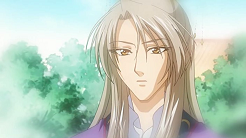
The past Autumn- and Winter-season came with an interesting trend: actually good visual novel adaptations. Not just one, but four series (Clanad, ef, this one and True Tears) came from nowhere and shattered the stereotypes I had about the genre. These four series showed that good writing can even turn such a boring–sounding premise as a high-school romance interesting. Kimikiss may not have been as refreshing as Clannad, it may not have had the well-written dialogue of ef, and it neither has characters with the depth of True Tears, but still it’s a worthy series to watch.

Kimikiss is one of these series that plays it safe. The first half is very slow, and basically just serves to flesh out the characters, and set up their personalities and hobbies. Then it starts developing its romances. There are basically three main couples to start with, all with their own problems. While they’re a bit clichéd at times, the character-development is definitely the highlight for this series.

This series doesn’t really have any obvious flaws. There are no errors in the storytelling, the main-characters and side-characters may not be ground-breaking, but they’re all well-fleshed out and developed. The graphics look okay, and so does the music. I do have one complaint with this series, though: it tends to lose itself in its love-triangles at times. Love-triangles are a nasty double-edged sword, and more often than not only distract from what’s really important in a series, where two characters could be advancing the plot but instead are too busy whining about who loves who. Only series as True Tears, that have basically been built around these love-triangles have made them work for me.

Kimikiss at times can’t seem to decide whether it wants to go for straight romance, or love-triangles. The result is that every time two characters are having a bit of time together, a third one pops up to try and take one of them away. In this series, it’s much more fun to just simply watch the couples develop.

I admire the guts of the director to basically split the main character of the game that this series was originally based upon, up in three different ones. The transition has really been seamless, and it shows that the director can do more than just copy and paste well. Kimikiss won’t rock your soul, but it’ll at least keep it a bit entertained.

Shion no Ou Review – 94/100


I doubt that I can write a review to do this series justice, but here it goes. Shion no Ou is an anime about shougi, the Japanese form of chess. The rules are quite complicated, but you don’t need to be able understand them if you want to enjoy this series. What’s much more important for Shion no Ou is the general strategies, and the mind-games that get played between the two players.

And don’t ask me how they did it, but the writers are true masters in terms of storytelling. While this series does take place mostly in a tournament-arc, they take everything that gets handed to them to spice things up. Every single character has his or her own style of playing that gradually evolves throughout the series. The police and the press often play a big role, as they support the main storyline and the main cast of characters.

And let me say that the story and characters are nothing short of incredible. The heroine, Shion, is one of the strongest female characters I’ve ever seen. Every single character is well-defined and developed. Every single episode pushes the plot forwards, without any exceptions. The original manga was also written by a woman who used to be a female shougi-player as well, and she made sure to show all the ins and outs of a shougi-tournaments.

The animation definitely is different from usual. You’ll either love it or hate it, and it does fluctuate from incredibly bad to incredibly good, due to a limited budget. But in exchange, everything looks unique, and you can see that the animators are trying everything they can to make the art stand out. The animation itself is messy, but the poses and camera-angles are creative and yet incredibly life-like, that turned this series into a visual feast for me.

Great anime usually have one or two aspects that turn out very polished, like a cast of terrific characters, or an engaging storyline, but the outstanding anime really deliver in every single department. Shion no Ou has it all: terrific storytelling, a great storyline, a cast of deep and amazing characters (both the villains, main and side-characters) that really comes to life in the second half, a terrific art-style and animation, excellent music and a good sense of realism, although you should note that Shougi is serious business in this series, and at times the characters do tend to take Shougi a bit too seriously. ^^;

Shigofumi ~ Stories of the Last Letter Review – 86/100


Shigofumi is another episodic series that takes an in-depth look at death. At first, it may seem like some strange cross between Shinigami no Ballad and Jigoku Shoujo, but it quickly finds its own style and identity to work with. The earlier episodes mostly focus on random cases, where Fumika, our lead girl for this series, delivers the final memories of a person who just died to his loved ones, while the latter episodes focus on Fumika herself, and why she ended up delivering these letters in the first place.

Shigofumi’s strength is how it’s able to deliver a quiet and engaging atmosphere, with the subtlety of a herd of stampeding elephants. One moment, you’re enthralled by the versatile characters, the next you’re freaked out by some disturbing plot twist that came out of nowhere. The interesting thing is that this series knows fully well how to combine its quiet moments with its eventful ones.

Another strength about this series is the cast of characters. The writers make sure that all the characters are likable before they start playing with them. Especially Fumika turns into a well-rounded character for such a small series. Her development is started early, and not at the semi-final episodes, which seems to be a mistake that many series seem to make.

But yeah, I mentioned that this series has the subtlety of a herd of stampeding elephants. This is in both the good and the bad way. If things seem a bit too quiet, you can bet your hat that a candle will fall over and set a house on fire, just too spice things up a bit, and the entire series is filled with these kinds of plot-twists.

The individual stories basically range from one particularly far-fetched tale of bullying, to very subtle and insightful views on death, and especially the people who have been left by them. Shigofumi definitely has its flaws, but because of this it also has its own identify. You may try, and Jigoku Shoujo and Shinigami no Ballad indeed at first sight seem similar, but you won’t find any series that’s really captured the same essence as this one. If you want a series that’s short, sweet, and yet still packs a punch, then this one could be worth to check out.

Clannad Review – 85/100


Wha! Another series I had no idea ended so soon. The series of the past two seasons have followed an interesting trend of breaking away from the usual 26/24/13/12-episode-formats, with more series than ever with just 10 (Hatenkou Yuugi), 11 (Hakaba Kitarou) or 22 (Shion no Ou, Ghost Hound, this one) episodes, and I think that it’s a great trend, better than including a bunch of random fillers to fill time.

In any case, on with the review. Let me start by saying that before Clannad started, I hated Kyoani with passion. One of the reasons for that was simple bias, unfortunately. The first ten episodes that I saw of Kanon were nothing special, and the same goes for the four episodes of Haruhi Suzumiya that I saw. Especially Lucky Star bored the heck out of me, every time I watched an episode of it, and yet people were praising these guys as if they’re were some kind of living incarnation of God. At that time, I just saw Kyoani as a bunch of reasonably good animators who rely way and way too much moe and stereotypes, and couldn’t write an engaging script, even if their lives depended on it.

And then Clannad came, and somehow it succeeded in entirely changing this opinion. Amongst all the visual novel and hentai-game adaptations, Clannad most definitely stands out for me as the best. Even if you hate the genre, this series is still worth checking out, simply because it’s so delightfully different, and it breaks so many stereotypes.

For once, the male main character has an actual personality and his own story. He actually has weaknesses, and isn’t a huge stereotype. The male side-character that you usually see around him (supposedly, to show the difference between guys who get lots of girls and guys who have no chance at them), may be an idiot at times, but he’s actually not as annoying as you might think he’d be, and he often brightens up the situation.

Then there are the female characters in the series. Their characters aren’t as special as some of the other ones, but they do their jobs. What’s especially notable is that this is one series that realizes who its female main character is, and so it never delves into pointless love-triangles. Because of this, this series has much more slice-of-life elements than it has romance-elements.

In Clannad, the main character isn’t the one who magically solves all the problems of his female companions on his own. Sure, he plays an important role, but every time, it’s either a different side-character who ends up saving the girl in question, or the combination of all the side-characters together. The level of friendship that wouldn’t be out of place in Higurashi no Naku Koro ni Kai is quite astounding and gives a nice perspective to this series.

This series isn’t perfect; nearly every female character does fall in love with the main character at one point or another, for very weak reasons. Luckily, they quickly realize that the guy is already occupied. This series also tends to have a few plot-twists that are a tad too coincidental and convenient. Thankfully, it knows how to build up well enough, and everything comes together in the final episode like a charm. I must congratulate Kyoani for delivering a solid series, away from any stereotypes. But seriously, please make their next series take place at a place away from a high school.

Hakaba Kitarou Review – 88/100


The original Hakaba Kitarou (later renamed to Gegege no Kitarou) was one of the original pioneers in anime and manga, even before the legacy of Osamu Tezuka. Ever since it was serialized in 1959, it’s spawned five lengthy television-series, eight movies and one live-action movie. The problem is that all of these reduced the Kitarou-franchise to a kiddie-series. Enter Hakaba Kitarou, in its Noitamina time-slot as it attempts to remove all of the “kiddie”-roots from the franchise. And believe it or not, but it succeeds pretty well.

The result is a very rare combination between horror and comedy. But this series mostly stands out because it’s so refreshingly different from usual anime. The art really tries to go its own way, with character-designs in an original style, and a continuous filter, reminiscent of Mononoke. There are lots of interesting camera-angles and monster-designs, which make sure that this series turns into a visual feast that doesn’t rely on moe whatsoever.

This is also one series that completely shatters the boundaries between good and evil. It may seem like that Kitarou is the main character, and therefore the good guy, and yet he likes to play cat-and-mouse games with his victims, and he doesn’t even seem to care whether these victims end up dead or not. Nezumi Otoko, on the other hand, may be the series’ villain (he acts mostly out of greed and for money), and yet he stands so far away from the stereotypical anime villain. This guy is often rational and he doesn’t try to look as cool or evil as possible. He’s also often friendly, although he’s ready to betray any friend in favour of his well-being.

The same goes for all other side-characters that appear in one the different stories that have been put into the eleven episodes that this series consists of. Everyone is somewhere in the grey spectrum between good and evil. And all of the major side-characters have multiple sides and hardly have any chance to get boring. I’d also like to mention the ease at which this series seems to be able to kill off its characters. Seriously, some deaths really come from nowhere.

And that brings me to another good point of this series. Not every episode may have one, but the plot-twists will leave you guessing, and some will come as a huge shock, exactly what a horror-series should be. You can see that the writers have a lot of fun while writing this series, and building it up. Hakaba Kitarou has a delightful air of unpredictability that you hardly ever see in anime.

Overall, if you’re looking for something different, then Hakaba Kitarou is the way to go. Don’t get fooled into thinking that this is a series for kids. Simplistic character-designs don’t automatically make a series a kiddie-one. At eleven episodes, there’s hardly any chance to get bored. This is one reason why I like winter-seasons. Because not many popular series air, it’s the perfect chance for the less popular and under-looked anime that try to be different to get a chance. 2007 had Master of Epic, and 2008 continues this tradition with Hakaba Kitarou.

Mokke Review – 89/100


Even though the season hasn’t officially ended yet, I’m pretty sure about my top-3 series of the Autumn-season. First place is obviously for Shion no Ou, Ghost Hound comes in second, and Mokke takes up the third spot. In a generally underwhelming season, these three series stood far above the others, and manage to deliver constant quality.

Mokke has had it quite tough in terms of popularity, though. Even before it aired, people were comparing it to the next Mushishi. Expectations it obviously couldn’t fulfil. True, at first sight Mokke and Mushishi seem alike. They’re both slice-of-life stories about supernatural spirits, but that’s where the similarities end. In Mushishi, the mushi had no personality whatsoever, while in Mokke, each spirit talks just like a human would. Mushishi featured a grown up and experienced adult as its main character, while Mokke worked with two young and naive sisters. And the most important difference: Mushishi was about its stories, while Mokke is about its characters.

And that’s where people are mostly turned off by. The stories for Mokke are quite simple and not very complicated. They just serve to support the characters. Each episode features some kind of spirit that comes into contact with either the two main characters, or somebody that they know. It may seems like the “monster of the week”, but thankfully the creators have enough inspiration to make every episode different.

And really, the characters shine. They’re all well-defined and subtly developed, and especially Mizuki and Shizuru bring this anime to life. Through the 24 episodes of this series, you’ll learn their hobbies, their fears, what makes them uneasy, and how they try to deal with the fact that one of them can see spirits, while the other gets easily possessed by them.

Do note that the character-designs don’t try to be as pretty as possible. Mizuki and Shizuru are in this way really portrayed as normal girls, but if you’re one of these persons who loses interest if you don’t see a sexy bishoujo drawn to please otaku for forty-five seconds, then you may stay away from this. I also acknowledge that at times, this series tends to be a bit too dramatic for its own good. And yet, this was always a series where I knew that I would end up in a relaxed state after watching, no matter what happened during an episode. Add that to the fact that I ended up crying for the characters more than once, the music is simple, yet effective, the final episode ended up being the best of the entire series, leaving no bad taste whatsoever and the OP and ED both feature excellent songs, and I see enough reasons to put this on my list of top-series of the season.

Saiunkoku Monogatari Review – 90/100


I can sort-of understand why people often are reluctant to check out very lengthy series. After all, they’re a huge commitment and it’s very hard to tell whether it will turn out worthwhile or not if you have to sit through more than sixty episodes. Series like Naruto, Bleach, Dragon Ball Z and Inuyasha went on and on, amidst pointless fillers, and just could have gotten so much better if they were just 1/4th of their original length.

Still, let me say that for every lengthy series that screws up, you can always find a lengthy series that’s absolutely worth the commitment. Take Legend of Galactic Heroes, Gintama, or any of the World Masterpiece series. And of course Saiunkoku Monogatari. It’s set in a world, reminiscent of ancient China, and follows Shuurei, as she tries to be the first female govermnent official, in a male-dominated society.

Of course, there’s much more to the story than just that. The series starts out as an innocent shoujo love-drama, but soon enough this series shows its josei-roots and develops its huge cast of characters perfectly. Be sure to expect lots of politics. The different arcs are very different from each other, and they’re more than enough to keep this series interesting though its entire run. And of course, there’s quite a bit of romance as well, but don’t expect standard Shoujo-romance here. Quite often, you see two characters who are in love with each other, yet can never be together due to their social status, or the things they did in the past.

I do want to note, though, that some parts of this series are less interesting than others. Saiunkoku Monogatari has a couple of incredibly deep and well-developed characters, but it needs to build up a lot in order to achieve this. There will be a few arcs that aren’t that special, other than that they build up for some amazing scenes, later on in the series. It’s also a shame that the final quarter of the series builds up to a third season that’ll probably arrive in two or three years. The final few episodes also showcase some dramatic budget-problems, with three recap-episodes within twenty episodes, so that’s also something to take into account.

Still, despite the flaws, Saiunkoku remains a versatile and engaging series. If you liked The Twelve Kingdoms (I haven’t seen the series myself, but I hear from everywhere that that’s another excellent series), you’ll definitely like this series. Now all that’s left is to wait a few years for the third season to arrive!

Millennium Actress Review – 91/100


Back in August, I made a rather large list of all kinds of worthwhile movies and OVAs, as a way to systematically catch up them, just like I did before with 13-episode series. I became an anime-fan relatively late, so I missed out on a lot of good stuff and this was the prefect chance to get my hands on a number of true anime classics. And with Millennium Actress, I finally finished this list. I’ll try to come up with some kind of compilation-post with my highlights tomorrow or the day after that.

In any case, Millennium Actress by Satoshi Kon was the perfect movie to save for last. Not only is it an excellent movie, but it also pays homage to all kinds of historical movie-genres. While I can’t say that it’s been the definite best movie ever, it does have the most imaginative storyline that I’ve ever seen in one. It even leaves the various Ghibli-productions miles behind it!

You can also recognize elements of other productions of Satoshi Kon. Suddenly, the RPG-episode of Paranoia Agent makes perfect sense and I can understand a bit where Paprika went wrong with its constant repeats of the same shots: Satoshi there tried to relive one particular scene of this movie, but he went much too far in that. Also, like all of his movies, the main characters stand miles apart from the sort of cast you usually see in anime, and their average age is probably the highest of any anime I’ve seen.

And this yet again shows that older characters can be just as fun to watch as the teenage ones. All members of the main cast are absolutely lovable, both the males and the females. I just couldn’t help but root for them throughout the entire movie. What also absolutely shines is the story. This is much more than just a simple love story, and Satoshi Kon goes way beyond the usual clichés and formulas. Unfortunately, the movie is not perfect. One thing I really missed in the second half was the hilarious sense of humour of the first half. It’s of course inevitable to become more serious as the movie progresses, but Tokyo Godfathers demonstrated that the jokes in the second half can really work in the movie’s advantage if they’re delivered well.

Looking back, it’s a shame that Satoshi’s record got spoiled with Paprika. That movie just feels outright mediocre when compared to all his stellar works, and it’s much, much worse than all of his other directing-jobs. Seriously, Perfect Blue, Tokyo Godfathers, Millennium Actress and Paranoia Agent all are excellent recommendations. All four are unique, all four have an excellent and realistic modern art-style, and all of them have an absolutely stellar soundtrack, with the background music from Millennium Actress probably being the best of them all.

Rurouni Kenshin – Tsuiokuhen Review – 90/100


Tsuiokuhen, or Trust and Betrayal, is the prequel (although it was produced later) to the series Rurouni Kenshin. Don’t worry; you don’t need to have seen the series to enjoy this four-episode OVA. I haven’t seen it myself, nor am I planning to (my to-watch-list is already large enough without the addition of a ninety-episode series), but I was perfectly able to follow what was going on without feeling left out, unlike the two Patlabor-movies. The original series may be too large of a commitment, but this four-episode OVA is a must-watch.

Seriously, I’ve never seen anyone who didn’t like this after watching it. The story itself may have been done before, but the storytelling and characters more than make up for it. This is one anime that perfectly knows how to use its time with a great balance of building up and intense scenes. Sure, there are some very nice fights, but the two main characters really steal the show. The side-characters are also well-defined, and have their own clear roles to play and at the end, the storylines are all very neatly wrapped up.

Still, in terms of sword-fighting this series delivers as well. There may be fewer fights than you would expect, but right now I can’t remember having seen any other anime with more detail in its choreography than what I’ve seen in this OVA, even considering the epics of Shigurui and Seirei no Moribito. In addition to that, the background music is also stellar. The only thing I can name that gets close to a bad point is the fact that the main character may have been a bit too young to be such a masterful and unbeatable swordsman.

Still, after watching it, I totally understand why Tsuiokuhen is so popular and well-loved. If you’re into period-anime, this just has to sit on your watch-list, and this is another top-notch OVA. The people from Studio Deen have proven once again that even though they screw up at times, they can churn out a classic just as easily.

Perfect Blue Review – 87/100


Perfect Blue: take a random episode of Paranoia Agent, remove all traces of humour whatsoever and extend the result into a ninety-minute movie. I originally thought that this series would be more like Tokyo Godfathers, but instead we get a story about paranoia, schizophrenia and hallucinations. And While I liked Tokyo Godfathers better, Perfect Blue is a very capable movie as well.

Satoshi Kon knows how to build up his story, and this is even apparent in his first major movie. It starts with a simple case where an ex-idol is being stalked by an obsessed fan, and the series turns more and more into a psychological horror-series afterwards. Like expected, the biggest purpose of this movie is to dive into the mind of its main character, and it succeeds pretty well at this. Mima is a terrific character, and even though she may freak out, she’s far away from an emo teenager in the middle of puberty.

This movie does have its problems, though. It feels like a few of the side-characters weren’t used to their full potential. While I can understand why Satoshi Kon decided not to show much of the background of the major bad guys, it would have been interesting to see more of the reasons behind their actions, and their backgrounds. The ending also felt a tad too abrupt, and an extra minute would have done wonders on it. A little more involvement with the police would also have been desired. Quite a few people get killed, but you hardly ever see the cops.

Overall, I agree with the general opinion for this movie: Perfect Blue is great, but it’s not Satoshi Kon’s best work. Still, if it’s paranoia you want, then you should definitely give it a chance. With a terrific soundtrack and a gritty, realistic setting, away from the usual idol-stereotypes you see in anime, this movie won’t leave you disappointed.

So, after this, there’s just one movie and one OVA left that I want to check out. I think it’s pretty obvious which ones I saved for last, but I’m not going to say which they are just yet. 😉