Bamboo Blade Review – 71/100


Ah, Bamboo Blade. You had the potential to become interesting when you started, though something went wrong. The flaws for this series are a bit more subtle than usual, and I’m still not 100% sure what it was that really caused the downfall for this series. If I had to guess, then it’s a combination of things. Bamboo Blade in the end had its moments, but remains overall boring.

Let’s take a look at the characters first. At the beginning of this series, they really caught my intention, and I admit having laughed quite a bit at their antics. They get a small share of development during the second half, so what went wrong? Well the characters may have been impressive at first sight, but looking back, the creators just took a bunch of stereotypes and gave them one or two original personality-traits. This leads to a quiet and small but uberpowerful girl who is obsessed with cheesy mecha-shows, a beauty who actually is quite sadistic but has a geek as boyfriend, that geek who has managed to score such a beautiful girl as girlfriend.

This is nice and all, but the characters didn’t feel dynamic at all. The creators were so busy, trying to step away from the stereotypes that they forgot that the silent girl still remained silent, the geek remained a geek, and the sadistic beauty remains a sadistic beauty. In the end, nearly every character couldn’t shake away his or her stereotype. The side-characters are off even worse: there’s the obsessive stalker-girl, the old hag, the rival and several of the opposing kendo-teams who are cookie-cutters at best. Because of this, the characters are funny and enjoyable when first introduced, but they just can’t remain interesting for a full course of 26 episodes.

Then there’s the story. It may be me, but it really felt like the creators were struggling to keep it moving forward. Basically, the show’s about a Kendo-club who fights in a number of tournaments. Every single group of opponents gets progressively duller for some strange reason. Especially the two final opponents feel artificial at best. Seriously, this show takes a real nose-dive as it nears its ending.

I really feel that this is one series that would have been best suited for 13 episodes. At least that way, the characters wouldn’t have had any time to get boring. I’ve praised the past Autumn and Winter-Season for featuring a lot of good shows, centring around high-schools, but this is unfortunately not one of them.

Gunslinger Girl – Il Teatrino Review – 90/100


Before I start with the usual review, I’d like to point out that this is the 250th review I’ve written for my blog. Yay!

In any case, if you’ve watched the original Gunslinger Girl and plan to watch Il Teatrino, there’s one thing that you need to take into account: a lot of changes have been made. The soundtrack has changed, but most importantly the character-designs have been redrawn completely in a totally different style and the animation-budget has suffered a great loss. The bad news: the fight scenes will look fake, and there will be speed-lines. The good news: this is about the only thing that’s wrong with this series.

The change in art style is something you’ll either love or hate with passion. Not considering this though, they do look gorgeous, and even though the animations in the fights looks fake, the animators have tried to make up for it with some awesome fight-choreography. With this, fights are much more than just brainless gunfights, and are much more based on tactics.

In addition, the storyline has developed into something amazing. The most notable thing is that there is NO main character whatsoever. Even though the girls are the centre of this series, do not make the mistake into thinking that they’re the one with the most screen-time. The creators have made sure not to give any character special attention, and because of this, this is one of the very few series where the “good guys” are just as developed and fleshed out as the “bad guys”. And yes, I put the quotations there on purpose, because sometimes it really feels that the girls are the bad guys. Especially Rico can be really scary at times.

Gunslinger Girl is also one of these series that delivers with every single episode. Introductions, climaxes and aftermaths follow each other in a rapid succession, and there’s so much going on in each episode. The cast of characters may be amazing, but it’s the storyline that pushes them forwards. This is one series that knows how to wrap up all of its storylines at the end, and provides a very satisfying climax.

It may be that I just don’t care about the changes that were made, but Gunslinger Girl has turned into one of the best series to air during the past winter-season, along with Porfy’s Long Journey and Hakaba Kitarou. At first sight, the characters may look “moe-ified”, but this series cleverly shows that the girls are much more than just a bunch of cute angels. Really, the adults end up stealing the show in this series much more than they do.

Gundam 00 Review – 83/100


Gundam 00 has been one of the most ambitious series of the past Autumn-season. It basically tried to show us a view on the world politics 400 years from now, combined with Gundam’s trademark mecha-action. Usually, this comes along with a great risk of screwing up and delving into an emo-fest, though fortunately the director of Ooedo Rocket and Full Metal Alchemist managed to avoid this pitfall, and delivered quite an interesting series. It may be rather rough around the edges, but there’s a lot to like about this series.

A group of four guys with ultra powerful mecha who use them to solve all armed conflicts in the world. This obviously sounds like an incredibly gullible idea to achieve world peace, but the thing is that the characters are well aware that the thing they’re doing is naive. This series never claims one side to be morally right or wrong. It just presents us several different views on the world.

The strength of this series is that it knows how to carefully build up. It’s got a huge plot and a huge setting that it needs to work with, and even though there are a few errors here and there, you can see that the creators have tried to explain as much as possible. The thing is also that the cast starts out as incredibly unlikable, and yet every single character develops, and at the end of the series has turned into something better and enjoyable. With a cast so large and diverse, you’re bound to have a few favourites.

The part in which Gundam 00 screws up the most is the dialogue, though. You can see that it’s one of the few parts that didn’t receive careful attention, and it just serves to develop the characters and the plot, though it does feel rather forced at times.

Gundam 00 is a series that continuously develops both its plot and characters, and things do come together in the end quite good. I won’t to spoil anything, but let me just say that the second season will be completely different from the first. It’s not the best series, but it turned out better than expected.

True Tears Review – 86/100


Love triangles and myself don’t have the best relationship. They’re often predictable, usually get nowhere and really like to distract from the main point of a series. True Tears shows that things can be done differently, though. This series has really been built around a love-triangle, and somehow, it’s managed to avoid the pitfalls that has caused the demise of so many series.

The key is good scriptwriting. The series is originally based upon a visual novel, though the creators made the smart decision to just ignore the storyline and come up with their own. True Tears is a slow series, but because it’s slow, it’s able to really dive into the minds of its characters. The result delivers, because the characters in this series are deep.

This is one of these series where the characters and their intentions can’t be easily described in one sentence. A major theme of this series is sorting out your own feelings, and feelings like that aren’t that simple to describe. Shinichiro, our main male lead also keeps hopping from one girl to the other, making the viewer wonder about who he’ll end up choosing until the final episode. The side-characters also for once aren’t stereotypes. The best friend has an actual personality and his own problems, the main character’s father and mother play a big role in the series as well. There’s just one character whose role remains ambiguous throughout the series: Aiko. I’m still not sure what her purpose actually was.

The visuals are another reason to check out this series, because they look absolutely gorgeous. A lot of attention has been put in the animation, and you can see that this series has received a big budget to work with. Even though there are definitely better series, True Tears remains a worthy series of your time.

The Melancholy of Haruhi Suzumiya Review – 81/100


So… I watched it. I originally dropped the Melancholy of Haruhi Suzumiya after four episodes, back when it aired in the spring-season of 2006, simply because I had to drop a few series to prevent myself from watching too many series. The biggest reason why it took me so long to pick it up again is simply because the fanbase back then was incredibly annoying. Everyone seemed to talk about how awesome this series was, but the most praises I read were not about how well it was written, or the amount of creativity that was put into it, but about how moe the different female characters were. It really feels like every single squeal of Mikuru has been intensively discussed. I don’t know about others, but I’m not that keen on watching a series that’s based on a few moe-actions.

After finally watching this series, I must say that this series definitely is more than just moe, moe and moe. It’s been based on a series of light-novels, and it shows in the dialogue. Especially Kyon and Itsuki like to ramble on and with their respective sarcasm and philosophical analysis, and both are really well-written and keep you interested throughout the lesser interesting parts of this series, but I’ll get to that later.

Another flawless area of this series is of course the animation itself. It’s clear that Kyoani had a big budget for this series, and they used it pretty nicely to convey the subtle movements of the characters, the detailed backgrounds to portray the overall lives of the characters and the very impressive CG-scenes that pop up once in a while.

Well, now, regarding the lesser points of this series: there are basically two major flaws in this series. This anime basically consists of two parts. The first seven episodes (if I recall correctly, the original series aired in random order) are basically the story-arc, and show how Kyon gradually gets to know all the mysteries around Haruhi Suzumiya. This part is actually pretty good! The story continues to get pushed forward, and especially the second half of this story-arc delivers with a subtle, yet ominous atmosphere. The characters continuously develop and change, and it doesn’t have any chance to get boring. Heck, it wasn’t even focused on moe at all.

But yeah, the second arc is much less interesting. It’s basically a collection of random fillers that I guess were meant to flesh out the concept, but things rather failed here. It’s here where the character-development grinds to a halt and this series becomes mostly boring. This arc again consists out of seven episodes, and only during one of them I didn’t catch myself edging for ALT-F4, which ironically was the most down-to-earth episode of the bunch.

Which brings me to the second flaw of this series: Haruhi Suzumiya herself. Kyon, Itsuki and Yuki are actually pretty interesting characters, and I guess that Mikuru turned out much better than expected. Haruhi, however, got on my nerves every time she appeared. She also brought out the worst in other characters, because especially Mikuru can’t stop squealing when Haruhi is up to one of her plans again.

I’m not sure whether I’m the only one with this, but the moments I actually enjoyed most were the “quiet moments” of this series. Moments where nothing happened, and the characters were just killing time. I couldn’t care less about all of Haruhi’s adventures, and her need to meet up with strange things, and yet I liked seeing Kyon and Itsuki playing a random board-game; I liked how Yuki was alone in a room, while in the next room the local drama club was practicing. Heck, I even liked Kyon as he kept thinking about how hot Mikuru was. What I didn’t like was when Haruhi would jump into the club-room to announce her umpth idea.

Really, this turned out to be quite a good series, only with the “bad main character”-syndrome. When the second season arrives, I hope that the creators will continue to build upon what they’ve established now, and keep their focus as much away from Haruhi as possible.
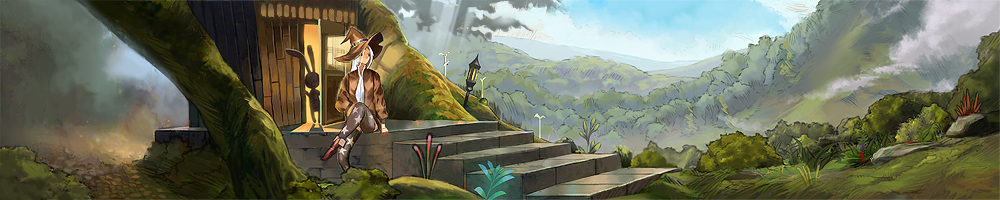
Spice and Wolf Review – 85/100


For the past few days, I’ve been in the strange mood to compare animation-companies. Don’t ask me why, I’m not sure myself. In any case, Spice and Wolf (or Ookami to Koshinryou) has been produced by Imagin, whose only previous work basically consisted out of a bunch of notoriously bad fanservice-series (Hit wo Nerae, Cosprayers, Love Love?), so no, I can’t really say that I was anticipating this release. Turns out that you can teach an old dog new tricks. Or in this case: an old wolf.

Even though it may not look like it, Spice and Wolf is what you’d call a smart and down-to-earth series. The two main characters are surprisingly deep for only thirteen episodes. Their motivations are well-motivated, much more than what you’d see in usual anime, and they have a lot of different and complex sides. They both start to travel together, in a setting reminiscent of medieval Europe, though this isn’t a story about knights at all, it’s about merchants.

And this series really makes use of this, by showing us the ins and outs of the life of a merchant, while both Lawrence and Horo (the two main characters) provide critical commentary and analysis to the things that they run into. The dialogue is of a really high-quality, and it’s no wonder that the light novel that this series was based on won an award. This becomes especially apparent when the major female side-character gets introduced: I was really convinced that the show would turn into a cheesy love-triangle at one point, but it’s the opposite! Her appearance and use in the story is carefully explained, as well the relation that she has between Lawrence and Horo.

As for the bad points for this series – if you plan to watch this, you really have to be interested in merchants. Otherwise it’ll just bore the heck out of you. Aside from the side-character mentioned above, the other characters in this series also pale in comparison to the main cast. Sure, their motivations are explained well enough, but it feels like they could have been used and fleshed out much better than this series did.

The highlight of this series is definitely the final three episodes, where everything comes together like a charm. In one word, these episodes are fascinating, and close off the series without leaving a bad taste whatsoever, and still leaving space open for a possible continuation. The first arc may feel a bit lacking, but this is still another great series from the past winter-season.

Kekkaishi Review – 84/100


Ah, shounen-fighting series. How many of them have fallen into the pit of mediocrity? Probably too many to count. Still, once in a while a series appears in the genre that actually delivers. The cream of the crop is for me the Law of Ueki, and even though Kekkaishi couldn’t come to that same level, it’s still a good example of a well-developed series in a genre that overall consists out of lazy manga-adaptations and toy-commercials.

For once our lead heroes (Yoshimori and Tokine) don’t have offensive powers. In fact, the entire concept of Kekkaishi is based around defence; all they can do is block, nothing more. The first twenty episodes are basically just reserved for random stories that let the viewer get familiarized with both the characters, and how they make use of their own powers in their own way. The creators manage to keep these episodes more than interesting through lots and lots of quirky characters, who’ll put a smile on your face.

Then when the story comes, this series has the advantage that it can work with characters that are already pretty well fleshed out, and the creators make perfect use for that. Keep a lookout for when Gen appears, because he’s without a doubt the best character of the series. Throughout its run of 52 episodes, Kekkaishi isn’t afraid to do things that usual series of the genre try to avoid.

There are a few problems with this series, though. Fighting-series should NEVER play with hidden powers, and yet every single one seems to have them. Although Kekkaishi uses them in enough moderation, they do pop up at the worst possible moments. This is the cause that the final three episodes will feel rather meh, which is a shame because the episodes that lead up to them are excellent.

It also feels that a part of this series does feel needlessly drawn out, though. I believe that this would have been the perfect series for 39 episodes (my personal favourite series-length). Apparently, this series was dropped by its sponsor and had to be drawn out to a 52-episode format so that it could be sold overseas, though this is why I’m of the opinion that series should just use the amount of episodes that fits for their story, and not make the story fit its amount of episodes.

On a semi-unrelated side-note, I think that this is a good place to voice some complaints about Sunrise that I’ve been having. I personally consider four animation-studios as “the big four” for television-series: Nippon Animation, Production IG, Madhouse and Studio Deen with as runners up Gonzo and Bones. I don’t think of Sunrise at all when I think of my favourite series, and yet they have been behind some interesting series as Freedom, Mai Hime, Bakumatsu Kikansetsu Irohanihoheto and Gintama.

I think that I finally know the reason: it’s a bit harder to see, but they’re just like Kyoani and Makoto Shinkai. They may be great in their own way, but they’re too afraid to try out new things. Makoto Shinkai has his male main characters, Kyoani has its high-school settings, and for Sunrise, everything has to be epic and everything has to be a commercial success. Concepts that work get needlessly drawn out, which is probably why Kekkaishi went on for too long.

At the moment, I’m still hoping that Gintama won’t run out of jokes, now that it’s already passed its ninety-episode mark. Sunrise has produced a lot of noteworthy anime, but they’re just not like Gonzo, who can churn out a Master of Epic once in a while from out of nowhere. Come on, why not try a slice-of-life series next time?

Dragonaut – The Resonance Review – 62/100


There are basically two kinds of Gonzo. The first is Good Gonzo, which searches the borders of anime with new and engaging concepts, and which delivered us series as Bokura no, Master of Epic, Red Garden, Gankutsuou, NHK ni Youkoso and Last Exile. Then there is Bad Gonzo, which consists out of a bunch of lazy writers that are stuck in mediocrity and brought us series as Rosario to Vampire, Gravion, Romeo x Juliet, Glass no Kantai and Giniro no Kami no Agito. Dragonaut, unfortunately, without a doubt is a product of Bad Gonzo.

It’s a shame, because on a second look, the story has a definite epic potential, about Pluto undergoing some kind of metamorphosis and sending dragon-like creatures to earth for some strange unknown purposes. It has the making of a great mystery-series. Unfortunately, any attempt to develop this story is held back by an abysmal cast of characters.

There are just one or two characters that aren’t badly written. Everyone else spends the entire series angsting about nothing, and this series has really weird character-development. One moment characters hate each other from the depths of hell, and the next they’re passionately hugging each other like they’ve been friends for ages. Motivations for each character are badly explained, and they’re lucky if they can have a background. Especially the main couple will get on everyone’s nerves with their endless whining of “Jin?” “Toa?” “Jin!” “TOAAAAAAAA!!!!” Oh, and let’s not forget to mention one particularly bad character: Kazuki. This guy is a true joke and entirely ruins every scene that he appears in.

And of course this series has been dubbed “Boobonaut” for a reason. The character-designs try to be different, and they’re done by the same guy who did them for Witchblade, but something tells me that his hormones were really bugging him when he sat down to draw the different characters. Nearly half the female cast has a ridiculously over-endowed bosom that defies all senses of logic.

The past half year really hasn’t been good for Gonzo, with this… thing and Rosario to Vampire. Thankfully, their next line-up of Druaga no Tou, S.A and Blassreiter look more promising, and let’s hope that the people from Bad Gonzo are taking a very long holiday for the upcoming season. For Dragonaut, I really see no reason to recommend it. Even if you want cheese, Suteki Tantei Labyrinth is a much better choice, because at least that one is well-written.

Wellber no Monogatari ~ Sisters of Wellber Review – 82/100


Ah, Wellber no Monogatari. The show that scared away almost all its viewers in the first episode due to the talking tank. Still, this is another gem from Production IG, although it’s way rougher than series as Seirei no Moribito and Chevalier.

The biggest problem with this series is definitely that the first couple of episodes reek of useless filler, and at first sight, they give away nothing of the incredible increase in quality that would happen afterwards. In the end, though, this is one series that knows what its doing, and the first four episodes were just meant to flesh out the story and most especially: the characters.

And what amazing characters they are. Nearly every main and important side-character gets background and development early on as they push the storyline forwards. They’re really the driving force behind this series, and especially once it hits its second half they really start to shine. This is one series that isn’t afraid to kill off a major character, and the creators know exactly what it takes to give the characters depth

The writers may be very talented, but they’re unfortunately also a bit sloppy. Most of the climaxes border on heart-wrenching, but there are a few that border a bit on cheesy. A few plot twists also are just included to keep the story going. Take for example a princess who is on the run and has to travel undercover, and yet she travels along with a huge unique tank. The aftermath of this series is also way too rushed and just wants to do a few things too many.

Still, Wellber no Monogatari is a very enjoyable series that seriously doesn’t deserve the negligence that it’s currently getting. It’ll keep you entertained with its dynamic characters and storyline, and not to mention that it’s got some pretty impressive production-values. Both the music, but especially the visuals are very pleasing to the senses, so if you can excuse a storytelling error once in a while, then you could give this one a chance.

Suteki Tantei Labyrinth Review – 82/100


Suteki Tantei Labyrinth is one of these series where there’s one thing you absolutely mustn’t do: take it seriously. Once in a while, a series appears that doesn’t really care about making sense. Still, even though Suteki Tantei Labyrinth may not have the most exciting plot, it does deliver quality entertainment.

I think the best way to understand this is to look at the two most prominent staff-members for this series: Hiroshi Watanabe for the direction, and Natsuko Takahashi for the series composition. Natsuko Takahashi is basically a very experienced and talented scriptwriter, who worked on many different series like Jigoku Shoujo, Moyashimon, Full Metal Alchemist, Gankutsuou, Popolocrois, and those are just the best among her repertoire. She made sure that each character in this series has a motivation, and is well-fleshed out. There are no loose ends left behind, and the screenplay itself is quite impressive.

Then there’s Hiroshi Watanabe, who is in my opinion the strangest director out there. He directed epics as the Law of Ueki, Orphen and was the one who proposed the concept for Jigoku Shoujo, and yet he is also the mastermind behind flops as the final parts of Star Ocean Ex, and the abominable Shining Tears X Wind. This guy really has a strange idea of what is good, and that strangeness is exactly what makes this series so enjoyable.

Enjoyable, but far-fetched. The first half of the series basically consists out of random mysteries that our main character has to solve. They range from enjoyable to absolutely ridiculous. One particular villain goes through the trouble of spiking the body of his victim on the tip of a huge radio-mast, and the extreme focuses on tea become rather jarring after a while. Thankfully, the second half removes any traces of murder-mysteries, and instead it starts developing the characters and turns into a really entertaining family-drama, full of cheesy plot-twists that just have to entertain.

This series is basically what you’d get if a series is at some parts incredibly good, while at others incredibly bad. The storytelling is quite impressive, and it definitely succeeds in keeping the rather… flawed story interesting throughout the run of 25 episodes. The characters are also enjoyable to watch, especially in the second half, and some of the drama can be surprisingly good. Still, you’ll get the most enjoyment out of this series if you like a good dose of cheese once in a while.