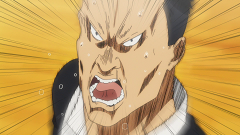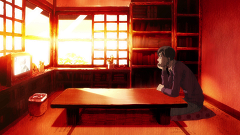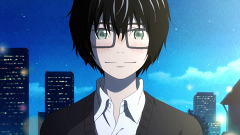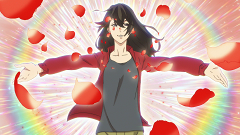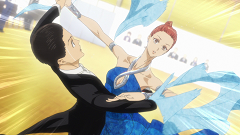
Shoukoku no Altair – 05 [The City of the Lighthouse]

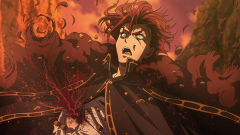
After a three-week break, Shoukoku no Altair returned today with an episode reminiscent more of its first three than its last. If you’ve been reading these posts for the last couple months, you’ll know that’s not a good thing, at least from where I’m sitting. We were awash in exposition and timeskips again this time around, and looking at the off-model characters scattered throughout the episode, I suspect it may have been outsourced (or else MAPPA is spread too thin with Kakegurui and Bahamut also airing this season). Still, the show’s weekly barrage of new characters, nations, and locales lends Altair a briskness that makes it easy to blog. You know the old saying: when the show’s too thin to analyze, suck it up and summarize.

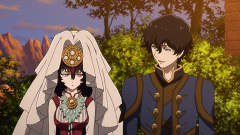
Actually, there was one theme at work in this episode that I felt was rather effective, and that’s the struggle between realism and idealism within Mahmut. When we first met him, he was tactless and naïve, despite his military status – he spoke without thinking, abandoned his city to help his friends on more than one occasion, and was regularly taken aback by the machinations of enemies and political rivals. His do-gooder streak remains, as we saw this week when he refused to leave Phoinike even after they declared war on the Empire, but he’s becoming more pragmatic and self-aware all the same. The decision to sail for Venedik and gain their support was motivated not by emotion or instinct, but by the fact that if Phoinike falls, the Empire will have Mahmut’s homeland of Turkiye surrounded. The former Pasha was also able to recognize a display of overconfidence in a friend, flashing back to his own trust in Ibrahim, who betrayed Turkiye just a month ago. I don’t expect that Mahmut will transform into a battle-hardened cynic before the series concludes, but the nuance is appreciated.

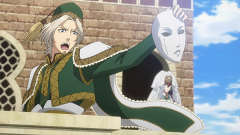
The man who will facilitate the aforementioned departure for Venedik is the newcomer Kiros, who you may have recognized as one of the riders flanking Mahmut during the opening theme. Kiros is another one of Zaganos’ spies, although his idea about what constitutes an effective disguise might make him ill-suited for the job. (Seriously, what’s with the Jack Sparrow cosplay?) His acquisition was handled by Suleyman Bey, who preyed on Kiros’ hatred of his politician father’s two-faced greed in order to bring him into the fold. This flashback was among the more interesting scenes of the episode, as it depicted the grittier side of espionage. Although Mahmut actively seeks out the company of intelligence gatherers, it might be a while before he gets his own hands dirty, so for now I’ll make do with the backstories of shadier men.

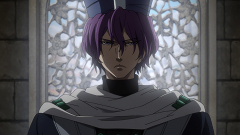
Konstantinos is the other significant character who made his debut this week. Though he appears friendly at first, he quickly reveals himself to be a dead ringer for Zaganos, who will use whatever (or whomever) is handy to achieve his ends. Konstantinos invites Mahmut to a government meeting in a fancy amphitheater, where the Phoiniken senators are set to debate whether they should allow the Balt-Rhein Empire to use their ports. Rather than allowing his guest to voice his opinion, however, it becomes clear that Konstantinos has only allowed Mahmut to attend the debate as a symbol of imperial defeat. With the support of both the people and his fellow senators, he declares war on the Empire, and what follows are a series of bloody conflicts along the wall that presently keeps them out. Altair’s politics are about as complicated as a mud pie, but its battles are much more interesting – Lady Lelederik is back, with a plan to scale Phoinike’s crystal cliff and infiltrate the city for the first time in 1800 years. Now it’s a race between her troops and the reinforcements Mahmut hopes to bring, and though the victor is all but assured, the contest may be compelling yet.

Ballroom e Youkoso – 06 [Line of Dance]

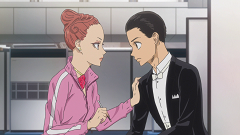
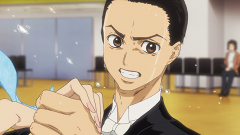
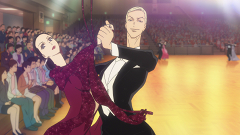
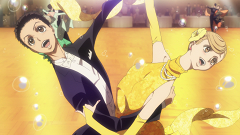
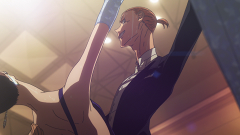
Several weeks ago, I wrote about my desire for the show to continually check in with Shizuku’s character – not just to put her on screen, but to show us how she’s thinking and feeling, now that her previous partner is sidelined and her new one clearly wants to be partners in more than one sense. In the fourteen days since the last episode, I developed the expectation that I wouldn’t be wild about this new installment unless Shizuku was a major part of it. And while she did make an appearance, both in the present day and in a flashback, she didn’t have a single line of dialogue, plus she was subjected to some heavy objectification on Gaju’s end. Why, then, was I so happy with Ballroom this week? I’m going to assume that if you’re reading this review, you’ve already seen the episode, so we’re skipping any sort of plot summary and moving straight to my favorite scene, which came near the end of our 22 minutes.

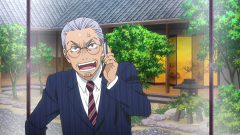
When Tatara comes home from a grueling practice session with Mako, he’s greeted by two things: popped blisters on his feet, and the sound of his father’s drunken phone conversation. The lights are off, and as he passes by his dad, Tatara hears him say, “He’s such a hopeless kid.” Let’s stop right there for a second and consider how dark this scene is. The blisters are, to Tatara, a symbol of his inadequacy, since he thinks to himself that experienced dancers would never have such a problem. So, he’s entering his home with the thought in his head that he’s not good enough, and on the way to his room he hears the only parent in his life confirm his self-diagnosis – talk about mental damage. Until this episode, Tatara’s home life had been portrayed as a happy one, featuring bright mealtime scenes and his dad functioning as a concerned, but understanding, parent. Here we see the exact opposite, and to make things even worse (or so it seems), the person on the other end of the call is Mako.

It turns out she’s been dealing with blisters, too, and her first instinct is to apologize for her lousy dancing. Like Tatara, she lacks confidence, and they take turns apologizing and deflecting until he decides to share that his parents are divorced. The show uses this fact to explain his commitment to restoring the Hyodo/Shizuku and Gaju/Mako dance partnerships, but Mako sees that resolve as a part of his character, and starts to gush about how thoughtful he is. This was the make-or-break moment for the scene, because anime often falls into the trap of praising their heroes for being sooo thoughtful and sooo nice, as opposed to creating stories that allow them to demonstrate those qualities in an authentic way. But Ballroom leapt over this pitfall by contrasting Mako’s opinion of her new partner with his own self-perception. As she assures him that everyone at Ogasawara is watching and admiring his progress, Tatara wonders to himself whether he’s worthy of their gaze. He feels thankful that anyone notices him at all, and considers it a miracle that any girl would want to dance with him.

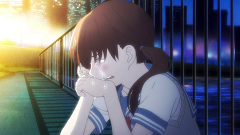
This is real shit. These are the naked thoughts of a kid from a divorced family, who doesn’t like school, considers himself to be untalented, and comes home to a father who self-medicates with alcohol. As Mako expresses her wish that he’ll keep dancing, we get a shot of Tatara’s feet – they’re the only place he can bear to look, given how foreign and inappropriate her praise must seem. But although his voice is small when he manages to find it again, he says thank you. He’s accepted guidance from coaches and challenges from rivals in the past, but now he accepts the kindness of someone who really respects him, and maybe likes him a little bit. Both kids are blushing by the end of the conversation, and it’s worth noting that Mako must have asked somebody at the dance studio for his phone number in order to make the call, so rumors about the pair may already be buzzing. I’m not totally on board the Tatara/Mako ship just yet, but I couldn’t be happier about the way they serve as anchors for each other in the harsh world of competitive dance.

There was more to the new episode than just this scene, but I’ve written enough as it is. Next week’s Ballroom will feature the Tenpei Cup, with our main couples going head-to-head, so I’ll try to integrate some of the stuff I didn’t cover this time into that post. Feels good to be back on the Ballroom bandwagon (at least for now).

Ballroom e Youkoso – 05 [Partner]

Ballroom aired a double feature last week, so this review is either a few days late or a few days early, depending on how you look at it. Either way, there won’t be a new episode this coming Saturday, with the next one scheduled to appear on August 12th. Personally, I welcome the break as an opportunity to reset my expectations for the show, which seem to have been too high. This series isn’t a mold-breaker of any kind, but rather a traditional shounen anime with non-traditional subject material. “Partner” was likewise a straightforward episode, but it did manage to properly introduce two very different characters, and adjust the motivations driving several of our main players. Not a bad way to wrap things up before a two-week break, all things considered.

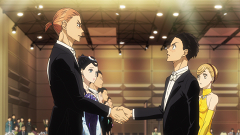
With Hyodo occupying the role of brooding genius, the show was missing a more hot-blooded rival character – that is, until now. Enter Gaju Akagi, whose brash personality and loud mouth are perfectly complimented by his ginger mullet. It’s a bit ironic that he insults Tatara’s bedhead just minutes after barreling into the episode, given his own disastrous hairdo. Maybe he lets it grow so long in the back because he’s ashamed of his giraffe neck? Jokes aside, though, Gaju’s dancing is nothing to laugh at, and he supports his claim to become Shizuku’s new partner with some fancy Latin footwork. The last of those three cuts looked rotoscoped to my eyes, but it was also super smooth and a little sexy, which is a tone that has eluded the series until now. I wouldn’t mind if I.G. fell back on this method from time to time in the future.

Gaju’s younger sister Mako can only watch from the sidelines as her partner tries to leave her behind, which is more than a little sad. She’s the meek, sensitive type, which is also a template that Ballroom hadn’t busted out until this week. Tatara is charmed by her shyness the same way he was by Shizuku’s strength, but is unable to sync with her during their first dance (if you could even call it that). Mako’s willingness to be led pays off later in the episode, though, when Tatara activates Prodigy Mode and instinctively guides her where she wants to go, providing some confidence in their future teamwork. Mako will have to exhibit much more improvement if she wants to reach her new goal, though: surpassing Shizuku and convincing Gaju to rejoin her as one of Japan’s best amateur Latin duos.

Also on board with this plan are Tatara and Sengoku, the latter of whom sets up the second meeting between the two shy kids. This might be the first time that Sengoku is actually cooperating with his new student, rather than manipulating or making fun of him, and it’s only made possible by their mutual dislike of Gaju. At the root of that dislike is the shared belief that Gaju is “stealing” Shizuku from Hyodo, but the reality is that Shizuku chose to switch partners of her own will. She claims not to care about Hyodo anymore, but regardless of whether that declaration holds any water, he’s banned from JDSF competitions for six months, so why not let the girl find a new lead? Even if her decision is meant to anger Sengoku, who she rightly calls out for being untrusting, she ought to be allowed to compete for the next half year, rather than being punished for other people’s mistakes. The episode closes on a shot of Shizuku looking pensively into the wall-length mirror at Ogasawara, perhaps wondering whether she’s made the right decision, so the show had better follow up with her character soon – the further she gets from being considered a prize to be won, the better.

Ballroom e Youkoso – 04 [Dancer’s High]

If you’d asked me a month ago for my top picks of the season, Ballroom e Youkoso would have been one of them. If you’d asked me two weeks ago to rank the new summer series, this show would have been right beneath Made in Abyss at the top of the heap. If you’d asked me seven days ago whether Ballroom was going to bounce back from its first subpar episode, I’d have wagered it would… but it didn’t. We’re only four weeks into a planned 24-episode run, so this level of pessimism must seem premature to many of you. Part of me knows that it is. The other, much larger part of me is too disappointed to care, so I’m going full nitpick mode for the next 500 words, with the promise that I’ll resume standard coverage next time.

Let’s start with how annoying Sengoku was in this episode, and more broadly, the depths of stupidity to which anime character writing can descend. Hyodo, Sengoku’s star pupil, has been concealing a knee injury that his teacher fears will worsen without rest. His solution is to take advantage of Hyodo’s absence and use Tatara as a substitute, which will disqualify Hyodo, thus preventing him from dancing and compounding his injury. (Let us overlook the fact that he could have simply convinced Shizuku to withdraw, as a later manga chapter will point out.) He then proceeds to blame Tatara, who he roped into this ridiculous plan, for lighting a fire under Hyodo’s ass, claiming that it will be his fault if his rival should bust his leg on the floor. The show hangs a lampshade on how dumb this is by having the background characters accuse Sengoku of being unreasonable, but the show forgets their objections as quickly as it raised them. The kicker is that Mr. Coach of the Year thinks to himself, “I guess it was worth butting in,” when he sees Hyodo dance the tango like a man possessed, and later laughs about the length of his ban from competitive DanceSport.

You might claim that Sengoku is just a dick, but think about the fact that the author delayed the disqualification just long enough for Hyodo to land himself in the hospital, or that Tatara continues to blame himself for Hyodo’s injury and DQ, even though it’s obvious to anyone with an ounce of brain power that neither of those things are his fault. This series is pushing square-shaped story beats through circular holes, and whenever the peanut gallery shows up to remind you that what’s happening doesn’t make a lot of sense, they get swept under the rug. Some of the same problems are present in the manga, but seeing them presented at a static pace and with no adjustments is a real disadvantage for viewers of the TV version.

Where the anime ought to excel is in the dancing scenes, but they’re just not cutting it for me. Ballroom is pulling the classic trick of cutting from panning stills to amazed reaction shots, and hoping that its real-life audience will feel the same sense of wonder as the faces on screen. I’m starting to see a lot of painted backgrounds that are meant to imply movement, as well – they’re not as cheap as speed lines, but they serve the same purpose. The standing ovation that Hyodo’s tango received near the middle of the episode felt utterly phony, given that more than half of it looked like posing rather than dancing, and that sucked the life from everything that happened afterward. Iwakuma’s brief appearance came off as immaterial, and what could have been a real heart-to-heart between Tatara and Hyodo ultimately felt like a convenient way to move the former boy one step closer to his goal. It now falls to the Akagi siblings (the two characters introduced just before the ED) to breathe new life into this once-charming show, or else the next five months of blogging are going to be tinged with regret.

NOTE: This week, I started referring to the show’s protagonist (Fujita Tatara) by his given name, which should become a regular practice going forward.

Shoukoku no Altair – 04 [The Eagle’s Joint Struggle]

Shoukoku no Altair seems to be settling into a rhythm. For an episode containing as much new terminology and backstory as this one, “The Eagle’s Joint Struggle” moved from beat to beat with an ease I wasn’t anticipating. That tone is partly owed to the character of Baskan Suleyman, whose competent yet approachable personality dominated the proceedings this week. As one of just two survivors of the Tughril people, you might expect him to be a darker, less forgiving figure, but his competence and charm made him my favorite cast member thus far. Mahmut seemed to have a similar opinion, which transforms his journey into one of purpose, rather than exile. It was great fun to see the two falconers swap stories and team up on a few of Louis’ flunkies. Mahmut now has his first real comrade, as opposed to the mentors, friends, and enemies he’s encountered until this point, and that’s a welcome addition to the series.

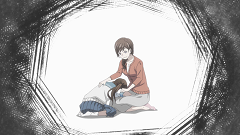
It wasn’t all fun and games this week, however, as the episode-opening dream sequence made the horrors of our hero’s past more vivid than ever before. During the first of these visions, Mahmut was literally rooted to the ground while his mother was murdered before his eyes. One new detail I spotted in this scene was the baby she cradled as her attackers advanced – this couldn’t have been her first child, since Mahmut was five years old when his village was burned, so perhaps his younger sibling was tragically taken from him that night, as well. Even more interesting would be if a third Tughril tribesman still lived, perhaps as a member of the Empire, having been captured during the raid. We aren’t given too much time to reflect on these possibilities, however, as the dream shifts to feature shadowy figures that prey on Mahmut’s self-doubt and tear at his eyes and ears. This is a new, more serious tone for the show, so it’s good that some friendly faces were introduced later to provide some balance.

Those faces belong to Barbaros, a kulak (Turkish for “ear”) in Zaganos’ spy network, and the aforementioned Suleyman, both of whom reveal themselves to Mahmut when he pays a visit to his home village. The show wasted no time in demonstrating the function of the Pyramis from last time; when held under a fountain at particular shrines, it emits a beam of light that Zaganos’ people can identify, and which Barbaros quickly spotted this week. It’s such a clever device that I’m already past worrying about how easily it fell into Mahmut’s lap, and ready for him to travel to more shrines and meet more potential allies. Not that I’ll forget Suleyman any time soon – his goal of using the spy network to prevent war stands in fascinating contrast to Zaganos’ apparent desire for it, so there may be an ideological clash in their future. Perhaps the larger arc of the series will be Mahmut flipping the spy network’s ultimate purpose from one of conflict to one of peace. Then again, maybe the Poison General isn’t as war-hungry as he appears, and everything we’ve seen from him so far has been part of a much longer game.

I’d be remiss if I didn’t mention some of the smaller details this week that really helped the episode breathe, including the brief ritual Mahmut performed upon his arrival at Yeni Tughril. What really impressed me about this scene was its lack of explanatory voiceover – we know from context that the water is intended to pay respect to the dead, and while the finer details may escape us, the silence makes the moment that much more poignant. (That being said, anyone who wants to offer additional commentary on that scene is more than welcome to do so!) Also worth noting is Mahmut’s observation that the area’s wild eagles will migrate north soon, so he won’t be able to use them in combat for a while. These quiet moments gave the show a healthier, more natural air this week, so I’ll be on the lookout for them next time, as well.

Ballroom e Youkoso – 03 [Dance the Waltz]

Well, there’s no going back now. Ballroom just went full sports anime, and it cut the brake lines for good measure. After the relative nuance of last week’s character introduction, the newest episode treated us to more fanservice, more contrivance, and more shounen formula than the last two combined. Sports series have really stepped up their game over the last few years, with Yuri on Ice and especially Ping Pong busting genre conventions every time they hit the airwaves, but I wasn’t expecting Ballroom to reach those heights – just equaling its sister series Haikyuu would be a fine achievement. The going is still early, but since I’m reviewing the show episodically, I don’t have a lot of praise to dole out this time.

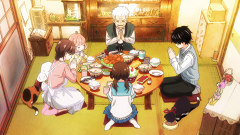
Before we get too negative, though, let’s talk about Fujita’s family life for a bit. There’s a sweet mealtime scene between our young hero, his father, and his grandmother, who we met for the first time this week. Fujita does his best impression of a color commentator as a sumo match plays on TV, allowing his nearsighted grandma to follow along. This heartwarming scene further establishes him as a good kid, but he’s still not disclosing his new hobby to his dad, so I have to wonder when Fujita’s sneaking around will come back to bite him in the butt. Ballroom isn’t one of those series that makes its paternal figures into antagonists, but we already know that he’s concerned about his son’s upcoming high school entrance exams. When he inevitably learns that ballroom dancing is coming before Fujita’s studies, we can expect a B-plot’s worth of material from the resulting conflict.

Notably absent from the dinner table is Fujita’s mother. I’ve been on the lookout for a shrine somewhere in their home, but it appears she’s just living apart from her family. I have to wonder whether Fujita would be more comfortable revealing his passion for dance to a mother figure, but it’s hard to speculate, since all the women in this cast are already part of that world. Tamaki-san is the encouraging type, at least, which is a wonderful trait for a young novice to have in an instructor. Speaking of female characters, I took issue with the way that half of the cast was treated in this episode. This is a shounen property, so I was prepared for a certain level of sexual objectification, but at this point Banba’s role in the story is 80% boob jiggle. The more offensive instance by far, though, came when Sengoku grabbed a handful of Shizuku’s dress during a pep talk and inadvertently bared her breasts. Then they threw in a gushing nosebleed and a camera flash for good measure… I was able to get past the changing scene from last week without much trouble, but if this shit becomes a staple in Ballroom’s playbook, it’s going to put a sizeable damper on my enjoyment of the series.

Excessive fanservice isn’t the only bone I had to pick with this episode, either. The “overheard from a bathroom stall” trope was executed with about as much grace as Fujita after just one dance lesson, and it didn’t teach us anything that we couldn’t infer from the studio above his home and his rigorous practice routine. The show’s attempt to frame another competitor for Hyodo’s fall didn’t even qualify as half-hearted, plus we’ve already seen him fall down a flight of stairs at Ogasawara. And the fall itself was a complete contrivance, not only because it allowed Fujita to hit the floor way ahead of schedule, but also because it will prevent Hyodo from claiming his title. This kind of plotting reminds me of sports anime from the mid-90’s: clumsy and lacking any kind of dramatic tension. Sengoku refers to dance competitions as “battlefields” midway through the episode, but the show handled this one as though it were a mere reenactment.

Thankfully, Hyodo’s character remains fascinating, even when the events unfolding around him are not. After seeing Fujita’s excited expression on the dance floor, Hyodo angrily demands that he “give it back,” a clear reference to the passion that he himself has lost. It’s tempting to think that the two trash-talkers from the bathroom got under his skin, but it seems to me that he’s been approaching this breaking point for a while. His enthusiasm for the sport is at a low point, given his lack of challengers and disinterest in training overseas; he may not even want to compete at all, feeling only the need to live up to his reputation or please his parents. Hyodo’s expressions on the floor are often intense, but never are they happy, and that’s where Fujita has him beat. The continued strength of their rivalry will be one of the biggest measures of Ballroom’s success as it goes on – hopefully the rest of the show catches up soon.

Shoukoku no Altair – 03 [The Council of Generals]

With this episode, Altair’s first arc comes to a close. Mahmut Pasha, teenage prodigy and commander of eagles, is now simply Tughril Mahmut, a disgraced former general set to leave Turkiye on a journey of discovery. Though its main character didn’t fare so well this week, I thought the show wrapped everything up nicely in its third effort, considering the amount of material it needed to cover. It put a bow on the conflict in Hisar, lovingly kicked our hero from grace while confirming his suspicions of an impending war, and introduced an important plot device that will drive the story going forward (more on that in a bit). Though Altair hasn’t become the polished production I’d originally hoped for, the stage is set for a new, hopefully more fruitful chapter in the show’s history.

Last time, after hearing that his friend Ibrahim was in trouble, Mahmut left for Hisar without saying a word to anyone. Though he was successful this week in rescuing Ibrahim and the hostages that had tied his hands, his reward upon returning to Turkiye was a demotion. The council’s justification: in addition to acting rashly at first, Mahmut later made the decision to free all the Araban people (subtlety isn’t one of Altair’s strong suits) who had been lured into Hisar by the evil Minister Louis, in the hopes that they could persuade their countrymen not to carry out a larger invasion. Mahmut’s fellow generals would have preferred that he let only a fraction of them carry the message, but they also want war with the Empire, and it’s this second motive that seems to be the real reason for the dismissal. This sudden reversal of fortune doesn’t carry a lot of emotional weight, since it comes so close to the beginning of our story, but it’s the best and boldest decision the show has made so far. Stripped of his rank and without a means of aiding his country, Mahmut is now free to hit the road and meet the two young men who appear at his side during the opening theme.

My previous suspicions about Zaganos were off the mark, though it turns out I was right not to trust him completely – he’s the type of guy who controls a spy network that spans the entire continent, which explains why his troops were located so conveniently in the last episode. Though the Poison General gives his court rival no credit for the happy ending in Hisar, he’s kind enough to give him a necklace that functions as the key to contacting these spies. Why Zaganos would give such a valuable trinket to a man intent on leaving the country is a mystery to me, but maybe a more observant viewer or helpful manga reader can ease my confusion in the comments below. Perhaps Altair is just the type of series to create more questions every time it answers one, à la LOST (though hopefully not as opaque). In any case, this handy plot device ought to provide the thrust for the rest of the narrative, so how it fell into Mahmut’s lap is less important than where it takes us next. After this week, I’m looking forward to seeing where that will be.

Ballroom e Youkoso – 02 [Kiyoharu Hyodo]

After a strong start to its two cour season, Ballroom e Youkoso has managed to waltz its way past all potential stumbling blocks and deliver an even better second episode. There was a lot to love here, including a carefully introduced rival and love triangle, great voicework from Shinba Tsuchiya, and some promising animation during a late solo dance sequence. Ballroom isn’t above including anime tropes like the always-classy ‘interrupted changing scene,’ and lead character Fujita’s latent genius is a bit too evident after just two installments, but the team at Production I.G. is doing a lot more things right than wrong. Let’s break them down step by step.

The episode is named after Kiyoharu Hyodo, the biggest of the three characters it introduces (the other two being Banba and Jinbo, Fujita’s friendly but underqualified dance instructors). Sengoku describes Hyodo as a “monster” who stands in complete dominance of Japan’s amateur DanceSport scene. He’s full of intensity on the floor, but totally aloof when he’s away from it, demonstrating his nonchalance throughout the episode via several cavernous yawns. Even if you think these are intentional, Hyodo is quite agreeable for a rival character in anime, especially given his young age and outrageous skill. He demonstrates a basic waltz step for his new studio-mate with only a slight protest, and keeps his cool when Fujita later interrupts his solo practice. The hitch is that Hyodo is involved in a nine-year dance partnership with Shizuku, on whom our hero has a massive crush.

When Sengoku teases that Fujita might try to steal his partner, Hyodo claims not to care. Shizuku, however, appears to care very much, blushing and pouting at his level-headed response. Thus the love triangle falls into place, with the only question mark being where Hyodo’s affections lie. Attractive and talented as Shizuku is, it’s hard to imagine that he wouldn’t be interested, but he doesn’t seem to be; even when presented with the opportunity to train overseas with her, he’s content to stay in Japan. This is clearly discouraging to Shizuku, who thinks Hyodo is “on another level” and considers herself “lucky he’s my partner.” The hero worship here made me a little wary of potential Sakura Syndrome, where a major female character acts only as a bystander or cheerleader, but the groundwork has been laid for Shizuku to undergo her own arc. Natsu from Baby Steps is a good model for how I hope her character is handled over the course of the series – always improving and competing against rivals of her own, even as she functions as a love interest for two different guys.

On the production side of things, the stills and CG dancers returned for another episode, but all was forgiven during one of the final scenes this week. During a solo practice session of Hyodo’s, the art became more sketch-like and the animation more fluid, giving a powerful, dynamic feel to his movements. Even if it only lasted for a few seconds, this willingness to break model and use a rougher style to capture a different energy is a confidence booster. I especially liked this choice given that Fujita was observing him, and needed to be inspired by what he saw to push the story forward. Speaking of Fujita, Shinba Tsuchiya is a breath of fresh air as his voice actor, imbuing the character with a nice blend of self-consciousness and enthusiasm. Tsuchiya is a newcomer to the seiyuu world, but he’s already drawing comparisons to Daiki Yamashita, who voices Deku on Boku no Hero Academia, so his future looks bright. Hopefully Ballroom’s future remains just as promising as the show starts covering multiple manga chapters per episode.

Shoukoku no Altair – 02 [The Citadel City]

After last week’s runaway locomotive of an episode, I had hoped that Shokoku no Altair would find a lower narrative gear during its second offering. That dream remains unrealized, however, as the show continues to introduce settings and push its plot without giving its cast much time to breathe. The first two episodes thus far share a similar structure: Mahmut attends court and learns of a conflict that puts Turkiye at risk, objects to his rival Zaganos’ plans, is shot down, runs off to fix things himself, and stumbles upon a conspiracy orchestrated by the Empire. Altair’s premiere had a fun festival scene that introduced Ibrahim and Shara, at least, but this time all we got were a couple of clumsy flashbacks before being thrown into another dispute between Turkiye and the opposing Imperial forces.

On one side of this dispute is Zaganos Pasha, who is almost too eager to ride for the Turkiyean territory of Hisar and quell what seems to be an uprising there. While most of the primary characters have been playing with their cards face up, Zaganos Pasha is someone whose motives were in question after a single appearance. His thirst for war seemed to hint at an alliance with the enemy, but this episode revealed that he and Imperial Minister Louis (who was behind the whole thing once again) were on different pages regarding the plot in Hisar. Time will tell if Zaganos is a simple foil for Mahmut, or whether his military aspirations are more deeply rooted.

If there’s still hope that Zaganos will reveal himself to be more than a puppy-kicking villain, the same can’t be said for Louis, whose lack of a twirl-able mustache is a big missed opportunity.  Whenever there’s an establishing shot of the castle where Louis confers with the Emperor, a comically evil piece of organ music starts up, just in case you were unsure who the bad guys were. I had high hopes for the Emperor at first, but his awareness of Louis’ schemes was more concrete this time around, which robs their scenes of any potential complexity. Much more interesting is Lady Lelederik, whose brief introduction revealed her cooperation with Louis to be tenuous at best. I’m no expert on monarchical titles, but I expect this new Duchess to trump the Minister in the coming weeks.

It occurred to me during this episode that Altair’s score is distinctly western, despite being set in an alternate version of the Ottoman Empire. The string section alternates between bombastic and mournful, but they’re nearly always audible, even during some of the characters’ inner monologues. We only get a break from this sameness during the dance scenes, where the music is cheerier and more varied, but not quite Turkish or even Middle Eastern, at least not to my untrained ears. (Feel free to call me out in the comments if I’m off base here.) Altair’s backgrounds and buildings look authentic, but its unremarkable music may be contributing to my lack of engagement with the series. Its ending theme, though, meshes traditional and pop music to create an entrancing beat for which I always stick around – that’s one department where Altair never lets me down.

Shoukoku no Altair – 01 [The Golden Eagle General]

As a fan of both historical fantasy and MAPPA, the studio behind this series, I had high hopes for Shoukoku no Altair coming into this premiere. Its Middle Eastern setting and young, eager protagonist make it a dead ringer for Arslan Senki, the first season of which I enjoyed. Arslan was a bit dry, and its battle scenes were riddled with CG elements, but it also had the disadvantage of being produced by Liden Films. My thinking was that with a more trustworthy animation house behind it, Altair had a shot at being the complete package.

The going is still early, but after one episode, my expectations have been appropriately tempered. Altair is a distinctly average show from a visual perspective, with most of its flair coming from the ornate Turkish outfits and architecture (Turkiyean, to use the show’s vocab), rather than its composition or sense of movement. I haven’t done much more than skim through the first chapter of the manga for this one, but it would surprise me if the art were this standard in its original form. Seeing how much material was crammed into these 22 minutes, though, makes me think that the episode director had a lot more on his mind than making the show look pretty.

Despite only introducing a handful of characters in its first outing (with plenty more to come if the OP is any indication), Altair feels jam-packed with content. I’ve seen it written that the show will likely burn through its first couple arcs to get to the good stuff, and if that’s the case, we ought to be rewarded down the line. For now, though, we’re relying on flashbacks, rooftop statements of purpose, and narrated exposition to learn about the world of Rumeliana. Turkiye is a small fish in a much larger pond, and until all the major players have been introduced, I don’t expect this style of delivery to change.

The most significant player in this story is Tugril Mahmut Pasha, “Pasha” being a title for Turkiyean generals. As the youngest person ever to join that distinguished assembly, he’s clearly being set up as a prodigy. His mother is dead, and he’s so inexperienced with women that he opts to sleep on the roof when he finds one in his bed, so he’s ticking all the normal boxes as far as anime protagonists go. Mahmut discovers a plot by the neighboring Balt-Rhein Empire to frame Turkiye for the assassination of their Prime Minister, who is given the name “Franz” in one of the silliest World War I references ever. Our hero conveniently overhears the name of the conspirator from a band of assassins, sets his army of eagles on them, reveals the identity of the traitor to the Emperor of the opposing nation, and saves the day. If that sounds like a lot of material for a first episode, that’s because it is, and that’s without the handful of characters and plot points I’ve neglected to mention. Still, Altair makes itself easy to follow, even as it moves rapidly through its material.

The person that interests me the most is Zaganos Pasha, a young general who wants war with the Empire despite their superior numbers, and with whom Mahmut immediately clashes. There’s a possibility that he’s feeding information to Louis, the Imperial conspirator, to achieve his goal, but his level-headed demeanor makes it hard to predict whether that’s truly the case. The Emperor of Balt-Rhein is also a bit of a question mark – his refusal to listen to all of Mahmut’s testimony indicates prior knowledge of Louis’ plot, but there’s no confirmation that he orchestrated the whole thing. Hopefully these characters, along with those who have yet to be introduced, will lend a bit of spice to a show that could really use it.