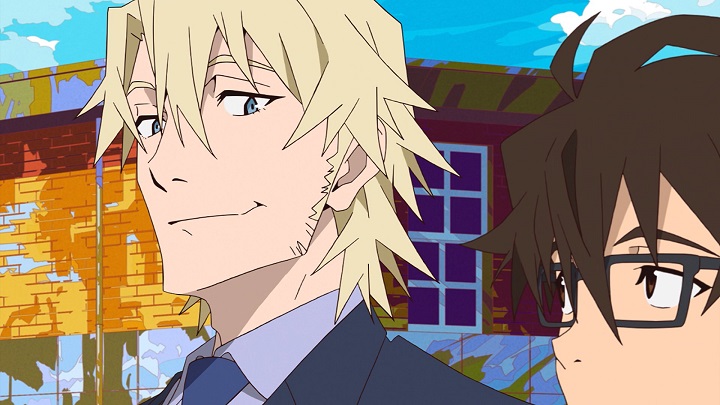
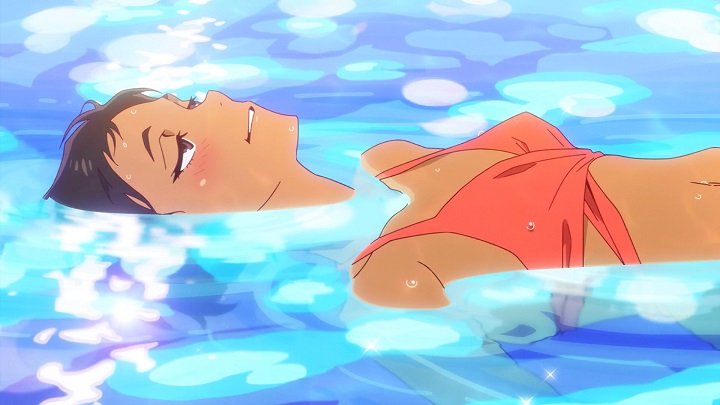
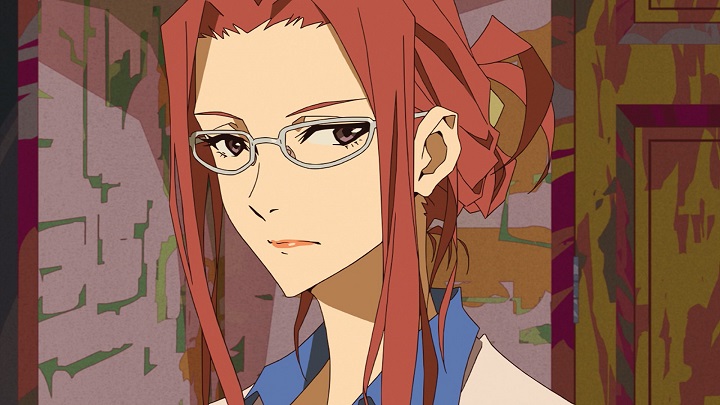
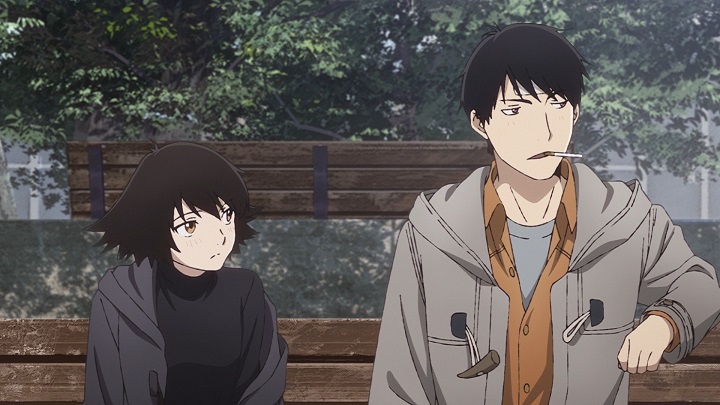
Some Quick First Impressions: Arte, Listeners, Sakura Wars the Animation

Arte

Short Synopsis: Tired of being held down by societal norms and traditions, a girl decides to leave behind her aristocratic roots and carve a new life for herself as an artist.

Lenlo: Unlike Armitage, I knew nothing about Arte going in and only barely knew that Artemisia, whom Arte is based on, existed. Yet even with no knowledge, Arte is the first series of this season to actually hold my complete attention all the way through. Similar to Runway de Waratte, the initial premise of a character striving in an industry they are unfit for and whom the industry is biased against is a good one. Right away it sets the entire world against the lead, and Arte doesn’t look like its going to shy away from the technical aspects like Runway. It’s only made better by the setting of 16th century Florence, which I at least have never seen covered in anime before. The backgrounds are beautiful, and as someone who has actually been to Florence, it’s a joy to see it rendered in such a stunning way. And the commitment to the setting seems to go beyond the flavor of the backgrounds, with hard labor in place of modern conveniences for the art and a focus on the actual living conditions of the times too. My only quibbles are actually very similar to Armitage, those being the comedy falling flat or the animation not being all there. Still though, it’s the first series to really catch and hold my eye yet. And the fact that Armitage is blogging it means I get to just sit back and relax with it to!

Potential: 80%

Armitage: Arte is a story, loosely based upon real events, which follows the titular character on her journey to becoming a painter in 16th Century Florence. The manga serves as a fitting companion piece to Blue Period (another phenomenal manga, though we’ll talk more about it when that anime eventually comes out) but while both are about individuals trying to pursue their passion of becoming artists, Arte distinguishes itself by not only being a story about art and the sacrifices that go into pursuing it for a living but by also serving as a criticism of a history of unfair gender biases that prevail almost every profession. I am already familiar with the source material so, all I hoped for while tuning in to the premiere was for a competent enough adaptation. And I got just that. While the animation itself was nothing too spectacular, the backgrounds bringing to life Renaissance-era Florence looked absolutely stunning. The voice actors for our main duo are both apt and Maaya Sakomoto’s vocal return for the OP is always welcome. The one thing I can point out as a minor quibble is that the comedic gags didn’t all land as expected but that’s a shortcoming on the manga’s part and not the anime. All in all, I couldn’t have asked for a better start to this story. I shall be returning next week for full weekly coverage. Hope you will join me too!

Potential: 100%

Listeners

Short Synopsis: Audio nerd makes advances on mysterious girl, but gets too caught up in his love of gear to actually get any.

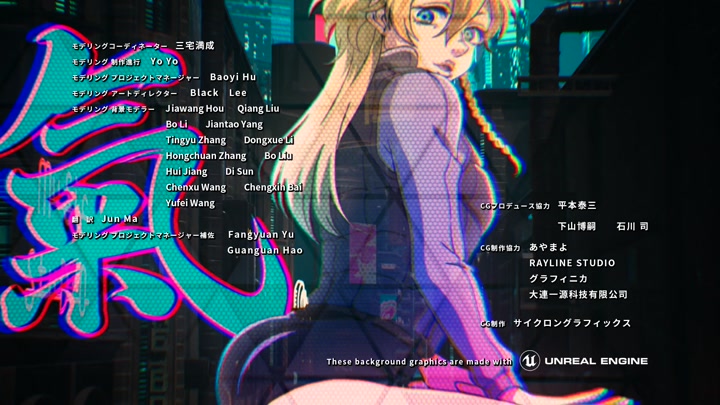
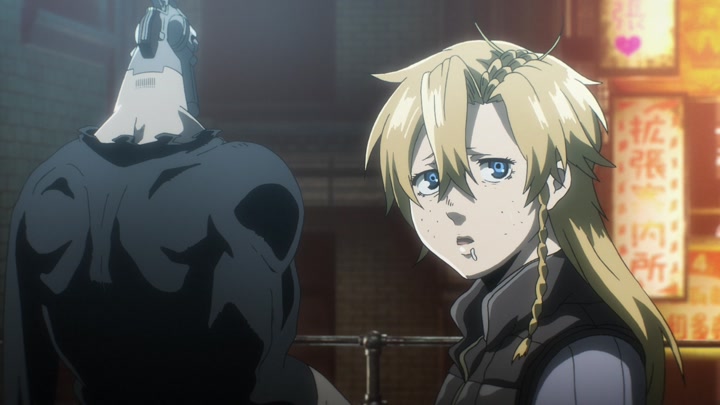
Amun: Really the studios doing Listeners and ToG should switch – I feel like each’s visual style is way better suited for the other. This show looks great – the CGI integration makes sense, the world has good details, it feels like a world of junk and burned out tech. The characters are well introduced with their obvious traits at the front but also with adequate room to grow. Where I’m a little hesitant is the obvious service that’s going to play into this show, and I’ve always found Japan’s portrayal of rock and roll a little…mismatched. That said, I like what I’ve seen so far – this kind of seems like a music mech version of Tsugumomo (also airing this season), which I’m a fan of (see what I did there). I’m here for at least a few more gigs!

Potential: 65%
Mario: Concept-wise, Listeners has a lot to write home about. It’s a musical and mecha hybrid in a distinct setting (at least in this first episode) with gorgeous character designs, expressive animation with a plot that knows where it’s heading. At the same time though, it sweeps through an array of cliche development and tired dialogue that it feels new and old school on equal measures. The soundtrack reminds me a good deal of FLCL, anyone who is familiar with Dai Sato’s past works will see lots of familiar factors here, and boy meets girl who is a perfect match for him with a convenient amnesia? All checks. Even the gags revolving around Mu misreads Echo’s advance is so dated it’s hard to overlook. But Mu’s outgoing personality plays out as a neat contrast to Echo’s personal traits and they have a pretty solid chemistry already. The battle at the end successfully embraces Listeners’ appeals: mecha ⁺ solid action ⁺ rock & roll. In addition, I enjoy many references to the real world’s music. Listeners’ premiere might be on a cliche side, but it does it with its utmost confidence, just like Mu herself.

Potential: 40%
Sakura Wars the Animation

Short Synopsis: A team of Taisho-era actresses moonlight as mecha-piloting peacekeepers.

Wooper: I knew this show was going to be bad, but I missed the fact that it was animated by Sanzigen, one of the worst 3DCG studios in the business. The first scene took place in darkness, so its ugliness was largely disguised, but the rest of the episode looked straight outta 2013. From simple dialogue to more complex theater and combat scenes, this thing is hideous to watch. The story isn’t much better, being a fusion of the fantasy, idol, and mecha genres that feels like it was made for nobody in particular. The enemies are lizards that look like robots, but are actually demons, and the suddenness of their appearance renders the ensuing battle scene totally lifeless. But hey, at least the main characters got to reintroduce themselves and deliver their shitty catchphrases before charging into battle. Yes, this is *that* kind of show – made solely to familiarize a new generation of waifu-seekers with a media property that they can sink their money into. Don’t watch this.

Potential: 0%

Mario: Unlike Wooper, I am fond of Sanzigen given how their character designs are attractive and the CG looks rather decent, but Sakura Wars looks trash and feels trash. All the characters look stiff and emotionless. It doesn’t help that the personality traits are nothing to write home about, with the worst offender being Sakura herself. Clinging to the only boy in the show, she’s just a pain to watch. The plot is filled with cliche like that girl that has amnesia or how we can tell miles away they are going to be under attack when the only man isn’t around. I know it’s a reboot of a franchise so there’s a market for it, but otherwise I see no reason to pick up on this. It’s unremarkable on all fronts.

Potential: 0%

Some Quick First Impressions: BNA, Tamayomi, Tower of God

BNA

Short Synopsis: Trigger re-writes Beastars in traditional Trigger style.

Helghast: Due to how Netflix releases things either too late or too early, the entire first half of BNA is out for your viewing pleasure. I’ve watched the first three episodes to balance it out and Studio Trigger hasn’t failed to entertain me yet. This time it’s Zootopia meets Kill la Kill and if you were expecting another Beastars, think more along the lines of the brustling fire-conscious city of Promare rather than the intricate layers of society. With the director of Little Witch Academia and the guy who scored Megalo Box being behind this production, it has been a fast-paced and wild ride through Anima City. The animation is an absolute riot in portraying the comedic violence and the characters of Michiru and Shirou drive the story with their different senses of discovery and justice. Being a Studio Trigger show, I expect this to be a smash hit or at least implode unto itself in a spectacular fashion.

Potential: 80%

Lenlo: Well one thing is for sure, you can tell this is a Studio Trigger production right from the get go. It’s flashy, bright and has a sense of style. Whether BNA ends up as anything more though we will have to wait and see. Because initially, its story isn’t anything we haven’t seen before, especially from Trigger, who seem hooked on this same core narrative. Some kind of class system in place, down-trodden, etc and the heroine comes in to fix it. That said there is some promise, a hint of a mystery, in just the first episode. Which gives me hope that there is more to BNA than just Triggers stylistic flair. Even if I am wrong though, if nothing else, BNA will be a party to watch. That’s for sure. With any luck, we may even go to space by the end.

Potential: 80%


Tamayomi

Short Synopsis: Two childhood friends reunite in high school and become a softball battery.

Lenlo: I feel betrayed. I feel lied to. In a word, I feel upset. Because the PV’s and Key Illustrations leading into this promised me strong women with strong thighs. And Tamayomi gave me neither. Just look at these thighs, all bland, detail-less and samey. It’s almost as if their character designs have little actual differences! Meanwhile, the animation on these thighs is also lacking, as they move like slow blobs of jello. I can’t even appreciate flashback thighs, which is criminal considering how many there were! Flashbacks I mean, not thighs. Long story short, as far as a “Cute Girls Doing Cute Things” sports show goes, neither the girls nor the thing they are doing, are cute. And so I can only say it fails.

Potential: No Thighs/10

Wooper: This premiere was, in a word, boring. It took 22 excruciating minutes for the main character to meet several of her classmates and throw a few practice pitches to her childhood friend, with a couple middle school flashbacks to break up the monotony. Every bit of the episode felt padded, from the slow upward pans whenever a new person was introduced, to the internal overreactions whenever a character did something mildly surprising. The comedy revolved around identically-designed anime girls being kind of ditzy, which is nobody’s cup of tea when it’s done this predictably. Speaking of their designs, they’re so simple that it’s a wonder that animation isn’t better. Everybody looks like Kirito with a more feminine haircut, yet the episode’s few moments of full motion struggled to keep things consistent. The main girl has a magical curveball that initially heads right for the batter’s head, then darts into the catcher’s glove at the last second, and… You know what, I’m not going to waste another word here.

Potential: 0%


Tower of God

Short Synopsis: Young boy enters a Tower themed Death Game in search of the only girl to ever talk to him.

Amun: I read the first couple chapters of this webtoon and I was decently hyped….first episode has pretty well killed that. Unlike Lenlo, I do not like the rough line – I think it disrupts what should otherwise be a spectacle of scenery. Instead, we have shallow depth, low effort backdrops with characters parading around in PowerPoint animations. The story is a mess too – had I not read the source material I would be completely lost. As it is, I’m only halfway lost. What I’m seeing is the very definition of amateur hour – which makes me sad since I’m rooting for the Crunchyroll sponsored projects to succeed. Oh well, better luck next time, I guess.

Potential: 1%

Lenlo: Tower of God is a weird one. Visually, I like it. The rough line work stands out and the animation is good enough with that line work to keep me interested. It looks like nothing else airing this season, really. However having read the original WebToon, I can say with utmost certainty that if you had no idea what was going on this episode, you won’t moving forward either. Narratively it’s a bit of a mess, as the author figures out what kind of story they want to tell. So all I can really say at this point is that I am looking forward to some good animation, some good fights, and if it can adapt some of the best scenes of this first volume, it will at least be a good time. Nothing phenomenal, but hey. Sometimes I just want some popcorn you know?

Potential: 50%, popcorn flick

Dorohedoro Anime Review – 80/100

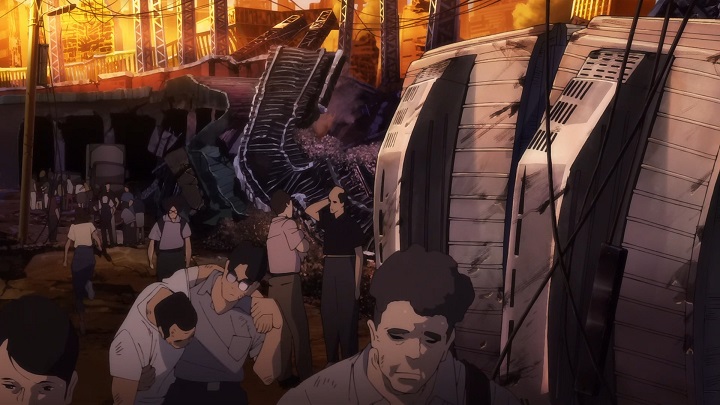
In late December of last year, I labeled Dorohedoro one of my most anticipated series of winter 2020. Honestly, that was a poser move. I’m not a manga reader, so my high expectations were based largely on secondhand praise, plus the potential for bloody irreverence promised by the PV and synopsis. There was one element of the show’s production, though, that I was confident would give it a unique appeal: the involvement of Shinji Kimura, background artist for such films as My Neighbor Totoro and Akira. He’s done plenty of great work as an art director, too, which was his role on this project. Sure enough, Dorohedoro’s grimy cityscapes and ramshackle interiors were uncommonly polished for a TV production – but the show had much more going for it than detailed backgrounds. A potpourri of violence, mystery, and a strangely loveable cast, Dorohedoro proved itself as one of this season’s strongest offerings, despite its task of adapting an unadaptable story.

Continue reading “Dorohedoro Anime Review – 80/100”

Dorohedoro – 12 [Pinky Promise]

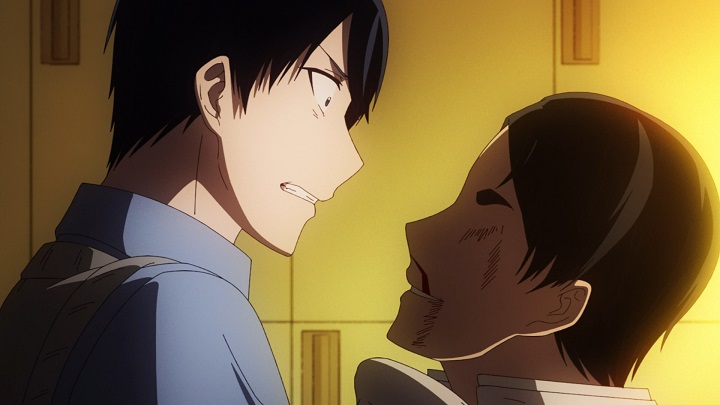
We came tantalizingly close to understanding the truth of Caiman’s identity in this episode, but in the end, Dorohedoro’s tendency to complicate itself prevailed. Not that I’m complaining – this was a strong ending, assuming that a second season will emerge some day to continue the story. It resolved some mysteries and created much bigger ones, and convincingly reconciled two friends after brutally pitting them against each other. The latter of those accomplishments was important, as without Caiman and Nikaido’s pinky promise towards the end, this finale would have felt overstuffed with flashbacks, dreams, and clues. Nevertheless, I enjoyed all of those hints at the show’s bigger picture, and I’m going to spend the bulk of this post unpacking them, since I can use tomorrow’s series review to discuss everything else.

Continue reading “Dorohedoro – 12 [Pinky Promise]”

Chihayafuru Season 3 Review – 82/100

Back in October of last year, I wondered whether Chihayafuru’s foundation of unceasing karuta matchups and unrequited love would have lost its luster by the third season’s end. Now that we’ve reached that point, I have to say that the series approached that limit several times over these last 24 episodes. When it first reappeared on screen after a six year hiatus, I was taken aback by its consistency, but small issues cropped up as the story ran its course (more on those in a bit). These problems were cause for reflection – was the 2019 incarnation of this show really that different, or had my expectations changed? After some thought, I arrived at an answer: the show was, in fact, different, but it still met my primary expectation. Despite some stumbles in its third season, Chihayafuru’s continued success aligns with my core belief about narrative fiction: character is king.

Continue reading “Chihayafuru Season 3 Review – 82/100”

Chihayafuru S3 – 24 [When Winds Send Waves Crashing]

Now *that’s* how you use a callback to finish an anime season. As a long-running series, Chihayafuru has both the history and the cast of characters necessary to echo itself in a satisfying way, and the conclusion of this episode is proof. Better yet, it involved all three main characters in the process, repeating Taichi’s past encouragement to Chihaya through Arata in the present. Even when those three are far apart, even when their minds are distracted and their hearts are broken, there’s something about the time they shared as children that keeps them connected. It’s no coincidence that the OP for this third season opened with an image of them as grade schoolers, or that both boys flash back to their elementary days once every few episodes. This finale worked to connect them in a more present sense as well (despite their physical separation), but I have to say that Arata’s text message mirroring Taichi’s faith in his old rival put a beautiful bow on this surprisingly-structured episode.

Continue reading “Chihayafuru S3 – 24 [When Winds Send Waves Crashing]”

Dorohedoro – 11 [See You at the Food Stall]

This episode wasted no time in picking up where the previous one left off, and right away we were hit over the head with a connection I should have made last time. The brawl at the town gate positioned Shin against Kasukabe, the doctor who saved his life during his time in Hole. You’d think that a former patient ripping off his savior’s arm with a hammer would leave a bigger impression, but sometimes Dorohedoro is in too big a hurry to emphasize those sorts of crossed paths. Not this week, though, as Shin’s easygoing nature triumphed over his bloodthirst, and we got a rare moment of cooperation between him and the gang from Hole (including Thirteen, who must be regretting his involvement by this point). For all of this show’s violence and grotesquerie, the scenes where even mafia cleaners and occultic professors manage to find common ground are among the best moments on offer.

Continue reading “Dorohedoro – 11 [See You at the Food Stall]”

Chihayafuru S3 – 23 [Like a Boatsman Adrift]

Last week’s introduction of the Taichi Cup had me excited for this episode. Who wouldn’t want to spectate a free-for-all tournament where Meijin hopefuls like Harada-sensei could clash with Class C challengers? Retro was in attendance, as well, which the show could have used to follow up his recent promotion to club president. The variety of participants might have created some fun matchups, maybe an upset or two – if the show had treated it as anything more than a distraction. When the Taichi Cup’s screen time ended just six minutes after it began, I was disappointed at the wasted potential that it represented. But as the episode ran on and it became clear where we were headed, I understood the reason for its brevity. Chihayafuru has historically placed climactic moments in its penultimate episodes, and used its season finales to cool down in their wake. And boy, did this one feature the mother of all climaxes.

Continue reading “Chihayafuru S3 – 23 [Like a Boatsman Adrift]”

Dorohedoro – 10 [Manju Terror]

Dorohedoro’s rampage continued this week, with sorcerous abductions, fungal transformations, and severed body parts aplenty. I managed to watch this episode twice before writing the post you’re reading now, so both its violence and its central mystery have had extra time to sink in. That mystery, of course, is the identity of the man inside Caiman, who was recognized as “Risu” by a fellow Cross-eye this week (just before his untimely death). After episode 9, I was convinced that the Caiman/Risu connection was less direct than that, but now we have evidence supporting the shared identity theory. There are other possibilities, of course – mistaken identity on the Cross-eye’s part, a fragment of Risu’s consciousness inhabiting someone else’s body – but I won’t dwell too intently on them. This show moves quickly enough that there’s always something new to consider (and in my case, to write about), so let’s get to it.

Continue reading “Dorohedoro – 10 [Manju Terror]”

Spring 2020 Season Preview

Wooper: It’s crunch time in Japan right now. Schools are closed as a measure against COVID-19, people are discontent with the lack of testing facilities for the virus, and the fate of the Tokyo Olympics remains uncertain. In times like these, people turn to entertainment to forget their troubles, and the spring anime season has over 40 potential distractions to choose from. Among them are a slew of popular sequels (including Kaguya-sama S2, which needs no elaboration), a Netflix-exclusive Trigger series with a 99% chance of getting fansubbed, the highest-profile manhwa adaptation ever, and a couple of promising detective shows. Even if we limited the preview to just those series, though, that wouldn’t cover all the good stuff in store for us beginning this April. You’re sure to find something interesting on the list, so read on and we’ll break down the upcoming season for you.

This poll is no longer accepting votes

What will you be watching from the Spring 2020 season?

MIDDLING EXPECTATIONS

Kitsutsuki Tantei Dokoro

Studio: LIDENFILMS
Director: Shinpei Ezaki
Series composition: Taku Kishimoto
Source: Novel

Wooper: I have good news and bad news regarding this literary detective series. The good news is that it’s based on a novel, so it’s unlikely to get bogged down in delivering an otaku-friendly product. The bad news is that it’s being adapted by Taku Kishimoto, whose previous stab at detective fiction was Kabukichou Sherlock (a show I dropped midway through its interminable two cour run). Even before that, his mystery-centric scripts for Erased and Joker Game hobbled their respective stories. In spite of his involvement, however, I’m excited to try at least one episode of Kitsutsuki. The idea of an early 20th century poet opening a detective agency opens all kinds of doors for his character, and the PV’s aesthetic looks a lot like Concrete Revolutio. Making use of that comic book style to adapt a work of historical fiction is an intriguing decision, so I want to see whether it pans out, even with a saboteur like Kishimoto as head writer.

Continue reading “Spring 2020 Season Preview”