orange – 05

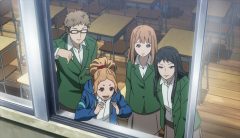
This episode sets the focus squarely on Suwa and his secret/ not-too-secret affection for Naho. Suwa is actually the one who always look after Naho, and he would do anything to make the girl safe and happy, even if it means he will eventually end up losing her. Normally I never buy that kind of love, simply because I believe if you truly love someone, you have to be a little selfish. You would want that special someone to yourself only. All that to say Suwa’s sadness is just so damn appealing that it’s hard to fault him for being too nice. Naho, on the other hand, takes his kindness for granted and she’s just too occupy about her feeling towards Kakeru to really notice everything around her. This episode gives her moment to really takes a step back and looks around, so that she could notice the efforts of everyone around her, Suwa especially, and moreover she has to acknowledge that. The two developments from Suwa and Naho come together nicely in the last scene, but I’m not entirely happy with its execution. There are 3 consecutive scenes where the show basically repeats the same message. In the first scene we have Kakeru asking Suwa if it’s alright for him to go watch fireworks alone with Naho, then the next scene the group teasing Suwa on the girl he likes, just so that the insensitive Hagita bluntly speaking out loud. The very next scene we have the girls confront Suwa again, asking him directly if he will help supporting Naho and Kakeru, in which he agrees. Those scenes are variation of the same things: Suwa has a felling for Naho and everyone but her notices that, but Suwa decides to steps down and being a supportive player. I get it but sometimes repeating the point too much and it lost its impacts. While I personally think the last scene is rewarding and effective, I also feel the story drags down too much in that middle part.

This week orange mentions time travel for the first time and honestly I don’t really care much about that. After all, the time travel element in the show is just the setup to progress the story, there’s no point to delve much into that. When the teacher goes for the technicality of time travel; about how it could produce alternative timelines, my mind wanders right back to Steins;Gates; which is very fitting because the director Hiroshi Hamasaki was the director of Stein;Gates. The topic of time travel was then explored nicely by the discussion between Suwa and Kakeru: “Would you go to the past or future if you could time travel”. It’s interesting to note that Kakeru really wants to go back to the past to fix his regrets, which is exactly what the future-self Naho has been doing. The conversation also hints at the insecurity of Kakeru, which further evident by his message towards Naho asking who she sent her chocolate for on Valentine Days. He hides his feeling well from his friends, but he is the one who always looks back to the past, feeling regrets with what he could do and refuses to look ahead to the future.

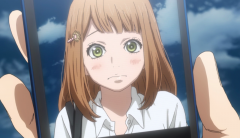
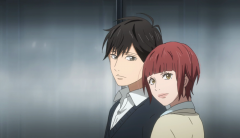
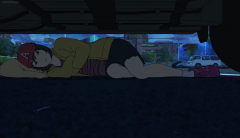
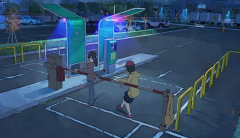
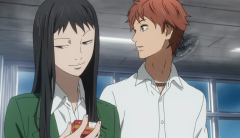
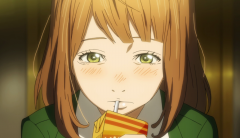
This episode still has an awful lot of still frame and the animation itself is a huge step down compare to the first three episodes. Let’s take a look at one of this week’s screenshot and you can see the quality of the animation was dropped to the point their faces are slightly deranged. While I can accept it last week as an illustration for Naho’s feeling hangover, there is no excuse this week and I start to think that this is more of a budget thing. Sadly, if it’s true then I have to come to terms with the animation quality. Overall, I think this is my least favorite of orange so far, both because the story could have been neater and more impactful, and the animation quality has decreased significantly. It’s not a disaster yet but I really hope the show can pick up itself from here.

~SuperMario~

Kizumonogatari Part 1: Tekketsu-hen (2016) Movie Review – 85/100

Just a quick note that I originally intended this week’s review to be about Miss Hokusai. But because of the DVD release of this Kizumonogatari (with good subtitle to boost), I decided to bump this up and review it instead. Monogatari series has been among one of my favorite series, and certainly the one that I spend time the most. Sorry Miss Hokusai but you will have to wait for few weeks later. When it comes to Monogatari series there’s simply no competition, okay? Now, let begin.

It’s always a tricky line when you are making a TV movie when you think about it, because you have to please both the fans of the series, along with new audiences who never see the series before. In other words, you have to make a movie that maintains the elements, tone and themes that make the series famous, at the same time the movie has to have something that can stand on its own. In that regards I always consider that The Adolescent of Utena is the best TV movie adaptation ever in anime. The way it reimages the plot of the original show, updating the settings, altering some plot points, and then goes completely bananas with its theme. Kizumonogatari has a bit of advantage, since it is also based from the light novel as a prequel to Bakemonogatari. The film was originally announced to be adapted right after the first series, back in 2010. Six years past, with the presence of many following seasons, there were doubts whether or not Shaft going to adapt it at all. Then comes the announcement of not one film, but a trilogy. This movie is just the first part of the trilogy, and clocking at exactly 1 hour, the film doesn’t hide the fact that it’s not self-contained, instead the film pleases itself of placing a groundwork for more events to come in latter parts.

Kizumonogatari part 1 nails many of the show’s distinctive features. Audiences who already love the series will find a lot to enjoy here. There are long, snappy dialogues, the distinctive but messy style of visual, the sharp impressionist art backgrounds, the insert screen texts, the ecchi undertone and of course the head-tilts. They’re all here. Its quick styles of visual prove to be too much for some, but never fail to impress (there’s a reason that my avatar is from Monogatari). The color palate changes according to the mood the characters are in or the topics they conceive. Monogatari is one of the few examples on how a great adaptation should be, in the sense that they don’t need to adapt it faithfully, but take the tone, the theme of its source material and turn the show into a very distinct visual feast (The Tatami Galaxy is another example). After all, light novels and visual anime shows are two different mediums, there is something that work well in one medium but will not work in another, hence taking an artistic liberty to the source is a very necessary task. Many characters that we come to know and love has returned for the film, or to put it more correctly, appear for the first time together. It’s actually very nice to see those characters before everything happen, when they are still insecure and naïve.

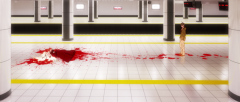
Yet, this movie sets itself apart from the series for so many reasons, or I should say, this movie is an update version from the series. While usually I don’t like the use of narration, Monogatari series is one of the best example on how to use the voice-over right. Because every character in the show has their own distinctive voices, using narration to understand the way they think, the worldview they possess feels deeply personal. Yet in the movie, the inner voice is stripped down and what we have instead is the external experience. The film shows what the characters experience through pure visual storytelling instead of relying on what the character’s inner thought. The first sequence of the film is the perfect example of this approach to create a sense a paranoia we feel along with our main character Araragi. We literally follow our main character’s every footstep, see what he sees, hear what he hears. In the sequence, Araragi wanders around an abandoned building. He’s shaking and terrified, completely out of place. It is a nightmarish situation in which Araragi couldn’t get out of and we sense his uneasiness. All this were achieved without any spoken dialogue.

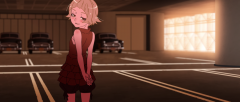
Moreover, if there is one element that truly stands out in the film, it is the sound designs. The film uses a more jazzy, popular melodic soundtrack that fits the scenes they play like a glove. My favorite piece of soundtrack happens when Hanekawa and Araragi meet up for the first time after the “incident”, the soundtrack goes Latino and sweet and upbeat, but later when Araragi encounters the vampire Kiss-Shot, the soundtrack goes dense and off-putting. The sound, or the lack thereof, complements the movie in so many way as well. I have to note that the sound designs, just like the visual presentation, are highly unconventional. The film use sounds like the tickling clock to represent the sexual tension of Araragi when he thinks back about Hanekawa’s underpants and big boobs, or use baby cries to substitute for the desperation of Kiss-shot when our main character refuse to help her, or the distorted sounds of people talking to illustrate the un-humanness Araragi is becoming. The more I think about those sound designs, the more I believe that the movie has outdone the series in so many level. The settings also get new designs: the old abandoned cram school, the high school and Araragi’s house have these new looks and it’s a joy to watch. As did with our characters. The characters have their own distinctive appearances and ask me which hairstyle fit Shinobu better, I would choose this one without hesitation. Unlike the series that I have mentioned earlier, the color palate in the film is dominated by the bright yellow and orange colors, which for me is very suitable, since Kiss-Shot has yellow hair (and she’s very important to this story), the yellow ray of the sun (which also very fitting with the theme) and most of all it makes the blood looks less terrified.

Story-wise, the film contains 3 parts: Araragi and Hanekawa meet for the first time; Araragi finds a limbless vampire Kiss-Shot on a verge of dying and decides to help her; Araragi on his mission to retrieve Kiss-Shot limbs in order to reverse back to human, with the help of Oshino Meme, a “negotiator”. Actually, for those of you who curious, the very first opening section of Bakemonogatari is basically a very quick overview of Kizumonogatari and contains the prequel’s most important scenes. Now I don’t encourage you to watch that to spoil yourself, but you might check it out to see the different in approach and design between that “preview” and the actual movie. That is for me what Kizumonogatari would look like if it were adapted 6 years ago. The second part of the film is easily the best part of the film, the way it mixes the natural world of the first part and the supernatural world of the last part, in addition with the visual and sound designs to create an eerie and quite disturbing atmosphere. Monogatari has tackled difficult and even depressing subjects before (the whole Sodachi’s acts), but this is the only time where they manage to put the viewers in and make sure us stay there with Araragi with an unflinching look.

So what’s to expect for the next two movies then? Oshino Meme mentioned that the whole thing now is too unbalanced that he can’t help but to step in; and he is the negotiator who bridges between here and there. Araragi thought that this is them (Araragi and Kiss-Shot – the Vampires) against human (the Vampire executors), but then Meme remarked again that Araragi and himself are human. If he can pick up something from that, he should have realized the reason Oshino Meme steps in is to help Araragi against Kiss-Shot. She’s hiding something and at this moment she just manipulates Araragi in order to get her full power back. Like the film states clearly in the beginning, “This story about a vampire has an unhappy ending – It concludes with everyone becoming miserable”. Don’t expect a joyous ending here, but that’s precisely the reason I look forward to the next movie.

Overall, Kizumonogatari part 1 is a worthy successor to the series, and a major step up in terms of production values and its visual storytelling, which is a feat itself consider that everyone have an extremely high expectation from it. Still, I have a hard time to score it alone as this one is clearly just a set up for more to come, but at least I could say that it succeeds in what it sets out to do. Lastly, to the question whether this movie would be a good place to start for newcomer. Well, I always prefer to go with the airing order, because they have been written that way (Kizumonogatari would be the third release in light novels). But I’d say the newcomer would welcome to watch this, because the movie both maintains many trademark elements from the series, and it’s chronically a beginning of its all. The only downside with this is you then have to wait for almost a year for the full trilogy to come out and it’s no fun waiting.

Next post, I will review one of my favorite film and personally the best animated film of this decade so fa… scratch that, this is one of the best film of this decade so far in any form, animated or not. Expect a high score here. Stay tune!

~SuperMario~
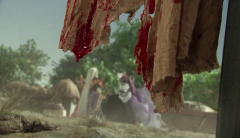
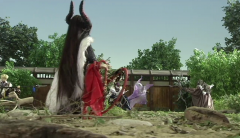
Thunderbolt Fantasy – 04

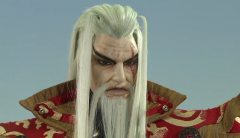
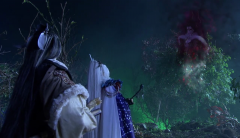
Wow, this episode is way better than I would have expected. Remember last week I mentioned that the demon girl might have a deep appreciation for Gui Niao (I called him Lin Xue Ya previously, but consider that he himself prefers to be called as an alias Gui Niao, I will stick with it from now on) and I expected the clash of light and dark arts between the two girls? Well, I couldn’t be more wrong this time, since the show went in a completely different fashion. Xing Hai hated his guts, because she felt manipulated by him in their last encounter. Many people suggest that it was a romantic tension but I don’t buy that at all. She quickly changes her mind though (way too quickly) after she heard about Tiang Xing Jian sword; and guess who’s the only one she gets along well? This is none other than Dan Fei. I really enjoy how the characters bound off each other, particularly the skeptical remarks from Juan Can Yun the spear wielder to the demon girl, and the venomous words from herself towards Gui Niao. Those arguments actually raise an interesting point about the very notion of hero/villain in the show. The two addition members this week (Xing Hai the demon lady and Sha Wu Sheng the Roaring Phoenix Killer) could very well be the ultimate villain in another series, yet here they will have to become “good” guys, joining up with the group to kill a villain. Gui Niao is another perfect example of this concept, we see him as cool and excellent strategic thinker, but we don’t know his motives in this quest at all. He mentioned that he is acquainted with the antagonist Mie Tian Hai so he feels responsible for stopping the guy, but he might as well just want to get control of the sword himself. Both Xing Hai and Sha We Sheng despised him to the point of hunting him down, plus the fact the he has little remorse when hearing about his master was killed because of him. I say this ambiguity makes his characters somewhat compelling and I can’t wait to see how far he plan ahead and what his true intention will be.

Another bit that goes against my expectation come from the second half. When we heard about the master who has a magic flute, plus the fact that he’s a skilled swordsman, we immediately think he could be a great addition for the group, using his wisdom as a voice of reason for the group to avoid any potential danger, right? WRONG. He was immediately killed off by the Roaring Phoenix Killer Sha Wu Sheng, who his purpose was simply to hunt down any connection to Gui Niao, in order to find him and kill him off. This development takes me completely off-guards, kudos to the writing of Gen Urobuchi. The Roaring Phoenix killer is by far the most skilled and deadliest character we encounter so far. Judged from him having the magic flute that the group desperately needed, I don’t know for sure what will happen in the next episode. Will the gang fight him to death to get the flute? Will Gui Niao negotiate with this guy so he would join the group? God knows. Finally, to the “most whimsical lines this week”, we have Xing Hai hesitating to enter the temple because the “smell” was too offensive. I guess being devil is not easy to get along, even if they really try to. If the show can keep up with those qualities that made it so refreshing: its elegant characters; its campy sense of humor and its stunning fights, I think Thunderbolt Fantasy is up there as one of the most entertaining show this season. The fun just about to begin and I really can’t wait for the next episode.

~SuperMario~

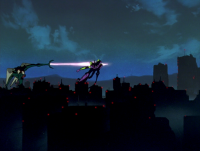
Neon Genesis Evangelion – 02

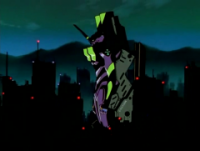
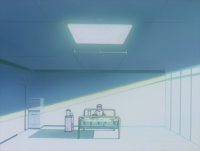
Turns out that our boy Shinji is after all THE ONE, akin to Neo in the Matrix or every main mecha hero for that matter. He has been chosen, he must therefore use such strength and heart and wits as he has. Sound like I’m complaining, right? Well, I’m not because I think this is a necessity for the series: you have to build the foundation first in order to deconstruct it. You have to establish all the genre tropes first before you crush them, move its parts apart and then assemble the parts again. Why do I think this series is a mecha deconstruction then? Because of the way this episode framed the story. It’s a bold choice to jump-cut from the climax of the battle to the next day where Shinji wakes up quietly in a hospital. The show deliberately hides the outcome of the battle till the end of episode to the point it had fooled me to believe that the battle was a failure, but in a larger sense, this is not unlike a failure. Nobody comes out as happy and excited as we normally expect from the winner side. Gendo, the one seems the most pleased with the outcome, was scolded by the committee for using the budget for his own personal gains (build a toy and let the son plays it); Misato voices her concerns out loud; the citizens in the city were afraid and planned to head out of the city; and certainly our Shinji was not happy about the result, NOT ONE BIT. The ceiling motifs in this episode is a nice touch of symbolism, because it sums up very well the disconnection between Shinji with the rest. Shinji just don’t feel the city as his home, as the place where he belongs. He just wants to be left alone and has nothing to do with the whole mess. There’s already some intrigue moments of the images of the Angels messing with his head, and I appreciate those moments both in terms of the symbolism it conveys, and the visual it possesses. The show really conveys a false sense of security well, indeed it feels more like they are more terrified with the potential of the Eva than satisfied with it. The Eva just literally went berserk and saved the day, but notice that Shinji at that time was unconscious and I do feel like Shinji just become the Eva at that point. Is it the trigger in order to activate the full potential of Eva? Well, I guess I just have to wait until later episodes to find out meself.

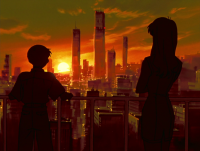
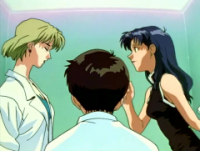
Now let’s talk a bit about the world-building of EVA. When Misato shows Shinji about the rising buildings, I think it summarizes the world of EVA the best. The city as a whole looks like a fortress (and as Misato points out, functions like one), this is basically a battlefield. The rising towers and buildings adjusts well with the theme the show establishes so far. Those building, just like our Shinji, hiding underground, waiting for the sun set to raise ahead. The committee also mentions about a certain project that is more important than defensing against Angels. What could be more important than protecting the world from aliens? For now, my guess is that they’re building another perfect city in order to get the hell out of here. Well, I feel like I have caught up too much with all the symbolisms of the show and I think some of my take here might go well off the mark, but really, aside from Utena and Monogatari series, no other show has ever given me that much imageries to chew on and I really appreciate that. All those aside, I really like the Misato’s apartment and the untidy trash, beer cans and takeaway junk foods everywhere really hint a lot about her character. To say that I still can’t put my fingers on what the hell the penguin doing in the episode?

~SuperMario~

orange – 04

Orange takes it very slowly this week, even slower than its standard. Indeed, we can summarize the plot of the first 15 minutes just by one sentence: After Kakeru dating with another girl, Naho feels brokenhearted and avoids Kakeru like a plague. Which actually makes sense. After all, the guy already had a girlfriend so if you are truly his best friend, it would be for their best interest just to avoid any close interaction like they used to, right? Except that both Naho and Kakeru feel very awkward with each other. Naho feels powerless that she can’t control the way she wants, so she bounds for another regret: What if she said to him face-to-face instead of sending letter? Or blaming her future-self for having it way too easy. Those feelings are genuine but it’s truly exhausted to follow her feeling. Ueda the new girlfriend sadly doesn’t shed enough light for her own character, and because we see Ueda through Naho’s and the group’s perspective, Ueda comes off more as a negative object (girlfriend who steal their best friend away) more than an actual person.

For the last few episodes, I always feel that the letters work more as a plot device. It is those letters that made Naho changing the future, but I like the fact that in this episode, it’s not those letters but the friends who actually encourage Naho to take action. Yes, this is a right step because, like she stated last couple episodes, those letters can’t change who she is, it is by the support of friends that she could make her effort. Furthermore, I can understand the change in attitude of Kakeru with Naho. Unlike their original timeline, the feeling of Kakeru towards Naho and his hesitant towards Ueda comes directly from her response “No” last week, because now he knows what she’s thinking. But still I can’t see how the friends know what she needs and support her this time, and not in the other timeline? Maybe because this time they sense that Naho is hiding something from them (the letters) so they can sense that she’s been depressed? Or the other way round? I don’t really see the link here.

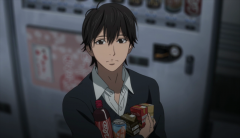
And to save the best for last, let’s talk about the stand out elements of this episode: the technical aspects. Except from the present day when the group visits his house after 10 years, the rest of the episode feels really off. Now, to be frank, this episode is doomed to be a disaster. After all, making an entire episode basically about love despair with no main action until the very end of episode is not ideal, to say the least. In addition, the restrain of the budget is shown visibly here: so many still frames; our characters in long shots look so shabby. Instead the show tries to be different. There are many out of place elements in this episode that constantly put us off: The CGI part of the vending machine; the mixing of dialogues with montages; the heavily use of frog motifs (which I’m not sure what for); random conversations from other people, and most jarring, the use of rock music in a supposedly sad and melancholic episode. This episode just basically screws over the consistency Orange had built in their first 3 episodes. It’s a risk move, of course; because most of the time I’ve been wonder if I watched the same show. I remember certain episode from “From the New World” run with that very same idea and went all out with their own styles. All this for the service of the climax scene, and boy, it works wonderfully. The confrontation between our lovebirds in the end really pays off what come before. I like the Orange now. Orange’s still going strong, but our Naho won’t and thus our hearts will burst into flames along with her.

~SuperMario~

Thunderbolt Fantasy – 03

With this episode we basically get an idea where the show will head for the rest of the series and I pretty much enjoy the direction they taking so far. Of course it makes sense that in order to get past those obstacles, the band needs to ally with others who are most suitable for the jobs, even if it happens to be a female demon who practiced necromancy, oops. Well I certainly don’t want anything to do with the demon in my group but I have an impression that she has been frightening people so that they would just leave her be herself. From what I see in the opening intro the other guy (I presume to be the guy who has that Soul magical blah blah blah Flute) looks even more peculiar. Lin Xue Ya proved again to be the mastermind who really plan everything ahead and it would be boring and cliche if he were the master sorcerer, so I hope the show avoids that. But he seems so confident to deal with the demon Xing Hai here, so I guessing Xing Hai has deep appreciation for him, just like Shou Yun Xiao the archer. I like the fact that this series acknowledges that not all demons are necessarily evil, which would add a little bit of context to our demon lady next episode. I also like the whimsical reverse-gender role of her “cutting off parts of 100 beautiful men to make a perfect living doll”, it’s just fantastic when you try to imagine her doing that.

The most interesting bit is of course the three obstacles the cast have to overcome. Well, setting up the Seven Sin Tower in the borderline of human and demon realms is a nice touch, because the show can dwell into dark magic and devil territories. I can see the clash of light and dark arts between the girl Dan Fei and the demon Xing Hai, and I hope they can explore that tension a bit in coming episodes. The three obstacles: The Village of the Dead, The Valley of the Doll, Labyrinth of Darkness; are not at all unique, instead we have encounter some of these before in other anime, but for this one I have high hope that Gen Urobuchi could make those materials interesting.

For a wuxia-action show, this episode in particular surely takes its time, as the first two-third of this episode was dominated by these characters talking to each other. But when the action kicks in, it sure looks wonderful and fun. I have said it before but there is certain charm of practical effects in puppetry that we can’t see in animation, like the body-exploding last episode. With this episode it was head-chopping. But the action is not even the highlights of this episode, it is the dialogues that maintain the campy sense that so entertaining to watch. There are many silly moments like when our main character Shang Bu Huan frustrated of the idea of him tagging along with the group, but get slightly annoyed when those characters proceed to introduce themselves and ignoring him (“Quit trying to move this conversation without me”); or when Dan Fei confronts him on the importance of protecting the legendary swords, instead our main character just ranting about the very idea of putting your own lives to protect the swords (which actually a very valid argument); or even the two most silly guys of the show Juan Can Yun and Shang Bu Huan talk about picking up girl and accuse each other of being pervert. Those moments create a weird chemistry between the cast but I hugely enjoy them that way. Like a puppetry show, these characters are just there to perform their larger-than-life roles, but they perform it so goddamn well that I have no complain whatsoever.

~SuperMario~

The Murder Case of Hana & Alice (2015) Movie Review – 85/100

Welcome to the third installment of World Animation section, but this time we head back to Japan for my favorite anime movie out of last year. If anything, I have always wanted those reviews to be a recommendation if you want to look for something different. So if there is anyone who would check out the films after reading those reviews, then I consider those posts a success. I know myself checking out a wide range of movies just because I read reviews that I enjoyed, so I hope I could offer the same here. Unlike those first two movies that I happened to watch in certain film screenings, from now on those movies that I review are available online or on streaming, so if you feel interested then by all mean go check it out yourself.

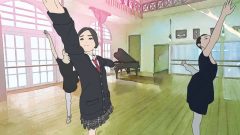
The Murder Case of Hana & Alice (or just simply The Case of Hana & Alice) is a prequel of a 2004 live-action movie Hana & Alice. The film divides into two separate parts, which contains even different sets of characters besides the titular Alice. We follow every steps of Alice as she familiars herself with the new environment in the first part; noticing the mysterious neighbor who spied on her (that would be Hana), being bullied in class for breaking the “curse seal”, having a chance to play ballet, meeting her father, participating in relay, and investigating a superstitious “murder case”. The second half we have her teaming up with Hana in an attempt to find whether the real victim was dead or alive, which leads to the many misadventures along the way.

If there is one thing that you immediately notice while watching this film is that the film looks and feels more like a live-action movie than anime. This is true in a sense since the director Shunji Iwai is famous for his live-action films and The Case of Hana & Alice was his first anime attempt. The shots compose is more of live-action sensibility than animation as well. Take for example the motifs of tracking the characters walking through the streets in a profile shot; while we have that kind of shot in anime, it’s usually used very quickly to show the characters talking to each other. Here in the film they use a good 10-20 seconds just to follow those characters literally just walking, either alone or together. The character designs, since they are modeled from real actresses, look more realistic than our usual anime designs. The color is always on bright scheme, with the mixture of real life building and pink/green-dominated background. It produces a more impressionist look and honestly I like the look of the movie. The music is easily one the best component out of this film, which composed by the director himself. It contains both piano score and violin score resembling a ballet score. If you close your eyes and just listen to the music, you can really feel the flow of the music and the mood it creates. It’s that good.

In addition, the decision to make this film an animated one was more of practical choice than artistic choice. The director wanted to use the same actresses from the original movie to display an even younger version of them, as a result he had to use rotoscoping to avoid ageing the actresses. To put it simply, rotoscoping is a process of filming live action footage (with real actors of course), then retrace it frame by frame by either re-drawn it or using computer software. Rotoscoping has been used before in anime, quite controversially even, in Flowers of Evil, to suggest an eerie and uncomfortable sense to our viewers, but in this case, the use of rotoscoping produces a very different outcome: a floating sense. That floating sense plays both as its strengths and as its shortcomings. On a plus side, this suits the most for ballet dancing, since you know, ballet dancing is already like floating across the floors. Many of the ballet sequences are easily the highlights of the movie, both visually and as a statement of how to use the technique right. On the negative side though, the weight of the characters always seems off, as a result we feel the characters “just floating” in many moments, most noticeably the first sequence where Alice falls off from her window and was “catch” by the worker, or later whenever Alice’s running. On other notes, the disparity between characters who were drawn from actual actors and those fictional characters is just jarring. The designs of the worker mentioned earlier or the triplets with bikes in the end felt really like they came from Tintin universe (with big-dot eyes and cartoon face) and to put it together with a much more realistic designs of the mains, you feel like you’re watching two different movies at the same time.

The biggest selling point of the film is, of course, the characters themselves and the dynamic between the two main girls. On that front, the film shines the brightest. This is the kind of characters I love to follow, not because they are the deepest, but because they’re full of identity. There are many vivid little moments that showcase this quality, as mundane and realistic as possible. From Alice punching the book written by her mother in a bookstore, to a moment where she found the last piece of snack, to the moment where the two girls practicing ballet out at night. Make no mistake, the staffs really love their characters and we feel that love throughout the movie. They are not your typical teenager high school protagonists, Alice is a girl that acts on impulse, she’s direct and doesn’t afraid to speak her mind; but she’s surprisingly down to earth and sincere as well or Hana is not your typically shut-in character, as she’s actually smart and quick-wit, and her guilt that she might be responsible for the death of her close friend makes her a more realized person than most other main characters we see in anime shows. Furthermore, they bound off each other very well, mostly because they have so different personalities, yet they can share the pain to each other. The other side characters, in general, provide enough charms and again, “personality” to make them stand out too: Alice’s mother is wise enough but often shown as childish, Mu is fantastic with her unique-but-nonsensical quirks.

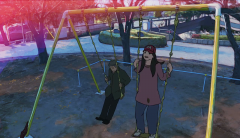
Another note that I find really interesting is that the whole film is decidedly female-centric cast, with the men only appear as either faraway (both Alice’s father and Yuda) or as weak and dependent (Alice’s father mentioned that he didn’t have a mindset to become a top runner, the bullying boy who reveals that he does it to save face, Yuda who is insecure about love and the idea of commitment). The only real male cast that was portrayed in different light is the old man. He’s representing the contrast between his old-self with the youthful, full-of-life of Alice. The sequence that speaks best to that idea, when Alice playing on the swing, stating how long it has been since her last play (2 years), the old man just sits quietly there in the next wing, his body feature looks no different than the old man in Ikuru, he told her that it has been 40 years since he played, because it was the time when his daughter was still in elementary school. This sad, melancholic tone mix in so well with the youthful of Alice. This is really the heart of The Murder Case of Hana and Alice- a film that celebrates the youthfulness, of how it’s like to feel young and enjoy the little moments of your life.

It’s criminal that The Murder Case of Hana & Alice slipped under the radar of most of anime fan. Surely it doesn’t look like your typical anime but I will say that there won’t be any anime like this in the near future. This is a rarity even among anime fandom. I haven’t watched the original live-action film, but surely after watching this I’m eager to check out the movie, just so that I can spend more time with those characters again.

Next post I will review the best written anime movie out of last year. And this time it might be the one you think it is. Stay tune!

~SuperMario~
Neon Genesis Evangelion – 01

Truth be told, I’ve never seen any of the EVA franchise, and it’s not normal since EVA is a must for any anime viewer. I don’t really know the reason why I keep myself from watching it, maybe both because mecha is not my favorite genre, and the hype of EVA is just overwhelming that I just don’t want to be any part of it. Asking any anime fan, especially from Western culture, “what series they think is the best” or “what is the first series they saw that got them into anime”, Neon Genesis Evangelion and Cowboy Bebop would likely to appear on people’s lips (I’m guilty of the second, with Cowboy Bebop). With that said, better be late than never. Since psgels himself never actually covered the original show or even rated it, I think this is a good opportunity for me to give EVA a retrospective review (not much of a retrospective really, since this show is new to me), at the same time give readers who already burnt out from new anime something they can chew on every week. Again, and I really stress it this time, I write this because I want to, but if you rather prefer me not to review shows in the past, all you need is shout out in the comment and we will take it into our consideration.

Now looking at this first episode, it struck me hard how desperate and pathetic team human is. The first episode wastes no time to show us the high stakes situation here with all the chaos and the ruined city caused by the Angels. The Angels, moreover, are overpowered beings with their own intelligence to boost. Our human’s ace card, N-2 mine – which mostly destroyed our own buildings and almost the whole city, couldn’t bring the Angel down. The whole situation got so desperate that they had to force a child, who never actual pilot anything before, to control Eva. It is also a bold choice to show us the very first image of Rei, when she was a TOTAL MESS.

Shinji and his father’s relationship is of course the real meat of this first episode. The way Shinji always looks for the recognition from his father, and the way Gendo uses his son with no emotional attachment whatsoever aren’t the most comfortable things to witness, to say the least. Calling him down so he had to pilot the damn thing when he’s clearly not ready, and then about to dismiss him when he back out? Ways to go Gendo! As far as I can see, this cold relationship hits directly to the insecurity of Shinji, and honestly his passive behaviors, while believable, could be a pain to watch later on.

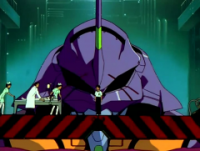
From the technical side, as far as the look and feel of EVA go, I’d say that I pretty enjoy it. The chaos settings and destruction motifs (falling buildings, bombing, even the destruction of characters themselves) really give you clear idea what this show is going for. The characters do not appear to be real or deep yet, but still are functional enough for this first episode. If there is one thing that doesn’t really translate well to me, it’s the character designs, they look kinda bland and exactly what you expect from the 90s anime show (in other words, dated). But well I’m never much of a fan of the 90s character designs (with only Cowboy Bebop for me still stood well after all this time, but even in that regards Faye’s big boobs turn me off every now and then). The visual looks great, there are many of shots that visually frame how Shinji struggling with the decision, especially the part where he stands in front of the Unit 01, his will-be partner, or more correctly, a part of himself in the future.

Alrighty, that’s it for now. I will try to get the second episode in couple of days so that we can catch this up with the new anime’s current week. Let us know what you think about the EVA series and if you still remember anything from the first episode. It must have been a long time since you guys last watched it, right?

~SuperMario~

Orange – 03

So this week we finally encounter a love rival. Of course with a romance drama show like Orange there had to be someone who would stand on their way right? Except there’s not much of a rival really since Naho never stands a chance against the new girl Ueda. As she learns hard and clear this week, some small incidents can be changed, Kakeru this time decided to join the football club, instead of quitting like last time; Naho had her chance to prepare lunch for him, something that her previous “timeline” couldn’t do. But those occurrences changed doesn’t mean that the core could be changed. Naho, with or without the support of the letters, could never bring herself to confess her love to Kakeru; and the fact the Kakeru will choose Ueda over her is something that will happen all over again, regardless of how many times she tries.

Immediately after watching this episode (yesterday), I quickly dismissed Kakeru’s closeness actions towards Naho in a beginning as a behavior of flirting; kind of like he opens himself more to Naho, a potential lover, until he sees a better opportunity from Ueda so he chooses Ueda instead. After all, no normal friend would expect other to cook lunch for them, you know. But today as I am somehow wiser than my own-yesterday self, I can see the reasons behind his actions towards Naho. Kakeru always looks at her as a female/mother figure, since he now lacks the real mother’s care. The way he suggests Naho to cook lunch for him, telling her that she behaving like a Mom, or tell her to alarm him at 5 in the morning, or even ask for her advice if he going to date Ueda; all these point towards his desire to have attention and to be taken care of by a female figure. All that to say there might not be any love interest towards Naho to begin with. Well we’ll know that for sure in future episodes.

As much as I enjoy Orange so far, I still have some concerns about Orange. Especially at the end of this episode where the adult cast read Kakeru’s letter, his comments on every member of the group feel strangely unconnected to me, since the majority of time we follow Kakeru – Naho relationship, the cast as a result don’t have any chance to develop. If I have to compare the cast of Orange with the cast of ReLife right now, ReLife has put much more attention to flesh out the cast. Except for Hiroto who is sensitive enough to know what’s going on and I love their natural interactions with each others, the rest of cast just simply too bland right now and I would expect much more from them in next episodes. All that said, three episodes in, Orange still maintains its slow but confident pacing and its very expressive, atmospheric art designs, and except for those teary eyes this last minutes, there is surprisingly less emotion outburst than I have expected. Keep it low like that Orange!

~SuperMario~
Thunderbolt Fantasy – 02

Sometimes there’s a show that so campy and fun that you just can’t help but enjoy watching it, and then sometimes there’s a show that completely takes you by surprise by how unique it is. Thunderbolt Fantasy offers both of these in a neat package and further showcases the richness of animation as a medium too. As a guy who always support diversity in animation, the show like this is all I could ask for. The fact that Thunderbolt Fantasy got made in the first place is nothing but astonishing, but for me the most fascinating fact is how on earth this show falls into anime radar in a first place, because this is surely not an anime show (I suspect it’s all because of Gen Urobuchi here). Damn, it is not even technically ANIMATION to begin with. Theoretically speaking, animation requires photographing successive drawings or positions of models to create an illusion of movement, whereas puppetry usually recorded live so there’s an actual movement in puppetry. Here’s an example to illustrate the difference: to make 1-minute of a stop motion animation, it could take hours even days for a shot-to-shot sequence, since there’s usually 15-24 frames per second and you can do the math. But for 1-minute of puppetry it would take just that- a minute of actual filming.

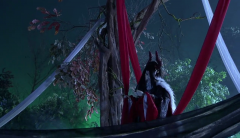
Now let’s get to the actual episode. This second episode offers a much slower pace than the first, with the main storyline here concerns our main character Shang Bu Huan chit-chatting with the helpless girl Dan Fei, and the mysterious Lin Xue Ya, he then gets ambushed by the bad Xuan Gui Zong clan, and escaped with the help of the brothers Juan Can Yun (kind of show-off comedic relief guy) and Shou Yun Xiao (the one-eye archer. Look, I’m trying to familiar myself with those names here). So far this is a very standard wuxia affair, with the plot so far ticks all the boxes of many wuxia’s conventions. The villains of this show so far are sadly bland and over the top. But what the show succeeds is how it still maintains the sense of exciting, the staffs clearly had fun while they were making this and we can feel it too, from the way each of character has their own mannerism, the practical effect (the feeling that you can sense the weight of blood dripping and body exploding (no sh!t) is refreshing), to the utterly ridiculous dialogue; all in the service of making this show as unique and entertainment as ever. This is, after all, a very different medium so I really treasure the experience that I can only find in puppetry. My only complaint from the technique itself is how the camera tends to keep too close to the characters. There are very few long shots in these first 2 episodes, mainly medium shots and lots of close up. That is understandable since the staff has to create all the models, set decorations by themselves; but sometimes the lack of establish shots confuse the hell out of me.

On last note, I have watched many wuxia shows before, but all of them are 30 plus episodes based on already established franchise materials, so I’m eager to see how Gen Urobuchi pull this off: an original wuxia that condensed into 12 episodes. Although Gen Urobuchi is not my favorite writer, I have to tip my hat off to him on this series. Without him, Thunderbolt Fantasy couldn’t exist. Without him, the Taiwanese puppetry will always be a mystery outside of its homeland. Damn, I haven’t even heard of them before this show. That fact alone is already something worth celebrating.

~SuperMario~