
My Life as a Courgette (2016) Movie Review – 82/100

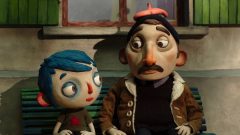
It’s never easy to make a good family’s animation. For movies aim at adults, the filmmakers can easily get themselves loose, go crazy and the audience can still get it. But for kids, these movies might be one of the first movies they’ve ever seen and that’s a huge responsibility. They have to aware of children’s mindset all the time so that they both maintain kid’s interest throughout its screening time and make them invested to the story. That’s a reason why usually a good family movie or show tends to be either inspirational, educational, or packs an emotional punch for viewers of all ages. My Life as a Courgette falls neatly under the latter category. The film is adapted from a French children novel and the screenplay was written by the talented Celine Sciamma (she directed handful of movies and all of them focus on teenage girls and their transitions to adulthood, in other words, my kind of films). Though not as dark as the book, it’s a story from a kid’s point of view that have a very adult concept and tough subject matter.

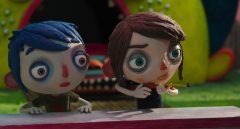
The film recounts a few months in the life of Courgette, a nine-year-old boy, who accidently kills his alcoholic mom, then finds himself in an orphanage. His real name is Icare, but he insists of calling himself Courgette since it’s one of the very few things that he has left from his mother. Indeed, when he steps into the orphanage, the only things he keeps in his suitcase are an empty beer can from his mother, and a kite he made by himself. He doesn’t remember much about his father either, since the father left the family long time ago to chase “chicks”. There in the orphanage, he, still feels responsible for the death of his mother, encounters other kids who – like him – had experienced rough childhoods. They include the self-appointed leader (and a bit of a bully) Simon, and later Camille arriving by court order, who witnessed her parent’s murder-suicide. Rosy, whose mother was sent back to Africa. Ahmed, whose father was arrested for robbing a convenience store. Alice, whose father was arrested too. There is also a kind-heart policeman Raymond who later would be Couragette father’s figure as well.

If you feel I give a bit too much of a synopsis here, this is because it’s essential to the theme of the story. The best thing about the film, I have to say, lies in its sensitive writing. Within the first 10 minutes, the film successfully establishes a solid ground of all the mishaps, all the sadness these children have been gone through. Those moments feel so real and hold so much power. Life is not fair in the first place, and those children did nothing to deserve it. They all end up here, without the care of no one really, and all they have are each other. Being said that, those sad, downbeat times are just a facet of life, and learning how to live with it is the main theme of the film. The later part of My Life as a Courgette comes to more light-heart, sincere territory, but by then we’re already swept by the sadness that the whole movie feels more like a bittersweet experience.

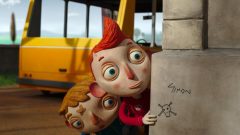
Upon making this feature, the director Claude Barras insisted that he took extra attention to the eyes of the characters, and it shows in the movie, as the characters have big, expressive eyes. In many of the touching moments, those eyes help conveying a lot of emotion and we really see the sadness behind those eyes. The character designs, with big head, multicolor hairs and very thin body, further make those characters easy to root for, and will definitely catch the interest of the children. It helps of course that the kids were well-written and speak like a normal 9-year-old would speak. The stop-motion for the most part is serviceable; they serve the story well but nothing to stand out and truthfully judging from technical aspect there is nothing to recommend either. Then again this film is a children movie so I guess it serves its purposes.

If there is one thing that I could criticize the film for, that is its conflicts resolve way too quickly. There are two main conflicts of the film. The first conflict comes from Simon bullying Courgette, both because of his name and because he’s new. The second comes from the group’s attempt to win back Camille from her aunt who intends to use the girl for government-aided. I really think more time spending to raise the stakes would benefit the film better, especially with its relatively short running time (66 minutes to be exact). Because of its brief running time, only Courragette and two more characters (Simon, Camille) have a chance to develop, and boy! They certainly grow a lot during their brief time staying together in the orphanage.

In the end, My Life as a Couragette is the kind of film that the kids can enjoy but there’s a level for adults to appreciate as well. The bittersweet moments are all well-earned, and this is a feat to tell a sad, dark story without being too cynical or depressing. The film actually suggests the opposite, that unfortunate things happen everywhere, but learning to bounce back and stand up from those mishaps is something worth treasuring for.

Next post I will review my personal favorite anime feature film that came out last year in 2015, and it is NOT the one(s) you think it is. Stay tune!

~SuperMario~
Orange – 02

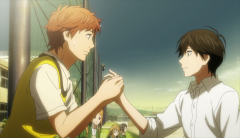
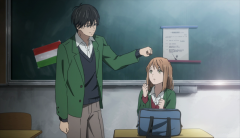
Let me say up front that I am not fond with either romance or melodrama. We usually mistaken romance for love but whenever I think about love I’d think of commitment. Melodrama don’t do well to me either as I always feel forced, like most of the time when the show goes big, emotional scenes, it often implies us what to feel and I feel manipulated instead. Orange, unfortunately go straight to these directions which naturally would put me away for good, but there’s something that keeps me hanging here, and that is the sense of regret. While I said before that I can feel for Naho’s behaviors and the way her shyness keeps her from doing what she should do that lead to her regrets later on, I can’t deny that Naho is NOT a well written character. It got even worse in this episode that she ends up as plain and unremarkable. And I don’t mean her introvert and shyness actions; yes, usually the main protagonist needs to actively carry the story but that’s not a point here; I mean that she’s so average that there’s nothing that makes her stand out. And that’s a problem. We see the story through her eyes, and if she’s unremarkable then it’s hard for us to identify with her. The rest of the cast, while they are natural with each other, still need more development to become full-fledge characters.

Regret is one of the big theme of this show, and it comes straight from the regrets of older Naho towards what she could do in the past for Kakeru and that feeling holds so much weight. The one thing that I really like from the premise of Orange is that this is the younger version of Naho who has to deal with it. Naho the 16-year-old is still immature, she’s still and will make lot of mistakes in her life and as one scene of the show nicely puts it, those letters tell her what to do to avoid regrets do not mean it will change her personality. She’s Naho and she will always be Naho. At least for those first 2 episodes she manages to do what her previous self didn’t have guts to do: to hit the final ball and to make Kaheru a proper lunch. All the details so far strongly foreshadow that Kaheru is going to die in a year’s time, even if Naho tries her best to prevent it. But it’s the actions that count. At least she tries and it’s the time that the group enjoying together that will be their most treasure moments, and that holds no more regret. There’s a real potential if the show ends like this.

Then again, it’s never a good sign that we can see how it would end up just after 2 episodes. This would be predictable and I really expect Orange would do something different to surprise us, or if they go that route they have to be very well executed. There are still more rooms for character’s development and I want to see more from Naho herself. Kakeru’s revelation about his mother committing suicide; for example, is a step in the right direction, because the detail gives us more light to Kakeru’s personality: the way he hides his emotions away and the way he yearns for a female figure. This is where Orange really shines and I expect more of this in coming episodes.

And I still hope they’d tone down the melodrama later on.

~SuperMario~

The Red Turtle Review – 93.5/100

Welcome to my first movie review on World Animation section, the column where I wholly dedicated to indie/ art-house animated features around the world that hardly got coverage anywhere really. And what’s a better way to start this section by reviewing one of the most talked about animation movie this year, the one that I believe will continue to gain more devoted fans for years to come. The one that debuted back in Cannes this year with rave responses. Yes, let’s get to The Red Turtle today.

The Red Turtle is a brainchild of the director Michael Dudok de Witt and Studio Ghibli. If you never heard about the director, he’s an auteur animator who directed award-winning shorts Father and Daughter, the short was so acclaimed that many big animation studios approached him to direct their blockbuster movies, all of which he declined. Then one day he received a letter from Ghibli Studio stated that they thought his shorts looked very Japanese and they wanted to make a film with him. If you think the involvement of Ghibli could make this movie a more anime influences, you got yourself in a bind there, because this is unmistakably a Dudok de Witt film with more of European arthouse sensibility, with the slow and deliberate but confident pacing, and the film is more about sense and experience and many details are more open to interpretation than offer any precise meaning.

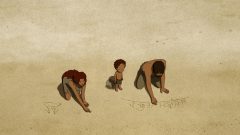
Looking from the outset, the film sounds like a really challenging work. This is a dialogue-free film about a man who washed away to a deserted island. He tries every opportunity to escape from the island, but always get disrupted by the giant red turtle. Then the man and the turtle form a closer relationship to each other and ultimately the man finds a way to adapt to his new life. And that was just the first 15 minutes of the film. For a full length feature film with no actual dialogue, it’s a feat that the movie maintains the attention to the very end. Indeed, trying to explain the plot of a film, or trying to recapture it in words, is already a disservice to the film. The Red Turtle is a film in its purest form, a visual storytelling that will lost its impact if it gets portrayed in any other forms.

Apparently, Dudok de Witt initially planned to have a main character to speak to himself, like what Tom Hank character did in Cast Away, but then he scrapped the idea since he felt that the dialogue (monologue?) was too unnatural. But without dialogue doesn’t mean this is a silent movie. The sound of the movie, that include both natural sound and the score, is one of its greatest achievement. The sound helps assist us to follow every steps the main character takes, really put us in his shoes as we follow him around. Those sounds create a whole surrounding very detail too, close your eyes and you can hear the wind breezes, the waves of the ocean, the steps of the man and those animals at the same time. The score is equally impressive, at most times it’s slow and tender, but other times thrilling and exciting (like the very first scene or during the flood sequence). Visually, Dudok De Witt implies a very plain character designs against a natural but well-detailed and rich world the main characters inhibit. The background is expressive, with too much details was put on it. From the bush trees, the little crabs who seems to follow the waves, the baby turtles go around the bench, all these really create an atmosphere to the island. The animation and the shot selections are all top-class, which holds much of our attention throughout its 80-minutes length.

The film maybe about a man who float in an island, but the plot never feels plotless. Everything happens contribute to the main themes, which are the connection between human and nature and the passage of time. The film chronicles the man who struggles to find a place in a nature that clearly not for him, to him having a family and has something to hold on to. As the man got older and wiser, he himself realizes he’s just a small part of the world, like every plant, animals around him. His passed away in the end is just as well a part of that cycle of life.

It’s rare today that can give a work that are original, mature and ambitious as The Red Turtle, especially against the backdrop of the dominance of computer animation in feature-length movies for the last 20 years. The Red Turtle, with its simple hand-drawn techniques, already feels like a timeless production, and the film is even more significant given the fact that this is co-produced by the beloved Ghibli, now on its semi-hiatus phase. While this film bears little resemblance to Ghibli’s original outputs, this is clearly a production of both the director Dudok De Witt and Ghibli; in a sense that The Red Turtle would not exist without those two. With so much efforts were put on this picture, it’s the more astonishing to realize that the film had achieved something so difficult to attain: simplicity.

Next post in this column I will review the film that just won the Annecy Festival this year. Stay tune!

~SuperMario~

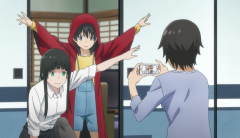
Flying witch Review – 86/100

As I mentioned in one of my weekly posts, most of the reason why a slice-of-life anime show don’t work well is not because there’s nothing happen, but more because the cast isn’t interesting enough or the show tends to repeat the things that we already know. I’m happy to say that this is not the case for Flying witch. Flying witch has all the elements good slice-of-life shows have and moreover it presents itself as one of the finest in the genre in years. The slow and deliberate pacing and the strong sense of atmosphere maybe the whole reason why people keep coming back to watch it.

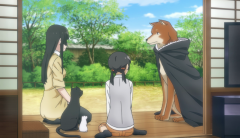
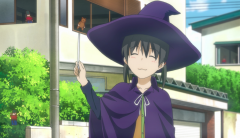
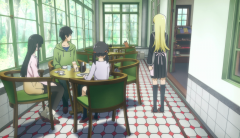
Story-wise, the show focuses on two main themes: the first theme is how Makoto the witch learns and lives her rural country lives. There are segments that as mundane as possible: Makoto learns to plant, the cast cooks hamburger, they go for herb-picking or thinning the apple trees. But the details they put in both show how they really care about the process, and help maintaining the relaxing atmosphere till the end. In Flying witch world, time will pass and people may get old, but growing plant, eating hot cakes and wandering around might be the best ways to spend your day. The second theme is to produce a mix of magical realism in this everyday life. By introducing new characters: The Harbinger, another witch, the witchcraft, the witch café or at the end the flying whale and Earthfish, the show showcases a sense of wonder, a touch of magic that feels almost like, well, actual magic. It helps that the introduced characters are endearing and have a very easy chemistry, they are both display on how each of us is different and have different purpose from each other, but ultimately we are all part of mother nature.

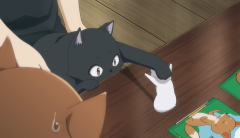
Aside from the atmosphere, the cast is easily one of the highlights of the show. Rarely in anime that I see a cast who feel really natural and thus, true to life like our friends around us. Chinatsu, for example, acts exactly like how 12-year-old girl would act. Her ever curiosity, her excited over whenever she encounters new things, are so natural and exactly herself. Chito the cat acts like any normal cat would, and then some. Indeed, one of the greatest strength of the show is how everyone in the cast are so consistent, yet each episode we could learn something new about them. Like we only learn that Nao is so clueless in kitchen on the last half of the show, or until the second encounter that we learn Anzu is really knowledgeable about history. Each of the cast also fits in the shows perfectly and it has been so long that I found myself enjoying so many characters like this one. Moreover, the chemistry between the cast is what makes this show shines so much. I always enjoy little moments shared between some of their cast: like back-and-forth conversations between Chinatsu and Inukai, or Nao and Chito the cat, or Anzu and Kenny the white cat. The chemistry between the siblings: from Kei and Chinatsu, to Makoto and Akame is also well-spot, they’re siblings and their personalities are so different, but they understand each other and I can feel the warm feeling they have for each other. All these little moments help build up the chemistry and make the show so rewarding to watch over and over again.

But the show not only shine for its laid back atmosphere, Flying witch is also known for its understated details. It furthers showcase how the staffs put so much effort to this show so that it feels almost effortless. Those little details that we can easily miss the first time we watched, like Makoto put her broom in “vehicle parking” section in one episode, or how the hamster shakes himself uncontrollably every time he finds himself near Chito the cat. Those details could indeed be very rewarding on repeated viewing. While the show is much more an atmospheric spectrum than comedy side, this show also has very solid understated comedy and always has a very good sense of putting a final punch. The quick remark from Chinatsu about her Mom for example “I heard that old people aren’t easily surprised” is both very whimsical and modest. The punch where Akame giving Chinatsu and Makoto her presents had to be one of my favorite part of the show.

Indeed, because of its relax tempo and slow pacing, it is destined for a lazy Sunday afternoon watch (which was exactly the time it’s available here in Australia), that’s feel true as in many of the episodes -for some characters – all they do is taking a nap. Ultimately, Flying witch is a celebration of the joy of everyday life, with a little touch of magic to create a sense of wonder that life and nature could bring to us.

~SuperMario~
Flying witch – 11-12 (end)

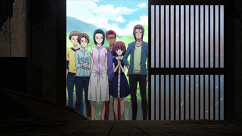
Flying witch gives us double doses of last episodes and I’m very happy with the way the show concludes within these last two episodes. All members of the cast were presented, and scenes involving the Flying Whale and Earthfish are the show’s most magical moments. This show has always been very consistency in its tone and atmosphere, but I would never expect that a show like this would have a nice closure sequence, and Flying witch actually pulls it off.

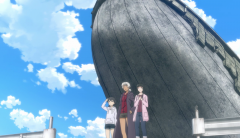
I would say the first segment of episode is Flying witch as its most magical and most awe-aspiring. It’s a treat to see Anzu appears in a whole episode, and the show wasted no time to highlight another side of her outside of the café setting. Turns out she’s a would be archaeologist and she’s super knowledgeable. I love how Chinatsu keeps asking everyone the most random questions she could think of, and surprisingly Anzu handles them very well. Her speech on the different between pancake and hotcake is whimsical and just plain nice to here. Talking about whimsical, I love Anzu’s close relationship with Kenny the white cat, and that the cat had been studied anthropology as a hobby. What an understated comedy here. All the cast delivers a very easy-going and laid back chemistry here. In terms of visual, the part where the cast goes to see flying whale, and ends up anticipates it in a completely opposite direction (talking about Makoto’s lack of sense of direction), to the part where they are on top of the whale- the visual are bright and just full of wonder, exactly like how it feels to get into the car and drive and just enjoy the scenery. At last, the show always has a solid punchline and this episode is another great entry, as it turns out the letter Anzu’s mom send to Akame is the bill that she has yet to paid.

In the last episode we follow Makoto as she goes out to the fabric store to buy stuffs for her robe, and on her way she happens to encounter many of our cast. This is Flying witch at its most mundane, but this is no mean a bad one. Instead following her stumbles around, deciding on which colors to take, and finally made a full robe all by herself is rewarding enough. The chemistry between each character with each other again is natural and laid back, and I really like the way the show portrays the chemistry between Akame and Makoto, as well as Kei and Chinatsu. They’re siblings and their personalities are so different, but they understand each other and I can feel the warm feeling they have for each other. The Earthfish in the last segment is a joy to watch, and actually if you pay more attention, those earthfishes have been foreshadowing in the first half of this episode. Well, the way those fishes just like to have fun, drinking alcohols, got drunk and flashing around are for me the most enjoyable moments in Flying witch, this and a sense of closure feeling as Makoto looks back to her stay, and as we know that this is the end of this amazing show, make the whole last segment a bittersweet experience.

Well, not that I’m complaining since the show had always been a joy to watch. I stand for what I said in the first episode that this is one of the best slice of life series we have in quite a long time. There will be anime shows come and go every seasons. There will be of course more shows that offer more thrilling and colorful characters than Flying witch, but nothing can beat Flying witch for what it does best. In Flying witch’s world, growing plant, eating hotcakes and wandering around might be the best ways to spend your day.

~SuperMario~
Bungou Stray Dogs Review – 62/100

Well, we don’t usually give a review on the first cour of anime show, given the fact that the second part will air next autumn season. But since I’m not certain I would cover its second half, plus I don’t think this series will improve itself, I might as well give Bungou Stray Dogs a proper review now.

Bungou Straw Dogs is an action show that follows a story of Atsushi, an abandoned boy who can transform into a tiger unconsciously. He got rescued and later recruited by the Armed Detective Agency, which contains a bunch other gifted characters. But things become more complicated as the Port Mafia – the local mafia – also want to take their hands on Atsushi and towards the end of the series, somehow the Guild – the North American counterpart for gifted people – involves to capture Atsushi as well. The show follows this main storyline, at the same time introduces each and every one of the Agency.

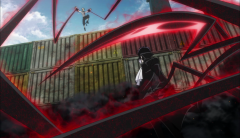
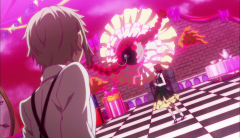
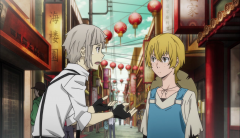
As far as action show goes, in term of production, the show has a lot to recommend on. The art designs, in highlights, feel like an essential component of Bungou Stray Dogs. This show has always put extra effort to create a strong personality for its settings. From under the bridge scene right at the beginning, to the abandoned hospital, to the various sights of the city, all are well-drawn and have an atmosphere of their owns. The last episode set-piece in closed space dimensional, in particular, showcase the art designs at its best as it has a very distinctive feel of dreamy and creepy, like a nightmarish version of Alice in Wonderland. The show goes for more of impressionist visual style, and I would say what they achieve here is impressive. The staffs show us that they have a great flair of shot compositions. This is one of a few anime series that whenever I freeze frame the screen, I can still find great shots for my screensaver. The impressionist visual also means that the color palette changes depend on the mood of the scene, but the show favors the use of strong color in its more ordinary scene: dark red, green, resembles many of classical paintings. The music of the show has always been very consistent, and sometimes it did take a little risk. In a bombing sequence for example, the score goes to unsettling and nausea approach, which in turns very fitting to the chaos and the nausea of the confusing crowd.

But in Bungou Stray Dogs, we don’t only have action. There are also some twists/ flavors mixed in with its action, and the results vary in many degrees. The first ingredient is to make the characters based on real life authors. This adds a little quirk to the characters, which is actually fun to watch, especially if you know the authors they are referencing to. Talking about characters, the cast in the show does have their own voices. Like the cast in shows like Baccano or Cowboy Bebop or directly from Tarantino’s movies, they never feel like a real person, but they’re damn fun to watch nevertheless. I have to point out Dazai and the girl Hyouka as the show’s stand out characters, the way Dazai’s charm his way out (even about suicide) and Hyouka tragic but grounded circumstances. Other characters are vastly over the top and when given a spotlight, they developed quite well but most of the times the cast is unfortunately bland and one dimensional. See, this is a fundamental problem of Bungou Stray Dogs, because the cast is so exaggerated and over the top, leaving them on their own could potentially affects the main storyline. As a result, in order to keep the story going the way the show wants it, the cast has to be as one-dimensional as possible and sometimes as inconsistent as ever. For instance, it’s nice to learn the truth behind Ranpo’s gift or Kanji acts up once in a while, but for the majority of time we will have to see the childish, selfish side of Ranpo or the happy-go-lucky Kanji. Bungou Stray Dogs, you need to constantly shed new lights to your characters, because if you don’t care fleshing out your characters then we won’t feel it either.

The inconsistency of the characters further highlights this issue and most of the times it feels like the characters act certain way just because the show wants them to. Like for example in the first few episodes it was established that the Agency is like a big family; but then Dazai got captured for several episodes and no one seems to care. I believe this supposed to show how Dazai is always ahead of everyone and he can take care of his own, but it feels truly bizarre that after all the trouble he went through, the next episode we have him sitting in a chair like nothing ever happened, and the cast treats him like he was never been captured before. There are also many times that the character Kunikida has a huge leap of personality, like in one episode when the Agency was informed that Atsushi has been abducted, Kunikida was totally oblivious to the news and kept babbling about the Agency’s current “important” ministry job. In the end of the episode, however, we have him rushing out to rescue Atsushi like it’s the most obvious thing in the world and it makes me feel dumped.

The second mix of ingredient is the mix of detective cases in several middle episodes of the show. Those cases are simple enough and they were presented to mostly showcase the cast’s members. But many cases are just plain, with our Detective solve it way too rushed with information we never even heard before (like the fishing tackle store, which if it blows up it could bring down all the big building nearby. How are we supposed to know it? Well, never mind!). Usually the new players introduced will have something to do with the case, and then when they finish their purpose they will get tossed out and we will never hear from them again. This is a minor complain but the number of innocent people who got killed off are jarring to me. I guess this is just me as I think the show doesn’t care much about this issue, but killing people just for the sake of raising stakes is a terrible writing.

All to say, in terms of production and character designs, there is a lot to recommended but writing-wise, the show needs a lot to improve on. As for the score, for me 60 is the line between exceptional and mediocre shows, and Bungou Stray Dogs is a slightly (very slightly!) above average show. This first half set itself up to be a three-way war between the Agency, the Port Mafia and the Guild. I’m interested to see how they handle the war and also curious to see the Guild counterparts and their gifts. Here’s hoping for the second half can deliver what this first half has been promised.

~SuperMario~
Bungou Stray Dogs – 12 (end)

And we get to the end of Bungou Stray Dogs, but this last episode doesn’t offer any conclusive ending, instead feel more like a set up episode for the next season. This last episode functions like a typically Bungou Stray Dogs’ episode; there are many good things to say about it, mainly the technical triumphs and the great character designs, but the writing and the new characters are mixed bags.

Let’s get to the good side first. As far as action show goes, Bungou Stray Dogs is at its top form this week. There are new set of enemies introduced, promising a three ways battle between the Armed Detective Agency, the Port Mafia and the Guild (the North American organization of the gifted) in a second season. Thus the main set piece this week happens in the imaginary closed space of Lucy (resembled of L.M Montgomery – the author of Anne of Green Gables) named Anne’s Chamber. I have mentioned that the show always had a very good grip on creating a memorable set pieces that really feel like it breathes by itself, this time in particular the close spaced is just wonderful. It’s so stylish and awe-aspiring, while at the same time dreamy and creepy. The fighting sequence is exciting, with the cat-and-mouse chase that are thrilling from start to finish. Atsushi again proved himself this week that he is capable of fighting for himself, and I can forgive him for wanting to run away calling for help because that’s just who he was. Thankfully he got pulled back by the physician, who soon revealed to be the Port Mafia’s boss. He is one of the more interesting character out of this show, both very mysterious and smart and tricky, and he’s just like Dagai who seems to be one step ahead of everyone else.

The other new characters presented this week, however, are just bland. I’m a bit disappointed that Fitzgerald turns out to be over the top archetypical American villain, the one who thinks money can buy everything and proud himself for that. I originally think he’s one of the tough one to beat but judge from the facts that he’s super one-dimensional, and he got killed off rather easily in the end, all that made me wonder what’s exactly his role in the show. Lucy is also a very one-note character, who appears mostly as a mad, sick little girl who just want to have fun. A bit about her insecurity among the Guild is a nice little touch but other time she functions like a typical villain. Dagai again back to the office and seems like nothing happen further emphasized my complains on the inconsistency of the show.

Looking ahead, I honestly have no idea how they could handle the mega-battles between the Armed Detective Agency, Port Mafia and the Guild. There seems to be a lot more Guild members with more unique skills to fight against next season, but it seems to me that Mori (the Port Mafia leader) is the ultimate boss. I’m a bit keen to check out the second cour just to see how they handle all that, but I’m not sure about covering its second cour, since I don’t think the show will get any better than what it is now.

~SuperMario~
Mayoiga Review – 78/100

Mayoiga has to be one of the most misunderstood shows in recent years.

On a surface, the premise alone has a lot of potential. The idea behind putting 30 people, each of them has very different set of personalities, together in a bus to a mysterious lost village, in order to start over new life is an intriguing concept, because there could be lots of angles to explore, even within its mystery/horror fare. The show could use the setting to explore the internal conflicts between the cast, or the nature of those monsters that drive anyone insane or even dig deep to the mystery behind Mayoiga, or the show can go full cannibalism that was suggested many times in the first episode.

Instead Mayoiga goes off track very early and never looks back and the overall execution certainly stands out, in a very-bad-it’s-good way

Billed as a mystery show, Mayoiga contains many elements that feel like a recipe for disaster: over the top characters, awkward pacing, long and meaningless conversations. In the first 10 minutes of the show for example, literally EVERYONE in the cast got introduced (and that 20 plus characters to remember). The characters have a distinct and overall solid character designs; but most of them are way too over the top to feel like real people. Mitsumune, our main character, for instance, feel really bland and his only traits are unsure about himself and his affection towards Masaki. The conversation drags on, don’t really advance the plot or flesh out the characters. Worst of all, the pacing sucks, sometimes it drags for too long before moves too quickly, for example in the first half of the show, there are few episodes where nothing important happens except the cast arguing. The cast themselves uses their time wisely to talk about how to call rock, paper, scissor the most correct way, arguing over the name of one of the cast who just vanished, or lying asleep in the end without the care of anything else.  The cliffhangers, were presented in almost the end of every episode, just so that the stake returns back to normal in a very next moment.

Thematically, Mayoiga actually has its meaning underlying under the surface. The monsters are revealed to be Nanaki, which are part of each individual’s past psychological trauma, come to life. They are a symbol of all those ugly things that the cast left behind to start over their new life. They are not, as the series progresses, intend to harm the cast, but are a part inside each character, and the show made a point (as in your face as possible) that all of them need to face their own Nanaki (their traumatic past) in order to become a better person. The Nanaki monsters, represented in 3D animation, are both out of place and uneasiness at the same time, which actually fits to the theme very well.  But I have to say, reading this underlying message is a bit too much, as the series itself never attempt to dig deeper into its theme.

Which brings me to the next point, many of the above elements actually WORKED in favors of the show. One thing that Mayoiga truly excels, the one thing that Mayoiga will likely be remembered for years to come, is its ridiculousness. All the ridicuolous, awkward bits are intentional, majority of them are so well-aware that it becomes hilarious. Many of the Nanaki monsters, for instance, are just plain silly in concept, such as a big silicon boob monster (yeah! You read it right!), or a girl seeing a giant Mitsumune because he happens to look like her ex-boyfriend, so instead of seeing her ex she would see Mitsumune who she just met for 2 days. See the absurd sense of logic here? Indeed, most of the cast embrace that ridiculous sense of logic wholeheartedly that it’s actually refreshing to see them keep betraying our expectation. Lovepon would be nothing if not for her “execution” speech, and after a while it’s just feel so welcome to see her running for her life from the monster, still remain in character “We going to be executed!!”. The Driver and his bus also keep appear/ vanish without any explaination is also a good running gag. Other characters, like Mitsumune, Hayato, Koharun, Nanko, actually the whole cast also embrace their one-note traits to a bitter end, put it up to the max that they become so gimmick and fun to watch. The conversations, as I mentioned above, drag on and on; but there is a lot to enjoy there, mainly for their unique train of thoughts and the ridiculous topics they could come up to.

Like I mentioned in my review posts, Mayoiga is a masterclass of using anti-climax not only to twist our expectation out of the usual conventions, but also to reduce any tension whatsoever. Take the revealing about the nature of Nanaki for examples, in a sequence where 4 members of our group witness their own Nanaki, they seem defeated, had nowhere to run but somehow, all of them managed to escape from it, without any injury. In other scene we witness the group decided to tied Masaki up and attempted to stab her, just so that she got ambushed by the bus driver, who drove her away just to beg her to allow him to meet his daughter again. The extensive use of anti-climax might seem uneven, absurd and even laughable at first, but actually these are all intentional so that the show can screw you out of any conventional sense.

But self-aware or not, Mayoiga can’t hide a fact that, in a nutshell, this show is an incoherent mess. In fact, inconsistency is the only consistent trait the show has. Mayoiga always feels like a product of too many minds, too many ideas that crammed all together, that contributes to too many half-baked ideas, and the pacing is all over the place. This seems understandable though, as in the process of making Mayoiga, the director Tsutomu Mizushima (Girls un Panzer, Shirobako, Prison School) encouraged the team to come up with ideas, and Mari Okada responsible for putting everything together. On that note I have to say the ending is surprisingly conclusive. Yes we would never know what happen to the people before the cast arrived, or how the majority of the cast meet their Nanaki (they JUMPED straight from those guys sleeping to they being back to the bus), but all the main questions are addressed and I actually feel kind of satisfied with the ending. This is a show with lots of obvious flaws, but it is also a show that unlike most of our usual anime fare. I have a great time with Mayoiga and ’m happy that I got the chance to cover it.

~SuperMario~
Mayoiga – 12 (end)

Mayoiga pretty much wraps up its story this week and for the series that focus much about anti-climaxes and inconsistency, this ending neatly conclude all of its main loose end. In the final twist of Mayoiga, it turns out that Koharun is God’s daughter (now I understand the inclusion of him in Mayoiga) and all she does was to prevent a Nanaki from fading so she could take her father’s Nanaki back. Sounds vague, right? But this is Mayoiga we talking about so I have no complain. The thing I notice in this last episode was the main confrontations this week: from Mistsumune and Hayato, Koharun and her father, to Masaki and Reiji; are not at all feel ridiculous but are quite emotionally effective. This result for me not come from the writing, but comes from the director who knows how to make a shot that bring out the most effective drama.

But also true to Mayoiga, the amount of ridiculous and (un)intentionally hilarious moments are still all over the place. Lovepon again proves that she’s one of the most consistent character in the show, with her remark “We’re going to be executed” while being chased by Hayato’s Nanaki. I also enjoy the way Dahara keeps betraying himself, telling people that he’ll stay one moment, then completely change to go back like nothing happen. Or the fact that Yotsun appeared in God’s house at the end credit, where previously he was stuck in the bus in the Lost Village, but then, Who Cares? Or many out of nowhere but equally hilarious punchlines “so her dark past was a boy” / “Guess I‘ll call off the engagement when I get back to reality” – “So you coming back?”/ “Koharun is a villain” that really explain why Mayoiga is one of a kind anime series out there. I also love the fact that after going through all kinds of Nanaki troubles, personal conflicts, all the cast reflect were people having the same painful experiences, so we might be not that unlucky to begin with. I’m still amazed with the train of thought this group has. Moreover, the decision to split, majority of them leave, some of them stay, was natural for me but seems so random as well.

So in the end, as far as the last episode goes, I’m happy to say that Mayoiga succeed. The episode tied up all the narrative loose end here, while still maintaining its own silly beat. All the things that shouldn’t work in other anime: namely the over the top characters, awkward conversations, silly themes and most of all ridiculous situations; all worked here. I won’t go as far as saying the whole thing is a success, because damn sometimes I still can’t put my finger on whether all the silly incidents are intentional or not; but it is really a feast to witness a series that offer something so different than the rest of your typical anime out there.

~SuperMario~
Bungou Stray Dogs – 11

Bungou Stray Dogs strays to another side stories this week, it’s pretty much set up for the second cour, and in that aspect this week is a success one, both gives us a new light to existing characters and makes quite a bit of impression on our new characters. I kind of appreciate how the series spends its first half on a very unusual lead: Higuchi and her insecurities both in her relationship to Akutagawa, but also her place in the Port Mafia. I mean this is Bungou Stray Dogs so I don’t really expect it to spend time focus on minor characters, yet it did. I’ve mentioned before that Higuchi in her last appearance was not well-written character, she seems more like a plot device last time who being there to trapped our main characters and waited for Akuwataga to come. But in this first half she comes off as a character who has her own worries and her own voice. Yes, being insecure is nothing special, and her heroic act is rather stupid more than inspiring, and I have my doubt that she’ll be important in the future; but for once I’m glad at the effort the show makes to flesh out our minor character. Bonus point for shedding new dimension to the Black Lizards members, who appear to be more sensible and dare I say, heart; than our own Detective Agency.

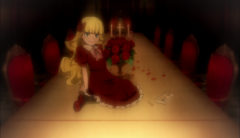
The second part spotlights the remaining member of the Armed Detective Agency, Kenji. All the facial expressions – from the chairman’s cold face, to Atsushi’s naïve reaction to Kenji’s reasons, to Kenji happy-go-lucky attitude reactions – are mostly great this week, something that the show rarely done it right before. The inclusion of Kenji, a country boy who has a very upbeat “If we’re sincere, they’ll response” attitude, further prove that the Armed Detective Agency is a bunch of weirdos who happen to (or because of) be gifted. Kenji, certainly one of the most over the top characters in Bungou Stray Dogs, smiles his way through all the incidents, and apparently solving the cases by his unique approach. This is not a bad thig though because it makes up some of the more hilarious moments in Bungou Stray Dogs. The fighting scenes for example is more comical rather than thrilling, but it fits well with the story. In other notes, I’m more intrigued to the two young female characters here, one is Hyouka who in this episode stands up for herself and asked so she could stay in the Agency (plus she’s just gorgeous in the maid outfit), I like the way she’s developing here as she takes action into her own hands. The other one is the mysterious young girl with red dress and without a single word in this episode, but she already gives off a strong impression. I suspect her to be a kick-ass girl and it’s apparent that her role in the second half will be much more significant. Speaking of this I have an impression that in the latter half it seems more likely that the Armed Detective Agency and the Port Mafia could team up to fight against Fitzgerald team, judging from the way the show focuses on the Port Mafia side this week (they’re not all that bad!) and the way it frames Dagai and Nakahara, Atsushi and Akutagawa relationships (they seems more like rivalry than actual enemy). I might be wrong of course but if it is this gonna be an interesting development for the next season.

~SuperMario~