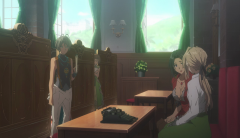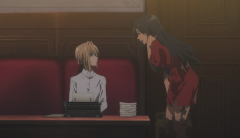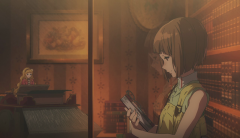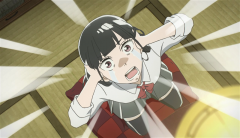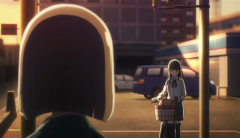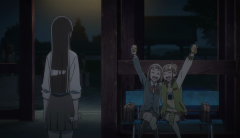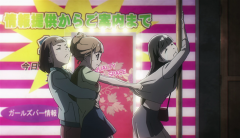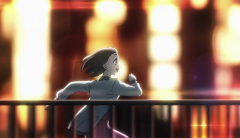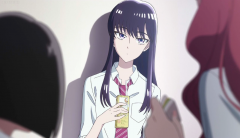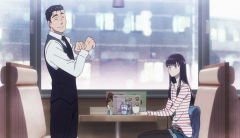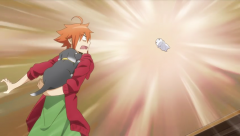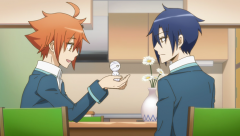
The Versus Show: Boku dake ga Inai Machi (ERASED) vs. Ano Hi Mita Hana no Namae wo Bokutachi wa Mada Shiranai

[slideshow_deploy id=’25280′]

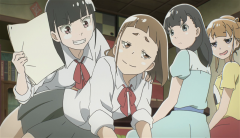
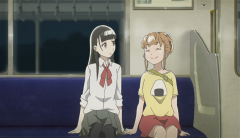
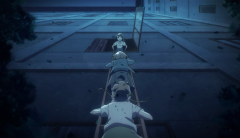
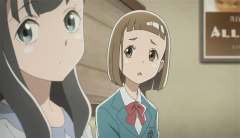
It has been quite a while since the last time we had this, right? Now, game on for some new match-ups. This time I pick 2 shows from recent years, both dealing with the death of a childhood friend(s), and arguably both of them received commercial and critical success in their run (as of this writing they receive a very close rating over MAL). Both deal with grief, confusion, and the allusion of fixing one’s mistake. Both have a diverse cast with their own emotional growth, strength and weakness. Both produced some of the most heart-breaking, tear-jerking and emotionally roller-coaster we have witnessed for the last few years. Both are made by A-1 Pictures. One is a drama, the other is a thriller, but ultimately they’re both character-driven shows. Without further ado, please welcome on stage, ERASED and AnoHana

Boku dake ga Inai Machi (ERASED)


Studio: A-1 Pictures

Season: Winter 2016

Episodes: 12

Source: Manga

MAL Rating: 8.57

When tragedy is about to strike, Satoru Fujinuma finds himself sent back several minutes before the accident occurs. The detached, 29-year-old manga artist has taken advantage of this powerful yet mysterious phenomenon, which he calls “Revival,” to save many lives.

However, when he is wrongfully accused of murdering someone close to him, Satoru is sent back to the past once again, but this time to 1988, 18 years in the past. Soon, he realizes that the murder may be connected to the abduction and killing of one of his classmates, the solitary and mysterious Kayo Hinazuki, that took place when he was a child. This is his chance to make things right.

Boku dake ga Inai Machi follows Satoru in his mission to uncover what truly transpired 18 years ago and prevent the death of his classmate while protecting those he cares about in the present.. (from MAL)

Excerpt from our site’s original review:

“This series has some great presentation and direction though it does make it somewhat predictable in how it highlights what’s to come. Predictable does not mean boring though and this tale has a lot of heart. There are a number of great scenes that can play with your emotions and each episode does leave a feeling of dread for a tragedy to come. Though those episode cliffhangers do build up expectations which the ending fails to deliver.The female cast is ridiculously strong with Satorus mother being one of the best parenting figures one could have.

Ultimately what decides your enjoyment of this show is your level attachment to the characters. The focus is clearly character driven and if you find yourself not caring for them, I am afraid the plot will not hold anything to compensate. But if you find yourself getting drawn into these characters then I believe your experience with this show will be a positive one but remember to walk into it with the right expectations.”

Versus


Ano Hi Mita Hana no Namae wo Bokutachi wa Mada Shiranai.


Studio: A-1 Pictures

Season: Spring 2011

Episodes: 11

Source: Original

MAL Rating: 8.56

Jinta Yadomi is peacefully living as a recluse, spending his days away from school and playing video games at home instead. One hot summer day, his childhood friend, Meiko “Menma” Honma, appears and pesters him to grant a forgotten wish. He pays her no mind, which annoys her, but he doesn’t really care. After all, Menma already died years ago.

At first, Jinta thinks that he is merely hallucinating due to the summer heat, but he is later on convinced that what he sees truly is the ghost of Menma. Jinta and his group of childhood friends grew apart after her untimely death, but they are drawn together once more as they try to lay Menma’s spirit to rest. Re-living their pain and guilt, will they be able to find the strength to help not only Menma move on—but themselves as well? (from MAL)

Psgels’ original review:

“Ever heard of the phrase “short but sweet”? This is the key to the best Noitamina-series out there: most of them can only be eleven or twelve episodes long, so they really need to know how to use their time, and this series is a brilliant example of how this timeslot should be used. It leaves no moment wasted, it never drags, and it’s always developing its characters, delivering heavy drama, and moving back and forth between showing new things about its characters and fleshing them out.

If you are looking for an emotional roller coaster however: watch this. Few series can boast to be this well laid out, especially when so small. Everything fits just perfectly. I’m not a fan of moe, but this show is so good that it immediately won me over.”


This poll is no longer accepting votes

What will you be watching this fall?


HAPPY VOTING GUYS!
Violet Evergarden – 03 [May You Be an Exemplary Auto-Memoir Doll]

Well, we have another original anime-material this week and I consider this episode slightly stronger than last week, although its main shortcomings still remain. The biggest improvement in terms of narrative, is how Violet Evergarden shifts their perspective to another secondary character. I still have issues with Violet the character, so it’s a nice change (and more bearable) to see her issues through someone else’s lenses. This week, our Violet attends the Auto Memories Doll class and we have a pretty much Violet’s routine here: her salute, her precise at receiving orders and her mechanical arms. And like all of us could have predicted, she excels on typing and grammar, but totally fail on transferring emotions to the letter. Only three episodes in and I’m already tired with all those same beats. It doesn’t even make sense to me how Violet ghost-writes Luculia in such a dry report-like, given her personality she could just write exactly what the girl says. The thing is, Violet not only has difficulty of expressing her own, or other’s emotions, she has a hard time understanding the feeling others have. She hardly expresses any emotions at all except when it comes to Major whathisname. As a result, her letter in the end, and her graduation because of it, don’t feel earned to me. They feel too quick, too compressed for such a change from Violet.

Thankfully, aside from our little Violeta’s development, we also have the story of Luculia and her own struggles with her brother. In a way an indirect victim of the war (the War settings are put into good use here), her brother is tormented for the dead of their parents, whom he feels that he failed to protect. That lead to his own destruction: drinking, fighting, being useless. Luculia feels unable to communicate with him, as all the raw emotions are botched up inside that it becomes impossible to be normal again. Communication, or to be more precise, the ability to communicate, is by far and large the central theme of Violet Evergarden and Luculia story succeed of deepen that theme with some emotional affecting moment and the strong visual flair that brings out the emotions just by the way they tone down the melodramatic moments. Most of my complaints about the show so far come from its script, namely its obvious and predictable narrative beat and its boring titular character. In fact, Luculia herself sometimes feels like a vehicle to unlock Violet’s emotion, thus she doesn’t really flesh out as a true character. We never know her own reason for becoming a Doll, for example, or why she becomes invested to Violet – the driest girl on Earth. Even the Auto Memories Doll workshop itself seems too rushed for its own good.

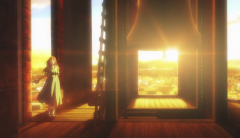
It’s the masterful visual storytelling so far that raised the bar to this material. The settings are beautiful and gorgeous. When Violet and Luculia get into the top of the tower and see the city from up high, the city looks attractive and impressive, yet somehow bring the strong feeling to the forefront. The visual focuses more on the character’s little gestures and their eyes than any big emotional overacting, which for me fare much better in terms of emotional impact. The first “letter” that Violet is decidedly simple; but express all the feeling that Luculia want to transfer across to her brother. I suspect this is the format we will get as the show moves on from its prelude phase, Violet encounters different people with different stories, and ghost-write and learn about their emotions in the process. I’m fine with that, as long as the show doesn’t get repetitive and gives a reasonable development to Violet to get her out of this robot shell.

A Place Further than the Universe – 04 [Four Caterpillars]

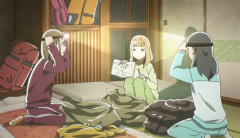
Universe takes another firm step towards the Antarctica trip, this time more about the actual preparation: parents’ approval, training and the likes. We’re still far away from the final destination, and I suspect it’d take a few more episodes before the girls arrive to the South Pole. Not that I complain because these build-ups make this journey much more believable. It helps that the direction so far smartly conveys the tones it tries to bring across. Take the scene where Mari tries to get her Mom’s approval for example. The show knows how to play up the fear of Mari of being caught red-handed for arranging her trip without her Mom’s knowledge (Mari, it’d be wiser to ask your Dad instead). It constantly builds the atmosphere up, and then play out in a spooky playful nature (remember what did the little sister do when they realize their Mom knows? She shuts the door. I’m outta here. Case closed). Priceless. Or take the scene where the girls being underwhelmed inside the old van? Universe shows us not only their disappointments, but the condition of the car: the girls crammed up in small seats, stack of papers about funding, the small note sticking at the cassette telling them it’s broken, an expensive car passing it to put more salt to the wound… Those little details certainly help make this preparation phase more entertaining.

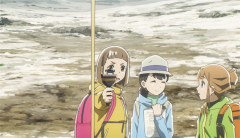
On to the 4-day training trip, I certainly feel related to how clueless the girls are when they have to do the actual field trip. Simple matters like which eye they should use, your left or my left, take note about altitude… the basic of mountain climbing, but there’s always first time for everyone. On that field trip, the girls meet their captain, Toudou Gin, whom sharing with Shirase the same pain: the loss of Shirase’s mother. It creates quite a tense tension between the two, so I expect we will learn more about her mother through their chemistry once they’re arriving to Antarctica. One potential conflict before they’re reaching the destination, though, is how Megumi (Mari’s best friend) feels a bit “uneasy” towards Mari’s plan. She has been the voice of reason for Mari to walk the fine line between “reaching your dream” and “taking realistic actions”, but her warming about feeling regret when you’re trying to hard but not achieving it sound off to me. It’s the opposite, and it’s not like her to say something like that. I guess we will have to wait until next week to see what Universe has in store for us regarding this plot thread.

One of my fear after the quartet is finally formed, is how then they will become less dominant and exist only as the group’s member with no real personality. Well, so far Universe hasn’t fall into that trap yet, given the cast still produces some neat chemistry together, and give both Mari and Shirase some more ground to develop. In Universe, Shirase has always been the one who drives the plot forward, and Mari is our emotional investment. This time again, when talking to Gin, she makes it clear that although Shirase was the invite them to the trip, it’s ultimately HER trip now – the place where she herself really wants to go and explore, along with all the friends she has made. Antarctica show is still looking strong at the moment.

After the Rain – 02 [Rain Drops on Green Leaves]

It has been exactly a year since I last blogged you, noitaminA shows, and this time again it’s another romance drama. Unlike Scum’s Wish last year, however, Ameagari has one simple premise, but it executes the idea with such grace. This second episode is even stronger than the first, setting the stepping stone for Tachibana and Kondo’s relationship. Now, big elephant in the kitchen so you know where I stand on its most “problematic” aspect. I don’t have a problem on the suggested relationship between 17 year old girl towards the 45 year old man. It is neither fantastical premise (It’s uncommon, but such relationship exists; and it’s easier than you might think when a junior having a crush on their senior), nor is it illegal or morally deranged. The age of consent in Japan is, curiously enough, 13 years of age. Granted that each province in Japan provides their own law in order to protect underaged children (usually about 16 year of age) from sexual abuse, but sexual tension is never the intent of Ameagari. At this moment, my gut telling me Tachibana falls for the wrong guy, but it’s not DUE TO their age gap.

What raise this little romance drama to the top of its genre is the excellent production values. While Ameagari never exactly stand out, the quality is amongst the best this season has to offer, simply because how the audiovisual storytelling and smart framing contribute neatly to the tone and the theme of this romantic story. Walking on such a tricky premise (ya know, a love story with such age difference already raise a yellow flag out of the gate), it’s remarkable that there isn’t any real misstep so far. I was impressed by Ameagari’s eye for details in those seemingly insignificant moments. For example, I love every moment of the one-minute entrance of this second episode where we simply follow Tachibana in the train to her workplace. There is a nice contrast between her and other girls her age, there is an attentiveness to the everyday life of our protagonist, and the music score is pitch perfect to bring the atmosphere out (weird consider how much I was put off by Violet Evergarden’s score). Or the scene where Kondo drives her to the clinic, we could see his stuffs in the backseat: a ball, a jump rope, and a bunch of umbrellas. What do they tell about his personality? A lot I say. As we know last episode he prepares extra umbrellas in case of his co-workers held up by the rain. At least he seems like a truly kind person.

It helps that both our main Tachibana and Kondo are immensely are relatable and likeable bunch, in that order. The entire plot so far is told by Tachibana’s point of view, and like everybody her view is peppered by her own subjective perspective. Moments where she has a chance to talk to Kondo feel purposely light and hopeful. Scenes involving her and the track feel sad and nostalgic, and moments between her and her classmate Yoshizawa feel overly nonsensical and comical. The latter especially due to the fact that she doesn’t care one inch about her friend, but doesn’t she realize he’s in the very same situation with her regarding their crushes? For Kondo, so far Ameagari successfully frames him as a goofy likable kind man, the man who would go out of his way just to make sure that his co-worker is safe and sound. The majority of plot progression this week centres around Tachibana gets herself injured again after sprinting to the guy who forgot his phone, so Kondo takes her to the clinic and goes house-visit the next day. Tachibana has gotten loose around him, a sign in which he himself notices, but the real plot-changer comes afterward, when she actually confesses to him, and he dodges it. What a smart way to get out of the problem, Kondou, although I suspect he still doesn’t really get it. No matter, we have 9 more episodes along the way, but from what I have seen in the first two episodes (near flawless accomplishment), there will be a lot of good materials to look forward to.

Violet Evergarden – 02 [Never Coming Back]

I’m thankful that this second episode plays out much quieter and more subtle than the first, because I’m not a fan at all with the grandeur approach of the first episode. This makes the second week of Violet slightly better than last week, but I still find myself not totally satisfied with the whole experience. This week shows our Violet making her first step over the Auto Memories Dolls job, which despite its name it actually refers to real girls ghost-writing letters for those in need. Violet gets acquainted with the team members, learning about the jobs: how to type, how to input information, how to translate what the customers mean into the right angle… the last of which Violet totally lacks of. The most important characteristic in this job is the ability to communicate, including the ability to read between the lines. When put it in that light, Violet is totally unsuitable for the job. She’s straight-forward (which failed in terms of communication), she can’t read the subtext and she lacks emotions. After all, like the show said, contradiction is the barebone of human’s emotions. How one feels isn’t exactly the same with how one acts, and it’s those inconsistences can tell you exactly who they really are. I agree with it, in theory at least, because the actual case Violet Evergarden shows us is so banal. Is that how women tend to act? Now I feel stupid for not knowing it, just like our poor Violet here.

I guess my biggest issues of Violet Evergarden so far lie in the main character, Violet herself. It’s a common pitfall for a show to create obvious flaws for the main character in the beginning of the story in order to make their personal growth more significant, and I feel Violet steps in that line here. The problem with that is that those flaws make them feel utterly unrelatable, given no human being would act like such. It’s part of the show’s narrative, I know, since everyone regards her as a killing machine, she sees herself as someone’s royal dog, the show visualizes her as a bleeding doll, and the novel purposely frames her as a robot, anything but a human. It’s also the show’s narrative that Violet needs to learn these emotions in order to truly become a human. At that I feel the need to point out about the change in the anime’s order compare to the Light novels’. The novel starts when Violet is already an established Doll, and then it traces back to her origin as we learn more about her. The anime gives all their attention to the growth of Violet, hence here we are, following the blank-state Violet as she navigates to the new environment. Sure, it’s more conventional but the progress is also more obvious, and I’m not sure “obvious” is what we need here.

So naturally, the emotional engagement I have for Violet Evergarden point towards the other team member, Erica. She, like Violet, feels like she’s unsuitable for the job, unable to write letters that make her, or her customer satisfied, and the success of her peer, Cattleya is a cherry on top. Yet despise knowing Violet’s shortcoming, she asks the team to not giving up on her, because she believes Violet can improve. That’s a contradiction. Just like despite her own shortcoming, she still wants to continue after she realizes her original passion for writing letters that touch the heart of readers, in one rare musical score of Violet Evergarden that isn’t overbearing. The production otherwise remains impressive. The flowers café house, for example, stands out and the animation remains fluid. If I have one criticism it would be the interior scenes feel a bit too dark for its own good. All in all, we are still pretty much in the introduction phase of Violet Evergarden and I suspect until Violet herself gets more fully-formed, and more relatable, is when this show hits its stride.

A Place Further than the Universe – 03 [The Follow Backs Don’t Stop]

“I could just die right now”

That line, spoken by our new member, Yuzuki, bookends this week’s Universe. It marks the shift in the new girl’s character growth. Last week, the Expedition girls mentioned they have a plan to raise fund, right? Turns out it’s not the mother, but the young girl herself, is used as their TRUMP card (bad pun, I know). Tsuhiki Ararararag  Yuzuki is an idol/ child actress/celebrity, so naturally the Expedition Team wanted to use her image as a promotion for the Antarctica trip, in which she feels zero enthusiasm to go. First, I must note about the voice acting of these main girls. While they’re even louder this week (I swear those voice actresses had such a BLAST time recording this), they share a natural forth-and-back dynamic that feel so pleasant. It comes as no surprise, that three of them, Kana Hanazawa – voicing Shirase, the one that need no introduction anymore, Yuka Iguchi (voicing Hinata) and Saori Hayami (voicing Yuzuki) all worked together before in the Monogatari Series (dubbing Nadeko, Tsuhiki, Yotsugi respectively). The other voice actress, Inori Minase, is no slouch either. She played Meteora in Re:Creators (AKA that one character who had to spill all the expositions), Rem in Re:Zero (that captured thousands of boys’ hearts) and most impressively for me, Chito in Girls’ Last Tour last season. These voice actresses clearly have fun playing those characters and so far, the acting elevates the chemistry shared between these girls whenever they interacting to each other.

Yuzuki, our new addition, is as different from the other girls as it could get, especially compare to Hinata last week. While Hinata stops school because she doesn’t feel belong to the big group, it’s the acceptance of friendship and the thrust to live a normal life with her “friends” are what Yuzuki yearns for. So far, Universe has been successful on creating very relatable issues from those girls. Yuzuki’s personal struggle, for instance, is something I can feel attached to. She hates the idea of going to Antarctica, and for good reasons (well, except “cold”). The idea of being pushed around, doing whatever her Manager/ Mommy thinks are the best for her is just plain… frustrating (#Mamaknowsbest). I have a feeling Universe glosses over some serious Mommy issues here. Yuzuki wants to spend more time to study so that she can go to school properly AND make friends properly, since she doesn’t have any friend due to her constant touring. I like the way the shot composition makes sure Yuzuki always situated at either end of the frame, looking out in order to highlight her being trapped in her own situation. That moment where she confesses her struggle, following immediately by Mari hugging her is goddamn effective and touching, another case of simple but sweet. When she realizes that these girls are far from best friends, that they just barely know each other but all heading for the same destination, it hits her that having the same goals, and sharing these experiences along the way together, might be what makes friend “friend”. I’d prefer if “the dream sequence” were true instead, since I feel Universe copped out at the end. Making it a dream sequence has its merits, mind you, given that Yuzuki now realizes that she wants to spend more time with the girls as her buddy; but it would’ve given me much more personal impact if these girls climb up the stairs for real instead.

In term of the big picture, well, after their plan failed last week, I feel that the girls find another solution almost too convenient. Another high school girl will join the Expedition Team, right after they refused a high school girl who is more equipped and willing to go? And that said girl comes up to meet the group no less. I let that slide for now because the girls still have to work hard for the approval, and changing an idol’s mind sure isn’t easy. Apart from successfully introducing the last member of the quartet, what makes Universe clicks the most this week is the delightful interactions between our girls together. Shirase really goes wild this week, in a quirky adorable way. “I’m gradually starting to understand how this girls work” is probably my favorite line of the week. It’s character writing right there. Finally, Universe gives some time to flesh out the relationship between Shirase and Hinata (remember, before that there’s always Mari stands between them) and they spark off some nice chemistry with some thoughtful wise advice from Hinata over Shirase’s charging on to the Antarctica trip at all cost. Those girls so far are a total delight and the coming trip promised to be a whole lotta fun, and lots more obstacles as well. This trip to the place further than the universe is now in sight.

A Place Further than the Universe – 02 [Kabukicho Fremantle]

I’m glad that this second episode addresses straight out all my worries from the first episode: the actual implementation to make that trip a reality, because boy, it’s no simple matter. Universe apparently does its research, telling us exactly places they need to go, the initial trip ahead and the amount of money they need to raise. Even me who is living in Australia has absolutely no idea that Freemantle is a place to gather the expeditions to board to the South Pole, so that bit is very informative. After all, the concept is about a bunch of 16 year old girls travelling to the place as bizarre as Antarctica, thus if Universe takes it lightly, it will start to lose its sparkle very quickly. But thankfully, the show depicts the girls’ plans and their struggles quite thoughtfully and believably.

Shirase has been on and on about her plan, and with the knowledge about the Antarctica that she has, it’s reasonable for Mari to trust her. Except that knowledgeable and desperate as Shirashe is, she’s still a naive high school girl, and her plan starts to crumble apart in our very eyes. Kudos for Universe for suggesting her inexperience early on (with a sketchy job advertisement), and then as the show continues it’s apparent that she takes the role too big for her to fill in. Mari worries if the civilian Antarctic expedition really allows them to join in, which angers Shirase because she herself knows how tough it is to get in. Her half-baked plan reaches its own breaking point when the plan of getting in the expedition team is to “seduce” male members, something none of the girls is mentally equipped enough to carry out. They failed, of course, but it’s still worth trying.

While I enjoy the chemistry between Mari and Shirase, I’m not that keen on their personalities alone. They serve the story right and they have relatable issues, but they never stand out as particularly interesting or deep characters. Thankfully, with the introduction of the third member, Hinata, she’s more than make up for what the two girls lack. Both bright in her own charisma and she fits the team like a glove, it’s an improvement in terms of characters for me. I like the fact that she has her own route when she declares that she doesn’t go to school because she doesn’t need to. That I can root behind, albeit the reason behind that sounds superfluous for me (that she doesn’t feel she blends in with normal crowd – not that working full time in a convenience store would solve that problem, girl). What sold me about her character, however, is despite her cheerful and outgoing traits, she’s surprisingly observant and she caught on with the girls’ plan even before she met them. You had me at “Are you going to… Antarctica”, girl (and despite accusing the other girls for being too loud, she’s the loudest one here). Moreover, right at the end where Shirase failed, she releases Shirase from leader role, an action to release the heavy load Shirase has been taking all along.

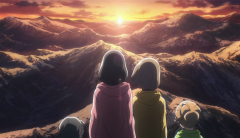
But the best part of this episode is when the girls run away from the Expedition team members, for a reason both us, and the girls don’t even know. The story might be about the girls going to the Antarctic, but the underlying theme has always been enjoying the youth to the fullest. Mari runs and smiles because she realizes that her youth “is in motion” makes so much sense. It’s the joyous, the feeling of actually doing and experiencing that counts. At this moment, the girls might be in their dead end, but with the involvement of the fourth girl, whose mother could very well be a famous person/ main sponsor for the civilian Antarctic expedition team, things will turn for the better. I’m eager to see how she meets up with the three girls.

Winter 2018 Anime Coverage

It’s this time again. After painfully * sat through almost all the first episodes this Winter 2018 has to offer. Here’s what our team decide to blog for this coming season:

Aidan: DARLING in the FRANXX, Fate/Extra Last Encore, Itou Junji Collection, Dies Irae (carry-over)

Mario: Violet Evergarden, After the Rain, A Place Further than the Universe

Lenlo: Kokkoku, Mahoutsukai no Yome (carry-over)

Wooper: 3-gatsu no Lion 2 (carry-over)

Helghast Killzone: TBA

As for Devilman Crybaby, we decided it’s for the best that one of us will do a full review on it.

That’s it, folks. Will see ya’ll real soon.

*a good kind of pain, mind you!
Some Quick First Impressions: Koi wa Ameagari no You ni, Miira no Kaikata, Hakumei to Mikochi and Hakyuu Houshin Engi

Koi wa Ameagari no You ni

Short Synopsis: A young highschool student falls for her middle-aged, single father manager.

Lenlo’s Review:

I am rarely a fan of romance anime, generally preferring a good romantic tragedy. Koi wa Ameagari no You ni however has managed to claw its way into my heart, with its premise of forbidden love. A 45 year old man with a son, and a highschool student? Most would call that illegal at the least. Ameagari is going to live or die by its characters and so far, I love them. The klutzy but lovable manager Kondo and the love-struck Tachibana play off of each other well. They way they are presented is great as well, the subtle hints of Tachibana’s past with the track and her apparent injury to the strained relationship between Kondo and his son. I love it, and it wraps it all up in a well animated/beautiful looking package to boot. My one worry is the questionable aspect of the relationship and how that will play out. On one hand the classic romance could work well from a female perspective. On the other, these kinds of relationships are often doomed to tragedy from the start, and I love a good tragedy. Guess we will have to wait and see.

Potential: 85%

Mario’s review

After the Rain, or to translate literally from the original, “Love is Like After the Rain” (boy, how I love this title) is a romance anime that I can totally get behind, even with such questionable premise behind the crush of a 17-year-old girl to the boss who is old enough to be her father. Because the main focus isn’t about the alluring of such problematic romance, but more about the coming of age story where pursuing her crush marks the new chapter in her life. I was impressed by the show’s visual storytelling that manage to underline Akira’s current life with their attention to details, sharp direction, and a quiet but thoughtful key moments of rain and encounters. Akira isn’t the most expressive type, neither is the manager, for example you can sense a torrent of emotions hidden within her feeling about the track team, but she manages to hide it too well. The production as a whole is equally impressive with beautiful scene settings and terrific direction. This one is a keeper.

Potential: 80%


Miira no Kaikata

Short Synopsis: A young man lives with and gets to know the smallest, cutest mummy in the world.

Mario’s review

How the heck that with a season full of cute girls, endearing kids, adorable toddlers, the sweetest character EVER is a little pet mummy? I admit it sounds creepy in concept, A PET PETITE MUMMY, really? In fact, how do you find this little pet as charming or not will pretty much tell you how much you like this show. Aside from the chemistry between him and the main guy, the show is lackluster in any other department. The production value is nothing special, the art background is bland and unimpressive and the story is just about the two of them getting to know each other. It’s good-natured, it’s sweet and it will make you wanna hug your pets tightly, but with the season that chokeful with too much cuteness, it doesn’t have much else to stand out.

Potential: 20%

Lenlo’s Review:

As Mario said, the keyword for Miira no Kaikata is bland. Everything about this show screams mediocrity. Dull backgrounds, bog standard designs, and aside from the mummy, recycled characters. The only source of entertainment to be derived from Miira no Kaikata is the mummy, who will no doubt get old quickly. Heck, I got tired of the dynamic by the end of this first episode. I wish I could say more, but there’s just nothing going for it. My verdict? Pass it up.

Potential: 0%


Hakumei to Mikochi

Short Synopsis: Two tiny forest-dwellers hunt for a mythical bird and visit a portside market.

Mario’s review

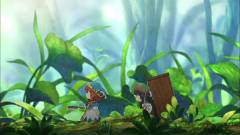
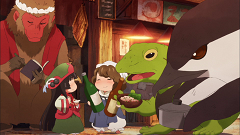
And I thought I’m already done with slice of life cute girls this season, come two tiny girls that again hit the jackpot. The show’s aesthetic is presented like a storybook with panels and soft but bright color backgrounds, which I totally feel appropriate given this type of story. The miniature people and their habitat feel just right at home with many bedtime stories you always listen to as a kid, right? Indeed, the two small stories of this first episode give off the same vibe. Full of life (just look at the port-market’s houses, I swear I wanna live there),whimsical, gorgeous with light-heart and warm plots – a kind of laid-back anime that also have fun introducing its unique world. Hakumei and Mikochi, each has their own personalities and they play up each other well, although don’t expect any character’s development from them. I guess it’s the Winter cold that make everyone want a little warm from those titles like this, hence the avalanche of cute girls shows this season, but this one has an all-age appeal and with its rich world and bright atmosphere. I’m in.   

Potential: 50%

Wooper’s review

A slice of life series about miniature people who live in the forest? That premise is right up my alley, but I might need to check out the manga on this one, because the anime didn’t meet my expectations. Actually, I sort of feel as though I’ve already sampled the manga, because Hakumei to Mikochi’s habit of placing rectangular panels on top of ongoing scenes gives it a similar air. This is a directorial technique that I recognized from last year’s Kuzu no Honkai, and sure enough, both series are from the same studio and director. Though I wasn’t a fan of Scum’s Wish, that show managed to squeeze at least a drop of artistry from the floating panel trick, but here it felt like a mere cost-cutting measure. It’s clear that a lot of care went into Hakumei to Mikochi’s art, and its characters blend quite nicely into its storybook backgrounds, but the number of still and panning shots in this premiere nearly put me to sleep. The show is cute, and has some charming dialogue about everyday problems (being unable to fit a piece of furniture through the front door, for instance), but I doubt that such a comfy vibe will be sustainable with production values this low.

Potential: 25%


Hakyuu Houshin Engi

Short Synopsis: A dumb shounen protagonist is given a list of enemies to defeat.

Wooper’s review

My god, this show has one of the worst opening songs I’ve ever heard. Fear and Loathing in Las Vegas have never sounded so screechy as they do on this track, and all the OP offers on the visual side of things is a slideshow of heroes and villains in ~kakkoii~ poses. The meat and potatoes of the actual episode aren’t any better, either. Hakyuu Houshin Engi is based on a 90’s shounen manga, and Studio Deen created an anime version in 1999, but I don’t need to see either of those to label this premiere as the worst of the three. This episode condensed a manga volume’s worth of content into 20-something minutes, most likely in an effort to skip to a section more ripe for adaptation. The damn thing could have been animated in PowerPoint and remained just as entertaining, with the added benefit of making more sense. Names of supernatural classes, various realms, combat techniques, and weapons are thrown at you for over half the show’s runtime, and the script is forced to play catch-up with itself as a result. Taikobo, the series’ ostensible hero, literally exclaims the function of his weapon right after receiving it. Afterwards, when he reads the first name on the list of enemies he has to defeat, his magical flying pet Supushan blurts out a bunch of facts about the guy, who appears behind them less than five seconds later. The resulting fight is a masterclass in anticlimax that would put even the worst episodes of Dragon Ball to shame. Everything about this premiere is bad. I wouldn’t even recommend it for fans of the manga, as you’ll be pissed at what 2018 has in store for this franchise. Don’t watch this.

Potential: 0%

Mario’s review

Welcome to 90s anime remake. Engi looks outdated and feels outdated, from its character designs, to its way of storytelling, to its characters’ tropes – everything that reminded me of a little brother of Dragon Ball. But what terrible isn’t the old-looking feeling, people still like products in the past because they remind them of the spirits of particular era that we don’t have anymore, it lies in its awkward pacing. This first episode feels like a recap of the introduction phase so they can focus on the real meat of the story, but when the groundwork isn’t that carefully laid out, it crumbles on its own weight. Already in this first episode we have the main guy goes for his mission, encounters his “destined rival” (by him literally appeared in front of our main guy. Handy!), challenging the boss, loss, hiding and going on a journey again.What?? The content worths at least 3 to 4 episodes here, so naturally everything else, especially characters, are taking short-straws here. The main dude is bland and share no chemistry with his spiritual animal, and he also has an awkward flashback that feel way off. This is a bad adaptation of a not-so-significant manga to begin with, which makes my job here fairly easy. Skip.

Potential: 0%

In This Corner of the World (2016) Movie Review – 90/100

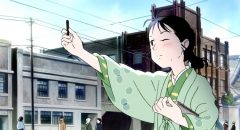
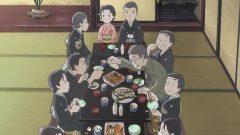
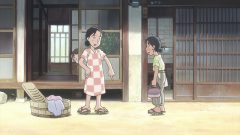
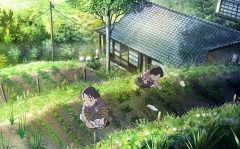
In this Corner of the World (for the purpose of this review, I’ll refer it as “Corner”), is the truest slice of life drama if you ever encounter one, in that it’s a slice into an ordinary life of an ordinary girl during the War period. That speaks into the very first strength of Corner, it breathes life and it feels all too real. Suzu, our protagonist, is a normal girl who loves to draw and a bit of an airhead herself. Throughout the course of the movie, we see her grown through a passage of time, get married to a stranger in a strange town, find accustomed to the new life, new family, new hometown before the war comes in and destroys everything. Quiet, slow but melancholic and beautiful at times, Corner shines through mostly because of its restraint to go heavy-handed. They could easily go melodramatic in many moments, consider they’re dealing with war issues, one of the most brutal subject on film. Yet somehow they know that the main focus is the life of Suzu, and the terror of war ultimately is just a part of it.

Coming to Corner, I originally expected another war treatment in the veins of Graves of Fireflies or Barefoot Gen or Giovanni’s Island – a full-blown lost of innocence drama about the horrific consequences the war causes to normal citizen. I was taken by surprise by how Corner instead focuses on the ordinary life of Suzu, on her little moments of living her life, the life that she has no control over. The whole film is painted in a way that it feels like a memory, a look back to the harsh period of Japan with a tender perspective, an outlook that both bitter and sweet at the same time. In Corner, there’s no big emotional outburst in display. There’s no angsty statement to be found at the horrible injustice of war. There’s no grand decision that change the course of war. Just like in our own real life the life-changing moments happen only few times, with long in-between time we stay almost the same, Corner is more interested to focus on those in-between moments.

As Corner aims for simple approach, the character designs are decidedly simple, never stand out, which remind me greatly to the art of the old era. The cast share formal, yet natural chemistry and even her relationships with the members of her husband side, especially with her sister in law have some solid development. The tone is light-hearted and episodic – and surprisingly – good humor, but we can all feel the weight behind each fleeting moment. The light humor is what I really appreciate about this movie. As I often see it, if you can find humor even in the worst possible situation, then you can go a long way. Imagine how the father in law falls asleep in the middle of the air raid, or the members of the house nearly burst out laughing with the idea of Suzu being a spy.

In my opinion, the war section wouldn’t be that powerful without the full-of-life coming of age story about Suzu in the first half. She has a normal childhood with a small crush and some true moments of happy carefree life, she then marriages off to a guy she barely knows in a faraway land, spends her days away doing housework. Suzu is significant in a way she never stands out, or like her sister in law comments: “leading a boring life”. Yet, she is the perfect protagonist for Corner. She presents the lives of many ordinary people in that era, the lives that we can all relate to. The latter part has some quietly devastating moments but like what comes before, it becomes just a part of Suzu’s life. For me at least, I feel heartfelt how despite everything happens, Suzu and her family, and in a larger extend, the strength of normal people manage to recover and continue to live on their lives, with a smile on their faces.

In the end, I wholeheartedly recommend In this Corner of the World. Quiet, subtle, humane, true to life, and weirdly humorous and warm, Corner again is a perfect example of a work that can shake off all the flashiness to seek for something real, and simple. The result, of course, is far from “simple” and “ordinary”, the mastery that is so hard to obtain. 2016 and 2017 have been great years for anime movies and Corner stays rightly at the near top of those offerings. A marvelous achievement from studio MAPPA.