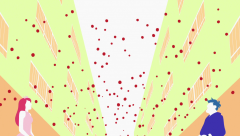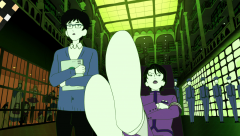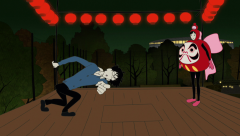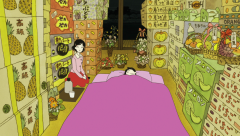
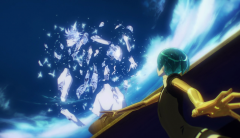
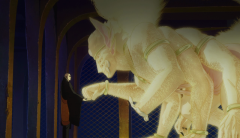
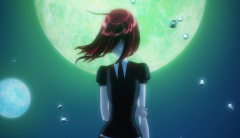
Houseki no Kuni (Fall 2017) Review – 92/100

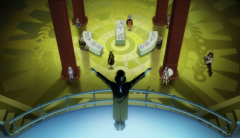
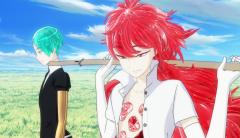
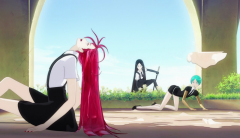
Make no mistake, Houseki no Kuni is the most ambitious anime project of the year. Not only because it’s an entirely CG project (and make a damn good use of it, mind you), or because of its narrative scope that at once strange, grand and beauty, but also in its very conception in their production phase. Unlike normal anime products, Orange studio approached the material as early as nearly 2 full years before its initial broadcasting, and the production went through many unusual phases that took much longer time for the studio to complete. This is to say it was a rough path that they decided taking on and the result showcases how much confidence they adapt the material. This season feels much more as an introduction to an epic story and at its core Houseki serves as an coming of age story to our protagonist Phos, while exploring the insecurities of those gems towards their own roles. As I compare the manga and the anime adaptation together, I still regard the manga as a more astonishing version, but by all mean it’s not a criticism against the anime. Houseki the anime approaches the source in the best way it possibly can, both highlights the unique appeal of its gems cast, striking visual metaphoring and dynamic fights sequence that make it one of the best adaptation in my eyes: both respect the core themes that make the manga stands out, at the same time is vibrant with its own personality.

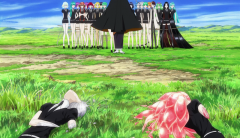
Houseki is a show of pure beauty. Its world building is ethereally fresh and rich, at once strange and full of mysteries yet to explore. Houseki features the world where the three races: the Lunarians who live over the Moon, the Gems who live in land and the Admirabilis who live under the sea. Underneath that surface where we follow the Gems doing their daily patrol and fight off the invaders Lunarians, the three races are hinted to be the three basic components that form the human race: the Soul, the Bone and the Flesh, respectively. Houseki is the work that is dense with Buddhism symbols, images and philosophy. This is further underlined in the way the character designs are drawn: the Moon People are identical entities, the Gems have their lower bodies almost the same, only the Gems-reflected in their hairs are vastly different and the Snails have their own distinctive, over-designed body with clear sexual traits. Speaking of the ambiguous of gender issues, Houseki might be the only series I could give a plus (+) rating for its sensitive approach to the non-gender beings, something that is rare even in today’s standard and something that speaks further to the originality of Houseki.

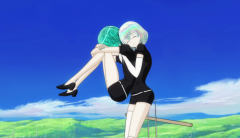
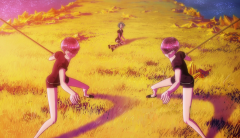
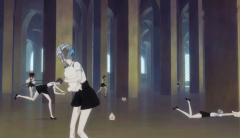
In order to approach the strange beauty of the Gems and the stylish dynamic of their fights, Houseki decided to go full CG – a decision that freaked out the manga fans considering the bad track of full CG shows. The computer generated might get some time to get used to, but the more Houseki displays its visual the more it reaches its new height. The characters look gorgeous in their CG models, the CG allows Houseki to experiment with many unusual shot angles and long shot tracking that really hard to pull in a traditional hand-drawn production. The sequence where Dia runs away from Shiro, for example, stands out for all the right seasons. In addition, this CG style uses its shortcomings in computer production (its lightweight movements and somewhat awkward character actings) into an asset, making the Gems feel offbeat and whimsical – the very quality that make them charming and pleasing to watch. The physical comedy, as a result, hits the mark most of the time. But not only the CG takes all the credits here, I have to praise the 2D production as well since the characters have 2D facial features that allow many subtle facial expressions. Orange studio really makes the most out of what they have, capturing the feeling of the manga using the tools of a different medium, and they pull off beautifully.

But exploring this mysterious world and its grand cast is only one of Houseki’s many concerns. This season is all about the growth of our main character, Phos, as they breaking apart, metamorphosing, and changing themselves for better or for worse. They experient some of the sharpest character development I have seen in awhile, both physically and psychologically. The more they losing parts of their body, the more useful and mature they become, the less memory they have. At the end of the day, what’s left of the original Phos? Phos certainly carries their own magnificently with their own charm and witty remarks and a natural voice acting from the talented Tomoyo Kurosawa. Moreover, Houseki underscores the identity and the insecurity of the Gems towards the own roles. Many of the gems, from Phos, Cinnabar, Dia are all struggling with their position. Those vulnerables make them so relatable and real. All other Gems of the cast have their own quirks, but they never sell themselves short. They share great natural chemistry to each other and each of them is memorable, grounded and overall a total joy to watch.

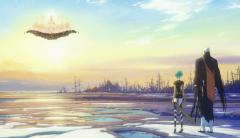
Aside from the colorful yet memorable characters, Houseki benefits from the stunning background arts that not only stand out on its own, but they fit to the narrative seamlessly. Take note how the color of the background changes according to the Gems in spotlight – a beautiful trick that both convey the aura of said character, but also is very appropriate to show the sparkling ability of those Gems. The anime visual has a lot of symmetric shots that from what I know isn’t apparent in the manga, but it’s a welcome upgrade since the techniques reflects very well the theme of Houseki. The soundtrack is another highlight that really elevate many sequences to another level, especially during the fight scenes.

But still, Houseki is much more than beautiful visuals. What I impress the most about Houseki is how they manage the overall tones of the show. Sometimes we have silly, offbeat fluffy comedy, at times it goes full on devastating that showcase a very realistic portrayal of grief; in other minutes Houseki is thrilling with monster chase, crazy Gems and dynamic fights. Strangely, all of these moments above feel really Houseki-y. It’s the show that is full of identity. Rarely I see an anime show that feel so unlike any other shows I watch out there, and manage to be so passionate on what it does, that I can let all my complaint about the show down under the kitchen sink. Unique, strange, beautiful, devastating, ambiguous, and charming all at once, Houseki is an one-of-a-kind series, and I mean it in the best possible way.
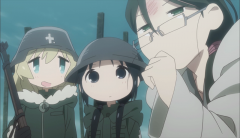
Girls’ Last Tour (Fall 2017) Review – 86/100

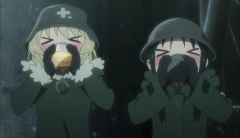
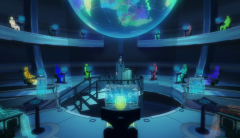
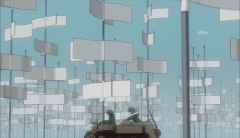
Girls’ Last Tour falls within my favorite new trend that emerging the anime medium over the last decade: a dark moe anime. Set in a post-apocalyptic world where the human race has almost extinct, our two girls wandering around the world in their kettenkrad looking for food and shelter. If it sounds a bit bleak and minimalism, rest assured that Girls’ Last Tour is at its heart a slice-of-life show about those girls having relaxing time in that world. And did I mention that those girls are real moeblobs? Their faces can go rounder and squishy, but strangely they never feel out of sync with the more realistic industrial setting. The show could be entertaining and soothing enough with just those factors, but it has more tricks under its sleeves. More often than not, Girls’ Last Tour addresses some simple philosophical issues that provides another perspective since the girls have no idea how normal society works. Moreover, while I consider the source material an already solid manga, the anime adaptation enhances this show further with a consistent visual audio production and great attention to details. It’s a beautiful and solid production all around.

I always consider a certain show a great piece of art when they know how to fuse seamlessly between two seemingly contrasting or opposite factors, because then the show can produce some unique chemistry, while at the same time balancing these extremes out – just like how yin and yang work in general. Girls’ Last Tour certainly is amongst this group. Take how the cutey designs of the girls both contrast and complement to the vast wasteland on the verge of totally destroyed. Or how despite the low-key depression of hopelessness that linger to wherever the girls go, the main theme is about how our girls find their little joy and keep moving on. I also want to stress on the small number of the living beings in contrast to the huge remains of weapons and dysfunctional machines. This show is one of the most minimalistic cast I’ve seen in anime medium, with only our two girls Chi and Yuu command the screen most of the time, and the number of people and animals they encounter along the way can be counted in two hands. For other shows it’s a recipe for disaster but in Girls’ Last Tour the girls never stay out their welcome in spite of (and I could argue because of) the vast world of nothingness. The last episode when the stream of many people appear on screen before the destruction, as a result, bring a powerful, overwhelming emotion to the table. This mastery in controlling over the general tone makes this show so relatable, sharp and grounded, despite the show is at its core a moe girls show.

Chi and Yuu make a great pair with their contrasting (again!) personality. Their chemistry is natural and sometimes the show explores the different mindset between Chi-chan who is academic but timid and Yuu who just like eating but quick to adapt. In one sequence for an instance, when arguing about the signs that give them directions to the destination, Chi argues that who would ignore signs that would help them to the destination, in which Yuu responses that it’ll be boring that way. Their difference in the way they approach life complement each other and bring the best out of each of them. Their bond and fondness to each other, in addition, is highlight through the completely comfortable in their close physicality and in the last episode that bond is further developed into satisfying payoff.
The worldbuilding of this series is another highlight, too. We get a hint of how the world come into destruction several times before, but it never at once come into a forefront. The city is displayed as an industrial, vast with multiple layers that the higher the level, the more advance the technology. Ancient people in that world had an advance in technology that now become long lost. Our girls travel that world without a proper knowledge about the remaining technology, and to a greater degree have absolutely no knowledge about how society works and many several topics regarding society like religion, war, home and death. These philosophical questions often pop up randomly, but they all serve the purpose of seeking a bit deeper about our own existence, our purpose in life and even what lifeform is itself. Ultimately, the answer to these questions are just as simple: the best way to die is to keep on living and enjoy little happiness in life.

While comparing the manga to this anime adaptation, I noticed in the manga, the sense of hopelessness is more apparent, thus make it a fair bit darker than the anime version. That’s not a jab against the anime at all, as I consider the production of Girls’ Last Tour a nearly flawless work. The shots are greatly composed, they know when to use natural sounds and when to let the score kicks in. The background art is always appropriate and striking. The direction, the editing make the show as natural as possible, and believe me it’s a goddamn hard job to pull. Girls’ Last Tour is just down right cinematic most of its time. Moreover, the voice acting work for the two girls are exceptional. Bravo White Fox for this wonderful adaptation where I can feel their love and their passion run right through every minute of the run.

While Girls’ Last Tour might provide no definitive ending to the girls’ last tour and sometimes might feel like nothing is really at stakes, I am myself surprise the whole trip never feel boring or repetitive, and Chi and Yuu’s chemistry is strong enough to carry the show. Depressing and comforting at the same time, Girls’ Last Tour is a rare show that produce its unique charms and distinctive tones, while always maintain its feet firmly on the ground. It’s the best of its slice of life dark moe genre and I certainly miss those girls and their kettenrad.

The Night is Short, Walk On Girl (2017) Movie Review – 92.5/100

“How many decades have passed since our drinking contest?”
“It hasn’t been that long. It was only a few hours ago, this very night!”
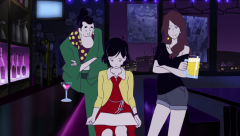
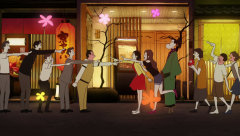
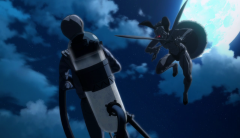
That gap in time perceiving plays a significant role in Night is Short. For you see, it all depends on how our perception of the surroundings and time itself can affect our lives. In Night is Short, time runs much slower for those who enjoy life and speed itself up for those who afraid to live. Come our main protagonist, a “black-haired maiden”, an unnamed red-dress girl who keeps walking on, enjoys the night and let life lead her way. She runs through a seemingly endless night and encounters many absurd events: the wedding, the drinking contest, the bookfair, the guerrilla stage theatre and the massive cold outbreak and many random plot threads crammed in together. As a narrative line, like its protagonist, Night is Short’s never content to stay in one place for too long. It’s decided messy, full of random events with colorful, exxergarate cast and very loose animation. It wouldn’t be too far-fetched to consider Night is Short as a spiritual concessor of The Tatami Galaxy, so those who already love the 2010 series will have a lot to enjoy here.
One factor you should expect, and I rather consider this as the film’s most detriment factor, is that it share the same spirits with the Tatami Galaxy. Written by the same author Tomihiko Morimi (which I happened a big fan of), and the distinctive visionary of Masaaki Yuasa (which arguably the best working anime director right now), Night is Short shares the same visual style, happens in the same universe, has the same simple character designs and even uses many of the show’s previous casts. The familiar in the look, the settings and the tone make it hard not to consider them as a companion piece, or a little brother of The Tatami Galaxy. Thankfully, Night is Short does just about enough to stand out on its own. Even without the knowledge of Morimi’s previous novels (the Tatami Galaxy, the Eccentric Family), you will able to enjoy the ride since those references never distract the flow of this hectic adventure.

As you can probably guess from the works of Morimi, this magical-realism Kyoto settings never fails to bring wonders and enjoyment. Every single setting, from the interior night bar, to the night book fair, to the river at night, have a warm, distinct feel to it that make it brimming with so much life. The magical-realism feel not only limited to the remarkable settings, however, but to the whimsy, over the top characters with exaggerated movements and the randomness, directioness of all the events crammed in together. If I have a word for it, it would be “randomness in a structured way”. Interior places that seem much bigger than their external appearances, time that is warped to be much longer than it is supposed to be. Characters who self-proclaimed as the god of whatever childish thing they can think of. Various mysterious folktales about their own cultural products. Night is Short is proud and obsessed of its own magical world, and be pretty happy to flood us with those details like a mother can’t stop praising about her child.

The animation of Night is Short, as pretty much expected from the legendary Yuasa, is distinctive and expressive. His loose animation style allows characters to be very lively with smooth animation to boost. While some might argue his style can be too much to take in, and it is certainly the case here, it fits the narrative well with a clear direction (I would argue EVERY decision he made has its merits), couple with nice shot-compositions, overwhelming use of color, and breathtaking cinematography make Night is Short a top-notch, albeit a bit for acquainted taste, production of the year. Most of the movie’s charm is hidden in visual language, as Yuasa plays around, experiments visual metaphors and symbolism in large amount of scenes. One certain visual thread that caught me completely off guard, for example, is the stage musical act. Great music aside, the various plays are displayed with a strong and keen direction that furthers blown me away on how confident Yuasa approached those scenes.

The characters, in addition, make up the most out of their screen time and they are certainly the biggest strength of Night is Short. We have 10 plus characters all running around at all times, but each of them is memorable and full-of-live, and the way they keep bumping into each other make a nice chemistry across the board. Most of them are absurd and weird, but they feel like they live in the picture, have their own hearts and run wild free all for themselves and many of them are surprisingly deeper than they initially appeared at first. But by spending too much time to flesh out such a large cast, the main protagonists, namely the Black-haired maiden and the unnamed male lead have little time to develop as much as they could. I can totally get behind the maiden since she’s the spirit of the film, but the same can’t be said to the male lead as I don’t think he deserve the attention Night is Short clearly intent him to be.

In fact, like Tatami Galaxy, viewers can find themselves overwhelming most of the time. Overwhelming by the rapid-fire dialogues, overwhelming by the hectic random adventures, overwhelming by crazy animation that keep pushing the boundary, overwhelming by excessive characters that too weird and absurd to sometimes take them seriously. But all that overwhelming feeling is the point of Night is Short. The movie is an examination of pulling out the maximum of our lives, in the spirit of our black hair maiden. The seemingly random events, the coincidental meetings with new people all point to the theme that all these things might be tied by the famous red string of fate.

All in all, Night is Short is an extraordinary mess of an experience. It’s a movie that I know I will enjoy multiple times because I love absolutely everything about it: its world, its characters, its tones, its central messages. Think of the movie as a companion piece to Tatami Galaxy (instead of comparing them together). Every single second is filled with passion and attention to details, as a result it has undeniable charms and unique imagination. Night is Short is ultimately a celebration of life, living life to the fullest. Let the night continues on forever, girl.

Juuni Taisen (Fall 2017) Review – 72/100

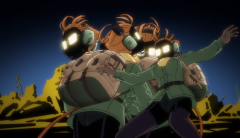
With a battle royale concept about 12 Chinese Zodiac warriors fighting against each other for a grand wish and penned by Nisio Isin, Junni Taisen had a lot of high expectation from the anime fandom. We’re pretty much guaranteed to have colorful larger-than-life characters, creative killings, cool lines and exciting battle sequences. The involvement of Nisio suggested that the show might be a tad bit talkier, focus more on characters instead of the overall battle and it could be a deconstruction to the battle royale premise. Well, in the end, Juuni Taisen isn’t what you expect it would be, but not for good reasons. What we have instead is a half-baked story that never quite spend enough time for its cast, a plot that has too much flashback and too little present plot-progress and a production that falls apart like a mutilated zombie.

In order to understand how Juuni Taisen structured the way it was, it’s best to look into their own backstory. Juuni Taisen is an adaptation of a Light Novel that served as a prequel to an one-shot manga about granting one’s wish (my thanks to the commenter who pointed it out), as a result, with the winner pretty much known and the basic groundwork about the Zodiac Wars already established, Nisio decided to narrate the Zodiac War in the reserve-order of the Zodiac signs, as well as its death order. Which comes to straight to the first issue of Juuni Taisen, it becomes predictable that kill half the fun of the battle royale concept. “Predictable” isn’t the same as bad, I must add. But my issues lie in the fact that this tournament doesn’t need to be predictable. Unless you have a sound reason to kill the Zodiac Warriors in that order (which the show doesn’t), it makes no sense whatsoever to rely on such arrangement.

Which also comes to my second point, if viewers come to Juuni Taisen expect a spectacular, brainless action show, they will bound to be disappointed. The fight sequences are decided short and anticlimactic. The pacing doesn’t flow very well because sometimes it spends too much time on flashbacks. There is a significant chunk in the middle part where the present-day moves so little it adds nothing to advance the plot. The huge amount of flashback, its talky nature and the decision to focus on one character per episode mean that Juuni Taisen is more a character-driven piece than action-oriented.

In fact, memorable and colorful characters are Juuni Taisen’s greatest assets. They are not particular deep but they all stand out in their own ways and fit to the narrative of this show like a glove. At its best, Juuni Taisen can develop characters with heart and soul, characters who we can identify and root for. The female cast, in particular, all are developed just about enough for us to care and still want more from them. Chicken, Monkey and Tiger’s stories all have their tragic side that make them utterly relatable. At its worst, Juuni Taisen can ponder too long to the flashbacks that halt the story progression, and worse add next to nothing on what we already know about the characters (hello Snake and Dragon) or too short that we don’t have time to learn more about them (Horse’s flashback is entirely about him trying to enhance his physical body. Dog’s flashback, likewise, is all about his strategy). In the last episode when the show spends some more time to flesh out the entire cast by having Rat asked them about their wishes, it hits home again because those characters are vibrant enough to lighten up the show.

Judging Juuni Taisen in a story department, in the end I consider this story branch fairy weak and uninteresting. Since this is a story about Rat as a protagonist it comes as a given, but I would love to see the retake of other possibilities as I still believe many characters still aren’t developed to their full potential. Not only the characters, but the settings and the implication that powerful people use the Zodiac War as a real-world proxy war are under-explored. For example, the tournaments that occur every 12 years sound nice in concept but inadequate in practice, because it suggests that the tournaments only happen in one animal sign only. Running through the series I still don’t know for sure how popular the Zodiac War is to the common people. If this War is supposed to be a Warrior’s pride then the show fails to develop it properly too.

Aside from the plot progress of the current tournament, the Warriors’ flashbacks usually fall neatly into 2 extreme settings: their mundane normal lives (Monkey, Sheep, Tiger, Rat) as a way to show those Warriors as normal people, and the battlefield (Boar, Chicken, Sheep, Horse, the twins, Tiger, Bull) where it serves to underline our characters as Warriors. Juuni Taisen seems to have a cynical attitude towards the war. War does affect badly to some of our warriors, and the violence of war is sudden and cruel, but that’s the world they live in so they have to accept and make the most out of it. You see, its central message isn’t really profound, or plausible, but I suggest don’t delve too deep into that because Juuni Taisen doesn’t seriously care about it either. All the show cares is to displaying those characters with different viewpoints and attitudes about war and the violence it brings.

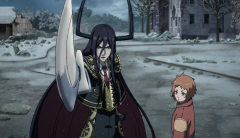
Graphinica studio is mostly known as a CG anime studio, and with Juuni Taisen as their first full hand drawn project, it does hint us something about the production values of this show. For the first few episodes, the production was solid with some dynamic fight sequences, but as the show goes on it starts to fall apart with off-model characters, clunky animation and overall unattractive aesthetic. The character designs, on the other spectrum, is so outrageously ridiculous and over the top they stand out as one of the most memorable feature in the series. I would never forget a character with stripper suit, a bunny tail and a high heel. As a whole, Juuni Taisen is decidedly not an action campy show it allures people to be, and that’s not often for its benefits. But still, I would recommend Juuni Taisen to other viewers, since it can provide many deliciously striking sequences, memorable dialogues with its memorable cast. You will have a delicious – if a bit uneven – time, just don’t expect a full-blown action show or a solid show with deep message.

Houseki no Kuni – 12 [New Work]

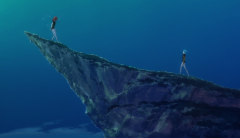
And this phenomenal anime has come to an end, at least for now. This finale is pretty much a calm before the big arc coming up, and further solidify the extend Phos has been growing so far. Well, Houseki isn’t very subtle on this by showing the parallel between this finale and the first episode. Again, we have the meeting between Phos and Cinnabar as the emotional chord, now with Phos’s offering the new job to their Crimson friend. Again, mirroring the very first sequence of the show  we have other Gems calling out for Phos to meet Kongou-sensei. While in the first episode Phos was lying on the grass doing basically nothing, this time they’re standing at the edge of the cliff and clearly have a goal in mind. It comes to a full circle, which is kind of appropriate for a heavily-Buddhism theme like Houseki. Many viewers might consider this ending anticlimactic, but I really like the steady progression of how the story unfolds and particularly how Phos has matured slowly but firmly since the start of the season. Even Phos reflects on the change with sad sentiment, a loss of innocence that they will never go back to the way they were before. This is one of the most well-developed anime character arc I have seen in awhile. Well done Houseki.

But not only Phos, this episode also shines on bringing other Gems to light with many hints of their backstory, while further highlights their colorful personalities with surprisingly relatable traits. Take Padparadscha for example, the beautiful Swiss-cheese holes Gem just waking up, having a walk at the shore and then falling back to sleep all too soon, but they sure catch up well with the situation and leaves a lasting impact. They’re the one who give Phos a much-needed advice: keep their composure and be mindful with their actions. Adding to that wise advice is the way he wears the uniform: loose shirt, uneven pair of socks and cool demeanor make him a total winner to me. But even Alex (Lexi), Zircon and Yellow Diamond all give their own stories that rooted deep in their insecurities when it comes to their roles and the fear of losing their dear comrades. Phos, on that note, had experienced both those issues, but it becomes apparent this time that the other Gems also have experienced them in some degrees too. Alex determines to learn all about the Lunarians as a reminder that they took Chrysoberyl away (the way they love trivia and cosplay Kongou sensei, by the way, are awesome). Zircon, on the other hand, feels deeply nervous around Bort, and their insecurities of having Phos surpassed him despite being the same age.

The biggest hint about the Lunarians comes from Phos’ attempt to isolate one of the Lunarian and try to talk to the figure. The Lunarian’s eyes come back into focus, or to put it better, they regain conscious. They even mutter something before got swept away by the toxic of Cinnabar. This makes me thinking what if the Lunarians are mind-controlled as well, just like the poor Admirabillis? All we know at the moment is the Admirabillis were captured and lose their consciousness in the Moon land, and the Gems are systematically controlled by Kongou-sensei, so it’s reasonable to assume the same fate with the Lunarians? Kongou-sensei obviously is the key to open the door full of secrets here, although Phos’ current decision to come over the Moon to see their side of story is a very logical move. After the Moon, the next target should be the Snails, right?

I still can’t put my finger on how much Phos still remembers Cinnabar and their promises, but it sure isn’t a good sign that Phos starting to lose their memories and Houseki suggests that as time goes on, when Phos loses more of their body parts, they will no longer have those important memories too. But their last encounter brings a lot of raw emotions to the forefront. Cinnabar still leans on what Phos promise, every single word of it, and the scene where they ran off Phos and showed their vulnerability speaks volume considering how they tend to avoid showing any emotions towards other Gems. It’s a hard job, and not necessary a rewarding one, where they team up with Phos to offer an opinion, or rather a contrasting opinion. I’m looking forward to see how the outcast duo will fare when they go up to the Moon for an enlightment.

Overall, what a ride! While I still bemoan for Houseki ending too soon and we have to wait for a certain amount of time for the sequel to come, if ever, I would definitely say that Orange studio had succeeded on their gambles of using fully computer generated to the entire show. The animation is dynamic and inventive, the visual is striking with symmetrical visual, moody color palette and the comedy is unexpectedly slapstick-y that somehow fit the tones of this little gem. Houseki is a treasure and I really hope they greenlit for the second season. This story is deserved to receive a full adaptation. The Gems must live on.

Girls’ Last Tour – 12 [Collection – Friends]

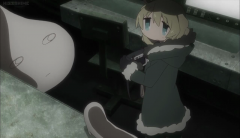
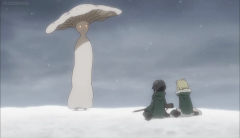
I am glad that this little dark moe show that mostly flies under the radar in this Fall 2017 ended in a high note, and Girls’ Last Tour has been really consistently solid to begin with. This is a fitting ending for a slice of life show like this, further reconfirming many elements that make Girls’ Last Tour stand out in the first place: its intriguing world setting, the bond between our two girls Chi-chan and Yuu, and still manages to surprise us in many ways. The only element was missing in this last episode is, surprisingly, its laid-back slice of life theme. This finale takes a look back to the past where humanity was still dominant, then to the present with those no-leg white caterpillar turn mushroom creatures, while at the same time give those girls a push to realize the importance of each other in their lives.

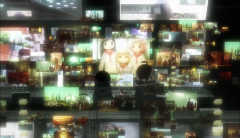
This first half is easily my favorite chapter of Girls’ Last Tour. As the girls taking pictures of themselves, the camera’s automatically syncing with the big screens and all sort of pictures, and videos from the past come into play. The girls obviously don’t aware much about those old storages, so it’s a nice surprise for them to witness the old world, the traditions, the people that no longer exist in the world. It’s a whole world’s history that play in front of the them: a group of girls presenting their latest project, a newborn baby, a sport event, the ongoing war… and the toss and mix between the tones of those events that gather a grand and epic feeling to the girls, and to us the audiences as well. Here I must compliment the precise editing of Girls’ Last Tour. Those video segments from the past play out seemingly out of order, but they hold the emotions very well, even the music helps strengthen the feeling. Those videos play a nice contrast to this wasteland the girl’s living right now. Full of people, full of life with vibrant colors in contrast with this dull, grey world, but in essence the dull world is one part of the rainbow color that makes life so interesting and full of wonders.
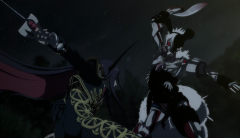
The second part focuses on the new creatures that appear out of the blue, swallow whole Yuu. At that point of time Chi-chan has to experient the important of losing Yuu in her life. Those creatures turn out do not look for human flesh, but rather the energy left over after the human race destroyed itself. Their objective is to swallow and “clean up” all the remnants of warfare, and effectively put the world into an inactive state, and that will be the new state of the world (they need to destroy all the bads before resetting the world again), albeit at the cost of the human race, and our two girls in particular, who were deemed as the last human on Earth by their calculation.

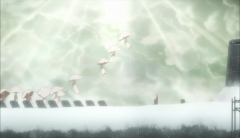
Those creatures transform into a flying Mushroom is weird but pointed criticism towards the consequences of war (Mushroom smoke anyone?). They are, after all, the very product of the destruction the human race had left behind. Their companion Cut is gone way too soon too, and now, with nothing better to do except knowing full well that the world is going to be destroyed, the girls confirm their bond to each other and continue on with the journey to the highest level. I had never expected Girls’ Last Tour to be this consistently great so it was a nice surprise for me and I love every moment watching and blogging this under-the-radar show. Amidst the post-apocalyptic hopeless world, the girls prove once again that all you need to do to survive is enjoying the little things in life and keep moving on.

Juuni Taisen – 12 [The One Wish That Must Be Granted, and the Ninety-nine That Can Be Done Without]

This last episode of Juuni Taisen centres on Rat pondering around, deciding on his ultimate wish after winning the Zodiac War. In a way, Rat is the perfect protagonist to explore the nature of wish-fulfilling, because unlike other warriors who have strong personality and have their wishes fixed in mind, all Rat wanted was to survive the Zodiac War. To add more trouble to that mix, he’s totally pessimistic and has little interest in what he really wants. So all Rat does is to weight all the options, and ask his past companions about their own wishes. The results are vastly different from one character to another, because simply they have different sets of value so the “wish” only works for them. To a certain extent, wish is a form of self-fulfilment, as you only wish for something that you don’t or can’t have, as a result what the characters wish for bring out their own insecurities. While I didn’t and still don’t care much for Rat character and his wish, this finale manages to flesh out the cast who have depth in various unexpected ways. As a consequence, although I don’t buy at all Rat’s ultimate wish (for me it’s anticlimax and nonsense as fuck), I still think we have a solid last episode that present well the nature of wish and give the big cast the last victory lap before the show itself fades out.

As we see the various deleted branches in Rat’s hundred possibilities, it’s worth noting that right at the beginning of this series, even before Boar steps into the building, we’re already on Rat’s winning route. The reason why? In other possibilities, Snake was still pretty much healthy and alive; and in one of the route especially, Snake was chopped down by Bull so that he can use the flamethrower to destroy Rabbit’s maniac Necromantist ability and in another reality, Rat is killed even before he entered the elevator. Sheep and Boar don’t give us much of what we already know about them (except for the mannerisms, Boy do I love Boar’s joy and pride when she says her wish). Chicken and Horse give us exactly what they fear, their own weaknesses. But it’s Dog and Rabbit who completely caught me off guard by breaking a bit of their characters, giving them a bit of soft side that we now know maybe just little more about them. Dog rescues a girl and becomes a guardian of that girl and the girl gives him a purpose in life (I know it sounds cliché but frankly, I can live with that). Rabbit, with his obsessions of making everyone his friends, and he’s truly committed to do that. It’s the one wish I’m glad didn’t happen because if it was, the world will become a freaking zombieland.

For all the strengths of his ability, it appears that the ability is more like a curse to Rat because he’s the only one who remembered all the deleted routes, meaning he experienced and remembered vividly all the other 99 occasions in which he had been killed. Again and again. Having option for all the possibilities also means that when it comes to making a proper decision choice, he’s slow and undecided and on the verge of nervous breakdown. Wanting to forget all that happened makes sense to Rat, since he won’t be bothered to remember all the possible paths and thus, becomes a bliss of ignorance – what you don’t know cannot hurt you no more ‘yeah yeah’.

Overall, I consider Juuni Taisen a missed opportunity. When Juuni Taisen remembers to flesh out the characters, it shines on. The Zodiac War, on the other hand, is poorly constructed. I still don’t get what the hell is up with all the “people” behind the big screen? Or I wonder do normal citizens know about the game at all? If they do, why no one recognize Rat? If they don’t, why the Zodiac war important at all? The plot progress didn’t manage enough twist and turn, with many unnecessary extended flashback and what’s up with Rat who disappeared 80% during the game? The production fall apart like Rabbit’s zombie patched body as the show went on. This might be my second least favorite show of this Fall season but I don’t regret the time spending watching and blogging it, because Juuni Taisen is still a fun and perfectly functional mindless trip. Just don’t look too critical on it.
Girls’ Last Tour – 11 [Culture – Destruction – The Past]

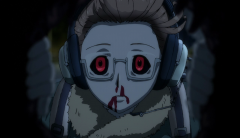
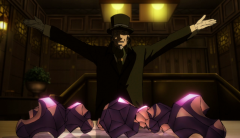
Despite its moeblob nature of our two girls, Girls’ Last Tour still keeps up its lowkey depression – such element that make this show so grounded in its world. In this episode, that stark, depressed nature of the world comes in full light with the focus on weapons and destruction. It starts small with a bullet and our weird animal friend “Cut” who can digest such bullet. Whimsical nature aside, it has its point on how that creature survives and evolves in this dead world. “Cut” is a product of this post-apocalyptic world, with shells of bullets and corpses of machine scattered all over the surface. In other to survive, what is the better source of meal than those bullets? (whether it’s nutritious is another story). Moreover, this episode we can see our animal friend having some basic communication with the girls (which is freaky when you think about it), and their hands can serve as a power supply and/or key to start up the systems. When it comes to the war stuffs, our adorable pet surprisingly knows its way around that it makes me feel it was their roles all along. Now, even Chi-chan notices the resemblances between the pet and the stone statue, which my guess for now is that they’re probably one. Despite its cute voice and its even cuter reactions, this pet is one of the freakiest animal that I’d be happy to stay away from.

Yeah, this week in Girls’ Last Tour starts small with a bullet, but then it progresses to something bigger, and much more destructive. The girls find themselves inside the machine that fire missiles. Yuu, in her normal curious state, presses another button, and the whole city is down in flame caused by the laser beam. That intensify of destruction is used fairly well in this episode, starts with some dysfunctional tanks, to the collapse of a machine, and then to the destruction of a whole city in mere seconds. That was a shock, and I imagine what happen if there were any life destroyed by that careless action. What if there were a person or a plant? Yuu quickly laughs it off because it’s fun, but then when the blame game begins she blames the machine first, then the old people who used that machine, then to herself. Sometimes mass destruction can be easily caused like this, powerful weapons in a hand of irresponsible people. Girls’ Last Tour goes even further though, as the girls’ next destination ends up being the forest of windmills (or are they antennas?) and the nuclear submarine that still functioning. It’s not a pretty sight at all: even when the world is destroyed, the weapon that could destroy the world all over again is still waiting for its chance to launch. That pretty much the reasons why Girls’ Last Tour is so balance. It blends smoothly between its moeblob, slice of life nature and its really dark, destructive settings. That balance makes the show still have its footing on the ground, while at the same time hopeful and light-hearted enough to remind us the beauty of keep on living and enjoy little moments of life. With only one episode left I really hope we have a finale that close this magnificent show in the most satisfying note.

Houseki no Kuni – 11 [Secrets]

With “Secrets”, Phos’ now in the middle of “loss of innocence” personal crisis. Well, they did reach that stage when Phos’ suffering over Antarc’s loss (in which he still hallucinates about Antarc’s present even now. Good job, Houseki), but in this episode, it comes to full force. Phos starts to break their trust towards Kongou-sensei, their teacher plus father figure (“breaking” in both metaphorical sense and visual motif). Not without a good reason though as the formidable beast (turns into fluffy harmless puppies this week, but that’s for later paragraph), as soon as he meets Kongou-sensei, he comes and greets him like a dog meets his old master. Kongou-sensei even plays several tricks and calls him by his name, with a manner that even closer and sincerer than with the Gems himself. Only Phos overhears his conversation. And only Phos, and Cinnabar to an extend (great choice of costumes there as only Phos and Cinnabar still wear the same old uniform instead of the new Spring uniform like the rest of the Gems, signify that they are different than the rest of the Gems), have that real suspicion about their Sensei. For others, that suspicion is like a moral code they don’t dare to cross, but Phos’ willing to cross it as their next move is to willingly be taken to the Moon so that they can learn about the Moon’s side of the coin. A promising adventure that will become a central plot thread for the second season, if one ever comes at all.

For me, it all makes sense regarding how Kongou-sensei has established a long history with the Lunarians from way, way back. I have tackled this before but Kongou remains an exception of the rules about the Houseki’s world so far. He’s the closest to “Human” to that world, the combination of both Flesh (gender-specific), Bone (he can crush everything) and Soul (all the Gems and what-seem-like all the Lunarians worship him). He obviously has something in mind to run things the way it is now, and that might not for the benefits of the Gems. The way he withholds many information about the Lunarians and the way he knows almost everything all suggest that he’s the mastermind behind this world, and at this rate I suspect that he will be the last person standing when Phos continues to transform themselves and learn all the answers.

Leave aside all the seriousness, never in my wildest dream that I could anticipate Shiro, the scary beast last week, turns out to be so cute, kawaii and fluffy like this. Or even the Gems steal their scenes by comedically stay true/ break a bit of their characters. Tale Alex/Lexa for example, who would’ve thought as soon as they look at the Lunarians, they turn into a maniac killing machine? Or Bort who enjoyed fighting so much couldn’t dare to hit those puppies? Or the first reaction Dia has when they wake up was upset because they didn’t have a chance to play with those puppies? I tell ya, they will fall head over heel if they ever watch a moe anime. How Houseki fuse seamlessly between thrilling action from last week and screwball misadventure this week without losing a hair of their identity is beyond me. For all the comedic tone this episode establishes, most of them work very well. What doesn’t work well, however, is the unnecessary Rutile – Padparadscha story that feel way too abrupted and way too late in the game. I admit I mildly interested in Rutile’s obsession of bringing the old Gem back to life, and the visuals are striking, but for the character that we haven’t heard once before, at the second last episode of this cour, in addition with Phos’ ongoing conflict on top of it, that shift is a total whiplash. It might work better in the manga version since there will be a progression to this Papparadscha character, but as the one-cour anime I would look for a tighter story because simply we don’t have much time to tell everything. Houseki, learn to cut off some parts of your body and patch it up somewhere more useful.

Juuni Taisen – 11 [To Treat a Man to Beef From His Own Cow]

To the surprise of no one, Rat wins the race by breaking in the right place at the right time with the right weapon. This is by no mean a coincidence, because later on we learn about Rat’s real power: “Hundred Paths of Nezumi-chan”, in which he can see 100 various outcomes and thus picking out the route where he can survive (the only route out of 100 scenarios). To save a certain plot progress, he “locks in”, just like in a game. Admittedly, his ability does make a good twist, but I can’t help but feel it’s way too overpowering. Your chance isn’t 1% anymore when you know exactly the route to the top of the mountain, right? With his win, in retrospective, I certainly appreciate Juuni Taisen more on their decision to kill off Monkey earlier. It was the move that turns the table to the entire race and flips the route expected from this kind of battle story. In other routes, Monkey might be our true protagonist and she might survive till the end, but this story is all about the Rat, so Monkey unfortunately draws a short straw here. Even Bull in the first half admits the same thing, that the moment Monkey turns into Rabbit’s zombie henchwoman, Rabbit becomes the force to be reckoned with.

Juuni Taisen also delivers one of its most twisted and awesome moment – almost at the same time, which I can argue that this single moment sums up pretty well the brilliance of Juuni Taisen: Monkey jumps out from the inside Rabbit’s freaking body and successfully catches Bull off-guarded. What the fuck? But then again, why don’t they kill Bull immediately? Doesn’t the Zombie who kill off the opponents can still bring them back to life? That explains the zombie birds, right? That explains why Rabbit was so furious when he couldn’t turn Horse into his zombie friend, right? Then, supposed that only Rabbit can do the trick, why doesn’t he shoot his blade like what he did last week? Again, this story isn’t given much thought into it, which is extremely frustrating. Juuni Taisen might have some interesting ideas, but not enough love or skill to carry out such intriguing premise.

Even Rat’s ability doesn’t execute well enough. We have a first-handed experience on how his power works: a game-inspired loop of whenever Rat fails to achieve the mission, he starts back and tries again. Except in this case he loses all the time. Imagine if the winner is either Bull or Monkey they would have left the place unscratched. So what Rat does instead is to explain his ability in an over-explanatory fashion. I’m vaguely interested in the deleted routes, however; like how he and Tiger form a grudging alliance in one path, or he and Rabbit unexpectedly hit it off in another. In any cases, it STILL doesn’t explain the decision to kill warriors in a reverse Zodiac mode, which eventually made the race boring, predictable and pointless. Alas, there is one wish that will be granted, and I bet it will have to do with the peace treaty Monkey has been prepared all along. Rat is the most unexciting character in this Zodiac Wars, so it’s hard for me to even care what he will wish for. Let’s just give him a good night’s sleep, I say. He earns it at least.