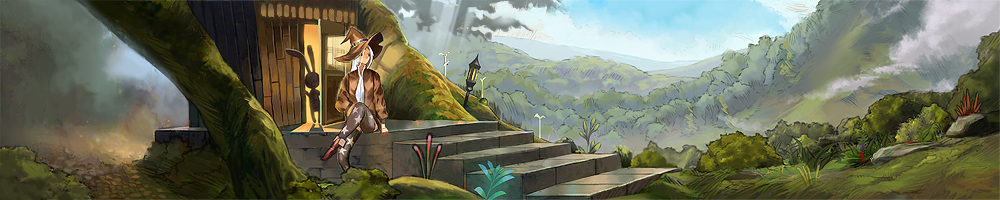
Uragiri wa Boku no Namae wo Shitteiru – 02


Yeah, yeah. I know I’m shuffling around series more than ever this season, but who cares, this episode was goooood. Consider Hakuouki dropped now, because Uragiri’s second installment did just about everything better.

I was a bit reluctant with this series. Not because of the gay undertones, but rather because of the prospect of another gothic show with angst and bishies. Sounds like Vampire Knight, doesn’t it? But really, the reason why Vampire Knight sucked wasn’t because of its angst and bishies. It was because of its completely shallow plot and characters and the horrid character of Zero. There have been plenty of good examples of series with bishies, and really: who cares about the homosexual undertones?

One of the biggest reasons why I consider this to be better than Hakuouki is the voice-acting, which was painfully rushed in the latter. It’s like the creators were “ah, just act like a hot guy and you won’t have to worry about being credible”; it’s the same thing that annoys me about all those cheap moe show. The characters here however are credible and don’t overact despite the angst. On top of that, the lead character is much, much more bearable here. Sure, Yuki isn’t exactly the most useful character, but at the same time with such a power as his, on top of being a girl in a guy’s body you can expect why he has emotional problems. And on top of that, he also isn’t the guy to run into a building full of murdering ronin without thinking things through. That also is a plus.

But what impressed me the most about this episode was its climax. Seriously, that was some really good combination of music, dialogue, atmosphere and build-up. I can also sense a lot of creativity in the art department: the gothic undertones are there, but they’re subtle, and the use of CG is the same. The plot itself also is quite creative: not in its ideas, but its execution. I really must praise the director for what he did here, and looking at his work, it seems that all of his works as a main director have been surprisingly solid: I loved what he did to Asatte no Houkou, Rescue Wings and Tsukihime: all had excellent characterizations.
Rating: ** (Excellent)

Giant Killing – 03


Another excellent episode, three episodes in and Giant Killing still is able to consistently entertain with its excellent chemistry. I love how, instead of trying to play as nice as possible, the coach seeks conflict. Now that Murakoshi isn’t allowed to take the lead anymore, the hierarchies that unfold are really interesting to watch. This episode also showed that he isn’t perfect: one of his experiments goes completely wrong and everyone just ends up arguing with each other.

A new player also makes his entrance, some sort of narcissist who actually turns out to be quite good. The next episode should be interesting to see what he can do as the new captain of the team. It’s pulling something similar to Ookiku Furikabutte: instead of building up, go against a really good team right away.

I also think that this is the series with the most amount of variety in terms of ages this seasons: there are teenagers, people in their thirties, we have supporters in their forties and also the kids are part of them. The only ones are missing are the really old people and high schoolers. And to be honest, I’m not at all sad about the latter.
Rating: ** (Excellent)

Hakuouki – 03


Okay, so now it is getting a bit annoying to see the lead character run everywhere, only to get protected. You can see that she really wants to help, and I can very much understand that she’s not going to get good at swordsmanship in order to be able to take on a number of adults, but when she runs into a building in which there are ton of angry guys waiting to kill everything that has to do with the Shinsengumi, she just jumps into the realm of the stupid.

In any case, with this episode it’s pretty much clear that the creators just plan to use the setting of the Shinsengumi for their own story: apparently Shinpachi Nagakura and Toudou Heisuke died of their wounds later on. Here, they pretty much survive. I doubt that the characters are actually going to Ezo at this point, but who knows. With the sub-par acting, it’s really going to depend on the character-development and the series’ ideas for its plot.

I didn’t like how the unnamed members of the shinsengumi are pretty much just cardboard cut-outs. Seriously, they don’t do anything; they just stand there and play for furniture that can draw swords. For the main plot, I really do want a bit more depth on the villains at this rate. At this point I’m still struggling a bit with the believability of this series: with some series it’s apparent that the creators did their research. Here it is not. It’s also the way in which the characters heal within like what? A week?

However, damn, that soundtrack was really good! When you just look at the pacing, then this episode was quite good. This is one of those series that you shouldn’t watch for its fights, but for its atmosphere, but that one was really good. The voice acting is bad at times, but the characters are getting fleshed out by their dialogue. This is one of those series that could get really good later on. Or it can just remain forgettable and a waste of time.
Rating: (Enjoyable)

Full Metal Alchemist – Brotherhood – 53


Wow, what an episode. Roy is back in the spotlight, and immediately steals it again. The action-scenes around him were just awesome. The animation, the way that Envy kept playing dirty and screwing up, it all worked wonderfully, not to mention that it was an exceptionally emotionally charged fight as we finally see him get the chance to avenge Hughes’ death.

And even though Mustang was incredibly powerful, it’s not like he god-moded himself through the fight as well: the creators made sure to not make this into just a one-sided bashfest due to that twist at the end of the episode: Mustang not taking into consideration that Envy could also change into Hawkeye. While not Darker than Black, this is another series in which being the strongest doesn’t necessarily mean being able to win every fight, and it does so without overdoing it by having weaklings win against incredible odds. Of course, this was a bit of a cliched cliff-hanger: the fact that we do not see Envy shoot means that he’s either going to miss, or just not shoot at all due to something (either Roy or the real Hawkeye) getting in his way.

And aside from the action, I also love those tiny details that are in the non-action parts of the show, like how during the broadcast, some of the guys had trouble holding in their laughs as they played around with the military on the phone. At this point, they really have nothing to lose, so they can really take such a risk of hacking into radio broadcasts, in order to gather up as many allies as possible.

One small bit of criticism here is the following: the past few episodes have really focused on a select amount of characters. I also would have liked what the characters who weren’t in the spotlights were doing. Not much, of course, just a few shots of were they were in each episode. For example, Hohenheim still is walking around somewhere, but we have no idea where that is. I actually think that it would make the series more complete if we occasionally got a small update on what guys like him, Al and also characters like Izumi and Father were up to.
Rating: *** (Awesome)

Heartcatch Precure – 11


Ah, a martial arts-themed episode. It follows a kid and his younger brother who are practicing Kungfu. At first I feared a boring training-arc (after all, the previous episode did show Tsubomi and Erika losing pretty badly). But this episode actually broke a ton of martial-arts cliches and stereotypes in the process.

What I loved about this episode was that it did not overestimate the powers of kungfu. Sure, when you master such a martial art, you can do some pretty neat stuff. However, it takes years before you’ll be able to understand it, and even more years before you’ll end up fully mastering it, especially as a kid. Most of these martial-arts arcs are very shallow, in the way of “ZOMG, I knowz kungfu now I iz awezome fighterzzz”. While in fact, a weak kid who knows a few years of kungfu still remains a weak kid.

This episode avoided making the mistake in having the episode end with the kid, taking revenge on his bullies by kicking their ass. In fact, his problems were perfectly normal: he stood out with his new hobby, and suddenly everyone expects him to be able to fight really good. Even though there’s no way that he’s going to be able to Judo away such a big kid. Instead, the creators had him take on one of those weak minions from the bad guys; you know, the things that anyone could take on. A clever way to show that he does have some guts when it counts. The entire episode also was not about him learning to fight and beat all bullies: the tensions between him and his classmates still exist at the end of the episodes and there was nothing like that “ah, I see you’re a good fighter now. Let’s all be friends and forget that we ever bullied you”-crap. Instead, this episode was all about that little brother who looked up to someone.

It’s because of these small twists that I love even the uneventful episodes of this series. You can really see that the creators put thoughts into how to make this work best, while not upsetting the already established fan-base of the Precure franchise by keeping true to mahou shoujo formula. In return, Tsubomi’s ideas of how kung fu works were a bit stupid. But can you blame her?
Rating: ** (Excellent)

Mazinkaiser Review – 77,5/100


Mazinkaiser is testosterone. In its purest sense. It’s completely brainless, full of action, fighting and needlessly yelling out attack names. it’s meant as a homage to the Mazinger-franchise, condensing its plot into just 7 ovas and one movie, and just about everything is dedicated to recapturing the essence of the many manly giant robot series that graced the seventies and eighties ad nauseam.

Just about everything here is over the top: the fanservice, the acting, the characters, the action, the explosions, the comedy. Who cares about that thing called substance? This series is really for those who want to see giant robots sending waves of badly named attacks at each other. It’s really something I would recommend to the fans of the cheesy giant robot series out there, because this series really knows its action: it’s greatly animated, and an excellent watch if you want to let loose of some energy.

But yeah, the problem really is that there is no substance whatsoever; and I really mean none. The plot is only about a bunch of robots fighting each other. If you’re not a mazinger fan here, then you shouldn’t even bother with this series. It’s series like this that, as a homage, have a select audience: one that’s already familiar with a number of other giant robot series. Overall, I too noticed that the quiet moments (in which nobody was fighting and the creators were trying to build something up) were just boring, simply because the cast is paper-thin and never tries to be anything more than they are, and even the action itself would have been more enjoyable had they actually had a bit of depth. Because of this, half of the action-scenes in this OVA failed to be interesting.

On top of that, this series also has lost a bit of its value after Shin Mazinger appeared, which did just about everything this OVA did, plus a whole ton of more things, including a bigger cast, character-development, and actual multi-layered plot and actual plot twists. Especially Baron Ashura in Mazinkaiser feels just a shallow shadow in comparison. The only reason why you would want to watch Mazinkaiser over Shin Mazinger would be the animation and I feel like I would have enjoyed Mazinkaiser a lot more if I had not watched the new Mazinger before it.

Storytelling: 8/10 – Knows it’s a homage, and does just about everything to recapture the mazinger feeling.
Characters: 7/10 – Likable, but no depth whatsoever.
Production-Values: 9/10 – Excellent animation, plus an over the top soundtrack that fits the mood perfectly.
Setting: 7/10 – Simple good versus evil. Very true to the Mazinger standards, but the setting feels just like a collection of random names.

Suggestions:
The New Mazinger
Tengen Toppa Gurren Lagann
Betterman

Katanagatari – 04


The big potential pitfall for this series was becoming too formulaic. You know, having every episode consist out of talking that leads up to a fight between Shichika and whoever holds the next of the twelve swords, in which we get to see the story of that swordsman examined. So what does this episode do? It just skips all of this in order to focus on something completely different. Nice. I love it when shows pull twists like that.

And on top of that, this episode was surprisingly intense. This episode completely reversed the parts of good and evil in this series. While Katanagatari wasn’t exactly a battle between good and evil to begin with, there always was a clear side of protagonists: Togame and Shichika, while the antagonists were also pretty well defined. This episode however… wow. Shichika’s sister is evil.

At first sight it seems a bit boring to have three random maniwani try to attack her, but this is really one of those cases in which the creators’ decision to go with double-length episodes pay off. If this had to be condensed into 20 minutes it would have just failed, but with forty minutes we really could get to know these guys beyond the shallow appearances that the maniwani had made thus far in this series. On top of that, Nanami’s monologues were really intense to watch in the way that she completely killed off the first people she was able to talk to since years, aside from her brother and Togame. It made for a very slow-paced episode though. This episode might actually have the most dialogue out of any Katanagatari episodes yet. Ah, those poor subbers.

Overall it was one of the best episodes so far, however it did seem that a part of the animators was on some sort of holiday or something. There was an unusual amount of still frames and extreme close-ups that were shot so that the creators wouldn’t have to animate the characters’ mouths. Thankfully it was nowhere near as bad as with Bakemonogatari, but it still stood out. With these series that show a lot of long monologues, it’s of course no problem if you cut away to a few photos and pictures to illustrate your point or show the surroundings, but there is a thing as overdoing it, and this episode felt to me like it was cutting a few too many corners.
Rating: ** (Excellent)

Angel Beats – 03


Let’s play a little thought experiment: suppose that instead of what she is now, Yurippe instead had brown hair, was a former construction-worker, had a brother who was a fired salary man, this series took place on Mars instead of a high school, and an ultra-powerful talking robot with a ditzy personality was working around. Do you think that people would have made such a fuzz about this series as a Zone of the Enders rip-off, as much as people are whining about the Haruhi references now? Even considering the difference in popularity between the two, I really doubt that anyone would have cared.

The thing is: what is original nowadays. Why are people complaining about the Haruhi references in Angel Beats, and yet with other series that are full of high school cliches that are apparent in thousands of other anime become ravingly popular. I don’t get it. In fact: what is originality nowadays? Just about every idea has been done before. The only way to be truly original relating to actual real-life news, but the way in which anime and manga are produced is just too limited to really take advantage of everyday news.

For example: it seems like the next episode will have baseball. Oh my god, they’re also ripping off Major, Ookiku Furikabutte, Cross Game, One Outs, Clannad, Toki wo Kakeru Shoujo, Blood+, FLCL, Touch, Sexy Commando Gaiden and a ton more series that have baseball in them. The thing is, that creators don’t have to reinvent the wheel for every part of their creation. If certain techniques, whether in cinematography, writing, animation or character-development worked in one series, then why not reuse them?

The thing that really matters is not the ingredients, but what you do with them: Angel Beats takes all its ingredients and creates a series that is completely different from Haruhi. It’s a series that focuses on entertainment, but also criticizes both authority and those who go against it. It’s in a setting which feels alive, even though everyone is dead. It’s both fast-paced entertainment and a serious story about characters who don’t believe in this thing called “fate”. For me, it’s done more than enough to set itself apart from other series, and it has plenty of its own ideas. In Haruhi for example, the concert was pretty much a one-off adventure. Here however the concerts form a core part of the story. Can that really be called a rip-off?

An example of a series that really is a rip off would be Omamori Himari of the previous season: it stole so many ideas and cliches from other series, but inserted nothing of its own. Now that’s what I call cheap.

In a way it also reminds me a bit of Argento Soma: apparently it’s supposed to be a huge Evangelion rip-off. But really: who cares? After the ‘big twist’ it goes completely into its own direction and becomes an amazing series with amazing themes. Or take Fantastic Children, which borrows a lot of ideas from Please Save my Earth. Does it suck because of that? Of course not!

Right now my biggest concern with Angel Beats is that the drama doesn’t really seem to work like it should. I’m not exactly what it is, but I’m still having a bit of difficulty connecting to the characters after they show their incredibly sad back-stories. I actually can’t put my finger on exactly what’s not working, but between the drama, mystery, comedy, adventure and slice of life that all come together in this series, I’m enjoying the drama the least. It’s not due to the fact that it rips off something, though.
Rating: ** (Excellent)

Durarara – 14


Hmm, it seems like the second half of this series is going to be a lot more focused: the pacing has become much more linear, and dropped most of the side-characters in order to focus on the main story-lines: Celty’s quest for her head, Mikado and the dollars, Kida and his past, and Anri and those strange slashers. In a way it’s a bit of a shame, but then again: the past two episodes have promised that all those separate storylines are going to intertwine like hell as the series goes on.

This episode was a bit of a calm before the storm; it was probably one of the quietest episodes of this series yet, but still it had one big development for Celty: openly showing her affections for Shinra, and later finding out that Shinra knew that his father was the one who stole her head and shipped it over to Japan. Shinra’s father is a bit of a weirdo, but he’s definitely an interesting addition to the cast. Also, something tells me that he’s not just wearing that mask for the sake of clean air. Perhaps he has some scars he wants to hide or something? In any case, I loved the way in which he revealed what he had done. Slipping such a 20-year old secret out on a whim. I love it when those series insert a bit of comedy with these big plot twists.

Interestingly enough, this episode provided a ton of background information: we now know what the slasher is, we know exactly what happened to Celty’s head, we know Izaya’s intentions and how he’s trying to bring Celty’s head back to life. Most of the questions that the series has asked have actually been answered now, with the biggest question marks that still remain are the background of Kida and Izaya, and what happened between the two of them. And considering that there are still ten episodes left, the creators have built up quite an interesting foundation to start playing with. Rather than revealing everything at the end, it’s definitely an interesting approach.
Rating: * (Good)

Ookiku Furikabutte – 29


And so it has begun: the next one of the gruelingly long baseball matches of this series. However, that’s exactly the reason why they stand out: the creators skip hardly any of the pitches. Even the unimportant innings are fully animated. It really makes the matches much more unpredictable than your usual baseball matches.

And like with the first season: the creators waste no time in fleshing out the team that the lead characters have their match with. They gave all of them so var a personality, even the ones who aren’t ace or pitcher. Take that batter before the ace, for example: it’s a small touch, but having him feel a tad under-appreciated under all of the attention that their ace is getting is a nice touch. We also get to know the pitcher a bit more, who seems to be a person who likes to be in control. It’s interesting how he feels like that team’s Abe, and the Ace feels like their team’s Mihashi.

Also, while I am a baseball noob (all of the things I know about the sport are from playing softball in high school at PE (and sucking at it) and watching anime as a student), I’ve been wondering something: why is the fourth position so often reserved for the team’s best hitter? I mean, it only works in the very first inning, when one of the first three batters manage to score a hit. At the rest of the innings, it’s completely random how many people he’ll be able to bring home as a cleanup hitter because all of these games can progress so differently. To me, it actually seems the most logical to stuff the best hitters at the first place: this way they get as many chances as possible to get a good hit out of the pitcher, and score a point.

Also, is it me, or does Ookiku Furikabutte really have the best animation of this season? I mean, it doesn’t have the eye candy of Sarai-ya Goyou, nor the money shots of Angel Beats nor the background art of Senkou no Night Raid, but there are no still frames, and there really is a ton of movement in this series. And not just that, but the characters all just move naturally; more naturally than anything else I’ve seen this season so far. Also take a look at those far-away shots: in most series they’re used as a bit of a cheap trick: people far away require less detail. With Ookiku Furikabutte however, the creators grab their chances to up the frame-rate even more: the animation at these parts is incredibly smooth and realistic.
Rating: ** (Excellent)