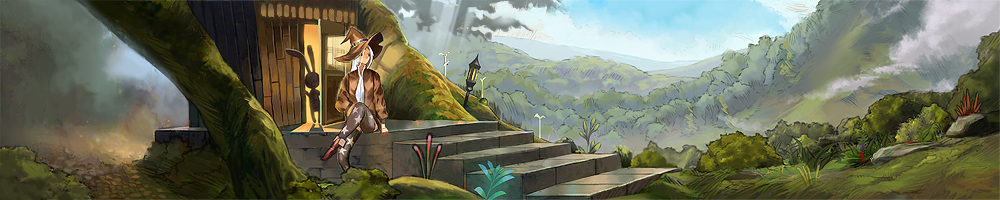
Mawaru Penguin Drum – 24

The point where I realized what the Penguin Drum was came at the beginning of this episode, in which we saw the caged Shouma and Kanba, and Kanba found the apple in his cage. There, it all made sense: Kanba would share the apple, and they both probably would have died if that apple wasn’t there, making their lives even more fragile than Himari’s. At first I thought that those apples were a symbol for Ringo, but the way it kept being used in the second half just didn’t add up to that. It still remains interesting that at the beginning of the show, the penguin hat sent the brothers to Ringo of all people. But in any case, it remains very cruel what this implies: in order to save Himari, the lives of Shouma and Kanba were needed.

And it is as I hoped: this ending really is amazing. The story came together wonderfully. The characters reached their catharsis. It all fitted really well. It’s not like all questions were answered, but in this case I believe that this doesn’t matter much. This show answered enough things and the rest is just up to our imagination. There is more than enough room to fill in the blanks. This series relies really heavily on symbolism and the surreal to paint its story anyway. What this show is in essence is a character study. And on that, it really delivered.

Overall, this show just completely dominated as my favorite series for the past half year. It was one heck of a step above all other shows that aired. Now that it’s finished, can I say that I like it better than Utena? To that, I unfortunately have to say no: this series is amazing, but I still like Utena better. It just as more fresh, it had better character development, it could take more time to show off its cast. And even then, Penguin Drum still remains as one of the best two shows of the year. I’m not yet sure which one is the best, but I’ll get to that in my 2011 summary.
Rating: *** (Awesome)

Un-Go Review – 87,5/100


Ah, the Noitamina Timeslot. It’s been going solid for more than six years now. Making a Noitamina series is a tricky thing to do, especially with the way that timeslot has evolved during the past three years. Series in it need to be both ambitious, yet fit in a very limited time and space (with only a few exceptions). There have been quite a few who miscalculated on this, like what happened with No.6, Eden of the East or C. Or Library Wars, Jyu Oh Sei and Moyashimon for that matter.

Here comes a show that does this in a different way, though. Un-Go realizes that its time is very limited, and yet it tries to put a lot of stuff in each of its episodes. This is a formula that can screw up in so many different ways, and yet here the creators actually nailed that balance that gets everything right. This show is half-episodic and half-continuous story, and for each of its arcs, even the ones that just take place in one episode, it makes sure that their murder mystery stories deliver. It’s great at build-up, and the twists it delivers all kick ass. It’s fast, but never too fast or too rushed. It’s definitely something where you need to pay attention if you want to be able to get it, but that’s the great thing: it forces you to think and pay attention.

As for how this show managed to be able to do this? Well, it just has no space reserved to flesh out the characters. There are no scenes in this series where we can just see the characters take a bit of time, and show off their characters’ sides. Every scene and line of dialog has a meaning to the plot. This posed another challenge to the creators, because they had to find another way to make these characters interesting and make them carry the story. The result is that the characters are fleshed out through their actions, ways of speeches and their reactions. It’s all carefully intertwined with the dialogue. This doesn’t lead to the most memorable cast, but still to one that works. The characters in this series somehow end up being fun and nice to watch.

The mysteries in this series are also carefully intertwined with this series’ setting. It’s post apocalyptic, but it uses this really well to spice up its stories, and it does so in quite some imaginative ways. This series really loves to pull heel-turn twists, in which things turn out to be completely different from what they seem at first. You can definitely see that a lot of time was spent on the script of this series, and that makes it consistently enjoyable for those who are in for something with a very fast pacing. It may seem overwhelming at times, but it’s because of this that the creators were able to put so much in so little time and somehow make it work.

Storytelling: 9/10 – Some excellent mystery storytelling here. Very fast paced, though.
Characters: 8/10 – They’re not fleshed out in the usual ways, but they still have some nice details to them.
Production-Values: 9/10 – Very solid graphics, but in particular the music backs up the show really well.
Setting: 9/10 – Uses its setting really well in the backgrounds of each of its stories, with a great look at modern technology.

Suggestions:
Mononoke
Shigofumi
Yojou-han Shinwa Taikei

Un-Go – 11

And here we have Un-Go’s ending, which I must say pleased me a lot. There are some parts that never got answered, like what really went on in the previous arc, but this was very worthy as a finale itself.

Probably the weakest part was the motivation of the bad guy, which while plausible, also felt a little weak. I personally believe that he also had a grudge against Kaishou’s practices during the war, and that that together, along with coming in the possession of someone as powerful as Bettenou caused him to do it.

This was a great murder mystery though. What made it especially interesting was that Kaishou, despite being innocent in this case, still isn’t entirely clean. He could easily have pulled off something like what he was framed for, and I think that that was what made the previous episodes so believable. The string of revelations at the studio also was great. The pacing again caused the story to come together very nicely.

What’s also interesting is that this episode didn’t have the biggest budget. It was mostly just very good explanation and exposition, with one really big explanation. Suddenly Inga came up from out of nowhere and started chasing Bettenou with some awesome animation. It probably wasn’t even the case of a big budget here, but rather that Bones got themselves one really good animator, and specifically put him on that particular scene. It works perfect to give a bit of an action-packed climax here in an otherwise dialogue-filled ending.

Overall, this season was unique in the way that my three favorite series all somehow ended up airing on the same day: for me Penguin Drum, Hyouge Mono and Un-Go rank as the top of the past three months, and Aikawa Shou did it again. I really like this guy as a scriptwriter and with this, he also shows that he’s great at noitamina series. There still is a prequel OVA left, to which this episode dropped a lot of hints. Looking forward to it!
Rating: ** (Excellent)

Chihayafuru – 12

Whoa, they’re already heading to the finals here. This was just one episode worth of build-up and aftermath, keeping up with this series’ tradition of not dragging on at all. And yet, this episode did everything a build-up and aftermath episode should do.

It actually put a neat detail in for every single one of the character: Chihaya feeling overwhelmed, Desk-kun losing his interest in grades, Pork-kun going back to his teacher, Kanade understanding that she also has to learn the rules and habits of competitive Karuta… and that teacher who suddenly made a complete heel-turn when she found out how hard the characters are working. Kazuya meanwhile is a very reactive character: on his own he’s not that detailed, but he shines when he plays off of the others.

There also was this charming little part about Chihaya wanting to get noticed by her parents. It’s a nice subversion from when this trope is usually played: usually this sibling shadow is this impossible barrier that can’t be breached. In this show though, Chihaya is starting to shine on her own. Also, after seeing so many ditzy idols, it’s great to see Chieko, who puts on two completely different personas when she’s on or off camera.
Rating: ** (Excellent)

Tamayura – Hitotose Review – 82,5/100


It’s a common premise: you have a series that’s about a bunch of high school girls and you follow their daily lives; it’s that simple. It’s far from my preferred genre though, and I find myself bored with most of them. There are, however, exceptions. Having the guy who directed all of the Aria series behind this also helps.

The cast does need a bit of time to warm up (especially if you haven’t watched the prequel OVAs), but for me, this was one major step above the usual series in this genre. For one: it spends a lot of time on fleshing out and developing its characters. Every episode is dedicated to showing different sides of the cast, or having them develop as a character. This is all very subtly done, ad the characters themselves are all very believably acted, with some very impressive and fluid animation that remains very consistent throughout the entire series.

Sato Junichi also uses this one trick that also worked really well with Aria: well written dialogue and voice overs, containing subtle morals that all of the characters can relate to. It again works very well, and all of this leads to a very heart-warming series with a genuine cast of characters.

It’s definitely a series that needs to grow on you, because the characters definitely do not show themselves off right from the start. This does lead to a few annoyances that you just need to sit through, like a really big crybaby, or a character who does nothing but whistle. Plus Sato Junichi’s habit to go with the weirdest looking cats imaginable.

Nevertheless, if you’re looking for a heart-warming slice of life series then this is a very solid choice. This is very relaxing and heart-warming, and it’s short and to the point with only 12 episodes and 4 ovas.

Storytelling: 8/10 – It’s slice of life, yet things happen here. Excellent at creating a heart-warming atmosphere.
Characters: 9/10 – Well developed in a short time, excellent acting, although you do need to get used to the cast.
Production-Values: 8/10 – Lots of animation, fluid and consistent, and a very good soundtrack.
Setting: 8/10 – The town in which this all takes place is actually very detailed and fleshed out.

Suggestions:
Aria the Animation
Windy Tales
Hitohira

Tamayura – Hitotose – 12

The first part of this episode was pretty much what we expected: celebrating the end of the year by organizing a large exhibition, restaurant, shop and theater for the lead characters. Although it still was weird to see people celebrate the end of the year in a completely different way from what I’m used to. (What I’m used to is mostly staying inside, watching random television and everyone massively igniting fireworks all at the same time after the clock hits 12).

What this episode showed me was that Japanese really treat the end of the year as another festival, where you can informally visit a lot of places, hosted by all kinds of different people. Is that true, or was that an exaggeration by this series? Last episode there were perhaps a bit too many people who came to just view Maon’s performance, and this episode too had the characters acting like magnets for other people.

And then, this episode suddenly closed off with Sayomi taking them on another trip, and her car getting stuck. I must say, that was quite a creative way to end this series with. It was fully on-topic, giving Potte a reason to remember her father again, but at the same time it was so random and whimsical that it’s definitely going to be memorable, rather than the usual carefully built up ending or aftermath. I like it.

The past half year, Sato Junichi has really delivered. First with Ikoku Meiro no Croisee, and then with Tamayura. They filled in for each other perfectly: Tamayura didn’t have an as interesting setting as Croisee, it on its turn did not have the forced drama and had much better acting. I’d count neither among the best slice of life series I’ve seen, but at the same time both were really solid and interesting.

I tried following other slice of life series this year, but that didn’t work as well as here. I’m still not exactly sure why, but these two series did not try to be funny: they just let their characters speak for themselves. Nichijou could have been nice if its jokes weren’t so hit and miss. A Channel just degenerated into boob jokes, while Yuruyuri went down even faster with its lesbian jokes. Those just aren’t the shows I want to watch. These two series however had characters who knew who they were, a solid setting to back it up, meaningful dialogue. That kept my attention.
Rating: ** (Excellent)

Nurarihyon no Mago Review – 80/100


I really was not pleased with the first season of Nurarihyon no Mago. It started off decently, and then it went on… and on… and on… and eventually it forgot to actually deliver. As a shounen jump adaptation, its source material had plenty of time to carefully build up its story, and this show actually ended up dragging that out even more. That definitely was not fun.

In any case, the second season looked promising: the pesky build-up was over: we now know the major characters, and it’s finally time to get to the meat of this series. So of course this show dives into multiple training arcs that are dedicated to making the characters stronger. Do you see the problem with this franchise?

However, I have to give this sequel credit: it is much, much better than the first season. Studio Deen put completely different staff members on it, and they fit this kind of story much better. The direction in particular is excellent and delivers some impressive characterization. The graphics also got a significant upgrade: just about everything looks better here. The animation is more detailed, but in particular the art and camera angles are much more detailed and imaginative, to the point of actually turning this series into a show with a ton of eye candy (this show also has one of the best character designers out there, and with this season, you can finally see why).

The storyline for the sequel is also far from as flimsy as the first season was. It’s deeply rooted in the past of many of the important characters, and it actually means something to the cast. It’s much easier to sympathize with both the main characters and the villains (also rejoice: Rikuo’s annoying classmates are much more bearable and play a far less prominent role, to the point of actually vanishing for most of the airtime). So if only it didn’t break up its pacing so often.

Yeah, most series have an average arc-length of around five episodes. This arc lasts a whopping 24 of them. That’s just way too long, and by far its most nasty habit is that Rikuo just randomly gets pulled out of the action, in order to train, get stronger and acquire a new power. These training arcs are way too bloody long, and really prevents this show from getting going until near the end of the show. But at that point, it really takes off, and delivers a solid semi-ending. It doesn’t wrap everything up, but the emotional closure is really well done there.

Is it worth it to sit through 48 episodes of this thing though? Nah. All I can say is: it will get better. But the problem with shounen jump adaptations is that they just have way too much time to waste. The currently airing Hunter X Hunter is the first in a long while to actually avoid this flaw. I’m giving it a solid rating for its execution, but that’s only because I don’t include the first season in it, which you unfortunately need to have seen in order to get what’s going on here. Go for this if you’re really bored.

Storytelling: 7/10 – Takes way too bloody long to get to its point and breaks up its flow too much with training arcs. Otherwise very solid, though.
Characters: 8/10 – This arc finally is dedicated to the characters, and gets some good things out of them.
Production-Values: 9/10 – A surprising amount of eye candy in this show.
Setting: 8/10 – There has gone quite a bit of attention to youkai lore into this series.

Suggestions:
Tactics
Tenpou Ibun Ayakashi Ayashi
Pandora Hearts

Nurarihyon no Mago – Sennen Makyou – 24

Bah, the creators couldn’t go through with it. In this episode, Nue is defeated… and retreats, along with the other evil youkai around him. It’s a shame: this would have been a great point to just close off this series.

But this also settles it: for me, this series has ended right now. The thing is: Abe no Seimei retreated in order to recover. This will take about 1 year. So yeah, we’re going to do the bloody cycle all over again, and train for a full year to get stronger in order to be able to fight him again. I do not have patience for that. Even if there will be a third season, I’m not going to watch this. This is just right for a conclusion, I don’t want to watch this drag out any longer. This shows that even with a director who really fits this series, there’s only so much you can do with this kind of source material.

And besides, this episode was really good apart from the retreat. With this, this show at least left a good taste behind, rather than what happened last year. The fight against Nue was the action packed climax I had been expected, and Rikuo came with a very good way to defeat him: just use the power of all of his comrades at the same time. Things got even better in the second half, in which a dream sequence reunited all three generations of the Nura-clan. That kind of closure, I can live with.

Also was this really Studio Deen? I mean, the animation throughout this entire episode was really good here. The camera angles were just excellent, the use of colours was really good, and especially the sparring match between the three Nura-commanders was quite nicely animated.

After this though, I really do hope that Studio Deen will get back to what they were good at. They once were the studio that might be bad at animating, but made up for it by picking up a lot of shoujo and seinen, daring and original premises and deliver a lot of bold and new storytelling ideas. The last show that had that was Giant Killing, and even that show came after a long drought. Nurarihyon no Mago was nice, but it wasn’t why I became a fan of them. It’s such a shame to see talent go wasted like this, especially after how Gonzo is showing that you CAN crawl back up from these depths.
Rating: ** (Excellent)

Phi Brain – 12

You know, with episodes like this, can I really stay mad at this series for not making any sense? This episode formally introduced this series’ main villain. And suddenly this series wastes no time to inform us of who exactly he is, and what he means to Daimon Kaitou. The characterization acting was really good all the way with this guy.

Also, I’m starting to see what this series is doing with its puzzles here. I mean, due to the nature of Shinto, anime has had a tendency to give a lot of different things a soul: robots, computer programs, shrines, cards. But puzzles? That’s a first. I really understood that this show actually considers its puzzles as sort-of characters, rather than just a means to get to an end.

Also, the music. It stayed in the background for most of the series, but it feels like this episode introduced a ton of new tunes here. And what’s more: they all fitted within the atmosphere, and contributed to it. This was meant to be a bit of a nostalgic episode, and the music definitely portrayed that same feeling. The feeling of finally seeing a really good friend again after many years.

I originally looked forward to this show because of Sato Junichi. After that, when I learned how little sense this show made my interest waned a bit. But really: you can see Sato Junichi’s influence through this adaptation: the characters are just rock-solid. Now that they’re starting to develop, they’re getting more interesting with every episode. So yeah, it’s for kids. That doesn’t need to be a bad thing at all, as long as the creators don’t treat their viewers as mind-numbed idiots (which unfortunately is often the case). Thankfully this turned out to be the other side of the coin.
Rating: ** (Excellent)

Mirai Nikki – 11

This show is fun, but it just makes no sense at times. Yuki has no problems with falling down a height that would have easily killed him (its a miracle they survived it even with that truck there), but gets incredibly scared to cross a ladder over just one floor, from which he just could have lowered himself.

Also, with all those unfunny skits at the end I didn’t thin it was possible, but this show actually made me laugh during that scene. Yukiteru was completely stupid there, but because of that the comedy actually worked. That was really refreshing after sitting through all of these bad skits at the end of each episode.

I’ still hard pressed what to exactly think of Yukiteru. I mean, he’s not as bad or dull as Shu from Guilty Crown (tip: if you want to make someone the next Shinji, at least get his characterization right!), and instead he’s the exaggeration of all wimpy male leads out there. This leads to scenes where he randomly shoots police officers (wtf?), and scenes where he keeps whining about being hungry and completely fails to understand the situation he’s in.It has its fun moments, but it’s exactly that latter part that bugs me a lot, and I do think that that’s holding this show down a bit.

As for Yuno, she’s a lot mote fun, although there is one thing that this anime did that I don’t really like, and that is the way they used the “vaant eyes” of in this episode. I mean, at least try to create some suspense here. Right now they’re like this “psycho-switch” on this computer. It’s too un-subtle. I often dislike the way this is used in anime. It’s like hanging a sign over the character saying “oh look, I’m acting strange!”. I get that this is supposed to be over the top and all, but even over the top series can become better through subtle acting.

Also, as for the bad jokes in this episode outside of the skit: how did Yukiteru smell donuts from outside… inside a closed window?
Rating: * (Good)