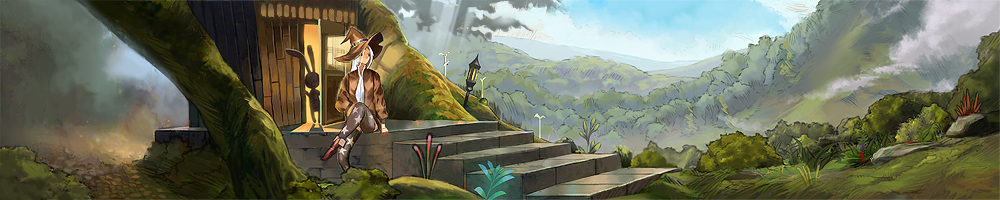
Casshern Sins – 07


Short Synopsis: Casshern meets a woman who wants to create a bell for her church.
Highlights: Interesting twist on religious themes.
Overall Enjoyment Value: 8/10 (Excellent)
The thing I like best about this series is not the main storyline, of how Casshern has supposedly killed the unkillable Luna, but rather the random stories that shape the world around it. At this point, I really don’t care how Casshern killed that Luna, all I want to see is those excellent stories, where Casshern walks around and meets random people, who each have found their own way of living after the apocalypse he caused. The fact that it happened is at this point just necessary backstory.

This episode is about a robot-woman, who wants to be create a bell in order to proof that she can bring something new to the world. I personally loved the architecture of the factory that she planned to put it on, and the one who came up with it deserves a lot of credit. She actually tries to turn Casshern into that bell, but that one obviously fails.

In any case, I really love what the creators tried to tell with this episode, how the girl tried to create faith by sounding the bell to lonesome travellers in the area, and how the robots alongside her just want to play games and not care about anything.

And well, I guess that Ringo and Ouji are this series’ Ricardo and Lilio (from El Cazador). There’s no reason for them to go the same path as the lead characters, but they just do. Just like El Cazador: it was annoying at first, but after a while it just became part of the series’ premise, and I got bothered by it less and less, and the same thing applies to Casshern Sins. In fact, I found it a nice touch to see them meet up with the woman after Casshern left her, so that we could exactly see how she developed.

Michiko e Hatchin – 04


Short Synopsis: Michiko meets a local party-girl with a few problems of her own.
Highlights: Drunk Hatchin was awesome.
Overall Enjoyment Value: 8,5/10 (Awesome)
With this episode, I’m convinced: Michiko e Hatchin is going to be an excellent series. The big question was of course whether the creators would make the random stories that will form the large part of this series well enough, and this episode proved that the creators are excellent at even that. This was one of these episodes where everything felt right, just like every single episode of this series since the second one.

I’m especially a big fan of how this episode progressed, and we got to know more and more about Pepe: she started off as a cocky whore, but then it turns out that she didn’t chose for that life of hers. She once was a rich lady, but lost everything when her parents died. It sounds really cheesy on paper, but the way the episode presented it made it really exciting.

I also really like Hatchin, even though she just had a supporting role in this episode. Seeing her getting drunk on what she thought was orange juice was hilarious, and I was also really surprised to see her still working at that restaurant, and how he hasn’t been sacked yet for just running off after the previous episode.

Kurozuka – 06


Short Synopsis: Kuro and the others attempt to vend off the attack from the bad guys.
Highlights: Very nice mid-boss fight.
Overall Enjoyment Value: 7,5/10 (Good)
Whoa, talk about the huge contrast with the relatively quiet previous episode. This episode just had one purpose: action, action and more action, and it did a really good job at that. So yeah, there isn’t much to say about this episode so this post is probably going to be rather short. I’m just a bit disappointed at the animation. Don’t get me wrong: it was of a very high quality in this episode, but I really hope that at least one episode in this series will return to the huge animation-quality of the first episode. Come on, Madhouse: you’ve made us hungry with that first episode, now provide something that at least comes close to it in terms of animation.

In any case, I must say that Kurozuka has become a pretty similar series to Ultraviolet: both are action-series with a plot that doesn’t try to be anything special, yet is fun to watch, both rely heavily on their style in their storytelling, both have similar character-designs in Kuromitsu and 044, and both make a lot of use of CG-overlays. I think the biggest difference between the two is that Kurozuka has a large animation-budget, while Ultraviolet had Osamu Dezaki.

Mouryou no Hako – 06


Short Synopsis: Toriguchi shares his theories with Akihiko.
Highlights: I can’t recall having seen any episode for the past year that had more dialogue in it than this one…
Overall Enjoyment Value: 8/10 (Excellent)
Wow… just wow. When I thought that the previous episode was full of dialogue, this episode becomes even more extreme: the entire episode, safe for a few flashbacks and the intro, took place in one room, featuring just three characters talking. Like mentioned above, the only episode I can think of that matches the amount of dialogue here is from Seirei no Moribito, when Barsa got her spear fixed. I really love these sorts of episodes, which are really mind-boggling to try and understand. But yeah, the hard part comes in understanding them.

I think that the first half focuses a bit on a side-story, when Akihiko shares a bit of background on the spiritual roots of the series. The drawing with the four gates that Toriguchi draw reminded me a lot of the four Gods that watch over Kyoto from the four different directions, but it also seems to be a drawing of a shrine that Toriguchi once visited, which resided on a mountain and had four different-coloured shines in the different wind-directions. I originally thought that that was something only Kyoto had, but it seems that there are more shrines of this type, with a smaller scale.

I think the whole point of that first half is that they’re discussing what Akihiko’s powers might be, and they move across different possibilities, like fraud or spiritual powers (which Akihiko both denies), in order to get a good comprehension of what he can and can’t do (which will probably be of a vital importance in the series’ second half, when these guys will probably start solving the case around the boxed murders). What caught my attention is that this series fully acknowledges that most mediums are frauds, despite being a supernatural series. I’ve only seen this at Ghost Hunt before, and it’s an interesting effect, giving the real supernatural effects even more of a mysterious flavour. Especially in this series, since we still haven’t got a bloody clue what went on back there in the research facility.

In the end, it seems that Akihiko prefers to be called a medium, as that’s where his powers seem to fit in best. I don’t believe he explained how exactly how power worked, but I don’t care whether he did or not, those are just mere details. The fact remains that this series is doing more than just basing itself off a few cultural references randomly grabbed from Wikipedia, but instead tries something much more complex, that goes beyond mere customs and folklore.

In any case, I found it pretty amusing that Akihiko thought that Sekiguchi and Toriguchi were merely visiting him because they wanted that background on his powers, but of course there’s much more than that. In the second half of the episode, Toriguchi reveals that he’s discovered quite a bit about the case with the boxed limbs. A strange guy came to him with a story he wrote (it seems that Toriguchi is also some kind of editor, explaining why he knows Sekiguchi), and his story sparked a few strange parallels to the box-murder-case. The guy didn’t seem to care how much he got paid for it, as long as it gets published.

When Akihiko analyzes it, it seems that the manuscript was written by a woman, and the writer somehow stole it from her. Toriguchi also suspected this, so he paid the guy a small visit at home. He wasn’t there at the moment, but he got greeted by an middle aged woman and old man, in a house with a room full of boxes, of the same kind of those who were found earlier, but the old man then scared him away. If I understood correctly, then the woman used an excuse of how the old man still needed to drink his tea to buy a bit of time for him, but then I wonder why he didn’t hide the boxes.

Toriguchi then tells about a how he spoke to a guy who lives next to the house f the old man who scared him away. People seem to call him Hyouei (or something that sounds like that). It turns out that he once was a famous box maker (hence the boxes, I guess). He seems to have become that because his father was also one, and it also seems that his grandmother had some sort of spiritual ability. He was quite famous, but at a certain point he became unable to create his boxes. He seems to have a wife and son, but Toriguchi couldn’t find out where they went.

The episode ends as Toriguchi tells how he found an old letter that Houei’s grandmother seemed to have written. It talks about a piece of paper, if I understood correctly. This piece of paper contained the word “Mouryou”.

So lately, I’ve seen some discussion about why we watch raws. I do so for a bunch of reasons: it’s consistent, I’m impatient, it’s the only way to watch unpopular shows as Les Miserables and Porfy no Nagai Tabi, and without subs and I can focus more at the visual expressions and effects instead of trying to keep up with the subtitles. This episode was obviously an extreme case of an episode that’s very hard to watch raw, but at the same time I love a bit of convolution once in a while. In this episode, when I watched it for the first time, a lot went over my head, but at the second watch, when I grabbed myself a dictionary, things suddenly started to make sense. And I can also rely on some of the commenters for filling in some of the gaps or mistakes I made (especially many thanks to Zerozaki for his patience to continue pointing out the things I missed or misunderstood for every episode. ^^;)

Bonen no Xamdou – 14


Short Synopsis: Furuichi freaks out once he sees Akiyuki again.
Highlights: Furuichi, obviously.
Overall Enjoyment Value: 8,5/10 (Awesome)
Finally Bonen no Xamdou is back! And what a way to return with such an episode; it’s here wehre Furuichi’s development finally comes together, and I really loved the way this episode unfolded itself.

Furuichi losing control was one thing, but what especially made an impression on me was how he behaved afterwards. I originally thought that the guy would simply die, but he till managed to survive the whole ordeal and got taken in by the forces of Sentan Island. After that, he escaped, and went back to the old couple that took care of him, in a perfectly calm mood. I don’t think the guy committed a real suicide, and that his real soul seems to be somewhere else. This is indeed the point in the series to suggest that there’s something deeper than just what the first half of the series would have us expect.

This episode also successfully eliminated my fears at Akiyuki ending up at a harem, because the episode ends with him, away from both Nakiami and Haru, when it seems that he now has amnesia and has been captured by what I guess are a bunch of circus-performers. I have no idea why the creators decided to schedule a hiatus right after the previous episode, instead of this one, which seems to be far more appropriate.

Furuichi’s animation was also wonderful, there was so much attention to detail, and I’m glad that the Xam’d fight with their bare fists. This turns the fights into much more than just throwing a bunch of flashy beams at each other. This series also really makes telling sound so easy: just progress everything naturally and don’t rely lazily on clichés, and yet it feels so much more creatively written than most other series.

Cromartie High School Review – 80/100


In terms of describing Cromartie High School, I think Jascii put this the best way: Cromartie High School is not about delinquents; “it’s about a bunch of morons who look like delinquents”. It’s Production IG’s shot at a comedy, and while it’s not one of the funniest things I’ve ever seen, it’s a very capable comedy-series nonetheless.

The fun in this series comes from the fact that even though the characters are all a bunch of idiots, they still try to be smart by engaging in huge debates over nothing, and they keep doing so with a straight face (many thanks to the animation, which remains consistent throughout the entire series). Every time a fight is about to take place, you can bet your hat that the characters will just talk endlessly about how they’re going to fight, and in the end they lose interest because of something else completely random that caught their attention.

That, along with the originality of this series make it a pretty funny short series (the episodes are only 10 minutes). The creators really try to toss everything they can think of at the viewers. We’re talking here about meteors, aliens, robots, grown men in bunny-suits and a Freddy Mercury-lookalike. This is more than enough material to keep the viewer from getting bore, so this series also doesn’t suffer from a lacklustre second half…

…although the characters do remain rather one-dimensional. There are also a bunch of characters with really inconsistent personalities, especially the main one: he changes from a complete moron to someone with actual intelligence, depending on the writers’ mood. There is character-development, but it’s pretty much become useless because of the episodes that seem to be aired in random order (one particular character is moves to America for a number of episodes, and yet a few episodes during this period show him like nothing’s ever happened).

Nevertheless, Cromartie High School is a quirky little series that’s good for a nice laugh. It’s got enough material to fill its airtime with (although it does at times overuse its running jokes too much, mostly the Afro-guy gets a bit too much airtime then what’s good for him), but I laughed a lot during this series.

Storytelling: 8/10
Characters: 7/10
Production-Values: 8/10
Setting: 9/10

Porfy no Nagai Tabi – 45


Short Synopsis: Paris is big. Mina isn’t there yet. Porfy’s out of money. So yeah, he’s still going to have to kill some time.
Highlights: Calm before the storm!!
Overall Enjoyment Value: 7,5/10
Porfy no Nagai Tabi is a very good series, but as I’ve mentioned before: overall just isn’t as good as Les Miserables, but one thing that it did do right was the OP: it fits for the entire series. In Les Miserables, people at one point were fighting and dying for what they believed in, and the OP still showed a bunch of little girls. ^^;

The episode starts as Porfy walks around one of the rich parents of Paris. Obviously, it’s not the most wanted part of the town by fortune tellers, so everyone acts annoyed at him, especially if he continues to bug them. A kind baker then directs him to the right places, and how it’s not the time for the fortune tellers to show up yet. Porfy then feeds some of the local pigeons and gets reminded of Apollo again.

That evening, Porfy sees the first cards since his arrival at Paris and idiotically mistakes the owner as Carlos. The supposed “Carlos” pushes Porfy away, who then hits one of the waiters, dropping one of his dishes. The waiter is very annoyed, although Porfy doesn’t seem to realize this because all he’s interested in is the food he just ruined: it’s Greek. Porfy says that he came from Greece, but the waiter obviously couldn’t care less. He then forces Porfy to the cook. Since Porfy doesn’t have any money and is familiar with the Greek dishes, he offers him a job. Porfy’d rather search for Mina, but the waiter, Xalupurous (Christ, what a difficult name), reckons that he can just search for Mina if he’s not working.

Alex(?), the cook, then shows him around and offers him a bit of food, since he’s a nice guy. It turns out that the restaurant desperately needed a new waiter since they recently sacked one of their old staff, and none of the French people was able to remember the right dishes. While Porfy washes the dishes, he chats a bit with Alex. It turns out that he was born in France, but his parents came from Greece. Porfy then accidentally breaks one of the dishes, making the waiter (I’ll just call him the waiter, since Xalopuro-thingy is just too complicated) gets even more angry. Later, when Porfy is peeling potatoes, he complains again because there’s too much of the potato wasted this way. The waiter then sends him to take away the dishes that are done.

One of the guests, reading a book, is getting bothered by a drunk. They struggle a bit, and she eventually pushes him onto one of the other tables. She however gets blamed for what the drunk did. The waiter tells her to leave, and even though Porfy tries to say that it wasn’t her fault, the waiter doesn’t listen and the woman leaves in anger, leaving her book. Porfy then brings it back to her.

A bit later, Porfy and Alex are finally done with the dishes. The waiter then pays Porfy with an incredibly small amount, due to the plates he broke and dishes he wasted and because of the book he brought back to the woman (he wasn’t supposed to). He then orders Porfy to be on early the job the next day as well. Porfy says that he doesn’t have a place to stay, but the waiter refuses to let him stay at the restaurant. Porfy then walks away, and runs into the woman from before again, who wants to thank him for bringing back the book. Apparently, she has been waiting for him, and overheard how he doesn’t have a place to stay. She introduces herself as Rose.

Porfy then tells her about how he’s searching for his sister, and lost just about everything, but Rose tells him to cheer up. She shows him around the house, and suggests how he should sleep on the couch in the living room, and of course take a bath, since he’s been sleeping outside all this while. When Porfy is watching outside, she takes him to the roof where they can get a better view.

They look at the stars for a bit, and then Rose says that she’s about to get to work. She puts on lipstick, and notes that it’s hard for a woman to be living alone. When she’s left, Porfy notices one of her paintings which has been flipped over. One of the faces of the painting has been crossed out with lipstick, and looks a lot like the actress Mina used to admire and the episode ends.

So yeah, it was a bit coincidental, out of all the woman Porfy could have ran into, but it’s a fascinating idea nonetheless, and the sacrifice the series has to make for it is more than worth it. I really like how, just before the finale of this show, the series decides to reserve two episodes to flesh out Mina’s love form movies a bit, by giving a bit of background for her favourite actress. After that, it’s really anything that could happen, and it all depends on how much time the creators want to spend on the series’ aftermath. There are seven episodes left, six if you count the next episode, which will conclude Rose’s story. I’m really curious to see how the final reunion will work out. The reunion with Alecia was downright awesome, and it’s now time to see whether the creators can make full use of nearly fifty episodes of building-up.

Mobile Suit Gundam 00 – 31


Short Synopsis: A-Laws prepares for the next wave of attack.
Highlights: Ooh, more background.
Overall Enjoyment Value: 7/10 (Enjoyable)
You know, in a way I’m glad that the creators decided to wrap up Saji’s story in this part of the story instead of waiting for this until the end, but really: it has to stop somewhere. He was the most annoying character in the second half of the first season, and as much as I hate to admit it, he’s also the most annoying character of the second season. I don’t mind how you can have a character like him on the show, but the creators are really giving him way too much airtime.

Every episode I keep thinking that the guy has learned his lesson, and for every single episode so far he’s proved me wrong. Okay, so he sees that he screwed up big time in the previous episode; He wants to help; that’s good. Unfortunately, the episode ended at the point where he was about to shoot down Louise, something which will make him even more emo than he already was for goodness’ sake!

Okay, so those were the bad parts. The rest of the episode was pretty enjoyable, to say the least. “Mr. Bushido” seems to be finally coming into action, and I’m interested in what he can add to this archetype. The overall episode was a good aftermath that did let the deaths of the previous episodes sink in. I’m also glad that Setsuna has grown up really much, and didn’t just try to get to Ali as soon as possible (like he would have done in the first season). The guy knows his priorities, and overall he’s turned into a capable main character for this series.

Meanwhile, I was pleasantly surprised when this episode showed some of Sumeragi’s past. She had this whole life as a soldier behind her, explaining why she knows so much about tactics, and why she fell into a slump after the end of the first season: she already had lost some of her loved ones at one time, and she tried to use the Gundams to forget about these times, but that pretty much failed after that final episode. Then Billy took care of her for the next four years, which also wasn’t the smartest thing to do because he kept reminding her of her past.

I’m also warming up to that silver-haired official, thankfully. His big disadvantage is that he doesn’t have the season worth of build-up like the other characters have, but he works very nicely against the other, more moralistic characters. I still think that the military people act a little bit too sentimental, considering how they’re supposed to be rigorously trained and should be used to the fact that anyone of them might die, but this is just me being nitpicky.

Detroit Metal City Review – 77,5/100


Studio 4°C is known from its original premises that try to explore the boundaries of the medium of anime. Once every five years or so, they release a comedy, and they too have these traits: think of Eternal Family and Kimagure Robot. The newest instalment is Detroit Metal City, a series that parodies a genre that hardly ever appears in anime: metal. The series was a huge success, and at the time that I’m writing this it stands as the highest-ranked series on AniDB. But then again, the second-highest ranking series is Code Geass 2, so one shouldn’t take these rankings too seriously.

In any case, Studio 4C’s experimental trademarks are clearly visible in this series. The character-designs look like no other series I’ve seen and they’re truly original, the art looks great, although the animation is simplistic. This is another comedy that heavily relies on its energy to keep the jokes going, and throughout its airtime, it makes a complete fool out of the metal-scene while offering some social commentary at the same time.

The major part of this series is about the lead character’s extreme case of multiple personality: on stage he’s a brute king of death metal, off the stage he’s a country bumpkin who likes Swedish Pop. The best parts in the series are when a Negishi’s fans get weird ideas after a simple accident, and even though they’re mostly over-exaggerated stereotypes, they’re a lot of fun to watch due to their bizarre imagination.

Ultimately though, this isn’t the best comedy out there. The comedy is really hit or miss: some episodes are hilarious, some are mildly entertaining, but others simply don’t work or drag on and the dull episodes outnumber the hilarious ones by a small fraction. In a way, it’s hard to get excited for such a series if you don’t know whether it’s going to hit or not. Thankfully, the final episode does deliver, so the series won’t leave a bad taste in your mouth.

So yeah, DMC is the least impressive out of Studio 4°C’s comedy-repertoire. I feel that if the creators cut the length in half, and removed the lesser episodes, it would have made for a much more exciting series. That’s what made Kimagure Robot and Eternal Family so great: they were hilarious, had some nice hidden messages here and there, and they were over before you knew it. DMC is a nice experiment for a series with a longer length than Studio 4°C’s usual works; it’s a good series, but not the best.

Storytelling: 8/10
Characters: 7/10
Production-Values: 8/10
Setting: 8/10

Jigoku Shoujo – 58


Short Synopsis: Two girls get a crush on Hone Onna.
Highlights: Talk about an elaborate punishment-scene.
Overall Enjoyment Value: 7,5/10 (Good)
This episode was really typical of the third season of Jigoku Shoujo: two girls are fighting over the love of Hone Onna, one using more subtle tricks, while the other blatantly threatened the other. The second one then ends up sending the first one to hell, and the next day she’s forgotten her crush and fallen in love with someone else.

If there’s one thing I’m worrying about this season, then it’s the lack of variety when compared to the others. It really seems that this third season is set in a high-school, and so it will be about conflicts between students and teachers, while the first and second season also like to show problems between adults at times (the lovable idiot, for example). I also wonder, since Jigoku Shoujo is basically confined to one area this time (since she can’t really move anywhere because she’s bound by Mikage), what are other people doing with their revenges? Does the website simply not work? The first season had this as well, and it’s an annoying plot-hole in an otherwise excellent series.

In any case, the ironic thing about this episode is that it’s basically Hone Onna who set up the two girls against each other. One oft he girls was awfully shy, but Hone Onna gave her a bit of courage, after which she started making the life of her rival miserable, getting sent to hell afterwards. Again, there’s a hidden meaning beneath this: adults meddling in teenaged business isn’t always the right thing to do. From a teenaged perspective, in any case.

This episode aso showed the first hint of an overall storyline: it’s now clear that Mikage is proving to be not the best vessel for her. Let’s see how this evolves throughout the series.