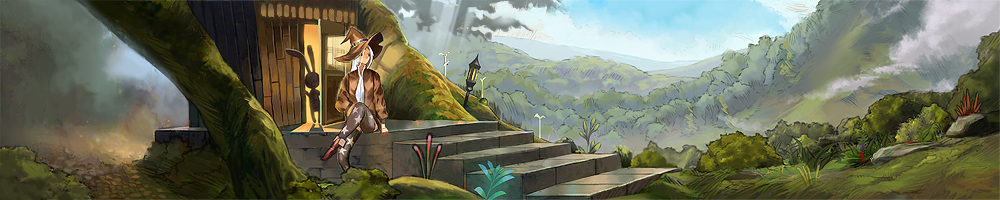
Casshern Sins Review – 90/100


One of the most unique series to start airing in the past Fall Season was Casshern Sins: a remake of a super robot series that aired in the seventies, but one that went into a completely different direction with just about everything. The result is a highly stylish series with lots and lots of things to like about it.

If there ever was an award for “Best Character-Designs”, then this series would be one of the top contenders. The art style in this series is really unique, and in fact it’s one of the most outstanding ones I’ve seen in the past few years. Just about everything in this series is a visual feast, ranging from the wonderfully drawn characters to the astonishingly beautiful background art. The animation quality itself isn’t anything special for most of the time, but it doesn’t need to be: this series is beautiful enough, even without a huge budget.

This series also stands out in its style of storytelling. The dialogue flows very naturally, and yet it’s deep, meaningful and very inspired without trying to sound pretentious. The pacing is deliberately kept slow in order to squeeze all of the potential out of the characters. It really was my favourite part of this series, because the dialogue flows in this series unlike any other series I’ve seen.

Casshern sins is a series about destruction and immortality, and a quite thought-provoking one as well. while mystery isn’t its main focus, it asks lots of interesting questions throughout its airtime that keep the viewer busy. As the lot unravels more and more, it really is the type of plot that requires the user to think in order to understand it all, because not everything is spoon-fed on a silver platter.

However, do note that this isn’t a series that only gets better and better. It’s divided into two halves: the first half is basically a travelling series, where the main character meets lots of different people. The quality is pretty inconsistent: some of the best and worst episodes of the series can be found here. In the second half, the main story kicks in, and the series becomes much more consistent: it pretty much continues at a steady pace, it never hits any lows, but also any heights are absent. This can become disappointing if you were hyped by some of the truly outstanding episodes in the first half. It’s the sign that the charcter-development never really came together in the end, although it definitely tried.

The only other flaw of this series is a rushed ending, though. The creators just didn’t take enough time for that final episodes, and the twists just come too fast to make the impact they could have had. But still we have ourselves an excellent series here. It’s fresh, original and imaginative despite based on a 1970s series. It doesn’t quite have the material to become an outstanding series, but it nevertheless has been a delightful watch for me for the past six months.

Storytelling: 9/10
Characters: 8/10
Production-Values: 10/10
Setting: 9/10

Casshern Sins – 24


Short Synopsis: The finale of Casshern Sins.
Episode Rating: 7,5/10 (Good)
Yeah, like expected: the creators tried to stuff too much into this episode and therefore it lacked the impact it could have had, but let me tell you this: if the right time was reserved to make everything in this episode give enough time to naturally unfold, this ending would have rocked beyond belief, and it would have been a great candidate for the best ending of the year. There were so many nice ideas in this episode, so it’s a bloody shame that the creators couldn’t have gotten their hands on one extra episode.

the big problem here that Casshern Sins has always been at its best in slow pacings: letting the dialogue slowly and fluently carry what’s happening. In this episode Lyuze and Ouji die within five minutes. That’s way too little. I could fully imagine that the material in this episode would have been more than enough to make four episodes of awesomeness: one about Lyuze and Ouji’s death, one about Casshern vs. Braiking Boss, one about Casshern vs. Luna and one aftermath in which we see Ringo grow up. The creators would have been easily able to fill that time within the episode.

But still I loved this episode, even though it could have been so much better. The thing I loved most about this episode was the final scene, in which we see Ringo grow up alone along with Friender. We never get confirmed whether she really is Leda’s child, but things are pretty certain here. Normally robots don’t grow, but she did, and she’s a teen-aged girl at the end of the episode. The only reason she could have grown into that was because she’s like Casshern, Dio and Leda. I appreciate it though, that the creators didn’t hang a sign over her with “look at me, I’m Leda’s daughter!!!”.

But yeah, what ever happened to that coloured rock?

In any case, it’s definitely been interesting to blog this series. In the end, it’s never really been my favourite series, but it sure as hell came close. My top 3 of the shows that started airing in the past fall season at the moment is the following:
#3: Clannad
#1/2: Mouryou no Hako, Michiko e Hatchin
I’m still not sure about the exact order between number 1 and 2, but I don’t think that I can include Casshern in it. It just… missed that extra something that would make it truly outstanding, and that I did experience in Clannad, Michiko e Hatchin and Mouryou no Hako. Nevertheless, it’s been an excellent series, with some of the most beautiful visuals out there.

Mobile Suit Gundam 00 – 48


Short Synopsis: It has arrived: the huge space fortress.
Episode Rating: 7,5/10 (Good)
I’m pretty surprised: while it hasn’t been anything amazing, the past few episodes have been pretty solid action. I was expecting the show to completely fall apart at this point… and it didn’t. Thumbs up for the creators. I’m never going to label this series among my favourites, but it’s still good to see that this ended up being such an enjoyable series.

So yeah, obviously Ribbons didn’t die. This really was the episode in which all hell breaks loose, and the body count was significantly increased: Regetta dies, Patrick dies for a second time, and Marie is also now potentially dead, though since we never actually saw her die, this means that she’s still going to appear in the next episodes. There’s still this matter of Allelujah vs. Hallelujah that needs to be taken care of, of course.

And yeah, of course I should have known that the big space fortress of this Gundam would be Veda: Ribbons’ headquarters. The army of clones was a bit too much, though. Especially since most of them seemed literally to have the intelligence of a bunch of flies more than anything. The biggest danger of these huge overwhelming numbers is of course the potential for power-level inconsistencies. Ribbons has been portrayed so much as the evil overlord that he seems nearly invincible at this point. But then again, he does have one weak point: when Veda’s gone, he’ll be screwed. It’s of course the perfect source of a grand climax: an exploding huge space fortress. Now all that’s left is to see how they’re going to do that. It’d be pretty anticlimactic if Setsuna would just barge in, hit the self-destruct button and flee outside again.

White Album – 11


Short Synopsis: Preparations for the upcoming concerts commence.
Episode Rating: 7/10 (Enjoyable)
AlexS has a very good point here: the characters here don’t behave like they are in 1986, they behave like modern day characters who have somehow lost their mobile phones and computers. Interestingly enough, answering machines were already invented and on the market in 1986, so why aren’t they used here? Having an huge focus on realism is a double-edged sword: on one side it’s awesome, and really allows the characters to shine, but the flaws become much more noticeable this way, and that’s what currently is happening with White Album.

Because it’s seriously getting harder and harder for me to like this series. I really want to be a fan of this series and its subtle execution, but these melodramatic scenes are getting harder and harder to take seriously. When I started this series, I guess I was hoping for a sort-of more dramatic version of Natsu no Sora, and the drama has really been excellent when it just involved characters talking to each other, but hwen they started crying and whining, I just couldn’t take them seriously.

The one crying in this episode was Touya, and this was really the most pathetic scene of the entire series. Idiot, if you want to see Yuki so badly, then go look her up! You’re daily making out with her manager, for god’s sake. Couldn’t he at least have asked her when she has a small break in her schedule? Besides, after all his flirting with Rina, Yayoi and Misaki, I’m surprised that he’s still genuinely missing Yuki.

But yeah, i guess that these characters are really meant to be hated. I’m going to wait until episode 13 before really labelling this show as overambitious, but that midway climax had better be damn good.

Birdy the Mighty Decode – 23


Short Synopsis: Birdy starts to search for Natoru.
Episode Rating: 8,5/10 (Awesome)
And so this series continues its string of utterly incredible episodes. Oh boy, it sure has set a incredibly high standard for the rest of 2009. It’s going to be interesting whether the rest of the year can produce another series that at least can come close to the level that this series has been at. This episode was mostly building up for the finale of this series (only two more episodes left!), but it did this so well.

I liked how this episode used the school festival in order to bring some more life into Senkawa’s school. It was only meant to flesh out the setting a bit more, and the rest of the episode was about something completely different. With most anime, such a school festival usually is the most important topic going on.

But yeah, while the death of this episode was probably the least brutal of the bunch, it yet again made a lot of impact. In this case, Nataru only lives for his revenge, and he doesn’t care whether he has to slaughter children who never were the masterminds in anything, he just kills using the powers he obtained. It’s promising to be an incredible finale in any case.

I also wonder what the purpose was of Capella’s arrest. Was it just to wrap up one of the loose storylines, or was it meant to give the old hag a bit of development? It was pretty hilarious that she turned in Capella after keeping her in hiding for so long.

In any case, one thing in which the past Winter Season has stood out for me was the huge amount of series with good villains: the villains here are victims themselves, who have all the reason to defend themselves because Nataru keeps killing them off, and it’s not just this series: Satoshi in Michiko e Hatchin has been one of the best villains I’ve seen in a long while, Casshern Sins, Jigoku Shoujo and Tytania love playing with the definition of ‘villain’, and shows as Hajime no Ippo and Shikabane Hime Kuro have superbly characterized villains. Nearly all of them have intentions other than “I want to destroy the world because I’m evil”. Before this season started, I really disliked them, and hardly any series had a good villain. The only series in 2008 with really good villains like the ones shown in this season were Mouryou no Hako, Kaiba, Shion no Ou and Gunslinger Girl. That’s four series over an entire year! That’s nothing!

Jigoku Shoujo – 75


Short Synopsis: A boy who is bullied by some of his classmates calls Jigoku Tsuushin.
Episode Rating: 8,5/10 (Awesome)
When talking about episodic series about a school setting, then the bullied kid is often a very popular storyline (or take any dark series set in school). I really have to say that this has been the best story about bullying I have ever seen. One of the most thought-provoking episodes of Jigoku Shoujo yet and yet again an awesome addition to the finale of the third season of this series.

Nearly always, these bullied stories are very exaggerated: the bullies are portrayed as pure evil, and the bullied one is entirely portrayed as the victim, or at the least the bullies are some sort of misguided villains. We should sympathize with the victims and hate the bullies, because that’s the politically correct thing to do. The best example I can think of right now is that episode Shigofumi dedicated to it. We could sympathize with the bullied one because he was just a good kid who only made one mistaken.

This episode showed that with bullying, people too often try to seek the problem with the bullies. The guy in this episode had enough reasons to be hated. He comes from a rich family, and is basically a spoiled brat, and yet he stood SO FAR away from the usual spoiled rich kids that anime has become notorious for. There’s this whole “I am better than you”-air around him, and that’s why he gets bullied, which only increases this air, spiralling out of control. Especially since the ones who bully him do so mostly because they hate how the guy is wasting money like he is. He continues to flaunt around with expensive tools, like very expensive watches, flat-screens and cameras, while the bullied guy has lost his father, has a sister who out of necessity needed to grow up fast in order to support her family because he himself is bad with the household chores.

Especially the scene in which Ai hands out Wanyuudo to the guy: he really expected himself to be the pure victim, even though he should be happy that he’s got so much money to spend. I think that he never really tried to talk things out with the bullies: whenever they start to threaten him, he’d just pay them off with money, or whatever gadget he was holding. It’s a very interesting kind of discrimination.

And damn… I could have sworn that we have seen one of the bullies before, but I can’t remember the exact episode in which that happened!

In any case, I’m surprised that the series is still going for revenges at this point, with only three episodes left. There was also hardly any Yuzuki in this episode, so I really wonder for what kind of climax the creators are going. It’s clear that they’re building up like crazy right now, and I’m not complaining about this at all, since the past few episodes have been absolutely amazing. And then again, the creators have had an entire season to fully plan in that climax of theirs, and they’ve also done a very successful climax twice before, so something really strange is going to have to happen in order to screw up the ending for the third season.

Tytania – 22


Short Synopsis: Idris’ past
Episode Rating: 7,5/10 (Good)
Well, that’s a very strange place to start talking about people’s past. This episode really should have been shown much earlier in the series, and I can see really no reason to postpone it so long. This is supposed to be the start of the finale, the background should be done by now.

Still, it was a very welcome episode of course, that fully detailed Idris’ obsession with power, and where his ambitions come from: his dead father. I’m also surprised that Ajman only has been sitting on the throne for five years now. That just proves the point that the previous episode tried to make: Tytania is so caught up in inner struggles: everyone wants to be the one with the absolute power over such a large empire, and Idris as well. Jouslain is the only one who so far has managed to think beyond that.

And really, the mysteries around Lydia only continue to grow. The only thing she did in this episode was look sad because Balami (cursed Katakana that made me think that his name was spelled as BaRUami) would be away for a longer while due to Jouslain’s mission to clean up the mess that Zalish left.

Tytania – 21


Short Synopsis: Now it’s Jouslain’s turn to go after Fan Hyulick (or however he wants us to spell his name).
Episode Rating: 8/10 (Excellent)
While at first I thought that this was a relatively uneventful episode, but near the end, this series got a totally new dimension because of it. Tytania really has been a cat and mouse game with Zalish and Idris and their henchmen on one side and Fan Hyulick on the other. Jouslain? He’s just an observer. He doesn’t care at all about catching Hyulick, he only wants Tytania to thrive and takes the appropriate actions for it. He actually realizes that it’s not going to work to just kill off Hulick and get it over with. Eventually the empire will fall apart and Fan really is the perfect way to stabilize the empire by giving it a common enemy to fight at.

All his actions before probably were all done in order to get rid of the inner conflicts of the Tytania government, and something is telling me that his goal is to get rid of Zalish and Idris, in order to create a stable and unified Tytania, rather than one that’s ruled by a bunch of different people with all different ideas and ideals. that also explains why he hasn’t done anything against Ariabart: he has him on a leash right now. The guy is very weak and easy to manipulate, and for a Duke he hardly has any ideas or initiatives of his own.

Overall, the only real flaw of Tytania lies within the Fan Hyulick-storyline, in the way that the creators like to use Deus ex Machina in order to keep his plans smooth. Fortunately though, this flaw doesn’t get in the way of what makes this series good: the politics. It really has been awesome to see a series that’s fully dedicated to politics, and hardly anything else.

But seriously… there are only five episodes left… and still Lydia hasn’t done anything important.

Genji Monogatari Sennenki – 09


Short Synopsis: The series skips ahead to the death of the emperor.
Episode Rating: 8/10 (Excellent)
I’ve received some comments about how my summaries of this series (and others as well) are always rather ‘inaccurate’ and sometimes even don’t make any sense. I appreciate these comments, because there are enough times when I get a bit too lazy in trying to understand raws. It’s especially bad with this series, since there are no subs whatsoever and more people than usual are going to use these summaries of mine to find out what happened. This series also doesn’t make the job of understanding it any easier due to the large amount of feudal Japanese inserted, not to mention the large amounts of unintroduced flashbacks, dreams and time skips, but I’m going to try to deliver summaries that are at least a bit more accurate than what they used to be.

In any case, the main event in this episode was the death of the emperor, which leaves Lady Fujitsubou and many others as a widow. This means that a lot of things are going to change now. Genji’s kid is probably going to have to take up the throne as soon ass he grows up, and the incident also allowed Genji and Fujitsubou to talk to each other again for a bit (even if it was just during the funeral, and they indeed continue to avoid each other for many years afterwards).

But yeah, especially Fujitsubou has it tough. I really don’t know about the royal system at that time, so this paragraph consists just out of a bunch of guesses that seem the most likely to me (please DO correct me if this is wrong), but it seems that she is mostly caught up with what to do with her son: if she stays quiet, she’s going to be the king’s mother, keep her influence and status, but she will be putting a fake emperor on the throne (which must have been a huge shame at the time). If she does confess, then she’ll immediately lose her status and her child will probably have a really hard time growing up in the least.

In the end of the episode, we see how she cuts off all her hair, and becomes a female monk after saying her goodbye to Genji. In this way, she possibly creates a scandal on herself, but her son will be allowed to stay out of everything and just continue his lifestyle while she can repent for the sin she committed.

With two episodes left, Murasaki now really has to come to the foreground, and she will probably be the one that Genji turns to within his sorrow. I really wonder what kind of climax the creators have prepared for this series. How far are we into the original novels anyway? Has it been consistently one volume per episode, or has the pacing increased over the past few episodes?

Michiko e Hatchin – 21


Short Synopsis: Michiko tries to find Hatchin as she’s chased by the police.
Episode Rating: 8,5/10 (Awesome)
Oh, how I love this series. Why must there be only one episode left!?

In any case, this episode was very much about the dark side of Michiko e Hatchin as it prepared for the final episode… and finishes off Satoshi’s storyline. I must say that his time together with Hatchin made a lot of impact on me. Hatchin is such an awesome damsel in distress: while she pretty much got dragged along by Satoshi, she constantly tried to argue with him and run away. Even going as far as trying to throw rocks at the guy when he had his gun pointed at her.

Satoshi’s end was… amazing, but not in the usual way. His development in the end was so incredibly subtle. There was no “zomg look here I did something nice for a change”. She came to him at a time in which he was in trouble and alone as well, there was just his time hanging out with Hatchin, his constant arguing with her, and this one line in which he acknowledged her (when she tried to throw that rock to him). With that, his sacrifice made perfect sense. Anime has a bad track record of making bad-ass punks like him turn soft in an overly cheesy way, but there was no cheese whatsoever in Satoshi’s death. His demise was brutal, there was no crying, overacted sadness or anything. Just a couple of smiling punks that grinned as they finished him off. It’s been a while since I’ve seen such a cold death from one of my favourite characters.

The past two episodes were really about the Hatchin vs. Satoshi, but at the same time Michiko did enough to keep her side of the story busy. Hatchin really has a lot of influence on the people she meets, and the creators did such a wonderful job on making this assumable. Michiko, a woman who is supposed to be on the run instead of hiding focuses on trying to get Hatchin back, throwing herself onto the lions. We’ve seen thus far that the police are not exactly perfect in this series but you don’t want to be walking right into them or you’ll be screwed.

The new policemen also felt like they were supposed to be introduced at this point, not like Samurai Champloo which needed a bunch of villains for its action-packed finale. And oh boy, speaking of which: I was so sure that the creators were going to wait till the next episode to show Hiroshi, and yet the bugger already popped up right now.

The next episode… it really promises to become an amazing one. I love endings which don’t revolve around two extremely powerful people going at it against each other (after all, it’s just too predictable, we’ve seen those things many times before), and in the end it’s going to be a combination of a cat-and-mouse game with the police and that loser of a Hiroshi trying to justify himself in front of his daughter. The interesting thing is of course going to be that Hatchin really doesn’t care about whether she can meet her father or not, but she is essentially trying to find him for Michiko. With Fuu, her journey was pretty much over when she met her father, but for Michiko and Hatchin, there’s a whole more dimension between them and Hiroshi.

At this point, I’d definitely label this series at the top of the season, even above Casshern Sins which in the end didn’t live up to its expectations. Michiko e Hatchin more than did, and I’m SO looking forward to that final episode, and at the same time I’d just wish it were longer. You can pretty much consider me a Manglobe-fanboy at this point. Samurai Champloo and Ergo Proxy already were incredibly good, but Michiko e Hatchin far surpassed them.