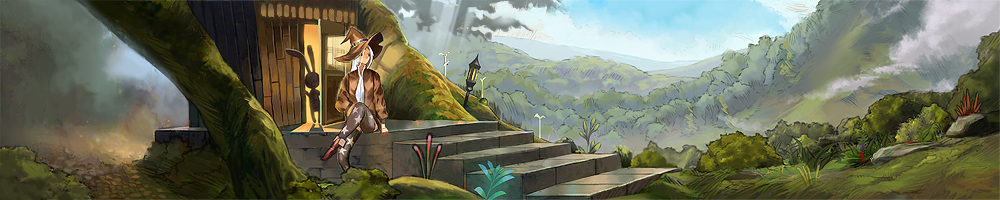
Druaga no Tou ~The Sword of Uruk~ Review – 80/100


The Sword of Uruk is the continuation to the surprisingly good Aegis of Uruk, which aired last year. It left us with quite a cliff-hanger, and it’s in any case worth the watch to see how everything plays out in the end. There are quite a few surprises along the way, but somehow the Sword just doesn’t have the charms of of the Aegis.

But before that, you really have to admire the time that went into developing the background for this series. Six months have passed since first season, and this shows in the character-development. The setting, which sounded so innocent and playful in the first season develops into one of epic proportions, and this really is a series of plot twists. For a fantasy series, the plot’s been quite complex and imaginative, which is something I can really enjoy.

However, at the same time I just don’t feel the things that made the original series great. The Aegis of Uruk was a very varied series: there was an excellent combination between silly adventures, character-development and plot. The Sword of Uruk is much more formulaic, though: the first five episodes or so are silly adventures, and after that the comedy stops completely to make room for the ever increasing drama. It just doesn’t feel balanced at all.

the first season had lots of interesting sites to explore, but only one episode of the second season really made an impression on me like the first season did: the house of the dead. This show succeeds more than ever as a fantasy series, but as an adventure one, it fails to impress, which is a bit of a shame, considering the first season. The ending especially shows this, as it’s a bit too much of a formulaic cheese-fest.

Still, there’s lots to like left in this show. The characters still are as charming as they ever were, especially since they already had a season’s worth of development on their resumes and the animation looks as solid as ever. The second season definitely stands out for different reasons than the first one, but it’s still pretty impressive, although not the charming series it once was.

Storytelling: 7/10
Characters: 8/10
Production-Values: 8/10
Setting: 9/10

Kodomo no Omocha Review – 90/100


One thing that I noticed after having watched lots of different anime is that gets harder and harder to find series that seriously surpass their own genre. Nevertheless, here is one such series: Kodomo no Omocha is without a doubt and by far the best shoujo romantic comedy I have ever seen. And in fact, aside from Nodame Cantabile I can’t think of any romantic comedy that made a bigger impression on me. I’m still amazed at how this series doesn’t just evade just about every pitfall that so many others of its genre fall in, but it manages to be consistently awesome for no less than 102 episodes!

Both in the romance and comedy department, this series delivers. The comedy always feels fresh, and the show exactly knows when to stop repeating its jokes in order to prevent them from getting stale. What makes the comedy especially enjoyable is the incredible amounts of energy that went into it. Sana surely is someone with at least some form of ADHD, but because of her incredibly bubbly personality the show stays fun from beginning to end. The side characters are also absolutely wonderful. I especially liked Sana’s mom and her antics.

The biggest fear you’d obviously have for such an incredibly long series is the tendency of those series to delve into long, long strings of fillers, but his show manages to avoid that very nicely. There are only about six pure fillers throughout the series: three recaps (which you can pretty much skip without any consequences) and three episodes which take place in some sort of bizarre parallel universe of the series. The latter belong to some of the funniest episodes of the entire series.

The rest of the series is divided in about ten arcs, of around ten episodes each, keeping the content from dragging on for too long. Every single arc has a different focus, but all of them contribute to the development of the cast. Even the most insignificant-seeming episodes have their purpose of fleshing out and bringing the cast of this series to life. The creators make excellent use of foreshadowing and flashbacks, and one particular thing they like is introduce one plot-line that only becomes important many episodes later.

In any case, the result is about 100 episodes worth of development put into the cast, and while the pacing of the drama and romance is pretty slow, the very fast paced comedy makes sure that the series never drags on. The show never forgets that it’s supposed to be a romantic comedy, and therefore maintains an excellent combination between funny and serious scenes: it knows exactly when to be funny and when to leave the jokes for a different time. In the end, the series comes together wonderfully, and the final arc of the series is definitely one of the best of the entire series, with a very satisfying ending.

Watching this series really made me wonder why there are so many other similar shoujo romantic comedies which completely miss the mark or have so much trouble to even fill 26 episodes. The only shows that I can think of that can even remotely remain funny through that airtime are Skip Beat and Perfect Girl Evolution. Apart from that, nearly every other shoujo just seems like an uninspired copy of this series. This series has more ideas stuffed into only 13 episodes than others in 26 of them.

Anyway, enough ranting. The only downside to this series appears in the fansubs, which pretty much belong to the worst subs I’ve ever seen, aside from Coalguys, perhaps. Lines are wrongly timed, badly translated and some are even omitted. There are also about ten episodes in which they for some reason completely change the names of the characters to their English counterparts. And while I can understand that this might be an attempt to make the show more accessible to western audiences, however:
1) Then at least be consistent in this and don’t introduce this halfway and give up just as easily.
2) You really know that things are going wrong when a guy named “Takeshi Gojo” turns into “Wootsie Woosie”. Seriously, who found that a good idea?

Still, that’s what official releases are for. For me, Kodocha stands on top of the shoujo genre, and it has been standing there for more than ten years by now. The sheer amount of creativity fully make up for the huge length of this series. Some of the jokes were utterly brilliant, the wide ensemble of facial expressions has been just priceless, and the cast of characters is just wonderful. Akitaro Daichi seriously is one of the best comedy directors out there. Speaking of which, what has he been doing for the past few years? It’s about time he came with another series, isn’t it?

Storytelling: 9/10
Characters: 10/10
Production-Values: 8/10
Setting: 9/10

Tytania – 25


Short Synopsis: Zalish gets into trouble.
Episode Rating: 8/10 (Zalish = GAR)
Ah, who am I kidding? This show rocks. Just ignore my whining for the past few episodes: if it’s indeed true that we’ve only reached the halfway point of the original novels, then there’s plenty of chance that the creators are willing to animate the second half into some sort of second season. Especially after they went through the trouble of getting the director of LOGH back to the director’s seat.

And seriously, this episode rocked. This show really is at its best when two prominent characters face off against each other. The prison escape was nice and all, but it just didn’t have the flair of Alsas’ big scenes, and this episode reminded me why this series is so awesome. A lot of build-up went into this, but it was a lot of fun to see Fan take care of the very badly prepared Zalish, and seeing Zalish in his turn pwn everyone with his monstrous strength.

But yeah, this is really the fun of tactical warfare: being able to think outside of the box, and make excellent use of your surroundings and abilities in order to take care of your enemies. It’s really episodes like this one that make all the build-up worth it, and it shows so much promise for the second season, in which the amount of battles only is going to increase.

My only complaint here is the use of guns there… while I admit that it’s pretty impressive for Zalish to scare his enemies so much that they become too afraid to use their guns, it still feels a bit unrealistic there…

Shikabane Hime Kuro Review – 87,5/100


The first season of Shikabane Hime was a very solid build-up, it had great horror, and may have had some pacing issue in the beginning, but it was one of the stories that gets better and better as it goes on. Shikabane Hime Kuro (the continuation), however promised to decline into the standard shounen clichés again, where the two lead characters form a romantic couple and battle a bunch of bad guys in a very overdone way. And in some ways, it did, but with so much style.

Shikabane Hime Kuro is an expert in managing expectations. From the beginning to the end, it sets different expectations for the viewer, only to deliver either something completely different, or exactly what it promised only five times better and more impressive. This leads to bizarre situations, like a couple of very crappy first episodes, followed by a string of awesomeness, followed by a Gainax-ending.

The biggest strength of this series is the cast of characters, though. Because it already had an entire season worth of build-up put into the lead characters, it now really has the chance to play with them and even then the development of the cast doesn’t stop. There’s hardly any episode wasted and both the side characters as the antagonists receive more than adequate attention to flesh out their characters well.

There are lots of nice themes that this series explores. While there are many elements that fall into the shounen clichés in this series, it also provides lots of new and fresh content, with an interesting storyline and plenty of effective mystery. Ouri and Makina are also far away from your typical shounen couple, for once, and a lot of attention in this series if focused on the two of them, trying understand each other, rather than simply one of them serving as a glorified damsel in distress.

But in the end, what it all comes down to is the following: Shikabane Hime is a terrific action-series, that knows exactly what it is. While the first few episodes of Kuro will disappoint, it quickly picks up with a string of gripping action scenes, with some of Gainax’ trademark animation (though used in moderation this time) and a rocking soundtrack, combined with a strong cast and imaginative plot twists that are going to keep you busy throughout the entire rest of the series.

I’m not exactly a fan of shounen series, but I love it when they’re done well, and that’s exactly what Shikabane Hime is. It’s found a very nice combination between style and substance here, and Gainax and Feel did a really good job at bringing the manga alive. It’s also interesting how for a manga adaptation, the creators managed to fit the stories perfectly into 25 episodes: there are hardly any signs of rushed scenes, major plotholes or pacing issues. Exactly what a good manga-adaptation should be.

Storytelling: 9/10
Characters: 9/10
Production-Values: 9/10
Setting: 8/10

Shikabane Hime – 25


Short Synopsis: The finale of Shikabane Hime
Episode Rating: ?/10 (wut?)
Uhm… yeah. This is without a doubt one of the more original endings I have ever seen, but… what?

But yeah, this is what you get when you combine Gainax with the director of Gilgamesh: both infamous for their unconventional endings. Here I was, expecting a really action-packed ending… and most of the bad guys die within five minutes, all the major threads left hanging are solved, nearly everything is carefully wrapped up into a rather quiet but rather anticlimactic epilogue… and the series seriously ends in the middle of a big fight between Makina and Hokuto. Has that ever been done before?

Still, I like the approach that the creators took. It’s definitely going to make this series memorable to me; it’s something I totally didn’t see coming, it’s anticlimactic how easy things really were in this final episode, and yet it strangely worked. In a way, we really didn’t need to know whether Makina or Hokuto would win the fight. That’s just the same predictable shounen crap, but in the meantime the creators did have enough time to explore on the main themes of the show. It’s interesting how despite all of the warnings, Ouri still sees Makina as a human being, but he never really fell in love with her and I think that that separates himself from Akasha and Sougi, who both fell in love with their Shikabane Hime: he never could fall in love with Makina because of Keisei’s influence and instead they grew more to become good friends.

I’m a bit disappointed that the final two seven stars didn’t receive their background, but at least the two of them aren’t complete paper bags, and the bit of depth that they received in this episode was appreciated. The old guy basically was someone who wanted to live desperately (it would have been interesting, though: why would he return as a Shikabane when he died at such an old age? And without a grudge as well…), while the bug guy simply was obsessed with Hokuto, and the reason why he acted so cruel through the majority of the series was because he didn’t really care about anyone other than his beloved Hokuto.

Overall, though, it’s definitely been a fun and awesome series. I had some doubts when I started blogging this show, but I’m glad that I did in the end, because it’s been a lot of fun praising (and yelling at the constant fanservice in) this series. While Gainax isn’t one of my favourite production companies, they really hit the mark this time with a very effective shounen series.

Natsume Yuujinchou – 25


Short Synopsis: Natsume meets a strange boy locked inside a trunk inside a strange house.
Episode Rating: 7,5/10 (Good)
I really have no idea what the creators are thinking, trying to stuff the contents of two chapters into one single episode. In fact, if the final episode of the first season would have simply been a story that we saw in the second season, then we wouldn’t have had this problem in the first place, since then the creators would have had enough time for that final arc of this series.

But yeah, I still liked this episode. It especially showed the subtle character-development. For the first time, Natsume is embarrassed in front of his friends by a stupid joke, and for the first time he gets ticked off when they’re laughing. Especially Kaname’s role in this series is quite unique and in a way pretty realistic: the two of them are good friends, but because they’re both loners and prefer being alone, you only see them together every once in a while. That doesn’t mean, however, that I’d really like to see an episode focused on getting to know his character a bit more. ^^;

In any case, about the episode, that kid intrigues me: here we have a youkai, who was sealed inside a wooden trunk for who knows how long, and yet people can see him, he doesn’t seem to notice that he’s a youkai himself, and he even seems to have friends at school who never suspected anything. The key seems to be in a promise he made with a weird axe-wielding youkai, that that kid failed to keep. My guess would be that he wanted to get a human body, but at the cost of a very high price. But then again, I doubt that such a relatively weak-looking youkai would be able to do such a thing.

White Album – 12


Short Synopsis: Rina reveals Yuki’s letter to Touya.
Episode Rating: 7,5/10 (Good)
Ah, there you have it. The whole reason why Yuki didn’t attempt to contact Touya was because she wanted to show him how much she has changed at her Christmas concert, and forbade herself to talk to him in the meantime. Way to go, girl.

Still, that doesn’t quite explain this series’ very mysterious lack of postmen. Seriously, I may be mistaken in this but it feels like every single letter has to be delivered in person. Because Yuki’s schedule is so hectic, the two of them could easily have decided to exchange letters with each other. Why didn’t they? The whole reason Yuki decided to stop talking to Touya was because she couldn’t contact him when he was on his escapades with Misaki, so why couldn’t she have sent him a bunch of letters instead? It’s very annoying to see that my suspense of disbelief with this series is constantly shaking, especially since there are so many good ideas stuffed into this series. it’d be a shame for them to go to waste like that.

But yeah, the big event of this episode seems to be that we finally know who Touya is going to end up with: Yayoi. In a way, it is a very original approach: you’d never see this coming at the beginning of the series, but it still just feels ludicrous and hard to believe how much the relationship between the two has spiralled out of control that way. I can understand Touya being seduced by her and all, but I still am in no way convinced about Yayoi’s actions. Even the reason she originally gave in order to hook up with the guy just feels weak: to prevent Touya from distracting Yuki. Was that really the best she could think of?

But the most pathetic scene in this episode was seeing Misaki confronted by the head of the drama club. For some reasons his minions are gone, he has gone insane, he stabs her with a knife but she is saved because she conveniently had one of Touya’s books at the place where she was stabbed. I mean, come on, that really was the best they could think of? Has there been any situation in which a conveniently placed body armour really worked at all?

I really don’t know what to think of that second season. The next episode really has a big climax in store, and it actually looks like things could get al resolved in the next episode, even if there wasn’t a second season, which leaves lots of potential for the second season to evolve into a completely different direction. But if it’s just going to have the same soap opera plot as the first season, then I really don’t know whether I’m going to feel like blogging 13 more episodes. I really tried to love this series. There is lots of great stuff in it, but in the end it’s just too much like a soap opera for me to take it seriously….

Mobile Suit Gundam 00 – 49


Short Synopsis: The big climax of Gundam 00
Episode Rating: 7,5/10 (Good)
And so, most of the conflicts are solved in this episode. All because Setsuna couldn’t stand to see all of his friends dying, which unlocked some sort of hidden powers in his Gundam which made it shoot out tons of GN Particles and allowed everyone to settle their difference. I’m not exactly sure what drug it used in order to resolve nearly every single conflict apart from the ones around Ribbons, but I guess that the overall message is that conflicts shouldn’t be solved by brainlessly fighting each other without listening to the other party. Nice, I guess, but a bit unrealistic. Ah well, at least I’m glad that it wasn’t Marina’s song that ended up saving everyone.

In any case, for all of the different conflicts that were solved in this episode, some were good and some were bad: Saji vs Louise was as horrible as ever, though the conclusion between Ali al Sarshes and Lockon was very solid and a very good gunfight. Marie vs Smirnoff basically went nowhere, and Billy vs Sumaragi was cheesy but served its purpose I guess.

Ribbons was pretty pathetic, though. The entire series has established the guy as some sort of evil overlord without any flaws whatsoever. And in this episode he just lets some random guys take over Veda without even an attempt to stop it. He should have known that all innovators could link to Veda, and since he’s such a 1337-hax0rz, he could have easily taken measures to prevent others from accessing Veda. And yet he acts all surprised when Tieria turns out to be alive, using the same trick he used a few episodes back.

I think that the big problem with this episode was that the “ultimate power” was a bit too convenient and selective: it was exactly what this series needed in order to wrap up every hanging thread: everyone conveniently gets healed, it conveniently calls the ghosts of some dead characters who help taking over Veda, while other dead people don’t appear at all, it conveniently cancels out Ribbons’ brainwashing on Louise, it conveniently clears most useless hatred. It’s just too convenient!

Overall, with one episode left, I have to say that I liked the first series better. Sure, Setsuna was pretty annoying back then, but at least his impulsiveness had a certain charm to it, which isn’t something I can say for Saji and Louise. It had a solid build-up with a great climax, and took place in a world that actually felt alive with a complex political structure. The second season focused much more on action and the characters, which all were either a hit or a miss for me.

On a positive note, I do have to admit that I really liked the background music of this episode. Great soundtrack.

Birdy the Mighty Decode – 24


Short Synopsis: Senkawa’s classmates have fun at the school festival, while Nataru continues to pursiut the remaining aliens.
Episode Rating: 8/10 (Excellent)
Ah, like expected: the creators plan to finish this series with a huge bang, just like they did with Noein. It’s going to be there where we can see whether or not all the building up can come together in the end. This episode was mostly building up, although there were quite a few surprise twists included.

Most notably, Nakasugi is back, though with her memory erased. I still really like how Senkawa got over his loss of her, and he’s not angsting about her at all. Instead, he provides excellent support for the other main characters, and in a way you can’t call him the main character of this series anymore. The first season was his moment in the spotlights, and he learned well that the new storyline doesn’t centre around himself.

And in a way, that’s the advantage that episodic series have over series with a continuous plot: it’s much easier for them to show different people and flesh out the setting this way, making it come alive, whereas a series with a continuous plot usually just focuses on a fixed set of characters without much time for guest appearances, because it’d be difficult to weave them into this storyline. And that’s another reason why Birdy the Mighty is so amazing, because it combined the best of both: its storyline is definitely continuous, and yet it did succeed wonderfully in making this setting come alive and making it diverse.

One thing that caught my eye was that this series still is continuing to make its setting feel alive, even with only one episode left to go. It’s a bit unconventional, and will definitely leave a few threads hanging open, but on the bright side it really gives that extra spark to the setting: it makes it feel like there’s much more going on in the world than just the problems of our lead characters. The alien in sunglasses in the end never really had an important role, and we hardly know anything about him, but he does return every once in a while to influence parts of the storyline (for example, tricking the girl into killing her former comrade for protection). Nakasugi as well: there is no way that she’s going to have any influence in the story at this point, but it just shows that she too is continuing her life and that Birdy and Nataru may have their issues, but they’re not the centre of the universe. I mean, how many other series have a light hearted school festival at the end of their airtime? The only examples I can think of are the ones in which the school festival leads to some really dramatic climax, but here it’s used for the entire opposite: to brighten up the mood and flesh out the setting.

I really like this, especially since most other series don’t care about this at all, and you can really see the results: in the series, it looks like the entire world is revolving around the lead characters, with hardly anything else. Random by-passers also just feel like a bunch of mannequins, who aren’t important at all. In Birdy the Mighty Decode, though, they all feel so refreshingly alive due to the attention that it’s been paying to flesh out the setting at such a late point in the series. Seriously, I’m really surprised to see that they decided to do this in the second half of the series, which is usually the time when most series are done with the world building and focus on other things. This really is much more apparent than even Noein, and it shows that Kazuki Akane’s style is evolving, and he’s trying and become an even better director than he already was. This guy truly is my favourite director ever.

Jigoku Shoujo – 76


Short Synopsis: Yuzuki is!%$#%#$@$@#!@#!#$@!@#!!!!!
Episode Rating: 9/10 (Fantastic)
Holy. Freaking. Heck! Oh my god, what an utterly incredible episode. I would even go as far as saying that this has been the single best episode that I have ever seen from Jigoku Shoujo, and with such an amazing series, THAT HAS TO SAY SOMETHING. Oh my god… I’m still amazed at the huge guts of the creators to pull such a plot twist….

So yeah, we all know the problems with the third season of Jigoku Shoujo: the incredibly far fetched stories that populated that first half. But seriously, the show has managed to pick itself up so wonderfully after that first half. It really is something the second season didn’t succeed at, and while at one point I claimed the third season to be the weakest of the bunch, I’m going to have to take that back now. Mitsuganae is at least better than Futakomori, and if the rest of the finale is as amazing as this one, it might as well be as memorable as the original series.

Because, ZOMG, Yuzuki turns out to have been a ghost in denial! Everything that happened so far was because she refused to acknowledge that she was dead, while in fact she was simply being recruited by Ai to join her league. It was indeed very weird for Ai to just pick out a random girl, but there’s nothing weird about it at all: Yuzuki is just another one in a string of random corpses that Ai tried to use in order to find her successor. My guess would be that all of them tried to escape to their previous lives when they found out, leaving Ai without a body again, in search for the next one.

I have to say that I was getting a bit wary of this series when the previous episode still came with the usual revenges, but now I see that this is the sort of climaxes that really works on the surprise element, and thus doesn’t need that many episodes, as opposed to the ending of the second season, which required much more build-up to work.

And yeah, the first half was good for another thing: it helped me lowering my standards for this series. At the beginning of this series, I really was expecting the most amazing series, that may have been a bit too unrealistic. But unlike the stories of the first season, which were incredibly diverse, the stories of the third season all were much more similar in atmosphere and themes. At the expense of the lack of diversity, it did allow the series for some magnificent build-up for the grand finale of the season, and oh my god… it worked so well.

On a completely unrelated side-note: was I the only one who loved how that little crawling ant was animated?