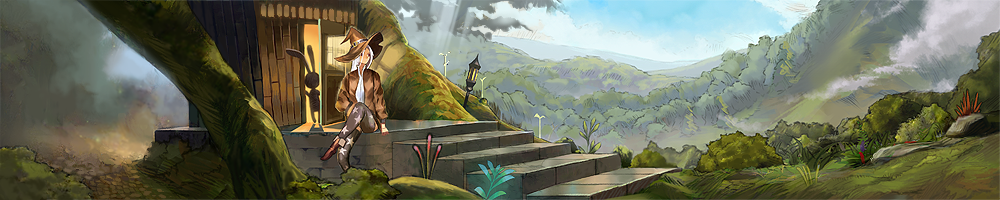


 Oh my god… it’s happened. It’s bloody happened. What an incredible episode this was, it totally changed the way I look at this series. I know that I’ve talked down to this series a lot for the past months, but damn. This episode really reminded me why I’ve become such a huge fan of the World Masterpiece Theatre… BIG SPOILERS coming up!
But yeah, that disclaimer must have been a bit redundant, because it’s an event that probably everyone knew about before this series started: the death of Bert. And that’s one thing that makes the World Masterpiece Theatre stand apart from all those other series: you know bad things are going to happen; you know that the shit is going to hit the fan, but you just never know when exactly it’s going to happen. Especially Les Miserables loved pulling this.
But seriously, the end of this episode took me utterly by surprise. The build-up for this episode was just SO adorable. Because of all the things with Henderson, I was really starting to forget what makes the World Masterpiece Theatre stand above 90% of all other anime: the character-development. And of course: that’s going to take about 25 episodes to really pay off in your average series. This episode really was where everything came together in terms of development in a really adorable Christmas episode. From Bert finally selling his trophy, to the villagers forgiving him because of how he risked his life to save Noah in the previous episode. It all fit incredibly well.
It’s really a shame that this series was wrongly advertised as Anne of Green Gables’ prequel, because that would suggest that Anne is the only important character here, while in fact this series is just as much about Bert, Johanna and the rest of the Thomas family.
I really wonder how this series is going to play out now that Bert is about to die. Not in terms of where the plot is going, but whether Anne’s second family is going to be able to match up to the Thomas family, or whether they’re going to be more like the stereotypical Henderson, Randolf and Mildred. I really have no bloody clue, but the past few episodes have really made up for how this series just kept going on about Henderson in the Marysville School Arc.
Rating: *** (Awesome)]]>
Full Metal Alchemist – Brotherhood – 23


 Another excellent episode, aside from the parts that focused on Winry. You know, I understand what purpose she has: keeping Ed and Al down to earth. The thing is that she just keeps hogging up too much screen-time even though she’s mostly unrelated to the story. Especially since the creators are pulling this series at a high pace, cutting several scenes along the way, and yet they seem to refuse to want to cut any of her airtime. It’s a good thing that she’s returned to the Auto-mail City. That’s also going to enable her to grow as a character.
Anyway, this episode really showed Lin and Lan Fan’s abilities, both as thinkers as as fighters. I really expected this fight to end with both parties simply retreating, what seems to be the trend in a lot of other series with lots of fighting, but Lin actually succeeds in not only capturing Gluttony, but he also manages to trick Wrath at the same time. Lan Fan cutting off her own arm… that just shows how well she must have been trained and how deep her devotion is. I personally can hardly imagine how one would be crazy enough to successfully cut off one’s own arm, but if the alternative is death…
But at the same time, Hawk did make the mistake of using a bit too obvious of a disguise. Anyone who works for the military who has worked with her could have seen through her, which is especially risky since they’re suspecting King Bradley to have something to do with her. Interesting subversion of the “Sailor Moon”-syndrome, though.
Anyway, that little girl that was with Scar finally comes in action. I have no idea who she is, how old she is, why she’s helping Scar and how she became so incredibly good at alchemy despite being just a child, but she seems to be someone to look out for.
Rating: ** (Excellent)]]>
Cross Game – 24


 I’d like again to hijack this post for a bit to post up some impressions of the past half year of anime. Now that most of the series of the past Spring and Summer Season are about to end, it’s time to reflect on them again, and how they matched up to previous years. My general impression of the past Spring and Summer Season is that they’ve been completely different from those a year ago.
The spring season of 2008 was all about fooling the viewer: making the viewer think that the focus of the series will be on something completely different from what it actually is, and this air that you never know what to expect of an arc or episode, for the good and the bad. This spring and summer however, have instead been about consistency: delivering, and doing so over and over. Even the series which focused on surprising did so consistently.
Because of this, there’s no way to say “Spring 2008 was weaker/better than Spring 2009”. The individual highlights of the Spring and Summer of 2008 were better than of the current season. As much as I like Tokyo Magnitude, Phantom, Shangri-La and the Guin Saga, their highlights simply don’t match up to Kaiba, Himitsu ~The Revelation~, xxxHolic and Amatsuki. However, at the same time I have a lot less to get angry about this season: 2008 had a lot of disappointments, and series that ended with a bitter taste for me (*ahem*, Allison to Lillia, Soul Eater, Macross Frontier, Mission-E, Nijuu Mensou no Musume, et cetera, et cetera). The current season of course has shows with a lot of flaws, but you could have seen all of them coming. I’ve watched 30 episodes this season, and only one of them was offensively dull (Sayonara Zetsubou-Sensei), and the good series have really been consistently good, with hardly any weeks that didn’t deliver.
The reason why I’m hijacking this post of all things to write this down is because I’ve had this strange feeling that something was missing this season, and now I finally know what it is. The biggest reason why the Spring and Summer of 2008 were so inconsistent was that they featured a lot of case-based series: in them, characters either had jobs that involved meeting lots of different people, travelled around, or just met different people, allowing these people to tell their stories. while episodic and fillerish at first sight, it resulted into a number of amazing and really well written episodes, and because of that I’ve become a really big fan of those sorts of series.
to my surprise, the past half year only featured one such series: Bakemonogatari. And that one turned out disappointing for a whole set of reasons involving Shinbo. Guin Saga and Tokyo Magnitude may seem like it, but the people that the main characters run into don’t really get an in-depth look, and their main purpose is instead to bring the setting alive, rather than standing out as a character with depth. And really, while there are a lot of very enjoyable series currently airing, I’m missing these quick series in which you never know what to expect. It’s those kinds of series that I’m going to look for especially in the upcoming fall season.
Anyway, to segue back into this episode, the epitome of consistency this season is of course Cross Game. This episode shows the first matches of the local tournaments, that will eventually lead to Koshien. However, I KNOW Adachi: Kou isn’t in his final year yet, so they’re going to lose at some point. The question is: when?
I liked how this episode also subverted a very common trope: “prettyboys are awesome”. This episode really proved that that isn’t necessarily the case, and it’s really good to see a group of people with normal looks in the centre, rather than a bunch of bishies or overly moe girls in the spotlights.
Other events in this episode showed a small glimpse of what happened to the members of previous year’s baseball team. They’ve all picked themselves back up in other teams, including Miki who’s looking much more healthy. This episode also marks what would have been Wakaba’s birthday, so Kou is out to collect another birthday gift for her.
One thing I didn’t like about this episode is that it was a bit too un-subtle about the Kou vs Aoba relationship. Especially the point in which Aoba looks at the camera and a soft wind conveniently starts blowing… that could have been done more subtle.
Rating: ** (Excellent)]]>
The Melancholy of Haruhi Suzumiya Second Season Review – 77,5/100


 Well, so that’s it for this season. Anime News Network reports that the second airing of Haruhi is only going to take up 28 episodes. Since there now have been fourteen episodes of the second season aired, a quick bit of math shows that the final episodes are going to be the ones that were left over from the first season.
Anyway, the “Second Season” of Haruhi is a bit of a misleading title. It’s not really a sequel, but rather a collection of episodes that fit in between the episodes of the first season, with the purpose to flesh out the cast a bit more. It consists out of three arcs: the Bamboo Leaf Rhapsody, Endless Eight and the Sigh of Haruhi Suzumiya.
The Bamboo Leaf Rhapsody is pretty nice. It’s a bit of backstory for the lead character Haruhi, which is of course always welcome. It just takes up one episode, and is pretty enjoyable. Endless Eight on the contrary takes up a whopping eight episodes, and basically consist out of the same episode repeated again and again and again, just with the animation and voice-work redone. However, these episodes can be easily skipped: only the first and the last matter, while the middle ones are still a nice enough slice of life to watch in those cases when you’re really, really bored.
My main problem with this series came at the start of the Sigh of Haruhi, though. One of my main complaints with the first season already was that Haruhi was incredibly annoying, and she really proves that again in this arc. The arc is also way too long, so her ramblings just go on and on and on. The rest of the cast could have made up for it, but during this arc they acted way too much like the stereotypes they avoided so well throughout the first season: Kyon becomes continuously horny for Mikuru, Mikuru continuously becomes a crybaby, Tsuruya is hyperactive and weird 100% of the time. I mean come on, give us some subtlety here!
Thankfully, the arc closes off with the best two episodes of the second season. The semi-final episode made a very good point, and the final episode finally shows that the scriptwriters put in some effort again, returning the series back to its former subtlety.
Overall though, the first season simply is better than the second. Not only did the second merely function to flesh out the characters, but you can also see that less effort was put into it. A lot of the episodes lack the detailed dialogue of the first season, and the animation, while still rich and detailed, suddenly started looking way too much like K-On and Kyoani’s other moe shows during the climaxes. Seriously, the characters for this series were already moe enough; you really don’t have to add even more to it…
The first season, while it also definitely had its annoying parts in the episodic fillers, did have its excellent first arc. but the second season has a lot less episodes that really deliver. Nevertheless, I really doubt that this is going to be the last of this series, and the second season nevertheless was a pretty decent slice of life series. I still like that Kyoani, during this time of an economic crisis, still is willing to try out daring concepts. At least, in some of their shows… Yes Munto, I’m looking at you.
| Storytelling: | 8/10 |
| Characters: | 7/10 |
| Production-Values: | 8/10 |
| Setting: | 8/10 |
Tokyo Magnitude 8.0 – 10


 Oh my god. This episode was just… incredible. It’s because of episodes like this that I still remain a fan of anime, even after watching hundreds of series. It’s series as this one that just keep me coming back, and make it all worth it.
The way this episode played out… it just allowed for the best way to show Mirai coming to understand that her brother is actually dead. We knew this for a few episodes by now, so it wasn’t the revelation or shock of his death that made this episode so powerful, but instead it was just Mirai’s character who carried this entire episode. Yuki’s illusion started to waver when Mirai met Yuki’s best friend. I think that at first, she was unconsciously confusing the two boys with each other, and therefore didn’t see the two of them at the same time at first, but eventually she did start talking to Yuki once she got used to his friend being there.
The sad thing wasn’t just Mirai realizing the death of her brother, but rather the subtle differences between the dead Yuki and the remains of the real Yuki: the things he wrote and did when he was still alive. It was really heart-wrenching to see how Mirai unconsciously tried to fit in her image of Yuki with the things he did, still refusing to admit that he was dead.
Whether or not this is realistic, I don’t know. I’m not a psychiatrist, I can only relate to what sounds plausible to me. Still, at the same time that doesn’t mean that there’s no gray area. Anime for me has always been a combination between fiction and realism, with the more realistic, or I guess that “believable” is the better word, usually being the most enjoyable for me.
A slightly spoilerific example, but excellent to illustrate the decision of the creators to insert a not-so-realistic plot twist in this series is Porfy no Nagai Tabi. It’s in many areas similar to Tokyo Magnitude: both feature two siblings, caught up in an earthquake, both feature a lot of realism, both involve travelling to get back to a family member you’ve been torn apart from, and both have females who were left with mental illnesses after the quake (in Porfy’s case, Mina loses all of her personality and memory).
Anyway, Porfy no Nagai Tabi was also incredibly realistic. Perhaps even more than Tokyo Magnitude because its length is nearly five times larger. However, when the final arc starts, a plot twist happens that’s in no single way realistic. There’s no way for something that convenient to happen. Does it ruin the anime, however? No. Instead, it really allowed the characters to get the best out of their development. With Tokyo Magnitude it’s the same: sure, we may not often see perfectly realistic illusions of our dead ones around us. But does that make this series any less incredible? For me, it absolutely doesn’t!
Rating: **** (Fantastic)]]>
Phantom – 24


 Aha, the calm before the storm episode. There’s nothing much to say about this one: it was as solid as usual, while the plot sets up for the big climax of this series, which is probably going to happen in the next episode. The past few episodes have really been able to very subtly build up to this finale, and I can’t wait to see how all of this has paid off.
So, in this episode Reiji first manages to convince Helen to leave Cal to him, because he doesn’t want to lose anyone else, however Helen in the end refuses to listen to him and decides to kill Cal off herself. It’s here where Reiji’s big weakness comes into play: his naivety. He believes with his heart that he’s going to be able to convince Cal to stop killing him, yet Helen who has the more realistic mindset sees no chance in that happening. The last she wants to happen is a dead Reiji, and so she chose for the option that would leave his life in as little danger as possible.
Scythe Master in the meantime also hasn’t been sitting still, when this episode introduces Vier, Funf, Sechs, Sieben, Acht and Neun. I’m not sure what they can add to the story at this point in the series, but it was only natural for him to put his experiments to a larger scale at one point.
Rating: ** (Excellent)]]>
Basquash! – 23


 You know, for all I’ve ranted against this series for the past few episodes, this episode rocked. It did exactly what it’s supposed to do, and for the first time in what feels like a long, long time I’m excited about this series again. At the moment, there still is the danger of the love triangle taking up too much attention in the final two episodes for this series, but if the finale is just as this episode, it’s at least going to end with a good impression.
I’m glad to see that all the build-up paid off in the end. I was really beginning to give up hope on this series, but the impending destruction of both the earth and the moon turned out to be exactly what this series needed to get every character back on track. Incidentally, in this episode Dan also was entirely unconscious. In the end, he didn’t turn out to e the best main character. I really liked him at the beginning of this series, but his development got a bit dull and cliché as the series went on.
But damn, the eye-candy! Now this is the Satelight I remember again. The shots of the moon in this episode were absolutely gorgeous, but apart from that there were tons of other awesome shots and amazing eye-candy. I’m really glad to see that the creators of this series have been saving their budget for the final episodes. Now if only they can keep this up for the final two episodes!
But I still am very worried. I know Kawamori by now, he’s going to go for some sort of cheesy romantic climax in the end. By far the worst part of this episode was the point in which Rouge kissed Dan back to life (no, seriously) and Flora happened to run into them, watching the entire process. PLEASE DON’T FOCUS THE FINALE ON THIS CHEESY LOVE TRIANGLE!
Rating: ** (Excellent)]]>
Slight Delay in Posts
Pandora Hearts – 23


 Do correct me if I’m wrong, but this is he part where the anime seems to be going into original episodes that weren’t based off the manga, right? If that’s the case, then the creators handled it pretty well this time. This episode didn’t try to rush through revelations, or go into a completely different direction, ruining the rest of the series.
Okay, it was a build-up episode, but a very pleasant one. My guess is that the creators have decided to end the series with the truth about the tragedy of Sabrie, and if they can pull it off it’s at least going to be a satisfying conclusion. This episode was all about building it up and what I liked a lot about it is that it did bother to show the development of the past few episodes: how much closer the five lead characters have gotten after Break gave in and told about his backstory. It’s as if that broke down some sort of invisible wall with that. It was also pleasant to see Ada again, and the jokes around Oz’s private security were also hilarious.
I’ve said this before, but anime-original material isn’t bad at all. It all depends on whether or not the creators are able to handle it correctly, and I’ve seen plenty of series who pulled off great things when they included stuff that wasn’t in the original source material. For Pandora Hears it unfortunately seems unlikely for a second season, so I’d rather have at least some conclusion, rather than that the show simply “ends” after episode 25 (this is one of those shows in which a “life goes on”-ending like in Aoi Hana simply doesn’t work), and so far they seem to be doing a good job. I’m not going to get too enthusiastic before I find out what the creators were actually building up for, but it does look like this show isn’t going to pull a Claymore at the end.
Right now, I want to have a good explanation for those strange puppets that appeared at the end of this episode. Did Vincent summon them in an attempt to get those who are close to the secrets of the Tragedy of Sabrie out of the picture, and can the creators pull it off without being cheesy? Well, let’s find out in the next two weeks!
Rating: * (Good)]]>
Gintama Episodes 1-100 Review – 90/100


 Well, I’ve made up my mind. I just finished episode 150 of Gintama, and it was indeed awesome. The perfect way to close off the series, no matter where you are in the series. Still, with this I’m going to drop this series. It’s the same with Ranma 1/2: I’d rather remember the classic first part, rather than stick with it for a few good episodes in a sea of mediocrity, especially since the good episodes don’t even come close to the standards that the series set in the past. But this review isn’t about the three digit episodes of Gintama, you can read about those here. This post instead is a review of the first 100 episodes, and a series that stands among the Law of Ueki and the Excel Saga as my absolute favourite comedies in anime.
Gintama is about a group of people who are willing to take any job for money, in a setting in which the earth has been taken over by evil aliens who settled in to live there after their victory, while the humans still live around as if it were feudal Japan. It’s structure is mostly episodic: most of the episodes are standalone stories in which the lead characters meet someone, or have some objective to overcome. While this formula can get incredibly boring in the wrong hands, the creators of Gintama turned it into gold.
Thanks to an amazingly witty sense of humour and a nearly limitless amount of creativity, the creators really manage to make the best out of this series’ format. In its jokes, it takes absolutely nothing for granted, and there are a number of absolute classic episodes that just deliver one brilliant joke after the other. The humour varies from parodies to character-based to downright random, all with their own highlights.
But what really sets Gintama apart from nearly all other comedies is its attempts to be serious. Usually, comedies fall apart horribly when they try their hands at some serious drama, which most often fall apart in horribly dull and cheesy messes. Gintama however only turns better when it gets serious. It knows exactly how to build up its stories, make them relevant and develop its characters. Its sense of dialogue in particular really is amazing: deep, meaningful, inspired and very detailed. Gintama was a series that could make me weep manly tears again and again.
Granted though, this series’ brilliance doesn’t last 24/7. Gintama does have a fair share of lesser episodes that, while nice to watch, border on the cliché, milk their jokes a bit too far or just fail in what they set out to do. Especially the first episode was one of the worst things that the creators could have picked to start off the series, because it ranks among the weakest of the series, but overall the entire first part of the series is hard to get into.
But when it does, the good parts really get better and better, and this trend continues for 100 episodes. I really recommend this series for anyone looking for a good laugh, because this series is just about everything comedies should be outside of compactness. The episodes after 100 are a lot less impressive, though. While they still have a good episode here and there, they just lack the creativity that made the first 100 episodes so awesome.
| Storytelling: | 10/10 |
| Characters: | 9/10 |
| Production-Values: | 8/10 |
| Setting: | 9/10 |