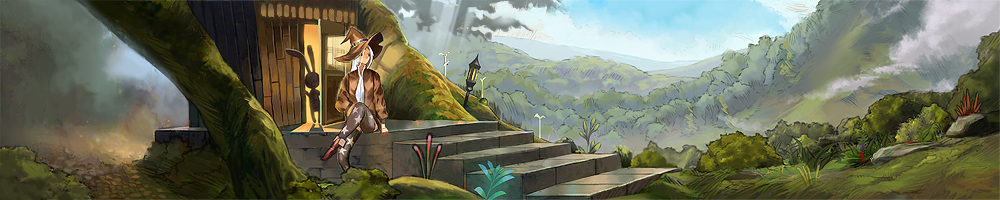


 Series about girls’ baseball teams that challenge male baseball teams are nothing new. Princess Nine did this before. Still, Taishou Yakyuu Musume tries to bring in a bit of a twist with its setting: the 1920s. it’s a very nice setting for a feminist series to explore the struggles of a team of girls to be accepted in a male-dominated sport.
When you look at the baseball in this series however, it unfortunately ends up shallow. It isn’t about girls defeating boys. My problem with this series is that more than half of the members of this series’ baseball team start out as complete noobs, and yet they suddenly grow strong enough to be just as good as a team of guys who have been training for their entire lives. I mean, I don’t mind feminism at all (in fact, it’s much better than the alternative and turning females into simple damsels in distress), but that’s no reason to deus ex machina your characters into talented players.
When you look past the baseball however, you’ve got a pretty enjoyable series. This series is actually mostly slice of life, with only a few episodes dedicated to baseball matches, and the slice of life is definitely the most enjoyable part in this series. The characters all have their charms and are enjoyable to watch, and the plot provides interesting situations that shape their characters.
But yeah, that’s nice and all but this remains a 12-episode series with more than fifteen major characters. there’s no way to flesh out all of them, and so a lot of characters remain underdeveloped even though they have quite a bit of potential. Still, at least the two lead characters have enough charms to save this series and while they have a few stereotypes here and there they’re fleshed out nicely, and are able to carry this series as lead characters.
Sure, this series isn’t anything special, but it’s the kind of series you watch on a rainy day. It’s very enjoyable, and even the baseball matches aren’t anything bad if you can swallow the unrealistic skills of the girls. It’s always good for a light watch, and this show really knew what it was.
Series about girls’ baseball teams that challenge male baseball teams are nothing new. Princess Nine did this before. Still, Taishou Yakyuu Musume tries to bring in a bit of a twist with its setting: the 1920s. it’s a very nice setting for a feminist series to explore the struggles of a team of girls to be accepted in a male-dominated sport.
When you look at the baseball in this series however, it unfortunately ends up shallow. It isn’t about girls defeating boys. My problem with this series is that more than half of the members of this series’ baseball team start out as complete noobs, and yet they suddenly grow strong enough to be just as good as a team of guys who have been training for their entire lives. I mean, I don’t mind feminism at all (in fact, it’s much better than the alternative and turning females into simple damsels in distress), but that’s no reason to deus ex machina your characters into talented players.
When you look past the baseball however, you’ve got a pretty enjoyable series. This series is actually mostly slice of life, with only a few episodes dedicated to baseball matches, and the slice of life is definitely the most enjoyable part in this series. The characters all have their charms and are enjoyable to watch, and the plot provides interesting situations that shape their characters.
But yeah, that’s nice and all but this remains a 12-episode series with more than fifteen major characters. there’s no way to flesh out all of them, and so a lot of characters remain underdeveloped even though they have quite a bit of potential. Still, at least the two lead characters have enough charms to save this series and while they have a few stereotypes here and there they’re fleshed out nicely, and are able to carry this series as lead characters.
Sure, this series isn’t anything special, but it’s the kind of series you watch on a rainy day. It’s very enjoyable, and even the baseball matches aren’t anything bad if you can swallow the unrealistic skills of the girls. It’s always good for a light watch, and this show really knew what it was.
| Storytelling: | 7/10 |
| Characters: | 8/10 |
| Production-Values: | 8/10 |
| Setting: | 8/10 |


 Okay, time for me to review my favourite anime of the past Spring and Summer Season: Phantom, or Requiem from the Phantom. It’s based on a visual novel by Nitroplus, and while it starts off as a Noir clone at first, it develops into something much more. It shows a story about a couple of assassins inside the modern American mafia.
It sets itself apart with an amazing cast of characters. Especially Ein and Zwei develop into a bunch of strong and sympathetic characters, but also most of the side-characters are memorable. They’re all incredibly well acted; the voice actors really managed to capture their characters, and there’s always a lot of subtlety in their actions and development.
This is all accompanied by a terrific execution. Dialogues between people often move slow, but a lot of things are said in-between the lines. The creators have a great sense of build-up, and know exactly how to deliver the plot twists with as much of an impact as possible. Despite the subtlety, the action-scenes also pack a punch. This show knows that gunfights between excellent marksmen can last very short, and they made excellent use of this in their build-up.
Since this is a Bee-Train series, the music is without a doubt excellent, but at the same time you can see that they’re trying out a few new things here and there. The use of music throughout the series is downright excellent, but what amazed me the most is the incredible size and versatility of the different background tunes. Hikaru Nanase, who also did the soundtrack of Noein and Zone of the Enders, created an incredibly versatile set of tracks for this series. The drawings are also continuously crisp, without hardly any distorted frames, and the animation itself is also pretty decent.
A bit of a lesser point of this series is that there are sometimes strange leaps in logic. One character may have escaped death a bit too narrowly, and this series also forces you to assume that with the right training, a bunch of teenagers can become much better at handling guns than any adult out there.
Nevertheless though, I personally loved this series. It’s a show that’s constantly evolving, even within its distinct three arcs. The major theme of this series, in which the best course of action doesn’t always get taken due to a sad combination of circumstances, is excellently explored by the cast. The characters in this series are deep and complex, and often you find them saying things while in reality they actually believe in something completely different. With an ending that you’ll either love or hate, this is a great recommendation if you like dark yet slow-paced series and don’t mind teenagers in your anime.
Okay, time for me to review my favourite anime of the past Spring and Summer Season: Phantom, or Requiem from the Phantom. It’s based on a visual novel by Nitroplus, and while it starts off as a Noir clone at first, it develops into something much more. It shows a story about a couple of assassins inside the modern American mafia.
It sets itself apart with an amazing cast of characters. Especially Ein and Zwei develop into a bunch of strong and sympathetic characters, but also most of the side-characters are memorable. They’re all incredibly well acted; the voice actors really managed to capture their characters, and there’s always a lot of subtlety in their actions and development.
This is all accompanied by a terrific execution. Dialogues between people often move slow, but a lot of things are said in-between the lines. The creators have a great sense of build-up, and know exactly how to deliver the plot twists with as much of an impact as possible. Despite the subtlety, the action-scenes also pack a punch. This show knows that gunfights between excellent marksmen can last very short, and they made excellent use of this in their build-up.
Since this is a Bee-Train series, the music is without a doubt excellent, but at the same time you can see that they’re trying out a few new things here and there. The use of music throughout the series is downright excellent, but what amazed me the most is the incredible size and versatility of the different background tunes. Hikaru Nanase, who also did the soundtrack of Noein and Zone of the Enders, created an incredibly versatile set of tracks for this series. The drawings are also continuously crisp, without hardly any distorted frames, and the animation itself is also pretty decent.
A bit of a lesser point of this series is that there are sometimes strange leaps in logic. One character may have escaped death a bit too narrowly, and this series also forces you to assume that with the right training, a bunch of teenagers can become much better at handling guns than any adult out there.
Nevertheless though, I personally loved this series. It’s a show that’s constantly evolving, even within its distinct three arcs. The major theme of this series, in which the best course of action doesn’t always get taken due to a sad combination of circumstances, is excellently explored by the cast. The characters in this series are deep and complex, and often you find them saying things while in reality they actually believe in something completely different. With an ending that you’ll either love or hate, this is a great recommendation if you like dark yet slow-paced series and don’t mind teenagers in your anime.


 Whoa, wtf…
Throughout this episode, I had no idea what the people in the shoutbox were talking about. I mean, it was an awesome episode that did just about everything it should have done: exciting gunfight, after which Scythe dies and Reiji and Helen live on, trying to search for Helen’s origins. After a bit of searching, they find that she was taken from Mongolia when she was little. It was a very fitting ending for my favourite series for the past half year.
Then the episode actually ended, and I understood. That really was daring from the creators: just when everything seems solved, they pull such a surprise ending that nobody saw coming, and they don’t even dare to explain what happened. Out of nowhere, a gunshot sounds, and both Reiji and Helen die. No extremely long death speeches, no overdramatic buildup. It’s just there, and less than a minute later they’re dead. it’s entirely left up to our imagination what happened.
And yet, somehow it made me like this ending even more. My theory of what happened is that McGuire is behind it. Something like “don’t mess with the mafia”, and he probably ordered assassins to track Ein and Zwei down. He previously left this to Scythe Master and Drei, but since the two of them failed he tried to do this a bit more subtle. Whatever assassins came, they figured that the most likely place that they would be able to find them was Ein’s place of birth. They knew this through Scythe, and they probably picked up a hint somewhere that Reiji and Helen were searching for it. After that, they only had to wait and snipe them when they arrived.
It just shows that there’s nothing like a happy end in the mafia. I really liked this ending because it didn’t try to overglorify the death of the two protagonists. It was a really subtle finale, and that’s something I can really appreciate. I admire Bee-Trains’s guts for trying to pull such an ending.
Overall, this has been such a wonderful series. It’s definitely in my Top 3 of Bee-Train series, along with Popolocrois and .Hack//Sign. It had such an amazing sense of subtlety, and yet at others it packed such a punch. With a fantastic soundtrack and a terrific sense of characterization (well, for me at least), I really consider this series to be the best of the past half year, and I’m looking forward to Bee-Train’s next series in 2010, whatever it may be about.
Rating: ** (Excellent)
EDIT: crap, I misunderstood this ending. Only Reiji died, Helen remained alive. Still, that doesn’t change my opinion, this episode rocked. Unless you want happy endings, of course. 😉
EDOT2: Major SPOILER for El Cazador!
After this, I still want to add a bit to the huge rage of people that seem to be unhappy over this episode. Watch El Cazador. that one has a happy ending in which the two progaonists live together happily ever after. Ironically, I remember how that ending also wasn’t well received. Ironic, isn’t it?]]>
Whoa, wtf…
Throughout this episode, I had no idea what the people in the shoutbox were talking about. I mean, it was an awesome episode that did just about everything it should have done: exciting gunfight, after which Scythe dies and Reiji and Helen live on, trying to search for Helen’s origins. After a bit of searching, they find that she was taken from Mongolia when she was little. It was a very fitting ending for my favourite series for the past half year.
Then the episode actually ended, and I understood. That really was daring from the creators: just when everything seems solved, they pull such a surprise ending that nobody saw coming, and they don’t even dare to explain what happened. Out of nowhere, a gunshot sounds, and both Reiji and Helen die. No extremely long death speeches, no overdramatic buildup. It’s just there, and less than a minute later they’re dead. it’s entirely left up to our imagination what happened.
And yet, somehow it made me like this ending even more. My theory of what happened is that McGuire is behind it. Something like “don’t mess with the mafia”, and he probably ordered assassins to track Ein and Zwei down. He previously left this to Scythe Master and Drei, but since the two of them failed he tried to do this a bit more subtle. Whatever assassins came, they figured that the most likely place that they would be able to find them was Ein’s place of birth. They knew this through Scythe, and they probably picked up a hint somewhere that Reiji and Helen were searching for it. After that, they only had to wait and snipe them when they arrived.
It just shows that there’s nothing like a happy end in the mafia. I really liked this ending because it didn’t try to overglorify the death of the two protagonists. It was a really subtle finale, and that’s something I can really appreciate. I admire Bee-Trains’s guts for trying to pull such an ending.
Overall, this has been such a wonderful series. It’s definitely in my Top 3 of Bee-Train series, along with Popolocrois and .Hack//Sign. It had such an amazing sense of subtlety, and yet at others it packed such a punch. With a fantastic soundtrack and a terrific sense of characterization (well, for me at least), I really consider this series to be the best of the past half year, and I’m looking forward to Bee-Train’s next series in 2010, whatever it may be about.
Rating: ** (Excellent)
EDIT: crap, I misunderstood this ending. Only Reiji died, Helen remained alive. Still, that doesn’t change my opinion, this episode rocked. Unless you want happy endings, of course. 😉
EDOT2: Major SPOILER for El Cazador!
After this, I still want to add a bit to the huge rage of people that seem to be unhappy over this episode. Watch El Cazador. that one has a happy ending in which the two progaonists live together happily ever after. Ironically, I remember how that ending also wasn’t well received. Ironic, isn’t it?]]> 

 I personally love those series in which you can never be sure what to expect, which is exactly the case in Umineko. Even after being spoiled that Beatrice was going to die I still loved how this episode played out. Seriously, can this series get even more intriguing?
In this episode, we learn that Beatrice indeed existed once on the island, but died in an accident when she was with Rosa. That part is most likely true, and the killer used that story as a basis for his murders. At that point, Beatrice also says that there are only 18 people on the island. However, she says this inside a flashback. What does that mean? That there were eighteen people on the island when Beatrice died? Or does that go for the current time-line?
Also, this episode ends up killing off all of the servants of the Ushinomiya-family for the first wave of victims. On top of that, it’s also revealed that the Kumasawa is the one who taught Beatrice her magic. That does make me wonder though: how did she let herself get killed off so easily in the first and second arc? Was it because she was with others? Did that prevent her from showing her powers?
Anyway, my guess is that there is a number of people that the killer wants dead, and he ends up killing a few more in order to cause confusion and throw people off. We know from the previous arc that Battller, Jessica, George, Natsuhi, Maria, Genji, Rosa and Kinzou are not among these people, which leaves 10 possible sources of the killer’s hatred. This arc should also promise to be interesting, because we finally get to see a bit more from Battler’s parents and Krauss, who all died in the first round in the previous arcs.
But yeah, the part in which Beatrice goes on a killing spree for the first six sacrifices is probably another illusion created by Beatrice, in order to throw Battler off. But how long can she keep pulling these things before Battler suspects anything?
Rating: ** (Excellent)]]>
I personally love those series in which you can never be sure what to expect, which is exactly the case in Umineko. Even after being spoiled that Beatrice was going to die I still loved how this episode played out. Seriously, can this series get even more intriguing?
In this episode, we learn that Beatrice indeed existed once on the island, but died in an accident when she was with Rosa. That part is most likely true, and the killer used that story as a basis for his murders. At that point, Beatrice also says that there are only 18 people on the island. However, she says this inside a flashback. What does that mean? That there were eighteen people on the island when Beatrice died? Or does that go for the current time-line?
Also, this episode ends up killing off all of the servants of the Ushinomiya-family for the first wave of victims. On top of that, it’s also revealed that the Kumasawa is the one who taught Beatrice her magic. That does make me wonder though: how did she let herself get killed off so easily in the first and second arc? Was it because she was with others? Did that prevent her from showing her powers?
Anyway, my guess is that there is a number of people that the killer wants dead, and he ends up killing a few more in order to cause confusion and throw people off. We know from the previous arc that Battller, Jessica, George, Natsuhi, Maria, Genji, Rosa and Kinzou are not among these people, which leaves 10 possible sources of the killer’s hatred. This arc should also promise to be interesting, because we finally get to see a bit more from Battler’s parents and Krauss, who all died in the first round in the previous arcs.
But yeah, the part in which Beatrice goes on a killing spree for the first six sacrifices is probably another illusion created by Beatrice, in order to throw Battler off. But how long can she keep pulling these things before Battler suspects anything?
Rating: ** (Excellent)]]> 

 Holy crap! The eye-candy! To think that Satelight had saved its best budget for last, that really took me by surprise. I didn’t expect to say this of Basquash of all shows, but this really was the prettiest episode I’ve seen during the entire Summer Season.
And I must say, that the creators actually did it. This episode was actually a pretty good prelude to the final episode that’s going to air next week. It was completely different from what I expected (I expected some Shin Mazinger-esque action-fest, but instead the pacing was much, much slower), but this finale has actually managed to get me excited about this series again.
It really was a risk to switch directors for this series, but in the end it actually worked. I really didn’t know why the first director was laid off when it was first announced, but after a while it did become apparent that he lost his touch around episode 8 or 9. While the characters did get developed, it was all just shallow and predictable, and nowhere near as fun and original as the first part of the series. It was a weird decision to bring in the director of Kiss Dum of all people, and he really took a risk by focusing a lot on build-up, rather than action-scenes, but I guess that it did pay off in the end. Sure, it was stupid at times, but then again I’ve stopped taking this series seriously by now.
As for the next episode… who knows how it’s going to end? It’s most likely going to feature the world getting saved and all, but whether it’s going to be action-packed or slow like the past episodes, I have no idea. At least, it really looks like it managed to avoid the Macross Frontier ending: the bad guys this time don’t feel as shallow that they can suddenly turn into good guys with a Deus ex Machina, and Dan’s love interests are instead all fine right now, and not playing the parts of damsels in distress, but actually turned out to be worthwhile sidekicks. With that, I’m happy enough. In a way, Basquash turned out to be the complete opposite of Macross Frontier for me: great start, great end, dull middle.
Rating: ** (Excellent)]]>
Holy crap! The eye-candy! To think that Satelight had saved its best budget for last, that really took me by surprise. I didn’t expect to say this of Basquash of all shows, but this really was the prettiest episode I’ve seen during the entire Summer Season.
And I must say, that the creators actually did it. This episode was actually a pretty good prelude to the final episode that’s going to air next week. It was completely different from what I expected (I expected some Shin Mazinger-esque action-fest, but instead the pacing was much, much slower), but this finale has actually managed to get me excited about this series again.
It really was a risk to switch directors for this series, but in the end it actually worked. I really didn’t know why the first director was laid off when it was first announced, but after a while it did become apparent that he lost his touch around episode 8 or 9. While the characters did get developed, it was all just shallow and predictable, and nowhere near as fun and original as the first part of the series. It was a weird decision to bring in the director of Kiss Dum of all people, and he really took a risk by focusing a lot on build-up, rather than action-scenes, but I guess that it did pay off in the end. Sure, it was stupid at times, but then again I’ve stopped taking this series seriously by now.
As for the next episode… who knows how it’s going to end? It’s most likely going to feature the world getting saved and all, but whether it’s going to be action-packed or slow like the past episodes, I have no idea. At least, it really looks like it managed to avoid the Macross Frontier ending: the bad guys this time don’t feel as shallow that they can suddenly turn into good guys with a Deus ex Machina, and Dan’s love interests are instead all fine right now, and not playing the parts of damsels in distress, but actually turned out to be worthwhile sidekicks. With that, I’m happy enough. In a way, Basquash turned out to be the complete opposite of Macross Frontier for me: great start, great end, dull middle.
Rating: ** (Excellent)]]> 

 The first season of Chi’s Sweet Home showed us exactly how awesome cats can be, so I was looking forward to its second season. Unfortunately, it fell victim to the number one pitfall of all comedies out there: it lost its inspiration! Such a shame!
The first season had a set of absolutely hilarious and classic episodes, while the other episodes always managed to put a smile on your face through the antics of Chi and later Blackie. The second season does have its share of funny episodes, but those are nowhere near as memorable as they were in Season One, and the lesser episodes really become more and more tedious to sit through as the series goes on.
In my opinion, the creators shot themselves a bit in the foot when they created the premise for this series. The first season had a red thread running though it: the fact that Chi lived in an apartment in which pets weren’t allowed returned often, provided some nice tension and made sure the series evolved as it went along. In Chi’s New Address, Chi’s owners move to a place in which pets are allowed. As a result, the rest of its episodes can simply be divided into two categories: episodes in which Chi runs around and meets someone, or episodes in which Chi breaks something. Sometimes the creators try to bring in a bit of extra dimension by putting both in one episode, but there is a general lack of direction throughout the entire series, and as it goes on the episodes get more and more repetitive. Especially the episodes in which Chi randomly causes trouble have been done to death by the end of the series.
But that’s not the only thing that deteriorated. For some reason, the animators also lost their inspiration. In a lot of episodes, Chi only has two emotions: neutral and happy. There’s nothing in between! While the characters were so charming in the first season, they were turned into a bunch of bloody stereotypes during the second season. Chi is way too often just happy for no reason whatsoever. Happiness should be spontaneous, not granted or forced.
At the end of the series, the creators do close off with a serious arc again, and to the show’s credit: it is enjoyable. They had a nice idea for it, and it was executed decently, although it really tended to be melodramatic during the heavy bits. Especially that final episode is horribly forced and cheesy. This series is supposed to be seinen, not kodomo!
Overall, it’s one thing for a comedy to stop being funny, but Chi’s New Address screws up in a lot of other areas as well. Thankfully, this summer seasons premiered a show called Kuruneko, and it’s everything a good cat-show should be. So yeah, if you like cats, go watch Chi’s Sweet Home’s first season and Kuruneko, but stay away from this one.
The first season of Chi’s Sweet Home showed us exactly how awesome cats can be, so I was looking forward to its second season. Unfortunately, it fell victim to the number one pitfall of all comedies out there: it lost its inspiration! Such a shame!
The first season had a set of absolutely hilarious and classic episodes, while the other episodes always managed to put a smile on your face through the antics of Chi and later Blackie. The second season does have its share of funny episodes, but those are nowhere near as memorable as they were in Season One, and the lesser episodes really become more and more tedious to sit through as the series goes on.
In my opinion, the creators shot themselves a bit in the foot when they created the premise for this series. The first season had a red thread running though it: the fact that Chi lived in an apartment in which pets weren’t allowed returned often, provided some nice tension and made sure the series evolved as it went along. In Chi’s New Address, Chi’s owners move to a place in which pets are allowed. As a result, the rest of its episodes can simply be divided into two categories: episodes in which Chi runs around and meets someone, or episodes in which Chi breaks something. Sometimes the creators try to bring in a bit of extra dimension by putting both in one episode, but there is a general lack of direction throughout the entire series, and as it goes on the episodes get more and more repetitive. Especially the episodes in which Chi randomly causes trouble have been done to death by the end of the series.
But that’s not the only thing that deteriorated. For some reason, the animators also lost their inspiration. In a lot of episodes, Chi only has two emotions: neutral and happy. There’s nothing in between! While the characters were so charming in the first season, they were turned into a bunch of bloody stereotypes during the second season. Chi is way too often just happy for no reason whatsoever. Happiness should be spontaneous, not granted or forced.
At the end of the series, the creators do close off with a serious arc again, and to the show’s credit: it is enjoyable. They had a nice idea for it, and it was executed decently, although it really tended to be melodramatic during the heavy bits. Especially that final episode is horribly forced and cheesy. This series is supposed to be seinen, not kodomo!
Overall, it’s one thing for a comedy to stop being funny, but Chi’s New Address screws up in a lot of other areas as well. Thankfully, this summer seasons premiered a show called Kuruneko, and it’s everything a good cat-show should be. So yeah, if you like cats, go watch Chi’s Sweet Home’s first season and Kuruneko, but stay away from this one.


 The first season of Ookami to Koushinryou, or Spice and Wolf, came from absolutely nowhere. It had the worst possible staff you can imagine (outside of the team that’s been animating Ikkitousen and Queen’s Blade, perhaps) and yet it came and delivered an incredibly solid series about merchants during the medieval times. Its second season takes this formula, and only improves on it.
It may seem like a given, but sequels don’t always surpass their original. This however is far from the case in Spice and Wolf. The second season is overall a lot darker than its predecessor, and it really made use of the fact that the characters have already got a season’s worth of development in them. It consists out of two big arcs, each in which Lawrence is trying to strike a very, very risky deal. They’re all very intelligent and well-fleshed out, full of surprises and with a very good conclusion.
You can really see that this is a series that’s based on a light novel series, rather than a manga. Just like the first season, the dialogue is deep and meaningful, and you really have to pay attention to keep following it. Horo and Lawrence love teasing each other with smart and witty remarks, and together they develop into quite a memorable couple. There are some great romantic scenes during the quiet parts in this series, that really gets the best out of both of them.
For the second season, the animation has been taken over by Brains Base, and if you pay attention then you can really see that the graphics have also gotten an upgrade, especially the background art looks gorgeous because of it. Overall, the second season is a bit less whimsical than the first one, but it makes up for it by a couple of well built-up and written arcs.
The first season of Ookami to Koushinryou, or Spice and Wolf, came from absolutely nowhere. It had the worst possible staff you can imagine (outside of the team that’s been animating Ikkitousen and Queen’s Blade, perhaps) and yet it came and delivered an incredibly solid series about merchants during the medieval times. Its second season takes this formula, and only improves on it.
It may seem like a given, but sequels don’t always surpass their original. This however is far from the case in Spice and Wolf. The second season is overall a lot darker than its predecessor, and it really made use of the fact that the characters have already got a season’s worth of development in them. It consists out of two big arcs, each in which Lawrence is trying to strike a very, very risky deal. They’re all very intelligent and well-fleshed out, full of surprises and with a very good conclusion.
You can really see that this is a series that’s based on a light novel series, rather than a manga. Just like the first season, the dialogue is deep and meaningful, and you really have to pay attention to keep following it. Horo and Lawrence love teasing each other with smart and witty remarks, and together they develop into quite a memorable couple. There are some great romantic scenes during the quiet parts in this series, that really gets the best out of both of them.
For the second season, the animation has been taken over by Brains Base, and if you pay attention then you can really see that the graphics have also gotten an upgrade, especially the background art looks gorgeous because of it. Overall, the second season is a bit less whimsical than the first one, but it makes up for it by a couple of well built-up and written arcs.


 Science fiction, androids and artificial intelligence are a popular theme in anime, but Eve no Jikan shows that you can still come with new ideas. It’s an OVA series of five episodes of 15 minutes, and 1 of half an hour, and it shows a possible future in which androids have just become able to look and act like regular human beings.
It explores the boundaries of intelligence, what it means to be self-conscious and in what aspect androids differ from humans, as well as human relationships with those androids. throughout its six episodes, it shows a variety of cases of how people chose to deal with it, through the eyes of the lead character Rikuo.
Overall, it’s a very well made series, and worth the watch just for the setting. However, it’s also just way too short: it has enough potential to fill up a regular 13-episoded tv-series, and it could quite possibly even run for 26 episodes. right now, the characters are just too underdeveloped, there’s too little time to get to know the fairly large cast in this series, there are so many interesting questions that are still left hanging, and there’s still a lot of potential left in the concept that the creators weren’t able to touch.
Still, there always is the chance for a continuation: Studio Rikka is a rare example of a successful independent animation studio, and considering the success of this series, they’re probably aiming for more. There is a flaw that can’t be excused with this, however: the characters tend to put an overemphasis on their acting. Especially Masaki’s character feels way too dramatic, and feels unnatural because of this.
Nevertheless, I definitely support these short OVAs that try to do something fresh and different. The OVA-format is really one in which you can take a lot more risks than with your regular TV-series, and yet hardly any series take advantage of this. Eve no Jikan’s problem is that it’s just way too ambitious for this format: it tried to too too much in too little time, which prevents it from being a classic, but on the other hand its short length turns it into a very accessible nice and light watch.
Science fiction, androids and artificial intelligence are a popular theme in anime, but Eve no Jikan shows that you can still come with new ideas. It’s an OVA series of five episodes of 15 minutes, and 1 of half an hour, and it shows a possible future in which androids have just become able to look and act like regular human beings.
It explores the boundaries of intelligence, what it means to be self-conscious and in what aspect androids differ from humans, as well as human relationships with those androids. throughout its six episodes, it shows a variety of cases of how people chose to deal with it, through the eyes of the lead character Rikuo.
Overall, it’s a very well made series, and worth the watch just for the setting. However, it’s also just way too short: it has enough potential to fill up a regular 13-episoded tv-series, and it could quite possibly even run for 26 episodes. right now, the characters are just too underdeveloped, there’s too little time to get to know the fairly large cast in this series, there are so many interesting questions that are still left hanging, and there’s still a lot of potential left in the concept that the creators weren’t able to touch.
Still, there always is the chance for a continuation: Studio Rikka is a rare example of a successful independent animation studio, and considering the success of this series, they’re probably aiming for more. There is a flaw that can’t be excused with this, however: the characters tend to put an overemphasis on their acting. Especially Masaki’s character feels way too dramatic, and feels unnatural because of this.
Nevertheless, I definitely support these short OVAs that try to do something fresh and different. The OVA-format is really one in which you can take a lot more risks than with your regular TV-series, and yet hardly any series take advantage of this. Eve no Jikan’s problem is that it’s just way too ambitious for this format: it tried to too too much in too little time, which prevents it from being a classic, but on the other hand its short length turns it into a very accessible nice and light watch.


 \
To be honest, until a week ago I still wasn’t quite sure how to review this series. I mean, there obviously was something wrong with it, but I just couldn’t put my finger to exactly what. Nevertheless, with the final two episodes (which were very exciting, by the way), I finally know where this series went wrong, and why it went from a very promising series to just… boredom.
Imagine yourself as the villain: you’re placed high in the military. A certain kid escapes your clutches, and this kid happens to hold the evil godmode powers of doom, and it is vital to get these powers back, so you are assigned this task. You’ve got a number of competent henchmen and you youself also are an experienced commander. It shouldn’t be too hard to come up with a plan to capture a 14-year old boy, right?
Well, this guy here sits on a chair for more than 20 episodes, looks evil and hardly does anything, and the plans that he does carry out hardly can be called the most effective ways to get to his objectives. In a lot of series, a good villain can really make a series, and really, Ayanami would have made an excellent villain if this guy actually stood up and DID SOMETHING.
the major problem with 07-Ghost is that it drags. Horribly. The plot here could have been carried out in one quarter of the time it actually used. So in the process, the lead characters have to find ways to keep them busy. Sometimes this is meaningful, but often it’s just way too angsty, melodramatic and shallow. Not really worth the investment of 25 episodes.
Which is a bloody shame, because this show definitely has some right ingredients. The direction during the action scenes is actually quite good: with an excellent soundtrack it knows how to entertain by pushing the right buttons at the same time. The series is full of creative shots and camera-angles, and the animation also hardly has any distorted faces. This is exactly why I was excited about this series: it sounded like an epic premise, but in the end the creators could have done so much more with this premise.
This series takes place in a church for the most part, so there is a unique religious feel about this series, so it’s really a bit of a shame of this wasted potential. Unfortunately, it’s really typical of the director: he did the same one to Hatenkou Yuugi, ruining it by an abysmal pacing. This guy really knows how direct technically: he knows how to make things exciting. However, in terms of content and especially pacing he still has a lot to learn. The best episodes in this series really ended up being episode 1 and 24. That has to say something.
\
To be honest, until a week ago I still wasn’t quite sure how to review this series. I mean, there obviously was something wrong with it, but I just couldn’t put my finger to exactly what. Nevertheless, with the final two episodes (which were very exciting, by the way), I finally know where this series went wrong, and why it went from a very promising series to just… boredom.
Imagine yourself as the villain: you’re placed high in the military. A certain kid escapes your clutches, and this kid happens to hold the evil godmode powers of doom, and it is vital to get these powers back, so you are assigned this task. You’ve got a number of competent henchmen and you youself also are an experienced commander. It shouldn’t be too hard to come up with a plan to capture a 14-year old boy, right?
Well, this guy here sits on a chair for more than 20 episodes, looks evil and hardly does anything, and the plans that he does carry out hardly can be called the most effective ways to get to his objectives. In a lot of series, a good villain can really make a series, and really, Ayanami would have made an excellent villain if this guy actually stood up and DID SOMETHING.
the major problem with 07-Ghost is that it drags. Horribly. The plot here could have been carried out in one quarter of the time it actually used. So in the process, the lead characters have to find ways to keep them busy. Sometimes this is meaningful, but often it’s just way too angsty, melodramatic and shallow. Not really worth the investment of 25 episodes.
Which is a bloody shame, because this show definitely has some right ingredients. The direction during the action scenes is actually quite good: with an excellent soundtrack it knows how to entertain by pushing the right buttons at the same time. The series is full of creative shots and camera-angles, and the animation also hardly has any distorted faces. This is exactly why I was excited about this series: it sounded like an epic premise, but in the end the creators could have done so much more with this premise.
This series takes place in a church for the most part, so there is a unique religious feel about this series, so it’s really a bit of a shame of this wasted potential. Unfortunately, it’s really typical of the director: he did the same one to Hatenkou Yuugi, ruining it by an abysmal pacing. This guy really knows how direct technically: he knows how to make things exciting. However, in terms of content and especially pacing he still has a lot to learn. The best episodes in this series really ended up being episode 1 and 24. That has to say something.


 Let me start this review by saying that I’m usually not much of a fan of slice of life comedies. In my experience, they’re often boring, repetitive and stereotypical, and just look too much like each other. However, there are of course always exceptions. Hyakko last year for example was great example of a series that hit all the right notes for me, and here’s another one: GA Geijutsuka Art Design Class. This really is everything that a good slice of life comedy should be.
The way this series stands out is that it’s not only enjoyable, it’s also very informative. In every episodes the creators put these nice facts about rt, art techniques and equipment that also made it a very interesting series to watch. I raraly run into a series that actually teaches me something, but this series is one of those rare exceptions. Especially if you like art, there are enough details put into this series to keep you interested.
On top of that, this also is a really well written and directed series. Even though it follows the daily lives of a bunch of characters, it hardly ever repeats itself: every episode is distinctly different, and about a different topic, it hardly ever repeats jokes, and when it does it builds further upon them, rather than milking them out.
This really is a comedy for those who like fast-paced series. The creators really jump from one scene to the other, to keep the show fresh and from dragging. However, that does lead to a bit of a chaotic pacing, and you really need to pay attention in order to be able to follow it, so if you’d like your comedies to be more straightforward you’ll probably be turned off by this series.
Nevertheless, with a lovable cast, an excellent script and a very good portrayal of a bunch of high school girls, this really is one of my top picks in terms of this year’s comedies. It’s always consistently fresh, enjoyable and interesting, and even the parts that aren’t funny are still enjoyable or informative. It’s really a shame that it flew so much under the radar, because it’s definitely among my top 5 series of the past summer season.
Let me start this review by saying that I’m usually not much of a fan of slice of life comedies. In my experience, they’re often boring, repetitive and stereotypical, and just look too much like each other. However, there are of course always exceptions. Hyakko last year for example was great example of a series that hit all the right notes for me, and here’s another one: GA Geijutsuka Art Design Class. This really is everything that a good slice of life comedy should be.
The way this series stands out is that it’s not only enjoyable, it’s also very informative. In every episodes the creators put these nice facts about rt, art techniques and equipment that also made it a very interesting series to watch. I raraly run into a series that actually teaches me something, but this series is one of those rare exceptions. Especially if you like art, there are enough details put into this series to keep you interested.
On top of that, this also is a really well written and directed series. Even though it follows the daily lives of a bunch of characters, it hardly ever repeats itself: every episode is distinctly different, and about a different topic, it hardly ever repeats jokes, and when it does it builds further upon them, rather than milking them out.
This really is a comedy for those who like fast-paced series. The creators really jump from one scene to the other, to keep the show fresh and from dragging. However, that does lead to a bit of a chaotic pacing, and you really need to pay attention in order to be able to follow it, so if you’d like your comedies to be more straightforward you’ll probably be turned off by this series.
Nevertheless, with a lovable cast, an excellent script and a very good portrayal of a bunch of high school girls, this really is one of my top picks in terms of this year’s comedies. It’s always consistently fresh, enjoyable and interesting, and even the parts that aren’t funny are still enjoyable or informative. It’s really a shame that it flew so much under the radar, because it’s definitely among my top 5 series of the past summer season.