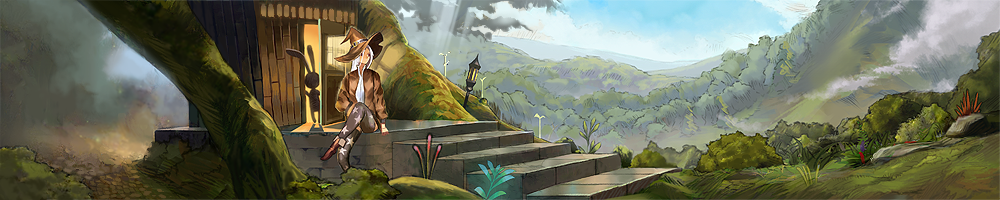
Konnichiwa Anne – 28


So, this was really the episode that would make or break this series: it was going to be the first episode of Anne, as she settled in the Hammond family, and visited her new school for the first time. The result is really a mixed bag, but I think that the creators are going to be able to make something out of it. At least, I don’t think that we’re going to get another repeat of the disaster of the Marysville arc.

First of all, Anne has grown again: she’s now ten years old, and you can see her development for the past three months that skipped: she has had no time to play around and be a kid, and really grown up in the meantime. But yeah, that brings us the the problems of continuity again: 10-year-old Anne is much more mature than 11-year-old Anne of Green Gables.

At a certain point in this episode, Anne also finds books of Shakespeare, and it’s actually very interesting to see her using these books and her own fantasy, in order to distract her from the reality she’s in. Like with the books she read in Marysville, she becomes entranced with them, especially because this time, she really has nobody to talk to. In Marysville, she at least had Johanna to talk to, Bert to relieve her worries to, and Noah, who she saw as her own brother because she had been raising him ever since he was born. But yeah, that brings us to continuity again: remember the beginning of Anne of Green Gables? Anne talked about a lot of girly things, but to my memory, she NEVER mentioned Shakespeare. This just again shows that there were a lot of red-haired Anne Shirleys walking around back in those days.

Now, as for the school. I absolutely loved the part in which the teacher was grading some tests by his students. That was really realistic. We didn’t actually get to see the students, because the schools were closed for summer break, but at least the teacher is much better than Henderson: he has this down-to-earth attitude towards teaching, and yet you can see why he decided to become a teacher in the first place.

Unfortunately on the other hand, the cheese is back. The drama in this episode was of the shallow kind again: Anne meets person, Anne talks to person and in the end the person completely changes into a different character because of the insights that Anne gave him. Especially the way in which the teacher said exactly what he learned and how it’s going to change his life just felt forced. I know that this is a kids’ show and all, but Porfy no Nagai Tabi faced the same problem, and that series again and again came up with great one-episode stories with plenty of well-written drama.

So yeah, overall this episode pretty much solidified as an inferior, though capable WMT-series, somewhat like Ie Naki Ko Remi (the 1997-version)’s sister-series. The two have a lot in common: both are spin-offs of utterly brilliant adaptations of literary works, but have drama that’s too shallow to really call themselves equal to the series they’re based on. And yet standalone, they’re pretty enjoyable. Remi had this with its excellent soundtrack (along with the best OP and ED of any WMT I’ve seen so far), strong lead and dark story about child-labour, while Anne did this with its dark attention to dysfunctional families, and a well-developed lead character Anne, who hardly resembles her original character.

Now that 2010 is getting closer and closer, I can only hope for an announcement of next year’s WMT-series to appear. Oh, I so hope that Nippon Animation is going to continue this franchise, despite its low popularity.
Rating: (Enjoyable)

Some Quick First Impressions: Fairy Tail, Aoi Bungaku and Table Cat

Fairy Tail

Short Synopsis: Our lead character destroys entire cities and ruin thousands of people’s lives with his powers. And is supposed to be the good guy…
Well, so here we have another one of those shounen fighting series. And to be honest, it feels like a rather half-assed attempt. You can really see that the creators are trying too hard for this one: at every single opportunity they get they try to be funny by an incredibly exaggerated facial expression. Some of those attempts are indeed funny, but in most of the cases they just lack comedic timing, feel lazy or just aren’t funny. The lead character also feels like any other 14-year-old shounen lead out there, without hardly anything that sets him apart. As for the fights, they mostly consist out of people throwing flashy beams and punches at each other until one party goes down. I’ve gotten bored of those ever since Bleach abused them. Right now, I’m a bit done with those shallow shounen series.
OP: Decent J-rock, but nothing special.
ED: Bad j-pop song.
Potential: 20%

Aoi Bungaku

Short Synopsis: Our lead character meets the love of his life as he runs away from the police.
Ah, yes. It’s obvious that this is going to be the least popular series of the season. I suspect that this series mostly going to be ignored, if Mouryou no Hako’s reception last year is any indication. It’s going to surprise me if there are actually subbers going to be interested in this series. Nevertheless, this series has the best character-designs of the new season, it has the best atmosphere of the new season, it has the best graphical direction, the most complex and difficult to understand script, and very much my favourite first episode of the Autumn Season. I love the way how it slowly plays out, with the atmosphere only getting bigger and bigger as it goes on. It’s about adults, rather than a bunch of teenagers, and the fanservice for once feels mature, rather than stupid like most other series this season. I really like the concept of animating six short stories inside one series: it’s going to provide variety, and make sure that the series is never going to drag. If I had to describe this episode, it’d be Kurozuka minus all of the freakish action and plus some actually good characterization. It’s taken a while, but I’m really glad to see another interesting concept from Madhouse!
ED: Nice ballad.
Potential: 90%

Table Cat

Short Synopsis: Our lead characters are a bunch of talking cats and dogs.
Okay… this is the perfect example of “so annoying it becomes funny”. I think that anyone who watched this episode wanted to kill that freaking poodle. Her voice actress just would not shut up. In fact, this entire episode (three minutes, okay) was full of the most hyperactive dialogue since the Excel Saga, combined with some really weird and spastic animation techniques. However, I can’t deny that I laughed. 😛
OP: Very cheesy and pointless for an anime with only three-minute episodes.
ED: Again, just a cheesy song that takes fifteen seconds…
Potential: 20%

Full Metal Alchemist – Brotherhood – 27


Recap.

We basically saw Hohenheim and some strange woman talk while the past twenty-six episodes were recapped. I’m not complaining however, because for a recap it was a very good one: it contained the best bits of animation along with the best soundtracks for an intense 20 minutes. Hohenheim meanwhile looks at people dancing around a campfire and has some sort of evil twin or clone or something show up. It then turns out to be a dream of his.

If this really wasn’t part of the manga, then I think it’s the creators’ way of foreshadowing. My guess is that they were forced to include a recap at this point, so instead of just boringly do an episode in which nothing happens, why not throw in a taste of the future? I must say, with the dancing children I’m beginning to see more why Hohenheim was supposed to be that kind man; he indeed doesn’t seem like the same guy as his white version.
OP: New OP this time, starts off well but then degenerates into generic J-rock.
ED:
Another slide-show. The music is decent for a j-pop ballad.
Rating: ** ()

Cross Game – 28


Yeah, this was by far the best baseball match of Cross Game, in which Kou and Azuma finally get a real threat posed to them. The matches still are nowhere as intense and exciting as in Touch, but it’s getting there. If the second half of the series can further develop the fact that Kou and Azuma aren’t perfect then we’re in for a great series.

For once, Kou didn’t give away a point because he was playing around, lazy or otherwise intentionally not focusing. The way that Keitaro just whacked a home-run out of Kou’s pitch caught him completely off-guard and Azuma too for once just hit a regular pitch, instead of a home-run. I also like that Senda, despite his portrayal as a seemingly useless character actually gets to bases at times. That’s more to say from Akaishi: there’s this theme with him, never being able to score any sort of solid hit: he either hits very hard, only for the ball to get caught, or he just completely fails to hit the ball in the first place.

Aoba again acted completely different from how she usually does, and turned into a bit of a fangirl for Kou, which of course clashed a bit with her tsundere-side. Yeah, at this point the arrival of Wakaba-lookalike seems about right to develop their relationship a bit more.
Rating: ** (Excellent)

Letter Bee – 02


Okay, this episode convinced me to start blogging this series. It had a bit of an uneventful first episode, but you can see that it was holding back. This episode showed a bit more of this series’ potential, and showed that it can very well write a nice dramatic scene. Lag is a bit too much of a crybaby in this episode, but thankfully: he grows up. Nevertheless, it still remains a question whether or not the creators are going to be able to pace the story properly, get the best out of the setting… and somehow solve the problem that they’re dealing with a still on-going manga…

The director is a new guy, as in he’s never directed an entire series before. This really can go anywhere, and at this point he seems decent enough. You can see that he’s not trying out or adding a lot of extra things, but the adaptation so far seems faithful from the perspective of someone who hasn’t read the manga like myself. He however was the technical director of Kaze no Youjinbo, which does show a lot of promise. Especially since Kaze no Youjinbo started off really slow and uneventful as well, and only became memorable as it went on. Perhaps this is the guy who can bring Studio Pierrot back to their standards before the Naruto and Bleach-era.

In any case, while a bit cheesy, that scene where Lag carried Gauche on his own was quite endearing. I like how the creators chose to start this series off with a young version of the protagonist: this way we can really get to know him. I just hope that he became less of a crybaby, but five years can change a lot of things. And apart from the crying, I liked how this episode really took its time to show the conversation between Lag and Gauche.

Apparently, there are going to be 7 DVDs. Since the first is going to contain the first two episodes, my guess is that the final six will each contain three, making for a total of 20 episodes for this series. Seems enough to get a nice story out of it.
Rating: * (Good)

White Album – 15


As for the shows I’m not going to blog:
– Out of the onslaught of moe comedies this season, Seitokai no Ichizon definitely stands out as the best and funniest. Nevertheless, I see no potential in blogging it weekly.
– Kuroko’s lesbian siscon fantasies in Railgun were just painful to watch. Even Index was better than this!
– For a while I thought that it would be fun to blog Blacksmith, with Manglobe behind the animation and an excellent soundtrack and all. But in the end, it’s just too much generic fantasy in which a band of teenagers has to go face an evil army of demons and evil adults. I want series that take risks instead of playing it as safe as possible.

Which brings us to White Album: love it or hate it, but you can’t deny that it was one of the most unique romance and eroge adaptations of the past years. While it has moe, it never tries to present the characters as such. Instead, it wants the viewer to hate its characters. Not through crappy scriptwriting as in School Days, but instead because of the characters’ actions, while still keeping a very solid script.

I mean, when you ignore the melodrama, the writing and direction is incredibly solid. The dialogue is meaningful and deep, the drama is often incredibly subtle and the creators really have an eye for detail. Just take a look at how Touya played with the condensation on the windows, or how incredibly well animated Mana was when she met Haruka on her bike. Choosing a generic fantasy like Blacksmith, in which the characters all act like caricatures and wounds magically disappear, over this one would just not sit right.

I really expect that this is going to be my hate/love series of this season, but I’d much rather have this series to rage over, rather than some badly written and lazy show that just feels stereotypical. I think the biggest problem with the first season was that it left an incredibly bad taste: it solved absolutely nothing, even for a show that’s supposed to be continued. Is it bad? No. Did it cause me to hate this series for six months? Yes.

As I watched this episode though, I was reminded more and more of why I started blogging this series in the first place. FINALLY Touya and Yuki get the chance to talk to each other for a good while, and it’s completely the opposite of the stereotypical way that I expected. They just hang out, albeit a bit uncomfortably with Yayoi being near, and then they say goodbye again.

2009 has been an excellent year for romance, so I might as well see and check out how this unique series is going to play out.
Rating: * (Good)

Some Quick First Impressions: Cheburashka Arere, Darker than Black: Ryuusei no Gemini and Sasameki Koto

Cheburashka Arere

Short Synopsis: Our lead character is a monkey that starts living with a crocodile.
Hmm, the kiddie-shows this season are surprisingly good. I wouldn’t exactly recommend Chebrashka to any adult, but for once we have a series that tries to be different from all the other kiddie shows out there. It’s actually a bit nostalgic, as it seems similar to the kiddie shows that I watched when I was only five years old (most notably, Barbapapa). One thing that especially strikes me is how good the animation is. The character-designs are simple, but they move really fluidly with hardly any corners cut. Interesting.
OP: Just a title screen, but original music.
ED: Very obnixious to anyone older than five.
Potential: 20%

Darker than Black: Ryuusei no Gemini

Short Synopsis: Our lead character stopped getting haircuts.
It was quite a surprise to see that this first episode focused on mostly completely new characters, but yeah: this was the best first episode of the new season. It’s got the intriguing setting of the Book of Bantorra with a solid and intelligent execution that can’t be matched by any other series this season. The characters are well written, the attention to detail to the origami was a very nice touch, and the battles still rely much more on wits and intelligence than raw power. This episode really showed that Bones didn’t make a sequel just to milk out this franchise, but they’re really intending to give it some more depth. It’s a shame that there are only going to be 12 episode, but on the other hand that’s going to make this series short and sweet. 2009 really looks like it’s going to be Bones’ best year ever.
ED: Solid albeit uninteresting ballad with a slide-show of random landscapes.
Potential: 90%

Sasameki Koto

Short Synopsis: Our lead character is a lesbian.
Sasameki Koto: a tad shallow, but definitely charming. This episode was one of the most emotional first episodes of the new season for me, because it was the best at combining subtlety and straight to-the-point drama. The soundtrack fits this romance series very well, and the atmosphere was pretty nice for this story. But yeah, that shallowness is going to become a problem for this series in the future. The dialogue felt not really very inspired, and the characters were a little too quick to cry. Nevertheless, after Aoi Hana with its mountains of subtlety, it might be worth watching a more direct lesbian series.
OP: A nice and calm song, although definitely not the best of its kind.
ED: A bit too annoying and poppy song.
Potential: 50%

Omoshi Magical Theatre: Risky Safety Review – 85/100


When I posted my first impressions on Kobato, I noted how incredibly cute its lead character Kobato was. I then started watching Risky Safety, and suddenly Kobato looked more like Hamako from Gintama in comparison. Omishi Magical Theater: Risky Safety has got to be one of, if not THE cutest anime I have ever seen.

And it’s not like most series that attempt to go for cuteness, in which they try to make everything as brightly coloured and fluffy as possible with a lot of energetic overacting. The titular characters, an apprentice Shinigami and Angel named Risky and Safety respectively, have such a natural charm that’s near impossible to plan out. Nearly all of their quirks are just too cute to watch when combined with the incredibly talented voice actres of these two (why yes, they’re voiced by the same voice actress, who does a fantastic job portraying both of them). They’re the type of characters who make all of the scenes they’re in a joy to watch.

The ten-minute episodes basically consist out of the two titular characters helping out a kid with worries, but the storytelling is genuine enough to make something interesting out of such a simple premise. The stories are well built up, and are about serious themes as undecisiveness, love, good and evil that aim to teach simple moral stories. You can also see that the creators like to try out new ideas: sometimes they like to show a bit of what happens in the setting around the characters, like showing a random conversation between a few passers-by that has nothing to do with the story, or showing some sort of reference to an earlier story. It’s interesting how in this story, whenever something gets destroyed or changed, it remains changed. For example, the stuff that Risky breaks in one room still remain broken 24 episodes later.

Overall, this series shows that anime can also be simple, yet effective. It’s an excellent recommendation for those who are looking for a quick watch. It’s such a charming series from beginning to end, and surprisingly solidly produced as well with detailed animation that hardly cuts any corners. With an excellent dreamy soundtrack excellent voice acting and incredibly cute antics, I really enjoyed this little series. It’s a shame that we never hear anything from its production-company anymore, APPP. Around ten years ago they used to do a number of series with very neat ideas, but right now they only seem to concentrate on in-between animation jobs (but doing a great job at them nonetheless).

Storytelling: 9/10
Characters: 9/10
Production-Values: 8/10
Setting: 8/10

Armed Librarians – The Book of Bantorra – 02


As for the series I’m not blogging:
– Kämpfer is just yet another stereotypical fighting show with no depth whatsoever.
– Nyan Koi had a really disappointing and shallow second episode. Plus, it’s obvious that the creators have never owned cats.

As for the Book of Bantorra, I think it was pretty obvious that I was going to blog this. Barring the sequels, it featured for me the best first episode of the new season so far and it looks to be another hit for newcomer David Production. This time, they might not have such a powerhouse behind the direction, but the premise has quite a few nice ideas thrown into it, there are lots of characters, all with different morals and values, and this episode showed yet again that it can deliver very nice action-scenes, even with its clearly limited budget. All in all, a very intriguing series.

The director didn’t handle any series I know, but this guy seems very experienced, with a lot of different series under his belt. I’m also very happy with the one who’s behind the series composition: Mari Okada. She wrote the script for a lot of the episodes of Simoun, and did the series composition for a lot of different series, including True Tears, Sasami Mahou Shoujo Club, Canaan and Vampire Knight (which may have sucked, but I heard that it was the best possible adaptation that the really mediocre manga could have gotten). That’s definitely a plus when animating a series of light novels with such a big setting.

The art director is also an interesting one, because Shigemi Ikeda is an artist with a huge amount of experience: the list of series he did the art direction for just goes on and on, and the result show in this episode in the architecture. You really need a lot of creativity to come up with these complex structures. A job well done, if I say so. The soundtrack also is done by the Death Note soundtrack guy, who also composed the scores for Himitsu and Real Drive, which means an excellent soundtrack as well.

But yeah, the weakest point in this series really is the direction, in the way that the quality control tends to be a bit off at times. This episode most notably showed that in the sudden increase of the already huge cleavage of the director, or how the widow of the guy who was killed by Coolio’s friend suddenly chose Colio of all people to talk to was also a bit too coincidental. Nevertheless, when compared to Shangri-la last season there are far less assaults to my suspense of disbelief, so there shouldn’t be any major problems there as long as the creators continue to keep the rest of this series interesting.

Volken also seems like an interesting male lead: he’s an adult for one, and he’s an interesting combination of an capable commander with strong morals, and a naive subordinate with a lot of potential for growth inside of him. He’s able to stand out as the lead character, and yet he doesn’t hog all the screen-time for himself (in fact, that meat guy has gotten more screen-time than he did in this episode). Hamyuts also has the potential to become a very interesting villain, the way she has been portrayed in the past two episodes: as long as she isn’t going to end up as a static character, the creators can do a lot of great things with her. I especially like how she likes to do things herself, instead of sitting in her chair, looking evil.
Rating: ** (Excellent)

Umineko no Naku Koro ni – 15


Holy crap! How many extra dimensions can a story get within just one arc? Turn the chessboard upside-down? How about reaching into a completely different dimension to find an extra side of that chessboard hidden!

With this episode I’m really starting to see Ryukishi07’s brilliance as a writer, and it was by far the best episode of this series yet. Where to start?Eva finds the gold, but instead of stopping the murder her second personality takes up a life of her own, goes after the gold and becomes the next Beatrice, the mysterious girl that we’ve been seeing in the OP? What the hell?

Screw trying to prove that the murders didn’t happen with magic. My theory still stands that the real murderer is probably some sort of illusionist and Beatrice and the other witches are pulling all sorts of illusions to confuse Battler. However, what does this mean for the entire nature of the games that Beatrice and Battler have been playing? Beatrice actually did not know that this was going to happen. Does that mean that for every arc, she just puts the initial pieces into place (as in, the magical servants and gives them the right instruction), and then watches everything play out like she wanted to? And what exactly does it mean of being in that “shadow realm” of theirs. It’s one thing that psycho Eva took over the title of Beatrice in this arc, but why did Beatrice also give up her name in that shadow realm? It destroys so many theories.

First of all, if she just did that to fool Battler, this would simply come to light at the end of this arc when everything gets reset again. Also, it also doesn’t mean that Beatrice simply wants power, because she just gave that up like it was nothing and didn’t even seem to be upset about it. Also, the way Beatrice and Ronove spoke about psycho Eva, in that “I’m not going to tell you because you’re not going to understand it anyway”-way was surprisingly genuine. There’s no reason for them to have said that if that were just part of the play, so more and more signs are pointing towards a whole dimension of magic not only in the “shadow realm” (by lack of a better name), but also within the island itself.

And then comes the final quarter of this episode in which Beatrice (or Beato, I guess) shows a completely different side of her. She really is an innocent child at heart, that laughing of her was just a way of her playing around, albeit in a bit of an extreme way. I’m not sure what exactly went on in her twisted mind, but she seems to have a complete lack of morals. This is just a guess from me, but even though Bernkastel and ΛΔ have formidable powers, they never actually went against Beatrice and Battler pretty much was the first one who slapped her in the face among her charade of various servants and furniture. And on top of that, the Beato on the island has also completely swapped personalities and is the complete opposite: mature, aware of her loss and while she still has pride, she says goodbye to her servants with her head held high.

Right now, my guess at who’s the murderer is also completely different. Eva is of course a huge red herring, as are Rosa and Beato. If we are to take from Higurashi, the killer is someone who has stayed in the background who seems innocent at first sight. That leaves the biggest suspects at this point Battler’s parents and Eva’s husband. These are the ones who have had the least amount of attention so far, and they do have their own sets of motives, to try and get rid of Krauss and become the inheritor/inheritor’s husband/wife.
Rating: *** (Awesome)
And remember: please refrain from mentioning anything that happens in the visual novel after this point…