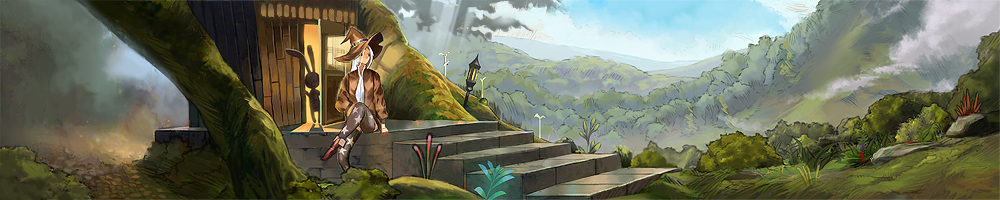
Mahou Tsukai ni Taisetsu na Koto Review – 82,5/100


Mahou Tsukai ni Taisetsu na Koto and its sequel Mahou Tsukai ni Taisetsu na Koto ~ Natsu no Sora are two completely different series. Not only do they share no similar characters whatsoever, but their execution, focus, themes and atmosphere are completely different, with the only similarity being that they take place in the same setting. I can fully imagine people liking one of the series, but not the other, and vice versa. Personally I like Natsu no Sora better, due to its extra layer of realism and the subtlety in its characters, but the first series also has a lot to like.

For the ones who never saw any of those series: the Mahou Tsukai ni Taisetsu na Koto franchise takes place in a world in which certain people are able to use magic. It explores young mages in training as they are prepared to make a living for themselves. It’s very much a realistic approach to the question of “what if magic really exists?” Way more than Natsu no Sora, the first season looks at what it means to be a mage: are magical powers really that convenient and can you just use them in the way you want? It also addresses the impact that magic has on society: what the general opinion of mages is, and the trouble it can cause in the wrong hands.

The series is much more episodic than Natsu no Sora, and each episode takes one particular character under the loop (about half of the episodes are dedicated to the main cast, the other to random people), and tries to tell the story of this character. At the final episode, the creators do a pretty good job at bringing everything together. It’s not the most emotional series out there, but this series definitely has its points at which it’s heart-warming.

At this however, it perhaps is a bit too enthusiastic at times. The main flaw of this series is that the creators are a bit too keen to spread around death and accidents. I know it’s necessary for its drama and all, but when everyone and his dog lost someone precious to them in some kind of tragic event, it loses some of the tension.

Overall, this series isn’t the best, and a few episodes and individual stories can be a tad shallow, but in terms of the big picture, it’s pretty impressive. It lacks the rock-solid execution of Natsu no Sora, and the drama can get a tad cheesy at times, but in the end I’d say that it has enough things that make it interesting, most notably the attention it has put into its themes, and how all of the characters relate to them.

Storytelling: 8/10 – A tad cheesy, but the stories are well told and come together well in the end.
Characters: 8/10 – Not as good as Natsu no Sora, but their issues and personalities are well portrayed.
Production-Values: 8/10 – The animation does what it needs to do, though not much more. The soundtrack is quite good, though.
Setting: 9/10 – Great themes, makes good use of its setting, puts a lot of emphasis on the morals of magic.

Suggestions:
Aria the Animation
Mahou Tsukai ni Taisetsu na Koto ~ Natsu no Sora
Hataraki Man

Nurarihyon no Mago – 04


I’m still not exactly sure why I like this series so much when it has just been building up. There’s also the amount of cliches and overused tropes here and having a kid as the lead character here also not the best for first impressions. Unlike Giant Killing, which started off immediately with a bang where it mixed often used tropes with very nice ideas, and immediately started to play with its characters, Nurarihyon no Mago has more shounen tropes against it and instead is clearly saving its trumps for later here.

The premise of this episode also was another kidnapping, which pretty much happens everywhere. I think it’s a combination of things that makes up for these cliches, which caused me to just mostly ignore them. The way in which the story is clearly promising to get more interesting is one thing, but on top of that I’m also really getting into the atmosphere here. The first half of this episode, for example was very good at that, and there definitely was this sense of urgency. The stories themselves are also well told and paced, and the characters are very good at conveying their emotions. I’m not sure whether this comes from the manga or the anime staff, but whoever is responsible is doing a very good job of putting everything into context.

My only real issue with this episode was that it devolved a bit into an “overkill fight”. You know, the part in which the good guys come with so much force at the bad guys that it works a bit as an an anti-climax. I know that it had its purpose in the story, but it also killed the tension that the rest of the episode had been building up to.

Now, something strange happened with the graphics in this episode. I’m not sure if it was there before (in that case I just didn’t notice), but there were some panels that were reduced to simple black and white lines. Now, I wonder whether the creators are going to use that more in the series. When they’re going to be consequent about it, it can lead to some neat effects. Speaking of the visuals here, that rat at the end of the episode looked really awesome. Kudos to the manga author for portraying such an interesting-looking transformation. If the rest of the manga has more of those scenes we’re in for some eye candy here.
Rating: * (Good)

Seikimatsu Occult Gakuin – 04


Okay, so now Fumiaki has reached the point where he’s just gotten annoying. In the previous episode he was still cute, but for the creators to carry this through in even this episode… it’s starting to get on my nerves. Especially considering that he’s gobbling up time that could be spent on the real main character here: Maya, who is a much more interesting character.

Characters like Fumiaki are always a bit of a double edged sword. I can understand flaws and all, but this episode was trying a bit too hard to make him look like an idiot. We’ve got enough anime with idiots already, can’t this series just be about genuinely interesting characters? Heck, I’d much rather watch that strange-haired weirdo and his friend at this point. At this point, I can only hope that the creators know what they’re doing with this guy.

This episode still had some really good jokes, though. Generally, all of the parts that didn’t focus on Fumiaki were really quite interesting and enjoyable. I loved the joke the creators made, when that moth chased Maya and Fumiaki behind Smile and JK. We also get confirmed even more that Maya surely knows a lot about the occult.

Most series about the supernatural just look at one direction: it’s either Shinto, or Viking legends, the Greek gods, or Chinese mythology or any other kind of popular kind of folklore. Only a few combine two of them, so Occult Academy is actually quite rare to actually look beyond the individual legends, and rather examines patterns and similarities between all kinds of different folklore across the world, like with the giant tree in this episode.

Finally, another thing that has me rather worried is the following, but it might just be something about this episode, and not the rest of the series. In terms of mystery, this series is really excellent at building up. But this episode showed that when it comes to revelations behind its questions… it doesn’t pack a whole lot of punches. Fumiaki’s background is pretty much what we could have guessed when he first explained it and the missing girl also predictably was found here. I want to see this series play around more with revelations.
Rating: (Enjoyable)

DT Eightron Reviews – 85/100


DT Eightron is one of those “screw the budget, we’re here to tell a story”-anime. And really: why not? The plot of this one is excellent, so who cares about the unimpressive graphics?

Personally I loved how the plot of this series unfolded from a seemingly average post-apocalyptic dystopia into a story about survival. What sets this show apart is the huge amount of neat ideas that the creators put into this, all dedicated to flesh out the setting that the series takes place in. It really gets quite deep as the series goes on. It may just be that I’m a fan of science fiction and all (hey, I never claimed that this blog unbiased), but after watching the entire series, I really have to say that the back-story it created is impressive, well thought out and very imaginative.

This show also rocks in the way that it subverts or averts common-used character tropes and cliches here. The lead character actually isn’t in control of the titular “mecha”. Instead, one of his friends is. The lead character is a bit of a bland kid, but for once this makes full sense in the story, and the creators actually make optimal use of this in the story. They never force him to be some sort of stereotypical hero here (those roles are cleverly used for the characters with the most combat experience), and instead its his development that makes him into a worthy lead character. You’ll get what I mean when you watch the series, but I don’t want to spoil too much about it. Just do note that in order to tell its story, it does introduce a few minor plot-holes here and there. The most glaring being the origin of the titular mecha, Eightron, which unfortunately is just never explained.

Watching this series really got me thinking about how perhaps I’ve been a bit too focused on animation budgets for the past months. It’s series like this that show that even though the animation is unimpressive (really, there are too many distorted faces and still frames here), you can still kick ass with your story. While it’s true that a big budget would have made this series even more enjoyable to watch, it’s not something that should be held against it when the plot has so many interesting ideas, and it has been this good at developing its story and setting. Heck, I wouldn’t be surprised if this was the series that partly inspired Ergo Proxy.

Storytelling: 9/10 – Slow, but atmospheric. Not realistic or believable, but excellent at developing its story and mystery.
Characters: 8/10 – Likable in the way that they play with quite a few tropes and cliches.
Production-Values: 7/10 – Yeah, don’t expect eye candy here. Good soundtrack, though.
Setting: 10/10 – Ah, why not? Great ideas, great development. It’s multi-layered, thought provoking. It’s really the kind of setting that I personally love.

Suggestions:
Ergo Proxy
Zone of the Enders
Argento Soma

High School of the Dead – 04


Not since Engage Planet Kiss Dum have we seen a recap this early in a series. Obviously, something went wrong, though thankfully only the first half of the episode was a recap: the rest of the episode was new material, but even then you could see that a lot of corners were cut here, like a number of far-away shots and convenient censoring that obstructed nearly the entire screen (though admittedly, some other scenes did have very good animation).

My guess is that something went wrong with the outsourcing. Madhouse seems to be a studio that outsources a lot, and my guess is that the part of this episode that some outsourced companies were responsible for failed to deliver their work on time. Hence the sudden inclusion of a recap.

Anyway, about the actual new content of this episode, it was mainly meant to show how even the people who didn’t turn into zombies can snap and cause chaos. With the authorities gone, people have just turned to killing in order to survive. It’s an interesting varation on the “punks are beating up random people”-trope.

Oh, and there were a number of small new scenes in between the recap (it’s as if the creators want to force you to actually watch it), but the only noteworthy thing about it is that we did see organized efforts in getting everyone to safety. That smirk of that teacher however… was just too much. I can understand that the creators wanted someone with a personality that will cause conflicts, but with this guy you can just hang a neon-sign above him reading “I am an asshole”.

Also, this episode showed that Zombies react to not just any sound, but the sound of metal. People talking and yelling seem to be just fine. This really seems to be a bit of a weird design choice, if you ask me.

Oh, and the creators? They’re definitely Shaun of the Dead fans. This episode featured another cameo, and both the title of the series as the title of the episodes are references to its title.
Rating: – (Disappointing)

Uragiri wa Boku no Namae wo Shitteiru – 16


So, here we finally get to the background episode. Or to be more specific: the start of the background arc. The creators really wanted to give this its time to unfold, and so this episode merely deals with the introduction: we get to know what’s up with Takashiro, we get to know exactly what everyone is, and what has been causing the reincarnations. The actual past is left for the next episode.

But seriously though, this did exactly what I hoped, and it solidified the characters even more. The depth of these characters really prevented this episode from turning into a dull exposition episode, and instead it filled in the blanks in the storylines really well. I also now understand why this series is named the way it is: before this series started, I thought that that somehow was some sort of spoiler to the relationship between Luka and Yuki, but instead it refers to the nature of Takashiro: in which he’s forced to reincarnate everyone in order to stand a chance at taking down Reiga.

I guess that the whole reason for Takashiro to be infused with a Dumas, it is probably to make him able to actually kill Reiga, without reincarnating him, but that will probably be answered in the next episode. We already know that Reiga did something really bad, and Takashiro was probably the cause of that. The question now remains where Yuki ties into this: was she just “there”, or she also have an important part in that tragedy? Beyond that, we also have Luka, who seems like the only character who doesn’t seem to fit here so far. I doubt that he was there when Takashiro got his scar, and my guess is that he met Yuki at a later stage.
Rating: ** (Excellent)

Giant Killing – 17


One of the best episodes of Giant Killing so far. Everything worked so well here, and on top of that we finally got to hear some new tracks from the OST. This episode really did an amazing job in heating up the tensions between the three forwards of the ETU.

I love how they all have their own issues here. Sakai is old and past his prime, but nevertheless a veteran. Sera meanwhile has his speed to back him up, which landed him as a solid forward and a place on the team’s starters. Natsuki on the other hand can make some amazing goals, but he’s also a nutcase, and the creators have been hinting for quite a bit now at how his talent may have some unexpected drawbacks.

It’s great to see that now we finally got to see Sakai’s version of the story. His age here definitely gives a new dimension to this story, because at this point I really feel like all three of them deserve the position as forward, and aside from Natsuki’s personality, it’s not like any of them are extremes on the team: they’re all solid attackers who may not be able to score much, but Sera and Sakai have both shown that they can keep pressure forward. Natsuki in the meantime is nowhere as extreme as Tsubaki.

One of those tiny scenes I also loved was the one in which Natsuki looked at his wife with that endless optimism of his. Even though his daughter fell asleep, he still kept going with those inner monologues of him. This episode had surprisingly little attention to the supporters, but they were definitely all there, along with two new people who joined the group of older fans.

Part of what made this episode also so awesome was the background music. Interestingly, the creators had some Latin-inspired tunes, and instead of using it with the Brazilians in the previous arc, they chose for something much less stereotypical in making it symbolize Natsuki’s inner euphoria. My favourite part however was the tune that was played, just after the first goal was made, and everyone was making their counter-attack. It’s because of that tune that the goal afterwards came out of bloody nowhere. I also loved Tatsumi’s face when that goal was made: it was the face of dread, as he feared that Natsuki would get even more confident than he already was.
Rating: *** (Awesome)

Sengoku Basara – 15


Whoa, was that Ishikawa Chiaki who suddenly performed an insert-song in the middle of this episode? Awesome, the creators here are certainly making sure to make this one a spectacle. Usually I’m not a fan of overacting, but this burning passion was exactly what prevented the first season of Sengoku Basara from standing out.

In any case, I’m glad to see that the second season is so much better balanced here. This episode was all about Maeda Keiji (who seems to have been upgraded to a lead character in this season) versus the rest of his clan, as he tried to stop them from engaging into a pointless battle.

I think that what makes Sengoku Basara more interesting than your average action series is that even though there’s a clear villain here, it’s still a complete chaos, where a lot more conflicts are going on. On top of that, the characters themselves aren’t stupid fighting machines (that’s one thing that the first season did right), but instead things lie far more complex, and I like how even though this is supposed to be an action series, it still puts a lot of focus on this dialogue.

Also, I believe that this was one of the first fantasy series that has the balls of actually animating the fact that the bodies of the characters are strong enough to stop a freaking katana. It’s great to see this actually get animated, rather than the usual thing in which we see some sort of flash, but don’t really know what exactly happened, and why someone isn’t sliced to death when being struck by such a killing weapon. Sengoku Basara isn’t the best game adaptation by far, but it definitely has the right intentions. That swordfight in the middle was definitely well coordinated.
Rating: ** (Excellent)

Heartcatch Precure – 24


As awesome as they look, I do hope that from now on the creators are going to limit the different transformation scenes in each episode. I mean, they were still fine when it was just Blossom and Marin, but now that Sunshine has arrived these scenes are starting to dominate the episode: in this episode, we had Sunshine’s transformation scene, the scene in which all precures announce their names, then there also was the part in which the heart seed was “born”, two times Sunshine’s special attack, then there’s Blossom and Marin’s special attack, plus another special attack of Blossom… it’s just too much. But I think that the creators realize this as well.

To make up for it, this episode featured the inclusion of a few new soundtracks for the series, and they really rock. They’re going to be great additions to the series’ second half. On top of that, this episode also introduced flying capes, so we’re probably also going to get a lot more aerial battles from now on. Sounds promising. Either way, I’m very curious to this second half: exactly how far will the creators go in shifting the direction of this series after the half-way point?

Anyway, about this episode: it was mostly meant to protect the Heart Tree, and prevent the bad guys from going after it in the second half. With this, we’ve also closed off the “Sunshine introduction arc”, and the next episode should give some hints about what the rest of the series will look like. The fight itself wasn’t the most interesting due to the above-mentioned transformation scene abuse, but this really was meant as an episode to introduce some of the new stuff here.
Rating: * (Good)

Break Blade I Review – 72,5/100


Perhaps it’s because I’ve watched too much anime, but I found this first of six Break Blade movies to be totally unremarkable. Sure, I guess that the soundtrack is good, (especially considering the huge budget that went into that one), and there are times at which the attention to details is quite good, but apart from that it was just so… generic.

Any potential for the future installments of this series of movies fully depends on how much the creators are going to use the build-up of this movie. Standalone though… I just wouldn’t recommend it. It’s basically just a big collection of cliches. It’s set in a fantasy world in which two big countries are at war. The lead character happens to be friends with the princess and king of one of the countries (so he can feel special and famous without the responsibilities of these jobs), while one of his other childhood friends has become a general of the other country. Oh, and he’s also the only one who can activate the “great awesome mecha of doom”. It’s all got this “been there, done that” feeling.

With so many cliches, you need something to make up for it. Break Blade so far… doesn’t. I understand that it could be holding back some trumps here and there, but it doesn’t make the best first impressions. The mecha battles are just average and unremarkable, while the money shots just come and go without leaving much of an impression. To me, this movie could have used a better direction, with a better build-up and better dynamics between the individual scenes.

The director, Tetsuro Amino has me worried, though. I mean, what is he doing, working on three projects at the same time? There are enough other talented directors out there, so he could have just decided to focus on either Hutch, Break Blade or Shiki. I’m really not looking forward to another Chiaki Kon or Akiyuki Shinbo here…

Storytelling: 7/10 – It sometimes has a good attention to detail, but it also failed to catch my attention.
Characters: 7/10 – Characters have background, but this is all minimal. They’re not bad, but they are completely unremarkable.
Production-Values: 8/10 – For a movie it has quite a few still shots, but it has enough well animated scenes. The soundtrack is recorded by an actual orchestra, but not really used well.
Setting: 7/10 – Too many cliches.

Suggestions:
– Visions of Escaflowne
Tales of Vesperia
Tales of the Abyss