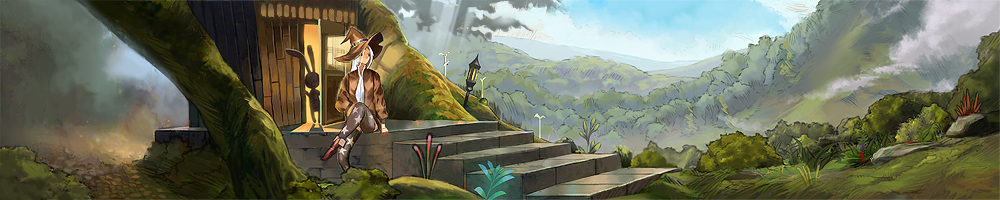
Hana-Saku Iroha – 25


What can I say? This was a wonderful episode and an excellent climax to this series. The creators stuffed a ton of character development into just this one episode.

This is going to be a bit strange, but I’m going to compare this ending with Tiger & Bunny’s for a bit. The big reason for that is because during that final arc, the side-characters all felt a bit lumped together. This episode of Hana-Saku Iroha however, avoided that: every single character had his or her own presence. Just about every character had his or her moment in this episode. It was a complete chaos in the Kissuiso, and the creators actually gave everyone something worthwhile to do. And best of all is that through this chaos, there were a ton of characters who were forced to act differently from their usual self.

This is a show that celebrates working, and it definitely hose a very interesting climax here: how to avoid getting caught up in it? After so many episodes in which the characters worked incredibly hard, I was afraid that they wouldn’t address this issue, but this episode really completes the circle and balances things out. This episode really added a lot to this series, and this is the kind of ending that I really like to see: the one that takes the series, keeps its core qualities and pushes them even further.
Rating: *** (Awesome)

Ikoku Meiro no Croisée Review – 82,5/100


Here is a slice of life series with a twist: instead of focusing on the same old setting, Ikoku Meiro no Croisee focuses on a Japanese girl who starts to live with a French blacksmiths in the Nineteenth century. If you’re like me, and you like slice of life series, but not the ones where just nothing happens, then this is one for you.

This show has two focuses. The first is its cast of characters. The second is celebrating both French and Japanese culture, and the difference between them. The studio behind this series, Satelight, has a lot of French roots and connections, and they were utilized wonderfully for this show. Throughout the series, this show examines all kinds of differences between the culture of the French and the Japanese of the 19th century, ranging from food, weather, gestures, customs: a very wide variety. Supported by that is a team of absolutely wonderful background artists, who give a gorgeous depiction of Paris in those days. The setting in this series is amazingly portrayed.

In terms of the characters meanwhile, you get very heart-warming slice of life. Especially Yune and Oscar are great character. Yune incredibly adorable, while Oscar feels very refreshing, standing miles away from the usual “grandfather”-stereotypes. The rest of the cast also has a great chemistry with each other, though there are a few issues with them individually. Claude, the main character can get a bit too angsty for the sake of drama. He acts too unfriendly and bossy a bit too much for it to be really believable. Alice meanwhile will annoy a lot of people in her first appearance, because of how spoiled a brat she is. Both get better over time, though.

This summer season really was lucky to have two such good slice of life series with Ikoku Meiro no Croisee and Usagi Drop. The big difference between them is that with Usagi Drop the drama was very realistic, while with Ikoku Meiro no Croisee it’s a bit forced, while at the same time Croisee succeeded more in creating a heart-warming atmosphere.

Storytelling: 8/10 – A bit forced with its drama, but very heartwarming and relaxing.
Characters: 8/10 – Yune is absolutely adorable, great chemistry, though a few characters that take a bit getting used to.
Production-Values: 8/10 – Satelight has really improved: consistent and the background art is great.
Setting: 9/10 – Amazing depiction of France of the 19th century, full of cultural differences.

Suggestions:
Hourou Musuko
Ristorante Paradiso

Ikoku Meiro no Croisée – 12


What an absolutely adorable final episode. This was just perfect to close off this series with a heart-warming feeling. At first the episode started off a bit uninspired, with Claude getting angry yet again, and Yune getting lost yet again, but as soon as Yune got on the roof of the Galerie, this episode never lost its charms.

It really forced Claude and Yune to talk to each other, and Claude to finally talk about his father, and the way the creators did it was incredibly charming. Throughout most of the series, my main issue with it that Claude might have been a tad too angsty was also pretty decently explained.

Overall, the big difference between this series and Usagi Drop: Usagi Drop was more realistic, while this series was better at creating its atmosphere. Because of that I believe that I like this series a bit better, and its charms hit me more.

Next season, it’ll be time for Tamayura. From the OVAs, we already know that it’s going to be a charming slice of life series, but it’ll be interesting to see whether it can surpass this series. The key will be the fact that it’s anime original: with that, you can make it do things that just won’t be possible in an adaptation, and I really hope that Sato Junichi will make use of that.
Rating: ** (Excellent)

Ao no Exorcist – 23


I do want to stress that the anime original material isn’t entirely hopeless. There’s one thing that it consistently did well: the characters. Even the beach episode: sure, it made no sense, but it was fun.

The majority of this episode was like that episode, really: it was rather far-fetched, but it did delve into the past of Rin and Yukio’s parents. It’s a bit strange to establish their mother as this mentally deranged woman who can’t seem to feel anything about the deaths of countless of people, yet who continues to fight for demon acceptance, although it was an interesting backstory that tied the past together with the present, albeit a bit forcefully. Satan having actual love was a bit awkward, but heck: we have seen so little of him that as a character it’s a twist that could make sense as long as you don’t confuse him with the traditional images of Satan.

The big question mark still is Yukio. The thing is that his character just derailed. Him being the bad guy is the twist that I just can’t accept. It had it coming for episodes now, but I still don’t like it one bit.
Rating: * (Good)

Tiger & Bunny Review – 87,5/100


The past years have shown a sudden influx of superhero series. It started with Ultraviolet and the Batman movies, then Heroman came and Madhouse had its Marvel series. The best of the bunch however, is Tiger and Bunny.

What this show did was quite special: it didn’t just pick a bunch of superheroes and had them fight crime. It constructed a very creative concept and setting around them: making them tv-stars. In the world of Tiger & Bunny, cameras follow every movement of the heroes as they catch bad guys, and they have been turned into a television phenomenon. By turning superheroes into celebrities, funded by sponsorships, this show is both able to celebrate, and criticize modern media.

The characters really succeed in making such an interesting setting come alive. One of the biggest strengths of this series is how fun the main cast is to watch. Especially the episodes that focus on just a few of them and explore their characters shine in their dynamics. This series is able to create very strong stories that are above all very fun to watch, making this one of the most enjoyable series of the past half year. Nearly every single episode delivers, and at the end of the series the cast has grown tremendously with powerful changes.

The format of this series is that it consists out of two halves. Each half starts off with a number of episodic stories that are meant to flesh out the cast and build up the story, after which a continuous story produces a climax. The plot of this series deserves praises especially because of how well it builds up. In fact, this is one of those stories where the build-up is actually more interesting to watch than the finales themselves. The creators throw in a ton of details as they slowly show more and more about the multi-layered storyline, while at the same time creating interesting individual stories for each of the cast members. it blends in seamlessly.

For me, the major flaw of this series was really that the finales went fairly straight-forward, and just not as interesting as the rest of the series. The cliches that were brilliantly used in the majority of the series in order to achieve some very creative effects suddenly became just… cliches. And that stood out a bit. The journey to the destination however was more than worth it.

Storytelling: 9/10 – Weaves various plot-lines very nicely throughout the story, is very well paced and above all really fun to watch. Albeit the finales are the least interesting parts of the show.
Characters: 9/10 – Awesome cast, wonderful development.
Production-Values: 8/10 – Yoshihiro Ike’s soundtrack rocks, the CG works, but often moves jerky, and the 2D animation also has its moments of inconsistencies. It’s a very colourful and bright looking series, though.
Setting: 9/10 – This series is very creative with its premise, and makes brilliant use of it.

Suggestions:
The Big O
Zone of the Enders
Mobile Police Patlabor

Tiger & Bunny – 25


Aw. To be honest, I found this to be a rather lukewarm ending. In the end, the best parts of this show were its build-up. This really was a series where it’s the journey that is important, not the destination. Both the Jake arc and this finale were the parts of Tiger & Bunny that impressed me the least. But hey, we’re getting a sequel.

The best way for me to describe this show would be “half-baked”. The creators kill off Kotetsu. Oh no wait, he’s just knocked out from the huge blast that conveniently managed to just destroy his suit. There are more androids! Oh now wait, there is a safety code now. Kotetsu is retiring. Oh no wait, he isn’t! Barnaby wants to live his own life now. Oh now, he isn’t, he’s just going to act like nothing happened!

I hate to call it, but I really think that the Sunrise executives had a role in this again. The thing with the sequel is that it wasn’t planned right from the start. The only single hint to that throughout most of the series was the fact that the entire city of Ouroboros was corrupt. My guess that originally the creators wanted to tie Maverick in with that. Instead, they were probably forced to leave open the option for a second season, which lead to the awkward plot twists in this episode that actually negated most of the character development for the different characters. These kinds of plot twists can be done well, but this was just too Ad Hoc and forced.. Because of that I’m a bit iffy about the announced continuation: I really suspect that the creators are going to have to write a completely new story on a really short notice. The last thing that happened was with Marie & Gali, whose second season was completely ruined by the inclusion of a scrappy.

Overall, I still love this show, but it didn’t make my favourite Sunrise series. My top 10 of Sunrise TV-Series probably looks something like this now:
10. Gintama
9. Seikai Trilogy
8. Witch Hunter Robin
7. Tiger & Bunny
6. Gasaraki
5. The Big O
4. Zone of the Enders
3. Bakumatsu Kikansetsu Irohanihoheto
2. Cowboy Bebop
1. Visions of Escaflowne
Rating: (Enjoyable)

Kami-Sama no Memo-Chou – 11


Oh, thank god! After No.6 and Kamisama Dolls suddenly took a turn for the worst, I’m really glad that this series continued its consistent run. With this, it stands above both these shows, as even though there is a ton of wasted potential here, it actually looks to close off really solidly.

This episode was solid build-up, but what struck me in particular is how the main cast grew even closer to each other. What happened to Ayaka was perfect for that. And in the meantime we got a great mystery story, looking for exactly how it happened. The cast definitely grew on me even more this episode, especially with the addition of the hopelessly broken brother of Ayaka.

Still, this case does seem awfully simple now that the creators hinted at the big boss drugging Ayaka and getting her to drop off that cliff. Still, even considering that there are things that still don’t make sense: why did she choose the school building of all places?
Rating: ** (Excellent)

Blade Review – 82,5/100


The most underrated series of the past season. Blood-C? Nah, that show is just very easy to either really like or really dislike. Hyouge Mono? Nah, there are enouigh people who want to see it subbed some day. As for Blade, however: I made a number of posts about it, but I don’t think that I can recall even a single person commenting on it after the first episode. Were there actually people who knew about this thing?

It’s a pity, because this turned out to be quite an engaging action series. Out of all the Marvel series that were shown over the past year, it by far stands out as the best, aside from a few single areas.

Let’s get those areas out of the way first: the animation and the action choreography. The animation is nowhere near as good as it was, back with the X-Men, and Wolverine had better choreography and knew how to make its fights visually more interesting. While this is indeed a bit of a pity, do note that apart from that, Blade is superior to Iron Man, X-Men and Wolverine in all other ways.

At first sight this may not seem to be the case. In fact, I can recall giving up hope with this series after its second episode came with a very cheesy police story. But after that, something very interesting happened: this show started to get more and more focused. Suddenly, it came with background arc after background arc: we get an engaging story of Blade in his teens, as a young adult, we learn what happened to his mother, what happened to his father, the main villain gets a compelling back-story and this show even has the time to take one of the side-characters of Wolverine, and use him better than how Wolverine did it! Instead of randomly focusing on action, every episode is actually meant to flesh out the story and give everything ample back-story.

Oh, the stories still are a bit cheesy and simple, but it all is surprisingly well executed, with great build-up, pacing and an excellent use of music. You really have to give it to the composer here: he composed four kickass and standalone soundtracks that are all different from each other. Because of that, not just Blade turns into the best character out of all of the Marvel-series, his sidekicks also dwarf their counterparts. The female sidekick finally hits the nail right on the mark: she’s neither a helpless damsel in distress, nor does she hog all of the screentime with deus ex machina powers. Intead, she adds something to the main character, and makes him change. The main villain is compelling, threatening and actually does something other tha sit in a chair, and the rest of the side-cast do a wonderful job both supporting the main cast, and also telling their own story.

Let’s also talk about the setting a bit. Are you tired of every single anime taking place in a Japanese High School? Then look no further, because this series is anything but typical. First of all, when was the last time we had an actual black main character? The last major one I can remember is Dutch from Black Lagoon, and even he got shafted as the show went on. Also, as the series went on, another very interesting thing happened: the characters didn’t stay in Japan, but instead went on a tour thoughout Southeast Asia. Seriously, every arc takes place in a different country, and in this way we suddenly visit countries that have never even made an appearance in anime: the Philippines, Cambodia, Laos, Vietnam, Malasia, this show takes us jungles all over the place, rather than just staying on one spot.

Also, this show is about vampires. The kind that sparkles? Of course not. Here they really are bloodthirsty creatures, but even there it’s not as black and white as just that. This series too spends a lot of time on the nature of vampires, what it means to become one, and most importantly: what happens to the loved ones of the people who do become one.

Okay, now just to make sure that I’m not overly praising this series: it does have Madhouse’s acting problem again. And with that, I mean that their character designs are so complex that it becomes really hard to animate them properly, making their acting feel a bit akward. Especially the first half suffers of this, when dramatic speeches can get a bit awkward due to choppy facial animation. It also remains a series that is dedicated to action. Don’t expect world class drama here. It’s simple drama with simple characters that just comes together wonderfully, especially after the glaring flaws that the earlier Marvel series had, this really was the closure that the franchise needed.

Storytelling: 8/10 – Great combination of action and plot, both which are surprisingly interesting.
Characters: 9/10 – A ton of attention to all kinds of character backgrounds was really appreciated, and the characters dwarf the cast of all of the other Marvel series.
Production-Values: 8/10 – Fantastic soundtrack, though the animation has a few issues here and there.
Setting: 8/10 – More anime should follow this series’ example of not picking the most overused premises to go with!

Suggestions:
Ultraviolet: Code 044
Claymore
Kurozuka

Summer 2011 Kaleidoscope – Week 37


Blade – 12
This episode had the single best action scene of the entire Blade series. How’s that for an excellent conclusion? Seriously, I’m really glad to see that this one closed off with a good ending, and it was everything it needed to be: exciting, action-packed and conclusive. the scene in the air where Eric and Deacon Frost are both falling in particular stands out as creative, and an excellent climax to the series. This really made up for the cop-out finale of the X-Men.

What’s even more interesting here is that this episode seemed very similar to the ending of No.6, but instead here everything was done right. A huge building was blown up, but half the series had actually been preparing for that moment, making use of the huge weakness of the Vampires, the Sun. There was an actual climax in which the characters share a few words, and then move on, rather than just leave without any random explanation.
Rating: ** (Excellent)

Sacred Seven – 12
Well, at least I got a good laugh out of it. If the rest of the episodes would have been like this, at least it would have been a lot more entertaining. Don’t get me wrong though this was hilariously bad. The ridiculously over the top villain was more funny than threatening (Doors?! We don’t need no stinkin’ doors!), but the way in which the creators also randomly decided to just kill him and let Faye be the final villain also made no sense whatsoever. And yes, because of that we got a “talking the monster to death”-ending. What also struck my mind was how hilariously silly the new monster designs were. I mean, were the creators really serious with Knight’s “costume”? And what was up with that green teddy bear or the face of the main villain? Also, this show took “human shield” a little too literal here.
Rating: (Enjoyable)

Usagi Drop – 11
Aand like expected… this show just ends. The big climax is Rin losing two teeth. I get the symbolism, but I still would have preferred it if the creators also showed the growing up parts. I know that the ending of the manga is rumoured to be terrible, but you can rewrite or completely ignore that. Right now, this does feel a bit incomplete, even though this series probably had the easiest task out of all the series that I’m currently watching to create a good ending. Standalone though, this episode again was as good as usual. I especially liked how the adults ended with themes about giving up your entire life for your children. That was a very good climax for this series.
Rating: ** (Excellent)

Sacred Seven Review – 65/100


The biggest disappointment for me for this season is an easy one: Sacred Seven. For starters, consider that my two favourite Sunrise series of the past decade are Bakumatsu Kikansetsu Irohanihoheto and Zone of the Enders. This series had the director of the former and the main writer of the latter. Together they could have made another epic science fiction series that could even have dwarfed Tiger & Bunny when done well. Instead, they come with a dull school mecha show.

And don’t get me wrong, school mecha series aren’t necessarily bad: Star Driver was excellent. But when you do one, make sure that it stands out. The creators of Sacred Seven had trouble with that.

The big problem with this show is that the plot it has come up with is completely boring, unimaginative and doesn’t know what it wants to be. It spends the majority of its time building upon two stories: Ruri(the token female)’s quest for revenge on her family and Knight and Faye,two random people with superpowers who are fleeing from bad guys. Both just fail to hit any high note whatsoever, made even worse through bland acting and long strings where nothing just happens.

What’s more is that the story seems just poorly managed. This show jumps the shark quite a few times throughout the series, like it wanted to do stuff but actually forgot about it and hastily tries to include it anyway. Halfway through the series an incredibly forced romance pops up, and the final two episodes throw away any suspense of disbelief and build-up and just go with an over the top cheese ball of an ending. Then there is also the bizarre case of the OP of this series. The OP actually was one of the best parts of this series: well animated, great choreography and a kickass soundtrack. And the halfway through the series the creators turn the OP into a dull ED with just random stills in front of it and switch over to a generic pop OP that just feels like all of the others.

What also doesn’t really help is the bland cast of characters. Out of everyone in this series, the only one who doesn’t feel bland is the main character, Arama. He’s this awkward tall guy who is nice to watch. The rest of the cast completely lacks imagination, is a cliche fest and just badly acted all together. Its villains aren’t exactly pathetic, but they’re just way too stereotypically evil.

And the worst part? The creators don’t even seem to realize most of these flaws for most of the series. For the first 10 episodes, they really try to play their series straight, instead of just making this a fun action series. The drama is completely unsubstantial, and yet it fills the majority of this series. Only in the final two episodes they decide to just screw it and head into the “so bad it’s good”-territory. This isn’t wasted potential. This is wasted talent.

Storytelling: 6/10 – Suffers from being incredibly boring and not knowing what it wants to be.
Characters: 6/10 – Bland and forgettable aside from perhaps the main character, but even he isn’t exactly good or well used.
Production-Values: 8/10 – At least there are a few (emphasis on few) good action scenes.
Setting: 6/10 – The same generic and overused high school action premise you see everywhere.

Suggestions:
Soukou no Strain
Star Driver
Seikimatsu Occult Gakuin