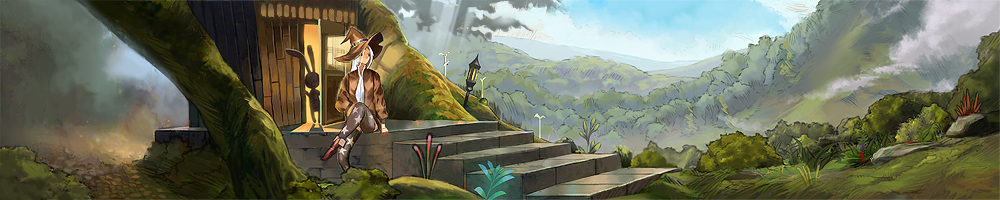
Eureka Seven Ao – 09

This was an episode for character and setting building, but thankfully it also remembered to deliver some good drama and action along the way. I like that about this show: it has fairly more time than usual, but when it needs to build up it does try to make this build-up interesting.

The episode had two main goals. The first was building trust between Ao and Fleur and Elena, showing that they’re beginning to read each other more and more. This is interesting development, but it does have a potential pitfall: developing into something generic. The way they interacted with Ao so far was very interesting and there was a lot of tension between them. Them getting to trust each other is natural of course, but this will remove some of that tension. So yeah, this series will have to put something in to replace that.

Second was that we saw that Truth guy continuing with his plans to what I presume will be world destruction. In this episode he recruits a soldier who is surprisingly similar to Dominic from the original Eureka Seven. I can definitely see that the creators are trying to do something interesting with Truth, especially by introducing him so relatively early in the series. I like how his powers enable him to just turn up from absolutely nowhere, but this does have the disadvantage of making him a bit too overpowered. What this guy needs next, is flaws.
Rating: *+ (Great)

Tsuritama – 09

Yes! This definitely is a start here! Best episode of Tsuritama so far!

This episode kept the light-hearted nature, added the epic “the world is doomed”-effect, increased the pacing, used the build-up of the rest of the series, and really got fun and exciting. The balance between comedy and drama especially was brilliant.

It’s also here where it really shows how creative this show is, because once again this episode thrived on it, and it had a ton of these nice finds that made this episode really interesting to watch, ranging from the bizarre bunny suits that the members of Duck wore and their hilariously direct ways of taking control of Enoshima to the use of hot curry and Haru’s idea to send Yuki to Nagoya of all places. It’s a really neat idea to have the cast make the main character make a little side-trip.

What’s more: this episode flowed really well into each other. For one the members of Duck are hilarious, but they were also very effective in rounding up the city despite that. It’s here where you can really see the build-up paying off, because Enoshima really feels alive, especially now that it has changed so much because of the evacuations. All the events in this episode also flowed really well into each other, and nothing felt forced. Come on, Kenji Nakamura: you can do this. Continue this upward trend for two more episodes and we’ll actually have a really great series here.
Rating: *** (Awesome)

Sakamichi no Apollon – 09

So Apollon decided to use the time before its finale in order to resolve the romance between the side-characters. This episode was all about Jun and Yurika, and actually a really good balance to the angst of the previous episodes, by finally actually resolving things, getting people to clear up misunderstandings and getting one couple together. After so many complicated feelings, this episode removed a lot of the different tensions and brought the cast back together, and it’s great that this is done before the finale.

Now we have three (yes, Apollon will be 12 episodes) episodes left for the three main characters. It’s here where all of the build-up needs to come together, and this series has to make use of its build-up. A great example of how to do this was with Yojou-han Shinwa Taikei. These three episodes will need to excel in this show’s own ways, most likely through impeccable acting and great character-development.

The rotoscoped scenes by the way look as good as ever. I mean, compare this to Tsuritama where it’s obvious that the biggest amount of budget was blown in the first episode, here the creators are still able to keep up a consistent animation quality up. The rotoscoped parts may not be as impressive compared to if they were had-animated, but still they look really impressive, and good unlike any other TV-anime out there.
Rating: ** (Excellent)

Lupin III – Mine Fujiko to Iu Onna – 10

This was another episode written by Dai Sato, and really: his influence is all over it and I am reminded again why he is one of the top scriptwriters out there. I’ve really missed him: Norageki had his ideas, but not his writing style, while the Tekken movie felt like he was forced to be generic. Here though, he got lots of freedom to tell Mine Fujiko’s backstory. The result is one of the best episodes of this show so far.

This was dark and surreal, and it had a great script that explored Mine Fujiko’s past without having her even in it. I love how it was non-linear on purpose, revealing a bit each time with different images and references, including Hegel of all people. It’s a great way to meet the owl baron as well, and this episode also built further upon episodes 1 and 6. It all comes together wonderfully at the end. Serioulsy Dai Sato needs to write another series. Get him to do some sort of Noitamina series or something. He can make something awesome out of that.

This series is probably really different from what the original Lupin III was, but I like that a lot: instead of trying to relive the original it really went into its own way. This doesn’t come without risks, though. The most dangerous is when a remake can’t choose between trying to be faithful or going into its own direction, or when it doesn’t really have anything impressive to add. Mine Fujiko to Iu Onna isn’t going to win the best of the season award, but it still had plenty of noteworthy things and is another addition to the collection of great remakes.
Rating: **+ (Excellent+)

Zetman – 10

For me, this was the best episode for Kouga so far. It finally build further upon that first test that that he was given by one of the villains, and it really carried that up to eleven with a great mind-game for him to tackle. I really like how he let himself all this get to him, alongside all of the ways in which he was tempted and confused here.

Jin meanwhile accepted some romance in his life. I like these changes, yet at the same time I feel like something still needs to happen to his character; it’s still a bit too simple, and the version of him that I like best is his young version in the first episode.

And yeah, this episode hit the “epic”-switch. It’s something you see in every series and his dog if even the least bit of action is involved: something quick triggers the potential end of the world. In this case it’s the absence of those white-hooded guys, leading every player to figure that they might as well kill all humans while they have the chance.

There are a few things that happened in this episode that will be really hard to explain, though. With this, I don’t mean Kouga letting himself get kidnapped so easily: it does fall in line with how he has been built up as this naive hero, especially since he probably figured that if he didn’t play along with the rules Konoha would end up dead. However, what does puzzle me is how one player can take control over every single broadcasting network. And what about that girl who got crushed by that bed? Why was she so happy to get herself killed?
Rating: ** (Excellent)

Aquarion Evol – 23 & AKB0048 – 06

Aaand Mikono, you fail at being a romantic love interest for Aquarion Evol. This was supposed to be your chance: this episode delivered all of the background for this series. This was your chance to be relevant. But no, you’re just mentioned once in the entire story as a sort-of afterthought. Your role as a damsel in distress got upstaged by Zessica at the end of the episode, and beyond that the only thing you did was… feel sorry for Kagura.

Apart from that though: this was solid back-story. And to imagine that the big twist of the original Aquarion… was a dog. That was just as crazy. The commander really stole the show in this episode with his trolling, and Shrade also shined here. It’s completely camp and over the top, but good entertainment.

I do wonder, though: if the world split in two, and only men can survive in Vega… then what are they doing on Altair? Based on that same logic we should have an entire female cast.
Rating: *+ (Great)

AKB0048 was about that really strange phenomenon known as “hand shake events”, together with unreasonable fans. I again like the focus on the darker sides of being an idol (having young girls like that listen to death threats like that), but the creators did miss a few opportunities. I mean, this episode did focus on the good fans, but we saw little of the really creepy fans; there was only one scene of that: the obsessed grown man who kept clinging. That could be a hint for things to come though. What probably won’t be treated is the whole commercial farce that idols can be, since with this series, the characters actually have a justifiable reason to get as much exposure as possible.

Also those battles still make no sense!
Rating: * (Good)

Some Quick First Impressions: Kingdom

Kingdom

Short Synopsis: Our lead character has a very bad case of constipation.
The producer of this series… screwed up badly. It’s a sad case of being crippled by your own ambition. I mean, it is impressive that he managed to land this series 38 episodes right from the start. The thing is, that he didn’t seem to realize that he didn’t have enough budget to actually animate all those. The result? CG. Tons of CG. This goes further than you can imagine, to the point where this becomes a CG animated series that has occasional 2D scenes in them. It looks horrible: both styles are ugly and they don’t mesh at all, not to mention the bad case of constipation that every single character seems to have. Beyond that, this episode suffered from a chronic case of melodrama. I mean I understand that series that are focused on combat are meant to be hot blooded, but this show just goes way over the top. This double episode (yes, this is a double episode) did have some nice ideas,but they don’t really come to their right in such a melodramatic shounen execution.
OP: J-Rock, neither bad nor good. But are they serious in that that protagonist is going to end up fighting entire armies on his own?
ED: An unimpressive ballad.
Potential: 10%

Hyouka – 07

At the start I was a bit disappointed that out of all the possible locations for a trip, the creators went with a hot spring. Still, this episode had its merits, and I can see that it had fun subverting a lot of cliches that you usually associate with these kinds of episodes. For one, there was more male fanservice than female, visiting them felt more natural and realistic, and the traditional ghost story in the inn had an incredibly simple explanation.

Underlying themes here were siblings, again not portrayed as black and white as usual: these two kids had their issues together, but they weren’t completely hostile against each other. This definitely was meant for both Hotarou and Chitanda to relate to (Hotarou through his sister and Chitanda through not having a sibling), and it worked well. Hotarou’s car sickness also was an interesting touch to his character.

Now, it’s clear now that Hotarou has a large crush on Chitanda. This leaves me to wonder whether the creators have any intention to resole that, or whether they just intend it to be random romantic tension for the sake of romantic tension. Either way, I do like how she lights up in the scenes shot from his perspective.
Rating: * (Good)

Berserk – Golden Age Chapter I – The Egg of the High King Review – 85/100

So, things have been very quiet in terms of movies. However, starting from now, we’re in for a year in which the line-up is going to be the best in many, many years. And what a wonderful way to start this streak of awesome movies than with Berserk’s remake. Remake anime are tricky. I hate them if they don’t add anything, or are nothing more than a glorified recap. With those things, you can just as well watch the original thing, making them completely redundant. When they’re done well though, I just can’t complain. Berserk’s movie is one of the best examples of that.

It adapts the same story as the TV-series, but the tone and execution are so completely different, and both adaptations have their own merits. The TV-series was dark, subdued and incredibly gloomy, using is long length perfectly to set its atmosphere. It let everything play out very slowly, and as a result was a tad padded out here and there. The movie however has a much brighter colour palette, its pacing is much faster, and rather than the gloomy atmosphere, it creates the atmosphere of an epic fantasy series. This also really reflects in the soundtracks: the TV-series had Susumu Hirasawa’s magic do a very depressed and dark score. The movie instead is full of choirs and orchestras, having a much more bombastic feel.

And then there are the visuals. On one hand we have the TV-series, which has the better art style of the two (outdated? Hah, I disagree; I have more problems with most anime characters nowadays looking too similar), creating some stunning designs and images, at the expense of a lot of still frames. Then there is the movie, which really excels in its animation. The TV-series had some amazing consistency, while the movie is much more experimental, even though it had to make some sacrifices for that.

Because yeah, if there is one complaint that you’re going to hear about this movie, then it’s the fact that the creators had to resort to CG for the actual character models. And really, for character-models done in CG, this really is one of the better examples of combining 2D and 3D, but it still stands out. The creators definitely prioritized movement over looking consistent, and it shows: the movement in this show feels very smooth and natural. The fluidity of the scenes is great.

Where this movie also stands out is a specialty of the director that Studio 4C got for this movie: Toshiyuki Kubooka, who previously directed Remaining Sense of Pain from Batman: Gotham Knight. He already showed there a great knowledge of human anatomy that he used in his gore, and he also uses this very effectively in this movie, giving a real edge to the combat scenes.

So, is this movie on par with the Television Series? I can’t say that yet, as it only adapted, what? The first ten episodes or so? They haven’t even reached the part where Berserk gets really, really good, but even then this movie had my constant attention and it was excellent at both building up and delivering solid action scenes, and it still has really good acting. It’s all really well balanced, but yeah: the downside is less time to flesh out some of the characters. Especially the side-characters suffered from this.

Storytelling: 9/10 – Managed to condense the Berserk storyline to movie-format. Wonderful balance and really went with its own direction.
Characters: 8/10 – The creators did a great job in bringing the characters to life. Unfortunately, the movie is only an hour long, and some side-characters suffered from this.
Production-Values: 8/10 – Really, the only reason why this isn’t a 9 is because of the CG. Perhaps the budget isn’t as big as some other movies, but the sense of aesthetics of this movie makes it a visual feast nonetheless.
Setting: 9/10 – Still maintains that unique take on the medieval setting here.

Suggestions:
Berserk
Rurouni Kenshin – Tsuiokuhen
Vampire Hunter D – Bloodlust

Phi Brain – 34

This was just bizarre. It seems that the editorial department realized that the writing staff intended to have the same puzzle in five episodes in a row, and they probably were just in time to salvage this and reduce the whole time of this arc by one episode by having the last match be a team-up. The thing is, that Sato Junichi most likely wrote this (he went from being the director in the first season to writing the series composition in the second season). He should know better, right?

And yeah. I didn’t think it was possible, but the creators actually provided an explanation for all of the other complaints I’ve been having over the past episode: nobody can think straight because they’re consumed by these orpheus rings. That’s why every villain is gay for Kaito, they make such ridiculous leaps in logic and have these extremely out of place mood changes that seem to come from out of nowhere.

And with this, the goal of this series has changed from “defeat the orpheus order” to “save the orpheus order”. Now, the question remains whether or not it’s interesting to watch an entire season dedicated to mentally deranged villains. It’s impossible to relate to them in any case, so instead this show is really going to have to develop these guys as victims instead.

The big potential pitfall is going to be making the ofpheus bracelets god-moded: justify every stupid leap in logic through them and relaying every dumb or over the top statement that these guys make just on “they weren’t thinking straight”. It takes away all character from the orpheus order, and it’s just lazy storytelling: normally writers have to take suspense of disbelief into account, and have characters acting reasonable. If you’re going to play with mental issues, do so with rules and structure, and don’t just blame everything on the “stupid virus”.
Rating: * (Good)