This season. It feels like a spring or autumn season is coming. Perhaps not a big one, but I’m surprised by the amount of solid titles that are coming out. There are quite a number of series I’m looking out for, plus also a few that already have the potential to become the best of the year unless the competition really ramps it up. We’re in for an interesting season, that’s the least. Unfortunately, there also are a lot of really bland series coming up. It’s a season of extremes.
Wake Up Girls
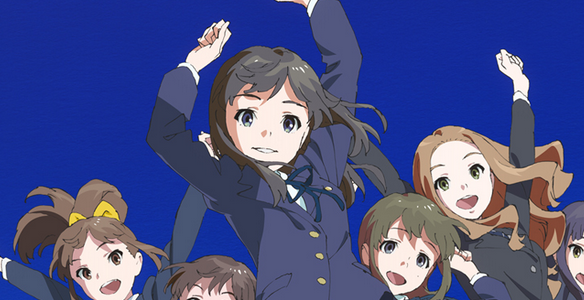
Impressions: Here is one to probably steer away from: Yutaka Yamamoto, a guy who basically is just one big troll, is going to direct a movie. It’s about seven high school girls. Who become idols in order to save a production company. Yes, he actually came up with this. It’s not an adaptation. Out of all the possible plots that he could have picked, he picked one of the most generic ones. Heck, with Fractale he actually tried to show that he had some ambition.
Bayonetta: Bloody Fate
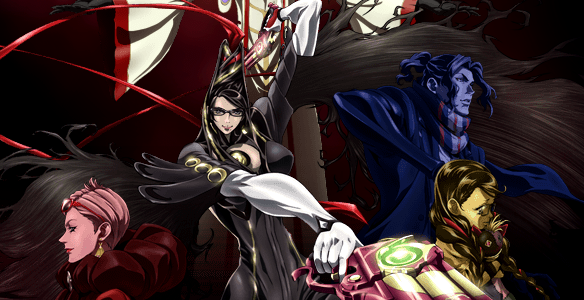
Impressions: This is going to be Gonzo’s new project, and it’s helmed by the director of Afro Samurai and the X-Men. What this basically means is that Bayonetta will be a movie about eye candy: throwing as much visual stuff at the screen and hope that the audience won’t be bored enough to realize that the storyline is pretty rubbish. It’s also got the screenplay from the guy who wrote the X-Men anime, which only reaffirms this.
Hunter X Hunter: Last Mission
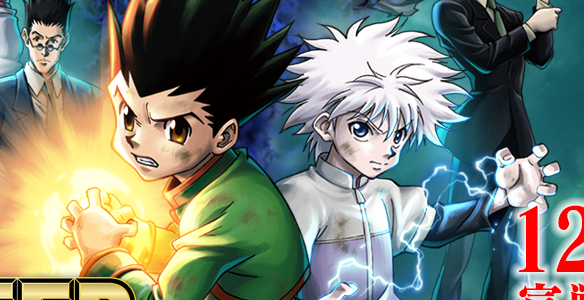
Impressions: Here is the interesting thing about this movie: it’s going to be adapted by the guy who also adapted the 1999 version. Including the OVA, the part of the franchise that managed to receive the best and most heartful adaptation so far. That is very promising, because even though this guy isn’t perfect (he also was behind the much more lackluster Greed Island Arc that just felt lazily adapted), he knows how to do it, and how to bring the best out of the characters. Here’s to hoping that he can do it again. The director will be completely different though, so who knows where that’ll end up?
Amazing Twins
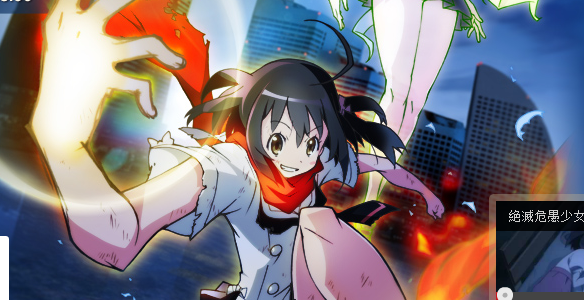
Impressions: Sato Junichi and Mari Okada. A combination between these two prolific creators was bound to happen someday, and it comes in the form of this quirky-looking OVA about some girls with superpowers. It looks out of the league for both of them, as this seems to be a pure action series, but that does provide opportunities. Both of them are ridiculously talented when they get something right, now the thing will be whether they can make this happen for this set of short OVAs as well.
Majocco Shimai no Yoyo to Nene
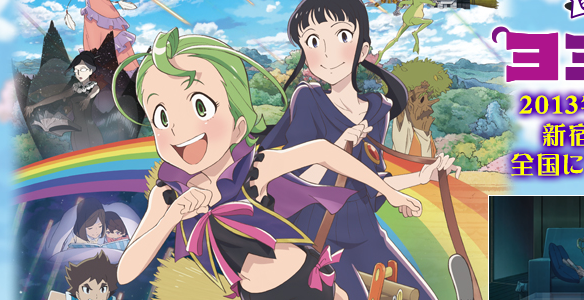
Impressions: Here is another one to look out for. Not just because of Ufo Table, but also because they put their best director on it: Takayuki Hirao. This guy screams alternative and he has guts to go where nobody else dares to go. He directed the fifth and best of the Kara no Kyoukai Movies, and was the only one who was deranged enough to try and animate a story by Junji Ito. His storytelling skills are sometimes a bit wonky and for that he will need good source material. But it looks like a nice and ambitious family movie.
Mouretsu Pirates

Impressions: Mouretsu Pirates was a bit of a weird series that got progressively better with every single arc thanks to some very good build-up. Tatsuo Sato is a great director and he will be both writing and directing this movie, which means that he has a lot of control about its content, and that’s very promising for a movie.
Buddha 2
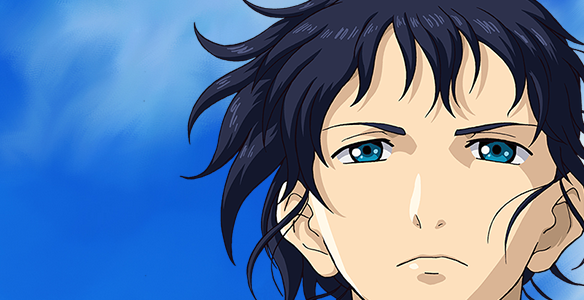
Impressions: Buddha 1 was amazing. A brilliant adaptation of Osamu Tezuka‘s classic. So of course I’m looking forward to the continuation! The director is going to be different for this one, though: Toshiaki Komura, someone with less experience than the first one and who is mostly known for directing Precure series and awful fighting stuff like Kinnukuman and Ring ni Kakero. I hope that he has a good team to back him up, because a story like this deserves people who handle it with care.
Tiger & Bunny The Rising
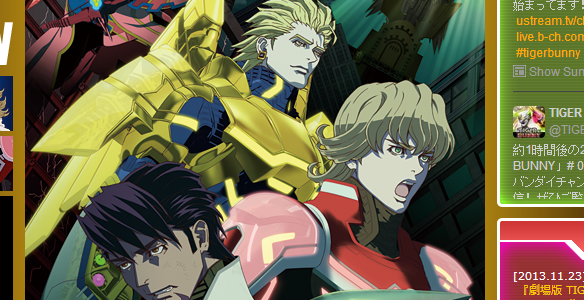
Impressions: So yeah, a lot of people probably noticed that I’m not posting movie reviews anymore. I really want to pick up movies again, however I need to find a way to actually sit down and watch long stuff again. I’m currently battling my own laziness and concentration for it, because I still need to watch the first movie before checking this one out. And the second movie too has the brilliant director of Yoshitomo Yonetani behind it, who is a master of chaos.
Kaguya Hime Monogatari
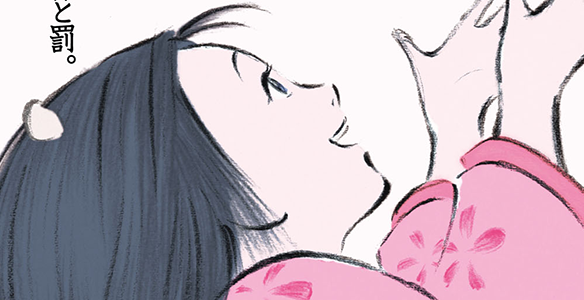
Impressions: This is one of my top movies to watch out for this winter. It’s probably going to be Isao Takahata‘s last full movie ever. And for those who don’t know him: he’s the one who co-founded Ghibli with Hayao Miyazaki. Out of all of the directors I have ever witnessed in anime, he is by far the most realistic one. Nobody has ever been able to top his feeling of characters since the late sixties when he got his first directing jobs. It causes his movies to be very slow, but I’d still like to see his talents one more time.
Mushishi
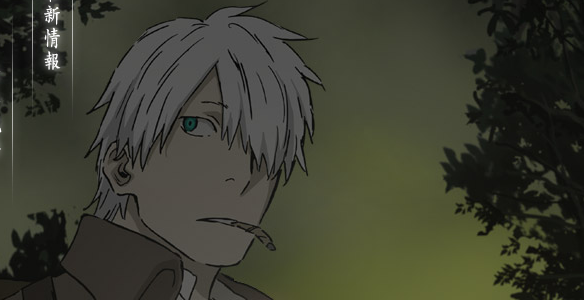
Impressions: Talk has been going on for quite a while now that there would be more Mushishi, and with this it has finally be announced: a one-hour special on January 4th. Reuniting all of the past staff that gave us one of the most memorable series out there. However, I am disappointed a bit: I had secretly hoped an entire new television series: there seems to be enough manga material left for that. However, I guess that you can’t have everything. A one-hour special is awesome enough.
Upcoming TV-Series:
Saikin, Imouto no Yousu ga Chotto Okaishiin Da Ga.

Summary: ” In the romance comedy, a girl named Mitsuki Kanzaki lives with her step-brother Yuya after her mother remarries. One day, Mitsuki is possessed by the self-proclaimed spirit of a young girl, Hiyori Kotobuki. Hiyori (in Mitsuki’s body) must fall in love with Yuya to move towards the “Gates of Heaven.”” – (Taken from ANN)
Produced by: ?
Original creator: Mari Matsuzawa
Impressions: This has to be one of the most ridiculously stupid, insulting and contrived premises to try and make incest acceptable.
First-Glance Potential: 0%
Oneechan ga Kita

Summary: “The story revolves around Tomoya Mizuhara, a 13-year-old boy who suddenly gains a big sister when his father remarries. 17-year-old Ichika is a little strange, and her affection for Tomoya is rather overwhelming, if not scary. On top of things, Ichika’s friend Ruri is the ultimate sadist. Then there is Ichika’s big-breasted quarter-Japanese friend Marina.” – (Taken from ANN)
Produced by: C2C
Director: Yoshihide Yuuzumi
Original creator: Rikou Anzai
Impressions: This will have 3-minute episodes, and it seems strangely like older-sister incest. Next.
First-Glance Potential: 0%
Maken-Ki Two
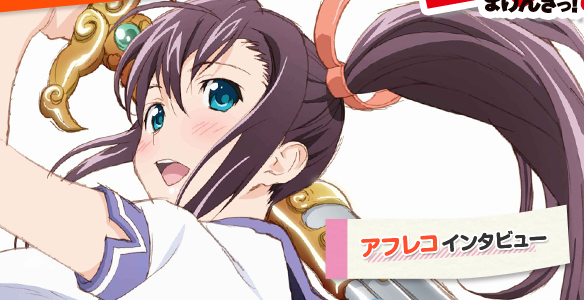
Summary: “Takeru Ohyama, a young normal yet perverted minded guy, got accepted and now goes to a school that, unknown to him, was where combat and magic is used. On the first day, he meets again after three years: Haruko Amaya, his childhood friend, Inaho Kushiya, a girl who says she’s his fiance, and Kodama Himegami, a blonde who wants to kill him. Finding out that there are many girls there that just don’t like him, he is told that everyone there uses a special magic ability while using an item or weapon called a Maken. Later, he finds that no Maken is acceptable for him and doesn’t know what to do, since in this school the students get into duels that showcase their magic and combat power, of which he seemingly has none.” – (Taken from ANN)
Produced by: Xebec
Director: Hiraku Kaneko
Series Composition: Yosuke Kuroda
Original creator: Hiromitsu Takeda
Impressions: Oh god, the director of Seikon no Qwaser and Xebec have found each other. Prepare for porn!
First-Glance Potential: 0%
No-Rin

Summary: “The story centers on the students at the Tamo Agricultural High School (Tamo Nourin Koukou, shortened to No-Rin). Kousaku Hata is a student there and is something of an idol otaku. The newest transfer student happens to be the super-popular idol Yuka Kusakabe who Kousaku adores. The school also has a childhood friend with a local dialect, a bishounen with glasses, a cute animal mascot, a girl with large breasts, a female teacher prone to flight of fancy, and more.” – (Taken from ANN)
Produced by: Silver Link
Director: Shin Oonuma
Series Composition: Michiko Yokote
Original creator: Shiratori Shirow
Impressions: Oh my god, Shin Oonuma is getting lazier and lazier. I mean, when you thought that he couldn’t go lower than with that Fate/Stay night ripoff, with this show they basically just putting up a sign saying “Otaku! Buy this!” I mean, can we please move away again from the idea that “big boobs” are a character trait?
First-Glance Potential: 0%
Wake Up Girls
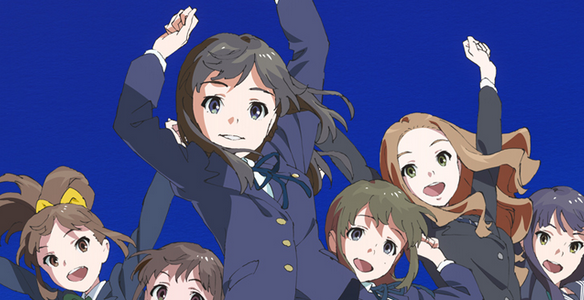
Summary: “Green Leaves Entertainment is a tiny production company on the verge of going out of business in Sendai, the biggest city in Japan’s northeastern Tohoku region. The agency once managed the careers of magicians, photo idols, fortune-tellers, and other entertainers, but its last remaining client finally quit. In danger of having zero talent (literally), the president Tange hatches an idea of producing an idol group. On the brash president’s orders, the dissatisfied manager Matsuda heads out to scout raw talent. Matsuda makes a fateful encounter with a certain girl…” – (Taken from ANN)
Produced by: Ordet
Director: Yutaka Yamamoto
Series Composition: Machida Touko
Original creator: Yutaka Yamamoto
Impressions: I’ve talked about this one above: Yutaka Yamamoto could have picked any premise he would have liked (he has the ego to get away with things, we know that), and he goes for a generic idol series with seven cute girls. Yay for originality!
First-Glance Potential: 0%
Nisekoi

Summary: “Nisekoi follows high school student Raku Ichijou, the son of a leader in the yakuza faction Shuei-Gumi, and Chitoge Kirisaki, the daughter of a boss in a rival gang known as Beehive. They unexpectedly meet when Chitoge hops a wall and knees Raku in the face. After she runs off, Raku realizes he has lost his pendant which was given to him by his childhood sweetheart with whom he made a secret promise. After discovering Chitoge is a new transfer student in his class, he forces her to help him look for the pendant. During the search, they begin to dislike each other.” – (Taken from ANN)
Produced by: Shaft
Director: Akiyuki Shinbo
Original creator: Naoshi Komi
Impressions: So many red flags going up here, it’s ridiculous. Right after finishing the Monogatari series Shinbo is immediately going to continue with another series. It’s a romance series, adapted from Shounen Jump, meaning that there is no way in hell that they’re going to be able to stuff the entire series into just 13 episodes, and it’ll probably drag out as hell due to the weekly format of that magazine. Also: “during their search they begin to dislike each other”… yeah right.
First-Glance Potential: 0%
Robot Girls Z

Summary: ” Robot Girls Z focuses on three high school girls: Z-chan (based on Mazinger Z), Gre-chan (based on Great Mazinger), and Grenda-san (based on Grendizer). The group forms the Robot Girls Z unit in Nerima Ward Oizumi Academy’s Photon Power District in Photon Power Town that promotes Photonic Energy as the future energy source and fight the evil Baron Ashura and her Mechanical Beasts Girls Garada-chan and Doublas-chan who seek to use Photonic Energy for their nefarious purposes.” – (Taken from ANN)
Produced by: Toei Animation
Director: Hiroshi Ikehata
Series Composition: Kzuho Hyodo
Impressions: This one seems like Toei’s lesser department doing another series, because it completely lacks any sort of creativity whatsoever. It’s just another series that turns things into cute girls, only this time it’s classic robot series. This is not how you do a homage! This is just blatant ass-kissing. You’re putting these girls at places they totally don’t belong! The director and series composition are both really meh: both people who seem lazy and not really inspired to make something good out of this one.
First-Glance Potential: 0%
Go! Go! 575
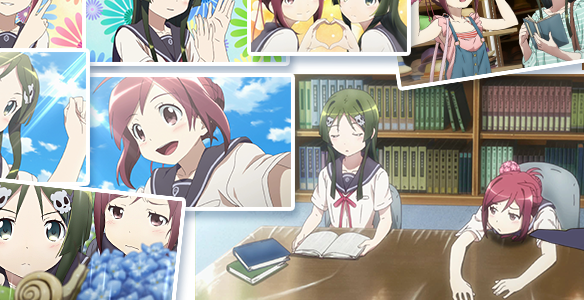
Summary: “The anime ties into Project 575, which lets anyone create songs using the traditional Japanese 5-7-5-syllable meter found in haiku and tanka poems.” – (Taken from ANN)
Produced by: SEGA
Impressions: I’m thinking: how on earth can they make this work? No staff has been announced yet, but even then: it’s two characters who read Haiku. Who on earth can make an enjoyable series that lasts an entire season out of that?
First-Glance Potential: 0%
Chuuninbyou Demo Koi ga Shitai II

Summary: “High school freshman Yuuta Togashi was once a “chuunibyou patient” i.e. an overly self-conscious middle schooler. He wants to bury this embarrassing past and begins a new life in high school—unsuccessfully. His classmate Rikka Takanashi, a “current” chuunibyou patient, has found traces of residual symptoms on him and used the fact to force Togashi “making a contract” with her.” – (Taken from ANN)
Produced by: Kyoto Animation
Director: Tatsuya Ishihara
Series Composition: Jukki Hanada
Original creator: Torako
Impressions: I’ve ranted about Kyoto Animation before, but let me quickly explain why I dropped Chuuninbyou quite early: all of their characters look the same! They always keep relying on the same archetypes and gags over and over, and even when you think that they’re going to try something different, the first episode airs and they find some way to make their characters look way too much like their previous iterations. I’m of course not denying that things can get better later on, but the question is: do I want to pain myself sitting through the same characters over and over again? Right now my answer to that is no.
First-Glance Potential: 0%
Magical Warfare
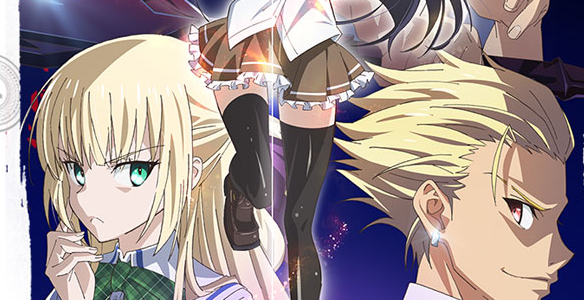
Summary: “In this modern magic action story, Takeshi Nanase is an ordinary high school boy who has a somewhat dark past. Due to certain circumstances, he formed a “fake” couple with his childhood friend Kurumi Isoshima, but otherwise, he lives a normal life. However, one day, he comes across a girl named Mui Aiba, in a uniform he has never seen before, collapsed on the school campus. This encounter changes Takeshi’s destiny completely. Mui tells Takeshi that she is a magician, and she apologizes, for she turned Takeshi into a magician, too. What Takeshi once knew as one world is actually two — the world where magicians live and the world where humans live.” – (Taken from ANN)
Produced by: Madhouse
Director: Yuzo Sato
Series Composition: Kazuyuki Fudeyasu
Original creator: Hisashi Suzuki
Impressions: Another boring premise with silly promo art that fails to stand out whatsoever. It’s a light novel adaptation, which raises even more red flags. The only bright point is that the staff behind this one is quite good: the director of Kaiji, Agaki and One Outs (but also Iron Man) and the series composition of Hajime no Ippo (but also Kampfer and Kamen no Maid Guy). And those negative examples are unfortunately what I’m fearing here: yes these guys have adapted some wonderful stuff. But they made that with great premises. Not bland and boring crap like this.
First-Glance Potential: 10%
Super Sonico the Animation

Summary: “Super Sonico is the mascot girl of the “Nitro Super Sonic” events held by Nitroplus. In her back story, she is already a photoshoot model, game character, and a musician, even as she studies as a college student. She is also part of a three-piece girl band named “Daiichi Uchū Sokudo” (Fastest Speed in Space) as the vocalist and guitarist.” – (Taken from ANN)
Produced by: White Fox
Director: Keiichi Kawamura
Series Composition: Yosuke Kuroda
Impressions: This one has me puzzled: so it’s a mascot of Nitro+, and it’s getting its own anime. If it’s going to be good, then it’s probably the first of its kind to actually deliver, because the potential for failure is incredibly high here. The problem is corporate: of course she’s a mascot so you can’t make her look bad or anything, she needs to be constantly appealing and you can’t do anything risky with her because it might lead to bad views about Nitro+. The creators behind it aren’t that bad or anything, but I really doubt that they can do anything with this.
First-Glance Potential: 20%
Hamatora
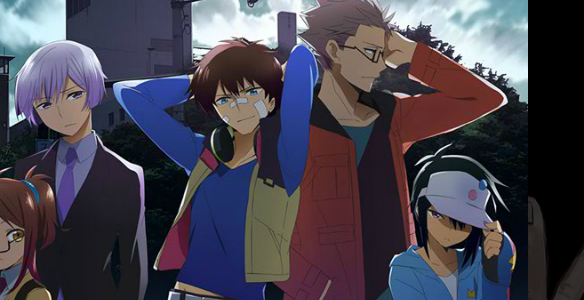
Summary: “The story revolves around “Minimum” or “minor miracle”— special hereditary powers discovered only in an extremely limited number of humans. Those who possess such powers are known as “Minimum Holders.” Partners Nice and Murasaki form a detective agency called “Hamatora” in Yokohama in 2014 — but their “office” is a table at Cafe Nowhere where they and their friends wait for clients. An old acquaintance of theirs, a cop named Art, hires them for a serial murder case he is investigating, and they discover that the murder victims are all “Minimum Holders.” As Minimum Holders themselves, Nice and Murasaki are drawn into this case, whether they like it or not.” – (Taken from ANN)
Produced by: ?
Director: Seiji Kishi
Series Composition: Yukinori Kitajima
Impressions: When the page loaded and I could only see a few vague hints, I could already tell immediately that this would be Seiji Kishi’s new series. It’s painfully obvious, and usually when you can recognize a director’s personal style, it’s good. With him though, I see him blatantly recycling some of the ideas he used in Daganronpa and Devil Survivor. I mean come on: over the past year he has done three series and one movie. This guy is overworked and needs to stop right now. The worst thing is that the premises of his series aren’t that bad. It’s just the execution that keeps on getting worse.
First-Glance Potential: 20%
Neppu Kairiku Bushi Road
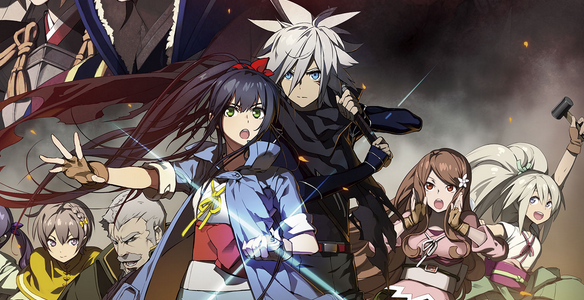
Summary: “An asteroid collision brought with is a deadly menace known as “Shinbo.” Faced with destruction, humanity retreated to land reclaimed from the sea. The one ray of hope is a device that can fight the Shinbo called “The Mechanical Divine General.” Ame, the princess of the refugees, and Sutou, who carries the blood of the Yagyu family, must awaken its power in order to save the world.” – (Taken from ANN)
Produced by: Kinema Citrus
Director: Masayuki Sakoi
Series Composition: Norimitsu Kaihou
Original creator: Sunao Yoshida
Impressions: It’s probably a coincidence, but I love how they decided to call the deadly menace that destroys humanity Shinbo (hey, it’s not my idea!) – But yeah, the plot here is pretty generic and pretty stupid (a princess of refugees seems very much like a silly attempt to make that character more special than what she actually is). The director of Needless and Maid Guy also makes me fear about whether this show will be more than cheap entertainment.
First-Glance Potential: 20%
Mikakunin de Shinkoukei
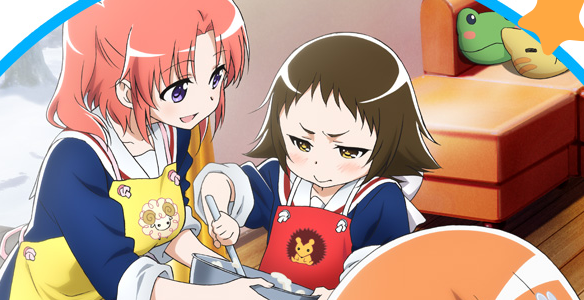
Summary: “The comedy revolves around Kobeni Yonomori, who on her 16th birthday suddenly has a young man with little presence named Hakuya Mitsumine and his younger sister Mashiro appear in front of her. It turns out that Hakuya is her fiancé, and Mashiro is her future sister-in-law. The three (and Konbeni’s older sister Benio) start living together underneath the same roof, and hilarious happenings occur.” – (Taken from ANN)
Produced by: Dogakobo
Director: Yoshiyuki Fujiwara
Series Composition: Fumihiko Shimo
Original creator: Cherry Arai
Impressions: This one seems like the standard premise for a sitcom, and nothing more. So slice of life that depends on the antics of three characters, and possibly a lot of cuteness. I personally don’t think that it will work. Perhaps one episode will be nice, but it won’t have enough material for 13 episodes. Unless you like the 4-koma adaptation genre, I see this one as instantly forgettable.
First-Glance Potential: 20%
Nobunagun
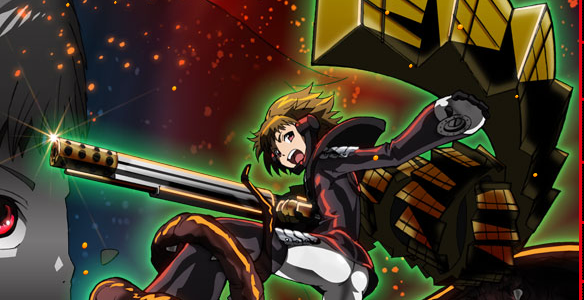
Summary: “Shio Ogura is a Japanese high school student, who is visiting Taiwan on a school trip when she is suddenly attacked by monsters. Agents known as “E-Gene Holders” from the government agency DOGOO also arrive, who wield weapons infused with the spirits of historical figures. Shio is revealed to also be an E-Gene Holder when the soul of Oda Nobunaga awakens after she tries to rescue a friend.” – (Taken from ANN)
Produced by: Bridge
Director: Nobuhiro Kondo
Series Composition: Hiroshi Yamaguchi
Original creator: Masato Hisa
Impressions: When I first saw the promo material, my reaction was that it was a really artsy project that probably would rely a lot on being cool. Then I read the premise and this show lost all of the hope that I had for it. The plot of this show is one that I hope will die out very soon, because it really is a dead horse at this point. And as for the staff behind it… Nobuhiro Kondo previously directed Kekkou Kamen and Keroro Gunsou… two series that I haven’t seen before, but I doubt whether that kind of experience can really make something good out of this series. Hiroshi Yamaguchi though… this guy is a good writer when he wants to be. He really needs to try though, in order to make something workable out of a bad premise like this.
First-Glance Potential: 20%
Sakura Trick

Summary: “The story revolves around Haruka and Yuu, two girls who go to a high school that is slated to be shut down in three years. To share “something special” between them, they share a kiss, and their relationship deepens from that moment onward.” – (Taken from ANN)
Produced by: Studio Deen
Director: Kenichi Ishikura
Original creator: Tachi
Impressions: Kenichi Ishikura is an episode director who previously worked at Shaft, and then went on to direct the umpth Da Capo series (which was really forgettable). But yeah, we have a lesbian romance series, which unfortunately still remains a series about a bunch of high school girls who all look the same, stuffed together. I like yuri, but I like it because of how good the stories of yuri-series on average tend to be. But I’m not sure whether just the addition of romance will be enough to lift this bland premise up from mediocrity.
First-Glance Potential: 30%
Inari, Konkon, Koi Iroha
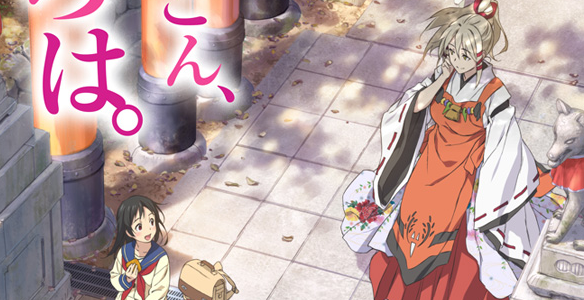
Summary: “The story revolves around Inari Fushimi, a shy, not-so-bright middle school girl living in Kyoto’s Fushimi ward. She has a crush on her classmate Tanbabashi, but cannot express her feelings. One day, as thanks for helping a fox pup, the deity Ukanomitamanokami grants her the ability to change her form.” – (Taken from ANN)
Produced by: Production IMS
Director: Toru Takahashi
Series Composition: Machida Touko
Original creator: Morohe Yoshida
Impressions: I’m on the fence about this one. The thing is that it’s a romance series that has the potential when done the right way. It also seems to want to take itself seriously. And it does have the director of Otona Joshi no Anime Time I. However it is a manga adaptation, and Machida Touko isn’t really good at adapting things. With that, I really fear that this will end up as a generic romance show that ends inconclusively and doesn’t go anywhere.
First-Glance Potential: 40%
Wizard Barristers: Benmashi Cecil
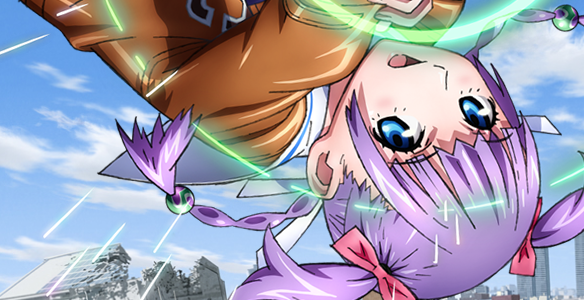
Summary: “The show takes place in Tokyo in 2018, where normal humans and those who can use magic coexist. As a result, there are laws against using magic, and a “magic courtroom” exists to preside over lawsuits regarding magic use. In these cases, “Benmashi” or wizard barristers defend those who use magic. The anime follows Cecil, the youngest Benmashi in history, and her associates as they defend clients in these cases.” – (Taken from ANN)
Produced by: Arms
Director: Yasuomi Umetsu
Series Composition: Yasuomi Umetsu
Original creator: Yasuomi Umetsu
Impressions: Okay, and the biggest WTF of the season in terms of staff is going to this series. Yasuomi Umetsu, the guy who is currently doing a pretty bad job with Galilei Donna, is going to follow it up IMMEDIATELY with a new series. Animated by Arms of all things, the single worst major production company out there. I… have no idea what he’s doing. He’s again going to write it from scratch and direct it at the same time. What puzzles me is how he got away with it, and why on earth he’s not doing a better job if he’s got so much ambition. I mean, this is not something you do normally in order to get a paycheck: he really needs to have wanted to do this in order to suddenly come out of nowhere with two completely original series. Why did Galilei Donna have such bad writing then? And if it’s apparently so easy to just get yourself an original series, why aren’t more people doing it?
First-Glance Potential: 40%
Witch Craft Works
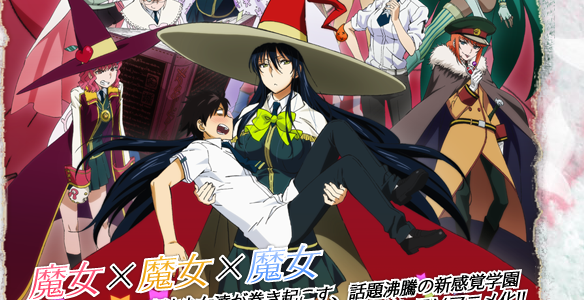
Summary: “Honoka Takamiya is perfectly content with living his quiet life as an average high school junior. The only disruptions to his mundane daily routine all seem to stem from unexpected encounters with his school’s super-popular student idol, Ayaka Kagari, the talented, phlegmatic, and gorgeous daughter of the school board chairman. To his dismay, Takamiya’s classroom seat turns out to be right next to Kagari-san, thus he suffers jostling, harassment, and even a beating from her inescapable crowd of jealous fans. As if this isn’t bad enough, Takamiya’s world–as well as a portion of his school–suddenly collapses around him, and he is twice lured into bizarre and fantastic deathtraps. Astonished at his own survival, Takamiya learns that his rescue is thanks to the cool head–and fire power–of a witch… named Ayaka Kagari. From then on, Honoka quickly discovers, with Ayaka’s devoted help, that neither his school, nor the people he thought he knew, nor even he himself are in any way normal.” – (Taken from )
Produced by: JC Staff
Director: Tsutomu Mizushima
Series Composition: Tsutomu Mizushima
Original creator: Ryuu Mizunagi
Impressions: Tsutomu Mizushima’s biggest problem is that he’s overworked: he doesn’t take his time for his series, despite being a really good director. Thankfully there has been some time since Yondemasuyo, Azazel-san, but I wonder whether it is enough. I mean, he needs to be really sharp again in order to make this premise consistently funny for an entire season, because it’s a school magic series. A very overcrowded genre, especially when it’s about this helpless male being escorted and protected by a cool and powerful female. What can they do to make this fresh? For one, the chemistry between the main couple NEEDS to be good. If it’s even remotely bland, then this show has no chance to remain interesting.
First-Glance Potential: 50%
Sekai Seifuku ~ Bouryaku no Zvezda
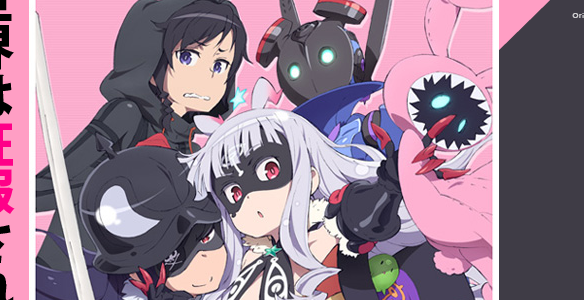
Impressions: Tensai Okamura is coming with a new original series, combined with A-1. That sounds great, doesn’t it? Well, the thing with him is that he’s a hit or miss director, but when he hits, he really hits hard with stuff like Darker than Black and Stink Bomb, but he has also written series that… didn’t really go anywhere. I really want to like this one… but just look at the promo art. Obviously there is THAT outfit, but I have another issue with it: EVERYONE is trying to make some quirky facial expression. That to me, is a sign of trying too hard. Adding too much of one spice while not caring about the rest.
First-Glance Potential: 70%
Noragami
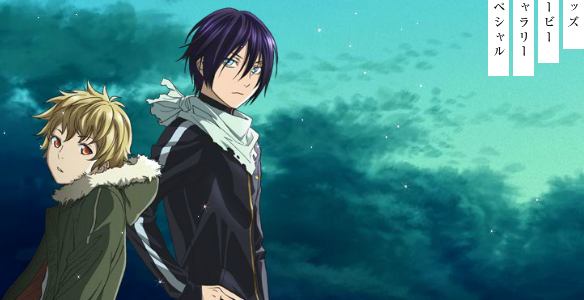
Summary: “At the boundary between this realm and another, there live eight million gods, dead spirits who serve the gods, and other assorted spirits who help and meddle in the affairs of humans. A sweet middle school girl named Hiyori Iki has been enduring bullying from her classmates, and she goes to the restroom by herself to cry. Scrawled on the bathroom wall is a phone number and the message, “I solve your troubles.” After Hiyori calls the number, she encounters a homeless, unemployed figure who proclaims himself a “god.” Crude, unpredictable, and worthless, he does not answer people’s prayers and no one acknowledges him. However, he has one sole power, the ability to cut all who pass between this world and the next.” – (Taken from )
Produced by: Bones
Director: Kotaro Tamura
Series Composition: Deko Akao
Original creator: Adachitoka
Impressions: This one looks like it might actually be quite interesting to watch if it’s handled well. Of course, it is an adaptation, and to me this sounds like a story that will have a hard time fitting into its time-frame. Deko Akao is quite a flawed writer. However, the director seems to be a young talent who has been running around Bones, and with this he’s getting his first chance to direct a full series. The website for this really screams that budget has been put into it. So yeah Deko Akao, don’t be lazy this time: give this story the attention it deserves. Use your head and think.
First-Glance Potential: 70%
Toaru Hikuushi e no Koiuta
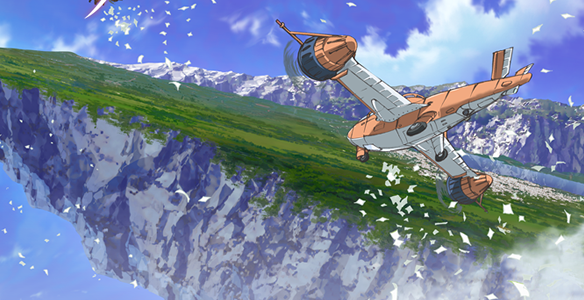
Summary: “The story of love and aerial combat follows a former prince who lost everything to a revolution, and a girl who became the symbol for the revolution. The orphaned prince, now renamed Karueru, embarks on a one-way journey to discover the ends of the heavens. Aboard the levitating island of Isura, he meets a girl named Claire. This is a tale of a prince who lost everything leaves for a journey with no guarantee of returning to his hometown safely. With hatred and revenge in his mind, he met several people that taught him about friendship…and love.” – (Taken from ANN)
Produced by: TMS Entertainment
Director: Toshimasa Suzuki
Series Composition: Shinichi Inotsume
Original creator: Koroku Inumara
Impressions: Remember Toaru Hikuushi e no Tsuioku about a fighter pilot who has to escort a princess? Well, the author wrote more novels, and this time we’re getting a TV-series about it. I’m fine with that: planes and fighter pilots are a pretty interesting topic to make a series about, and with this we have a bit more time to delve into the characters and the setting than just one movie. The director of Heroic Age and Rinne no Lagrange seems solid, as long as he won’t have to write his own story, but he knows his characterization at least. Shinichi Inotsune has adapted a variety of series, including good ones like Ristorante Paradiso. This has potential to work out.
First-Glance Potential: 80%
Nobunaga the Fool
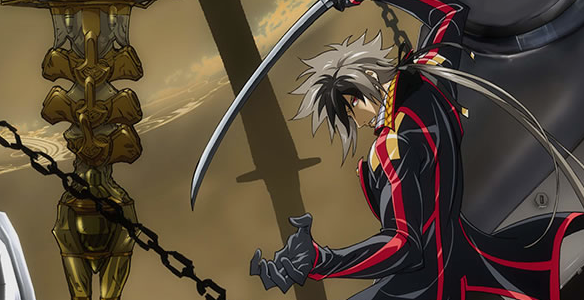
Summary: “The Western Planet and the Eastern Planet. Once upon a time, the two sides were bound by the “Dragon Pulse” spanning the heavens. The civilization that once had prospered has now turned to a tale of dreams, as the inextinguishable flames of war tear the realm asunder. The two planets remain engulfed in endless battles. The return of the super technology known as “sacred treasures” could revolutionize the world order, but no one knows of them but one person — a “heretical girl.” A girl from the Western Planet, Jeanne Kaguya d’Arc, saw heavenly visions of the birth of a “Star Messiah” who will save the world. She embarks on a journey to the Eastern Planet with Leonardo da Vinci, “the one who observes the world.” They come across the heretic of the Eastern Planet and “the greatest fool of the day,” Oda Nobunaga.” – (Taken from ANN)
Produced by: Satelight
Director: Eiichi Sato
Series Composition: Shoji Kawamori
Original creator: Shoji Kawamori
Impressions: Nobunaga… oh god not another one, please let this guy rest for onc.. HOLY CRAP THAT LOOKS AWESOME. I mean, this show. This is what he needed, because it dares to do something new with the guy. This is the kind of premise that is so ridiculously stupid that it might actually work, and Shoji Kawamori, who is strangely writing a series for once, rather than sitting at the position of chief director, is one of the people crazy enough to actually make it work. His ego will make sure that no idea is too crazy. And combined with that we have the director of Kiss Dum, which will make this an entire trainwreck. But it will be glorious!
First-Glance Potential: 80%
Houzuki no Reitetsu
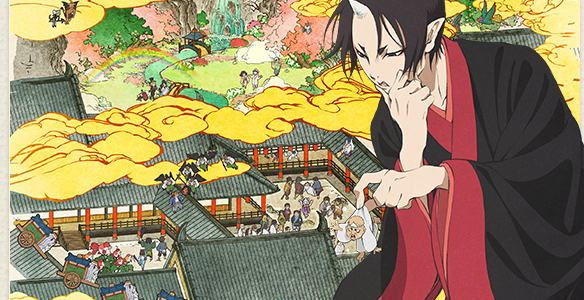
Summary: “Houzuki is the aide to the great king of Hell, King Enma. Calm and super-sadistic, Houzuki tries to resolve the various problems in Hell, including a rampaging Momotarou and his companions. However, he also likes spending his free time on his hobbies, such as fawning over cute animals and raising “Goldfish Flowers.”” – (Taken from ANN)
Produced by: Studio Wit
Director: Hiro Kaburaki
Series Composition: Midori Gotou
Original creator: Natsumi Eguchi
Impressions: Wit Studio seems to be split off from Production IG, and it looks like they took a lot of talent with them, and they actually came with quite an interesting premise to animate again, this time without Production IG at their side. It’s a premise that dares to be different. It’s an adaptation, but it’s the kind of adaptation that I can see would fit within an anime timeslot. It’s got a solid director who knows how to shoot stuff, and the writer wrote for a chunk of good series that Production IG did back in the days, so these people can pull it off. Now all that’s left is to hope that the manga this is based on is good.
First-Glance Potential: 85%
Silver Spoon Second Season
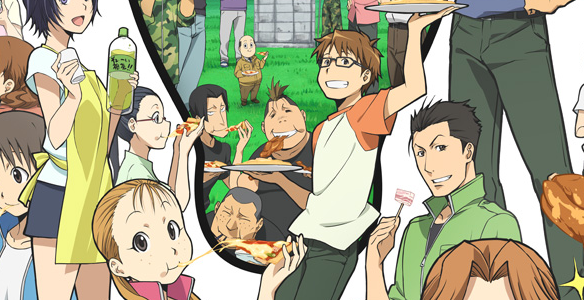
Summary: “Yuugo Hachiken decided to escape from the stressful school and home environment in the city by enrolling at Ouezo Agricultural High School. Unlike his peers who’ll eventually embark upon an agricultural career, he decides to study there only because he believes it’ll be less competitive academically. Unfamiliar with his new surroundings, he tries his best to adapt to the agricultural world he had never thought of living in.” – (Taken from ANN)
Produced by: A-1 Production
Original creator: Hiromu Arakawa
Impressions: Noitamina next season will rock, with the second halves of both Samurai Flamenco and Silver Spoon. Silver Spoon is a series that takes a very honest, yet also silly and endearing, look at farming, and the first episode was very effective at that. Like full metal alchemist, everything was calculated and let’s hope that the second season will be as enjoyable.
First-Glance Potential: 85%
Pupa
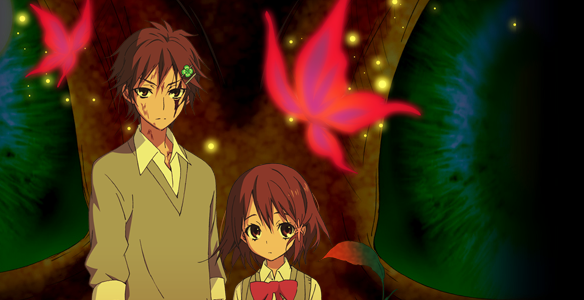
Summary: ” The “life-and-death sibling” story follows Utsutsu and Yume Hasegawa, a boy and his little sister who find themselves all alone. One day, Yume sees a mysterious red butterfly and her body undergoes a strange metamorphosis—into a creature that eats humans. Utsutsu struggles to find a way to restore his sister.” – (Taken from )
Produced by: Studio Deen
Director: Tomomi Mochizuki
Original creator: Sayaka Mogi
Impressions: Okay, so it got delayed one season. That still doesn’t change that I’m looking forward what is promising to be the first good show with incest in a long, long while. Tomomi Mochizuki is one of the best directors that Deen could have gotten, and it’s great to see him in the director’s chair again, and if that means a few delays in order to get things just right, then I’m willing to wait. I’m really looking forward to how disturbing they can make this one.
First-Glance Potential: 100%
Space Dandy
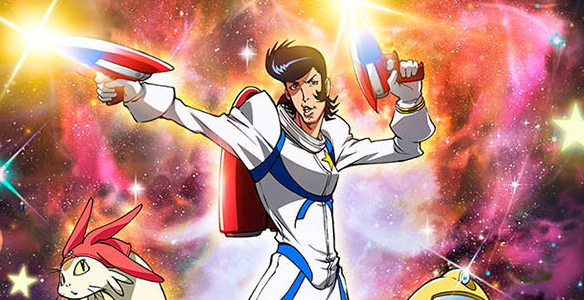
Summary: ” The story follows Dandy, an alien hunter who is “a dandy guy in the space”, in search for aliens with his robot assistant QT and a cat alien named Meow.” – (Taken from ANN)
Produced by: Bones
Chief Director: Shinichiro Watanabe
Director: Shingo Natsume
Script: Dai Sato,
Keiko Nobumoto
Impressions: Space Dandy isn’t just awesome because it’s helmed by Shinichiro Watanabe. No, it also reunites parts of the Cowboy Bebop writing staff: Dai Sato and Keiko Nobumoto. The three brains behind one of the most solidly executed and celebrated anime ever are finally coming together again to make something new, and let’s see what 15 years of extra experience has brought to them. This will be their big chance to come with something big again. They’ve got 26 episodes, they’ve got the talents of the animators of Bones behind them. The character-designer behind Cowboy Bebop, and I can already see a ton of different musical artists who will be behind the soundtrack. This will be big.
First-Glance Potential: 100%